
REVIEW · HIKING & TREKKING
Attersee: Sunset Hike to Großer Schoberstein with Guide
A sunset hike over Lake Attersee is the kind of plan that feels calm and special at once. This one takes you to the summit of Großer Schoberstein (1037 m) on an evening route with a relaxed pace, then brings you back down after dark with headlamps.
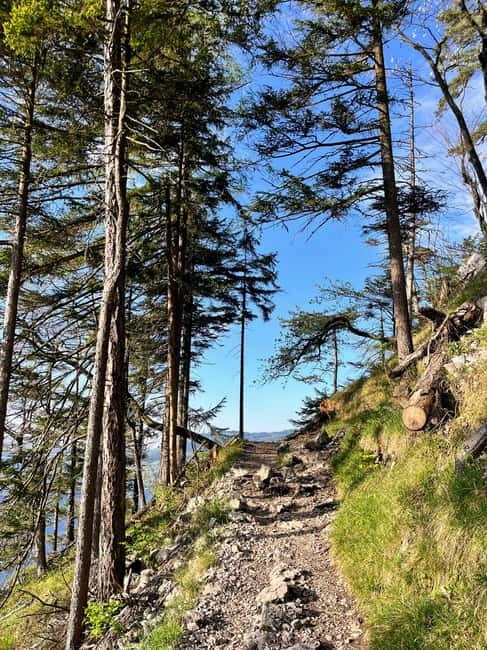
I especially like the mix of terrain. You move from cool forest paths to rockier sections and open meadows, so the hike stays interesting even before the sunset shows up.
One thing to think through first, though, is the timing of the return. The descent takes place in the dark using headlamps, so you need sure-footed confidence and no fear of rocky, uneven ground.
In This Review
- Key points to know before you go
- Why Großer Schoberstein at sunset feels different above Lake Attersee
- Getting started: meeting points and the Weissenbach rhythm
- Terrain mix: what the trail feels like before the summit arrives
- The summit moment: watching light slide over Lake Attersee
- The quiet return after dark: headlamps and safe pacing
- What to bring (and what will slow you down)
- The guide experience: pace, expertise, and languages you can use
- Price and value: is $69 per person worth it?
- Who should book this guided sunset hike, and who should skip it
- Should you book the Attersee sunset hike to Großer Schoberstein?
- FAQ
- How long is the sunset hike to Großer Schoberstein?
- What distance and elevation should I expect?
- Is the hike beginner-friendly?
- What’s included in the price?
- What languages are the guided tours offered in?
- Do I need hiking insurance?
- Where do we meet, and is transfer included?
- What should I wear and what is not allowed?
- What happens if the weather is bad?
Key points to know before you go
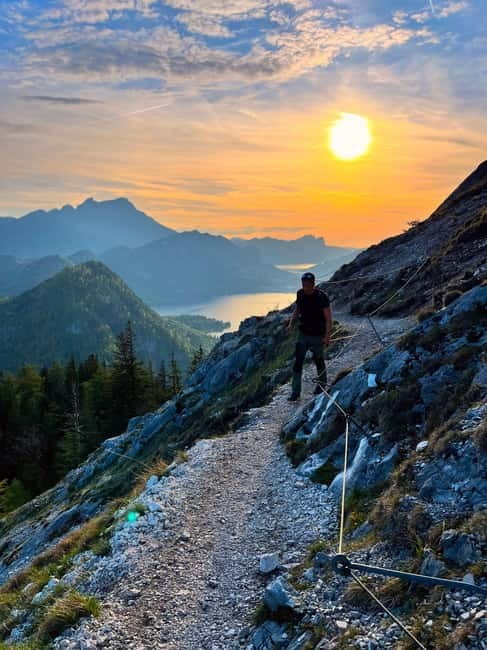
- Sunset summit payoff: You get time at the top to watch the light change over Lake Attersee.
- A real guide, not a casual walk: You’ll hike with a certified hiking guide and headlamp support.
- Moderate effort, real elevation: About 580 m gain over a roughly 7 km round trip, for about 4 hours.
- Terrain variety with some rocky bits: Forest, rockier sections, and open meadow stretches keep it from feeling repetitive.
- Dark return is part of the deal: Headlamps are included, and you should feel steady on uneven ground.
- Limited gear rentals: Backpacks and trekking poles may be available to rent, but quantities are limited.
Why Großer Schoberstein at sunset feels different above Lake Attersee
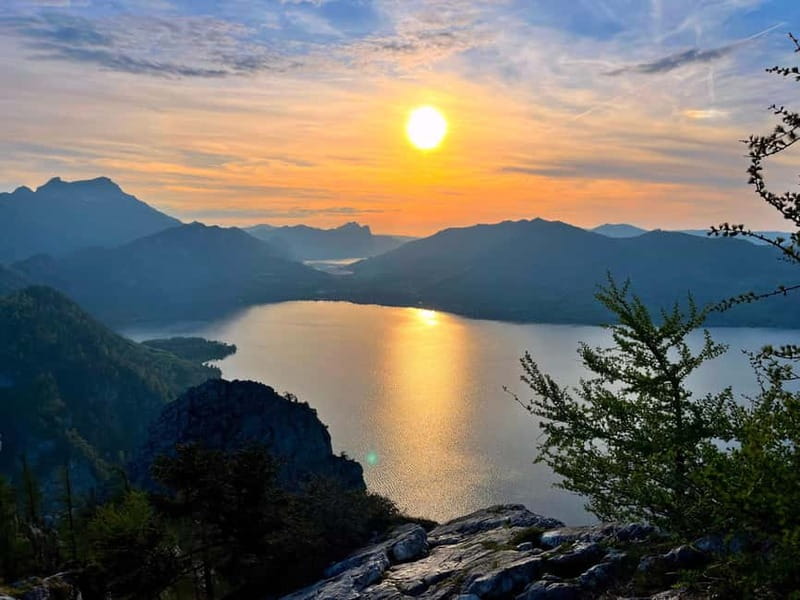
There are lots of viewpoints in Austria. This hike feels different because you earn the view in a way that makes the sunset feel earned, not staged.
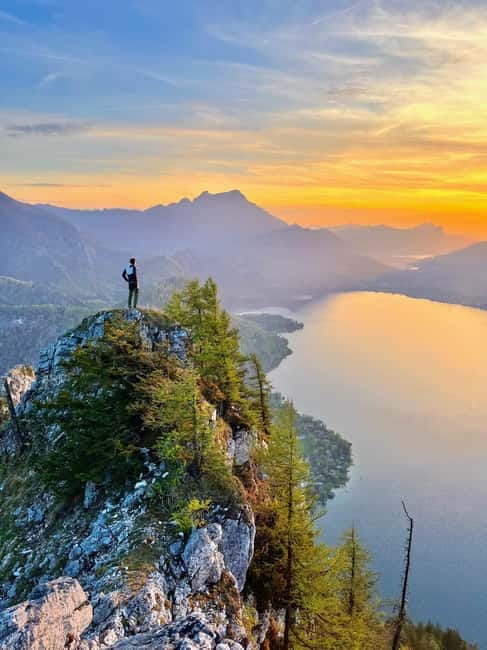
Großer Schoberstein sits above Lake Attersee, so as evening light fades, you get wide panoramas of the lake and the surrounding mountain shapes. The timing matters here. The tour is built around reaching the summit for the sun dipping below the mountains, not just for a quick photo stop.
And because it’s an evening hike with an intimate group vibe, the atmosphere can be surprisingly peaceful. You’re not doing a loud, crowded “watch it like a show” thing. You’re out there moving, listening, and then settling at the top.
Getting started: meeting points and the Weissenbach rhythm
The hike starts from one of two options. Depending on what you book, you’ll meet at Parkplatz Attersee Klettersteig near the Gustav Klimt Themenweg Stele area, or at Weißenbach-Forsthaus.
From there, you begin with a short photo stop. It’s not a sightseeing bus stop. It’s more like a quick moment to orient yourself, get your eyes on the route, and settle into the pace before the longer stretches start.
Then you spend time in Weissenbach am Attersee with the guide. That half hour is your chance to get context, learn what to expect, and ask questions about the trail. If you’re the type who likes knowing why you’re walking a certain way, this is a good part of the experience. It also helps everyone settle in early, before the evening starts cooling down.
A practical note: you’ll want to be ready for weather shifts. After sunset, it cools down quickly, even if it felt mild earlier in the day.
Terrain mix: what the trail feels like before the summit arrives
This hike stays varied, and I think that’s a big part of why it works so well for a sunset outing. You are not stuck on one type of path.
Expect:
- Forest paths that feel cooler and calmer
- Rockier sections where sure-footedness matters
- Open meadows where you can see more and breathe a bit differently
The elevation gain is about 580 m over roughly 7 km round trip. That doesn’t mean it’s a brutal climb, but it does mean you’ll work. If your legs feel fine but your footing feels uncertain, the rockier sections are the part that could slow you down.
The guide’s job is more than leading. A good guide times the group, checks how people handle footing, and keeps the pace relaxed enough that nobody feels rushed. In one example, a guide named Roland was described as using humor and adjusting to group tempo, which is exactly the kind of leadership that makes uneven terrain feel manageable.
The summit moment: watching light slide over Lake Attersee
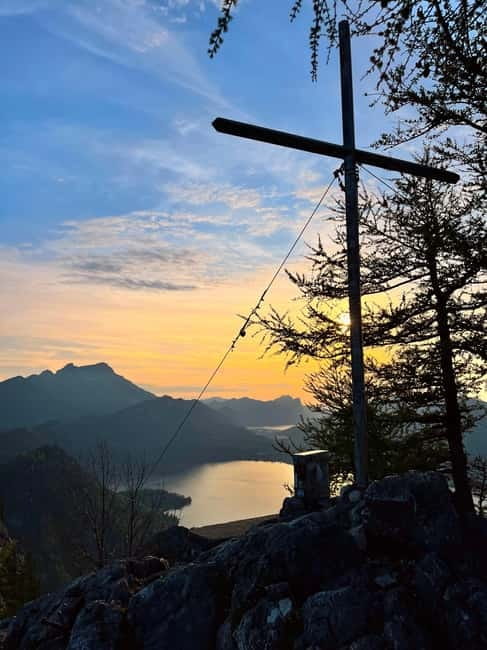
The main event is the summit of Großer Schoberstein at 1037 m. This is where the evening hike turns into a view you’ll remember.
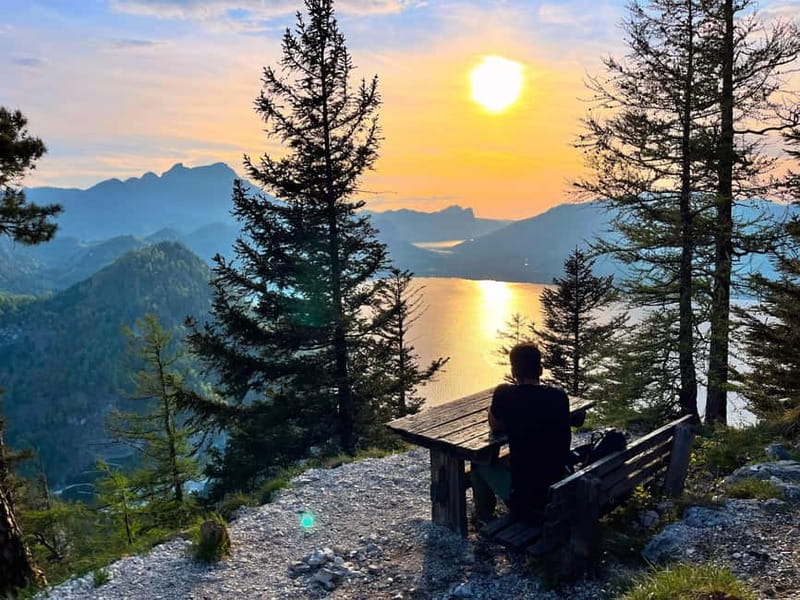
You’ll reach the top after a scenic stretch, and you’ll have time to relax and take in the panorama. This isn’t a sprint-and-go. You get a chance to look out over Lake Attersee and the surrounding mountain scene, then watch the light change as the sun drops.
What I like most about this kind of sunset hike is the shift in energy. Earlier, you’re focusing on steps and rhythm. At the top, your attention naturally moves to the horizon.
If you’re coming with someone, this is the part where you can trade phone photos for real viewing. The lake and ridgelines make it easy to spot shapes, not just colors.
The quiet return after dark: headlamps and safe pacing
Here’s the essential reality check: after sunset, you return using headlamps. That means the hike doesn’t end when the sun goes down. It changes into a different skill set, moving from “enjoy the view” to “stay steady on the descent.”
The good news: headlamps are included. Still, you should take this seriously. Walking in the dark on uneven ground is harder than it is in daylight, even when the slope isn’t extreme.
So ask yourself these questions before you book:
- Do you feel comfortable stepping over rocky or irregular surfaces?
- Can you keep your pace controlled when visibility drops?
- Do you have any vertigo or strong height anxiety?
This tour specifically lists people who should avoid it if they’re afraid of heights or have vertigo, plus those with heart or respiratory issues, motion sickness, or other pre-existing medical conditions. If any of that applies, it’s better to choose a different day hike.
Also, if you’re worried about balance, you can help yourself a lot. Wear sturdy trail shoes, not soft soles. Use hiking poles if you have them. Trekking poles may be available for rent, but the supply is limited.
What to bring (and what will slow you down)
You’ll enjoy this hike more if you pack like an adult who plans to still be comfortable an hour after sunset.
Bring:
- Hiking boots or sturdy trail shoes
- Water, at least 1 liter
- Snacks like energy bars, dried fruit, or nuts
- A backpack (15 to 20 liters)
- Weather-appropriate layers (it cools quickly after sunset)
- Hiking poles if you use them
- A headlamp is provided, but having one extra light source can feel reassuring if you already own one
Also note what’s not allowed. You should skip:
- High-heeled shoes
- Sandals or flip-flops
- Open-toed shoes
- Luggage or large bags
- Alcohol and drugs
- Smoking
- Baby carriages, slippers, skateboards, scooters, skates
- Making fire or bare feet
That list may feel intense, but it’s there for safety and trail etiquette. Think of it as a reminder that this is an evening hike with dark footing, not a casual stroll.
The guide experience: pace, expertise, and languages you can use
This isn’t a solo adventure where you hope you can follow a sign. You get a certified hiking guide, and the group moves as one unit.
The guide speaks English, German, and Hungarian. That matters if you want to understand trail details, not just nod and follow. Even if you’re not fluent, having real communication helps when the terrain gets a little rockier.
Small-group or private options are available, which can make a difference on an evening hike. On a dark descent, group spacing and how quickly you’re asked to move matters more than it does on a daylight walk.
In feedback about the guide, one name that came up was Roland, noted for using humor, sharing natural and route knowledge, and adapting to group tempo. That combo is exactly what you want when the hike includes both uneven footing and a controlled return in low light.
Price and value: is $69 per person worth it?
At $69 per person for a 4-hour guided sunset hike, you’re paying for three things you’d struggle to replicate on your own.
First, you’re paying for a certified guide. On a trail that includes rocky sections and a return in the dark, guidance is not just “nice.” It’s practical safety.
Second, you get headlamps included. That takes one piece of planning off your plate. You also have someone timing the sunset and the return so the group doesn’t get stuck out too late.
Third, you’re paying for the format. You’re not doing a generic hike to a random viewpoint. You’re doing a planned sunset outing with a relaxed pace, time at the summit, and a structured return.
If you love guided experiences, it’s good value. If you already hike regularly at night and don’t need help with pacing or route confidence, you might feel the price is less appealing. But for most people, the safety and flow are exactly what makes it worth paying.
Who should book this guided sunset hike, and who should skip it
This hike fits best when you want a mix of effort and reward, with structure and a guide.
Good candidates:
- People with moderate hiking experience or confidence on uneven ground
- Travelers who enjoy summit views and want real sunset timing
- Anyone who likes learning about the route and local nature while moving
You should skip it if:
- You’re under 10
- You have heart problems, respiratory issues, or vertigo
- You fear heights or you don’t feel steady on rocky, uneven terrain
- You deal with motion sickness in ways that could be triggered by the pace or environment
Also, it helps if you travel prepared. The tour asks for hiking insurance, sure-footedness, and enough fitness to handle about 580 m of elevation gain in a few hours.
Should you book the Attersee sunset hike to Großer Schoberstein?
If you want a sunset experience with actual hiking built in, I think you should book. The summit view over Lake Attersee, the guided pacing, and the included headlamp setup make this a solid choice for an evening outing in Upper Austria.
I’d hold off only if night footing makes you uneasy, if you know you get anxious around heights, or if rocky sections are a problem for you. This is not a stroller-friendly stroll, and the tour itself is clear that sure-footedness is part of the deal.
For the right fit, it’s one of those rare plans where the effort stays manageable, then the payoff arrives all at once at the top.
FAQ
How long is the sunset hike to Großer Schoberstein?
The tour lasts about 4 hours.
What distance and elevation should I expect?
You’ll hike about 7 km round trip, with roughly 580 meters of elevation gain and loss.
Is the hike beginner-friendly?
It’s listed as moderate. Beginners are welcome, but you need sure-footedness and confidence on rocky, uneven terrain, especially because the descent happens in the dark.
What’s included in the price?
You get a certified hiking guide and a headlamp.
What languages are the guided tours offered in?
The guide can provide the tour in English, German, and Hungarian.
Do I need hiking insurance?
Yes. Valid hiking insurance is required for participation. Assistance may be available upon request.
Where do we meet, and is transfer included?
The meeting point can vary depending on the option booked, with locations including Parkplatz Attersee Klettersteig near the Gustav Klimt Themenweg Stele and Weißenbach-Forsthaus. Transfer is not included.
What should I wear and what is not allowed?
Wear hiking shoes or sturdy trail shoes. High heels, sandals or flip-flops, and open-toed shoes are not allowed. Smoking is not allowed, and alcohol and drugs are not allowed.
What happens if the weather is bad?
The tour is subject to weather conditions. It may be cancelled or rescheduled in case of bad weather, and the booking allows free cancellation up to 24 hours in advance for a full refund.
Encores After Dark
- Vienna: Evening Cruise Along The Danube
★ 3.5 · 1,280 reviews - Exclusive Evening at Schönbrunn Palace: After-Hours Audiotour, Dinner, Concert
★ 4.0 · 930 reviews - Vienna: Panoramic Night Tour by Bus
★ 3.8 · 898 reviews - Vienna: Schönbrunn Palace Evening Tour, Dinner and Concert
★ 4.4 · 889 reviews
Paths Above the Valleys
- Mödling/Vienna: Scenic Guided Hike with Alpacas and Llamas
★ 4.9 · 130 reviews - Alpaca and llama hike Moedling near Vienna
★ 5.0 · 27 reviews - 4-Hour Private Alpine Hiking Tour ‘In the footsteps of king Lionheart’
★ 5.0 · 13 reviews - Wachau World Heritage Hike
★ 5.0 · 10 reviews
Just added to the bill in Austria

Hiking & Trekking, compared.
Mödling/Vienna: Scenic Guided Hike with Alpacas and Llamas
Read our review →
4-Hour Private Alpine Hiking Tour ‘In the footsteps of king Lionheart’
Read our review →
4-Hour Private Alpine Hiking Tour ‘Matterhorn of the Prealps’
Read our review →
3-Hour Private Hiking Tour to historic places around Spitz in Wachau Valley
Read our review →
Sound of Music Private Tour including do-re-mi hiking trail
Read our review →Browse the lists this tour appears in