

REVIEW · GUIDED WALKS IN SALZBURG
Salzburg Introduction Walking Tour
One walk, two eras, and Mozart. This Salzburg introduction blends medieval streets, baroque squares, and real music history, guided by scholars in English.
I like the mix of big landmarks with the smaller “why it matters” details, especially along Getreidegasse and the baroque center where power and trade once collided. I also like that you’re not just doing postcard sightseeing, you’re getting stories that connect Mozart, Salzburg’s institutions, and later twentieth-century history.
One drawback to consider: the experience is very narrative-led, so if you want a super clean, step-by-step overview or a more time-anchored structure at every moment, you may need to ask your guide to slow down and tighten the timeline.
In This Review
- Key Things to Know Before You Go
- Salzburg’s Old Town Gets a Smart Storyline
- Linzer G. 39 Meeting Point, and Why Small Groups Help
- Getreidegasse and Burgher Town: Crooked Lanes With Real Purpose
- Baroque Squares and Archbishop Power in Plain Sight
- Mozart’s Birthplace and Festival Halls: More Than Tourist Stops
- St Peter’s Abbey: The 696 AD Anchor Stop
- Salt Commerce, Medical Innovation, and the Mozart Family Timeline
- The Trapp Story and WWII Reality Behind the Movie
- Value Check: What You Pay for at About $180.21
- Who This Salzburg Introduction Tour Suits Best
- Should You Book This Salzburg Introduction Walking Tour?
- FAQ
- How long is the Salzburg Introduction Walking Tour?
- What does the tour cost?
- What’s included in the price?
- What’s not included?
- Where do I meet the group?
- Is the tour offered in English?
- What is the cancellation policy?
- Final Call
Key Things to Know Before You Go
- Small group feel: Maximum of six in the small-group concept, with the broader limit listed as up to eight travelers.
- Historian-style guiding: Professors, doctoral students, historians, journalists, art critics, and published authors have led this walk.
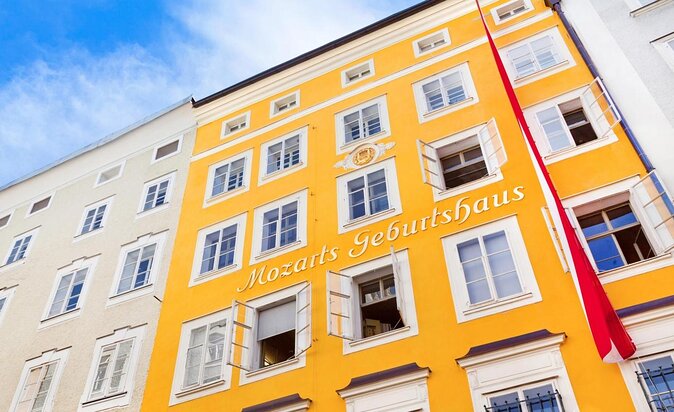
- Mozart plus context: You’ll see Mozart’s Birthplace and hear childhood stories, not just name drops.
- St Peter’s Abbey stop: The Benedictine site dates back to 696 AD, giving you a long view of Salzburg.
- Sound of Music, explained properly: You’ll learn the Trapp story as WWII refugee history, not only movie trivia.
Salzburg’s Old Town Gets a Smart Storyline
If you’ve got only a short time in Salzburg, this is the kind of tour that helps you stop wandering in circles. In about 2.5 hours, you get a guided walk that links the city’s streets to the people who shaped it, from medieval salt commerce to Mozart’s musical childhood and the twentieth-century Trapp narrative.
The core value is the pacing: you move neighborhood to neighborhood, but the guide keeps tying locations to meaning. That turns a walk through old streets into something you can remember later when you sit down at a café and finally understand what you’re looking at.
More Guided Walks in Salzburg
- Salzburg 2.5-Hour Walking Tour: Mozart, Old Town & More
★ 4.2 · 987 reviews - Salzburg: Old Town, Mozart, & Mirabell Gardens Walking Tour
★ 4.8 · 461 reviews - Salzburg Oldtown: Sightseeing Walking Tour with Licensed Local Guide
★ 5.0 · 392 reviews - Salzburg Old Town Walking Tour, Mozart, Mirabell Gardens
★ 4.5 · 201 reviews
Linzer G. 39 Meeting Point, and Why Small Groups Help
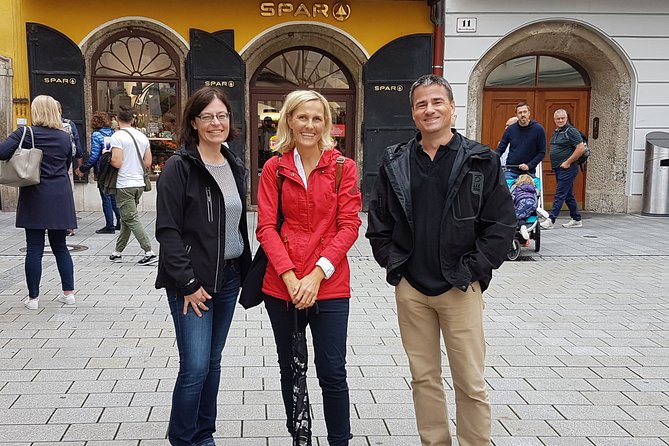
You meet at Linzer G. 39 in central Salzburg (5020), near public transportation, and the start time is listed as 9:30 am. Morning and afternoon departures are available, so you can pick the daylight window that fits your plans.
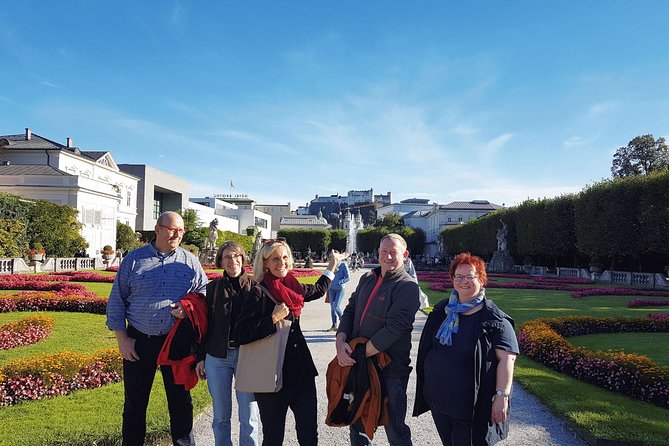
This is not a huge, ticket-line crush. The tour is designed as a small-group walk (limited to up to six in the small-group concept, and listed with a maximum of eight travelers for the activity). In practice, that matters because the guide can answer follow-up questions instead of rushing to the next corner.
Also, since it’s a mobile ticket, you can focus on finding the meeting point rather than juggling printed paperwork. And yes, you’re walking, so treat it like a real half-day warm-up, not a slow stroll.
Getreidegasse and Burgher Town: Crooked Lanes With Real Purpose
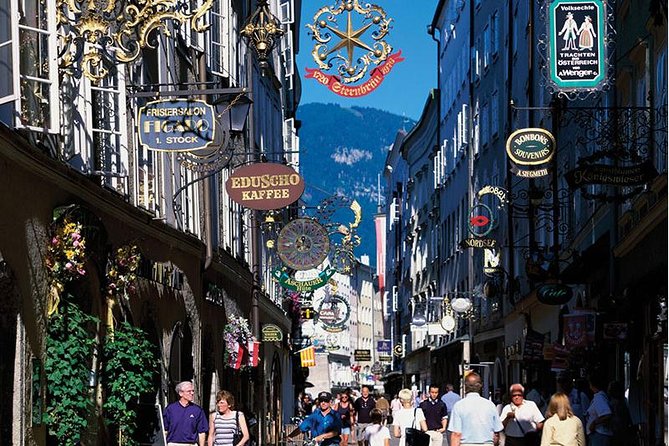
Early in the tour, you’ll work through Salzburg’s Burgher Town, where the lanes are narrow and the street pattern feels intentionally inconvenient. That’s not an accident. These kinds of tight streets and passageways supported a commercial life that could function in medieval conditions, and Getreidegasse is the standout example.
As you walk, your guide explains how the city’s commercial center stayed active through centuries, while the visual style still looks medieval in feel. It’s the difference between seeing an old street and understanding why it formed that way.
What I like about this section is the contrast in scale. You start in the tight, crooked urban fabric, then the tour later shifts you into more open baroque spaces. That lets you feel Salzburg’s “before and after” without needing museum floor plans.
Baroque Squares and Archbishop Power in Plain Sight
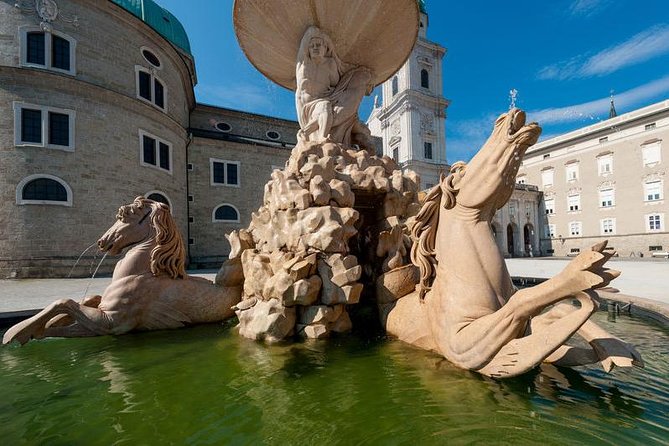
After the older lanes, you’ll reach baroque squares where the city looks more spacious and more formal. This is where Salzburg’s archbishops once held sway, and the architecture reflects that. You’ll get a sense of how power reshaped the urban layout, not just the buildings themselves.
This part of the tour is especially valuable if you’re the type who likes to understand how cities are designed to influence people. Baroque squares are built for movement, ceremony, and visibility. A guided walk helps you spot those intentions faster than you could on your own.
A consideration: the baroque parts can mean you’re exposed to sun, depending on the season and the route your guide chooses. One good tactic is to wear layers and bring a hat, because even a “short walk” can feel longer when you’re in bright open areas.
More of Austria on foot, bell tower to bell tower:



Mozart’s Birthplace and Festival Halls: More Than Tourist Stops
Next comes one of the big reasons people book this tour: Mozart’s Birthplace and stops tied to Salzburg’s performance culture, including the Festival Halls. You’re not just looking at famous façades. The guide connects those locations to Mozart’s childhood in the city, including what it meant to grow up surrounded by music and institutions.
This is also where you’ll get a sense of Salzburg’s musical identity as something lived, not just marketed. You’ll hear about how local life supported composers and performers, which helps you understand why Salzburg could become a global music symbol later.
If you’re visiting during the festival season, this section can feel extra alive, because you’re linking your sightseeing to what the city still uses today. Even outside peak dates, it works, because the context is the point.
St Peter’s Abbey: The 696 AD Anchor Stop
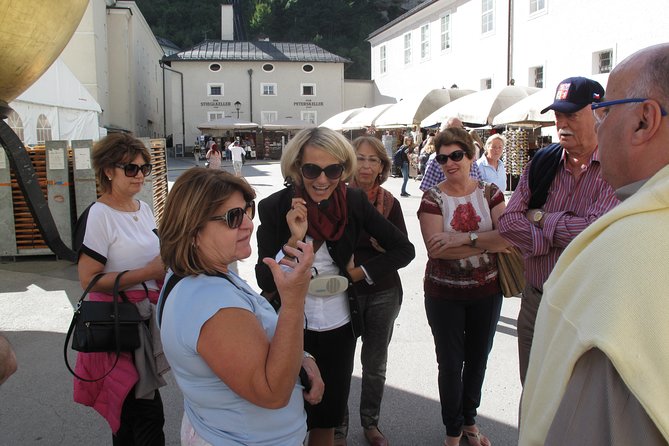
One of the tour’s most meaningful moments is the visit to St. Peter’s Abbey, a Benedictine monastery dating back to 696 AD. That date changes your perspective. Salzburg isn’t just “old.” It’s old in a way that affected real daily life for centuries.
A guided stop here is useful because the guide ties the monastery to the longer timeline of the city. You’re not just seeing stone and greenery. You’re seeing how institutions shaped learning, religion, and the flow of community life.
And because you’re walking, this stop also breaks up the “big street view” feeling. You pause and let the city slow down. That’s a small thing, but it makes the whole tour land better.
Salt Commerce, Medical Innovation, and the Mozart Family Timeline
Salzburg is famous for music, but the tour does a smart job of reminding you that the city was also built on other kinds of power. You’ll hear about medieval salt commerce, which matters because salt trade helped fund influence and stability. Without that kind of economic engine, cultural fame would be harder to sustain.
You’ll also hear about medical innovations, which is a nice twist on the usual “only churches and composers” tour pattern. That broader approach makes the city feel less like a theme park and more like a working place with real minds behind it.
Then the guide connects the dots through Mozart’s family, including Wolfgang and Nannerl Mozart, and it also brings in Michael Haydn as another important musical figure tied to Salzburg. The tour doesn’t treat music as an isolated miracle. It treats it as a local system.
If you like historical timelines, this is the part where you can ask questions. Simple questions like how this connects to what you saw 30 minutes earlier can help you turn the narrative into an internal map.
The Trapp Story and WWII Reality Behind the Movie

Most Sound of Music fans know the movie. This walk adds the missing layer: the Trapp family story as WWII refugee history. The tour frames it as a global story that spread through film, but with a real-world background you might not have learned in other Salzburg tours.
I appreciate this because it keeps the “musical Salzburg” theme from staying stuck in nostalgia. You’re still enjoying the cultural connection, but you’re also seeing how twentieth-century turmoil affected real families.
This section can be emotionally heavier than the Mozart moments, and that balance is part of what makes it memorable. The guide’s job is to keep it understandable, not overwhelming, and you can gauge the tone based on how your guide handles questions.
Value Check: What You Pay for at About $180.21
At $180.21 per person for roughly 2.5 hours, the question is not just whether you’ll see sights. The question is whether the guidance helps you see them better.
Here’s where the value sits. Your ticket covers a professional scholarly guide and a guided walk through the historical center. It’s not only “point and photo.” It’s interpretation, and interpretation is what makes Salzburg click faster, especially if it’s your first day or your first time in the city.
What’s not included matters too. You’re not getting food and drinks, and there’s no hotel pickup and drop-off. You’re also not getting Mozart Residence admission, so if you want museum time or interior access beyond what you’ll see from the walk, you’ll plan that separately.
My rule of thumb: if you’re the type who usually tours with a guide because you want context and you hate feeling lost, this price can feel fair. If you’d rather wander freely and only pop into a museum on your own schedule, you might want to spend that money on a smaller, targeted visit later.
Who This Salzburg Introduction Tour Suits Best
This fits best if you want a fast way to understand how Salzburg works. Think: first-timers, music lovers, history buffs, and anyone who wants Sound of Music stories with a real WWII backbone.
It’s also a good choice when your time is tight. Two and a half hours is long enough to cover major areas, but short enough that you still have energy for later stops like cafés, viewpoints, or optional entries on your own.
One more practical note: you’ll be on foot for much of the tour, and the streets in the old center can be uneven. Wear comfortable shoes and treat it like a proper city walk.
Should You Book This Salzburg Introduction Walking Tour?
I’d book this if you want your Salzburg experience to feel structured and meaningful from day one. The scholar-led guiding, the pairing of Mozart sites with the longer timeline behind them, and the inclusion of the Trapp story as WWII history are strong reasons to choose it over a generic sightseeing stroll.
Skip it if you prefer to self-tour with minimal talking, or if you know you only want museum interiors and you’d rather spend your time with hands-on entry tickets instead of a walking narrative.
If you do book, bring a curious mindset, a hat for sun, and a willingness to ask questions. In a small group, those questions help shape what you get from the walk.
FAQ
How long is the Salzburg Introduction Walking Tour?
The walk runs for about 2 hours 30 minutes (approximately). It includes a historical-center walk and is described as a walk through the historical center of Salzburg.
What does the tour cost?
The price is listed as $180.21 per person.
What’s included in the price?
The tour includes a guided walk through Salzburg’s historical center and a professional scholarly guide.
What’s not included?
Food and drinks are not included, there is no hotel pickup or drop-off, and Mozart Residence admission is not included.
Where do I meet the group?
The meeting point is Linzer G. 39, 5020 Salzburg, Austria. The tour starts at 9:30 am.
Is the tour offered in English?
Yes, it is offered in English.
What is the cancellation policy?
Free cancellation is available up to 24 hours in advance for a full refund. Cancel at least 24 hours before the experience’s start time to get your full refund.
Final Call
If you want a smart, story-driven start in Salzburg, this tour is a strong pick, especially for Mozart fans and Sound of Music visitors who want the real-world Trapp context too. If you’d rather do everything on your own time with minimal guided interpretation, consider saving your budget for targeted museum visits instead.
Just added to the bill for Salzburg



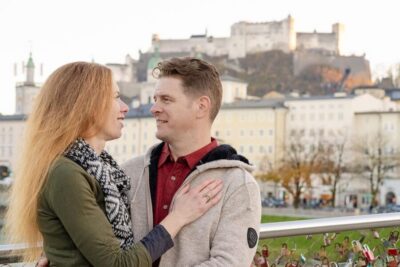
Guided Walks in Salzburg, compared.
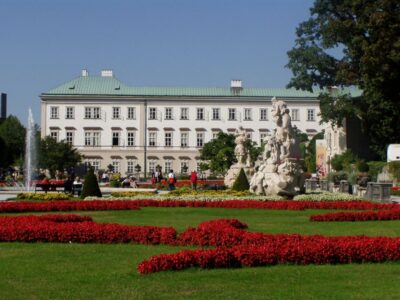
Salzburg 2.5-Hour Walking Tour: Mozart, Old Town & More
Read our review →
Old Town, Mozart, & Mirabell Gardens Walking Tour
Read our review →
Salzburg Oldtown: Sightseeing Walking Tour with Licensed Local Guide
Read our review →
Salzburg Old Town Walking Tour, Mozart, Mirabell Gardens
Read our review →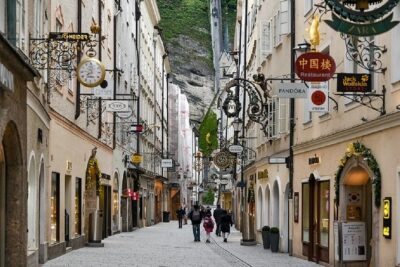
Salzburg Old Town Highlights Private Walking Tour
Read our review →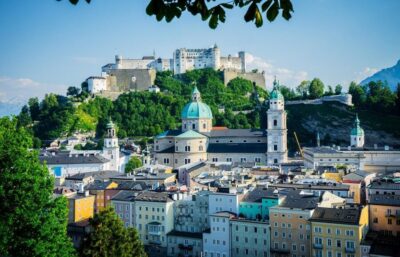

Salzburg Old Town, Fortress, Cathedral Private Walking Tour
Read our review →Salzburg Old Town, Fortress, Cathedral Private Walking Tour
Read our review →Browse the lists this tour appears in