Three hours to learn via ferrata safety.
In the Bregenzerwald region of Vorarlberg, this beginner course turns a scary-looking wall into a controlled skill set. I really like that the full via ferrata equipment is included, so you are not hunting for rentals or showing up under-prepared.
I also like the small group size and the state-certified mountain guide teaching real fundamentals, not just a hype walk. In one session, trainer Alex was praised for calm, clear instructions, and that matches the way this course is designed to build confidence for first-timers.
One consideration: this is a basic course. You will learn the basics for easy routes, but you should not expect it to replace practice time, repeat outings, or a bigger skill progression beyond difficulty B-CC.
In This Review
- Key Things You’ll Be Glad You Know Before You Go
- Vorarlberg Via Ferrata, The Safety-First Reason This Course Exists
- Meeting At Partenen Climbing Garden, Spot The Firmalpin Guide
- Equipment Included: Helmet, Harness, Via Ferrata Set, Then You Learn Why It Matters
- Belaying Technique Practice, The Core Skill Beginners Often Skip
- Touring With Topos: Choosing Easy Routes Up To Difficulty B-CC
- Efficient Movement Tips, So You Spend Energy Smarter
- Meteorology and Alpine Danger Basics, Knowing When to Slow Down
- Accident Behavior Fundamentals, Because Safety Is a Skill
- Price and Value: What $104 Covers for a 3-Hour Skills Upgrade
- Who This Course Is For (And Who Might Need More Time)
- Should You Book This Via Ferrata Basic Course in Bregenzerwald?
- FAQ
- What equipment is included in the via ferrata basic course?
- How long is the course?
- Where is the meeting point?
- How do I recognize the guide on the day?
- What languages are offered for the instruction?
- Is the course limited to small groups?
- Does the course run in bad weather?
Key Things You’ll Be Glad You Know Before You Go
- Full equipment included (helmet, harness, via ferrata set), so you can focus on technique
- Belaying technique training built for beginners, not guesswork
- Topos and tour planning basics to help you pick routes more responsibly
- Meteorology and alpine danger basics so you understand when to say no
- Accident behavior fundamentals so safety is not just a word on paper
- Small group of up to 8 for more attention and fewer rushed decisions
Vorarlberg Via Ferrata, The Safety-First Reason This Course Exists
Via ferrata has become wildly popular in the Alps for a good reason. It feels like climbing, but with help from fixed cables, steps, and rails. That also means more non-alpinists are showing up in terrain where mistakes can add up fast.
This course is aimed at closing that gap. Instead of treating the ferrata like a theme-park activity, you get a grounded safety foundation. You learn how equipment works, how you move more efficiently, and how to think about route choice and conditions.
It is a practical kind of introduction. No heavy mystique. Just the stuff that helps you climb easier, with fewer surprises.
Meeting At Partenen Climbing Garden, Spot The Firmalpin Guide
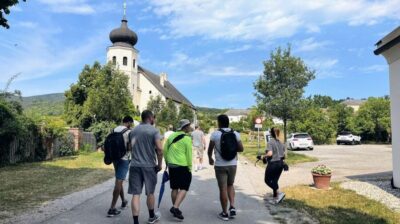
You meet at the Partenen climbing garden. It is a small hut with a playground, which makes it easy to recognize once you are there.
For guides, you will recognize the Firmalpin team by their uniform. Look for an orange Primaloft jacket or a blue hard shell with the Firmalpin logo. That matters more than people think. When you are eager and a bit nervous, clear identification keeps the start calm.
From there, the course flows through the core skills you need for via ferrata basics. It is designed to move you from equipment confidence to real technique.
Equipment Included: Helmet, Harness, Via Ferrata Set, Then You Learn Why It Matters
The standout value here is that you do not just get advice. You get the gear rental included: helmet, climbing harness, and a via ferrata set.
That matters because via ferrata safety depends on the full system, not just one part. In your instruction, you learn equipment knowledge, which means you should understand what each component is for and how it fits into your routine before you ever commit to an easier route.
In a basic course, the biggest benefit of included gear is that you learn the correct setup while it is right there in front of you. You avoid the common beginner problem of arriving with the wrong assumptions, or the wrong fit, and then trying to correct it on the fly.
Belaying Technique Practice, The Core Skill Beginners Often Skip
A via ferrata course only feels “fun” when you also feel safe. That is why belaying technique is a central topic here.
You get instruction on how to use proper belaying methods and learn the right approach for managing the system while moving. Even if you are not climbing with a partner in the way you would on a traditional rock route, the ideas still matter: security habits, correct positioning, and how to stay controlled as the terrain changes.
This is one place where the teaching style matters. The course is led by a state-certified mountain guide, and the reviews specifically highlight calm, understandable coaching. As a beginner, you want someone who does not rush you. You want clear steps, and you want corrections that are explained so they actually stick.
Touring With Topos: Choosing Easy Routes Up To Difficulty B-CC
A lot of beginners get stuck at the “I can climb today” level. This course pushes you toward something more useful: tour planning basics.
You learn how to work with topos, and you practice thinking about how to select a route that matches your abilities. The stated course objective is independent ascent of easy via ferrata routes up to difficulty B-CC. That is a key detail.
Difficulty labels can be confusing when you are new. Knowing how to choose based on your own limits and the route’s demands is what keeps your day from turning into a stressful scramble. You are not just learning to move on a cable line. You are learning to decide where it is smart for you to go.
You also cover principles for recognizing your own limits and identifying danger zones. That is not glamorous. It is exactly what keeps beginners safer over the long run.
Efficient Movement Tips, So You Spend Energy Smarter
Via ferrata can be tiring fast. Beginners often waste energy by moving awkwardly or hesitating too much.
This course includes tips and tricks for efficient movement. You learn principles and problems specific to via ferrata, which is important because the movement feels “climb-like,” but it has its own rhythm. You are working with fixed hardware and a cable environment, which changes how you balance, transfer weight, and keep your progress steady.
Even short training can make a difference. When you understand how to move more smoothly, you can spend less time feeling pumped and more time enjoying the physical experience of the Alps.
Meteorology and Alpine Danger Basics, Knowing When to Slow Down
You also cover the basics of meteorology and alpine dangers. That is not a side lecture. It affects whether via ferrata should happen at all.
The course runs in all weathers, but only if safety can be guaranteed. Your assigned mountain guide makes the decision to carry out, postpone, or cancel depending on conditions.
This is one of the most important lessons for beginners: in the mountains, you do not control the weather. You control your preparation and your choices. Learning meteorology basics and alpine danger concepts helps you understand the why behind postponements, rather than feeling like you got unlucky.
If you have ever wondered why some outdoor plans change quickly, this is the course that teaches you how to think clearly when conditions are unpredictable.
Accident Behavior Fundamentals, Because Safety Is a Skill
Safety training should not end at “don’t fall.” Here, you learn behavior in case of accidents.
That typically means you learn what to do, how to think, and how to respond when things go wrong. For a beginner course, these fundamentals are especially valuable because fear can freeze your brain. If you have at least a basic framework, you are more likely to act rationally instead of panicking.
This section also connects back to the rest of the course. Equipment knowledge, belaying technique, tour planning basics, and accident behavior all form one system. When you understand the system, you climb with more confidence.
Price and Value: What $104 Covers for a 3-Hour Skills Upgrade
At about $104 per person for a 3-hour session, you are paying for trained, certified instruction plus complete gear rental. That is a strong value for beginners.
Here is why it adds up:
- Equipment is included, so you do not have to pay for helmet, harness, and via ferrata set rentals separately.
- You get a state-certified mountain and ski guide plus a small group setting, which means more attention.
- The course covers multiple safety pillars in one go: equipment, belaying technique, route planning, meteorology, alpine dangers, and accident behavior.
Could you do via ferrata without a course? Yes, but you would be buying experience the harder way. This course is about shortening the learning curve safely, and it gives you a framework you can keep using on future ferrata days.
Not included in the price: arrival and departure costs, and your own catering. That is normal, but it means you should plan meals or snacks accordingly.
Who This Course Is For (And Who Might Need More Time)
This is built for newcomers with little mountain experience and for families. It is suitable for children aged 10 and over.
If you are:
- a first-time via ferrata climber,
- a parent trying to keep things structured and safe,
- someone who wants to learn the why behind equipment and technique,
this course is a very good fit.
If you already climb frequently and want advanced movement or long exposure, you might find this too basic. Think of it as your foundation. You get the safety habits and the route-thinking basics. Then you still need repeat practice to become truly comfortable.
Should You Book This Via Ferrata Basic Course in Bregenzerwald?
Book it if you want a beginner-friendly path into via ferrata that takes safety seriously and teaches you real fundamentals. The best reasons are straightforward: full equipment included, a state-certified guide, and a curriculum that covers belaying technique and tour planning, not just a first attempt.
Skip it or consider a longer progression if you want advanced routes, heavy technical coaching, or an extended climb day. This one is about the basics, done well, in a small group.
If you are coming to Vorarlberg for outdoor fun and you want your first via ferrata to feel controlled instead of chaotic, this is the kind of course that helps you build confidence the right way.
FAQ
What equipment is included in the via ferrata basic course?
The rental equipment is included: helmet, climbing harness, and via ferrata set.
How long is the course?
The course duration is 3 hours.
Where is the meeting point?
You meet at the Partenen climbing garden, a small hut with a playground.
How do I recognize the guide on the day?
The guide is part of Firmalpin and wears an orange Primaloft jacket or a blue hard shell with the logo print.
What languages are offered for the instruction?
Instruction is offered in German and English.
Is the course limited to small groups?
Yes. The group size is limited to 8 participants.
Does the course run in bad weather?
The program is carried out in all weathers if safety can be guaranteed. The assigned mountain guide decides whether to carry out, postpone, or cancel the tour.