
REVIEW · TRAIN EXPERIENCES
Albergline: A romantic railway between Innsbruck & Bludenz
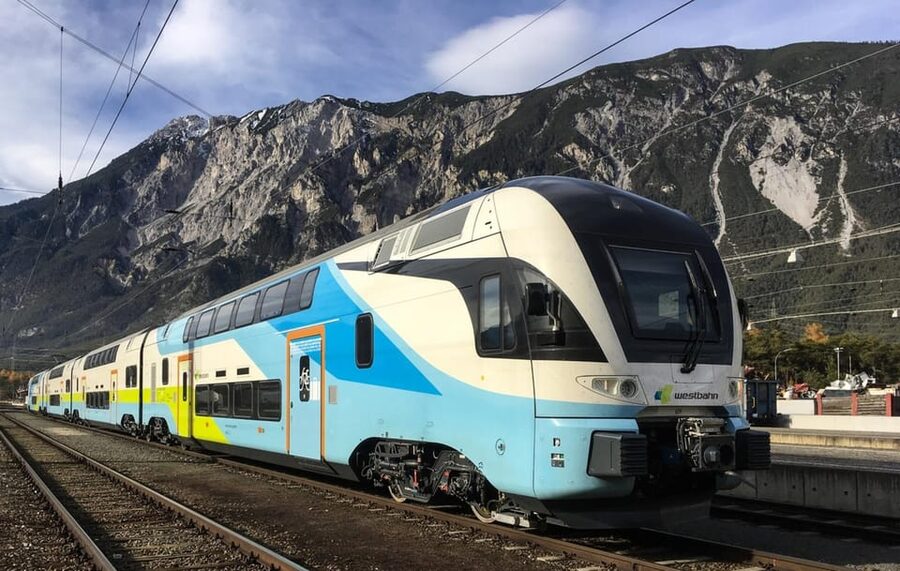
A romantic railway that also feels practical. The Albergline links Innsbruck and Bludenz through some of Tyrol’s most dramatic terrain, including the Arlbergtunnel and the long views into the Paznaun valley. It is basically mountain country by rail, with modern comfort and a timetable built for staying on track.
I like the way the scenery stays close to you, so your window time feels worth it. I also like the onboard comfort, especially the leather seats, adjustable seating, and power outlets across the train, so you can settle in instead of fighting for basic convenience.
One thing to consider: this ride is 125 minutes, so it is not a slow, stop-and-stroll adventure. If you want the best views, you will want to manage your seat choice and plan for a full ride rather than multiple scenic walks.
In This Review
- Key highlights at a glance
- Albergline: A fast way to see Tyrol like a local
- The route promise: Innsbruck to Bludenz, with mountain views all the way
- Trisanna Bridge and Wiesberg Castle: the scenery that feels engineered for photos
- Landeck and Langen am Arlberg: where the line climbs into serious altitude
- Paznaun valley meadows: when the ride shifts from steel to softness
- The Arlbergtunnel: 10.25 km of mountain reality
- WESTbahn KISS 3 double-decker comfort: why this feels easy on your body
- Onboard extras that actually help: WESTcafés, cooling, and step-free boarding
- Time, price, and value: $39 for a direct rail scenic day
- How to plan your seat and timing for the best views
- Who this is best for (and who should skip it)
- Should you book the Albergline between Innsbruck and Bludenz?
- FAQ
- How long is the Albergline ride?
- Where does the train route go?
- What major places or landmarks are along the route?
- How much does it cost?
- Is Wi-Fi available on board?
- Are there power outlets on the train?
- Is there food or coffee available during the ride?
- Are there restrooms on board?
Key highlights at a glance
- WESTbahn punctuality focus on a direct connection that avoids interruptions
- Scenic Tyrol route between Innsbruck and Bludenz, including Landeck and Langen am Arlberg
- Arlbergtunnel and steep grade (max gradient 3.1 percent), engineering you can actually feel
- Modern KISS 3 double-decker trains with step-free boarding and wide doors
- Comfort tech on board: Wi-Fi, power sockets, cooling ventilation, adjustable leather seats
- Food and drinks on demand via four WESTcafés per train
Albergline: A fast way to see Tyrol like a local
This is the kind of train ride that works even if you are not a train person. You get a direct shot through Tyrol between Innsbruck and Bludenz, with the big mountain sights rolling by along the way. It is also priced in a way that feels easy to say yes to, especially when you factor in modern comfort plus onboard services.
The route is built on the Arlberg Line, which runs from the Tyrolean town of Landeck through Langen am Arlberg at 1,217 m (3,993 feet) and on to Bludenz in Vorarlberg. You are riding in steep terrain too. The line has a maximum gradient of 3.1 percent, one of the steepest railway lines in the region that still runs regular passenger and goods traffic.
For me, the “romantic” part is not just the pitch. It is the way you get wide mountain views from a comfortable seat, without the stress of changing buses or coordinating multiple legs.
Held over another night in Innsbruck
- From Munich: Salzburg Day Trip by Train
★ 4.7 · 1,547 reviews - Vienna: Panorama Train Tickets to explore Schönbrunn Palace
★ 4.3 · 1,164 reviews - Vienna City Airport Train – CAT
★ 4.0 · 220 reviews - Salzburg Train Station Arrival Transfer
★ 4.5 · 7 reviews
The route promise: Innsbruck to Bludenz, with mountain views all the way
The experience is simple by design. You travel the core stretch linking Innsbruck and Bludenz, and the timetable is organized around being on time. The information you are given is clear on one point: punctuality is the priority, and the connection is direct, meaning you are not doing a bunch of interruptions during the ride.
That matters more than it sounds. In mountain regions, “one extra connection” can mean delays, waiting outside, and losing your view windows. Here, you keep moving, so the views have less chance to feel rushed.
You are also not stuck with just one kind of scenery. The route includes:
- impressive rail infrastructure like the Trisanna Bridge
- castle-and-valley settings such as the Wiesberg area
- wide green meadows in the Paznaun valley
- a long technical moment inside the Arlbergtunnel (10,250 m, or 6.4 miles)
So you get variety, not just “mountains, mountains, mountains.”
Trisanna Bridge and Wiesberg Castle: the scenery that feels engineered for photos
If you like dramatic structures, this is one of the best parts of the ride. The train passes the Trisanna Bridge near castle Wiesberg. This is not a small crossing. The bridge is listed at 211 m (692 feet) long and 87 m (286 feet) high.
Why does this matter for your trip? Because it is the rare rail sight that combines engineering scale with an instantly readable view. You do not need to understand architecture to appreciate what you are seeing. You just need a window seat and a willingness to pause your phone long enough to look out.
Practical tip: as you near the bridge area, stay ready with your camera, and keep your seat comfortable for a few minutes. The whole ride is short, so you want to avoid “I will get ready later” syndrome.
Landeck and Langen am Arlberg: where the line climbs into serious altitude
The route runs through Landeck and Langen am Arlberg (at 1,217 m / 3,993 feet). Even though you are not told about extra long stops to wander, these towns are part of the line’s story. They mark the transition from lower, everyday town energy into the classic Alpine rail corridor.
What I like here is that you get the sense of the journey changing shape. You start in a major Tyrolean gateway region and end in Vorarlberg. Along the way, the train keeps climbing and working through steep terrain, including that max gradient of 3.1 percent.
If you are the type of traveler who enjoys understanding what you are moving through, this line gives you context fast. You are not just passing scenery. You are moving along a route that was built to handle tough grades while keeping service regular.
After the interval, more from Innsbruck:

Paznaun valley meadows: when the ride shifts from steel to softness
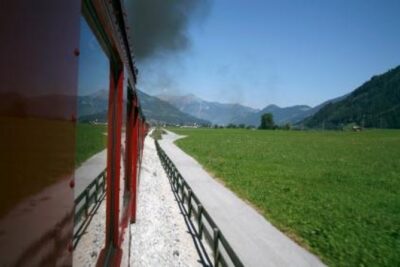
Not every rail highlight is a structure. One of the route’s best stretches is the Paznaun valley with its lush green meadows. This is the part where the ride tends to feel more open and airy, with the countryside spreading out beyond the rail line.
Here is the value: meadows and valleys give you a different kind of “romantic.” It is not just dramatic heights. It is the easy long view. And on a comfortable train, those long views are exactly what you want because you can relax instead of constantly adjusting for comfort.
If you care about photos, this is where you should lean into wider compositions. If you care about stress-free travel, this is where you can stop overthinking and just let the landscape carry the moment.
The Arlbergtunnel: 10.25 km of mountain reality
Then comes one of the most talked-about elements of the line: the Arlbergtunnel, listed at 10,250 m (6.4 miles). It is long enough that you will feel the tunnel shift the rhythm of the ride. Outside becomes less about what is right there now and more about time passing efficiently.
You might wonder if that kills the romance. For me, it adds something. It is a reminder that you are riding through mountain terrain that is too complex for easy roads. This is how the region stays connected: through serious rail infrastructure that keeps passenger and goods traffic moving on schedule.
What to do with this moment:
- Plan for it, mentally, so it does not surprise you.
- Use it as a reset, check your phone, refill your drink from one of the WESTcafés if you want, and enjoy that the “hard part” is still moving smoothly.
WESTbahn KISS 3 double-decker comfort: why this feels easy on your body
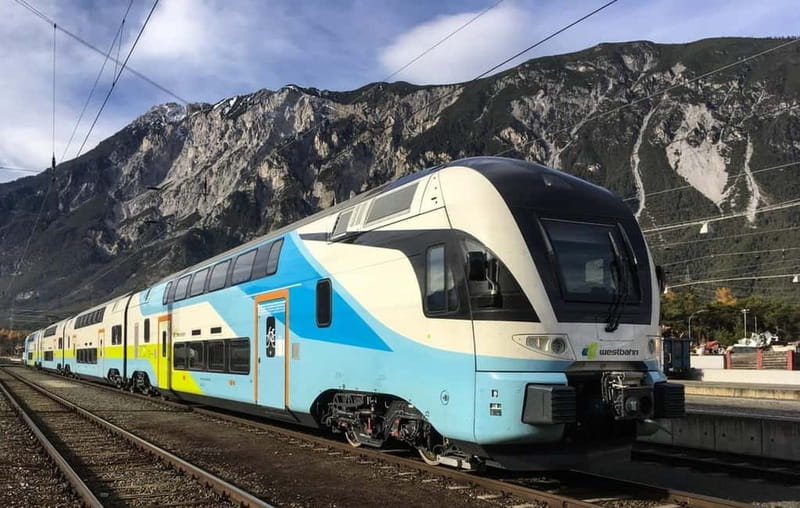
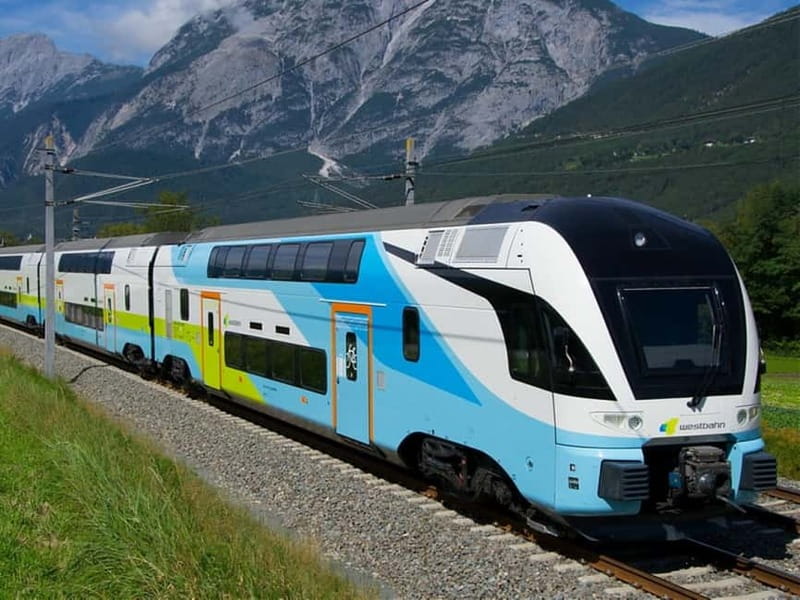
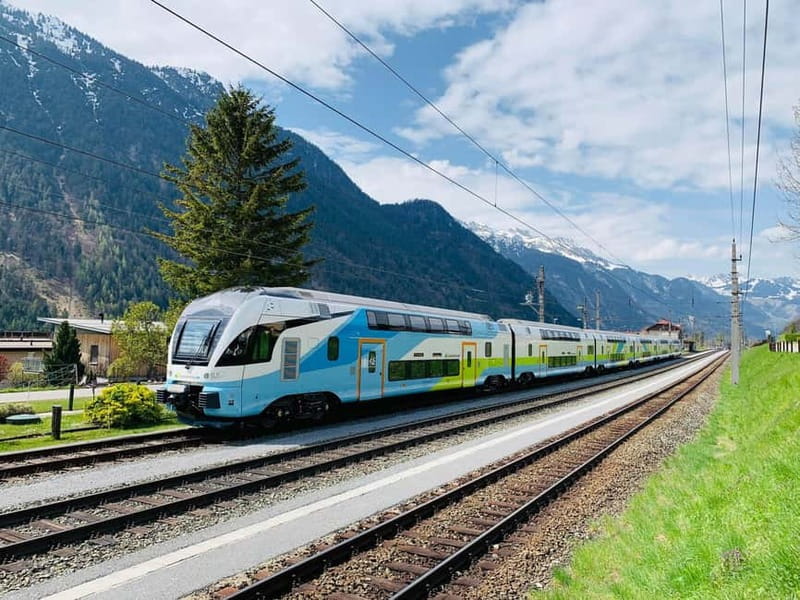
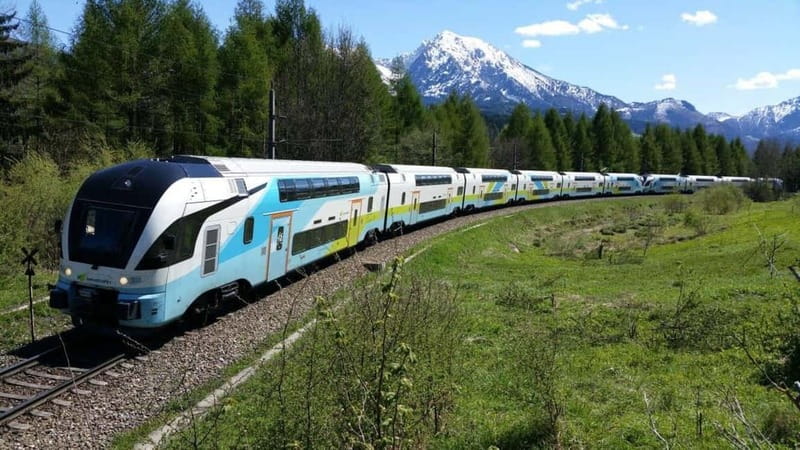
This is where the trip earns its good reputation. You ride in a modern blue-white-green double-decker fleet, specifically KISS 3 trains made by Stadler, with 15 sets in this type. The train includes cooling ventilation, so even warmer days feel more manageable.
On the practical side, the design includes:
- low-floor layout and step-free boarding
- wide boarding doors
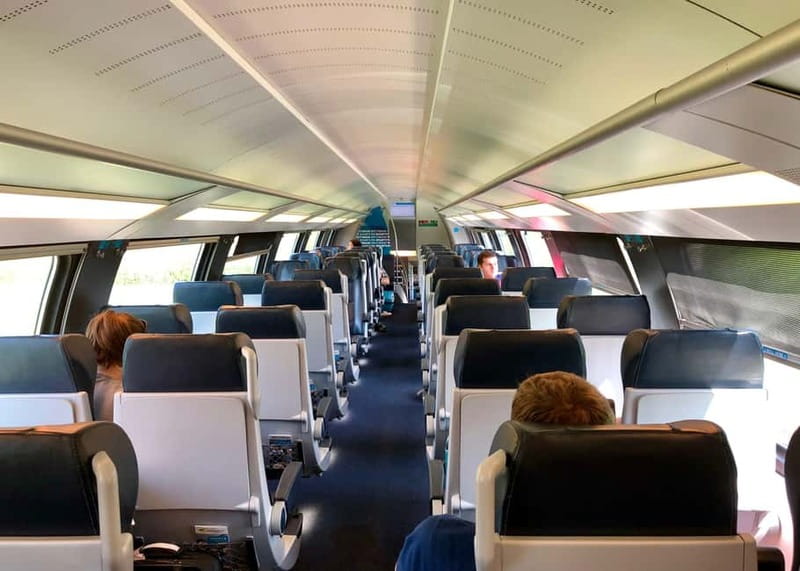
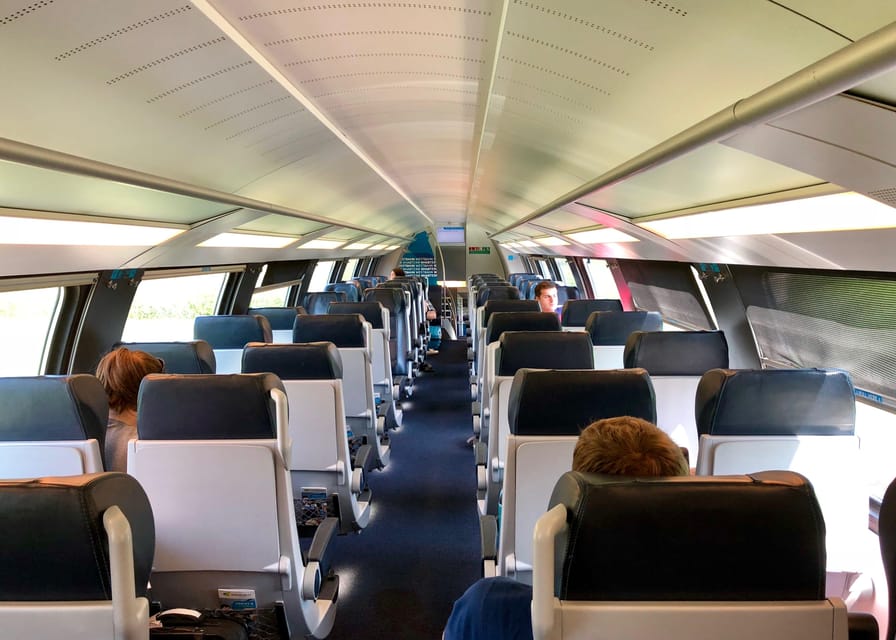
- leather seats with adjustable seating
- power outlets throughout the train
- free Wi-Fi
- gender-separated toilets
- four WESTcafés per train, with coffee and cold drinks plus snack vending machines
If you are trying to decide whether a 125-minute ride is “worth it,” comfort is the answer. It is not a basic cattle-car connection. You get real seat comfort plus power and Wi-Fi, which makes the ride work for work, resting, or simple entertainment.
Also, there is something quietly useful about having WLAN and outlets distributed across the carriage. It means you do not have to camp next to one outlet like it is a rare resource.
One detail I really appreciate: the seats are adjustable. That sounds minor, but on a short ride it can make a big difference in whether you feel relaxed or stiff by the time you arrive.
Onboard extras that actually help: WESTcafés, cooling, and step-free boarding
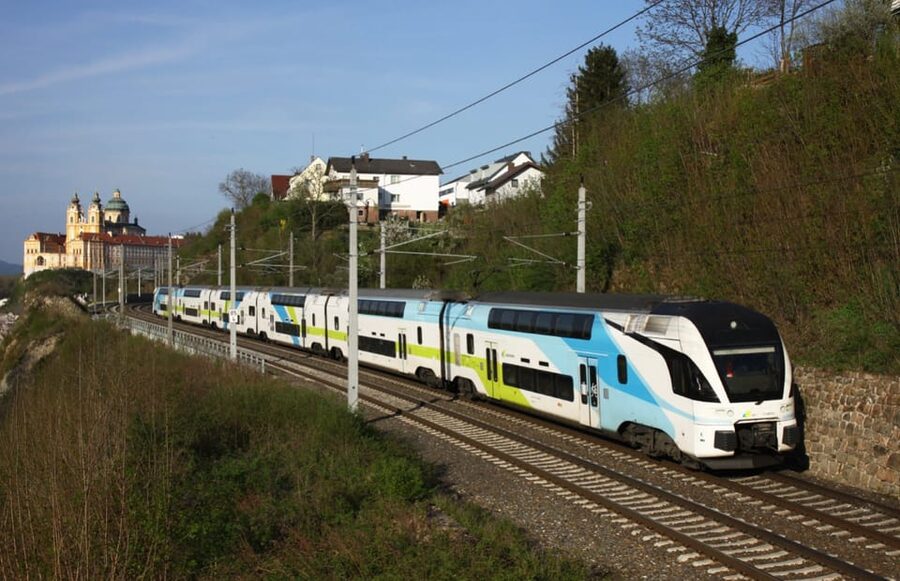
Food and drink are handled in a straightforward way. The train has four WESTcafés per train, with coffee and cold drinks plus snack vending machines. You are not forced to plan a picnic, and you can also avoid awkward “did we eat too early?” timing problems.
The train is also built to keep things comfortable day-to-day:
- cooling ventilation for temperature control
- step-free boarding for easier entry and exit
- wide doors, which help when you want to move without squeezing past people
The toilets are listed as gender-separated, which can make privacy feel easier if that matters to you. It also suggests the train is designed for real passenger flow, not just quick infrastructure.
For a short ride, these onboard extras are not “nice-to-have.” They reduce friction. Less friction equals more enjoyment of the scenery.
Time, price, and value: $39 for a direct rail scenic day
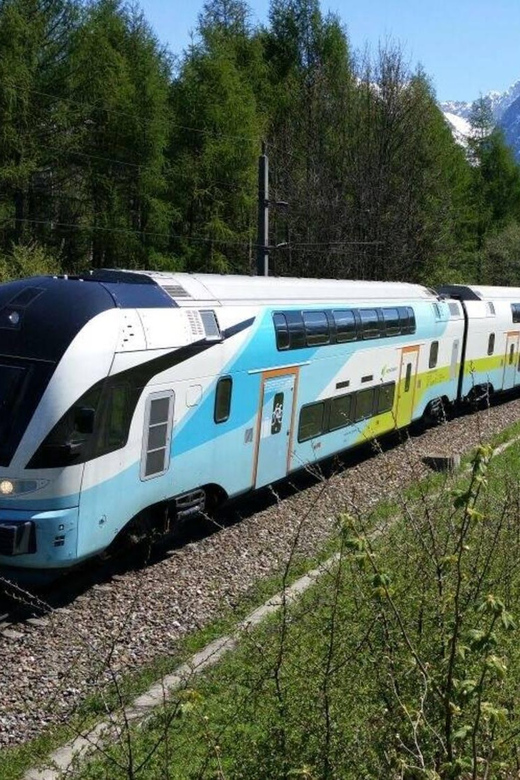
At $39 per person and 125 minutes of ride time, this is priced like a practical regional transit option, not like a niche tourist experience. The value comes from combining three things:
- Direct connection between Innsbruck and Bludenz with high punctuality
- Modern comfort plus free Wi-Fi and power outlets
- Major scenery segments along the Arlberg Line, including Trisanna Bridge and the Arlbergtunnel
One verified Austrian booking specifically highlighted two points that match the info you get: the train was comfortable and clean, and the price felt awesome. That alignment is important. When comfort and cleanliness are both delivered, the journey feels like a win, not a trade-off.
So if you are deciding between spending time and money on buses, transfers, or less comfortable options, this is the kind of middle-ground choice that often makes trips smoother.
How to plan your seat and timing for the best views
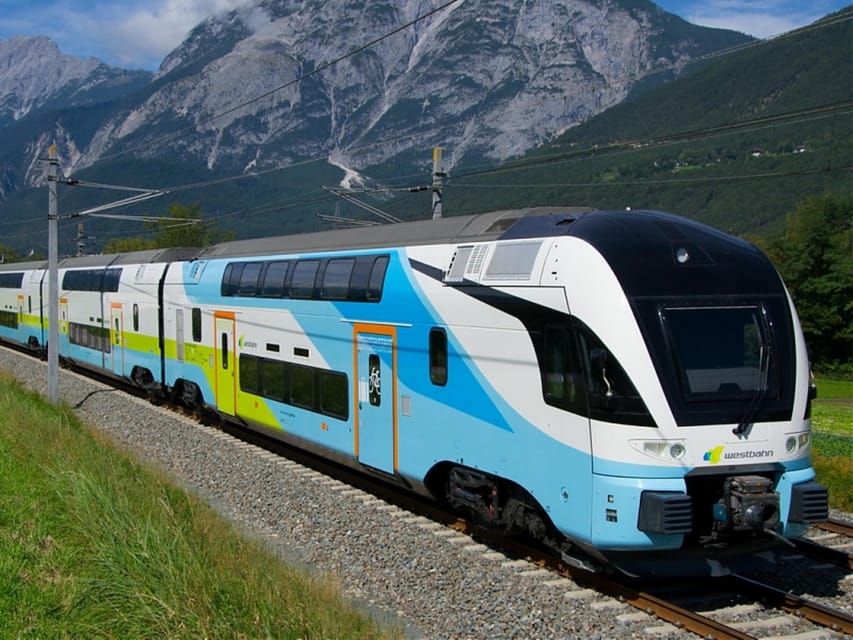
You cannot change the physics of tunnels and bridges, but you can control how you experience the route.
A few smart moves:
- Aim for a window seat if views matter to you. The route is scenic by design, including the Paznaun valley meadows and big structures like Trisanna Bridge.
- During the bridge approach, get ready. The Trisanna Bridge is an engineered sight, and the time window to enjoy it is part of the experience.
- When you know you will be in a tunnel, settle in. Use that stretch for a snack, a drink, or checking the free Wi-Fi.
Also, because the journey is 125 minutes, do not plan to do a lot of wandering. Treat it as a sit-back-and-watch trip. That mindset will make it feel smooth rather than rushed.
Meeting point can vary depending on which option you book, so be ready to follow the specific instructions you receive for your departure.
Who this is best for (and who should skip it)
This ride fits best if you want:
- a scenic rail route without complicated transfers
- modern train comfort with power and Wi-Fi
- a short day segment that does not eat your whole schedule
It also makes sense if you care about Alpine engineering. The steep grade of 3.1 percent plus the Arlbergtunnel gives the journey more substance than just pretty scenery.
Skip it if you are looking for:
- a multi-stop day with long on-foot sightseeing breaks
- an experience built around guided walking or deep museum-style stops
This is a train ride first. The sights happen as you move.
Should you book the Albergline between Innsbruck and Bludenz?
If you want a practical way to experience Tyrol’s core rail corridor, yes. For a $39 price and a 125-minute duration, you get direct service, modern comfort, and genuinely memorable infrastructure on the route, including Trisanna Bridge and the Arlbergtunnel.
Book it especially if you value seat comfort, onboard Wi-Fi, and the idea of watching the Paznaun valley meadows roll past without stress. If you prefer long guided stops and leisurely pacing, you may find this too short and too focused on the ride itself.
FAQ
How long is the Albergline ride?
The duration is listed as 125 minutes.
Where does the train route go?
It runs between Innsbruck and Bludenz in Vorarlberg.
What major places or landmarks are along the route?
The route includes Landeck and Langen am Arlberg, and highlights such as the Trisanna Bridge near castle Wiesberg, the Paznaun valley meadows, and the Arlbergtunnel.
How much does it cost?
The price is listed as $39 per person.
Is Wi-Fi available on board?
Yes, free Wi-Fi is accessible on board.
Are there power outlets on the train?
Yes, power sockets are available throughout the train.
Is there food or coffee available during the ride?
Yes. There are four WESTcafés per train offering coffee and cold drinks, plus snack vending machines.
Are there restrooms on board?
Yes, and the train provides gender-separated toilets.
Just added to the bill for Innsbruck
Train Experiences, compared.
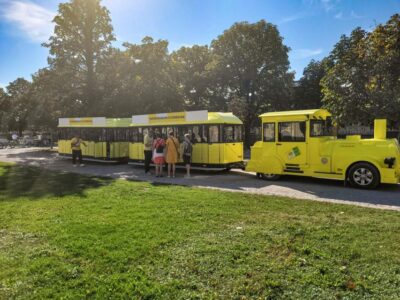
Panorama Train Tickets to explore Schönbrunn Palace
Read our review →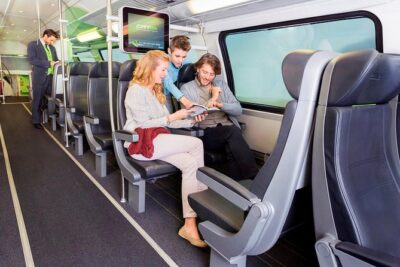
Private Tour of Salzburg from Vienna by Car or Train
Read our review →Browse the lists this tour appears in