
REVIEW · SELF-GUIDED TOURS
Innsbruck Self-Guided Audio Experience
A small phone tour maps the whole city. This self-guided experience strings together 14 Innsbruck sights with English audio you can play in any order, plus an interactive headphone-marker map when you want to orient fast. It is a great way to turn a walk into something more thoughtful, especially if you like architecture details and want control over timing.
I like the value here: the price covers the audio and the stops include free admission at each attraction. I also love that you can split the route over multiple days without feeling “behind.” One potential drawback to plan for: the audio tracks run long (some around 20 minutes), and in my experience you may have to switch back and forth between the audio playlist and the map file.
In This Review
- Key highlights worth your attention
- How the Innsbruck audio tour works, with no GPS stress
- Price and value: why $9 can work well here
- Stop 1: Innsbruck Hbf, where rail history meets mountain views
- Stop 2: Triumphpforte, Maria Theresa in marble
- Stop 3: Landhausplatz, the 2011 redesign that still sparks debate
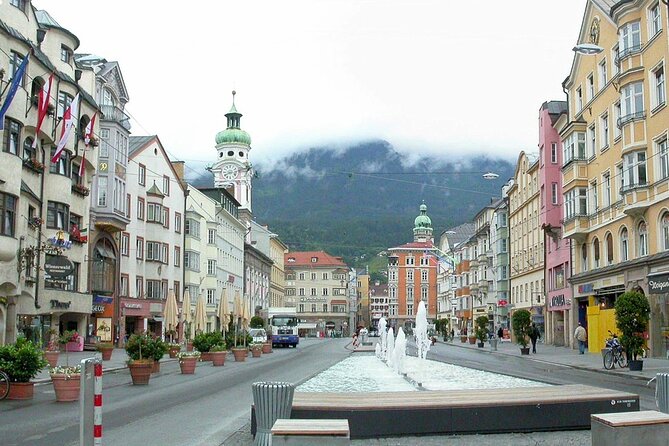
- Stop 4: Maria-Theresien-Strasse, a promenade of styles and power
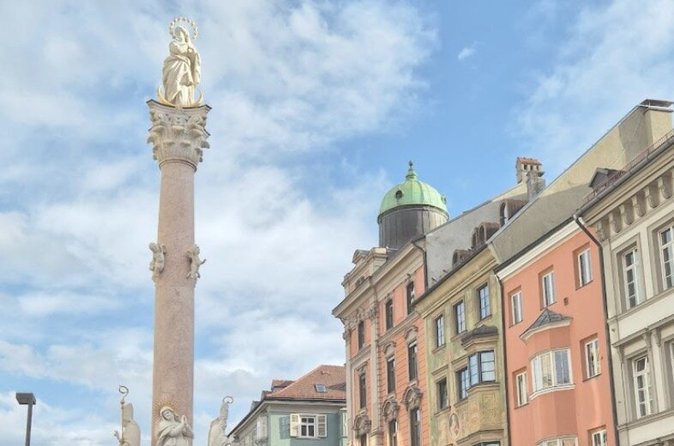
- Stop 5: St. Anna’s Column (Annasaule), Baroque symbolism you can actually spot
- Stop 6: Spitalskirche, a hospital chapel where sound is part of healing
- Stop 7: Altstadt von Innsbruck, medieval planning and guild clues
- Stop 8: Dom zu St. Jakob, Cranach’s Madonna and stage-like Baroque design
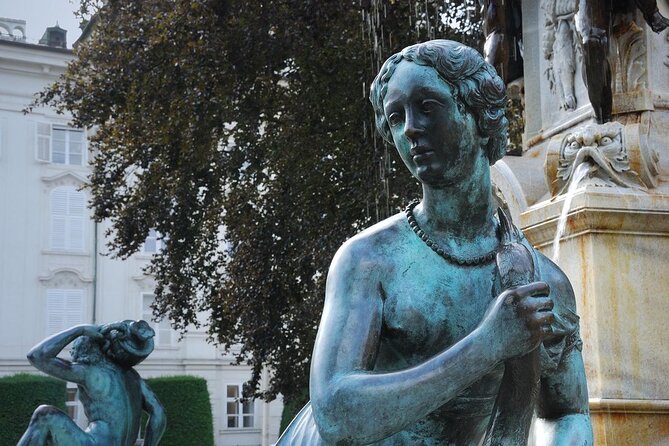
- Stop 9: Leopoldsbrunnen, a Renaissance fountain with political math
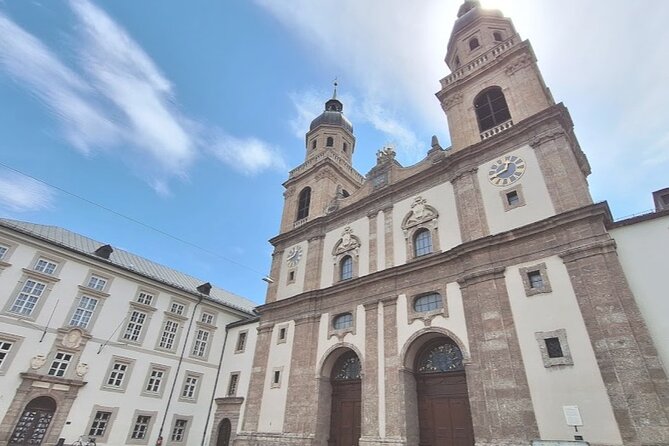
- Stop 10: Jesuit Church Innsbruck, trompe-l’oeil and planned light
- Stop 11: Hofgarten, imperial leisure and botanical science
- Stop 12: River Inn and the colorful houses that act like a code
- Stop 13: Markthalle, a food hall where Alpine meets Italian
- Stop 14: Basilica Wilten, Roman layers under Rococo drama
- Pacing tips so the long audio tracks feel like a win
- Should you book this Innsbruck self-guided audio tour?
- FAQ
- How much does the Innsbruck self-guided audio tour cost?
- How long does the tour take?
- Is the tour GPS guided?
- What language is the audio guide available in?
- Do I need to bring earphones or data?
- How do I access the audio and the map?
- How long do the access links stay valid?
Key highlights worth your attention
- 14 stops with free admission listed at each site, so you are not paying again and again
- English-only audio, delivered through a SoundCloud-style playlist link
- Interactive Google My Maps link with headphone icons, accessed in your browser
- Long tracks per stop (often about 20 minutes), ideal if you like detail
- You control pacing, with the option to skip sections and replay favorites later
- A walk-heavy route if you do everything, roughly 6.2 miles
How the Innsbruck audio tour works, with no GPS stress
This is a self-guided tour. That means there is no GPS voice telling you where to stand, no strict start time, and no group pacing. You choose where you start and finish around Innsbruck, then follow the audio at the stops you pick.
You get two private links. One opens a single audio playlist that contains all attraction tracks in a recommended order. The other opens an itinerary map in Google My Maps (important: in a web browser, not the maps app). Each stop shows up with a headphone icon, and selecting a site gives you a link to its specific audio.
You will want headphones and you will need internet on your phone, because the audio and map links are online. If you are used to GPS tours, the format feels a little manual at first, especially if you toggle between the audio file and the map file. The upside is flexibility. When you feel like slowing down, you can.
Tracks are designed to be listened to at the stop level. The schedule lists each location around 20 minutes, so if you do every stop in one go, expect a long, steady walk. The “3 to 9 hours” range makes sense once you factor in skipping, replaying, and taking breaks.
Held over another night in Innsbruck
- Innsbruck English Audio Tour with Quizzes on your Phone
★ 5.0 · 1 review - Vienna: Tickets for Mozarthaus Vienna with Audio Guide
★ 4.2 · 2,344 reviews - Vienna: New Hofburg Palace Audio-Guided Tour & Entry Ticket
★ 4.1 · 566 reviews - Salzburg: Cathedral Entry Ticket with Audio Guide Option
★ 4.4 · 134 reviews
Price and value: why $9 can work well here
At $9 per person, this is inexpensive for 14 separate audio stops. The biggest value win is that the experience includes an admission fee component, and the itinerary lists each stop with free admission. Even if you only visit a handful of sites on your own, stacking them with audio interpretation can still feel like a bargain.
The tradeoff is time and phone setup. You are paying for content and convenience, not for transportation or an audio device. If you forget earphones or your data runs out, you will lose the main benefit. Also, because this is not GPS guided, you will be responsible for moving between locations and choosing your order.
There is also an art to timing. If you love stories and want more than a quick plaque reading, the longer tracks can feel worth it. If you prefer short bursts, plan to use pause and skip as tools, not failures.
Stop 1: Innsbruck Hbf, where rail history meets mountain views
Innsbruck Hbf is a strong opener because it combines modern structure with older cues. The audio focuses on how the station helped shape Tyrol into a modern Alpine hub, including the Brenner railway as an engineering turning point. You also get to look for architectural details and hear stories about famous travelers who moved through these halls.
There is another payoff: the station’s position can give you mountain panoramas, and the guide helps you identify peaks visible from there. In practice, I found this stop can be hit-or-miss depending on what you expected to see. If you are not in the mood to study station architecture, you might treat it as a quick orientation stop and move on.
Tip: If your goal is maximum payoff, treat this first stop like a warm-up. Spend what you enjoy, then skip ahead if you are not seeing what the audio describes.
Stop 2: Triumphpforte, Maria Theresa in marble
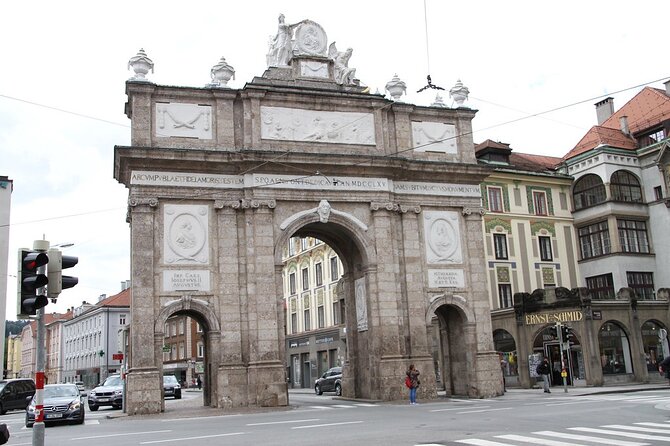
Triumphpforte (Triumphal Arch) is the kind of landmark many people photograph without fully unpacking. The audio explains its dual message, commissioned by Empress Maria Theresa in 1765, celebrating a royal wedding while also mourning an imperial death.
What I like about this stop is the way the audio reads the stone. The north and south faces are described as telling different stories through relief sculpture. You also get a deeper look at symbolism, why this arch is one of the few Roman-inspired triumphal monuments outside Italy, and how it was protected during wartime and later restored.
Tip: Stand back for a full face view, then walk closer. The relief details are easier to understand when you alternate distance and proximity.
More of Austria taken andante:
Stop 3: Landhausplatz, the 2011 redesign that still sparks debate
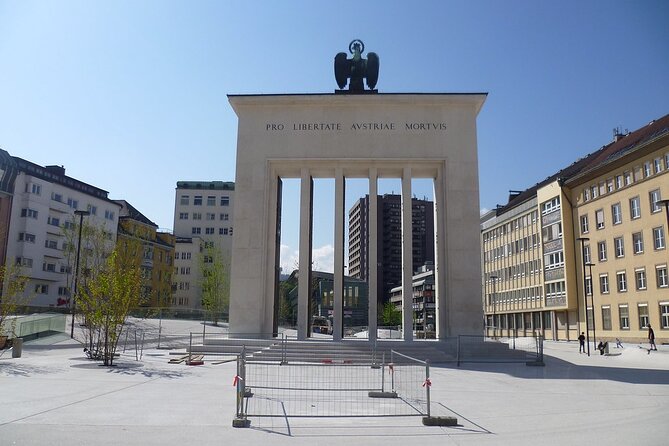
Landhausplatz is an urban-design story as much as a sightseeing one. The audio tackles the controversial 2011 redesign, turning a traditional Austrian square into an undulating concrete landscape that still matters to locals.
You also get historical layers beneath your feet, including medieval foundations and remnants of city walls, plus the square’s role in Tyrolean governance across centuries. The guide connects modern monuments to evolving identity, which is helpful if you tend to see plazas as just “meeting points.”
Possible consideration: If you are expecting ornate buildings as your main visual focus, this stop may feel more about interpretation than dramatic scenery.
Stop 4: Maria-Theresien-Strasse, a promenade of styles and power
This boulevard is a walking lesson in how a city grows without losing its past. The audio highlights the street’s evolution from an imperial thoroughfare into a sophisticated promenade, pointing out architecture from Gothic, Renaissance, Baroque, and Rococo styles.
You get stories behind ornate facades too, like where visiting nobility stayed and where ideas may have been discussed. The audio also talks about urban planning that frames views of the Nordkette mountains, plus where courtyards may be found if you know where to look.
Tip: Go slow here. This is one of the easier places to get “stuck reading” because the facades reward close attention.
Stop 5: St. Anna’s Column (Annasaule), Baroque symbolism you can actually spot
St. Anna’s Column is memorable, and the audio helps you see it as more than decoration. Built in 1706, it commemorates Tyrol’s defense against a Bavarian invasion, a key moment for regional identity. The audio points out symbolism carved into the base, where four saints represent specific victories.
You also learn that Maria Theresa later transformed the surrounding area into an imperial stage for power projection. Another fun angle is learning what wartime damage and restoration might look like in the stone, plus the column’s “perfect mathematical proportions,” which the audio nudges you to notice.
Tip: Take a moment to look at the base carvings. It is the part people rush past.
Stop 6: Spitalskirche, a hospital chapel where sound is part of healing
Spitalskirche starts with a modest exterior, then turns into the kind of place the audio can unlock for you. The story here is that this was once a hospital chapel, used for centuries by Innsbruck’s sick and vulnerable.
The highlight is the ceiling frescoes, described as depicting divine intervention in human suffering. The audio also explains how the church blended Gothic foundations with Baroque embellishments, and it frames the building’s survival through wars and natural disasters.
Even better, the guide talks about acoustic features designed to amplify prayers, connecting the idea of healing with how sound behaves inside the church.
Tip: If the church interior is busy or quiet times vary, plan for a short pause at the center so you can hear how space changes the sound.
Stop 7: Altstadt von Innsbruck, medieval planning and guild clues
The Old Town walk is where the “audio tour” concept starts to feel real. The audio turns ordinary streets into a historical map by explaining medieval planning principles: narrow passages that helped protect against invaders and harsh Alpine weather.
You also get a sense of power during Habsburg rule, plus architectural details that survived fires, wars, and modernization. If you like the kind of clues you can spot with your own eyes, look for guild symbols carved into facades. The audio frames them as coded messages from craftsmen.
It even connects what’s underfoot to the wider mountain region by linking materials to geological connections.
Tip: If you feel a little museum fatigue by this point, shorten the audio. The street layout and buildings still work even with fewer minutes.
Stop 8: Dom zu St. Jakob, Cranach’s Madonna and stage-like Baroque design
Dom zu St. Jakob is one of Innsbruck’s biggest spiritual and artistic anchors. The audio explains that an 18th-century Baroque cathedral replaced earlier churches while still borrowing meaningful elements from predecessors.
One of the most specific treasures is a Madonna painting by Lucas Cranach the Elder, described as inspiring pilgrimages across Europe. The audio also interprets ceiling fresco narratives and explains theatrical architectural techniques designed to create emotional impact.
You also learn about the cathedral’s connection to the Spanish royal family, and the way design supports sermons and musical performances through acoustic engineering.
Possible consideration: If you are tired of standing indoors, pick a time when you can enjoy the lighting and sound without rushing.
Stop 9: Leopoldsbrunnen, a Renaissance fountain with political math
Leopoldsbrunnen is visually elegant, and the audio makes it political. Archduke Leopold V commissioned the fountain not just for beauty but to assert authority.
The guide explains the mythological figures carved around the basin as representations of virtues tied to leadership. It also mentions sophisticated water system engineering from the 17th century, plus the idea that the fountain became a social hub where servants gathered information and spread news.
Restoration clues in the stone help explain how symbolic elements changed across political eras, making the fountain a physical timeline of shifting allegiances.
Tip: Try a slower circuit around the basin so you can read the carvings from different angles.
Stop 10: Jesuit Church Innsbruck, trompe-l’oeil and planned light
This Baroque church is described in the audio as spiritual devotion paired with artistic innovation, with a clear goal: counter Protestant influence through strong visual impact.
The guide points out trompe l’oeil techniques that create optical illusions, plus the mathematical precision behind decoration that can look purely exuberant. It also covers craftsmen brought from Italy and how their techniques influenced local artisans.
A special detail in the audio is the planned use of natural light at different times of day to create spiritual effects. In other words, you are not just looking at art, you are watching a design system.
Tip: If you can, aim for mid-day or late afternoon to catch how light moves across surfaces.
Stop 11: Hofgarten, imperial leisure and botanical science
Hofgarten is the part many people enjoy because it offers a calmer break from buildings. The audio explains how the garden evolved from private Habsburg hunting grounds into a landscape showcasing exotic plant specimens from across the empire.
You also get a surprising angle on scientific advancement, with the claim that many Alpine species were first cataloged here. The guide helps you notice hidden architectural follies and sculptures, and it connects garden design shifts from Renaissance patterns to later romantic English influences.
In my experience, this is where the route feels worth slowing down. Even if other stops are more “story reading,” the park environment gives the stories a place to breathe.
Tip: Take your time here. This stop can reset your energy for the last third of the route.
Stop 12: River Inn and the colorful houses that act like a code
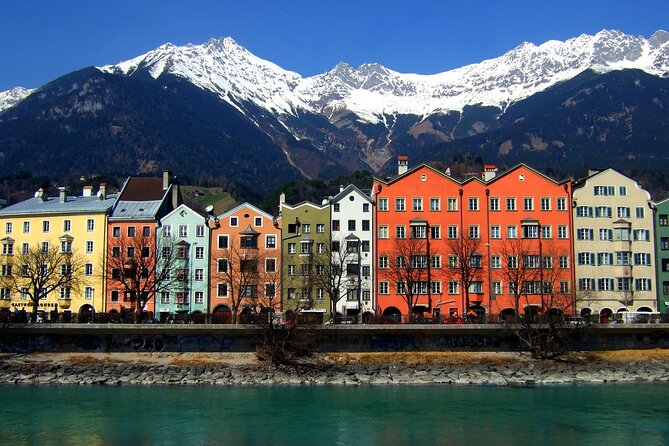
The River Inn promenade is iconic for a reason. The audio explains the rainbow-like house colors as a practical solution: fishermen could identify their homes through river fog after long expeditions.
It also frames color as a code that signaled trades and social positions, turning a visual detail into social history. The guide points out architectural elements that protected against flooding and discusses restoration challenges in keeping historical accuracy while dealing with environmental pressure.
Tip: If you are photographing, aim for a spot where you can see the full facade colors and the river line together.
Stop 13: Markthalle, a food hall where Alpine meets Italian
Markthalle is where the audio tour gets practical. The story here is Innsbruck as a crossroads, shaped by Alpine and Italian influences, from trading post beginnings to a sophisticated food hall.
The guide focuses on how to identify regional products and what to look for when separating authentic local items from tourist offerings. It also mentions the market’s architectural significance, including early examples of steel and glass construction in the region.
If you like food as identity, this stop connects product availability to seasonal Alpine rhythms and explains how dishes reflect relationships with neighboring regions.
Tip: If hunger hits, this is the place to pause. Even if you skip listening for a minute, the market is a natural break.
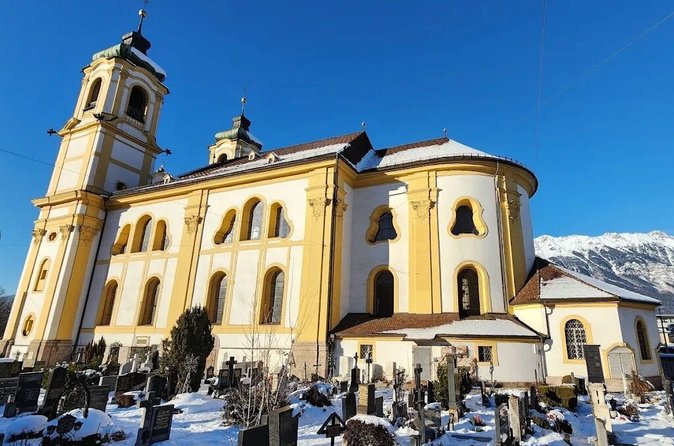
Stop 14: Basilica Wilten, Roman layers under Rococo drama
Your final stop is Basilica Wilten, a Rococo masterpiece built upon one of Tyrol’s oldest sacred sites. The audio includes archaeological evidence of Roman worship at the location, explaining how Christianity absorbed earlier sacred traditions.
One of the most treasured items described is a 14th-century wooden Madonna that survived repeated fires and reconstructions. The audio also points out symbolism in the lavish decorative program and claims that master craftsmen secretly included their own portraits within religious scenes.
You also get information about acoustics for music, plus mechanical features supporting elaborate Baroque religious theater. The guide connects the basilica to Alpine pilgrimage routes, showing how it functioned as both local parish and international destination.
Tip: Don’t rush the ending. Save a little energy so you can sit and take in the space.
Pacing tips so the long audio tracks feel like a win
Because many tracks hover around the 20-minute mark, you should manage time like a choose-your-own-adventure day.
If you want a half-day, pick 6 or 7 stops and skip the rest. If you want a full day, do all 14, but plan breaks. If you feel the audio slowing you down, pause, then restart only the sections that match what you are currently looking at.
Also, remember that the format is not GPS. Keep your phone screen brightness reasonable and make sure your audio link works before you start walking. If you run into link confusion, use the map headphone icons to jump to the audio for that specific stop rather than trying to scroll through everything.
Should you book this Innsbruck self-guided audio tour?
Book it if you want an easy, low-cost way to see 14 major Innsbruck landmarks with English storytelling and free admission tied to the stops. This is especially good if you like architectural details, symbolism, and “why this place looks the way it does,” rather than just snapping photos.
Skip or adjust expectations if you hate long listening sessions or you prefer tight, GPS-driven navigation. The audio format is flexible, but it requires you to be comfortable using your phone and switching between audio and map links.
If you do book it, I suggest starting with the Old Town stretch and saving Hofgarten for a slower moment. That combination tends to make the whole day feel easier and more satisfying.
FAQ
How much does the Innsbruck self-guided audio tour cost?
The price is $9.00 per person.
How long does the tour take?
The duration is listed as about 3 to 9 hours, depending on how many stops you complete and how long you spend at each.
Is the tour GPS guided?
No. It is self-guided and not GPS-guided, and you can choose where to start and finish and which order to visit the stops.
What language is the audio guide available in?
The audio guide is offered in English.
Do I need to bring earphones or data?
Yes. You need headphones or earphones and internet access on your smartphone. Earphones and internet are not included.
How do I access the audio and the map?
You receive private access links through the booking platform messaging system. The audio is provided through a playlist link, and the map is provided through an interactive Google My Maps link in your browser.
How long do the access links stay valid?
The links are valid until your tour is complete, with a maximum validity of 6 days.
Just added to the bill for Innsbruck


Self-Guided Tours, compared.
Tickets for Mozarthaus Vienna with Audio Guide
Read our review →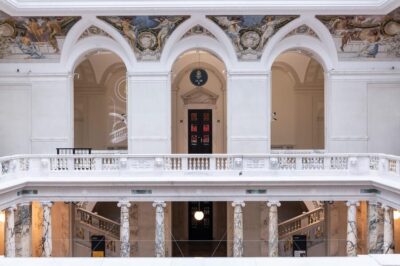
New Hofburg Palace Audio-Guided Tour & Entry Ticket
Read our review →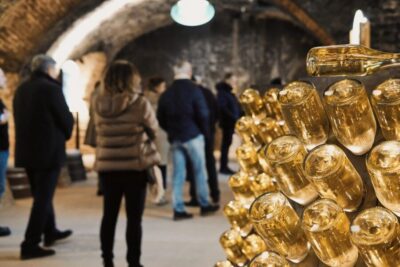
Schlumberger Wine Cellar Guided or Self-Guided Tour
Read our review →
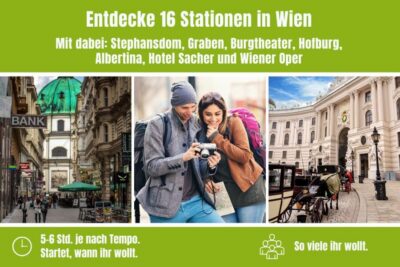
Vienna Walking Tour with Audioguide on Your Smartphone
Read our review →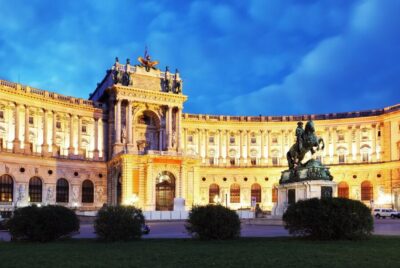
Browse the lists this tour appears in