
REVIEW · SCHöNBRUNN PALACE & GARDENS TOURS
Schönbrunn Palace & Gardens Tour
Schönbrunn feels like Versailles’ serious cousin. I really like the way the tour starts in the formal gardens, where Baroque landscaping turns walkways into a story, and then switches gears to the palace’s Millions Room, a Rococo masterclass that is both artsy and oddly specific. One thing to watch, though, is that the palace and park entrance fee is not included, so your total cost will be higher than the tour price.
You’ll also get the kind of guide support that makes a big, crowded site feel manageable: your historian guide helps you buy tickets, keeps the group moving, and shares context in clear, question-friendly explanations. If you get a guide such as Katrina, Katarina, or Katharina (names I’ve seen on this experience), you can expect lively storytelling that links the rooms to real people, including Maria Theresa and Sisi.
In This Review
- Key highlights to look for
- A 150-minute game plan for Schönbrunn’s biggest rooms
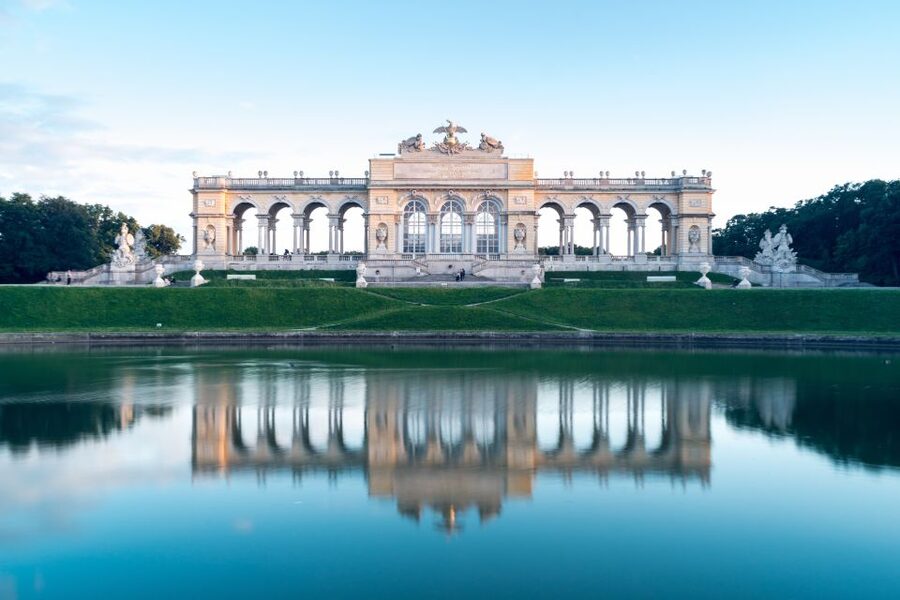
- Formal Schönbrunn Gardens and the Gloriette viewpoints
- The palace starts with the porcelain office, not the usual guesswork
- Inside the High Baroque world, with Maria Theresa as the lens
- The Millions Room: why the name is tied to price
- Sisi and Franz-Joseph: apartments as a story of court pressure
- Jewish Quarter stories that broaden the visit beyond royalty
- Price, ticket fees, and whether a historian guide is worth it
- Who should book this Schönbrunn tour (and who should not)
- Should you book this Schönbrunn Palace & Gardens Tour?
- FAQ
- How long is the Schönbrunn Palace & Gardens Tour?
- Is the tour guided, and what kind of guide do you get?
- What language is the tour offered in?
- Are the Schönbrunn palace and park entrance tickets included in the price?
- Does the tour include skipping the ticket line?
- Where do we meet the guide?
- Is pickup available from my hotel?
- Does the tour include the formal gardens?
- Does the tour cover the Jewish Quarter?
- What is the cancellation policy?
Key highlights to look for
- Baroque gardens with interlaced nature and architecture, plus a walk toward the Gloriette viewpoints
- Porcelain Room, Maria Theresa’s office space
- Millions Room, famous for its name and its mix of Indo-Persian miniatures and Rococo-style framing
- Franz-Joseph and Elisabeth Apartments, centered on court ritual and personal escape
- Spiraling escape route, the staircase concept that helped Sisi reach the gardens away from the palace
- Jewish Quarter and ghetto-era stories, added perspective beyond the main imperial rooms
A 150-minute game plan for Schönbrunn’s biggest rooms
This tour is built for focus. You have about 150 minutes, with a 30-minute gardens start and then roughly two hours inside the palace on a guided route. That timing matters at Schönbrunn because the place is huge, and doing it alone can turn into a half-day blur of rooms and lines.
Here’s the value angle: you’re paying for interpretation, not just access. A live English historian guide helps you understand why Schönbrunn was built to rival Versailles, what different Habsburg rulers tried to project, and how personal life collided with state life in specific rooms. Guides in this program can include professors, doctoral students, journalists, art critics, and published authors, so you’re not just getting facts, you’re getting reasoning.
You can also skip the ticket line, and your guide helps you purchase your tickets. That combination is especially useful if you want to avoid wasting your limited time standing around.
More rooms and gardens at Schönbrunn:
- Vienna: Schönbrunn Palace & Gardens Skip-the-Line Tour
★ 4.7 · 7,739 reviews - Vienna: Skip-the-Line Schönbrunn Palace & Gardens Tour
★ 4.8 · 5,411 reviews - Vienna: Mozart and Strauss Concert at Schönbrunn
★ 4.5 · 2,967 reviews - Vienna: Skip the Line Schönbrunn Palace and Gardens Guided Tour
★ 4.5 · 1,540 reviews
Formal Schönbrunn Gardens and the Gloriette viewpoints
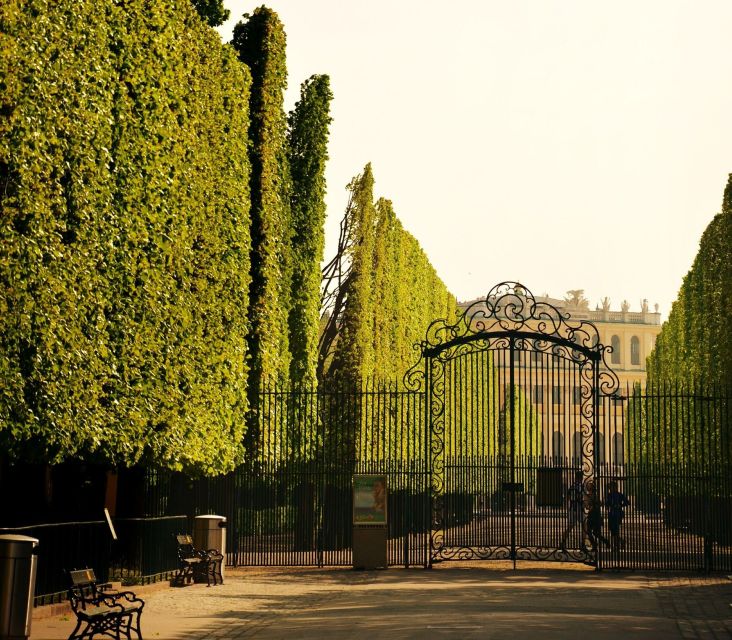
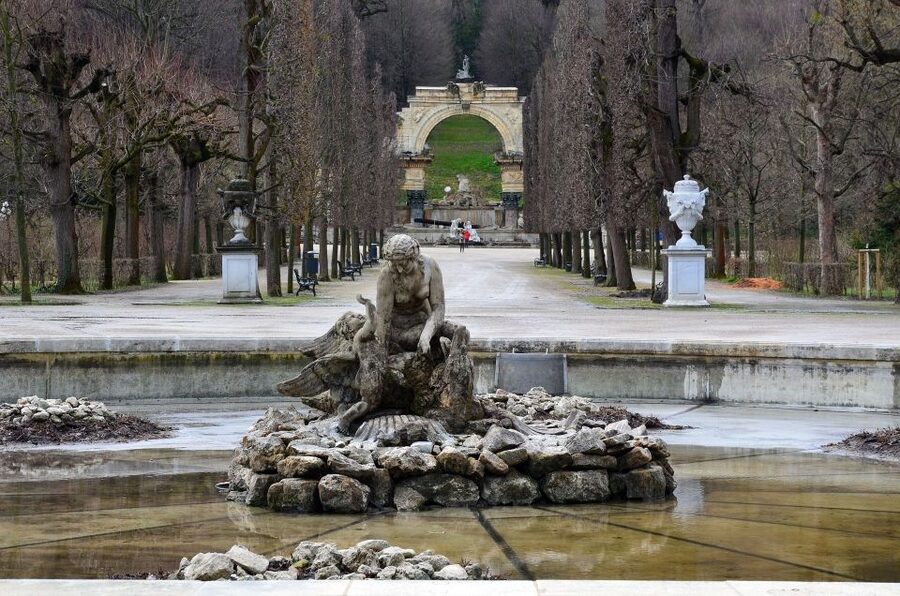
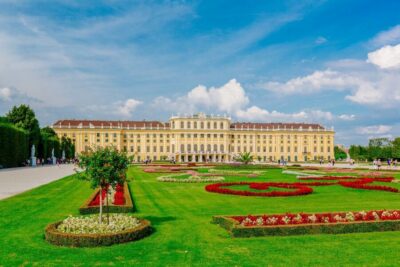
The experience begins outdoors, and that’s a smart move. You start with Schönbrunn’s formal gardens, arranged using the Baroque idea of interlaced nature and architecture. Instead of “pretty paths,” the gardens are planned like theater sets: sightlines, geometry, and movement are part of the design.
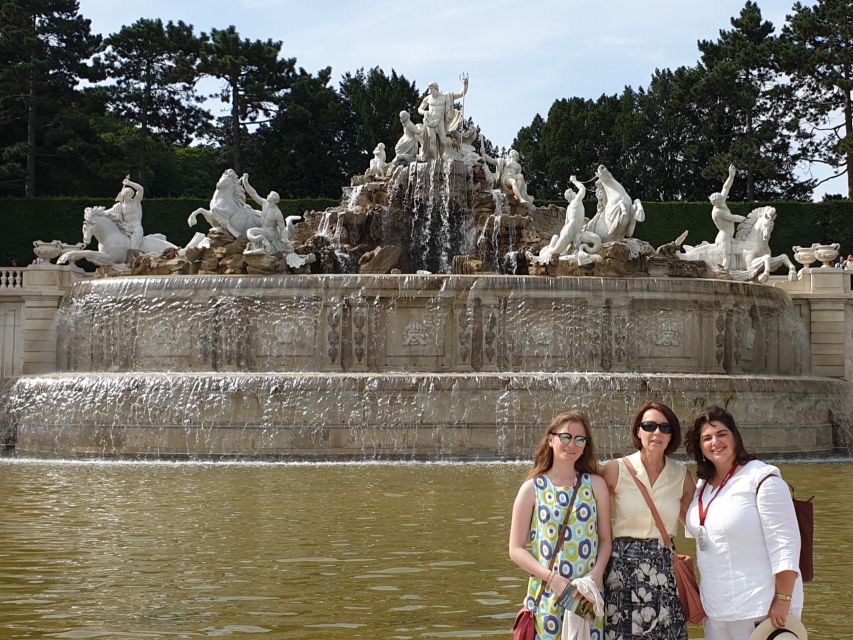
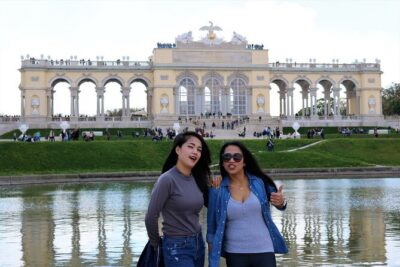
Your guide’s storytelling then connects what you’re seeing to what drove Maria Theresa’s reign. As you get closer to the Gloriette, you’ll hear about the triumphal arch on the hilltop and the panoramic views over Vienna’s woods. The Gloriette is not only a photo stop. In the way the tour frames it, it becomes a monument to the military victories linked with Maria Theresa’s political moment, which helps you read the architecture as propaganda, not just decoration.
The gardens opened to the general public in 1779, which the guide presents as Maria Theresa’s canny public gesture. That detail can change how you think about the palace grounds. You’re not only looking at elite leisure. You’re also seeing how the court tried to win public attention and legitimacy.
Practical tip: bring a jacket you can manage in changeable weather, and wear shoes you’re happy to stand in. Even a short, guided garden walk adds up, and the viewing areas can get busy.
The palace starts with the porcelain office, not the usual guesswork
Once you’re in the palace, you move from outdoor symbolism to indoor power. One of the first standout rooms is the Porcelain Room, described here as Maria Theresa’s office. That’s an important framing because offices are where decisions happen, not where people only pose.
The tour also places Schönbrunn in the Habsburg story as an imperial policy center and a court-life hub. Maria Theresa’s role comes through as more than a name on a façade. The guide’s explanation ties the palace’s grandeur to her leadership, including the idea that Schönbrunn served as both a focal point of imperial politics and a working summer residence.
One detail that makes this feel human: Schönbrunn was the summer home of a reigning family with 16 children. Hearing that while you look at the scale of the residence helps you recalibrate. You’re viewing an enormous palace that still had to run like a home with constant movement, planning, and discipline.
Inside the High Baroque world, with Maria Theresa as the lens
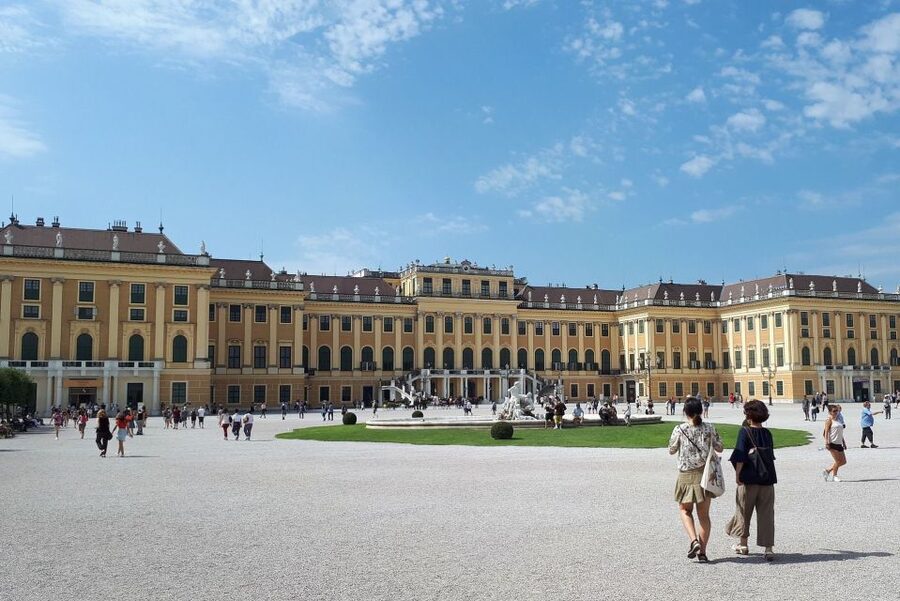
Schönbrunn is described as High Baroque and built to rival Versailles, and the tour uses that comparison to help you interpret the style. Baroque design is meant to impress, but it also nudges you to move in the right direction and notice the right features. That’s why a guided route helps. Without guidance, you can end up staring at surfaces and missing the logic of layout.
Maria Theresa becomes the central lens for much of what you see. The guide positions her reign as a highpoint in the Habsburg Dynasty’s political and cultural dominance in Europe. The rooms then stop feeling random. They become evidence in a story about rule, image, and influence.
If you enjoy connecting architecture to policy, you’ll likely appreciate how the tour repeatedly ties what’s on your left and right to what was happening in the empire at the time. The tone is less museum lecture and more, here is why this room exists.
Held over another night in Vienna
The Millions Room: why the name is tied to price
If there’s one room that many people remember afterward, it’s the Millions Room. The tour explains the name in a very literal way: it was named for its price. That instantly tells you what kind of room this is. It’s not a normal everyday chamber. It’s a statement.
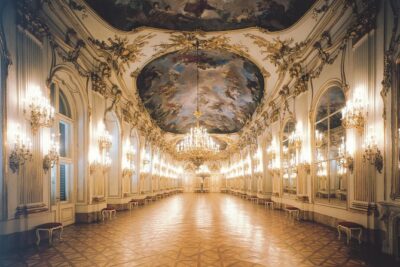
Inside, you get a rare mix of decorative worlds. The room features antique Indo-Persian miniatures displayed in Rococo frames, and it includes wall hangings of carved rosewood from the Antilles. That combination matters because it shows a court aesthetic that was not just European. It was global in materials and in visual language.
Rococo itself is about playfulness and curves, but the Millions Room doesn’t feel lighthearted. The guide’s framing makes it clear that Rococo here is a tool for signaling power through luxury and taste.
If you care about art history, this is the part where you’ll slow down naturally. If you care about storytelling, it’s the part where the meaning catches up to the visuals.
Sisi and Franz-Joseph: apartments as a story of court pressure
After the opulence, the tour moves into more personal conflict. You’ll explore the Franz-Joseph and Elisabeth Apartments, which focus on a couple pulled apart by the burdens of state.
In 1854, Emperor Franz Joseph married the Bavarian princess known as Sisi, and the tour notes that she disliked the ritual machine of court life and the ornate environment of the summer palace. Hearing that while you tour the apartments helps you interpret why some spaces feel like they’re about display while others feel like they’re about escape.
One especially compelling detail is that Sisi commissioned a spiral staircase that led from her official rooms to a private entry. The idea was simple and practical: she could flee from the palace to the gardens without going through the main ceremonial paths.
That staircase concept makes the apartments more than pretty rooms. It becomes a physical workaround for personal autonomy. You’re looking at design shaped by emotional needs.
Jewish Quarter stories that broaden the visit beyond royalty
Schönbrunn can dominate the imagination, so it helps that the tour adds time connected to the Jewish Quarter. The highlight here is hearing stories from the time of the Jewish ghetto, which adds a different kind of context to your Vienna day.
This part is valuable because it disrupts the palace-only lens. The Habsburg court and its luxury were not separate from the realities of people living under shifting rules. Even when you can’t fully picture every detail, the guided stories give you a fuller sense of how societies functioned around the empire.
If you want a palace visit that doesn’t ignore the darker side of history, this added perspective will likely be a plus. Just remember it’s still a guided tour, so you’ll want to listen actively and take the context in as it’s explained.
Price, ticket fees, and whether a historian guide is worth it
The tour price is $176 per person for about 150 minutes, and it includes the guided tour plus a historian guide. You also skip the ticket line, and your guide will help you purchase your tickets.
The main caution on value: the palace and park entrance fee is not included. That means the final amount depends on the ticket cost you pay with your guide. Still, the skip-the-line feature can be a real time saver, especially if you’re visiting during a busy period.
So who is this good value for?
- If you want the big rooms explained in plain language, not just stared at, the guide time justifies much of the cost.
- If you hate waiting in lines and prefer someone to manage the flow, the ticket-line skip and guided route help.
- If you only want to wander slowly at your own pace, paying for a fixed route might feel less efficient.
I think the biggest “value proof” is how specific the tour gets. The Porcelain Room as Maria Theresa’s office, the Millions Room with its Indo-Persian miniatures and rosewood hangings, and the Sisi staircase detail are not the kinds of facts you’ll casually discover on your own without reading labels all day.
Who should book this Schönbrunn tour (and who should not)
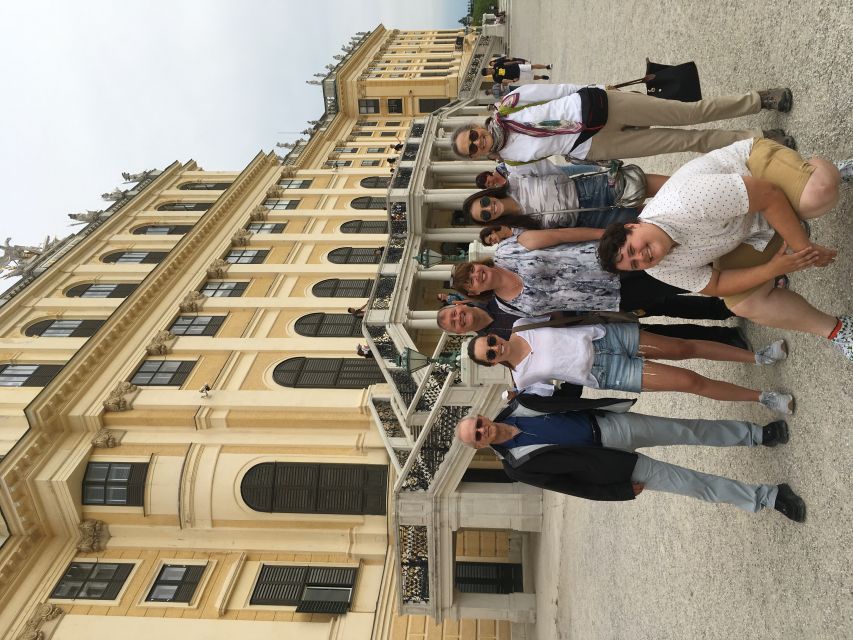
This tour is a good match if you like:
- Guided art and decoration, especially Rococo and luxury-room details
- Habsburg family stories, with Maria Theresa, Franz Joseph, and Sisi tied to real rooms
- A pace that prevents you from losing the plot in a huge palace
- Small-group or private options, which can make questions easier (I’ve seen examples of people having the guide essentially to themselves)
It’s less ideal if you:
- Want long, unstructured time in the gardens for wandering and sketching
- Prefer to tour palace rooms without stopping for explanations
- Are traveling with a very flexible schedule and don’t like being guided by set timing
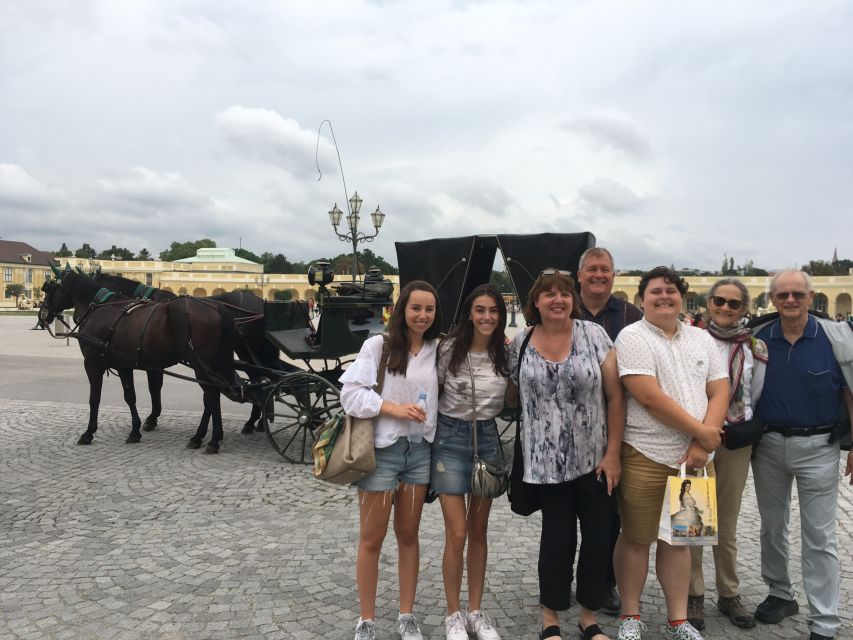
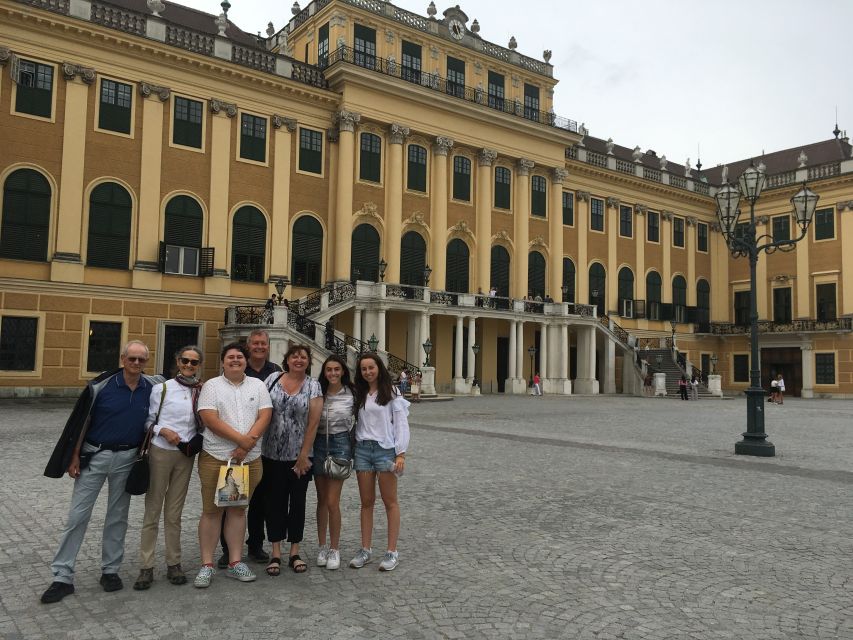
One more practical note: the meeting point is at the Schönbrunn Arrival Centre, Schönbrunner Schloßstrasse 50, with the guide waiting in front of the Group Centre building across the street from the palace’s main entrance. If you’re even slightly unsure, show up a few minutes early. It saves stress.
Should you book this Schönbrunn Palace & Gardens Tour?
Book it if you want the best parts of Schönbrunn connected into one clear story. The gardens set the stage, the Porcelain Room and Millions Room give you strong art-and-power focus, and the Elisabeth apartments add a human angle with Sisi’s escape route to the gardens.
Skip it only if you’re the type who wants full freedom to roam, or if you know you’ll want to spend much longer on your own in places not covered by the guided route. For most people, though, this is a smart way to see the essentials with an actual historian in your ear, not just a ticket in your pocket.
FAQ
How long is the Schönbrunn Palace & Gardens Tour?
The tour lasts 150 minutes (about 2.5 hours).
Is the tour guided, and what kind of guide do you get?
Yes. You get a live guided tour with a historian guide.
What language is the tour offered in?
The tour is offered in English.
Are the Schönbrunn palace and park entrance tickets included in the price?
No. The entrance fee for the palace and park is not included. Your guide will help you purchase your tickets.
Does the tour include skipping the ticket line?
Yes. Skip the ticket line is included.
Where do we meet the guide?
Meet at the Schönbrunn Arrival Centre at Schönbrunner Schloßstrasse 50. The guide waits in front of the Group Centre building across the street from the palace’s main entrance.
Is pickup available from my hotel?
Pickup is optional. A private tour can include personal pickup and you’ll follow your guide to the palace using Vienna’s metro.
Does the tour include the formal gardens?
Yes. You’ll visit the Schönbrunn Gardens for about 30 minutes.
Does the tour cover the Jewish Quarter?
Yes. The experience includes the Jewish Quarter and stories from the time of the Jewish ghetto.
What is the cancellation policy?
You can cancel up to 24 hours in advance for a full refund.
Just added to the bill for Vienna

Schönbrunn Palace & Gardens Tours, compared.
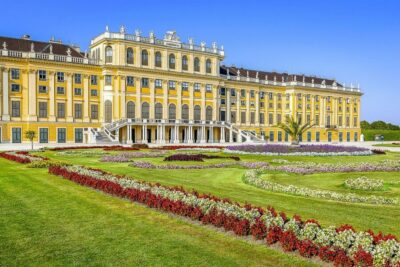
Schönbrunn Palace & Gardens Skip-the-Line Tour
Read our review →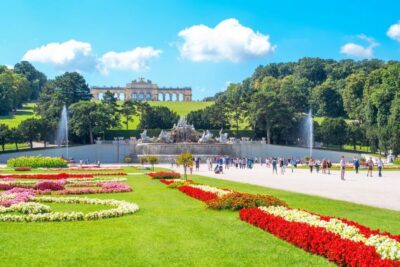
Skip-the-Line Schönbrunn Palace & Gardens Tour
Read our review →
Bus & Schönbrunn Palace Skip-the-Line Guided Tour
Read our review →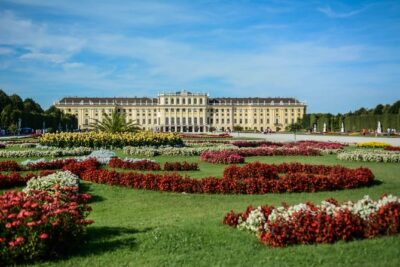
Skip the Line Schönbrunn Palace and Gardens Guided Tour
Read our review →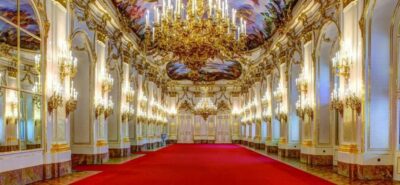
Schönbrunn Palace & Garden Skip-the-Line Guided Tour
Read our review →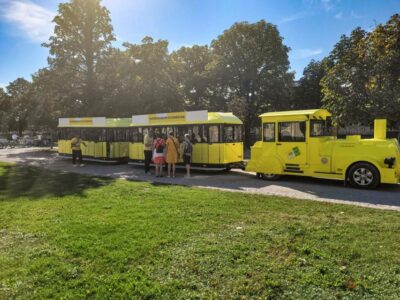
Panorama Train Tickets to explore Schönbrunn Palace
Read our review →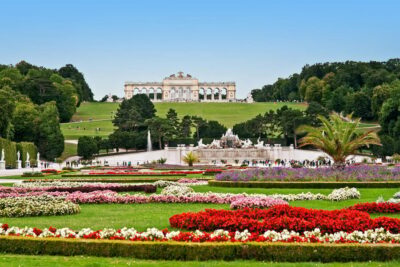
Skip-the-Line Schönbrunn Palace and Gardens Tour
Read our review →Browse the lists this tour appears in