
REVIEW · SIGHTSEEING & CITY TOURS IN VIENNA
Terrible crimes in Vienna, hidden secrets of the inner city
Vienna has a darker side. This two-hour walk turns the inner city into a true crime history trail, and I especially like the smartphone audio guide that keeps the story going between stops. You also get lesser known Vienna history tied to real addresses, not museum facts floating in the air.
One consideration: the material can be graphic and heavy, so it is more suited for teens and adults than for anyone who prefers light sightseeing. If you are sensitive to murder details, you may want to mentally pace yourself.
In This Review
- Key highlights to look for
- A two-hour Vienna crime walk that stays in the real streets
- Meeting point, route style, and what comes with your ticket
- True crime as a Vienna history shortcut
- Stop by stop: the inner city addresses behind the stories
- Tegetthoffstraße 2, Capuchin monastery dungeon story
- Trattnerhof, the Jaroszynski murder and actress Therese Krones
- Augustinerstraße 12, Palais Bathory and the Blood Countess legend
- Graben and Kohlmarkt, Demel and the Udo Proksch insurance fraud plot
- Herrengasse, Ferstel Palace and the Zu den Fünf Morden execution
- Herrengasse, former Hotel Klomser and Colonel Redl’s spy suicide
- Molker Bastei, Anna Gaugisch and the Danube dismemberment case
- Am Hof, 1848 political violence and war minister Theodor Baillet de Latour
- Hannaken-Brunnen, the Hannakenkönig surgeon and fake injuries
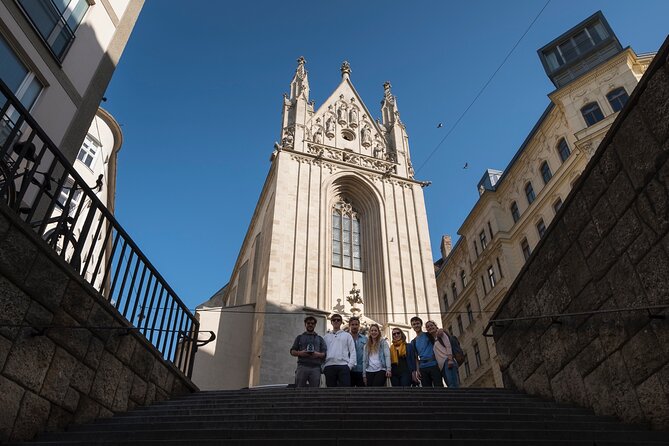
- Maria Am Gestade, city wall and the Zahlheim case
- Hoher Markt, Thekla Riener and torture tied to jealousy
- St. Stephen’s Cathedral area, the story of the bakers and the Danube
- Steffl, executioner’s dungeon and the Plainacher witch
- Himmelpfortgasse, the walled-in nun and a Romeo and Juliet style tragedy
- What makes this tour especially strong for most visitors
- Price, value, and what you should do before you go
- Who should book this, and who should consider a different style of tour
- Should you book? My straight answer
- FAQ
- How long is the tour?
- Is the tour offered in English?
- Where does the tour start and end?
- What ticket and extras do I get?
- How many people are in the group?
- What if the weather is bad, or I need to cancel?
Key highlights to look for
- Offbeat inner city route that stays compact enough to feel like a real walk, not a bus tour with crime trivia
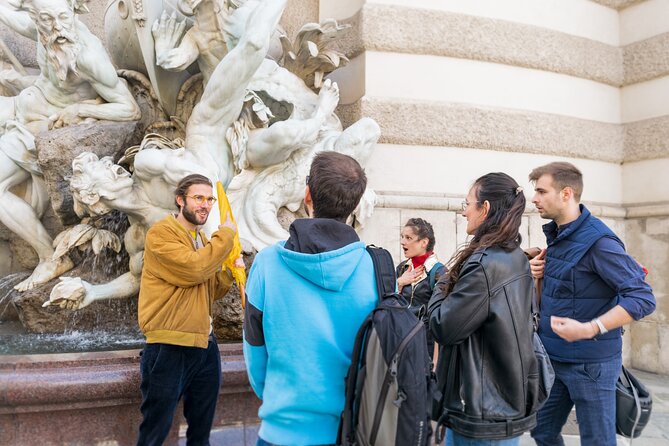
- A guided storyline by Ben, with strong research and smooth transitions that keep you curious about what comes next
- Capuchin monastery dungeon and Joseph II as early anchors for how power and punishment worked in Vienna
- Famous cases with specific street locations, from Colonel Redl’s spy scandal to the Vienna witch trial sites
- All the stop points are free to access, so your money goes to the guide and the narrative, not ticket lines
- Small group size up to 20 people, which makes it easier to hear the guide and follow the thread of the walk
A two-hour Vienna crime walk that stays in the real streets
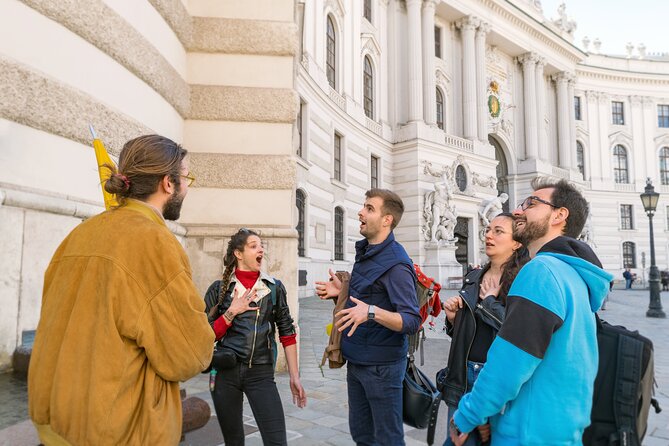
This is the kind of tour that makes you look at Vienna differently. Instead of focusing only on palaces and music, it threads a chain of grim events through the inner city, using specific buildings and corners as the “stage set” for each story.
The duration is about two hours, and the pace is built around short walk segments between stops. That matters because Vienna’s center is very walkable, and you get to actually see the facades and street life, not just hear about them from far away.
The tour is also in English, with a guide leading the whole thing. If you like history that has a plot, this is for you. If you prefer quiet monuments and tidy timelines, you might find it a bit much.
More Sightseeing & City Tours in Vienna
- Vienna: Guided Walking Tour of City Center Highlights
★ 4.7 · 4,989 reviews - Vienna: City Cruise with Optional Lunch
★ 3.4 · 3,982 reviews - Vienna: City Cruise
★ 3.3 · 2,978 reviews - Vienna: Guided Walking Tour of City Highlights & Hidden Gems
★ 4.9 · 2,180 reviews
Meeting point, route style, and what comes with your ticket
You start at Helmut-Zilk-Platz, Albertinaplatz 2 to 3, 1010 Vienna, and the walk ends at Rauhensteingasse, 1010 Vienna. It is designed to be easy to reach with public transport, and the start area sits right where you can orient quickly.
Your ticket is mobile, and you also get a complimentary smartphone audio guide. In practical terms, that means you can hear story support in your own rhythm while still listening to the live guide. It is a nice combo for this kind of subject matter, because murder cases and court drama can blur together if you only rely on spoken explanations.
Group size is capped at 20 people. Smaller groups tend to help with clarity, and that matters when the tour is packed with names, dates, and places.
True crime as a Vienna history shortcut
What makes this work is how the crimes are used as a lens. Murder cases are not just for shock value. They show you how Vienna dealt with control, punishment, rumor, social status, and even public anger.
You get a wide spread across centuries, so you see patterns shift. One era focuses on religious authority and punishment. Another gets into scandals, espionage, and how institutions protect reputations. Another lands in political violence during revolution. The result is that Vienna feels less like one style of architecture and more like a living machine that kept changing how it handled human behavior.
Stop by stop: the inner city addresses behind the stories
Here is what you will experience as you move through the center, stop after stop.
Held over another night in Vienna
Tegetthoffstraße 2, Capuchin monastery dungeon story
At the Capuchin monastery you hear about a dungeon linked to Father Innocentius. The story is messy in a very human way: monks were sometimes locked up for decades, and not always for sensible reasons like you would expect. Some claims are basically absurd: unauthorized walks, one-time abuse of a monastery official, and similar triggers.
You also get the political twist involving Emperor Joseph II. Father Innocentius announced the dungeon to him, Joseph II kept the dungeon closed, and Innocentius was transferred to Lviv for his safety. Later, the man’s life supposedly took dramatic turns, including becoming Protestant, joining Freemasonry, and advising the tsar.
Why it matters for you: it is early proof that Vienna’s “official” story of morality and order could hide real machinery of confinement. It also sets an atmosphere before the tour becomes more crime-scene focused.
Trattnerhof, the Jaroszynski murder and actress Therese Krones
At Trattnerhof, you get the Jaroszynski murder case, tied to the actress Therese Krones. The core idea here is how easily an outsider can be dragged into someone else’s catastrophe. Krones gets pulled into a murder narrative she had little to do with, and her career suffers badly.
There are rumors built around extravagant desires, but the story you hear is also about addiction and debt. Jaroszynski is framed as someone trapped in gaming and money troubles, with the murder case becoming an extension of that pressure.
Why it matters for you: it is a useful reminder that in court and rumor-driven societies, the “real motive” can be less romantic than people hope. The architecture stays calm around you, while the story gets dark.
Augustinerstraße 12, Palais Bathory and the Blood Countess legend
At Augustinerstraße 12, the tour points you to Palais Bathory and the legend around Elisabeth Bathory, the so-called Blood Countess. This is the most myth-stained stop on the route, because the story circles between danger and intrigue: either an infamous serial killer or a countess caught in a violent struggle tied to loyalty.
The case is presented in the famous dramatic form, with accusations of bathing in blood and murdering huge numbers of victims.
How to handle it: this is one of the stops where you should adjust expectations. Even if you treat the story as a mix of allegation and legend, it still tells you how Vienna carried scandal and how aristocratic power could twist into fear.
Graben and Kohlmarkt, Demel and the Udo Proksch insurance fraud plot
Moving through Graben and Kohlmarkt, the tour lands at Place of the Demel, connected to Udo Proksch in the 1970s. This is not medieval punishment. It is modern conspiracy thinking, and it sounds like a thriller when you hear it explained in place.
The tour describes a plan involving an overinsured freighter chartered for Asia, with an explosive charge hidden onboard. It ends with mass murder and mass insurance fraud, and the investigation is said to have taken years due to Proksch’s connections in many directions.
Why it matters for you: this is how the tour shows crime adapting to the modern world. Vienna is still Vienna, but the crimes are now tied to shipping, insurance, and networks of influence.
Herrengasse, Ferstel Palace and the Zu den Fünf Morden execution
At Herrengasse, you reach Ferstel Palace and hear about the house connected to Zu den Fünf Morden, one of medieval Vienna’s most notorious mass murder sites. The story includes the detail that the perpetrator was impaled because the deed was considered uniquely terrible, including the killing of a seven-year-old.
You also hear that the executioner was not experienced in that type of execution, which made the execution last extremely long.
Practical note: because this is medieval justice, it is also a story about spectacle and punishment as theater. That is useful even if you are not a true crime fan, because it explains why people feared the system, not just the perpetrator.
Herrengasse, former Hotel Klomser and Colonel Redl’s spy suicide
Right across at the former Hotel Klomser, you hear about Colonel Redl’s suicide and what the tour frames as the greatest spy affair of the monarchy. The story adds a huge what-if angle: the affair could have been a decisive factor for the First World War.
It also connects to an institutional vulnerability. Redl’s espionage destroyed the army’s reputation and exposed weaknesses in a secret service office described as underfunded, the Evidenzbureau.
Why you will remember it: Vienna’s inner city looks elegant and ordered on the surface. This stop turns the mood into something tense, because you are standing by a place tied to intelligence work and betrayal.
Molker Bastei, Anna Gaugisch and the Danube dismemberment case
At Molker Bastei, the story turns to the Anna Gaugisch murder. Her boyfriend, Raimund Lewisch, is described as dismembering her in 1861, with parts found in the Danube and in the area associated with where you stand.
The narrative also frames the crime as driven by an attempt to remove someone who was pregnant, with extra cruelty added by dissection details involving tools and craft.
This is one of the more upsetting stops. If you are doing this tour because you like dark history, stay with it. But if you are just curious, you might take a mental breather before you move to the next corner.
Am Hof, 1848 political violence and war minister Theodor Baillet de Latour
At Am Hof, you hear about the killing of war minister Theodor Baillet de Latour during the revolutionary year 1848. The tour presents it as one of the rare political violence cases in Vienna, tied to the beginning of the Wiener October Revolution, which is described as more violent and later followed by a “real recapture.”
The stop also mentions the civil arsenal in the same area, which was looted during the revolution.
Why it matters for you: political violence is often presented as big concepts. This makes it concrete, with one high-profile death acting like a turning key in the story of 19th-century Vienna.
Hannaken-Brunnen, the Hannakenkönig surgeon and fake injuries
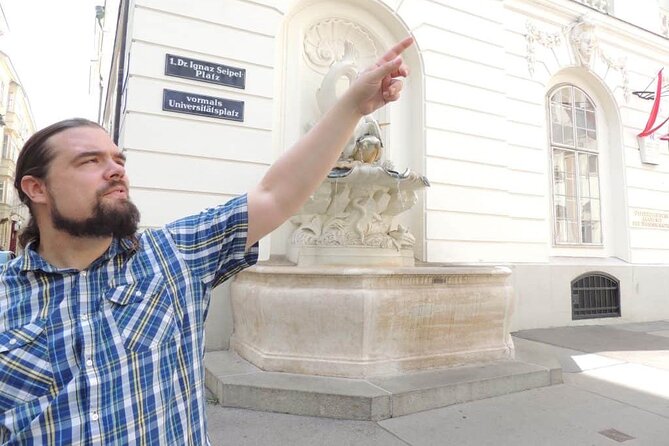
At Hannaken-Brunnen, the tour offers a story about a surgeon, the Hannakenkönig, who supposedly broke bones himself to improve business. The narrative says he created trip hazards so people would get injured, then he could treat them.
The fountain is explained as showing two men carrying an injured comrade to the surgeon.
Why it matters for you: it is dark, yes, but it also feels like an early version of a scam. And it highlights how Vienna’s streets and public spaces could be tied to people’s livelihoods, even in ugly ways.
Maria Am Gestade, city wall and the Zahlheim case
At Maria Am Gestade, you hear about a section of city wall tied to the Zahlheim case. The tour describes it as the site of the last wheeled in Vienna punishment for murderers, noting how cruel this death penalty was and how later it disappeared in many countries.
It also includes a specific political point: the case forced Joseph II to accept a decision he usually rejected, meaning the evidence or severity pushed him to break his typical policy.
Why it works: you get to connect law and leadership directly, from the street-level spot to Joseph II’s personal stance.
Hoher Markt, Thekla Riener and torture tied to jealousy
At Hoher Markt, the tour tells the story of Thekla Riener, connected to alleged torture with instruments described as coming from the courthouse. The core narrative is that she was supposed to betray a lover, but that lover was said not to exist.
The jealousy motive is described as driven by imaginary lovers. Thekla is then said to have been accidentally killed, while her parents supposedly ended up insane.
This stop is heavy psychologically, not just physically. Even if you do not want gore, this kind of case teaches you how obsession could be treated as both a social problem and a legal one.
St. Stephen’s Cathedral area, the story of the bakers and the Danube
At St. Stephen’s Cathedral, the tour references a medieval story about a punishment for bad bakers. It includes the legend of the baptism of bakers, where bakers would be put in a cage and dipped into the Danube multiple times.
The tour also notes that the legend ties into the city’s idea of enforcing quality, including a legend connected to bread and brutal quality assurance measures. It even compares this with similar punishment ideas in English-speaking countries.
Why it matters for you: it is a reminder that “crime” in older societies was not only murder. Fraud, food quality, and public order could bring brutal punishment.
Steffl, executioner’s dungeon and the Plainacher witch
Near Steffl the tour references the Malefizspitzbubenhaus, described as the executioner’s apartment and dungeon. You hear about the only witch trial story in Vienna tied to the Plainacher, who was allegedly held and tortured there.
The narrative includes the charge framework: an epileptic granddaughter bewitched, demons summoned, and family claims tied to the accusations. It also says witch persecutions were not common in Vienna, but here the judge had to avoid public pressure.
Why it matters for you: you get a less common perspective on European witch hunts. Instead of a single country’s standard pattern, Vienna’s story is presented as controlled and cautious, which is an interesting contrast.
Himmelpfortgasse, the walled-in nun and a Romeo and Juliet style tragedy
At Himmelpfortgasse, the tour points to the former Himmelpfort monastery and the story of a nun walled in in 1319. The reason given is that she did not want to part with her lover, whom her father hated.
The tour describes this as a local version of Romeo and Juliet, with political and family rivalry involved. The father condemns her to a life as a nun after conflict between the mayor and the archenemy, tied to their children becoming friends.
Why it matters for you: it shows how “crime” could include personal relationships treated like threats to social order. The story has tragic shape even without modern courtroom details.
What makes this tour especially strong for most visitors
I like that the tour keeps you moving through real inner city space. Vienna has enough major sights that it is easy to do the same sightseeing circuit over and over. This route gives you a different walking map, with older buildings you might not notice on your own.
I also like the storytelling structure, because the crimes are arranged across eras. When the next stop hits, it feels like a new chapter rather than a random set of murders. The guide’s job is to keep those transitions clear, and the feedback around Ben is that he does exactly that, with friendly delivery and lots of research behind the scenes.
And one more value note: the stop points are described as free to access at each location, so your cost is mainly for the guide, the plot, and the audio support.
Price, value, and what you should do before you go
The price listed is $46.13 per person for about two hours. For Vienna, that is in the range where you are paying for a guide-led experience. Here, you are also getting a smartphone audio guide, and the stop sites do not require separate paid admissions, at least as described.
If you are deciding whether it is worth it, think about your goal. If you want to collect ten photo stops and move on, this likely feels too dark and too story heavy. If you want to understand why Vienna’s streets have layers, this offers a very specific way to do it.
Before you start, do one simple thing: decide how you want to handle the tone. Bring curiosity, but also set your limit. If a stop is too intense, you can pause, step back, and re-center. The route is paced in small chunks, so you are not trapped in one story for long.
Who should book this, and who should consider a different style of tour
This tour is a great fit for you if:
- you like true crime, but also like history tied to actual places
- you enjoy stories that cover multiple centuries
- you want an inner city walk that does not follow the usual palace-to-cathedral route
It is less ideal if:
- you get upset by graphic murder details
- you prefer light commentary and scenic stops only
It is also a solid choice if you have already done the classic Vienna highlights and want a fresh angle. Vienna is famous for glamour, but it also has a long record of how people enforced rules, protected power, and punished enemies.
Should you book? My straight answer
I think you should book this if you want a guided Vienna experience with a tight story arc and a real sense of place. The two-hour time window makes it doable on most travel schedules, and the small-group setup helps you keep up with names and locations.
If you are sensitive to heavy crime content, or you want a purely relaxing walk, you may be happier with a different sightseeing style. But if you can handle grim stories, this one is a memorable way to see Vienna’s inner city as something more than postcard perfection.
FAQ
How long is the tour?
The tour runs for about two hours.
Is the tour offered in English?
Yes, it is offered in English.
Where does the tour start and end?
It starts at Helmut-Zilk-Platz, Albertinaplatz 2 to 3, 1010 Vienna, Austria, and it ends at Rauhensteingasse, 1010 Wien, Austria.
What ticket and extras do I get?
You receive a mobile ticket, and you also get a complimentary smartphone audio guide.
How many people are in the group?
The tour has a maximum of 20 travelers.
What if the weather is bad, or I need to cancel?
This experience requires good weather. If it is canceled due to poor weather, you will be offered a different date or a full refund. Cancellation is free up to 24 hours in advance for a full refund.
Just added to the bill for Vienna
Sightseeing & City Tours in Vienna, compared.
Guided Walking Tour of City Center Highlights
Read our review →
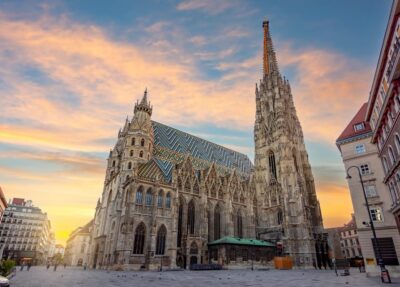
Guided Walking Tour of City Highlights & Hidden Gems
Read our review →
City Sightseeing Tour in an Electro Vintage Car
Read our review →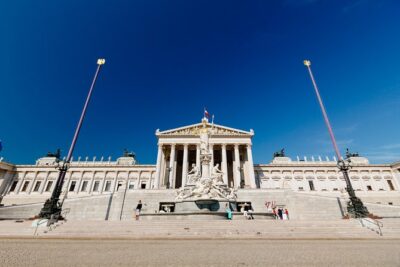
Skip-the-Line Schonbrunn Palace Guided Tour and Vienna Historical City Tour
Read our review →
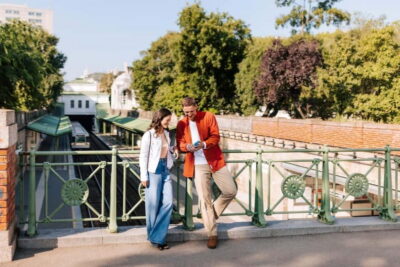
Vienna City Card: Public Transport incl. 200+ discounts
Read our review →Browse the lists this tour appears in