
REVIEW · CHRISTMAS
Vienna Christmas Tour
Christmas lights look better when you walk. This Vienna Christmas Tour stitches together key sights and market time in just about two hours, starting at 4:00 pm so you catch the evening glow. I love the small-group format with a licensed local guide, Dace Schaerf, because you get real attention instead of being swept along with a crowd.
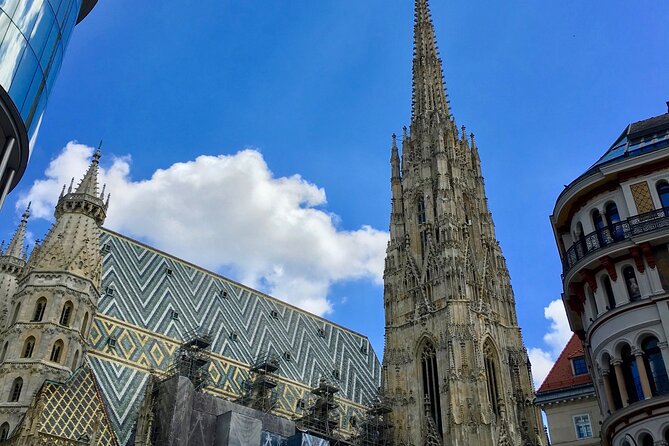
You also get a practical mix of architecture, churches, and Christmas traditions without planning a whole evening on your own. You’ll pass landmarks like St. Stephen’s Cathedral, the Hofburg Palace area, and the Parliament building, then focus on standout markets such as Freyung, Am Hof, and the Wiener Christkindlmarkt (with around 150 stalls). The main drawback to keep in mind is that the pace can feel tight, especially if you want long photo breaks and slow browsing at every stall.
In This Review
- Key things I’d bank on before you go
- Why a 4:00 pm Christmas walk hits differently
- From Graben chandeliers to the first market mood
- Stop-by-stop: how each market and sight changes the vibe
- Graben and Kohlmarkt, then a classic Vienna architectural breather
- Freyung: traditional crafts and a calmer feel
- Am Hof: where local food energy takes over
- Minoritenkirche: the nativity pause that slows your heart rate
- Wiener Christkindlmarkt: the big one with around 150 stalls
- Karlsplatz Christmas Market finish: Art Advent plus mulled wine
- What is included, what costs extra, and how to plan your spending
- Pace and comfort: the real decision factor for a 2-hour route
- Who will love this, and who should consider a slower option
- Should you book this Vienna Christmas Tour?
- FAQ
- How long is the Vienna Christmas Tour?
- What time does the tour start?
- Where do I meet the guide?
- Where does the tour end?
- How many people are in the group?
- Is the tour in English?
- Does the tour include food or drinks?
- What kind of walking is involved?
- What happens if the weather is bad?
Key things I’d bank on before you go
- Small group, personal attention: max 10 people means easier questions and less rushing for everyone.
- Late-afternoon timing: start at 4:00 pm, so the markets and lights are part of the experience.
- Market variety in one route: Freyung, Am Hof, Wiener Christkindlmarkt, and Art Advent at Karlsplatz.
- Big Vienna sights included along the walk: from St. Stephen’s to the Hofburg area and Parliament.
- Church stops add atmosphere: the Minoritenkirche nativity is a quietly memorable pause.
Why a 4:00 pm Christmas walk hits differently
Vienna is at its best for Christmas lights when day turns into that first cold blue hour. Starting at 4:00 pm gives you a sweet spot: you can still enjoy daylight for landmark views, then watch the markets and trees start to shine as the evening sets in.
This tour is also designed for people who like momentum. It is not a sit-down tasting event. It is a walking route with stops at major Christmas markets, plus the kind of city sights you would normally try to cram into a full day.
And it is priced like a guided highlights package, not like a restaurant crawl. At $87.62 per person, what you are paying for is a professional licensed guide, a smart sequence through central Vienna, and a time-efficient way to see several market scenes while you get context for what you are looking at.
Held over another night in Vienna
- Vienna: Christmas & New Year’s Concert in St. Peter’s Church
★ 4.6 · 763 reviews - Vienna: Christmas Photoshoot with a Pro Photographer
★ 4.3 · 241 reviews - Christmas and New Year Concert at St. Peter’s Church in Vienna
★ 4.5 · 155 reviews - Christmas Concerts in Capuchin Church
★ 4.5 · 81 reviews
From Graben chandeliers to the first market mood
You meet at Graben 13, 1010 Wien, a central starting point that’s easy to reach and also very close to the most festive walking streets. The first segment heads you toward Graben and Kohlmarkt, where you get the Christmas dressing-up factor right away. This area is known for decorated streetscapes, and you’ll see giant Christmas chandeliers as you begin.
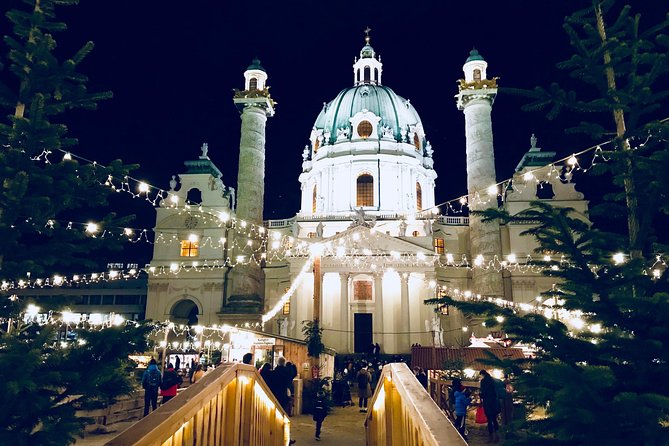
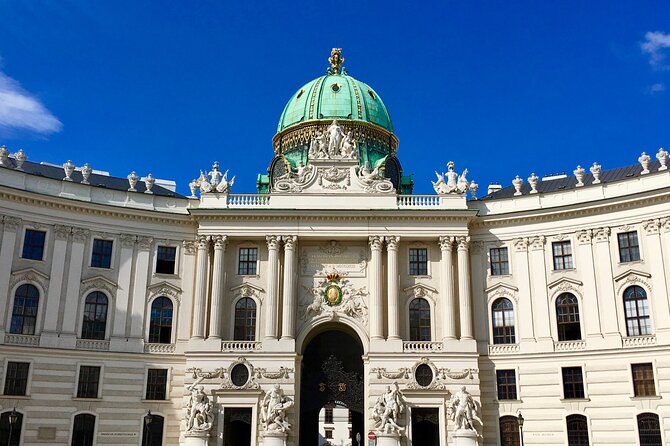
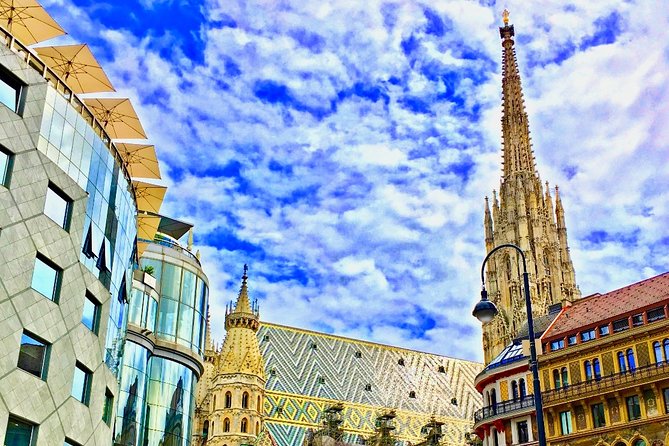
Right after, the tour shifts into sightseeing mode. You pass some of Vienna’s most recognized buildings, including St. Stephen’s Cathedral, St. Charles Church, and the Hofburg Palace area. Along this corridor, you also get glimpses tied to government and culture, including the Parliament building and major official venues you’d usually only see from the outside.
This is where the small-group size starts to pay off. With a maximum of 10 travelers, you are more likely to actually ask questions and get answers that connect the architecture to Christmas in Vienna, instead of hearing generic sound-bites.
Stop-by-stop: how each market and sight changes the vibe
Graben and Kohlmarkt, then a classic Vienna architectural breather
The early stop at Graben and Kohlmarkt is about getting your bearings fast. You begin in one of the city’s most central, walkable shopping and sightseeing corridors, and the decorations set a warm, playful tone before you hit the heavier market areas.
Then you move into a quieter architectural moment at Freyung Passage. This is an architectural passage with marble columns, friezes, and ironwork, so it feels more like a photo pause than a food stop. It is a good reset if the streets feel crowded, and you also get a peek into the way Vienna blends grand design with everyday walking.
What to watch for here: since you are moving indoors or semi-indoor along the passage, you might get better views of details than you would outdoors in wind and crowds.
After the interval, more from Vienna:
Freyung: traditional crafts and a calmer feel
The Freyung markets are among the more traditional ones on the route. The standout is the tone. Compared with markets that can feel like a nonstop conveyor belt, Freyung has a more measured atmosphere. It is a place where craftsmanship gets more attention, so you’re more likely to see handmade items and thoughtful gift ideas rather than only mass-produced ornaments.
You get around 10 minutes here. That sounds short, but because Freyung can be calmer, it often feels like more time than it is. If you want one place to actually browse slowly, this is a strong candidate.
Practical tip: choose one or two categories first, like ornaments or small crafts. When you wander without a plan, time disappears fast on a tight route.
Am Hof: where local food energy takes over
Next is Am Hof, in one of Vienna’s older, beautiful squares. This stop is known for food and drink, including Zirbenpunsch. You’ll also see a big mix of local food stalls, and there is an Austrian Post presence on-site, which adds a slightly different kind of holiday vibe.
The square itself helps. Because Am Hof is a classic old-town plaza, it feels scenic even when you are standing in line for a warm drink.
You get about 15 minutes. That extra time matters here, because food stalls tend to be more tempting and queues take longer when everyone wants the same thing.
Minoritenkirche: the nativity pause that slows your heart rate
At Minoritenkirche, the highlight is the impressive nativity display. This is one of those stops that changes the rhythm of the tour. Instead of chasing stalls and treats, you get a brief moment that feels more reflective.
The presentation and figure characterizations are part of the magic, and it can actually put you in that meditative mood, even if you normally do not do much church time on trips.
The downside: if you are not into interiors, this might feel like a detour. Still, it is short enough to stay optional in your head, not in your schedule.
Wiener Christkindlmarkt: the big one with around 150 stalls
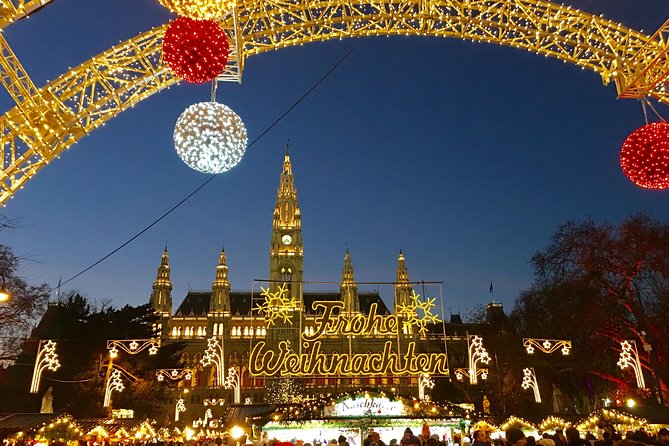
Then comes Wiener Christkindlmarkt, the traditional market with roughly 150 stalls. This is where you expect maximum Christmas energy, and you get it: Christmas presents, tree ornaments, crafts, sweets, and warming drinks.
The market also plays nicely with the city’s big public spaces. Trees in the Rathauspark and along the Ringstraße shine in the background, so the atmosphere feels more “Vienna-wide” than just a single bazaar.
You get about 20 minutes. That is enough time to walk the main lanes, find a couple of gift ideas, and grab a drink if you want. It is not enough time to become a full-time shopper, though.
This is also a place to remember the money rule of Christmas markets: everything is tempting, but your best value is usually in a couple of targeted purchases rather than impulse buys every few steps.
Karlsplatz Christmas Market finish: Art Advent plus mulled wine
The tour ends at Karlsplatz Christmas Market at Karlskirche area (Teich vor der Karlskirche, Karlsplatz 10). This stop is often called Art Advent on the route and it is a good way to close the loop. You get more traditional Austrian food, mulled wine, and handicraft items, plus vintage-style Christmas decorations.
You’ll get around 20 minutes to keep browsing and, if you want, linger long enough to feel the neighborhood atmosphere before heading out for dinner.
The Karlskirche church itself is nearby, and it’s included as a sight stop, though entry is not listed. Still, even seeing it from the outside helps make the endpoint feel dramatic and properly Vienna.
What is included, what costs extra, and how to plan your spending
Here’s the straightforward version. The tour includes a professional licensed local guide and the walking route. Food and drinks are available to purchase.
At the markets, you can try hot-spiced wine and gingerbread, but those are own expense. That matters because many people think a Christmas tour includes tastings. It does not, so budget for a couple of treats if you want the full market feeling.
My go-to approach for value on a tour like this:
- Pick one drink you genuinely want (mulled wine or Zirbenpunsch are popular choices).
- Pick one gift category you can carry easily (small crafts, ornaments, edible gifts).
- Let the rest of the stalls be inspiration, not purchases.
If you try to buy something at every market stop, you will pay more than you planned, and you’ll feel rushed.
Pace and comfort: the real decision factor for a 2-hour route
This is a walking tour with a medium amount of walking. In winter, that matters because Vienna streets can feel icy and the air can cut right through your layers.
Also, this tour runs in all weather conditions. Dress appropriately, because November and December can be cold. If there is strong rain, the tour can be cancelled, and you get a full refund.
The other big factor is the schedule. Some departures feel fast because the route hits multiple markets in one evening. If you like to pause for photos every few minutes, you may feel the pressure.
On the bright side, the group size helps and a guide like Dace Schaerf typically keeps things organized. In one instance, audio equipment was used so the guide could be heard clearly, which is a big deal when you are walking past noise, chatter, and stall music.
Who will love this, and who should consider a slower option
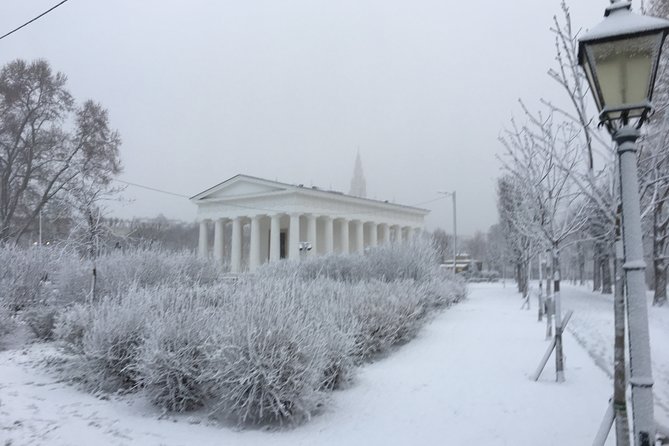
This tour is best for active travelers who want a high-value “first orientation” in central Vienna. It is also ideal if you only have a short window of time and want to see both the city’s Christmas flavor and a cluster of major landmarks.
You’ll likely enjoy it if:
- You want to cover multiple markets without spending hours planning.
- You like walking and quick, curated stops.
- You enjoy architecture and church interiors as part of the holiday mood.
You might want a more relaxed, longer market visit if:
- You want long browsing time at every stall.
- You prefer deep historical storytelling instead of a highlights rhythm.
- You are the type who needs a lot of photo stops, no exceptions.
The tour is still a strong value as a guided highlights sampler, but the timing is not built for slow shopping marathons.
Should you book this Vienna Christmas Tour?
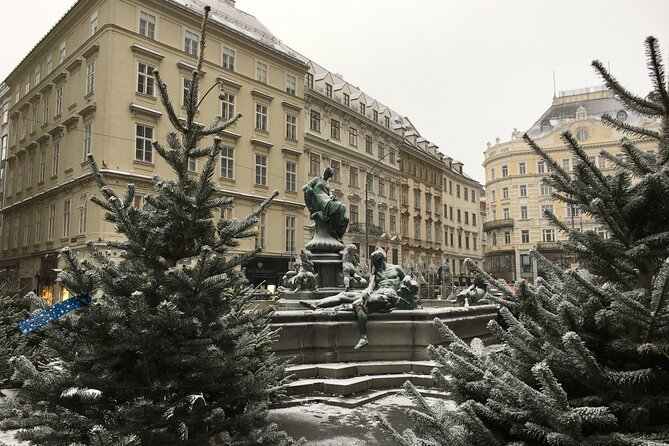
Yes, if you want a smart, late-day plan that combines central Vienna sights with several distinct Christmas market scenes in about two hours. I think it is especially good as an early trip activity, because it gives you a map of where to go next on your own.
Book it if you:
- Like small groups and guided context.
- Want a mix of market variety, plus stops like Minoritenkirche’s nativity.
- Prefer an efficient walking route over sitting in one place.
Skip it or choose something longer if:
- You know you will resent feeling rushed.
- You want to spend most of your time buying and photographing, not walking and refocusing.
Bottom line: this is a well-paced introduction to Vienna Christmas, with Dace Schaerf guiding you through the city’s key landmark corridor and into market time you can actually use.
FAQ

How long is the Vienna Christmas Tour?
It lasts about 2 hours.
What time does the tour start?
The start time is 4:00 pm.
Where do I meet the guide?
The meeting point is Graben 13, 1010 Wien, Austria.
Where does the tour end?
It ends at Teich vor der Karlskirche, Karlsplatz 10, 1040 Wien, at the Christmas Market at Karlsplatz.
How many people are in the group?
The tour has a maximum of 10 travelers.
Is the tour in English?
Yes, it is offered in English.
Does the tour include food or drinks?
No. Food and drinks are available to purchase, including hot-spiced wine and gingerbread at the markets.
What kind of walking is involved?
There is a medium amount of walking, and it is a walking tour.
What happens if the weather is bad?
It operates in all weather conditions, but if there is strong rain the tour may be cancelled with a full refund.
Just added to the bill for Vienna
Christmas, compared.
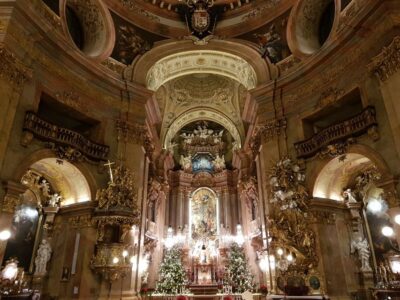
Christmas & New Year’s Concert in St. Peter’s Church
Read our review →
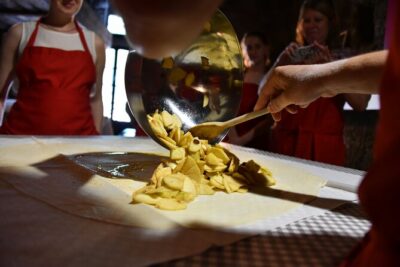
Salzburg Christmas Cookies and Apple Strudel Cooking Lesson
Read our review →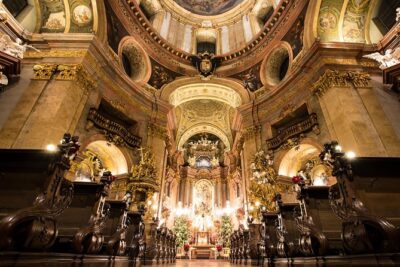
Christmas and New Year Concert at St. Peter’s Church in Vienna
Read our review →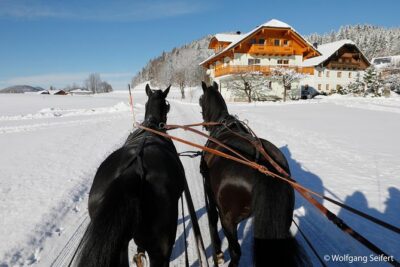
Christmas Horse-Drawn Sleigh/Carriage Ride from Salzburg
Read our review →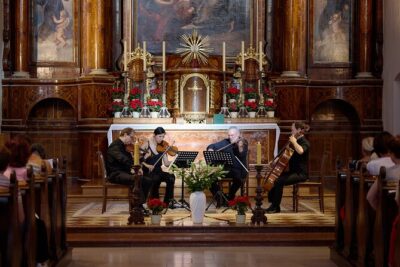
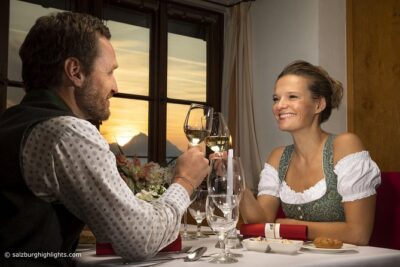
Mozart and Advent/Christmas Concert with Dinner at Fortress Hohensalzburg
Read our review →Browse the lists this tour appears in