
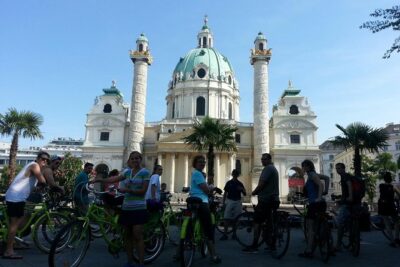
Vienna is better on a bike path. This 3-hour small-group ride mixes easy, well-maintained cycling with standout architecture like the colorful Hundertwasser House, plus classic imperial stops such as Hofburg Palace. You also get photo-ready moments at Vienna icons, including the Opera House and St. Stephen’s Cathedral, without feeling stuck in one spot.
I especially love the way the route feels local, not tour-bus touristy, thanks to the focus on bike-friendly roads and the Danube Cycle Path. I also like the human part, the live guide who turns major landmarks into understandable stories, with strong feedback for guides such as Esther and her clear, interesting info.
One consideration: this is cycling first, sightseeing second, so it is not suitable for people with mobility impairments. And if weather gets nasty (heavy rain, snow, or thunderstorm), the tour does not take place.
In This Review
- Key highlights worth planning around
- Why Vienna on two wheels feels like the right shortcut
- Meeting at Velopold Vienna, getting set up, then rolling
- Prater and the ride start that builds confidence
- Danube Cycle Path time: scenery plus perspective
- Hundertwasser House: the architecture stop you will remember
- Ringboulevard and the imperial layer: quick context that sticks
- Opera House, City Hall, Hofburg Palace, and St. Stephen’s Cathedral
- Leopoldstadt return route: the city’s everyday side
- Bikes, pace, and small-group feel for a 3-hour plan
- Price and value: what you actually get for $55
- Who this tour suits best, and who should skip it
- Should you book this Vienna bike tour?
- FAQ
- FAQ
- How long is the Vienna small-group bike tour?
- Where do I meet for the tour?
- What’s included in the price?
- What is not included?
- What languages is the guide available in?
- Is it a small-group experience?
- What should I wear or bring?
- What happens if the weather is bad?
- Is the tour suitable for people with mobility impairments?
Key highlights worth planning around
- Well-maintained bike paths that help you actually enjoy the ride instead of fighting traffic
- Hundertwasser House and other architecture-focused stops you can photograph easily
- Ringboulevard sights that give quick context for Vienna’s imperial era
- Photo stops at major landmarks like the Opera House and St. Stephen’s Cathedral
- A small-group format plus a guide who brings the history to life
Why Vienna on two wheels feels like the right shortcut
If you are seeing Vienna for the first time, you need two things: coverage and sanity. Vienna by bike is one of the best ways to do both, because you can move between clusters of sights without burning time on transfers or navigating every street on foot. And because the tour uses bike paths designed to be rideable, you spend less energy on logistics and more on the experience.
This is also the kind of tour that teaches you how to read the city. You start with a friendly orientation, then the route connects the modern rhythm of Vienna with older power and culture. That means when you see the Hofburg Palace area or the grand buildings near the center, you understand what you are looking at and why it mattered.
Finally, you get the best of both sightseeing styles. There are big, famous photo stops, but the ride itself keeps things lively. The Danube Cycle Path segments and the architecture-focused stops prevent the classic walking-tour problem of getting tired before you reach the good parts.
More Bike & E-Bike Tours in Vienna
- Classic Vienna: 3-Hour Guided Bike Tour
★ 4.7 · 2,146 reviews - Wachau Valley Wine Tasting Bike Tour from Vienna
★ 5.0 · 829 reviews - Vienna City Bike Tour
★ 4.5 · 599 reviews - Vienna: City Highlights Guided Bike Tour
★ 4.6 · 496 reviews
Meeting at Velopold Vienna, getting set up, then rolling
You meet at the Velopold Vienna shop, check in at the front desk, and get your gear sorted. Bikes are included, so you do not need to bring your own. You also get bottled water during the tour, which is a small detail that pays off in real life, especially on a 3-hour schedule when you might not want to hunt for a shop.
The tour begins with an introduction to Vienna and then heads out with a first stretch near the Prater amusement park. This matters because it helps you settle into the pacing. By the time you start hitting the major “wow” areas, you already know what the guide will be pointing out and what kind of stories you can expect.
Group size is kept small, which helps in two ways. The first is safety and smoothness on shared streets. The second is that guides can keep explanations focused and relevant, rather than rushing through facts just to keep a large pack together.
Prater and the ride start that builds confidence
Starting around the Prater amusement park gives you a mental warm-up. It is a recognizable area, and it helps you shift from arrival mode into travel mode. You get an informative setup before the tour really connects the dots between neighborhoods, waterways, and imperial power.
From there, you roll into the part that makes the tour worth it for time-pressed visitors: the route is designed to link multiple themes, not just separate attractions. Instead of seeing one grand building and then crossing the city to another grand building, you get a flow that turns the ride into the experience.
If you care about comfort, the setup helps. You are in comfortable shoes and comfortable clothes, and the bike gear is already handled. That is a big deal when you are riding for most of a half-day, because your body knows when you are prepared, even if the distance is not huge.
Danube Cycle Path time: scenery plus perspective
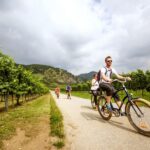
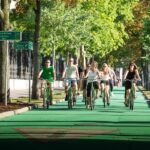
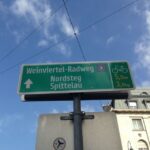
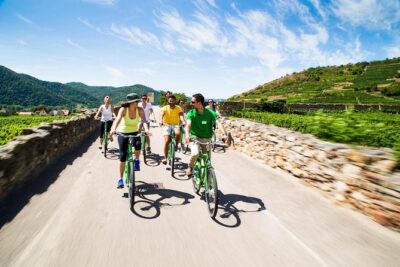
One of the most enjoyable segments is the ride along the Danube Cycle Path, where you get views that feel more like travel than checklists. The tour also highlights the Danube Canal area, so you are not only cycling through city streets, you are also getting that water-and-open-space feeling that Vienna can do so well.
This is where you start to understand why the guide keeps things structured. The ride gives you an easy rhythm. You can listen, look, and take in the city without stopping constantly. And because the route is bike-oriented, you can actually enjoy the scenery instead of spending the whole time dodging traffic or scanning for crosswalks.
It also sets up the next major stop, Hundertwasser. The contrast works: after the smoother, scenic cycle-path stretch, the bright color and unusual forms of Hundertwasser House feel even more dramatic.
More flat kilometres along the Danube:
Hundertwasser House: the architecture stop you will remember
The Hundertwasser House segment is a highlight for a reason. Vienna has plenty of “serious” architecture, but Hundertwasser changes the mood. The tour is structured so you can see it properly and connect what you are seeing with the stories the guide explains.
In practical terms, you also get a good photo moment. The building’s colorful look is naturally photogenic, so even if you take quick shots, you get good results. You are not stuck squinting through distance or trying to time your angles while walking uphill.
The best part is how this fits into the overall tour. Hundertwasser is not just a random stop. It is part of the tour’s theme of Vienna as a city of layers, where old power sits near newer artistic expression. That makes the city feel less like a museum and more like a living place with different styles and eras.
Ringboulevard and the imperial layer: quick context that sticks
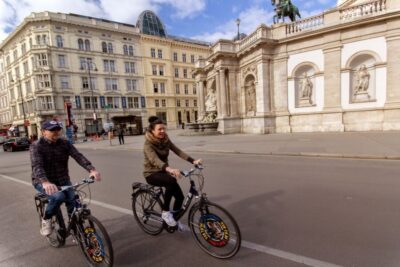
Then you hit the Ringboulevard, a classic corridor where Vienna’s imperial past shows up in big statements. This is the portion that turns iconic buildings into more than postcard views.
The tour includes a stop in front of several fascinating historical sites, and the guide uses those stops to explain what you are looking at, including stories about the former royals. Even if you are not a history nerd, this approach helps. You can see the scale, you can notice the design language, and you can attach meaning to the visuals.
The Ringboulevard experience is also about pacing. You cycle through the corridor, then pause when it counts. That gives you both motion and clarity. You are not stuck reading signs for too long, and you are not sprinting past everything, either.
If you love architecture and want to understand why certain buildings feel formal and powerful, this section is one of the best uses of your 3-hour window.
Opera House, City Hall, Hofburg Palace, and St. Stephen’s Cathedral
The tour includes multiple photo stops at some of Vienna’s biggest names:
- the Opera House
- City Hall
- Hofburg Palace
- St. Stephen’s Cathedral
The value here is not just recognition. It is the order and the context. When you see these landmarks after earlier explanations on the ride, they connect. You are more likely to notice design details, street setting, and how the buildings relate to each other across the city.
Here is a practical tip for photo stops: move a little before you shoot. Even a few steps can change your angle with these iconic facades. If you are tempted to only take one photo from where the group stops, you might miss a better viewpoint a short walk away.
Also, do not underestimate the mental relief of having these major sights handled for you. You show up, the guide points you where to look, and you spend your time taking photos and processing what you see, not planning your next turn.
Leopoldstadt return route: the city’s everyday side
After the central highlights, you ride back through Leopoldstadt. The tour frames this area as multicultural, gastronomical, and artsy, and that matters because it rounds out the Vienna picture.
This part of the experience helps you avoid the all-emperors-and-cathedral problem. Leopoldstadt gives you a sense of how Vienna feels when you are not only looking at formal power structures. Even from a bike seat, neighborhoods have personality, and you get a better feel for where you might want to wander later.
Think of this as the “future plans” segment. By the time you finish, you usually have ideas for what to eat, where to stroll, or which art spaces to seek out. The guide ends with local hints, tips, and ideas for the rest of your stay, which is especially helpful if you do not know the city well yet.
Bikes, pace, and small-group feel for a 3-hour plan
Three hours sounds short, but in a city like Vienna, it can be exactly right. This tour keeps the structure tight: you start with setup and introduction, ride between key areas, pause for explanations and photos, then end back at the meeting point with suggestions.
Because it is a small group, you are not stuck waiting while a huge group compresses and stretches every time the route changes. That translates into a smoother ride and less stop-start frustration.
The tour also includes bottled water and provides the bike, so the baseline comfort is taken care of. You just need to show up ready to cycle comfortably. Wear comfortable shoes and comfortable clothes, and you will enjoy the ride much more. If you are the type who hates rough logistics while traveling, this level of setup helps you relax.
One more note: the tour is guided in English and German, so you should feel covered even if you are not fluent. And the guide is live for the whole experience, so you are not just following a track without context.
Price and value: what you actually get for $55
At $55 per person for a 3-hour guided bike tour, the value comes from what is included. You get:
- a bike
- bottled water
- a live guide
Food and hotel pickup and drop-off are not included, so you are not paying for a full day of meals or transport services. But you also do not have to factor in the cost and hassle of coordinating pickup at a hotel.
The real value is the combination of sights plus the way you move between them. If you tried to do this on your own, you would spend time figuring out routes, bike logistics, and where to stop. Here, the structure is handled, and the guide adds context, which often turns a “cool building” into a “now I get why this matters.”
If you are in Vienna for a short stay, this price is easier to justify because it compresses multiple landmarks, including Hundertwasser and major central icons, into one efficient half-day.
Who this tour suits best, and who should skip it
This bike tour is ideal if you:
- want a first-time orientation to Vienna in a short window
- like architecture and want context, not just photos
- enjoy cycling and prefer well-organized routes over unplanned wandering
You might want to skip it if:
- you have mobility impairments, since it is not suitable
- you do not feel comfortable riding a bike for most of a 3-hour outing
- you are traveling during a period with frequent heavy rain, snow, or thunderstorms, because the tour may not run in those conditions
As for guide style, the feedback highlights that the guides bring good knowledge and keep the tour interesting. One guide name that came up was Esther, praised for delivering good information and making the ride feel enjoyable and efficient.
Should you book this Vienna bike tour?
I would book this if you are traveling light on time and heavy on curiosity. The tour gives you a practical way to see major Vienna highlights, including Hofburg Palace and St. Stephen’s Cathedral, while also delivering a memorable architecture detour at Hundertwasser House. The Danube Cycle Path and Ringboulevard sections make it more than a list of landmarks.
If you can cycle comfortably and you want someone to connect the dots while you ride, this is a strong value. Just be honest with your body and the weather. If rain or storms are likely, have a backup day in mind.
FAQ
FAQ
How long is the Vienna small-group bike tour?
It lasts 3 hours.
Where do I meet for the tour?
You check in at the front desk of the Velopold Vienna shop.
What’s included in the price?
The tour includes the bike, bottled water, and a guide.
What is not included?
Food is not included, and there is no hotel pickup or drop-off.
What languages is the guide available in?
The live guide is available in English and German.
Is it a small-group experience?
Yes, it is offered as a small group.
What should I wear or bring?
Wear comfortable shoes and comfortable clothes.
What happens if the weather is bad?
In case of heavy rain, snow, or thunderstorm, the tour will not take place.
Is the tour suitable for people with mobility impairments?
No, it is not suitable for people with mobility impairments.
Just added to the bill for Vienna
Bike & E-Bike Tours in Vienna, compared.
Wachau Valley Wine Tasting Bike Tour from Vienna
Read our review →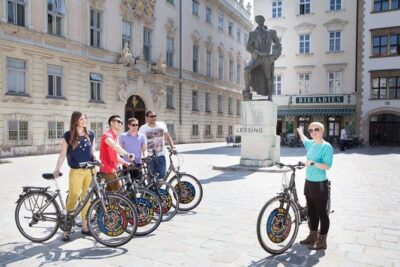
Grape Grazing: Wachau Valley Winery Biking Tour
Read our review →
Vienna by Bike 3-Hour All-In-One City Bike Tour in English
Read our review →
Browse the lists this tour appears in