
REVIEW · WINE TOURS
Vienna: Taste Austria the ABCs of Wine
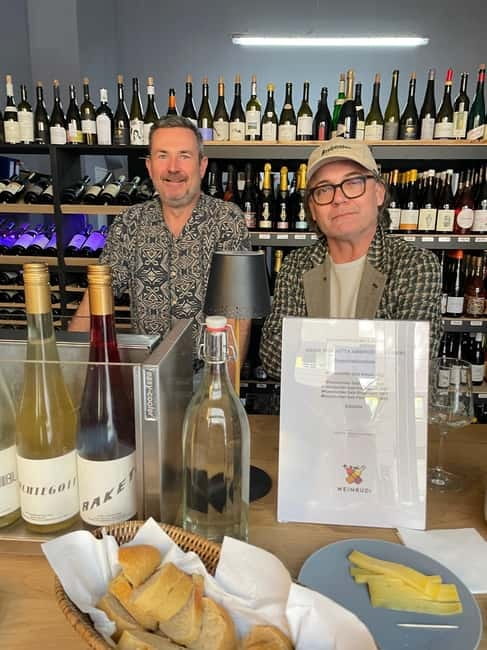
Austrian wine clicks fast when you taste it side by side. At Weinrudi, the session guided by Rudi walks you through Austria’s big styles, from the Wiener Gemischter Satz to wines shaped by the Danube, South Styria, and Neusiedler See, with plenty of hands-on learning about how to actually taste. I especially like the practical food pairing coaching, plus the way you sample from multiple regions instead of getting stuck on just one grape.
One thing to think about: this is a tight, shop-based tasting that lasts about 2 hours, so it is not the choice if you want a long, scenic day out of town.
In This Review
- Key highlights you should care about
- Vienna’s Wine Tasting at Weinrudi, Where the Lesson Feels Like a Hangout
- What You Learn in Two Hours, From First Look to Final Sip
- The Austrian Regions You Will Taste, and Why They Matter
- Wiener Gemischter Satz, and the idea of freshness
- Danube influence and the Steinfeder, Federspiel, Smaragd labels
- South Styria Sauvignon Blancs with cool-climate character
- Neusiedler See, sweet wines and red wine structure
- The mineral side of Blaufränkisch
- Food Pairing Tips That Actually Help You Order in Real Life
- What Makes Rudi’s Teaching Style Work So Well
- Price and Value: Is $81 a Good Deal in Vienna?
- Logistics That Matter: Timing, Meeting Point, and What to Bring
- Who Should Book This Wine Tasting, and Who Should Skip It
- Should You Book Vienna Taste Austria the ABCs of Wine?
- FAQ
- How long is the Vienna wine tasting at Weinrudi?
- What does it cost per person?
- Where do I meet the guide?
- What languages are available for the live guide?
- What size is the group?
- What is included in the guided tasting?
- What is not included?
- What should I bring?
- Is there an age limit?
- Is it wheelchair accessible?
Key highlights you should care about
- Small group, big attention: limited to 8 participants for a more personal feel
- Learn the tasting method: you practice tasting with all your senses, from sight to aroma to flavor
- Real Austrian labels: you cover classifications like Steinfeder, Federspiel, and Smaragd
- Region by region sampling: Wiener Gemischter Satz, South Styria Sauvignon Blancs, and Neusiedler See styles
- Food pairing you can copy: guidance tied to foods like salami, olives, and cheese
- Rudi’s teaching style: welcoming, friendly, and willing to answer your questions
Vienna’s Wine Tasting at Weinrudi, Where the Lesson Feels Like a Hangout
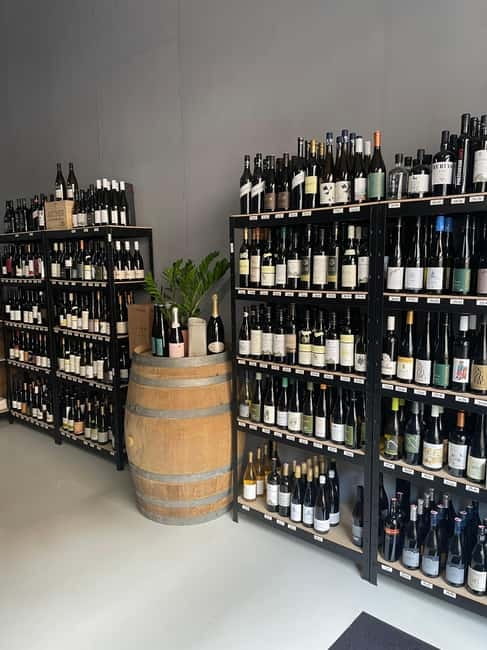
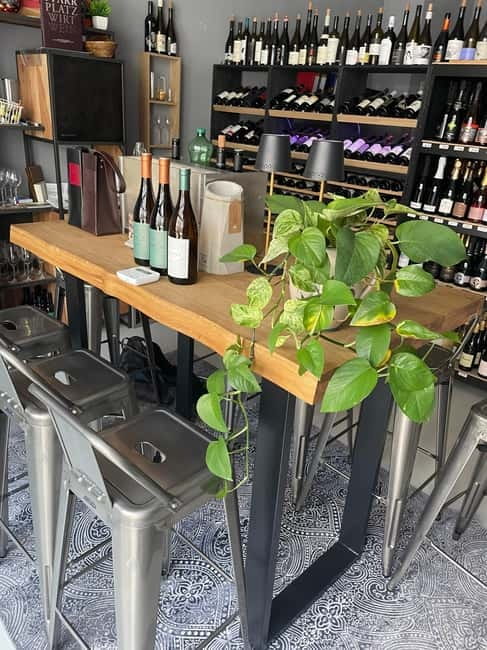
If you have ever looked at an Austrian wine list and felt a little lost, this kind of tasting helps you get your bearings fast. The format is simple: sit with a local wine expert in a cozy shop, taste several wines, and learn what to notice while you sip. You are not asked to memorize stuff for an exam, you are taught how to read the glass in front of you.
What makes it work in Vienna is that the experience is built around Austria’s wine regions and how they differ. You sample wines that reflect different climates and soils, so you start seeing patterns, not just individual labels. And because it is a small group, Rudi can answer questions and steer the tasting toward what you like.
The session also has a clear focus: learning the art of wine tasting and practicing pairing wine with food. That matters because taste is partly flavor, but it is also smell, texture, and how your food choices pull the wine in one direction or another.
More Heuriger pours and cellar rows:
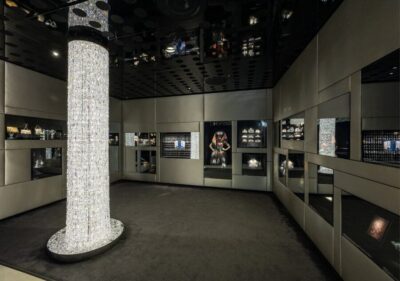
- Vienna: Swarovski House Tour with Champagne & Gift
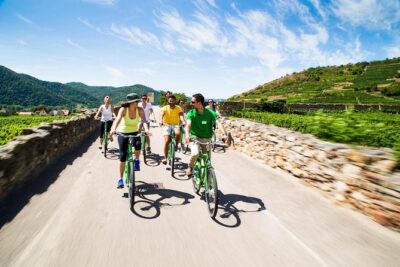
★ 4.6 · 1,132 reviews - Wachau Valley Wine Tasting Bike Tour from Vienna
★ 5.0 · 829 reviews - Countryside Half Day Wine Tour near Vienna
★ 5.0 · 545 reviews - From Vienna: Half-day Countryside Wine Tour with Meal
★ 4.7 · 526 reviews
What You Learn in Two Hours, From First Look to Final Sip
The tasting is designed like a sensory workflow. You start with the visual assessment, then move into the aromas, then the flavor on the palate. You learn to slow down just enough to notice what each wine is doing, even if you are new to wine vocabulary.
Here is what you can expect to practice:
- A quick visual check to pick up hints about style
- Aroma analysis, so you understand where the character comes from
- Tasting notes focused on what you actually feel in your mouth
Rudi also shares pairing tips during the session, so you are not just tasting wine in isolation. You learn how to think about matching wine with food, instead of guessing.
One practical bonus: you get lots of chances to ask questions. In this setting, you can go from curious to confident without feeling rushed.
The Austrian Regions You Will Taste, and Why They Matter
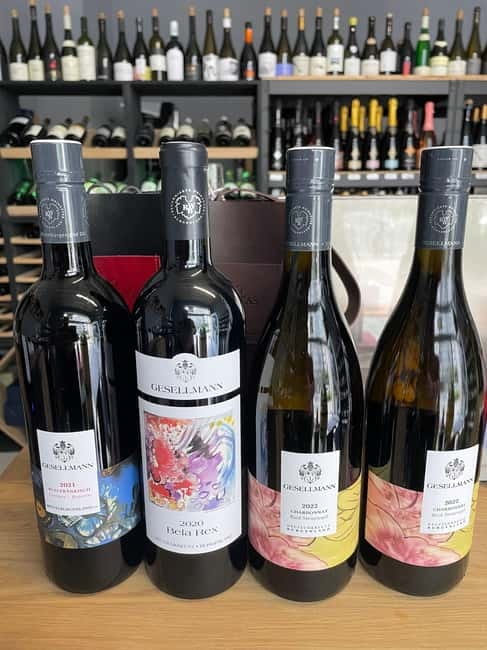
This is not a one-grape tasting. You taste across major areas of Austrian wine, and the guide links each wine to the region’s characteristics. That is the difference between tasting a souvenir and tasting an education.
Wiener Gemischter Satz, and the idea of freshness
The tasting includes the legendary Wiener Gemischter Satz, a wine style known for its freshness and complexity. You learn what to look for while tasting, so you start to understand how freshness can still be layered rather than flat.
Held over another night in Vienna


Danube influence and the Steinfeder, Federspiel, Smaragd labels
You also learn about the classifications Steinfeder, Federspiel, and Smaragd. The key point you take away is how the Danube and soil structures influence what ends up in the glass. Even if you are not planning to become a full-time wine nerd, this helps you interpret labels when you see them later.
South Styria Sauvignon Blancs with cool-climate character
Next comes the aromatic Sauvignon Blancs from South Styria. The guide explains why the cool climate and steep slopes of this region can produce exceptional wines. The value here is that you connect a style to a place, so the next Sauvignon Blanc you try feels less random.
Neusiedler See, sweet wines and red wine structure
Neusiedler See gets its own spotlight, including a look at the sweet side of Austrian wine and the red wine region. You taste styles ranging from fruity Blaufränkisch to noble sweet Trockenbeerenauslesen. You also learn how the Pannonian climate shapes these wines, which gives context for why sweetness, fruit, and structure show up the way they do.
The mineral side of Blaufränkisch
One of the most interesting learning moments is how Blaufränkisch can show mineral character. The guide ties this to iron-rich soils and the resulting spiciness and structure. Even if you do not use those words in your own notes, you start noticing that some reds feel more about texture and tension, not just fruit.
Food Pairing Tips That Actually Help You Order in Real Life
One reason I like this tasting is that it does not stop at wine. It gives you pairing ideas you can use the same night you walk into a wine bar or a casual Austrian restaurant.
The food part includes guidance tied to what you taste, and some pairings you might experience include salami, olives, and cheese. That is a smart lineup because it covers salty, savory, and creamy textures, which helps you see how a wine reacts.
When you get pairing tips like this, you learn to ask better questions, like:
- Should the wine be more crisp or more rounded with salty foods?
- How does aroma change when you take a bite?
- Does the wine emphasize fruit or does it bring out spice?
You leave with a working strategy, not just a list of pairings you will forget later.
What Makes Rudi’s Teaching Style Work So Well
Rudi comes across as welcoming and genuinely into the subject, and that matters more than people think. If someone is friendly and flexible, you pay attention longer, ask better questions, and actually remember what you learned.
From what you can expect in the session:
- He answers questions during the tasting
- He keeps the atmosphere comfortable in a local wine shop
- The experience can be tailored to your tastes in real time
- You may even get small comparison pours from other countries, which can help you place what is uniquely Austrian
That last point can be surprisingly useful. If you already like, say, Sauvignon Blanc from elsewhere, a comparison can clarify what Austria is doing differently in flavor and style.
Price and Value: Is $81 a Good Deal in Vienna?
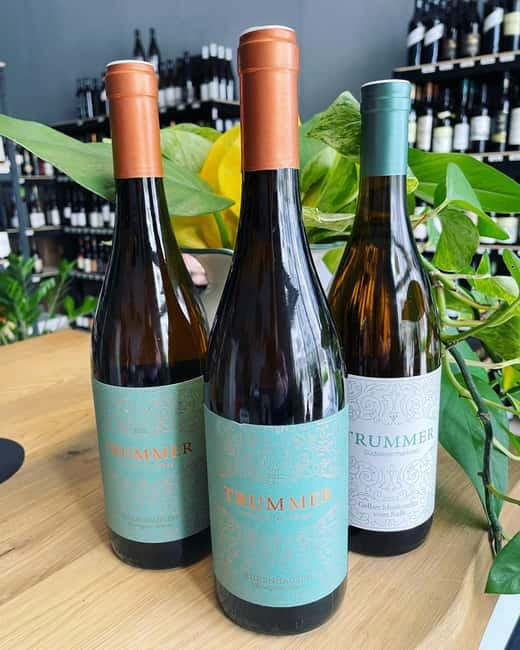
At $81 per person for about 2 hours, this tasting sits in the “worth it if you care about understanding” category. It is not just a pour-and-wander. You pay for guided instruction, region-to-region context, and food pairing tips.
The value equation usually comes down to three things:
- How many different wines you try
- Whether you get a real tasting framework, not just labels
- Whether the group size keeps the experience personal
Here, the group limit is 8 participants, so you are less likely to be lost in the background. And the tasting is structured around multiple Austrian regions and classifications like Steinfeder, Federspiel, and Smaragd, plus specific styles like Wiener Gemischter Satz. Add in the pairing coaching, and the lesson sticks better than it would with a casual sampling.
Also remember what is not included: transportation to and from the venue, and any personal wine purchases. If you plan to buy bottles, budget for that separately. If you do not, you can still walk away with plenty of learning and no pressure.
Logistics That Matter: Timing, Meeting Point, and What to Bring
This is a 2-hour experience, and you should check availability for starting times. It is run by a live guide in English, Portuguese, or German, so you can pick what fits your comfort level.
Meeting point is in the shop, where the host waits. Since the exact address is not provided here, the best move is to confirm the location when you book, then arrive a little early so you can settle in.
You will want:
- Comfortable shoes
- A camera
- Water
And one rule: no smoking.
There is an age requirement too. You must be at least 18, and the tasting is not suitable for children under 18.
Who Should Book This Wine Tasting, and Who Should Skip It
This is a great fit if you:
- Want a practical introduction to Austrian wine regions
- Like hands-on learning and tasting with guidance
- Enjoy food pairing and want to order with more confidence later
- Prefer small groups instead of big bus tours
You might want to skip or choose something else if:
- You want a long sightseeing outing with lots of walking or outdoor scenery
- You are sensitive to cold, since the experience is not suitable for people with a cold
- You do not meet the age requirement
One more important note for mobility: the info says wheelchair accessible, but it also states the experience is not suitable for wheelchair users and people with mobility impairments. That is a contradiction, so do not guess. Contact the provider to confirm what support is realistic for your situation.
Should You Book Vienna Taste Austria the ABCs of Wine?
If you like the idea of learning how to taste wine, not just drinking it, I think this is a strong booking in Vienna. The format uses Austria’s own wine regions as your lesson plan, and it gives you a method for tasting with all your senses. Add in food pairing tips and the small-group limit of 8, and the $81 price starts to make sense fast.
Book it if you want to leave with clarity. You will know what to look for on a menu, and you will have a tasting framework you can use anywhere.
FAQ
FAQ
How long is the Vienna wine tasting at Weinrudi?
The tasting session lasts approximately 2 hours.
What does it cost per person?
The price is listed as $81 per person.
Where do I meet the guide?
Meet at the shop, where he waits (Er wartet im Shop).
What languages are available for the live guide?
The live tour guide is available in English, Portuguese, and German.
What size is the group?
It is a small group limited to 8 participants.
What is included in the guided tasting?
Included is a guided wine tasting session, an introduction to Austrian wine regions and varieties, food pairing tips, and expert wine knowledge sharing.
What is not included?
Transportation to and from the venue is not included, and personal wine purchases are not included.
What should I bring?
Bring comfortable shoes, a camera, and water.
Is there an age limit?
Yes. Participants must be at least 18 years old. It is not suitable for children under 18, and it is also not suitable for pregnant women or people with a cold.
Is it wheelchair accessible?
The info includes wheelchair accessible, but it also states it is not suitable for wheelchair users and people with mobility impairments. You should confirm details directly with the provider before booking.
Just added to the bill for Vienna




Wine Tours, compared.
Wachau Valley Wine Tasting Bike Tour from Vienna
Read our review →
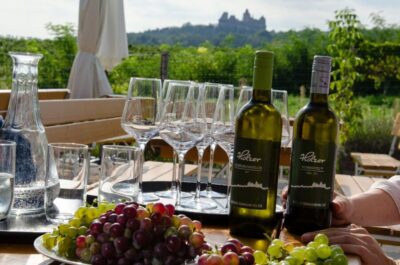
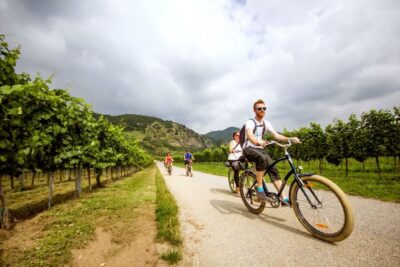
Grape Grazing: Wachau Valley Winery Biking Tour
Read our review →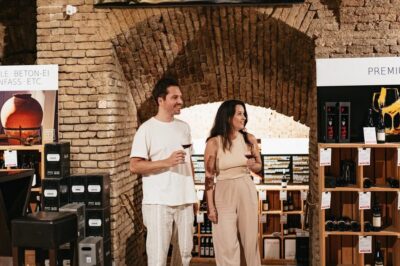
Wine Tasting Experience in a Private Wine Cellar
Read our review →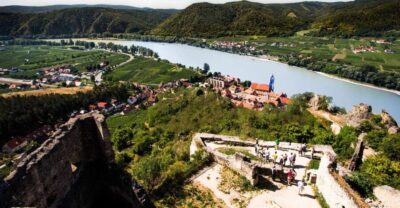
Schlumberger Wine Cellar Guided or Self-Guided Tour
Read our review →Browse the lists this tour appears in