
REVIEW · SIGHTSEEING & CITY TOURS IN VIENNA
e-Scavenger hunt Vienna: Explore the city at your own pace
Vienna feels like a game you can steer. This e-Scavenger hunt Vienna turns a classic sightseeing loop into a phone-led quest, so you can move when you want and spend time where your curiosity lands. You start at Kärntner Str. 11 and finish back there, with stops that range from major art halls to big royal buildings and church bells.
I especially like two things: first, the prompts keep you active while you walk, so you do more than just pass by famous sights. Second, it is a self-paced format that fits easily into a flexible day, usually around 2 to 4 hours depending on how long you linger at museums.
One drawback to consider is engagement level. One family-style review found the questions too simple, and if you want a high-energy guide vibe, the app format might feel a bit flat. Also, the game is on your phone, and smartphone and data are not included, so plan for that before you head out.
In This Review
- Key things to know before you play
- Starting at Kärntner Str. 11, then walking with purpose
- Price and value for a group of up to 6
- How the app hunt changes the way you look at Vienna
- Kunsthistorisches Museum: European painting and game-ready viewpoints
- Vienna’s big story in a few “why does this matter” moments
- Hofburg: Habsburg residence to official presidential home
- Natural History Museum: old collections with modern value
- Belvedere: Middle Ages to the present in one museum stop
- Vienna State Opera: the landmark, the atmosphere, the scale
- Stephansdom area: Stephen’s Cathedral and the Pummerin bell
- City Hall and Rathausplatz: monumental architecture on your route
- St. Peter’s Church and the Petersplatz round shape detail
- Austrian National Library and its 12 million items
- The imperial treasury and two imperial crowns
- Who this self-paced Vienna hunt is best for
- Practical tips to make the hunt smoother
- Should you book this e-Scavenger hunt Vienna?
- FAQ
- Where does the e-Scavenger hunt Vienna start?
- How long does the experience take?
- What language is the experience available in?
- Is this activity private or shared?
- Do I need to bring a smartphone?
- Is mobile data included?
- Is there a set meeting point at the end?
- Is the experience available every day?
- Is it suitable for people with hearing impairments?
- Are service animals allowed?
Key things to know before you play

- Self-guided on your phone with an online app game and a city walk format, not a live guide.
- Classic Vienna hits like the Kunsthistorisches Museum, Hofburg, Belvedere, the Vienna State Opera, and Stephansdom area.
- Real landmark context built into the stops, from Austro-Hungarian power to major museum collections.
- Good value for groups up to 6 since the price is per group, not per person.
- Mostly museum and walk time, so comfortable shoes matter more than fancy gear.
Starting at Kärntner Str. 11, then walking with purpose

The hunt begins at Kärntner Str. 11, 1010 Wien, and it ends back at the same spot. That back-to-start design is more useful than it sounds. You can keep your day simple, avoid the stress of figuring out a second meeting point, and build your own add-on plans afterward.
You will be using a mobile ticket on your phone, and the experience is offered in English. That matters because the game is meant to be navigated through your device, not through a handheld booklet. If you want this to feel smooth, I suggest arriving with your phone charged and ready, since the tour depends on you being able to open the app and follow tasks.
This is a private activity, so only your group plays. For families or small friend groups, that often feels more relaxed than joining a big crowd and trying to keep up.
More Sightseeing & City Tours in Vienna
- Vienna: Guided Walking Tour of City Center Highlights
★ 4.7 · 4,989 reviews - Vienna: City Cruise with Optional Lunch
★ 3.4 · 3,982 reviews - Vienna: City Cruise
★ 3.3 · 2,978 reviews - Vienna: Guided Walking Tour of City Highlights & Hidden Gems
★ 4.9 · 2,180 reviews
Price and value for a group of up to 6
At $37.49 per group (up to 6 people), this can be a very cost-effective way to cover a lot of central Vienna. If you are paying per person, museums and guided walking tours add up fast. Here, the “price math” is friendlier because you split the group cost.
Now, the tradeoff is also clear. You are not hiring a live guide who will answer questions on the spot. You are buying an app-based game and a route that takes you past major landmarks. If you like structure without lectures, you will likely feel satisfied. If you want deep storytelling in real time, you might miss that human layer.
Also note the time range: 2 to 4 hours. If you move quickly and skip museum interiors, you can finish closer to the shorter end. If you spend time actually looking at art and displays, you will naturally drift toward the longer end. Either way, the format is designed so you do not need to cram.
How the app hunt changes the way you look at Vienna
An e-Scavenger hunt sounds playful, but the real value is focus. Instead of letting your eyes slide over crowds and façades, you are nudged to slow down and pay attention. That is especially useful in Vienna, where the city’s best details hide in plain sight, like rooflines, statuary, stonework, and the way buildings frame plazas.
The experience is friendly for hearing impaired travelers, and service animals are allowed. That is a good sign that the design is meant to work for different needs, though the exact method (captions, visual instructions, or other features) is not spelled out in the details you provided. In practice, you should still check the app instructions when you start, so you know what kind of support it offers.
The format also leans family-friendly. One caution is that the tasks may feel simple if you want complex trivia or a lot of “aha” moments. If that sounds like you, treat this as a fun city walk with light challenges, not an expert-level quiz.
Kunsthistorisches Museum: European painting and game-ready viewpoints
The Kunsthistorisches Museum (KHM) is your first major museum stop, and it is known as one of the world’s important museums for European painting. That is a powerful anchor for the hunt, because Vienna’s art world is not small. When you begin here, you are not just wandering, you are stepping into a place built for careful looking.
In the game flow, you are pointed toward exhibition highlights that span from Monet to Picasso, and you also encounter categories like photography, architecture, and contemporary art. Even if you only catch portions, that range is useful. It gives you something to connect across centuries, which you might miss if you only chase one famous name.
Practical tip: Museums can swallow time. If you want to keep the hunt on track, skim first, then return to the spots the app asks about. This keeps you from over-reading every label on your first pass.
More of Austria taken andante:

Vienna’s big story in a few “why does this matter” moments
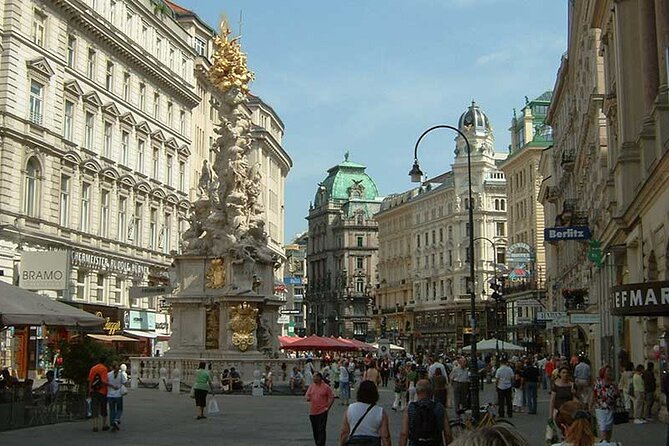
One of the puzzle stops zooms out and gives you the city context. Vienna grew from early Celtic and Roman settlements into a medieval and Baroque city, and it later became the capital of the Austro-Hungarian Empire. The game also flags Vienna’s role as a major European music center, covering the stretch from Viennese Classicism into the early 20th century.
I like this kind of framing because it turns “pretty buildings” into “political and cultural geography.” When you later see palaces, opera spaces, and grand public architecture, the city’s layout makes more sense. You stop thinking of Vienna as a collection of postcard views and start thinking of it as a stage for power, art, and performance.
If you are traveling with someone who hates museum lectures, this is a lighter way to get the key context without a long speech.
Hofburg: Habsburg residence to official presidential home
The Hofburg palace is next, and the details here are solid. It was the residence of the Habsburg archdukes from the 13th century until 1918. Since 1945, it has been the official residence of Austria’s Federal President.
That timeline alone gives you a quick lesson in how continuity works in Vienna. You are seeing a site that kept its status even as rulers changed. It also helps you understand why the city’s art and state spaces feel connected. When you walk from art museums to the Hofburg, the hunt is basically moving you from culture to governance.
In the flow of the experience, the game also references Habsburg state rooms. That is where you get the power story more directly, and it is a nice bridge from earlier museum content to what the empire used these spaces to project.
Practical tip: Palace and museum interiors can have security lines and timed visiting windows depending on the day. The hunt is built for self-pacing, so if you hit a slowdown, take it as a cue to pause and let your game continue at the right moment.
Natural History Museum: old collections with modern value
Next up is the Museum of Natural History. It is described as one of the world’s important natural history museums, with earliest collections of artifacts over 250 years old. That “over 250 years” detail matters because you are not just looking at objects, you are seeing history of collecting itself.
If your group likes “real things” instead of only paintings, this stop balances the route. It also gives a break from heavy architecture and palace symbolism. You still get cultural value, just a different type of museum energy.
This is also a good reset stop for families. Natural history museums often feel more hands-on and approachable than big fine art collections, even when you are not doing a deep scientific visit.
Belvedere: Middle Ages to the present in one museum stop
The Belvedere is described as one of the leading museums worldwide. Its famous collection includes works ranging from the Middle Ages to the present day. That is one of the best ways to experience a museum without guessing what you like first. Your phone game can point you to highlights, and the collection range means you will probably find something that clicks fast.
For many people, Belvedere is the place where Vienna’s art tempo shifts. Earlier you are dealing with European painting and the Habsburg story. Here you get a broader sweep, which helps the hunt feel like a coherent survey rather than a list of unrelated buildings.
Practical tip: If you feel museum-fatigue, use the game prompts as your “minimum target.” Then, if you still have energy, add a second room. This keeps you from turning a 2 to 4 hour plan into an all-day project.
Vienna State Opera: the landmark, the atmosphere, the scale
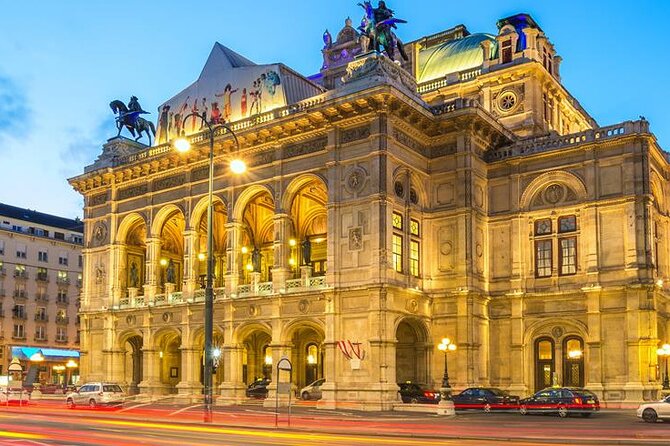
The Vienna State Opera (Wiener Staatsoper) is called Austria’s most important and largest opera house. Even from outside, opera buildings communicate something. They signal ceremony, status, and the idea that performance is a major civic function.
Because this is an app-guided hunt, you are not dependent on catching a specific show. You can still experience the opera house as a landmark in your route, and your game tasks can steer you to notice the elements that make it feel unmistakably Viennese.
If your group loves music, opera, or architecture, this stop tends to land well because it connects the earlier city context to a real building you can see.
Stephansdom area: Stephen’s Cathedral and the Pummerin bell
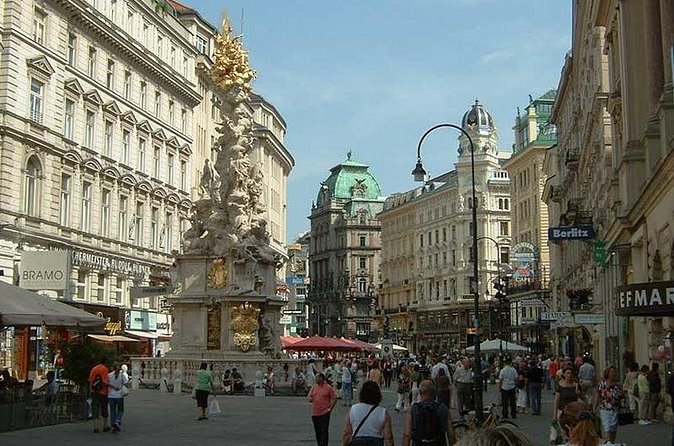
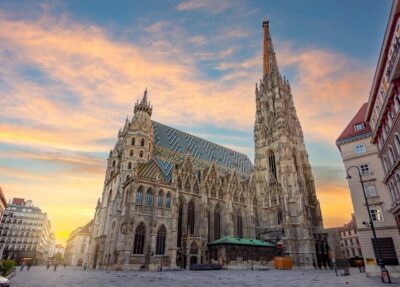
Then comes Stephen’s Cathedral and the Pummerin. The north tower is 68.3 meters tall, and the Pummerin is described as the second-biggest free-swinging chimed church bell in Europe. That is exactly the kind of detail your brain remembers later, and it is great for a scavenger hunt style.
The hunt also keeps you tied to key landmarks like Stephansplatz, which is described as the geographical centre of Vienna and named after its prominent building, the Stephansdom. When you stand near these spaces, the city’s “center of gravity” becomes real. It also helps you understand why so many routes and walking tours keep returning here.
Practical tip: Church areas are popular. Give yourself a few extra minutes for photos and people flow, then return to your phone tasks so you do not lose your place.
City Hall and Rathausplatz: monumental architecture on your route
The City Hall (Rathaus) and the Rathausplatz area are part of the game path. The City Hall is described as one of the splendid monumental buildings along Vienna’s, designed by Friedrich Schmidt.
This is a great stop for anyone who likes architecture but does not want an architectural history lesson. You get the basic “designed by” credit, and the building’s scale does the rest. In a self-guided format, the landmark itself acts like a teacher.
If you want to make this stop even more useful, pause long enough to look up at façade details before you move on. With a hunt, you can time it by finishing one task, then taking 2 to 3 minutes to “scan” the building for visual answers.
St. Peter’s Church and the Petersplatz round shape detail
St. Peter’s Church is listed as an 18th-century church building at Petersplatz. It has a round shape and is to some extent based on St. Peter’s Basilica in Vatican City.
That comparative detail is valuable because it gives you a way to recognize design influences without becoming a scholar. You can look for the round form and get the idea of how Vienna borrowed symbolism and shapes from elsewhere in Europe.
If your day includes several museums, this church stop also offers a calm break. It is easier to enjoy a viewpoint and a quick architectural moment than to keep reading labels nonstop.
Austrian National Library and its 12 million items
Next is the Austrian National Library, described as the largest library in Austria, with more than 12 million items across its collections.
Even if libraries are not your main obsession, this stop is a reminder that Vienna is not only palaces and paintings. It is also bureaucracy, scholarship, and preservation. Libraries help explain how empires and cities maintain knowledge long enough to build art collections later.
The hunt frames this stop in a way that can make you notice the building and think about its scale, not just walk by it.
The imperial treasury and two imperial crowns
The final set of clues points you to the imperial treasury, described as the most important treasury in the world and home to two imperial crowns. That is a fitting finale because it ties together the empire storyline you started to learn earlier: the Habsburg connection, the Hofburg setting, and the idea of power made visible through symbols.
If you like “closing the loop,” this kind of ending works well. The hunt moves you from cultural works and public architecture toward the objects of rule.
Who this self-paced Vienna hunt is best for
This experience fits best if you like getting your bearings and mixing famous places with light challenges. It is especially suitable for:
- Families who want a calmer, friendly game structure rather than a lecture
- Small groups who want to split the cost and enjoy a route together
- Travelers who prefer self-guided pacing over strict schedules
- People who want major Vienna landmarks in about 2 to 4 hours
If you are the type who wants a lot of deep storytelling from a live guide, you might find the app prompts less satisfying. One note from a family-focused perspective was that the questions felt lazy or simple, and the app did not keep them as engaged as they hoped. That does not mean it will be the same for you, but it is a real consideration.
Practical tips to make the hunt smoother
- Bring a charged smartphone and consider power savings mode, since you are following tasks on-screen.
- Since smartphone use and data are not included, plan how you will access the app while walking.
- Wear comfortable shoes. The route strings together major central stops, and you will walk.
- If you hit museum fatigue, use the hunt as your anchor, then add only one extra room at your favorite stop.
- If you are traveling with mixed interests, the variety helps: art, history, architecture, churches, and opera.
Should you book this e-Scavenger hunt Vienna?
Book it if you want a self-paced way to cover a lot of Vienna highlights without committing to a tour guide schedule. The per-group price up to 6 can be strong value, and the mix of art, palace power, and landmark storytelling makes it easy to feel like you covered the “main story” of central Vienna.
Skip it if you know you want deep trivia, complex questions, or an app that feels like a full entertainment experience. In that case, a live guided tour might match your energy better.
FAQ
Where does the e-Scavenger hunt Vienna start?
It starts at Kärntner Str. 11, 1010 Wien, Austria.
How long does the experience take?
Plan for about 2 to 4 hours.
What language is the experience available in?
It is offered in English.
Is this activity private or shared?
It is a private tour or activity, so only your group participates.
Do I need to bring a smartphone?
Yes. The included experience uses an online app on your phone, and the use of a smartphone is not included, so you should bring your own.
Is mobile data included?
No. Use of smartphone and data is not included.
Is there a set meeting point at the end?
The activity ends back at the meeting point, which is the starting location.
Is the experience available every day?
Yes. Opening hours are listed as Monday through Sunday, 12:00 AM to 11:59 PM, during the stated validity period.
Is it suitable for people with hearing impairments?
It is listed as user friendly for the hearing impaired.
Are service animals allowed?
Yes, service animals are allowed.
More Scavanger Hunts in Vienna
- Vienna: Scavenger Hunt Self-Guided Tour
★ 4.7 · 83 reviews - Fun & mobile scavenger hunt through Vienna
★ 4.5 · 17 reviews - Vienna Scavenger Hunt and Highlights Self Guided Audio Tour
★ 4.5 · 13 reviews - Vienna Highlights Self guided scavenger hunt and Walking Tour
★ 4.0 · 5 reviews
Just added to the bill for Vienna
Sightseeing & City Tours in Vienna, compared.
Guided Walking Tour of City Center Highlights
Read our review →
Guided Walking Tour of City Highlights & Hidden Gems
Read our review →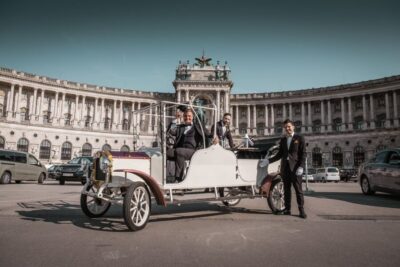
City Sightseeing Tour in an Electro Vintage Car
Read our review →
Skip-the-Line Schonbrunn Palace Guided Tour and Vienna Historical City Tour
Read our review →
Vienna City Card: Public Transport incl. 200+ discounts
Read our review →Browse the lists this tour appears in