REVIEW · TOURS
Fall in Love with Vienna in 4h: Hidden Gems- Group Tour
Four hours in Vienna, and it flies by. You get a tight walk through Mozart-adjacent spots, old lanes, baroque churches, and major landmarks, finished at the Vienna State Opera, all with a small group and an English guide who keeps the stories clear and human. I particularly like the Mozart start at Mozarthaus Vienna and the small-group vibe that makes it easy to ask questions.
The other thing I love is the built-in 30-minute coffee-house break for proper Viennese coffee and apple strudel, right in the middle of the route so your legs get a reset. You also leave with a printed information package, a city map, and practical suggestions for where to go next beyond the city center.
One possible drawback is that this is a walking-heavy route, and it asks for moderate physical fitness, plus it depends on good weather. If you are hoping for long museum time inside major institutions, you should know entrances to museums are not included.
In This Review
- Key points to know before you go
- Price and pacing: is $84.29 worth it for 4 hours?
- The walk begins at Mozarthaus Vienna and ends at the State Opera
- Stop-by-stop: what each highlight is really good for
- Mozarthaus Vienna, plus Blood Alley Quarter for quick atmosphere
- Sala Terrena and Stephansdom: from early music to the city’s core
- Figlmüller at Wollzeile: a schnitzel stop that also teaches how Vienna moves
- Church of the Jesuits and Griechenkirche: baroque drama and medieval lanes
- St. Rupert’s Church and Ankeruhr: oldest roots and a famous clock
- Hoher Markt and Judenplatz: Roman reminders and WWII impact
- Am Hof, Freyung Passage, and Minoritenkirche: small streets that feel like rooms
- Volksgarten and Justizpalast: roses outside, power inside
- MuseumsQuartier Wien, Hofburg, and Burggarten: culture zones and Habsburg gravity
- The coffee break that keeps the whole route enjoyable
- What you get that helps after the tour ends
- Who this tour suits best
- Should you book Fall in Love with Vienna in 4h?
- FAQ
- FAQ
- How long is the tour?
- What is the price per person?
- What time does the tour start?
- Where does the tour start and end?
- Is the tour in English?
- Is there a coffee break during the tour?
- Are museum entrance fees included?
- How big is the group?
- What ticket type do I receive?
- What happens if bad weather cancels the tour?
- Is tipping included in the price?
Key points to know before you go
- Mozarthaus Vienna to Wiener Staatsoper, with the whole walk designed to feel like one continuous story
- A mid-tour coffee break built for energy, not just sightseeing pauses
- Dozens of stops in 4 hours, so you get variety fast and you must stay moving
- WWII impact shown at Judenplatz Holocaust Memorial, not just postcard Vienna
- Free entry marked for the listed stops, so you can spend time looking instead of budgeting on the fly
- Small groups (up to about 15) mean better conversation and faster pacing control
Price and pacing: is $84.29 worth it for 4 hours?
At $84.29 per person for about 4 hours, you are paying for three things: a guide who stitches the city together, a dense route that saves you planning time, and an included sit-down break with coffee and apple strudel. For Vienna, that combination is often the difference between seeing highlights and actually understanding how the pieces connect.
The big trade-off is pacing. There are 20-plus stops, with most lasting only a few minutes, so you will not linger like you would on a slow self-guided stroll. If you love long museum hours, this tour is a strong primer, not a substitute.
Held over another night in Vienna
- Vienna: Vivaldi’s Four Seasons Concert in Karlskirche
★ 4.7 · 14,951 reviews - Vienna: Spanish Riding School Training
★ 3.9 · 9,281 reviews - Vienna: Schönbrunn Palace & Gardens Skip-the-Line Tour
★ 4.7 · 7,739 reviews - Vienna: Light of Creation Votive Church Immersive Light Show
★ 4.8 · 6,779 reviews
The walk begins at Mozarthaus Vienna and ends at the State Opera
The tour starts at Mozarthaus Vienna, the Mozart house and apartment in the Domgasse area, also called the Figaro house. It is a smart first stop because it gives you a cultural anchor early, and you start with someone else’s perspective instead of staring at buildings with no context.
At the end, you finish at the Vienna State Opera on Opernring 2. Even if you do not go inside, arriving there at the end feels like a payoff moment, because you have already walked through a path that explains how Vienna got from court and composer culture to the big public stages.
Stop-by-stop: what each highlight is really good for
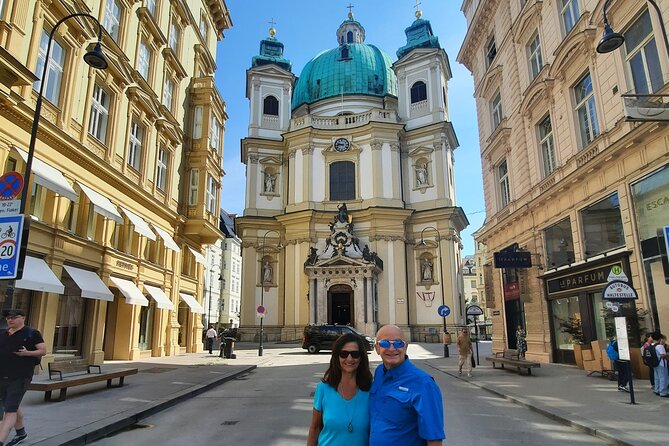
This is the fun part: each stop is brief, but the guide uses it to point you at a specific layer of Vienna.
Mozarthaus Vienna, plus Blood Alley Quarter for quick atmosphere
Mozarthaus Vienna (the Figaro house) is where the tour’s Mozart theme starts to feel real. Instead of only hearing the name, you get a sense of place through the house and apartment connection.
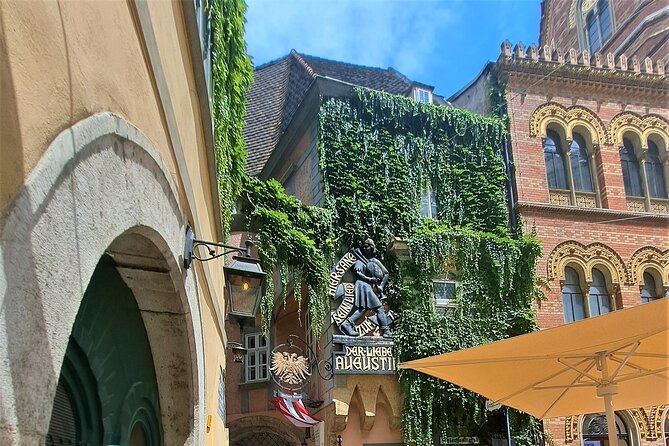
Then you jump to Blutgassenviertel, the Blood Alley Quarter. The attraction here is visual and atmospheric, with old, traditional Czech-style houses in a tight area. This is the kind of street you would miss if you only followed the biggest boulevards.
After the interval, more from Vienna:
Sala Terrena and Stephansdom: from early music to the city’s core
Sala Terrena im Deutschordenshaus is one of the first concert houses in Vienna, and it is linked to Mozart performing. Even in a short stop, that fact helps you notice the space as a stage for real people, not just a label on a map.
Next comes Stephansdom, St. Stephen’s Cathedral. You get about 10 minutes, so think of it as a “get the shape of it” visit. Use this moment to locate where you want to return later for a longer look, because you will likely walk away with a stronger sense of why this cathedral dominates the skyline.
Figlmüller at Wollzeile: a schnitzel stop that also teaches how Vienna moves
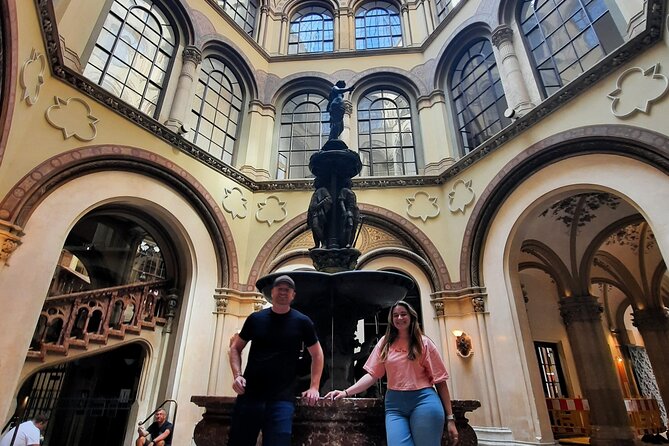
Figlmüller at Wollzeile is a historical schnitzel restaurant, but the bigger win for your trip is the setting: a wonderful passage. The passage matters because it shows you Vienna’s love of covered walking routes, where the city feels compact and intimate.
This is also a good moment to think practically about food. Even if you do not eat right then, you will remember the location as a “grab a classic meal later” option.
Church of the Jesuits and Griechenkirche: baroque drama and medieval lanes
The Church of the Jesuits is impressive baroque architecture. Short stops like this are great for training your eye. You start recognizing details, then later you can compare them to other churches you see around town.
Griechenkirche zur heiligen Dreifaltigkeit takes you into the medieval part of the city, with old pedestrian streets and passages. The value is not just the church itself, it is the vibe of walking through older Vienna, where the route feels like part of the story.
St. Rupert’s Church and Ankeruhr: oldest roots and a famous clock
St. Rupert’s Church (Ruprechtskirche) is described as the oldest church of Vienna. That makes it a quick history marker, but it also helps you understand why Vienna can feel layered, not linear.
Then you reach Ankeruhr, a famous clock. It is one of those sights you might walk past without a guide, but with a guide you learn what to look for and why it is considered one of the city’s most beautiful clocks.
Hoher Markt and Judenplatz: Roman reminders and WWII impact
Hoher Markt is tied to Roman museum and Vienna’s history, so it is a natural bridge between medieval and older eras. If you like the “timeline effect,” this stop is useful because it hints at what is under the surface.
Judenplatz Holocaust Memorial brings weight to the route. It is tied to the Jewish square and the impact of WWII on Vienna’s Jewish community. This is one of the moments where the tour becomes more than sightseeing, because it grounds Vienna’s beauty in real human history.
Am Hof, Freyung Passage, and Minoritenkirche: small streets that feel like rooms
Am Hof is one of the oldest parts of the city, so the point here is place. You see a slice of old Vienna and understand that the city’s center is made of pockets, not just a single avenue.
Freyung Passage gives you a “walk-through” experience, with the passage and surrounding buildings enhancing the view. These covered connectors are where Vienna feels most livable, because you can slow down without fighting traffic.
Minoritenkirche includes a copy of Leonardo da Vinci’s Last Supper. The key value is art spotting in a place people might rush through. Even if you only have a few minutes, it gives you something memorable to anchor the tour.
Volksgarten and Justizpalast: roses outside, power inside
Volksgarten is the garden of thousands of roses. Even briefly, it is a nice contrast to the tight streets and heavy history stops. It gives you an outdoor breath, and it also helps you picture Vienna as a city that pairs culture with green space.
Justizpalast is one of the most impressive buildings in Vienna. Think of this as a “scale” stop. You get to see how grand architecture signals authority, and you start linking the palace world to the public world.
MuseumsQuartier Wien, Hofburg, and Burggarten: culture zones and Habsburg gravity
MuseumsQuartier Wien is an inner yard with several museums. Even if you do not go inside, you feel how Vienna organizes culture into spaces you can walk around.
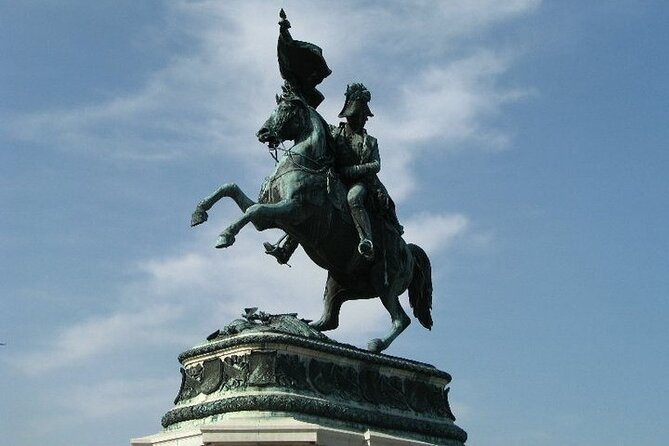
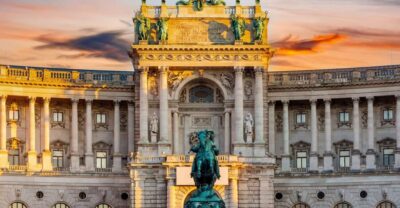
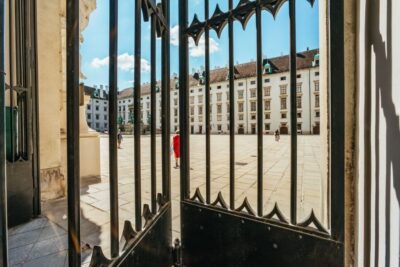
The Hofburg is the palace of the Habsburgs, and the tour uses it to give you the big political backbone. In a short stop, you are mostly getting orientation: where power lived, and how it shapes the city’s layout.
Burggarten adds two things at once: the most photographed Mozart statue in Vienna and the Butterfly Museum. This is a great example of how Vienna can mix a famous cultural image with a lighter, family-friendly attraction. If you want a relaxed follow-up after the tour, this area is an obvious candidate.
The coffee break that keeps the whole route enjoyable
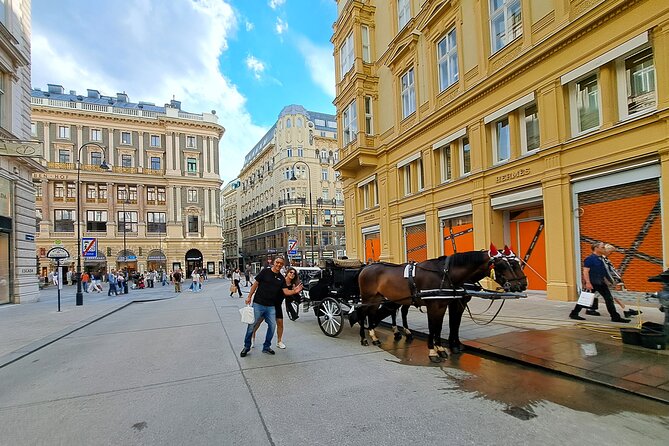
The included 30-minute break happens in a traditional Viennese coffee house. This matters because a 4-hour walk with 20-plus stops is a lot, especially in winter. The stop is timed to give you recovery in the middle, not at the end after you are already tired.
In colder weather, guides often find ways to keep you comfortable along the way, including stepping into places when possible. Still, the best strategy for you is simple: plan for walking, dress in layers, and treat the coffee break as your reset button.
What you get that helps after the tour ends
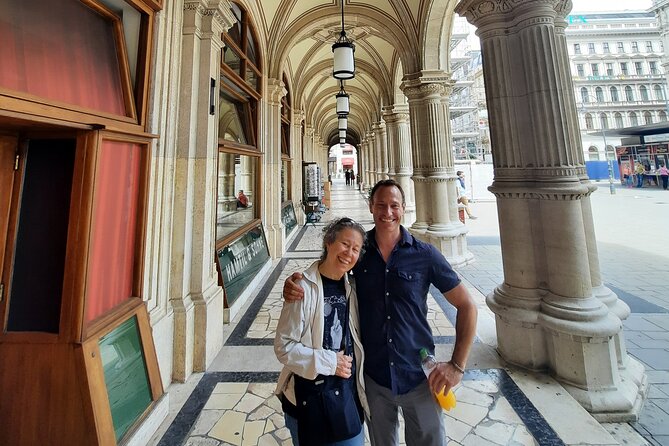
This tour is not only about the walk. You also get a printed Vienna information package plus a Vienna city map, along with plenty of suggestions for places to visit outside the city center, and for restaurants and coffee shops.
That last piece is underrated. Vienna can feel “one neighborhood at a time,” so having ideas beyond the obvious core helps you spread your trip out and avoid repeating the same kind of sightseeing every day.
Who this tour suits best
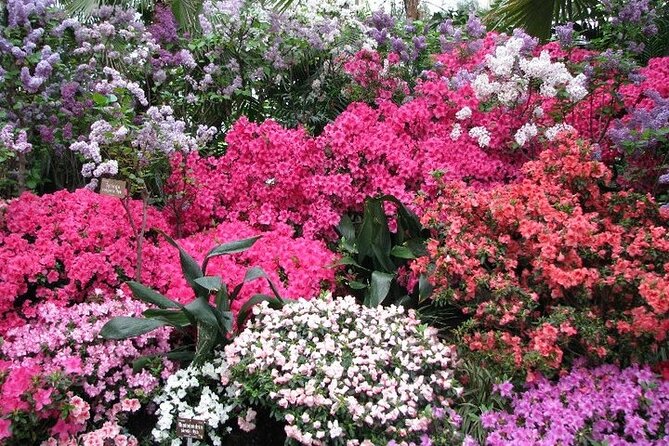
This tour is a strong fit if:
- You are on a short trip and want to get your bearings fast with a guided route
- You like variety, from Mozart connections to churches, passages, and memorials
- You want a small group setting, with time to talk and ask questions
It is not the best fit if:
- You want long museum hours, because entrances to museums are not included and stops are short
- You dislike brisk pacing, since the route is built for many stops in 4 hours
- Your schedule is tight around weather, because the experience requires good weather
Should you book Fall in Love with Vienna in 4h?
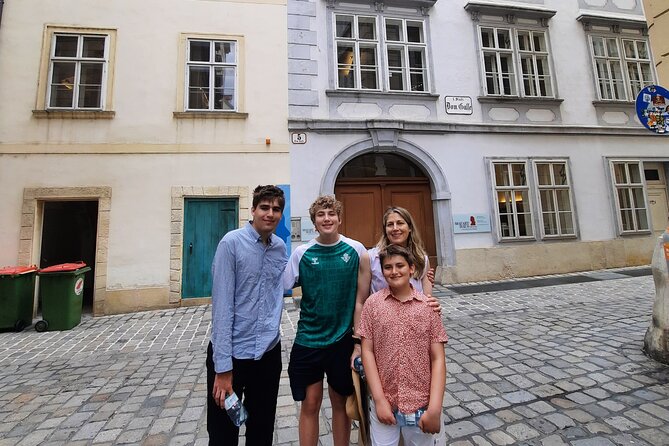
I think you should book it if you want a guided snapshot of Vienna that goes beyond the obvious. The price feels reasonable for what you get: a dense walking route, an included coffee-and-apple-strudel break, and a tour finish at Wiener Staatsoper that gives your day a clean ending.
If your travel style is slow and you love museum immersion, save this for day one as orientation, then spend your later time going deep on the sights that grabbed you most. For many first-timers, this is a practical way to start, learn the city’s structure, and make better choices for the rest of the trip.
FAQ
FAQ
How long is the tour?
The tour lasts about 4 hours.
What is the price per person?
The price is $84.29 per person.
What time does the tour start?
The tour starts at 1:00 pm.
Where does the tour start and end?
It starts at Mozarthaus Vienna, Domgasse 5, 1010 Wien, Austria, and ends at the Vienna State Opera, Opernring 2, 1010 Wien, Austria.
Is the tour in English?
Yes, the tour is offered in English.
Is there a coffee break during the tour?
Yes, the tour includes a 30-minute break in a traditional Viennese coffee house, with coffee and apple strudel.
Are museum entrance fees included?
No. Entrance fees to museums are not included.
How big is the group?
It is a group tour for 4 up to 18 persons, with a maximum of 15 travelers mentioned in the additional info.
What ticket type do I receive?
You get a mobile ticket.
What happens if bad weather cancels the tour?
If the tour is canceled due to poor weather, you will be offered a different date or a full refund.
Is tipping included in the price?
No. Tips are not included.
Just added to the bill for Vienna
Tours, compared.
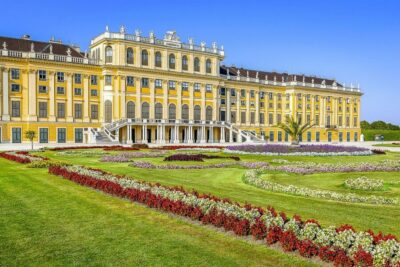
Schönbrunn Palace & Gardens Skip-the-Line Tour
Read our review →
Skip-the-Line Sisi Museum, Hofburg and Gardens Tour
Read our review →
Skip-the-Line Schönbrunn Palace & Gardens Tour
Read our review →
Guided Walking Tour of City Center Highlights
Read our review →