
REVIEW · WALKING TOURS
Graz Private Walking Tour
Graz history hits different when you walk it, not just read it. This private 90-minute route ties together Habsburg residence stories, the influence of the Styrian Diet, and the mix of old streets with modern design hits like Kunsthaus.
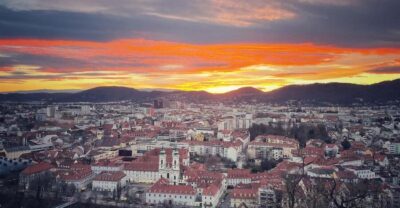
I especially liked how the tour starts with a big picture view from Schlossberg hill, then pulls you down into the city’s actual landmarks. You’ll also get a real-feeling sense of how religion and politics shaped everyday life in imperial Graz.
One consideration: it is a walking tour, so some sections can feel brisk. Bring comfortable shoes, and don’t plan this as a leisurely stroll if you get tired fast.
In This Review
- Key reasons this tour works
- Why Graz feels like a living Habsburg story
- Starting at Hauptplatz: a fast orientation you can feel
- Schlossberg hill: the story begins above the city
- Hauptplatz and the Town Hall: where civic power shows up
- Luegg House and the White House: details that actually matter
- Eagle Pharmacy and Palais Sturgkh: power, style, and identity
- Archduke Johann’s statue and the political timeline in stone
- Landhaushof Renaissance courtyard: the stop that rewards slowing down
- Kunsthaus Graz: switching from imperial to 21st-century design
- UNESCO Old Town since 1999: why the walk feels extra worth it
- Music and cultural heritage you can sense while you walk
- How religion and politics make sense in a short 90 minutes
- Price and value for a private group up to 15 people
- Who should book this Graz private walking tour
- A practical way to get more from the rest of your day
- Should you book it?
- FAQ
- How long is the Graz Private Walking Tour?
- What is the price?
- Where do we meet the guide?
- What languages are offered?
- Is this tour private?
- Are entrance fees included?
- What should I bring?
- Can I cancel for a full refund?
Key reasons this tour works
- Schlossberg hill orientation: Middle Ages viewpoint to set the whole story in context
- Hauptplatz landmarks: Rathaus, Luegg House stucco, and the White House details
- Power mapped in architecture: Pharmacy, palaces, and Archduke Johann’s monuments
- Landhaushof Renaissance courtyard: A standout courtyard you can actually picture
- Kunsthaus stop: Modern architecture contrast inside a short time window
Why Graz feels like a living Habsburg story
Graz has several nicknames, including UNESCO City of Design, City of Human Rights, and a Culinary Capital City angle. Even if you only catch parts of those themes on foot, the effect is similar: the city feels like it keeps reinventing itself while staying anchored to big historical forces.
The big theme on this private walk is Graz as an imperial residence of the Habsburg dynasty. That matters because it explains why the streets hold so many statements of power, faith, and culture. You are not just seeing pretty facades, you are seeing the machinery of a ruling world.
And you do not have to guess what things mean. A local guide helps you connect the dots as you move, in English or German.
More Walking Tours in Graz
- Graz: Old Town Highlights Private Walking Tour
★ 4.6 · 16 reviews - Graz Private Walking Tour With A Professional Guide
★ 5.0 · 5 reviews - Graz Old Town Highlights Private Walking Tour
★ 5.0 · 4 reviews - Private Photoshoot Walk Old Town of Graz
★ 3.0 · 3 reviews
Starting at Hauptplatz: a fast orientation you can feel
The meeting point is practical and easy to find: next to the fountain in the middle of the square, Hauptpl. 1, 8010 Graz. From there, the tour quickly gets you into a rhythm: look around, then learn what you are actually looking at.
If you like tours that help you get your bearings fast, this one fits. In about 90 minutes, you cover enough central highlights that you can later wander independently without feeling lost.
The walk is also private, meaning it is geared to your group and your questions. In the best case, that turns into a tour that feels tailored rather than canned.
Schlossberg hill: the story begins above the city
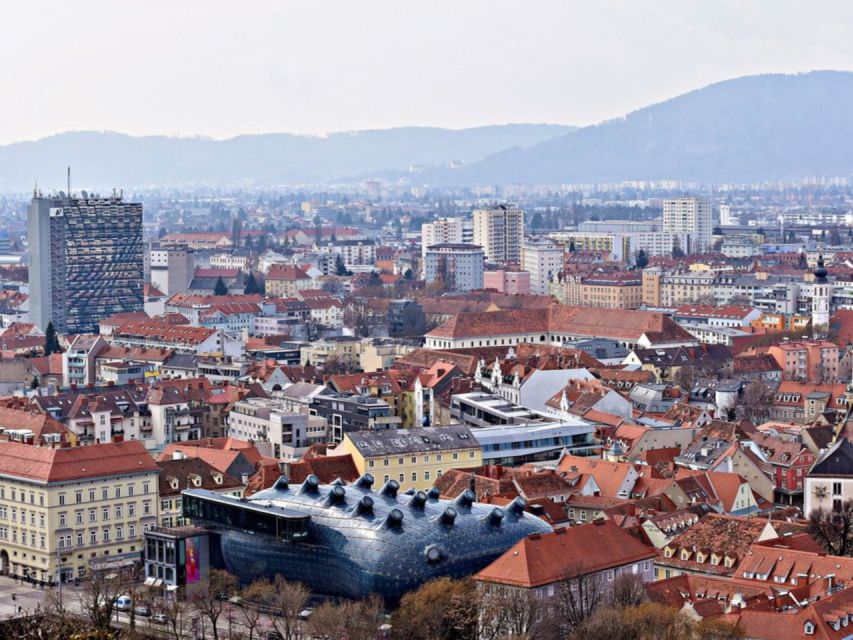
The tour’s first major viewpoint is Schlossberg hill. Even without going deep into exact dates, you get the key idea: Graz’s medieval importance and early merchant presence, including Slavic traders and merchants, are part of why the city developed the way it did.
From this height, the city’s structure starts to make sense. When you later see the market square and surrounding architecture, you understand why these places mattered and how far influence reached.
If you are sensitive to stairs or steep bits, plan to take it steady. You are not hiking for hours, but the terrain is real, and the hill viewpoint is part of why the tour feels “proper” rather than purely surface-level.
Hauptplatz and the Town Hall: where civic power shows up
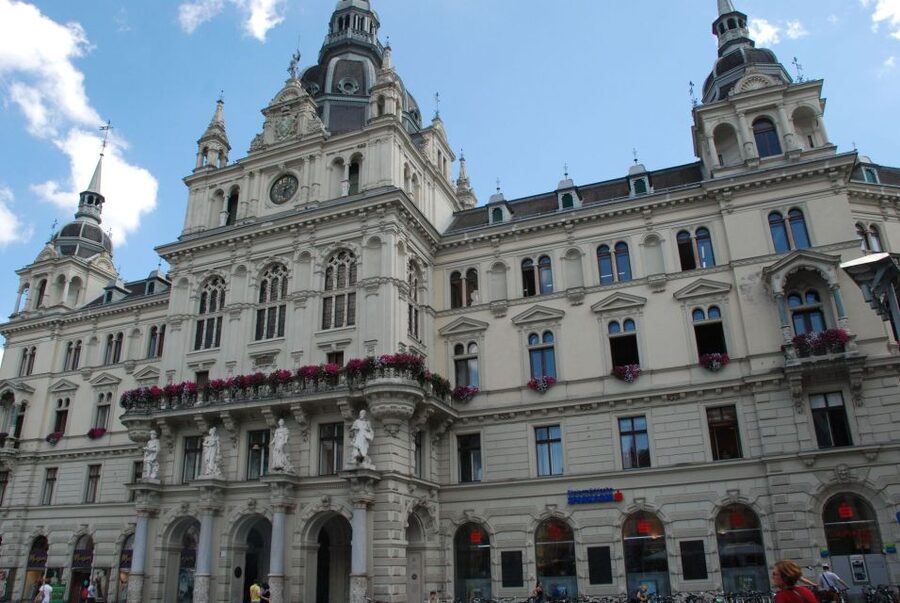
After the Schlossberg perspective, the tour turns to the civic heart of the old town. The Town Hall dominates the market square, and it anchors the idea that Graz was not only a residence of rulers, it was also a functioning city with institutions and public life.
This is a key moment on the walk because it switches your brain from “imperial story” to “how people organized daily life.” Once you see how civic space works here, the rest of the landmarks feel less random.
You also get a clear sense of the old town’s layout, which is UNESCO World Heritage since 1999. That designation is not just a plaque on a wall. It is a clue that the preserved urban fabric is one of the reasons this place rewards slow exploration.
More of Austria on foot, bell tower to bell tower:



Luegg House and the White House: details that actually matter
Two stops that feel like they were chosen for people who like architecture are Luegg House and the White House.
Luegg House brings you to a 17th-century building with an impressive stucco façade. That word matters because stucco work is where you see style as a language, not just decoration. The guide helps you notice what you might otherwise skim past.
Then comes the White House, a five-story structure with a sandstone relief of the Virgin Mary. Religious imagery like this is not there by accident. In a city shaped by the Reformation era pressures and ongoing Catholic influence, religious symbols show up as statements of belief and legitimacy.
If your eyes like details, this part of the tour gives you enough time to really look.
Eagle Pharmacy and Palais Sturgkh: power, style, and identity
Next, you will pass through landmark architecture that reads like a city biography.
The Eagle Pharmacy is a 16th-century stop, and it is a reminder that healthcare, commerce, and status were tied together in older urban life. A pharmacy building was not just for daily needs. It could also signal prosperity and civic standing.
Then you get Palais Sturgkh, a 14th-century presence. The age of the building alone helps you feel the layering of Graz, but the guide’s job is to connect that layer to the story of rulers and institutions.
This is where the tour’s theme of religious and political background becomes practical. You start to see that “history” is not only dates. It is who had influence, where that influence lived, and what styles they used to project authority.
Archduke Johann’s statue and the political timeline in stone
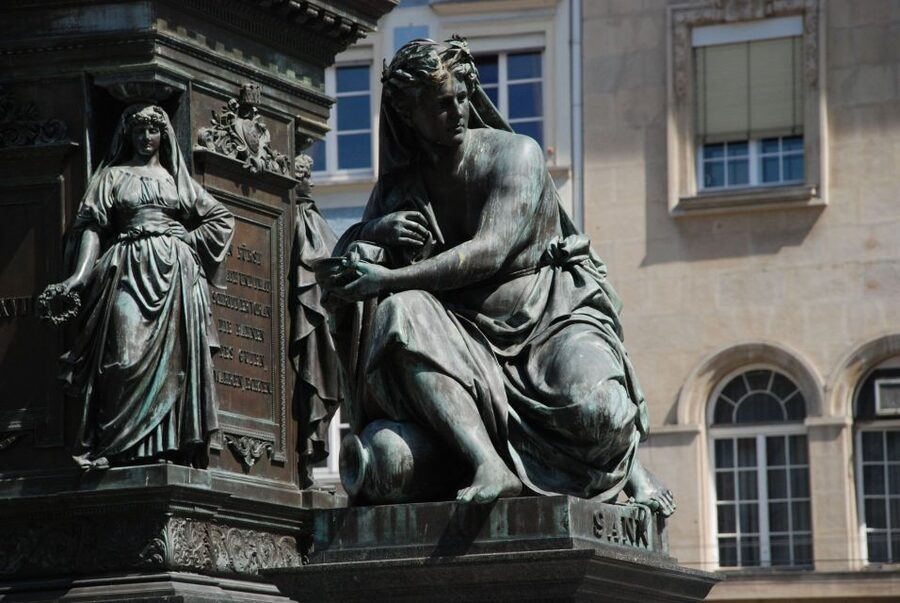
Another distinct landmark is the fountain and statue of Archduke Johann, dating from 1878. This kind of monument does something simple but powerful: it shows what a later era decided to honor.
Monuments help you understand that history is not frozen. It gets reinterpreted by later generations, and the stories you tell about rulers change over time.
On this walk, that gives you a smoother timeline from imperial residence back into a later 19th-century framing. It helps the city feel cohesive, not scattered.
Landhaushof Renaissance courtyard: the stop that rewards slowing down
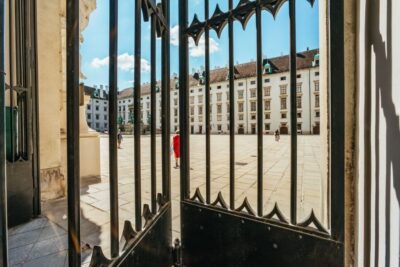
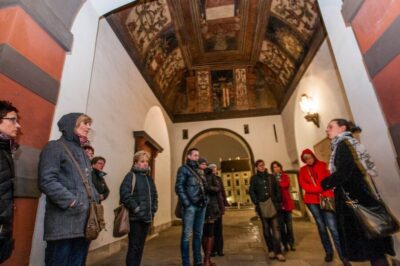
If you want one place where the tour stops feeling like “a list of buildings” and starts feeling like an experience, it’s the Landhaushof and its remarkable Renaissance courtyard, noted as the first one of this kind in the city.
A courtyard is special because it changes the scale. On a street you can take in the skyline and facades, but inside a courtyard you sense structure, rhythm, and intention. You can look up and see the geometry of power and design in one glance.
Renaissance courtyards were built to communicate culture and order. In Graz, this courtyard also links back to the institutional story, setting you up for the next theme tied to the Styrian Diet and the way regional governance shaped the city.
Kunsthaus Graz: switching from imperial to 21st-century design
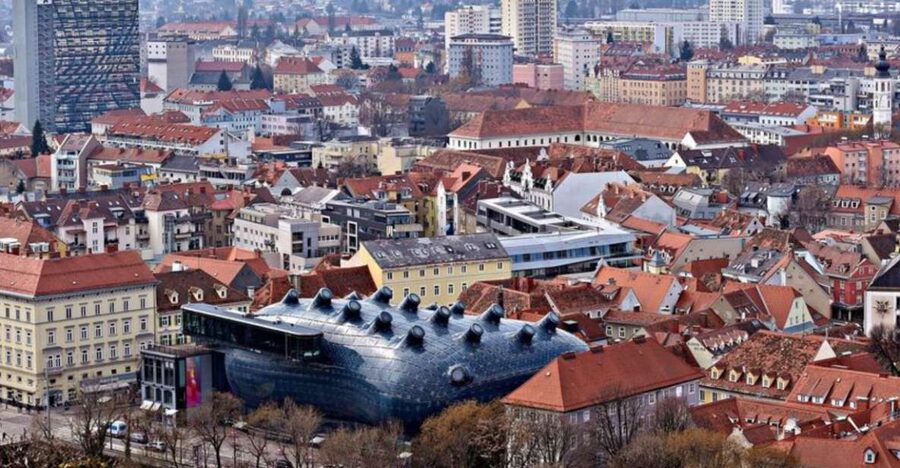
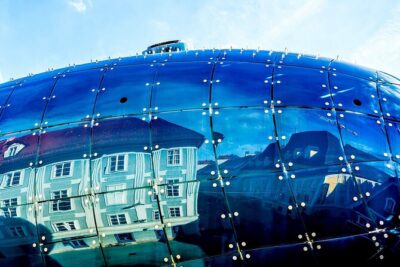
After the older layers, you get a hard contrast with Kunsthaus, Graz’s modern exhibition space. The building is known for its ultramodern, blob-like architecture, and it is exactly the kind of stop that makes Graz feel current instead of museum-only.
This section is about contrast, not just novelty. When you place modern design next to historic imperial architecture, you can see what the city values now. That design identity is part of why Graz carries the UNESCO City of Design nickname.
Even if you do not go inside for an exhibition, the architecture itself is the point. It turns your walk into a story about continuity and change.
UNESCO Old Town since 1999: why the walk feels extra worth it
A lot of European cities have old centers. Graz has a protected core that is UNESCO World Heritage, listed in 1999, and described as one of the best-preserved districts in central Europe.
That preservation matters for you as a traveler. It means the street scale, building placements, and architectural character are still coherent enough for a guided walk to feel meaningful. You are not chasing landmarks across a highway-like grid.
Instead, you can connect the stops into a real route and later keep exploring on your own. The tour acts like a map you can reuse.
Music and cultural heritage you can sense while you walk
One highlight you should expect is music and architectural heritage. The guide’s job here is to help you notice how culture was supported and displayed through court life, institutions, and public spaces.
You will not need a music degree to enjoy it. It is mostly about context: how a city with imperial importance tended to invest in cultural life, and how architecture helped express that investment.
If you care about culture that feels lived-in rather than staged, this is a good fit. The tour keeps things grounded in what the buildings signal.
How religion and politics make sense in a short 90 minutes
The tour specifically aims to explain Graz’s rich religious and political background. In practice, that means you get more than a sermon and more than a royal family tree.
You’ll connect religious imagery like the Virgin Mary relief on the White House with the larger civic and institutional landmarks. You’ll see how palaces, courtyards, and monuments reinforce the same story from different angles.
And because it is private, your guide can shift emphasis if your group cares more about governance, faith, or design. That flexibility is part of why people leave the walk with a clearer sense of the city.
Price and value for a private group up to 15 people
This tour costs $289 per group, up to 15 people, for 90 minutes with a local guide. That price is not “per person,” so the math works best when you can share it.
If you are two people, the cost may feel high compared to group walking tours. But if you have a family, a small circle of friends, or even a small team, the value rises fast because you get a private guide without the usual “small group markup” that many cities charge.
Also, the guide is local and stays with your group only, which is often the difference between a quick photo stop and an actually useful walk. If you want insider context, this format helps.
Entrance fees are not included, so treat this as a walking-and-looking tour. It is best for historic exteriors, courtyard views, and architectural storytelling.
Who should book this Graz private walking tour
Book it if you want:
- A short, focused orientation to central Graz with specific landmarks
- A private guide in German or English
- A route that blends imperial-era buildings with modern Kunsthaus contrast
- Clear storytelling about religious and political background without heavy reading
Skip it if:
- You prefer long museum time over outdoor architecture
- Your group hates walking hills. Schlossberg viewpoint means you will be moving upward at least briefly.
A practical way to get more from the rest of your day
One of the best outcomes of a good guided walk is what happens after it. A strong guide will not just list sites. They help you decide where to go next.
In this case, the guide experience includes offering suggestions for the rest of your day, so you can keep the momentum instead of ending the tour with a blank map.
That turns the 90 minutes into more than a standalone activity. It becomes a launchpad.
Should you book it?
Yes, I would book it if your goal is to understand Graz quickly and see the city’s main architectural and institutional threads in one go. The mix of Schlossberg viewpoint, Hauptplatz landmarks, Renaissance Landhaushof courtyard, and Kunsthaus modern contrast is a smart use of time.
The only real catch is the walking. If you pack good shoes and keep expectations realistic, you will come away with a clearer feel for why Graz earned its major identities.
Given its 4.9 rating based on four verified bookings, this is also a strong signal that the guide experience is landing well.
FAQ
How long is the Graz Private Walking Tour?
The tour lasts 90 minutes.
What is the price?
It is priced at $289 per group, up to 15 people.
Where do we meet the guide?
You meet next to the fountain in the middle of the square at Hauptpl. 1, 8010 Graz, Austria.
What languages are offered?
The live guide is available in German and English.
Is this tour private?
Yes, it is a private group, and the local guide is with your group only.
Are entrance fees included?
No, entrance fees are not included.
What should I bring?
Bring comfortable shoes for walking.
Can I cancel for a full refund?
Free cancellation is available up to 24 hours in advance for a full refund.
Just added to the bill for Graz



Walking Tours, compared.
Guided Walking Tour of City Center Highlights
Read our review →
Guided Walking Tour of City Highlights & Hidden Gems
Read our review →
Vienna Historic Center Small Group Walking Tour
Read our review →
Ghosts and Legends Guided Nighttime Walking Tour
Read our review →Browse the lists this tour appears in