
REVIEW · GUIDED WALKS IN VIENNA
Vienna Historic Center Small Group Walking Tour
Vienna is best understood on foot. This small-group introduction (capped at 15) moves fast, but it never feels rushed, with audio devices so you can actually hear the guide on crowded sidewalks. You start at the grand Maria-Theresien-Platz museum quarter edge, then work your way through the Ring Road and the Habsburg heart of the city.
What I really like is the payoff-to-effort ratio. In about 2.5 hours you get the big visuals, St. Stephen’s Cathedral included, plus the political and cultural context that makes Vienna click instead of just impressing.
One consideration: this is mostly an outside walking tour, and there are no museum entries. If you were hoping to go inside palaces or pay for indoor highlights, you’ll need to plan that on a separate trip.
In This Review
- Key highlights at a glance
- Why this 2.5-hour Vienna walk works for first-timers
- Starting at Maria-Theresien-Platz: the museum quarter that sets the tone
- Ringstrasse and the grand 19th-century plan you can still read today
- Hofburg and Heroes Square: where power stories have good street-level context
- Churches and institutions: the Vienna you feel in your legs
- Burgtheater, Volksgarten, and the quieter side of the city center
- From Palais Ferstel and the University to Freyung and the shopping streets
- Price and value: what $72.56 gets you, and what it does not
- Pace, comfort, and practical tips for a smoother walk
- Should you book this Vienna Historic Center tour?
Key highlights at a glance
- Small group size (max 15) for easier questions and smoother crowd navigation
- Audio devices so every stop stays intelligible, even near busy squares
- Ring Road focus on UNESCO-classic architecture after the old fortifications
- Habsburg power stories at the Hofburg complex, including the Anschluss connection from the castle area
- A smart ending at Stephansplatz where you can keep exploring on your own
- Mostly outdoors, no museum interiors, with occasional weekday indoor moments
Why this 2.5-hour Vienna walk works for first-timers
If Vienna feels huge when you first land, this tour gives you an anchor. It strings together the city’s most recognizable landmarks and the major themes behind them: the Habsburg empire, 19th-century grand urban planning, and the everyday Vienna you still walk through today.
The format also makes sense for real schedules. You can pick from several start times, and the tour runs about 2 hours and 30 minutes. I like that you are not stuck on one rigid “morning only” slot, and you are also not committing to a full day when your energy might be running on jet lag.
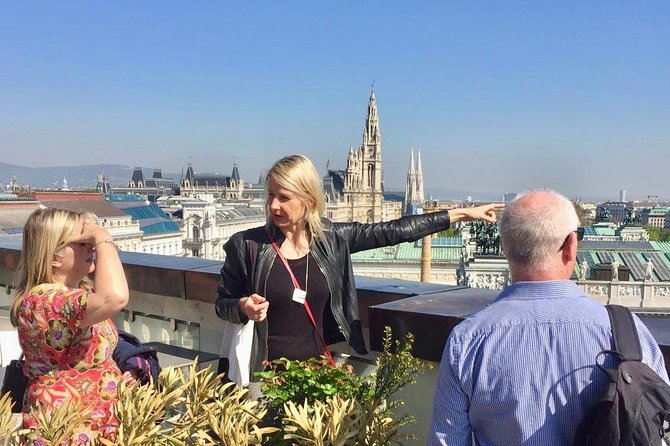
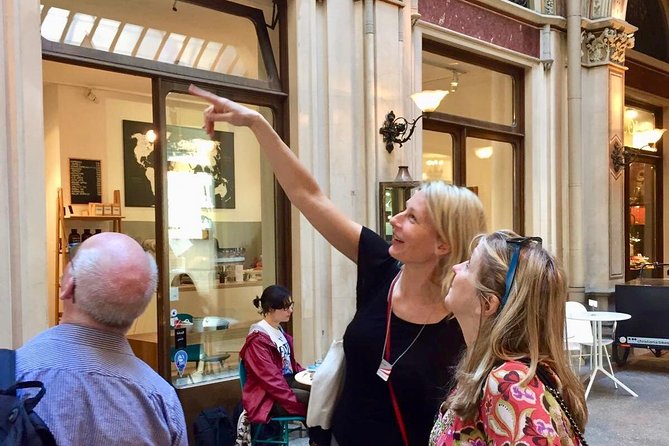
Most importantly, the group size stays human. A cap of 15 travelers means the guide can manage where people stand, and you can ask questions without shouting. Add the provided audio devices, and you get a clear commentary even when you pause in thick tourist foot traffic.
More Guided Walks in Vienna
- Vienna: Guided Walking Tour of City Center Highlights
★ 4.7 · 4,989 reviews - Vienna: Vienna Central Cemetery Guided Walking Tour
★ 4.8 · 3,307 reviews - Vienna: Guided Walking Tour of City Highlights & Hidden Gems
★ 4.9 · 2,180 reviews - Vienna: Viennese Underworld Guided Walking Tour
★ 4.7 · 1,865 reviews
Starting at Maria-Theresien-Platz: the museum quarter that sets the tone
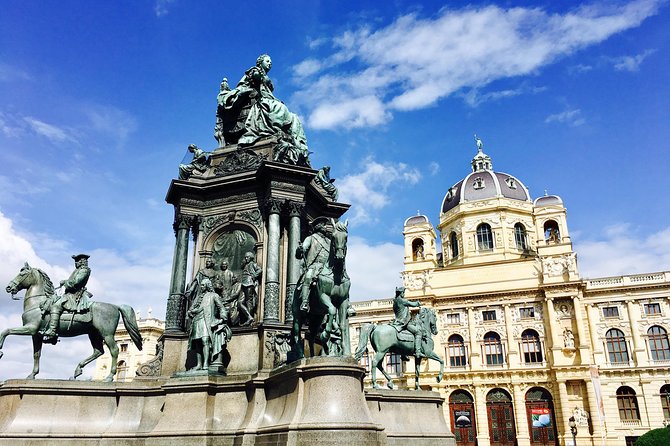
The tour begins at Maria-Theresien-Platz, a wide public square between the Ringstrasse and the Museumsquartier area. You face the twin grand facades of the Natural History Museum and the Art History Museum, and the square itself is anchored by a big statue of Empress Maria Theresa.
This stop is more than a pretty photo op. The guide uses the setting to introduce the “Ring Road era” mindset, when Vienna stopped being a walled medieval city and started building a new civic image. It is the kind of context that makes the rest of the walk easier to understand.
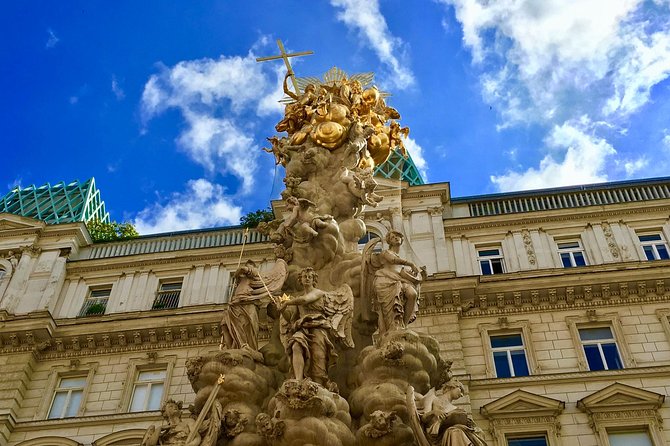
Next comes the Maria Theresia Denkmal on Ringstrasse, a monument that mixes the empress with additional figures, including Wolfgang Amadeus Mozart. Even if you think you know Vienna for music already, this is a nice reminder that Vienna’s famous names are tied to the city’s political identity, not just the arts.
Ringstrasse and the grand 19th-century plan you can still read today
From the museum-square start, you shift to the Ringstrasse, the circular boulevard that replaced the medieval fortifications in the second half of the 19th century. It is UNESCO-listed as part of Vienna’s World Heritage, and it is also the easiest way to grasp how Vienna upgraded itself from “old city” to “imperial capital.”
On the Ring Road walk, you pass through a showcase of architectural styles that Vienna does well: Classical, Gothic, Renaissance, and Baroque elements all mixed into one continuous civic stage. That variety can feel chaotic on your own, but a guide can point out what you are looking at and why it was built that way.
You also stop near major civic power buildings and institutions along the way, including the neo-Gothic Town Hall and the Austrian Parliament Building area. If you only visit Vienna for palaces and churches, this civic angle adds balance, and it helps you understand why Vienna looks the way it does: empire, governance, and public grandeur all in one loop.
A quick scenic pause near the Kunsthistorisches Museum Vienna building helps set the “royal collection” theme. Then you move toward Burgtor, the neoclassical gate built after the Napoleonic Wars, which gives you a literal boundary between the city streets and the Hofburg world.
Hofburg and Heroes Square: where power stories have good street-level context
The Hofburg stop is the emotional core for many people, and it is well used here. The tour moves you through the Hofburg area and explains its role as the former imperial palace of the Habsburgs, the center of power, and how it developed over centuries.
One detail that sticks with me as a traveler is how the tour connects architecture to events. The New Castle area is discussed in connection with the announcement of the Anschluss from a balcony in the castle complex. That is a heavy historical moment, but hearing it in context helps it land rather than feel like a random fact.
From there, you reach Heldenplatz, Heroes Square, a large open green attached to the city after earlier structures were removed during the Napoleonic Wars. The square works like a “reading room” for the Hofburg complex. You can see why this kind of space mattered: it gave the empire a stage for ceremonies and public life.
The tour also references the Austrian National Library and keeps moving so you get the key sights without turning this into a slow crawl. There is also a stop that references the Baroque Winter Riding School at the Hofburg Palace, known for Lipizzan stallions training and performing regularly. You may see it from outside, but the mention is enough to steer your later planning if you want to go deeper.
More of Austria on foot, bell tower to bell tower:
Churches and institutions: the Vienna you feel in your legs
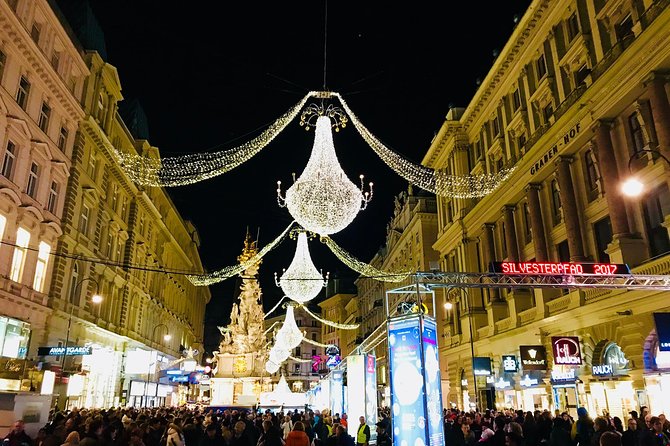
As the walk continues, the tour shifts from big-ticket imperial monuments into the human-scale Vienna that is easier to picture living in.
You pause at St. Michael’s Church, which dates back to around 1220. It is a different kind of atmosphere than the grand Ring Road buildings, and the guide’s commentary makes it feel like a living part of the city rather than just a stop on a checklist.
Then you pass by the Office of the Federal Chancellor of Austria and head toward the Rathaus, Vienna’s City Hall. Rathaus is neo-Gothic and impressively designed, and the tour treats it as both an architectural landmark and an indicator of how the city organizes civic life today.
Along the way, you also get a stop called Historic Center of Vienna, framed as the main subject of the walking route. Ten minutes there is not for museum-style appreciation. It is for orientation: how the old city parts connect, where the important streets and squares sit, and how Vienna’s central neighborhoods “click together.”
There is even a reference to a famous coffee-house vibe, pointing you toward Vienna’s reputation for meetings, writing, music, and ideas over cake and coffee. You will not be sitting through a full coffee-house experience as part of the tour, but the context helps you choose where to go later.
Burgtheater, Volksgarten, and the quieter side of the city center
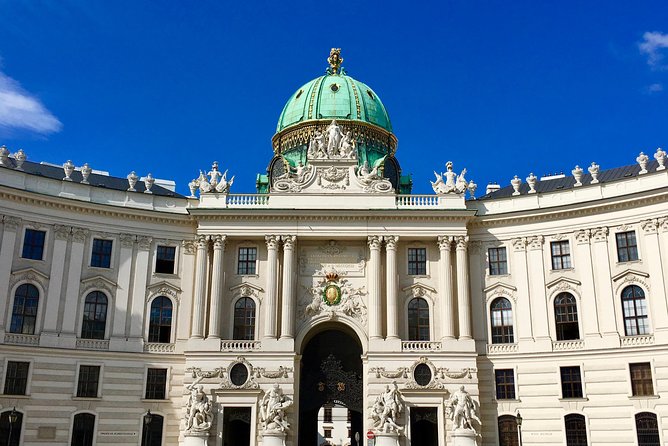
Vienna is famous for performance spaces, and this tour gives you one: Burgtheater. It is described as one of the best theaters in the world, and seeing it from the outside makes it a quick, memorable stop rather than a time-consuming ticket decision.
Next you reach Volksgarten. The park includes the Theseus Temple, a small replica inspired by the Hephaisteion in Athens, and that cultural cross-connection is exactly the kind of detail Vienna loves. The guide also notes the Cortisches coffee house in Volksgarten as a place associated with composer Johann Strauss playing waltzes. If you like music history, this is one of those “wait, that makes sense” moments.
From Volksgarten you get to Beethoven Pasqualatihaus, a former residence of Ludwig van Beethoven on a ramp of the old town fortifications. Again, this is outside viewing and street-level context, but it helps you picture where genius actually lived in the city fabric rather than in an abstract museum.
From Palais Ferstel and the University to Freyung and the shopping streets
The walk continues through Palais Ferstel, originally associated with the Austro-Hungarian National Bank and the Stock Exchange. It is a reminder that Vienna’s grandeur is not only royal. It is also financial, institutional, and tied to how the city modernized.
Then you stop at University of Vienna to hear stories that connect Vienna’s academic legacy to major scientific breakthroughs. Sigmund Freud is mentioned, along with Lise Meitner, the Jewish physicist whose work changed modern science. That mix of humanities and science is a thoughtful contrast to the empire-focused parts of the route.
You also reach Freyung, described as one of the oldest squares in the city center with an intimate, picturesque feel. This stop is a nice “cool down” moment, and it gives your feet a chance to enjoy instead of just endure.
Finally, the tour transitions toward Graben and Kohlmarkt, which are described as the most elegant pedestrian streets in Vienna. You get a clear sense of where the city’s everyday shopping life meets the monument scale of the center.
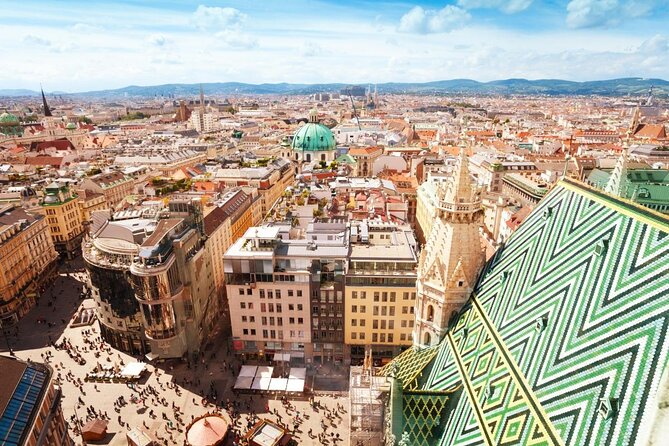
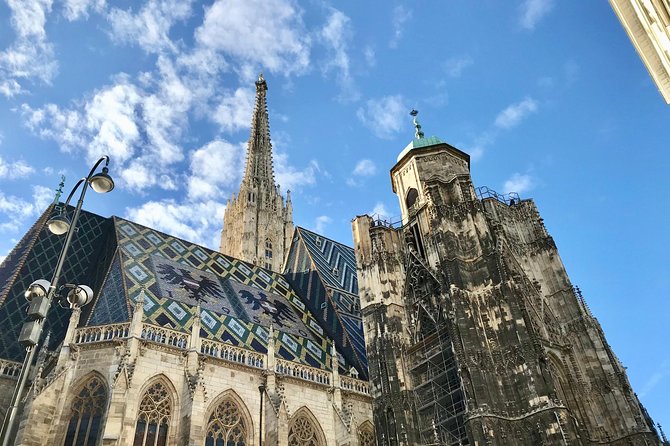
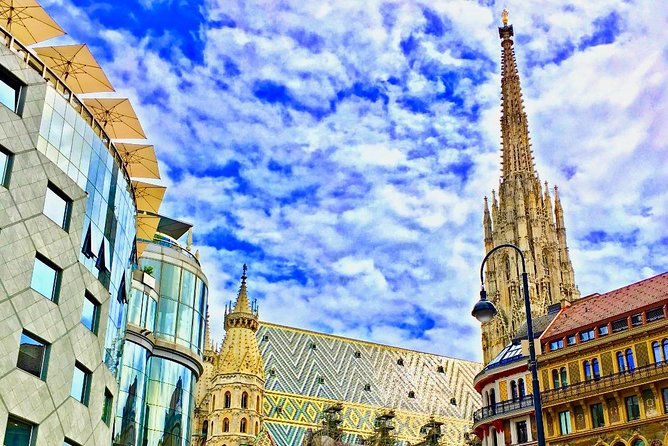
The grand finale is Stephansplatz, positioned as the heart and soul of Vienna, and the tour ends at St. Stephen’s Cathedral. Expect a flurry of atmosphere right here. Even if you have seen photos, being on the square makes the cathedral feel less like an icon and more like the center of the city’s daily rhythm.
Price and value: what $72.56 gets you, and what it does not
At $72.56 per person, this tour is priced like a real guide-led orientation experience, not like a casual self-guided stroll. The value comes from three things that matter in Vienna: the 15-person cap, the audio device support, and the curated route that compresses the city’s major themes into about 2.5 hours.
What you should not expect is museum entry. The tour explicitly does not visit the inside of any museums, and the experience is framed as mostly outdoors. Depending on the weekday, you might see some indoor locations like palaces, the university, or a cafe, but it is not a museum-ticket itinerary.
So the decision is simple. If you want someone to help you interpret what you are seeing and build a smart plan for the rest of your stay, this price is reasonable. If you want paid entry lines, interior-only highlights, and long time inside big institutions, you will likely feel underwhelmed and should add separate museum tickets.
Pace, comfort, and practical tips for a smoother walk
This is a walking tour built for people with moderate physical fitness. It is not recommended for travelers with walking disorders. Reviews also describe it as a lot of walking, with one guest noting around 14,000 steps over roughly 2 hours.
That means you should dress for the conditions and protect your feet. I recommend comfortable shoes with real traction, and if the weather is cold, dress warm and be ready for open-sky walking stretches.
Because the route focuses on outdoor highlights, weather matters. The experience requires good weather, and if it is canceled due to poor weather you should be offered another date or a full refund.
Should you book this Vienna Historic Center tour?
Book it if:
- You are visiting Vienna for the first time and want the major landmarks plus context without spending time figuring things out on day one.
- You like asking questions and want a guide who keeps the story clear while you walk.
- You want a starting point you can build on, since the tour ends right at St. Stephen’s Cathedral where you can branch out.
Skip or supplement it if:
- You want museum interior time. This tour is designed for outside sights and storytelling.
- You prefer a slower pace with fewer stops, since the schedule is built to cover a lot in 2.5 hours.
- You have mobility limits, since it is not recommended for walking disorders.
My verdict: this is one of the better “get oriented fast” options in Vienna. It is built for smart first-day energy, especially if you want to return later on your own with a clearer sense of what matters most to you.
The Habsburg Map
- Vienna: Time Travel and Magic Vienna History Tour
★ 4.6 · 3,879 reviews - Time Travel-Magic Vienna History Tour Ticket
★ 4.5 · 1,099 reviews - Skip-the-Line Schonbrunn Palace Guided Tour and Vienna Historical City Tour
★ 3.5 · 940 reviews - Vienna Mozart Concert in Historical Costumes at the Musikverein
★ 4.5 · 888 reviews
Just added to the bill for Vienna

Guided Walks in Vienna, compared.
Guided Walking Tour of City Center Highlights
Read our review →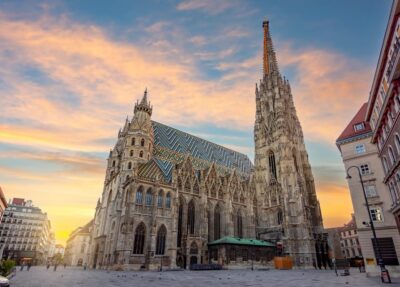
Guided Walking Tour of City Highlights & Hidden Gems
Read our review →
Ghosts and Legends Guided Nighttime Walking Tour
Read our review →
Browse the lists this tour appears in