
REVIEW · WALKING TOURS
Linz Private Walking Tour
Music history starts right on Hauptplatz. This private, 2-hour walk threads together Linz’s Mozart and Beethoven connections with big architectural moments like Austria’s largest church, Mariendom, and you also get a satisfying stop for the iconic Linzer Torte. I especially like how the guide works like your own mini team, sharing practical orientation tips that make the rest of your visit easier. The one thing to plan for is that entrance fees are not included, so if you want to go inside more than you can from the street, you may pay extra.
In a compact route, you’ll move through the Old Town feel you came for: the main square, the Trinity Column, and both the Old and New Cathedrals, plus the Danube area. Several recent guests praised guides such as Sandra for being friendly, clever with explanations, and good at adjusting to what the group wants. The tour style is upbeat and flexible, not a memorization marathon.
If you want a first-time-friendly way to understand why Linz works so well for music lovers, history fans, and architecture nerds, this is a smart pick. And because it is private, you can ask questions without feeling rushed.
In This Review
- Key things I’d bet on
- Linz is small enough to grasp, music-themed enough to remember
- Hauptplatz and the Trinity Column, the tour’s easiest starting point
- City Hall, the Old Cathedral area, and why the Danube matters
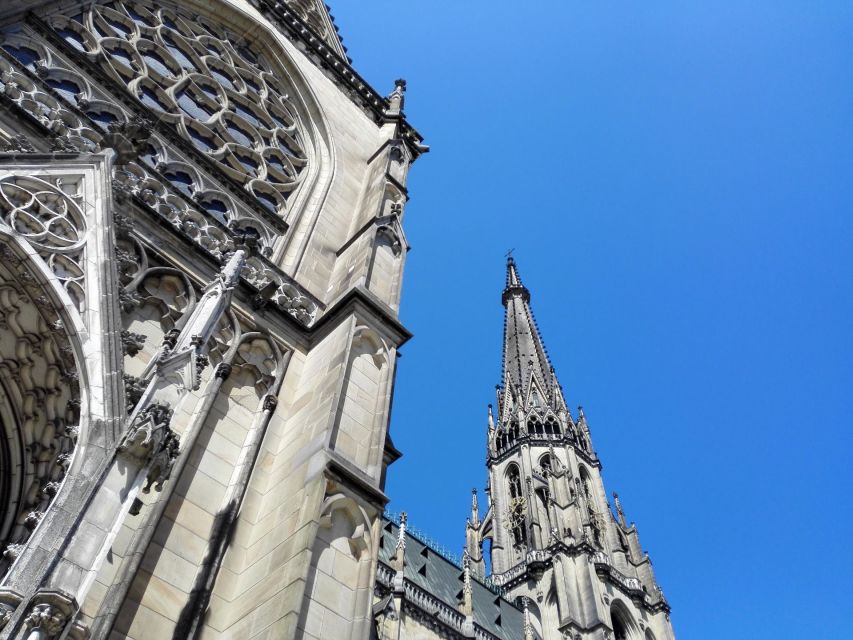
- Mariendom, Austria’s largest church, and what the 134m tower means
- Mozart Residence: the Renaissance building where Linz became a composer’s workshop
- Beethoven’s presence: how your guide connects the music thread
- Linzer Torte, 1653, and why food is part of the story
- What you get for $289 per group up to 15
- Two hours in Linz: how to make the walk work for your day
- Who this Linz tour suits best
- Should you book the Linz Private Walking Tour?
- FAQ
- Where is the meeting point?
- How long is the tour?
- Is this a private tour?
- How many people can be in the group?
- What languages are available?
- Is the price per person?
- Are entrance fees included?
- Can I cancel for a refund?
- How do I pick a start time?
Key things I’d bet on
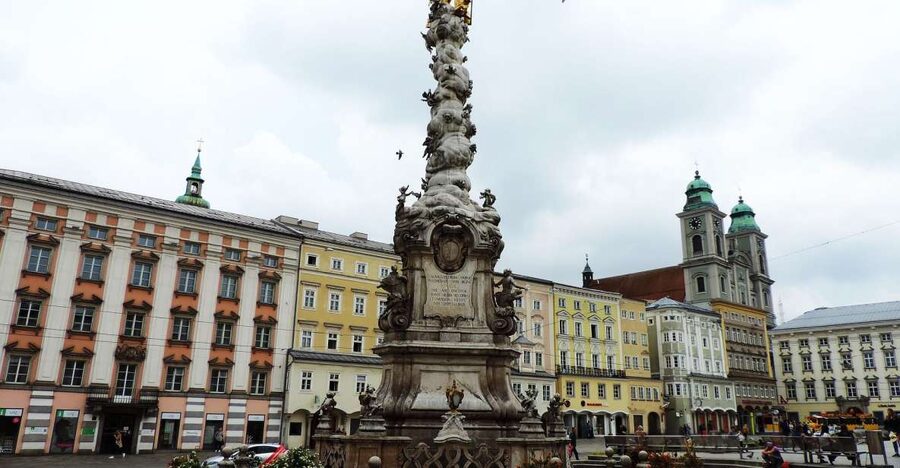
- Hauptplatz meeting point with the 20-metre Trinity Column that was built in gratitude for protection
- Mariendom (New Cathedral) with a 134m tower and room for 20,000 people, the headline church stop
- Mozart Residence in a Renaissance building tied to writing the Linz Symphony and Linz Sonata in just three days
- Linzzer Torte tied to the world’s oldest cake recipe dating from 1653
- Old Town orientation in just two hours, including the Danube River area and major landmarks
- Guide attention to your group’s wishes, based on strong feedback from recent visitors
Linz is small enough to grasp, music-themed enough to remember
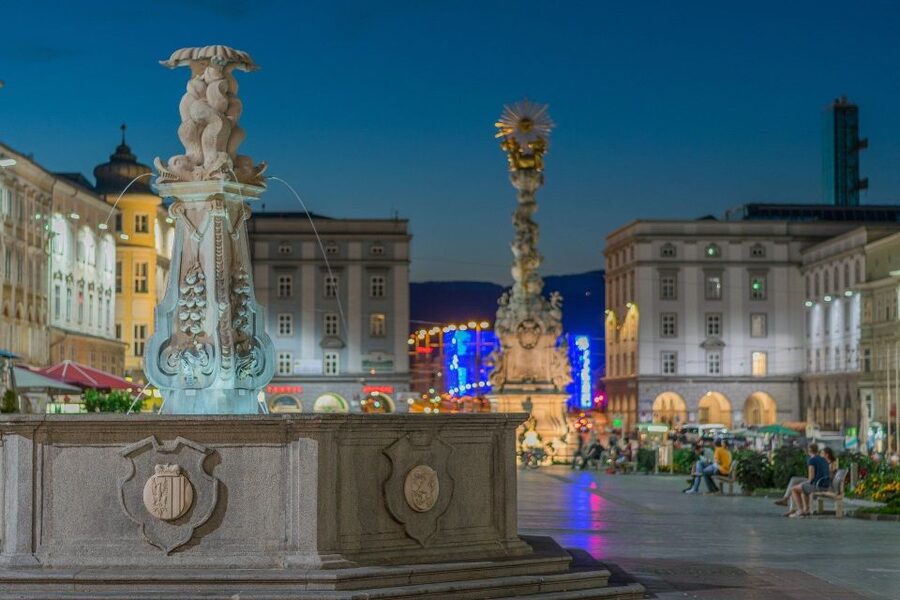
Linz can feel like a city with two tempos. One is the Old Town pulse, with classic squares and church architecture you can read with your eyes. The other is the modern cultural energy, with plenty of museums and a reputation for music and good food.
That mix is exactly why a walking tour like this works. In two hours, you can go from the big religious landmarks to the composer story, and you still get time to connect the dots between the places. Your guide’s job is not just to name buildings, but to explain why Linz’s identity has so much to do with music.
You also get a clear “where to next” feeling. Based on recent guest feedback, the guides tend to share useful tips for the rest of your stay, which is valuable if Linz is new to you or if you want to build a second day around what you learned.
More of Austria on foot, bell tower to bell tower:
- Vienna: Guided Walking Tour of City Center Highlights
★ 4.7 · 4,989 reviews - Vienna: Vienna Central Cemetery Guided Walking Tour
★ 4.8 · 3,307 reviews - Vienna: Guided Walking Tour of City Highlights & Hidden Gems
★ 4.9 · 2,180 reviews - Vienna: Viennese Underworld Guided Walking Tour
★ 4.7 · 1,865 reviews
Hauptplatz and the Trinity Column, the tour’s easiest starting point
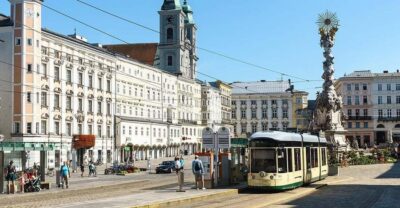
Your walk begins right where the symbolism is concentrated: in front of the Trinity Column on Hauptplatz. The column is an impressive 20 metres high, made of white marble, and it was built in gratitude to the Holy Trinity for protection against fire, war, and plague.
What I like here is that it sets the tone fast. You are not starting with a random street corner. You are starting with a city’s idea of safety, faith, and collective memory in plain stone.
From Hauptplatz, the tour connects you to the visual order of the Old Town. You’ll also look at the City Hall area and get the big-picture sense of how the square and civic buildings relate to the church landmarks later on. Even if you are not a history buff, this part helps you get your bearings fast.
City Hall, the Old Cathedral area, and why the Danube matters
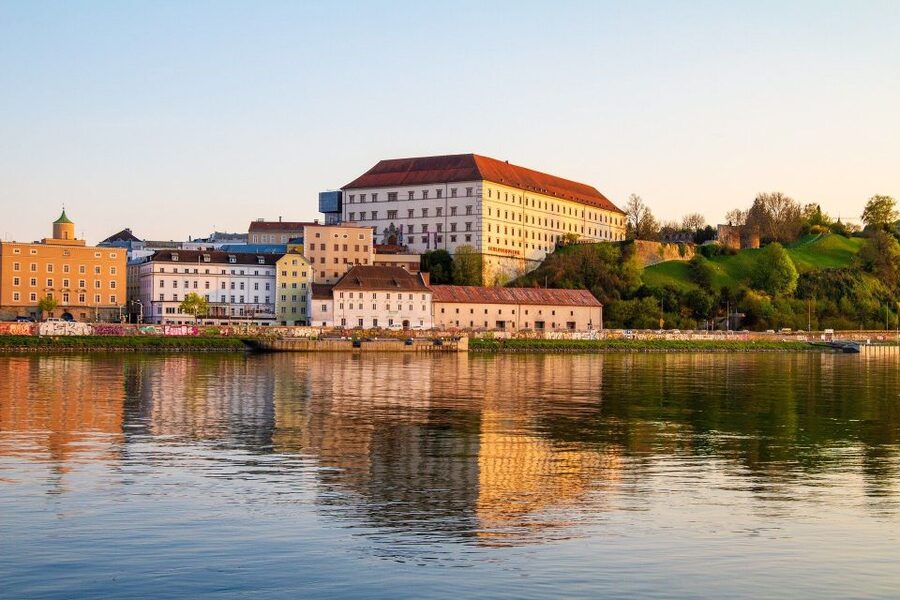
As you continue, the route keeps you moving through the heart of the city rather than sending you off into distant neighborhoods. Expect stops that frame Linz as a place shaped by both religion and public life, with the Danube River area included in the walk.
The Danube connection matters because it’s a constant reference point for how towns like this grew and organized themselves. Even when you are only seeing it from a street-level viewpoint, it helps you understand why a city that celebrates music and culture also cares about trade routes and movement.
Then you’ll reach the Old Cathedral and the transition toward the New Cathedral. This pairing is smart for first-time visitors. Old Cathedral gives you the continuity, while the New Cathedral shows the later architectural ambition. It is the kind of comparison that makes buildings feel like chapters, not just backdrops for photos.
Mariendom, Austria’s largest church, and what the 134m tower means
The star moment is the neo-Gothic New Cathedral, also called Mariendom. This is Austria’s largest church, with a 134m tower and space for 20,000 people.
Seeing it on foot is better than seeing it in pictures, because you can feel the scale in stages. The tower height is the obvious headline number, but what really lands is the sense of planned capacity, this idea that the building was meant to hold the city’s community at major moments.
In a tour format like this, your guide’s value is in pointing out architectural cues and connecting them to Linz’s religious story. You are learning how design choices reflect devotion and civic pride, not just ticking off a landmark.
One more practical note: churches are a top reason people stop, but they also can create the temptation to linger. In a two-hour tour, you’ll get the highlights, yet if you want longer interior time, plan on adding that yourself after the walk, since entrance fees are not included.
Held over another night in Linz

Mozart Residence: the Renaissance building where Linz became a composer’s workshop
Next comes one of the most specific music stories in the whole route: the Mozart Residence. You’ll look at this Renaissance building tied directly to when Mozart composed the Linz Symphony and the Linz Sonata in only three days.
That three-day detail is huge. It turns a composer’s timeline from abstract to concrete. Instead of hearing that Mozart visited, you get the sense that Linz was a working space, a place where composition happened quickly and intensely.
If you like music, this stop makes the rest of your trip more meaningful. When you later listen to the Linz Symphony, you can mentally place it where the story began. And if you are more of a casual music fan, the guide’s explanations usually make it easy to follow, since the connection is straightforward: building, composer, and a clear timeframe.
Beethoven’s presence: how your guide connects the music thread
The tour highlights include Beethoven’s compositions as well, and the way this usually works in a walking tour is through “musical map making.” You’re not just hearing that Linz has a musical legacy. You’re being guided to connect what you see around you with what the composers represent.
That matters because Linz’s music identity is not only about one composer standing in isolation. It’s about a city that places musical achievement into its cultural memory alongside the architecture and civic life you can physically walk past.
I’d treat this part as your chance to ask questions. If you care more about Beethoven than Mozart, or if you want help understanding which pieces are associated with which periods, your private guide format makes it easier to tailor the conversation.
Linzer Torte, 1653, and why food is part of the story
The tour includes the iconic Linzer Torte, tied to the world’s oldest cake recipe dating from 1653. I love when a walking tour uses food as a cultural anchor, because it turns a historic date into something you can actually taste or at least experience directly as part of the moment.
Here’s the clever angle: the Linzer Torte is not a random dessert stop. It’s a piece of heritage, like the Trinity Column, but in a form you can enjoy. A recipe surviving that long speaks to local identity and the kind of continuity that also shows up in the city’s church and civic landmarks.
If you are traveling with people who think history is boring, food can convert them. Even if you are mostly here for architecture, it helps to end or punctuate the experience with something that feels recognizably human, not just stone and dates.
What you get for $289 per group up to 15
Pricing is always the big question, so here’s the practical way I’d judge value. You pay $289 per group, up to 15 people, for a two-hour private walking tour with a local guide who works with your group only.
That means the cost is not “per person,” it is “per group.” If you’re a pair, it can feel like a big splurge compared to shared tours. If you have a small group of friends or family, the math gets easier because you’re splitting one private guide cost across more people.
Also note the tour clearly separates guide time from extras: entrance fees are not included. That is normal for tours like this, but it does affect your total budget if you plan to go inside sites. Still, the core value here is the guided interpretation, especially around Mozart, Beethoven, and the main church landmarks.
My take: if you want a smooth introduction to Linz that ties music and architecture together, a private guide for two hours is often worth it. It prevents you from wandering and guessing what matters most, and it adds context you can’t easily get from signage.
Two hours in Linz: how to make the walk work for your day
This tour lasts two hours, so think of it as a “high signal” overview, not a deep museum day. Wear comfortable shoes, because you’ll cover multiple central landmarks by foot. Bring a small bottle of water if you are in warmer weather, since you’ll be outside much of the time.
Also, since the route centers on key Old Town points, it’s a good idea to schedule it earlier rather than later. After the walk, you’ll know what to return to if you want more time at Mariendom or the Mozart-linked areas. If you do it on day one, you can turn the tour’s orientation into a plan for the rest of the trip.
Finally, private means you can adapt. If your group wants to slow down for photos at a specific stop, or if you want extra time around the composer-related stories, your guide can usually adjust. Recent feedback specifically praised how guides handled group wishes and offered helpful next-step suggestions, and that’s exactly the kind of flexibility you want from a private tour.
Who this Linz tour suits best
This is especially good for:
- music lovers who want Linz framed through Mozart and Beethoven connections
- people who enjoy architecture and religion as part of understanding a city
- first-time visitors who want a tight Old Town introduction with major landmarks
- small friend groups or families who want a private pace
- anyone who values a guide who can respond to what the group wants, with strong praise for guides like Sandra for being personable and skilled
If you already know Linz well and want a detailed museum crawl, you might find two hours too short. But if you want the city’s key themes stitched together in one walk, it hits a sweet spot.
Should you book the Linz Private Walking Tour?
I’d book it if Linz is new to you and you want a guide-led way to connect music, architecture, and food heritage quickly. The highlights are very specific and high-impact, from the Trinity Column’s protection story to Mariendom’s scale, then directly into Mozart’s three-day composing window, and finally the Linzer Torte rooted in 1653.
I would not book it expecting that everything will be fully self-contained. Entrance fees are not included, so if you want extra interior time, budget for that. And if your group is very into long stays inside buildings, consider pairing this with a follow-up on your own.
If you want a practical, private introduction to Linz that you can build on afterward, this tour is a strong choice.
FAQ
Where is the meeting point?
You meet in front of the Trinity Column on Hauptplatz, 4020 Linz, Austria.
How long is the tour?
The tour lasts 2 hours.
Is this a private tour?
Yes. It is a private group experience with a local guide who will be with your group only.
How many people can be in the group?
The price is per group up to 15 people.
What languages are available?
The live tour guide offers English and German.
Is the price per person?
No. The price is $289 per group.
Are entrance fees included?
No. Entrance fees are not included.
Can I cancel for a refund?
Yes. You can cancel up to 24 hours in advance for a full refund.
How do I pick a start time?
You check availability to see starting times.
Just added to the bill for Linz
Walking Tours, compared.
Guided Walking Tour of City Center Highlights
Read our review →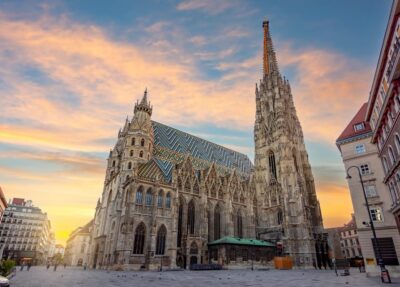
Guided Walking Tour of City Highlights & Hidden Gems
Read our review →
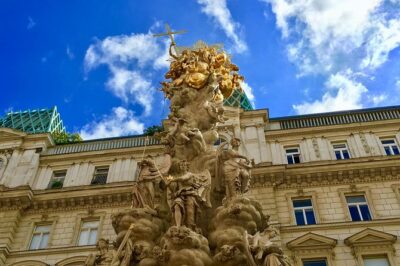
Vienna Historic Center Small Group Walking Tour
Read our review →
Ghosts and Legends Guided Nighttime Walking Tour
Read our review →Browse the lists this tour appears in