REVIEW · VIENNA TOURS & ACTIVITIES
The devilish Vienna
Vienna gets its night-time horror. The devilish Vienna tour strings together ghost stories and grim medieval legends through real inner-city spots, with spine-tingling storytelling that feels like theatre on cobblestones. I love how it connects famous cinematic and religious landmarks to the darker beliefs that grew around them.
Two things I especially like are the compact 2-hour route and the way the guide’s performance keeps the pace moving. One drawback to consider is the tone: if you prefer cheerful city history, this can feel bleak, spooky, and a bit graphic in its themes.
In This Review
- Key highlights you will feel on the walk
- What The Devilish Vienna is really about (and who it suits)
- The timing and pacing: why 2 hours feels just right
- Price and value: what $45.38 buys you
- Where you start and how the route flows through dark Vienna
- Stop by stop: what you’ll see and why it matters
- Josefsplatz: sewer-world Vienna and the Harry Lime connection
- Michaelerplatz: mummies, Michaelergruft, and legend’s pull
- Neuer Markt: Capuchin Crypt, hidden dungeons, and punishment talk
- Rauhensteingasse: torture-prison folklore and the Mozart death-house legend
- Blutgasse: the Templar massacre alley and its curse
- Stephansplatz, revisited through St. Stephen’s Cathedral symbolism
- The final stretch to Dr. Ignaz Seipel Platz: plague pits and the meaning of burial stories
- The guide factor: Stefan’s performance style
- How to make the most of it on a real Vienna night
- Weather and comfort: the one factor you cannot control
- Should you book The devilish Vienna?
- FAQ
- How long is The devilish Vienna tour?
- How much does The devilish Vienna cost?
- Where do I meet for the tour?
- Is a mobile ticket used?
- How big are the groups?
- Is public transportation nearby?
- Are service animals allowed?
- What is the cancellation policy?
- What happens if the weather is bad?
- When will I get confirmation?
Key highlights you will feel on the walk
- Josefsplatz, where Harry Lime’s story meets Vienna’s underworld
- Michaelerplatz and the idea of mummies, mixing legend with real places
- Capuchin Crypt area, plus talk of prison dungeons and harsh monastic discipline
- Torture-prison stops, including the Elisabeth Plainacher story
- St. Stephen’s Cathedral symbolism, including devilish details and tower lore
- Plague-era tales around Dr. Ignaz Seipel Platz, including burial-alive themes
What The Devilish Vienna is really about (and who it suits)
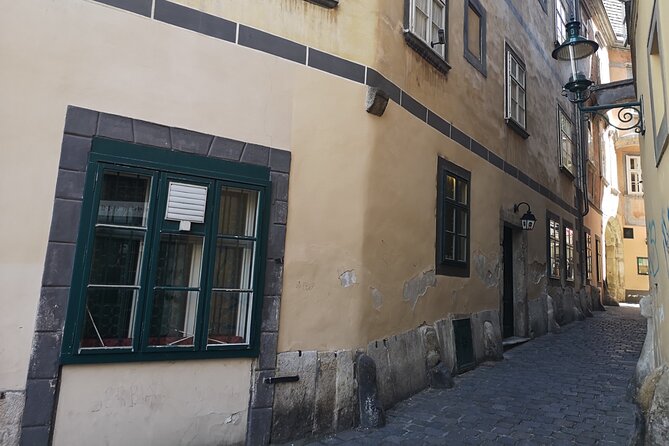
This is not a museum tour. It is a walking show that uses Vienna’s most photogenic streets as a stage for dark folklore, grim punishment stories, and supernatural explanations people attached to everyday buildings. You get the sense that the city wanted to forget some chapters, then the stories refused to die.
The best part for you is that the tour stays grounded in places you can point at. You are not just hearing “dark history” in the abstract. You stop, look around, and the guide ties the story to what you can actually see nearby: alleyways, church grounds, cathedral exterior details, and famous squares.
It suits you if:
- you like gothic atmosphere and folklore,
- you enjoy clever storytelling more than strict academic history,
- you want a night plan that feels different from the usual palace and museum loop.
It may not suit you if:
- you get anxious around horror-style stories,
- you want a quiet, low-energy walk,
- you cannot tolerate tales of torture and plague-era suffering, even if presented as legend and context.
Held over another night in Vienna
- Vienna: Vivaldi’s Four Seasons Concert in Karlskirche
★ 4.7 · 14,951 reviews - Vienna: Spanish Riding School Training
★ 3.9 · 9,281 reviews - Vienna: Schönbrunn Palace & Gardens Skip-the-Line Tour
★ 4.7 · 7,739 reviews - Vienna: Light of Creation Votive Church Immersive Light Show
★ 4.8 · 6,779 reviews
The timing and pacing: why 2 hours feels just right
The whole experience runs about 2 hours, and the route is made for walking without turning into a marathon. The guide keeps each stop short, often around 10 to 20 minutes, so you get a steady rhythm: story, location, quick pause, then on to the next corner.
For me, that matters because you can stay focused. Vienna’s center is huge in texture, and it is easy to lose the thread when you walk too long between explanations. Here, the cadence helps you remember names and places. It also helps you avoid that end-of-tour fatigue that can make a “spooky night” feel like a chore.
The group size cap of 20 travelers also helps. You are not stuck in a huge pack. You can hear the guide and still see the buildings.
Price and value: what $45.38 buys you
At $45.38 per person, this is a mid-range price for a short, guided, inner-city experience. What makes it feel fair is the mix of:
- a guided route through multiple iconic points,
- story performance rather than reading plaques,
- and a “mobile ticket” setup that keeps things simple once you meet up.
Also, this kind of tour is often best when you travel on a schedule. You are not planning a special museum visit. You are adding a themed experience that fits easily into an evening, especially when the city is lively and the light changes fast.
If your goal is to cover lots of heavyweight sights in one day, you might choose a ticketed attraction instead. But if your goal is atmosphere and memorable stories tied to real streets, this price works.
Where you start and how the route flows through dark Vienna
You meet at Stephansplatz 5, 1010 Wien, and the tour ends at Fleischmarkt, 1010 Wien. That placement is smart. Stephansplatz is a natural arrival point, and the ending area sits near the inner-city street grid where you can easily keep exploring after the tour.
As you walk, the tour’s theme turns the usual sightseeing order upside down. You start with places linked to devilish symbolism and religious monuments, then the stories drop you deeper into burial legends, secret prison talk, and underworld imagery.
After the interval, more from Vienna:

Stop by stop: what you’ll see and why it matters
Josefsplatz: sewer-world Vienna and the Harry Lime connection
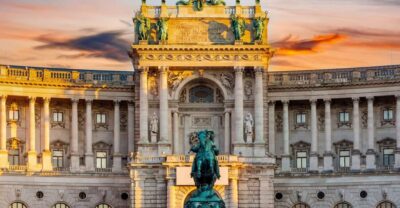
Josefsplatz sets the tone fast. The story here links the area to the film setting around Harry Lime’s enigmatic death and the hunt that goes into the city’s underbelly. Even if you only know Vienna from bright postcards, the tour reframes the square as a doorway into rumors about cellars, bunkers, canals, and that famous feeling that something moves beneath the city.
Two practical benefits for you:
- you get a clear “underworld” theme early, so the later stops make sense,
- and you learn how Vienna’s physical layers, above and below ground, become story fuel.
A small consideration: if you are not into film-linked references, you might still enjoy the mood, but you may not get the extra “pop” from that connection.
Michaelerplatz: mummies, Michaelergruft, and legend’s pull
At Michaelerplatz, the tour shifts to the idea of mummies in Vienna. You hear about the Michaelergruft and how people wrapped the mummification story in mystery and legend. This is a classic Vienna ingredient: a real setting, then the human need to explain the unexplainable.
Why this stop works: it teaches you how stories travel. The tour shows how a religious or crypt-like space can become a magnet for folklore, because it feels secret even when you are standing in plain sight.
If you prefer a purely historical lens, keep your expectations flexible here. This is still a legends-style stop, not a lab report.
Neuer Markt: Capuchin Crypt, hidden dungeons, and punishment talk
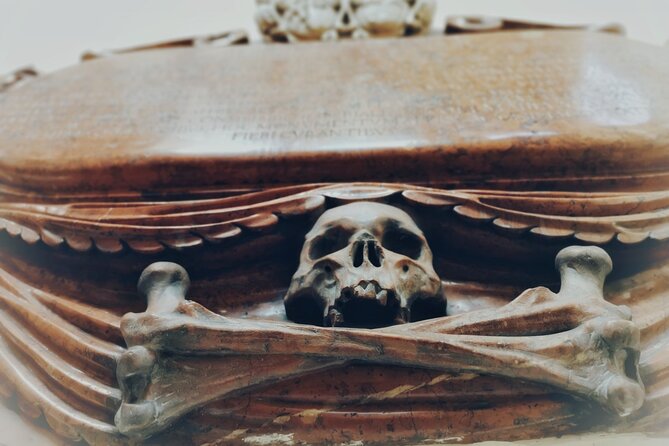
At Neuer Markt, the focus turns toward the Imperial Crypt area, described as the most important cemetery in Central Europe, and then into darker territory: hidden prison dungeons under the Capuchin church and the cruel punishments connected to Capuchin monks.
This stop is valuable because it gives you a sense of why the stories sound so severe. In many European cities, burial and punishment were tightly linked, and the tour uses that logic to explain the emotional weight people placed on these spaces.
Watch for this drawback: the “prison dungeon” themes are part of the spooky entertainment style. You may find it heavy if you are already sensitive to stories of suffering.
Rauhensteingasse: torture-prison folklore and the Mozart death-house legend
Rauhensteingasse is one of the most memorable parts of the route, with two linked story stops.
First, you visit House No. 10, tied to the former Malefizspitzbubenhaus, described as Vienna’s infamous torture prison. Here the guide covers the imprisonment and torture of Elisabeth Plainacher, presented as the only witch in Vienna in the tour’s storytelling.
Then you move to House No. 8, connected to Mozart’s death house. The tour mentions a legend about a ghostly gray boat that commissioned the requiem and, according to the story, pushed Mozart toward his death. It also nods to how the legend appears in the film Amadeus.
Two reasons you will like this stop:
- it pairs “real address” realism with supernatural claims,
- and it gives you pop culture overlap, so the stories stick in your head.
A consideration: because this stop stacks multiple grim themes in a short stretch, you might want to mentally pace yourself if you are feeling emotionally affected by torture and illness-era legends.
Blutgasse: the Templar massacre alley and its curse
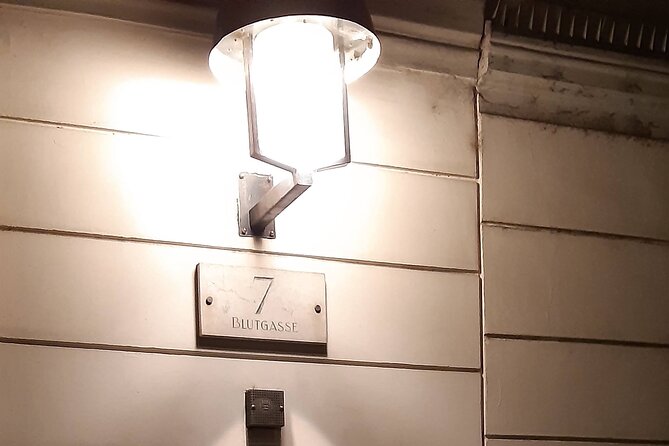
At Blutgasse, the tour tells the legend behind the alley’s name, tied to a massacre associated with the Knights Templar and a curse that supposedly lingered afterward.
This is the kind of story that Vienna does well, because the city has lots of narrow lanes where names feel like they should mean something. The guide uses that setting to make the curse feel plausible in the local imagination.
Practical tip: this is a great moment to look down the alley as you listen. The narrowness and street perspective are part of the effect. The story lands harder when you see how the space funnels attention.
Stephansplatz, revisited through St. Stephen’s Cathedral symbolism
Back near the grand anchor of the walk, the tour turns to the exterior of St. Stephen’s Cathedral. You hear why the north tower is only half as high as the south tower, plus devilish symbolism on the exterior. There is also mention of a legend involving Master Buxbaum and a pact with the devil.
This stop is useful even if you are not into horror for its own sake. It teaches you to read the cathedral like a text, not just a landmark. When you understand how folklore attaches to architecture, your sightseeing changes.
One drawback: if you are expecting the cathedral interior, this tour is focused on exterior symbolism at this point. Plan for photos and exterior details, not indoor access from this experience alone.
The final stretch to Dr. Ignaz Seipel Platz: plague pits and the meaning of burial stories
As you walk from Fleischmarkt toward Dr. Ignaz Seipel Platz, the story gets plague-heavy. The tour covers the Sage of the Dear Augustine, described as being thrown alive into a plague pit, and it also frames related historical reality of burial alive in Vienna, plus measures taken afterward to avoid that.
This ending matters because it shifts from supernatural framing to social consequence. Even when the stories include legend, the guide keeps pointing you toward the human reality behind the fear: plague, panic, and the desperate systems people built to manage mass illness.
If you do not like grim endings, just know this is where the mood is darkest. It is also where you may feel the most clarity about why people told these stories as warnings.
The guide factor: Stefan’s performance style
One of the strongest reasons people book this kind of tour is the guide, and here the guide is Stefan. From what you can expect in the tone, he does not just recite. He performs. That means you get sharper pacing, more theatrical emphasis, and a feeling that you are in the middle of the story rather than reading about it from behind a microphone.
I like performance guides because they make walking tours feel alive. You will also appreciate that the stop lengths are short enough to stay in the flow, so Stefan can keep the energy without dragging you through the same intensity for too long.
If you want a calmer experience, ask yourself if you enjoy “scary story voice” in public. If you do, this tour style is a good match.
How to make the most of it on a real Vienna night
Because the tour is centered on mood, you will get more out of it if you treat it like an evening activity, not a quick side errand.
Here are practical ways to boost your experience:
- Wear shoes for cobblestones and uneven streets. The tour is mostly walking.
- Bring a light layer. Evening air can cool quickly in Vienna.
- Keep your phone ready for photos, especially at cathedral and alley stops, but do not let screens break your attention.
- Go in with a flexible mindset. Some parts are legend, some parts are historical context, and the magic is in how the guide connects them.
Also, this tour is called The devilish Vienna. That title is not marketing fluff. The exterior symbolism, devilish lore, curse stories, and plague-era fear themes are the thread that ties the route together.
Weather and comfort: the one factor you cannot control
The experience requires good weather. If it gets canceled due to poor weather, you will be offered another date or a full refund.
This matters because you are outside the whole time. If rain is common in your travel window, consider packing a compact umbrella or rain layer. If you get bad weather, do not assume you can “just wait it out.”
Should you book The devilish Vienna?
Book it if you want:
- a 2-hour Vienna ghost tour that feels like performance,
- stories tied to real inner-city addresses,
- and a different side of Vienna beyond palaces and imperial interiors.
Skip it if you:
- dislike horror themes or grim punishment and plague stories,
- want a purely academic or lighthearted walk,
- or you are traveling when weather is very likely to derail outdoor plans.
If you can swing it, this is especially good when you want a night plan that still feels close to the city’s center and easy to connect with dinner and further walking after. And if you enjoy a guide who can act as well as explain, you are in the right place.
FAQ
How long is The devilish Vienna tour?
It runs for about 2 hours.
How much does The devilish Vienna cost?
The price is $45.38 per person.
Where do I meet for the tour?
You meet at Stephansplatz 5, 1010 Wien, Austria, and the tour ends at Fleischmarkt, 1010 Wien, Austria.
Is a mobile ticket used?
Yes, the tour uses a mobile ticket.
How big are the groups?
The tour has a maximum of 20 travelers.
Is public transportation nearby?
Yes, it is near public transportation.
Are service animals allowed?
Yes, service animals are allowed.
What is the cancellation policy?
You can cancel for free up to 24 hours in advance for a full refund. If you cancel less than 24 hours before the start time, the amount you paid will not be refunded.
What happens if the weather is bad?
The experience requires good weather. If it is canceled due to poor weather, you will be offered a different date or a full refund.
When will I get confirmation?
Confirmation is received at the time of booking.
Just added to the bill for Vienna
Vienna Tours & Activities, compared.
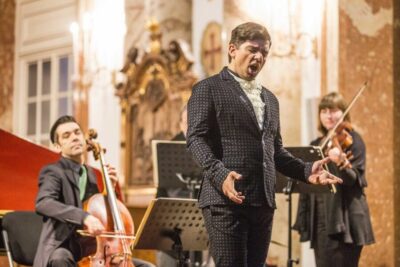
Vivaldi’s Four Seasons Concert in Karlskirche
Read our review →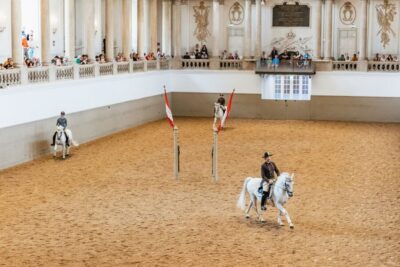
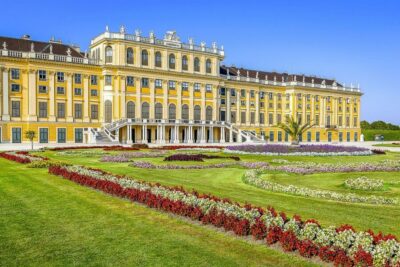
Schönbrunn Palace & Gardens Skip-the-Line Tour
Read our review →
Light of Creation Votive Church Immersive Light Show
Read our review →
Classical Concert in the World-Famous Musikverein
Read our review →