REVIEW · TOURS
Vienna: ‘Armenia In The Heart Of Austria’ Tour
Vienna hides a whole Armenia behind monastery walls. This 2 hour tour turns the Mekhitarist Monastery into a living history lesson, and I especially loved Maria Schutz Church and the stop at the Mekhitarist Library, where the scale of the collection is genuinely jaw-dropping. One possible drawback: this is a religious and cultural focus, so if you came to Vienna for grand palaces and street views only, you might find it a bit more “inside” than you expected.
I also like that it stays human-sized, limited to 10 people, and you get a live guide in English, German, or Armenian. You start right at the monastery entrance and end with a Mechitharine liqueur tasting, which is a fun, practical way to connect the art and manuscripts to everyday tradition. If you dislike tastings, you can still enjoy the museum and library, but the liqueur part is baked into the experience.
In This Review
- Key things you should notice before you go
- Entering the Mekhitarist Monastery, where Vienna gets an Armenian soul
- Maria Schutz Church: why the building and the altars hit so hard
- The Loretto-Chapel and the story of Mary with the Rose
- The refectory stop: art that makes the monastery feel big
- Mekhitarists Museum and Library: where the Armenian story turns into paperwork, art, and coins
- Manuscripts, numismatics, ceramics, carpets, and even Aivazovsky
- How the tour ends with Mechitharine liqueur, and why that matters
- Price, timing, and whether $84 makes sense for a 2 hour Vienna stop
- Who this tour is perfect for, and who might want something else
- Quick guide to getting the most from your visit
- Should you book Armenia In The Heart Of Austria?
Key things you should notice before you go

- Small group access: limited to 10 participants, so questions are actually possible.
- Maria Schutz Church details: you see standout altar works tied to St Mary’s protection of Armenia and St Gregory the Illuminator.
- Turkish siege connection: the Loretto-Chapel includes Mary with the Rose, tied to the rescue after 1683.
- A monumental refectory painting: The Feeding of the Five Thousand is presented as the refectory’s major visual centerpiece.
- Library and museum scale: you’re not just seeing a few items, you’re being walked through major collections, including thousands of manuscripts.
- Finish with Mechitharine liqueur: tasting comes at the end, with history and production stories.
Entering the Mekhitarist Monastery, where Vienna gets an Armenian soul
The tour starts in front of the main entrance of the Mekhitarist Monastery, and that first moment matters. Vienna can feel like a polished postcard, but the monastery gives you a different kind of atmosphere. Instead of moving fast from one famous facade to the next, you slow down and follow a guide who frames the place as a home for Armenian spiritual and cultural life.
From the start, you’ll hear about the history of the Mekhitarist Congregation in Vienna, including its recovered story from bygone days. The wording can sound academic, but the effect is simple: it helps you understand why this monastery exists where it does, and why so many Armenian treasures found their way to Vienna. Even if Armenian history is new to you, the tour gives you enough context to make the art and collections click.
Because it’s a small group, you’re not stuck just watching from the back. You’ll be able to ask practical questions as the guide moves you through the spaces, and the guide is live, not audio-only. That matters here because the monastery is full of specific names and details, and you’ll want someone to help connect them.
Held over another night in Vienna
- Vienna: Vivaldi’s Four Seasons Concert in Karlskirche
★ 4.7 · 14,951 reviews - Vienna: Spanish Riding School Training
★ 3.9 · 9,281 reviews - Vienna: Schönbrunn Palace & Gardens Skip-the-Line Tour
★ 4.7 · 7,739 reviews - Vienna: Light of Creation Votive Church Immersive Light Show
★ 4.8 · 6,779 reviews
Maria Schutz Church: why the building and the altars hit so hard
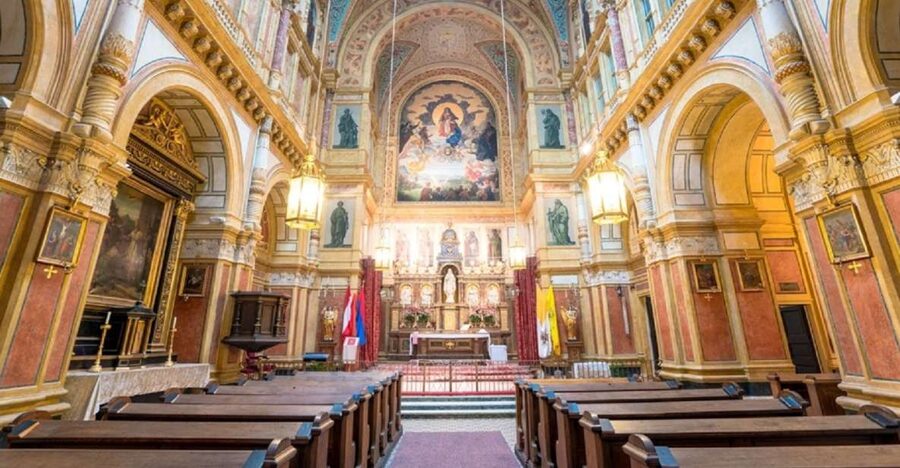
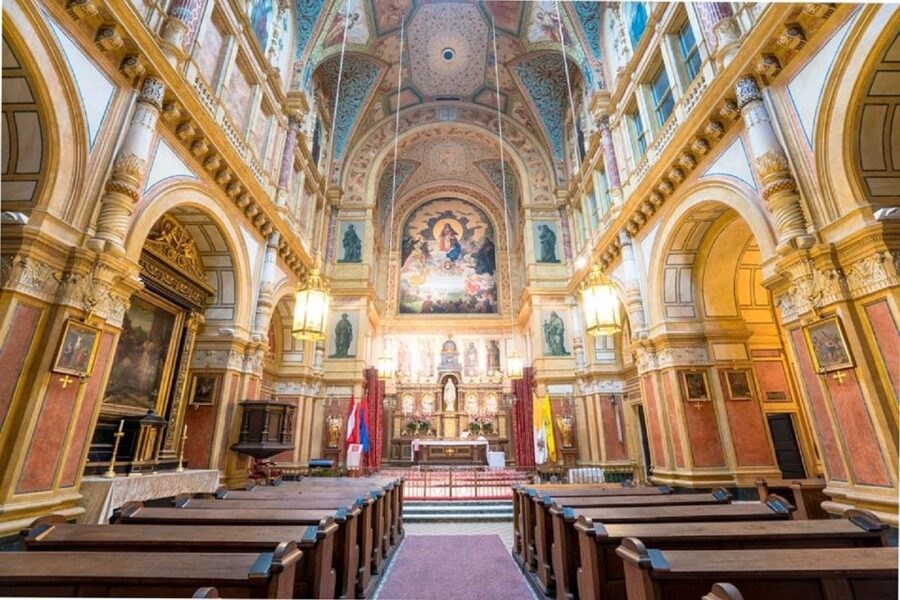
Your guide brings you into Maria Schutz Church, built in 1874 as a replacement for an older Cappuccine church. That single fact sets the tone. This isn’t just a pretty interior you pass through. It’s a purposeful transformation, and the tour explains it in a way that makes the building feel like a statement.
Inside the church, you’ll look closely at altar art that ties directly to Armenian devotion and identity. One standout is the altar painting showing St Mary’s protection of Armenia, painted by Camillo Sitte. The other is an altar dedicated to St Gregory the Illuminator, designed by Theophil von Hansen, who is also known as the architect of the Austrian Houses of Parliament in Vienna.
This pairing is what I find most satisfying. You’re seeing Armenian faith themes expressed through major European artistic names and design talent. It’s not a “museum culture versus local culture” situation. It’s a meeting point, and Vienna is the host.
Practical tip: if you’re the type who likes to read every label, slow down mentally. In a space like this, your time is better spent looking at the compositions first, then letting the guide’s explanation give you the keys. The church interior is one of the most impressive parts of the experience because it’s both visual and interpretive.
The Loretto-Chapel and the story of Mary with the Rose
After the main church, you move on to the Loretto-Chapel, where the focus narrows sharply. Here you’ll see the baroque miraculous picture called Mary with the Rose.
The tour makes it more than a religious artifact by attaching it to a dramatic rescue story: the picture was fortunately rescued intact from the perils of the Turkish siege of Vienna in 1683. That turns the chapel into something you can feel historically. Suddenly, you’re not only looking at religious art. You’re looking at an object that survived a turning point for the city.
This is one of those moments where the guide’s pacing helps. If you rush ahead, you might treat it as just another chapel stop. If you let the story land, the experience becomes more emotionally grounded. You’ll probably catch yourself standing there a bit longer than you planned.
The refectory stop: art that makes the monastery feel big
Next comes a different kind of wow. You pass the refectory, and the star element is a monumental painted work by Ludwig Ferdinand Schnorr von Carolsfeld titled The Feeding of the Five Thousand.
Refectories can easily blend into the background on tours like this, but the tour makes a point of emphasizing it as the refectory’s most impressive element. The logic is clear. In a monastery, the refectory is where daily life happens. So when a major biblical scene is placed front and center there, it turns routine into reflection.
What I like about this stop is how it changes your perspective. Up to this point, you’ve been absorbing church and chapel art tied to specific devotion. In the refectory, the scale and subject make you think about community and feeding, not just worship. It’s still religious art, but it’s also about human rhythm, shared meals, and collective life.
If you’re short on time in Vienna, you might think you’d rather skip a refectory. Don’t. This is one of those “small detours that pay off” moments.
After the interval, more from Vienna:


Mekhitarists Museum and Library: where the Armenian story turns into paperwork, art, and coins
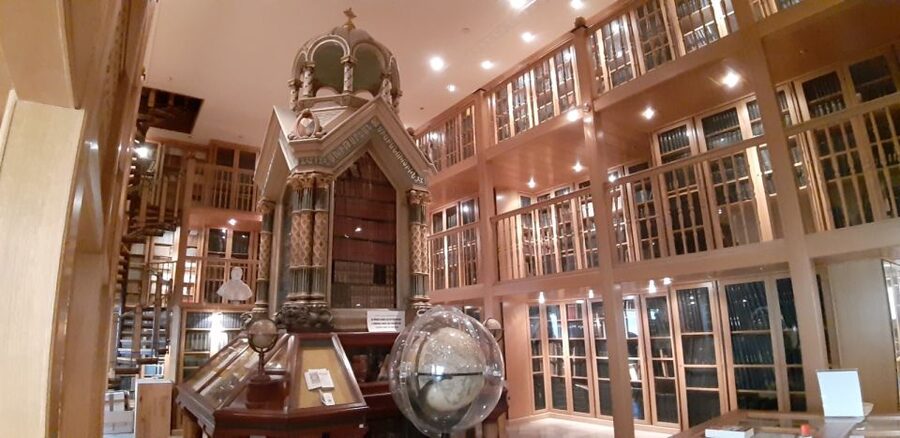
Then the tour shifts into its true heart. You go into the Mekhitarists Museum and Library, and this is where the experience stops being “interesting” and starts becoming specific, measurable, and hard to replicate anywhere else.
The guide takes you through the world of the Mekhitharis Library, one of the standout Armenian collections in the world. You’ll hear numbers that help you picture the scope. The library includes more than 2,800 Armenian manuscripts and more than 170,000 volumes of ancient and modern Armenian publications. It also has the largest collection of Armenian newspapers and magazines in the Western world.
That last detail is the one that really matters if you care about culture beyond monuments. Newspapers and magazines are where languages live, where debates happen, where diaspora communities keep talking to each other. Seeing that kind of collection in Vienna helps you understand that Armenian life in the city is not only religious. It’s also literary, journalistic, and ongoing.
Manuscripts, numismatics, ceramics, carpets, and even Aivazovsky
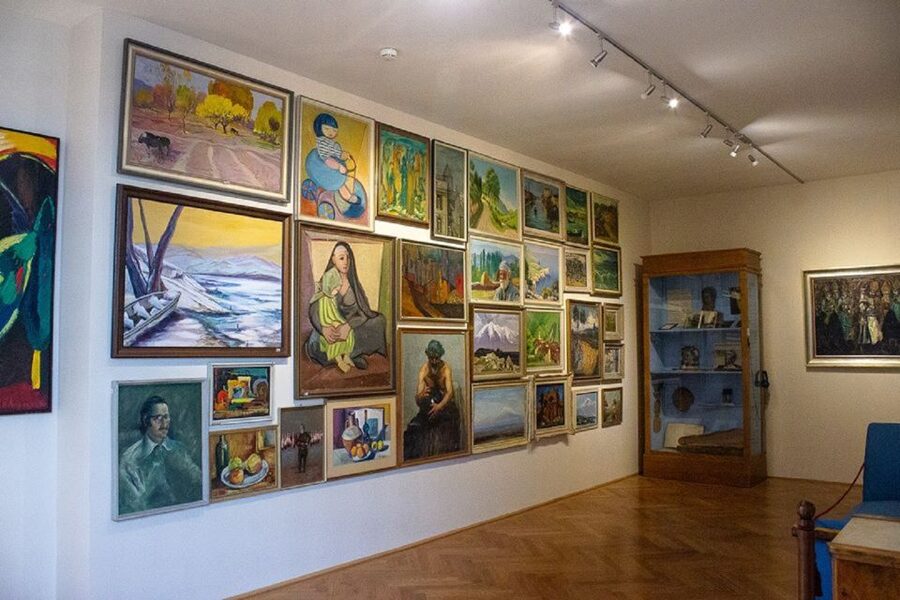
The museum component doesn’t limit itself to books. The guide points out collections that tell parallel stories through everyday objects.
You’ll learn about the Mekhitarists numismatic collection of coins, including 10,000 Armenian coins and 20,000 coins from other countries. That detail is useful because coins are portable history. They show trade routes, political shifts, and how communities interacted across borders.
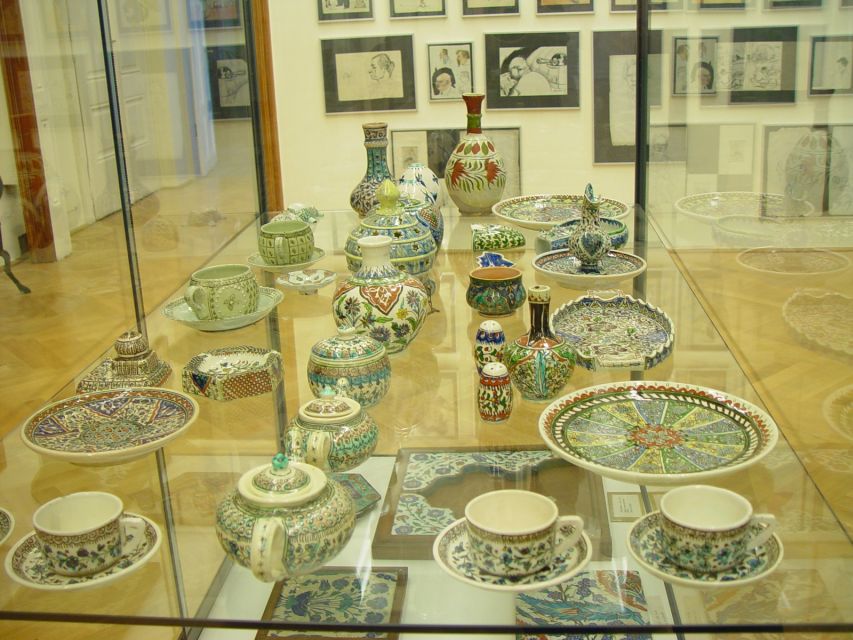
Then you’ll see ceramics and carpets, mainly of Armenian production. The point here is not to turn the tour into a shopping catalog. It’s to show how culture travels through craft. Textiles and ceramics often last in ways that paper records can’t, so they become another way the monastery protects identity.
On the art side, you’ll be shown valuable paintings by Armenian artists, including three paintings by Aivazovsky. That Aivazovsky mention gives you an easy bridge if you already recognize his style. Even if you don’t know Armenian art history, you’ll understand why the collection has star moments.
Practical tip: if you’re the type who gets overwhelmed in museums, use the guide’s structure. Ask yourself one question during each section: what kind of story is this object telling, faith, language, everyday life, or political change? When you frame it that way, the variety feels purposeful instead of chaotic.
How the tour ends with Mechitharine liqueur, and why that matters
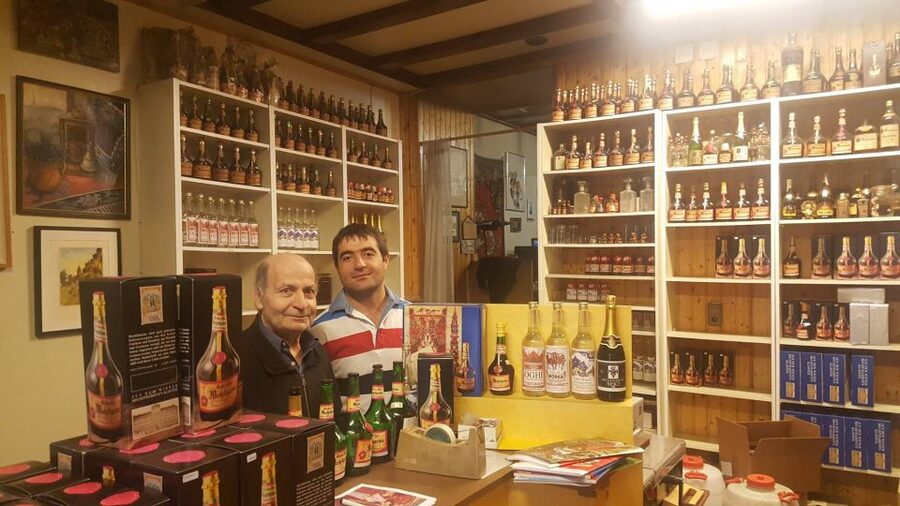
After walking through church, chapel, refectory, and collections, you finish with a taste of high-quality Mechitharine liqueur.
This isn’t just a small sip and goodbye. During the tasting, you’ll learn secrets about the Mechitharine liqueur world, including what makes its taste unique, plus its history, its families, and the business behind it. That last part matters more than people think. Food and drink stories often connect directly to who had the know-how, how production was organized, and how culture survived through practice, not only through art.
I also like that the liqueur gives your brain a final bookmark. After absorbing manuscripts and coin collections, switching to something sensory helps you remember what the tour was really about. It’s Armenian heritage in multiple forms, including something you can actually experience.
If you don’t drink alcohol, you might still appreciate the explanation, but the tasting itself is part of the included experience.
Price, timing, and whether $84 makes sense for a 2 hour Vienna stop
The price is $84 per person for a 2 hour tour, and it includes entrance fees, guide service, and the liqueur tasting. For a monastery visit where you’re getting guided access to interior church areas and major museum and library rooms, that inclusion is where the value lives.
You’re also paying for structure. This is not the kind of place where you can casually wander and accidentally see the right altars, the right chapel story, and the right library highlights in the right order. A guide helps you skip the guesswork.
Timing is also worth considering. Two hours goes by fast, especially once you hit the library and museum areas. If you like to linger, you might want to plan a bit of extra time nearby after the tour so you can return to any space that grabbed you.
Small group size, up to 10 people, also justifies the price. It’s not a crowd tour, so you get more attention and more chance to ask questions.
Who this tour is perfect for, and who might want something else
This tour is a strong fit if you like history with real objects. It’s also ideal if you care about Armenian culture, or if you want to see Vienna from a less obvious angle. The church altars, the 1683 rescue story tied to Mary with the Rose, and the library scale are the big reasons.
It’s also a great choice if you enjoy tours led by religious guides who can explain what you are seeing, not just where it is. In the past, guides such as Father Vahan have been described as warm and welcoming, and you may see a similar personal touch depending on who leads your group. If your guide is Father Vahan, keep an eye out for his closing message, which connects the Armenian people to the idea of gaining something through those who preserve culture.
Who might consider skipping it? If your ideal Vienna day is all outdoor architecture and photo stops, and you dislike interiors, this may feel too focused indoors. Likewise, if you dislike religious art as a category, you’ll still learn, but you might not feel the same emotional pull.
Quick guide to getting the most from your visit
If you want this tour to land well, do two things before you start. First, go in curious rather than expecting a casual walk. This is a curated sequence, and you’ll get the most by staying with the guide.
Second, when you hear a big name like Camillo Sitte, Theophil von Hansen, or Ludwig Ferdinand Schnorr von Carolsfeld, treat it like a clue. Those names aren’t random. They help you see how Austrian artistic talent connected with Armenian subjects inside this monastery.
Finally, save your questions until the guide gives you breathing room. Since it’s a small group, the conversation can actually flow, and your questions make the tour better for everyone.
Should you book Armenia In The Heart Of Austria?
If you like your sightseeing with substance, you should book this tour. For $84, you get a concentrated 2 hour experience that combines Maria Schutz Church, the Loretto-Chapel story of Mary with the Rose, refectory art, and one of the world’s most significant Armenian library and museum collections, ending with a Mechitharine liqueur tasting.
I’d especially recommend it if you want Vienna to feel personal, not just impressive. This is one of those visits where you leave with names in your head, stories in your notebook, and a sense that a diaspora culture can shape a city, quietly, powerfully, and for generations.
Just added to the bill for Vienna

Tours, compared.
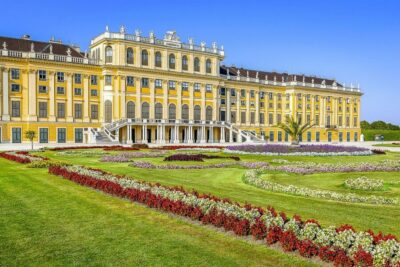
Schönbrunn Palace & Gardens Skip-the-Line Tour
Read our review →
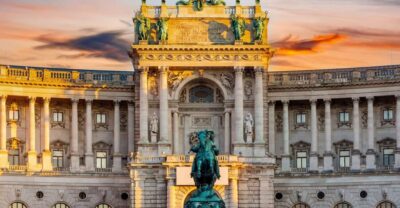
Skip-the-Line Sisi Museum, Hofburg and Gardens Tour
Read our review →
Skip-the-Line Schönbrunn Palace & Gardens Tour
Read our review →
Guided Walking Tour of City Center Highlights
Read our review →