
REVIEW · MOZART & CLASSICAL CONCERT EVENINGS
Vienna: Classical Concerts in the Minorite Church Ticket
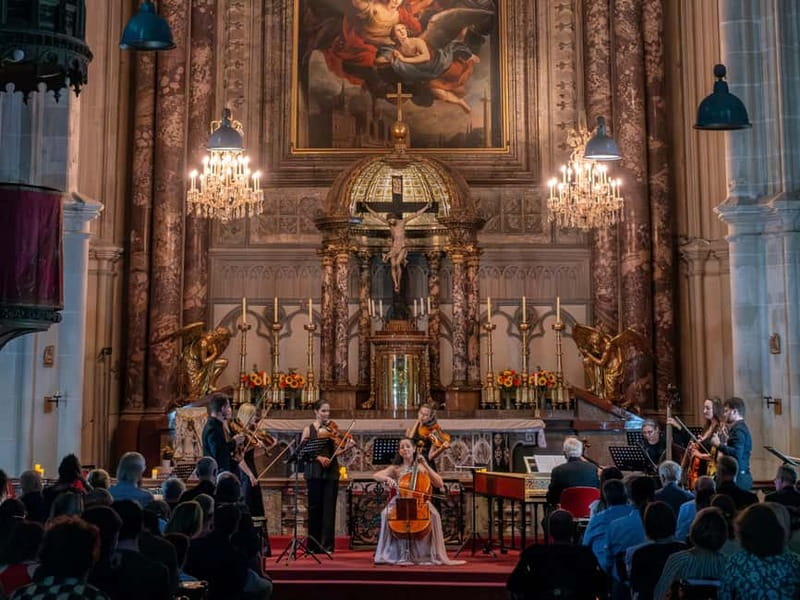
A church concert sounds cliché, until you hear it. This one happens inside Vienna’s Minoritenkirche, where the Gothic space does half the work for you with standout acoustics. I also like how the programming stays varied, so a Mozart or Vivaldi evening feels fresh instead of copy-paste.
One thing to consider: seating is unnumbered, and church seating can be hard on the body. If you want the best view and the easiest sit, arrive when doors open and be ready for pew-style comfort.
In This Review
- Key things to know before you go
- Why the Minoritenkirche Turns Classical Music Into an Evening Event
- What’s Playing: Mozart, Beethoven, Vivaldi, Bach, and Season Specials
- Timing and Arrival: Doors Open Early, But You Do Not Need to Sprint
- Seating and Comfort: Beautiful Room, Realistic Pews
- The Performance Experience: Short, Focused, and Often Emotion-Forward
- How Much Value You Get for Around $22
- Who This Fits Best, and Who Might Skip It
- The Practical Stuff: Rules, What You Can Bring, and Languages
- Should You Book This Minoritenkirche Classical Concert?
Key things to know before you go
- Minoritenkirche acoustics make even shorter programs feel full and clear
- Unnumbered seating means staff guide you to the best available spot
- Admission starts 30 minutes early, so plan a calm arrival, not a rush
- Programs rotate all season, from Four Seasons to Passions
- No photos or videos inside and no flash, so leave your phone in your pocket
- Winter comfort is real, with reports of heating keeping the church warm
Why the Minoritenkirche Turns Classical Music Into an Evening Event
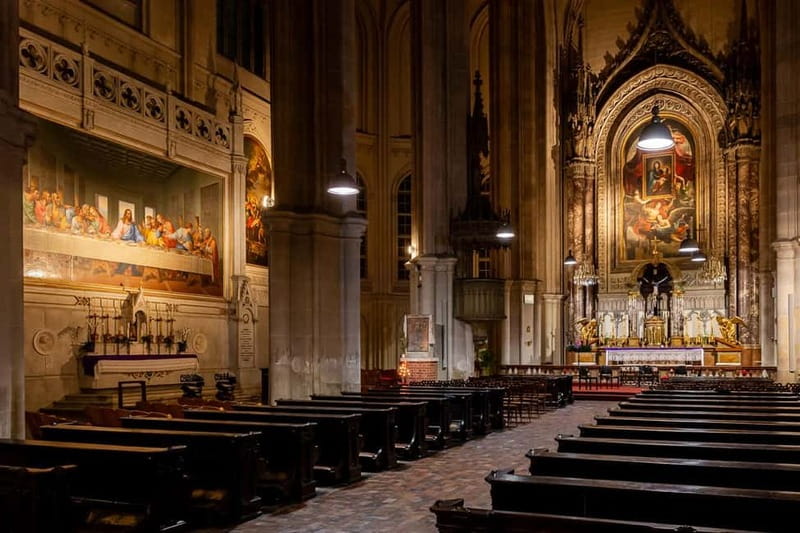
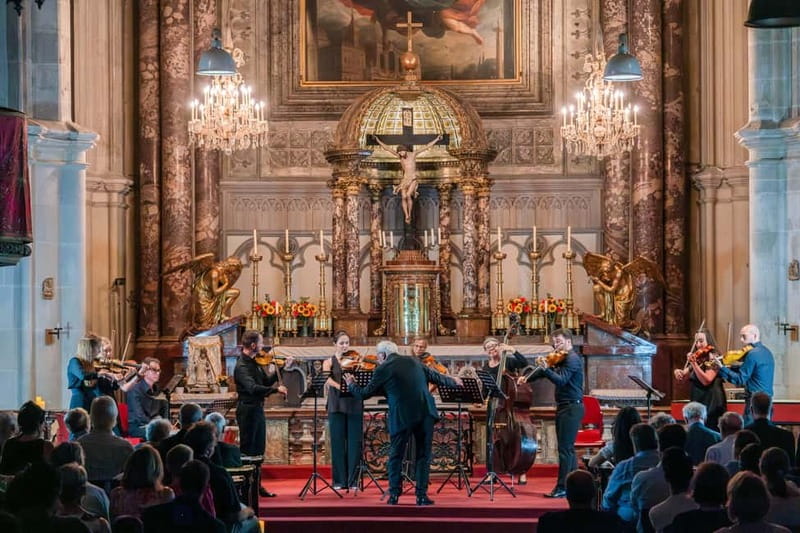
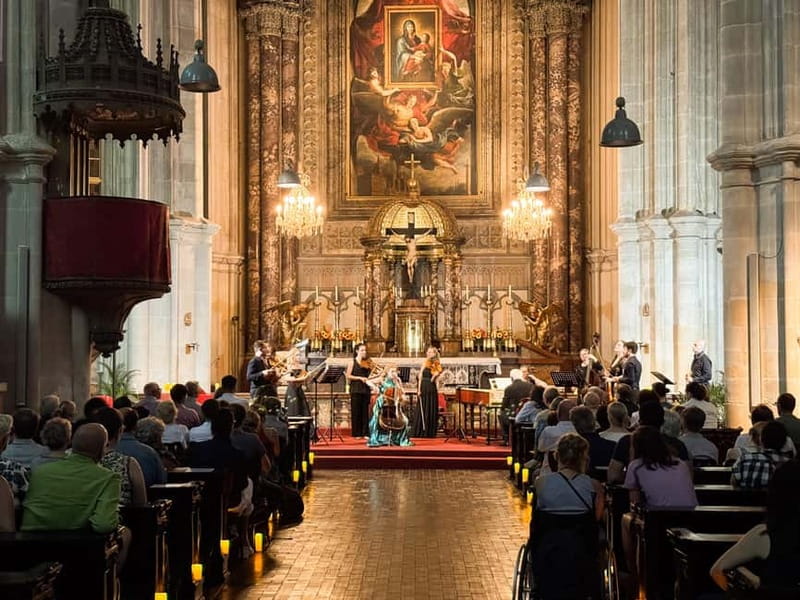
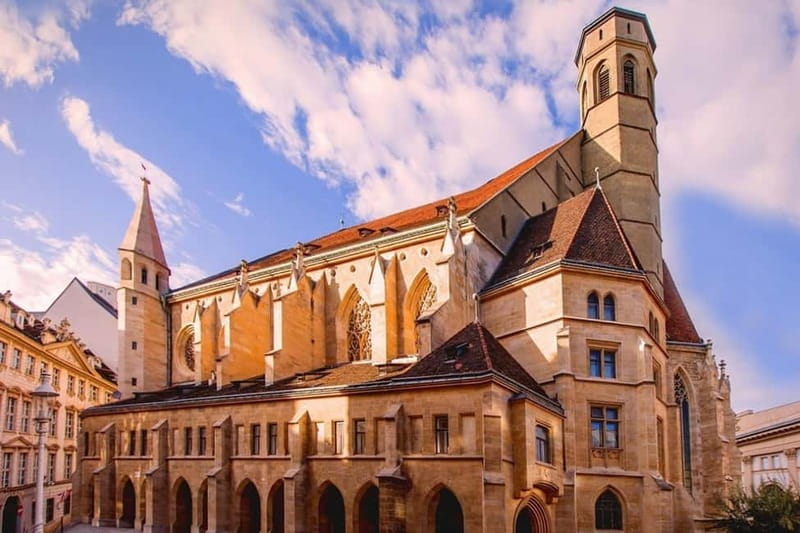
If Vienna has a “sound,” it’s part music and part room. In the Minoritenkirche, you get both. The building is Gothic and immediately memorable, with a visual focus that keeps your attention where it belongs: on the performers and their phrasing. And then the sound arrives, clean and balanced, with a natural reverberation that helps notes bloom without turning into blur.
That combination is why this concert option works even for people who do not usually seek out classical music. You are not stuck in a giant hall where everything can feel distant. Instead, you get that church-to-ear intimacy, the kind of listening where you can follow fast passages and quiet details. Reviews back this up again and again, especially for the way the music fills the church and stays intelligible.
The other reason I like it is the “big composer, real-world” feeling. Concerts here often bring in Mozart, Beethoven, Vivaldi, Bach, Schubert, Haydn, and more. But because the setting is so unmistakably Vienna, the familiar pieces do not feel like museum items. They feel like they belong to tonight.
More evenings of Mozart and strings:
- Vienna: Vivaldi’s Four Seasons Concert in Karlskirche
★ 4.7 · 14,951 reviews - Vienna: Classical Concert in the World-Famous Musikverein
★ 4.6 · 6,673 reviews - Vienna: Mozart Concert at the Musikverein – Golden Hall
★ 4.6 · 5,194 reviews - Vienna: Classical Concert in St. Anne’s Church (Annakirche)
★ 4.6 · 3,414 reviews
What’s Playing: Mozart, Beethoven, Vivaldi, Bach, and Season Specials
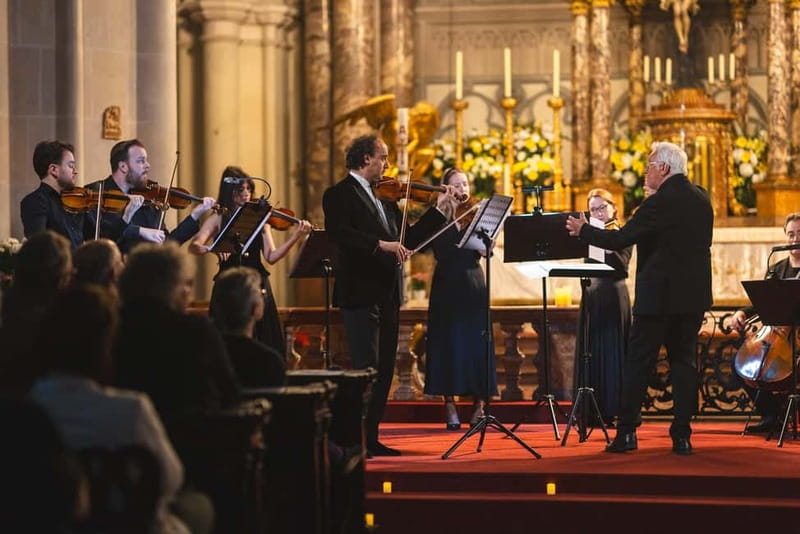
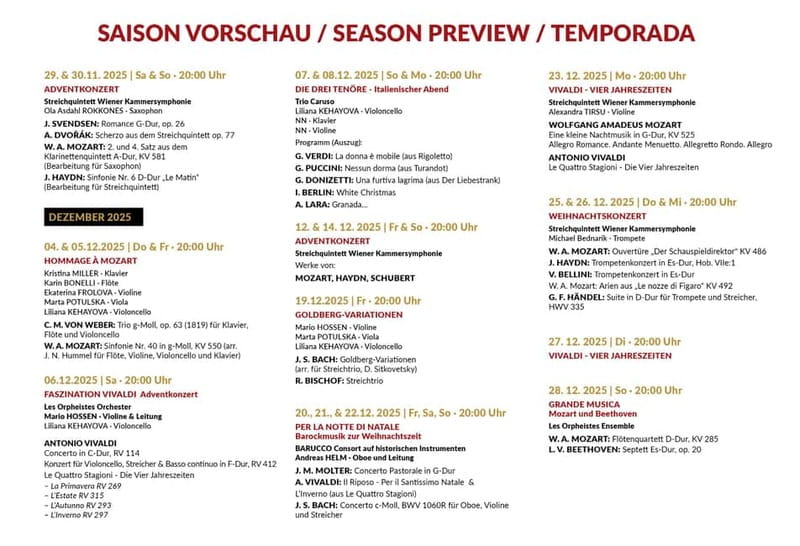
The schedule changes, but the promise stays consistent: you will hear major works, often with a program that feels thoughtfully connected. The Minoritenkirche calendar includes everything from Baroque highlights to heavier works around Easter and the holidays.
Here are some specific examples from upcoming dates so you can see the range:
- March 7, 2026 (Piano Solo): Luis González Lladó plays Janáček’s Sonata 1. X. 1905, plus de Falla and Liszt.
- March 13, 2026 (Symphony No. 7): Győr Philharmonic Orchestra with conductor Martin Sieghart performs Anton Bruckner’s Symphony No. 7.
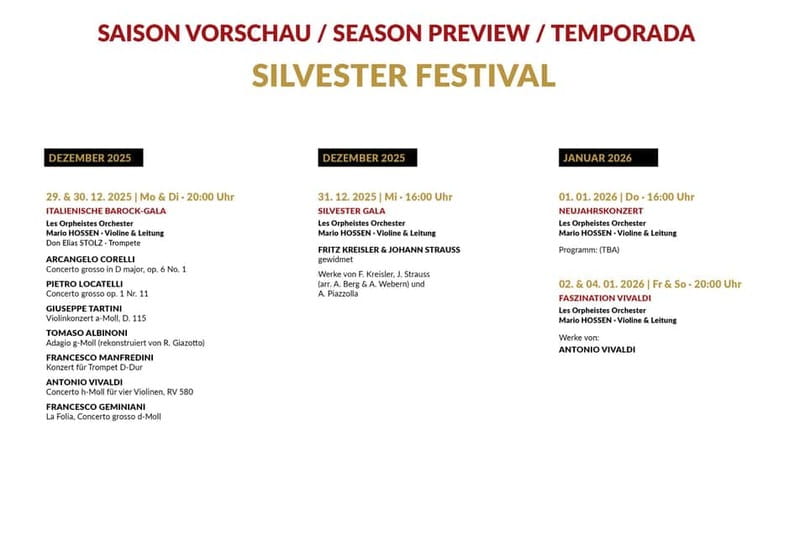
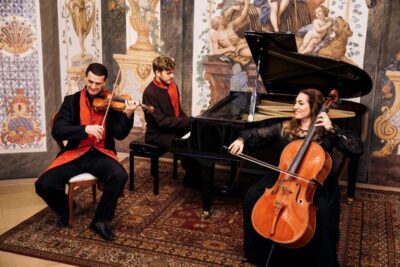
- March 28, 2026 (Goldberg Variations): Mario Hossen (violin), Alexander Gordon (viola), and Liliana Kehayova (cello) perform Bach’s Goldberg Variations, arranged for string trio.
- Easter season options in early April 2026 include Bach’s St John Passion, plus Easter concerts featuring Haydn and Mozart, and a Vivaldi and Bach program.
- April 18, 2026 features Vivaldi’s Four Seasons.
- May 1 and 2, 2026 is a Mozart cycle with Divertimento KV 136, Violin Concerto KV 219, and Symphony No. 1 KV 16.
- May 15, 2026 is billed as Vivaldi versus Paganini, mixing Vivaldi concertos with Paganini variations and themed works.
- May 22, 2026 is a flute-focused program with works by Paisiello, Nyman, Salieri, Mozart, and C. P. E. Bach.
- May 30, 2026 pairs piano and strings for Mozart fantasy, Schubert quartet No. 14, and Chopin variations.
- June 4 and 5, 2026 (La Passione) includes Haydn’s Symphony in F minor Hob. I:49, Bach lute suites, and a marimba concerto component with Christoph Sietzen.
What this means for you in plain terms: you can match the concert to your mood. Want bright and instantly recognizable? Look for Four Seasons or a Mozart cycle. Want something emotional and dramatic around Easter? The Passion concerts are the obvious pull. Want variety that is not just the same three radio staples? Many programs mix composers in ways that keep you listening closely.
Timing and Arrival: Doors Open Early, But You Do Not Need to Sprint
This concert runs about 1 hour to 70 minutes. Doors and admission begin 30 minutes before the start time, which is a helpful guideline for planning your evening. The good news is you do not need to arrive significantly earlier. Seating is unnumbered, but staff members are there at the entrance to welcome you and guide you to suitable seats.
The entrance is located under the arcade of the church. That detail matters, because it can be easy to look in the wrong place when you are already standing in historic-city-center streets.
One practical tip from real-world comfort: if you want the best odds for a first-choice view, treat the arrival window like a purposeful pre-show. People often feel the difference when they get themselves sorted early instead of arriving at the exact last minute and then accepting whatever works.
Also note the ticket is set up so you can skip the ticket line. That saves time and stress, especially if you are chaining this concert with dinner plans nearby.
Seating and Comfort: Beautiful Room, Realistic Pews
Unnumbered seating is part of the charm and part of the trade-off. Once you are inside, staff guide you, and you choose from what is available in your category area or nearby section. That flexibility can work in your favor, especially if the concert is not packed to capacity.
Comfort is the other half of the equation. Several people mention church pew seating can be uncomfortable, and chairs are sometimes described as basic. You will want to dress for the fact that you are sitting longer than you expect. If you have a sensitive back or knees, consider what you would do for a theater seat that is not cushioned. A small cushion can be a smart personal fix, as long as it stays within the venue rules you are given.
Room temperature is not always an issue in old churches, but it can be. In this case, reports say the church is heated and stays warm enough for winter evenings. That is a big deal, because nothing ruins the magic faster than spending the first 15 minutes thinking only about your fingers going numb.
One more note: this is a concert inside a church, so it is not a casual hang. Keep your phone put away during the performance, and follow the rules strictly. No flash photography, no video recording, and no photography inside during the concert.
Held over another night in Vienna
The Performance Experience: Short, Focused, and Often Emotion-Forward
The structure is simple: you buy a ticket, get seated, and enjoy a focused program that lasts about an hour to an hour and 10 minutes. There is no long “event arc” to manage. That is actually a benefit if you are trying to see Vienna without turning your whole trip into a schedule spreadsheet.
The sound experience is what sticks. Reviews repeatedly highlight:
- acoustics that carry music clearly through the entire church
- performances that feel intimate rather than distant
- programs that balance well-known pieces with less typical choices
If you choose a show with a standout soloist, the experience can become even more personal. For example, Mario Hossen is named in feedback as spectacular, and his performance is described as bringing unusual craft and intensity to the room. When you sit close enough, you can catch details like bow work and phrasing that you would miss in larger venues.
Some evenings also end with an encore. That is not something you should count on, but it is a nice reminder that the performers take the atmosphere seriously and respond to the room.
How Much Value You Get for Around $22
At roughly $22 per person for a major classical concert in a landmark venue, the value feels strong for two reasons.
First, you are paying for the combination: recognizable composers plus a world-class performance setting. When you see a name like Martin Sieghart or Mario Hossen on the lineup, you are not just buying “music time.” You are buying a curated evening where the room helps the sound land.
Second, the length is manageable. Many Vienna evenings are either too short to feel worth it or too long to fit comfortably into a full day of sightseeing. This lands in a sweet spot. You can enjoy the concert and still have energy left to get back to dinner or a nighttime stroll.
If you care about seats, you may notice there are categories. One review mentions buying “preferred seating” and being happier with proximity. Another mentions an unwanted trade-off: sometimes the exact seat you expect in a category is not guaranteed. So treat category as a helpful guide, not as a promise of a specific chair location.
Who This Fits Best, and Who Might Skip It
This concert is a great match for:
- first-time classical listeners who want the experience to feel human and close
- people who want a classic Vienna night without committing to a huge hall
- anyone who loves Mozart, Beethoven, Vivaldi, Bach, and similar “core repertoire”
- viewers who appreciate variety, like string-trio arrangements (Goldberg Variations) or thematic programs (Vivaldi versus Paganini)
It is not a great match for:
- children under 6, since the event is not suitable for them
- people who want flexible rule-free behavior, since no photography or video recording is enforced during the concert
- anyone who cannot handle pew-style seating for about an hour
If you are sensitive to distraction, you should also know this is a place where rules matter. A few notes mention issues like screens or audio distractions when the rules are not followed perfectly. You can reduce the odds of that by choosing your seat area thoughtfully, and by entering with patience. Church concerts work best when everyone treats them like the shared listening experience they are.
The Practical Stuff: Rules, What You Can Bring, and Languages
Before you go, read the rules so you do not end up stressed at the door. The concert venue does not allow:
- smoking
- food and drinks
- flash photography
- alcohol and drugs
- video recording
- photography inside
On languages, the host or greeter supports English, German, Spanish, and Italian, and that multilingual help can make it easier to get oriented at the entrance.
If you need wheelchair access, the venue is listed as wheelchair accessible. That matters because older churches can be tricky, so it is good to see accessibility included in the event information.
The event is run by Klangkultur Entertainment GmbH. That is useful mainly as a reference point if you are confirming details in your booking account.
Should You Book This Minoritenkirche Classical Concert?
I think you should book it if you want a Vienna evening that feels authentically local and seriously musical, without turning into a long production. The Minoritenkirche setting plus the consistent focus on major composers make it an easy “yes” for most visitors. And the price is low enough that you can take the chance even if you are not a lifelong classical fan.
I would hold off if you are very picky about seating comfort, need cushioned seating, or expect a concert experience where you can casually film or photograph. Also, pick your date based on the program, not just the venue. If you love Vivaldi, choose a Four Seasons themed night. If you prefer something weightier, look toward the Easter Passion options.
If you want my simple rule: book the one that matches your musical mood, show up right when admission begins, and treat the pew comfort like part of the adventure. You will end up with a night in one of Vienna’s most striking church interiors, hearing classical music the way it was meant to sound in that room.
Just added to the bill for Vienna
Mozart & Classical Concert Evenings, compared.
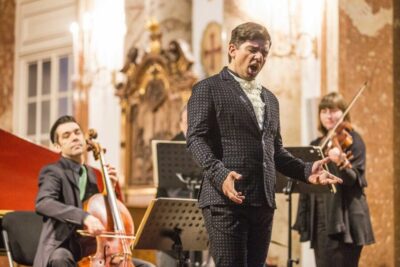
Vivaldi’s Four Seasons Concert in Karlskirche
Read our review →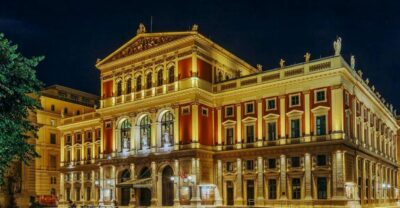
Classical Concert in the World-Famous Musikverein
Read our review →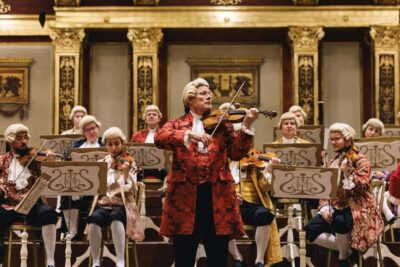
Mozart Concert at the Musikverein – Golden Hall
Read our review →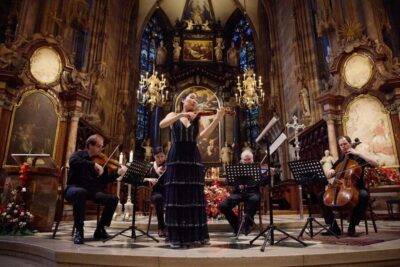
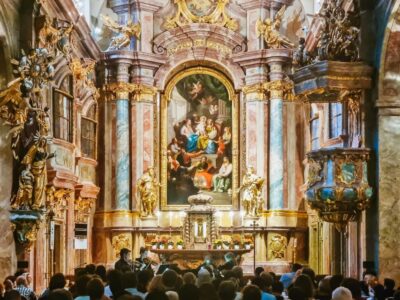
Classical Concert in St. Anne’s Church (Annakirche)
Read our review →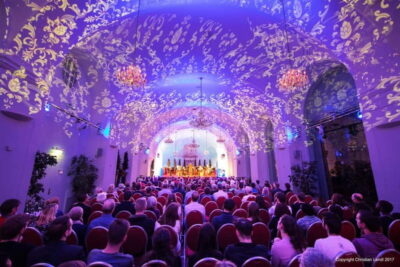
Browse the lists this tour appears in