
REVIEW · COOKING CLASSES
Vienna; Cooking Class: Make Schnitzel & Apple Strudel
Schnitzel and strudel, learned at home. This Vienna class is built around family recipes and a local chef’s teaching, all in the cozy setting of Lena’s own city-center apartment. It is one of the easiest ways to understand what Austrian home cooking tastes like, not just how it looks on a menu.
I also love the practical payoff: you make a 2-3 course meal yourself, then sit down and enjoy what you cooked, including Viennese potato soup, chicken schnitzel with cucumber salad and potato salad, and freshly baked apple strudel. A possible drawback is that if the group is on the larger side, your hands-on time may feel stretched.
In This Review
- Key highlights and takeaways
- Vienna Apartment Cooking Class: What Makes Lena’s Schnitzel and Strudel Work
- The 3-Hour Flow: Talk, Cooking Stations, Then a Dinner You Built
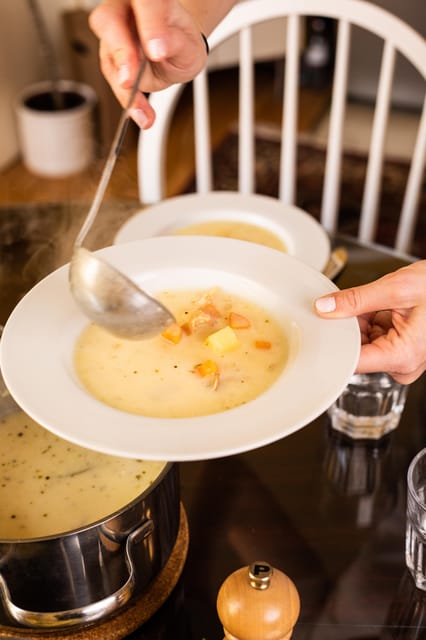
- Grandmother-Style Viennese Potato Soup: A Warm Start With Real Technique
- Chicken Schnitzel, Cucumber Salad, and Potato Salad: The Classic Plate That Teaches You
- Apple Strudel From Scratch: Where Home Cooking Feels Like Magic
- Group Size and Hands-On Time: How to Get the Best Experience
- Value in Real Terms: $153 for a 3-Hour Austrian Dinner You Cook
- What to Bring, What to Wear, and How to Plan for Vienna Apartment Cooking
- Lena’s Apartment Setting: Biedermeier-Era Vienna in Your Cooking Space
- Should You Book This Schnitzel and Strudel Class?
- FAQ
- How long is the cooking class?
- How much does it cost per person?
- What dishes will I cook during the class?
- Do I need prior cooking experience?
- Is the class suitable for vegans?
- Are dietary restrictions handled?
- Is alcohol included?
- What do I need to bring?
- Where do I meet the instructor?
- Is there free cancellation?
Key highlights and takeaways
- Family-style Austrian comfort food: schnitzel and strudel taught from scratch, plus sides and dessert.
- A real local setting: Lena’s apartment brings the Biedermeier-era Vienna feel right into the kitchen.
- You cook, then eat: the meal is part of the experience, not an afterthought.
- Group size matters: small groups mean more time doing each step.
- No cooking experience needed: you learn technique, not just recipes.
- Take-home recipes: you get the instructions to recreate the dishes at home.
Vienna Apartment Cooking Class: What Makes Lena’s Schnitzel and Strudel Work
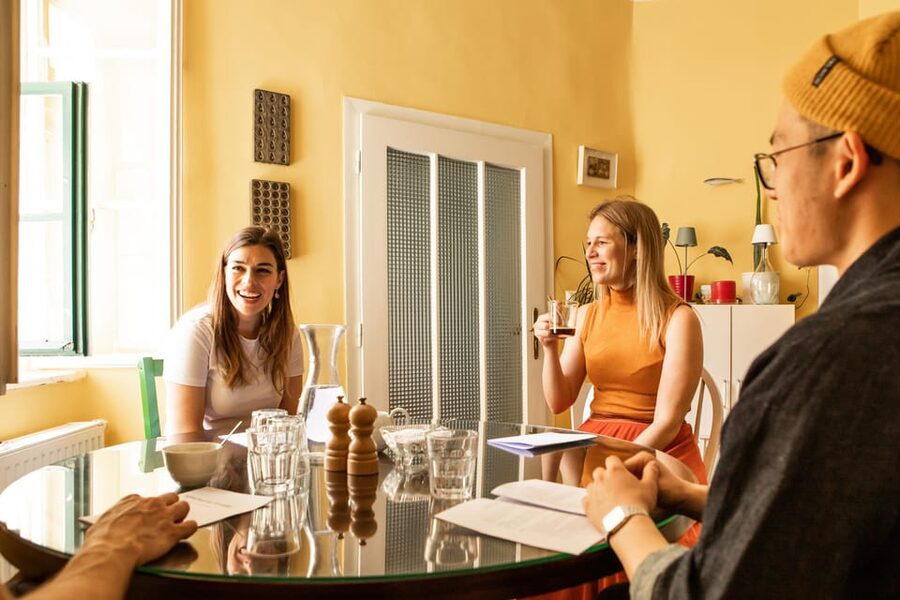
If you want Vienna in a practical way, this is a strong pick. You are not touring a museum or chasing a checklist. You are learning how Austrian comfort food is made, in a kitchen rhythm that feels like someone inviting you into their routine.
The heart of the class is Lena, born and raised in Vienna, sharing family recipes she says have been cooked in her family for generations. That matters because these dishes are not just “Austrian famous.” They are the kind of home cooking people actually make, adjust, and pass down. You get lessons that connect technique to tradition, like why schnitzel gets treated a certain way and what makes strudel pastry work.
Also, this class is designed to be more than a demo. You cook as much as possible yourself, then you eat together. In short, you leave with a full stomach and the steps to repeat the meal later.
More Strudel & Cooking Classes in Vienna
- Nabiel’s Vienna Cooking Class
★ 5.0 · 234 reviews - Vienna: Wiener Schnitzel and Strudel Cooking Class
★ 4.9 · 126 reviews - Schnitzel and Strudel: Shared Cooking Class
★ 4.5 · 17 reviews - 1 Hour Tradtional Kaiserschmarrn Cooking Class & Tasting in Wien
★ 4.0 · 7 reviews
The 3-Hour Flow: Talk, Cooking Stations, Then a Dinner You Built
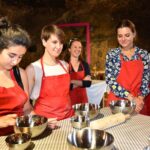
The structure is simple, which is exactly what makes it comfortable. You meet in Lena’s apartment in the city center, then you spend the full session there. First comes a short discussion about Austrian cuisine and how it reflects Austro-Hungarian Empire influences, plus ties to Bohemia, Hungary, and Italy. It is a quick way to add context before you ever pick up a knife.
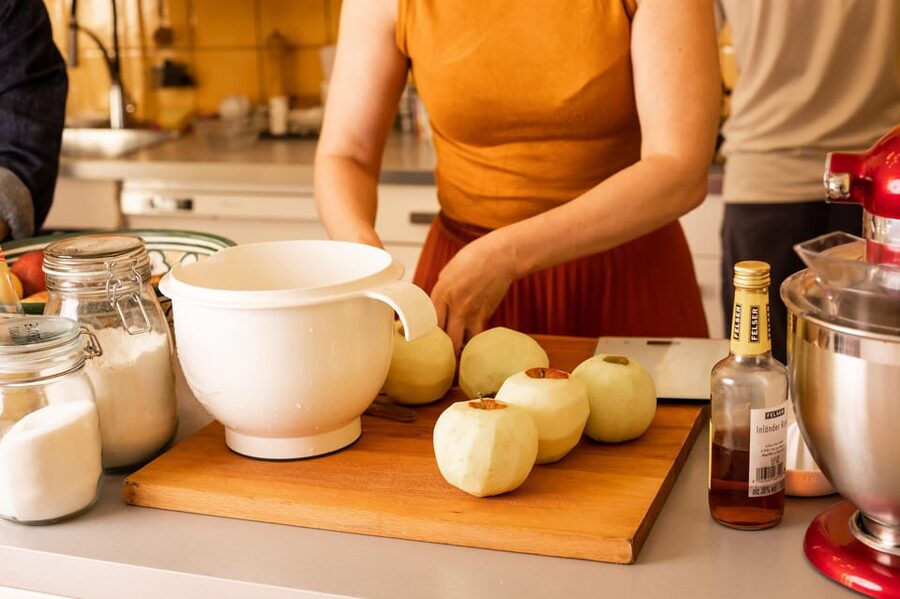
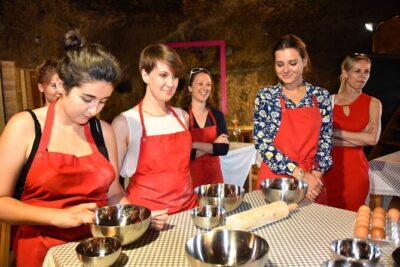
After that, the cooking starts. Depending on the number of people, the meal becomes a 2 or 3-course experience. The core dishes you learn are Viennese potato soup, chicken schnitzel with cucumber salad and potato salad, and apple strudel for dessert. If your group is doing the full route, you will likely make and plate all of them. If it is the shorter version, you will still follow the same family recipe style, just with fewer courses in the final meal.
What I find especially useful is that the class is set up like working through stages. You learn what happens first, what you do while something cooks, and when to adjust. That is how you avoid the common cooking-class problem where everyone rushes at the same time and half the group watches.
Grandmother-Style Viennese Potato Soup: A Warm Start With Real Technique
The meal begins with Viennese potato soup, described as Lena’s grandmother’s famous version. Even if you already like potato soup, this course helps you learn what makes the dish feel distinctly Viennese rather than generic comfort food.
You get practice with the basics you will reuse later in the meal: timing, texture checks, and seasoning. Potato soup is a good entry point because it teaches you how to judge thickness and flavor balance while still being approachable for cooks with no prior experience.
A practical bonus, too, is that soup brings everyone together. While some people prep or chop, others can stir and taste. It keeps the workload from exploding all at once, which is helpful in a group kitchen.
Chicken Schnitzel, Cucumber Salad, and Potato Salad: The Classic Plate That Teaches You
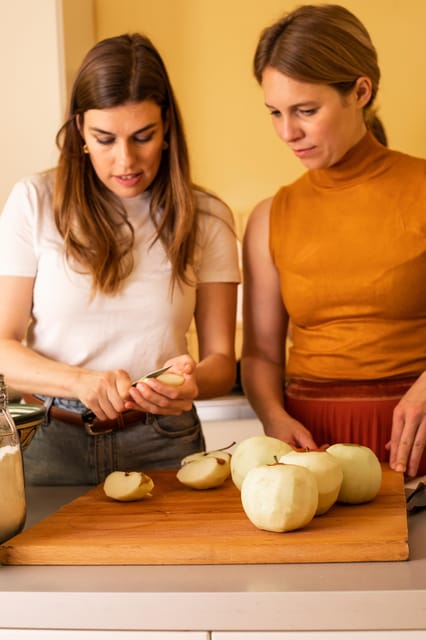
Schnitzel is the star here, and you are not just learning the concept. You learn how to make chicken schnitzel from scratch, plus the key sides that turn it into a proper Austrian plate.
This is also where hands-on time matters most, so pay attention to the technique you are shown and then copied. In many home cuisines, schnitzel is about the coating and the pan rhythm. The class format gives you a clear path to get it right and repeat it.
You will also make cucumber salad and potato salad alongside the schnitzel. That is a smart choice because it shows you how Austrian meals balance fried or crisp mains with cooler, tangier sides. Even if you plan to cook schnitzel again later, you’ll remember the meal logic, not just the recipe list.
One review pointed out a simple wish: having a glass of wine would have been nice. Alcohol is not included, so if you like pairing food with a drink, plan around that. The good news is you still eat a complete meal you made yourself, which is the main value.
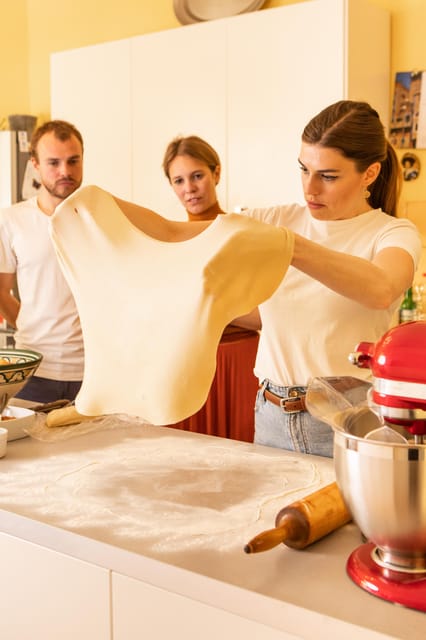
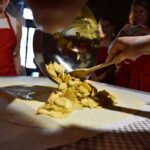
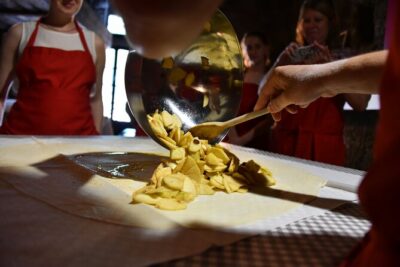
More dough rolled paper-thin:

Apple Strudel From Scratch: Where Home Cooking Feels Like Magic
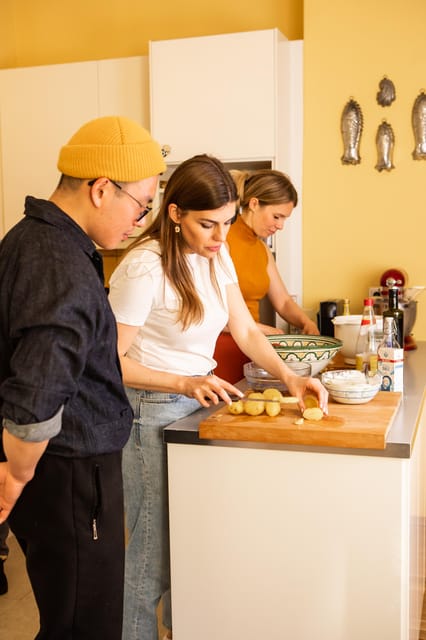
Dessert is freshly baked apple strudel, and it is the course many people remember long after the class ends. Strudel has a reputation for being intimidating. In a good class, though, it becomes a series of teachable steps: how to handle dough, how to portion the filling, and how to get that flaky, tender result.
Even better, you get to bring the learning home because you take the recipes with you. That turns the strudel from a one-time experience into a real future project.
If you want a souvenir that is actually useful, this is it. Several people highlighted taking leftover strudel away and finishing it later. That is exactly why bringing containers can matter, even if the class has its own approach to take-home food.
Group Size and Hands-On Time: How to Get the Best Experience
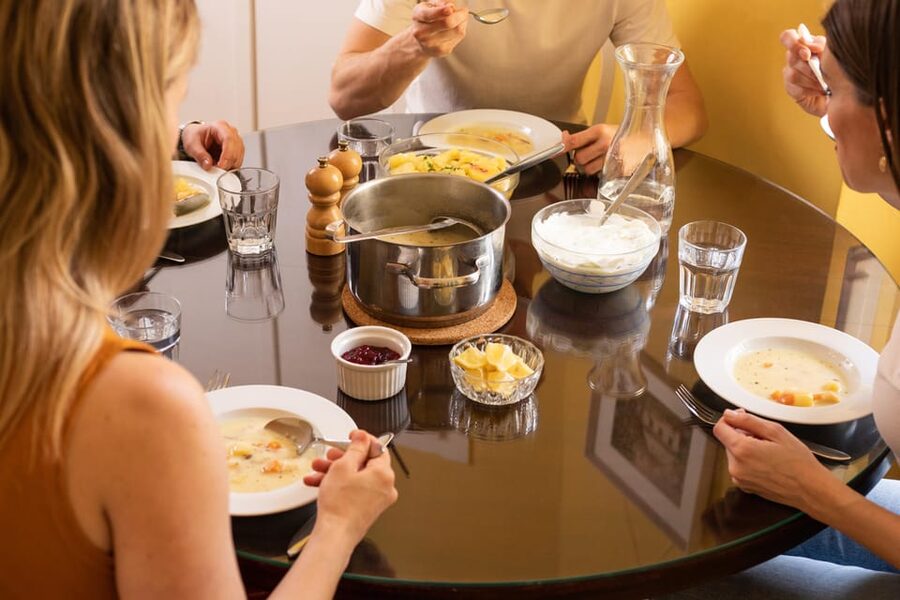
This class runs with groups between 2 and 12 participants. With a smaller group, you get more time doing the tasks yourself, and less time waiting your turn. With a bigger group, you might still enjoy the class, but the workload may be shared so not every person can perform every step at the same depth.
One review did call out that when there were too many people, hands-on felt possible for only part of the time. That is not a dealbreaker, but it is useful to know when you book.
My practical advice:
- If you care most about doing every step, lean toward smaller groups.
- If you are happy learning and participating as you can, the group size will feel less critical.
- Either way, eat the meal with confidence. You will still cook enough to feel ownership of the final plate.
Value in Real Terms: $153 for a 3-Hour Austrian Dinner You Cook
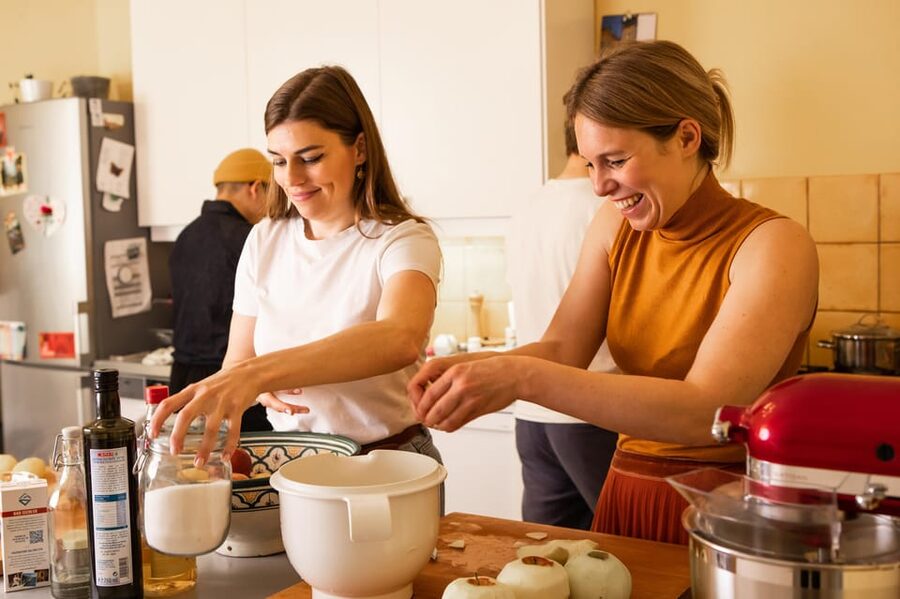
At $153 per person for a 3-hour session, this is not the cheapest thing you can do in Vienna. The value comes from what is included and what you gain.
You are getting:
- ingredients for the cooking
- a dinner made from the dishes you helped prepare
- recipes you can recreate at home
- all the work space and instruction in a city-center apartment kitchen
So you are paying for the full package: teaching plus ingredients plus the meal. If you were to buy all the ingredients and spend your own time learning technique from trial and error, the class starts to look like a shortcut to competence.
Also, the setting is a real home, not a standardized studio. You get that family-apartment feel, plus a sense of Vienna that is calmer than a commercial kitchen. That sort of atmosphere is hard to quantify, but it affects how much you enjoy the evening.
What to Bring, What to Wear, and How to Plan for Vienna Apartment Cooking
This is an easy class to show up for, but it has a few practical “Vienna reality” details.
Bring:
- a camera
- comfortable clothes
Wear clothes you do not mind getting splashes on, because you are cooking. The kitchen is in a typical Viennese apartment building, and it does not have air conditioning. In summer, you might find it hot in the kitchen. Plan clothing and water accordingly.
Leftovers: the class recommends bringing containers if available. Tupper Ware is not included. If you want strudel to survive the trip back to your lodging, bring a container you trust.
Dietary restrictions: dietary restrictions are not a problem if you advise in advance. The one clear limitation is that the class is not suitable for vegans.
If you have never cooked before, don’t stress. The session is built so no prior cooking experience is expected.
Lena’s Apartment Setting: Biedermeier-Era Vienna in Your Cooking Space
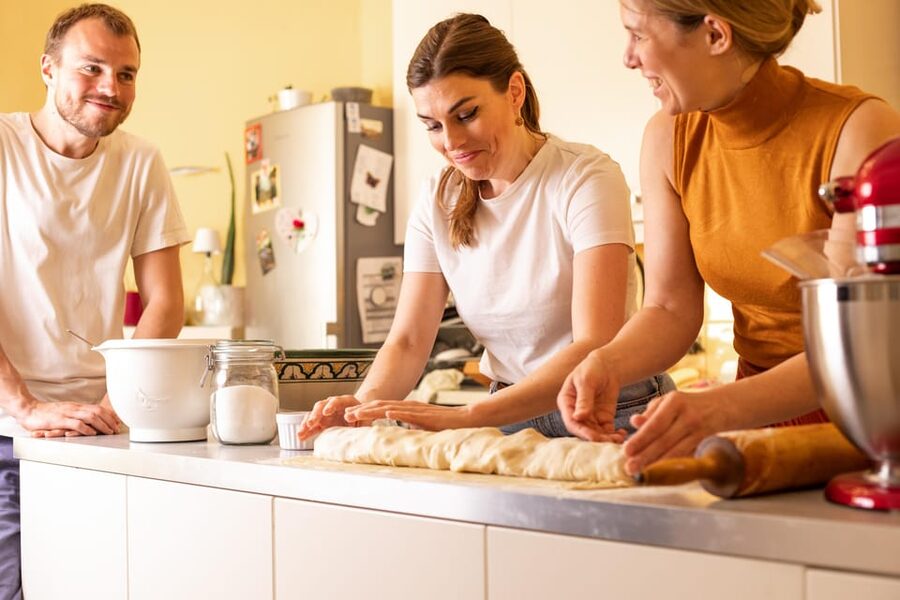
You meet in Lena’s apartment, ring at Top 20. The apartment is on the second floor, and it is on the left side. You spend all your time there, so the building becomes part of the experience.
Lena’s home is described as full of antiquities and modern art, and the apartment building is a typical Biedermeier-style house from the 1800s. Even if you have already seen Vienna’s grander streets, this gives you a different angle: Vienna as lived-in, not staged.
It is also a reminder that these dishes belong in kitchens like this, not just in restaurants. You feel that while you cook, and then again when you sit down and eat.
Should You Book This Schnitzel and Strudel Class?
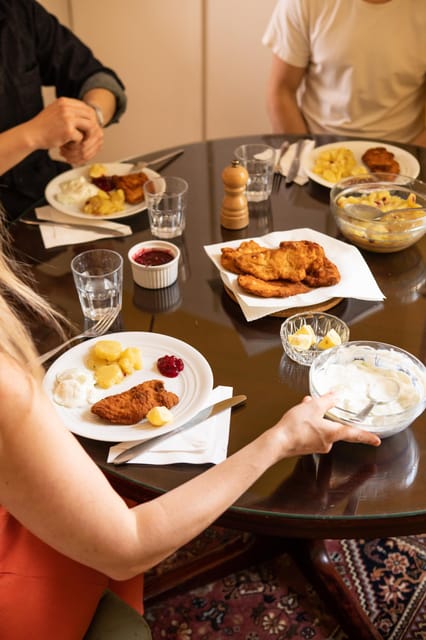
Book it if you want a hands-on Vienna experience that gives you real skills, not just photos. This is especially good if you like Austrian comfort food and you want to understand the dishes through technique and context, taught by someone who grew up with the recipes.
I would also book it if:
- you want a fun, family-friendly style activity with everyone cooking at their own pace
- you want to leave with recipes you can actually use
- you prefer small, apartment-based learning over a crowded tour format
Think twice if:
- you are very sensitive to group size and want maximum hands-on for every step
- you expect alcohol to be included (it is not)
- you are vegan (the class is not suitable for vegans)
If your goal is to cook Austrian classics in Vienna, then eat them right away, this class is a strong match.
FAQ
How long is the cooking class?
The class runs for 3 hours.
How much does it cost per person?
It costs $153 per person.
What dishes will I cook during the class?
You will make Viennese potato soup, chicken schnitzel with cucumber salad and potato salad, and freshly baked apple strudel for dessert. Depending on group size, the meal can be 2 or 3 courses.
Do I need prior cooking experience?
No prior cooking experience is expected.
Is the class suitable for vegans?
No, it is not suitable for vegans.
Are dietary restrictions handled?
Dietary restrictions are no problem if you advise in advance.
Is alcohol included?
Alcoholic beverages are not included.
What do I need to bring?
Bring a camera and comfortable clothes. If available, bring containers for leftovers.
Where do I meet the instructor?
Meet in the building and ring at Top 20. The apartment is on the second floor on the left side.
Is there free cancellation?
Yes, you can cancel up to 24 hours in advance for a full refund. Reserve now & pay later is also available.
Crafts, First-Hand
- Vienna: Chocolate Workshop in Chocolate Museum w/ Tasting
★ 4.5 · 1,802 reviews - Chocolate workshop in Chocolate Museum Vienna “BO-YO”
★ 4.5 · 352 reviews - Vienna: Viennese Waltz Beginner Workshop for Couples
★ 4.9 · 144 reviews - Mozart Kugel Workshop
★ 4.7 · 129 reviews
Just added to the bill for Vienna





Cooking Classes, compared.
Austrian Apple Strudel Cooking Class including Lunch in Salzburg
Read our review →
Salzburg Christmas Cookies and Apple Strudel Cooking Lesson
Read our review →
Traditional Kaiserschmarrn Cooking Class & Tasting
Read our review →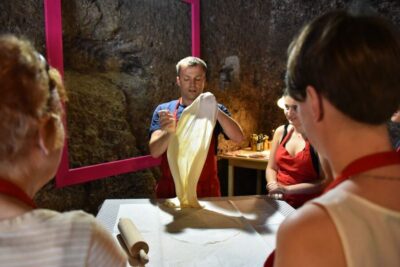
Cookies and Apple Strudel Cooking Class Including Lunch
Read our review →
Apple Strudel & Prezel Cooking Class incl. Dinner & Music
Read our review →
Dinner Cooking Class – Prezels, Dumplings, Apple Strudel & Music
Read our review →Browse the lists this tour appears in