
REVIEW · MOZART & CLASSICAL CONCERT EVENINGS
Vienna: Mozart Concert in the Brahms-Saal
Two hours, one perfect Viennese night. A Mozart Orchestra of Vienna concert in the Brahms-Saal turns familiar music into a fully staged event with baroque costumes and big-name soloists. You get overtures, arias, and duets from Mozart’s best-known operas, plus orchestral pieces that feel very at home in Vienna.
I also love how the program finishes with crowd-pleasers like the Blue Danube and the Radetzky March. The main drawback to keep in mind is sightlines, because balcony seating can place you above or behind the stage, and flat floor areas can make it harder to see the musicians up close.
In This Review
- Key points before you go
- Mozart Orchestra of Vienna in Brahms-Saal, Vienna
- The 2-hour program: Mozart opera highlights and Strauss classics
- Meet the forces on stage: orchestra ranks, soloists, and opera singers
- Baroque costumes and wigs: what they add to Mozart and Strauss
- Seating in the Musikverein: balcony views, flat floors, and what to check
- Ticket exchange at Kärntner Straße 51 and at the Musikverein
- Dress code and practical comforts for a Mozart night
- Price and value: is $81 worth it in Vienna?
- Who should book, and who should reconsider
- FAQ
- How long is the Mozart Concert in the Brahms-Saal?
- What is included in the ticket price?
- Where do I exchange my voucher?
- When does the venue open?
- What time is the ticket collection point available?
- Where can I exchange my ticket earlier to skip the evening line?
- What dress code should I follow?
- Are there discounts for children or students?
- Does the concert include a cloakroom?
- Is free cancellation available?
- Should you book the Mozart Orchestra concert in the Brahms-Saal?
Key points before you go
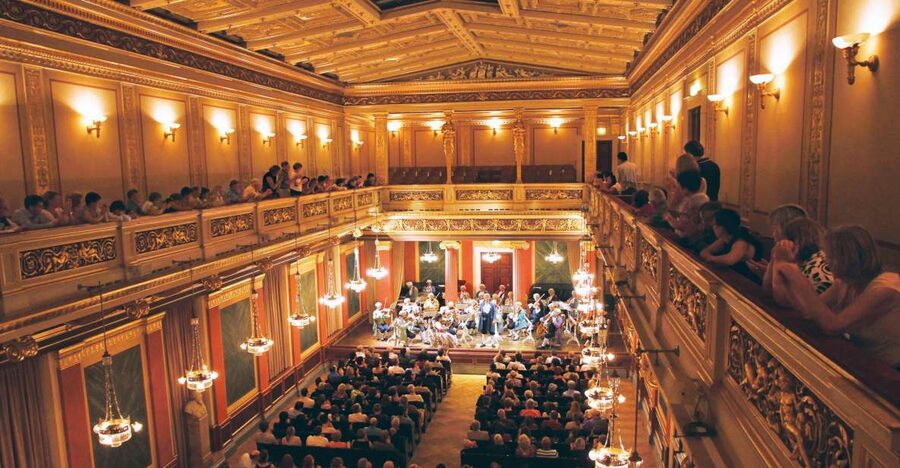
- Baroque costumes on stage make Mozart and Strauss feel like theater, not just background music
- 30 players from top Austrian orchestras plus guest soloists and opera singers
- Mozart opera highlights include overtures, arias, and duets, not a random best-of mix
- Strauss finale energy with the Blue Danube and Radetzky March
- Seat choice matters if you care about seeing performers, especially from balconies
Mozart Orchestra of Vienna in Brahms-Saal, Vienna
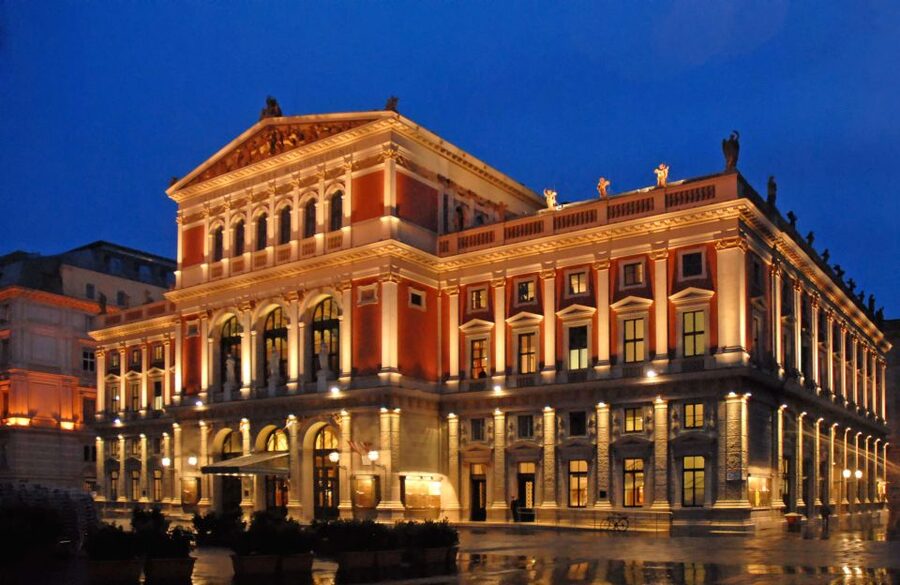
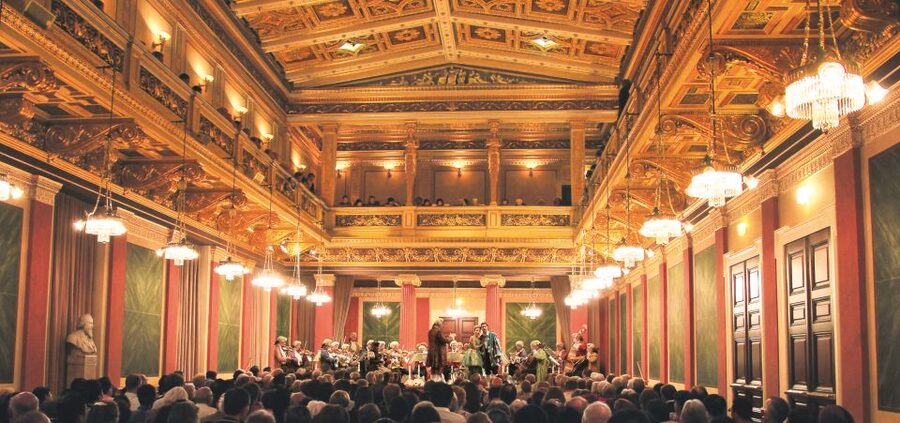
If you want Vienna to feel like Vienna, start with music. This concert takes place in the Brahms-Saal at the Musikverein, one of the city’s most famous classical venues. The setting matters. It is large enough to create that full orchestral sound, yet the experience is still personal, because the program is designed to stay clear and entertaining from start to finish.
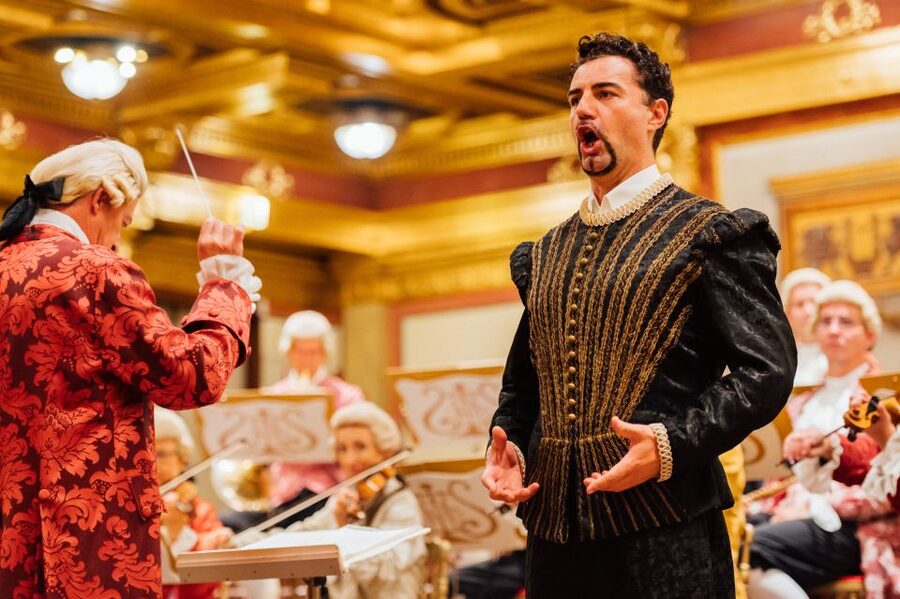
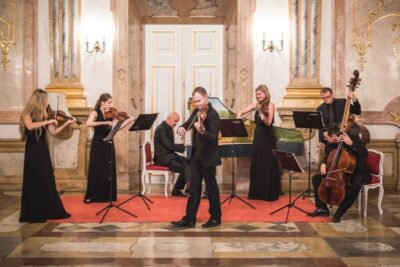
What makes this performance feel especially worth your time is the combination of performers and presentation. You are not just hearing Mozart’s melodies, you are watching a staged interpretation with period costumes and wigs. That visual element changes the mood in a good way. Even if you are not a die-hard classical fan, the show style makes the music easier to follow and more fun to sit through.
I also like the “real orchestra” feeling here. The ensemble is drawn from major Austrian orchestras, and the lineup expands with internationally known soloists and opera singers. The result is that you get strong vocal moments, plus a tight, powerful orchestra behind them.
More evenings of Mozart and strings:
- Vienna: Vivaldi’s Four Seasons Concert in Karlskirche
★ 4.7 · 14,951 reviews - Vienna: Classical Concert in the World-Famous Musikverein
★ 4.6 · 6,673 reviews - Vienna: Mozart Concert at the Musikverein – Golden Hall
★ 4.6 · 5,194 reviews - Vienna: Classical Concert in St. Anne’s Church (Annakirche)
★ 4.6 · 3,414 reviews
The 2-hour program: Mozart opera highlights and Strauss classics
The heart of the evening is Mozart, but it is not limited to symphonies you might hear on a late-night playlist. The program blends orchestral excerpts with vocal selections, including overtures, arias, and duets from Mozart’s most well-known operas.
You should expect a run of recognizable musical forms. The concert includes selections from symphonies, concerti, serenades, and divertimenti, performed in a style that nods to 18th-century musical academies. In practice, that means the pacing stays lively and the music feels varied, rather than one long, slow movement of sound.
Then comes the pivot to Austria’s favorite finishers. The unofficial anthem vibes land at the end with Johann Strauss I’s Radetzky March and Johann Strauss II’s Blue Danube Waltz. Even people who do not normally chase classical concerts tend to perk up during these moments. It is the musical equivalent of leaving the theater to fireworks.
One extra detail you might notice is audience interaction. In at least some performances, the conductor invites a short clap-along during a couple of numbers. It is brief, and it keeps the room lively without making the whole thing silly.
Meet the forces on stage: orchestra ranks, soloists, and opera singers
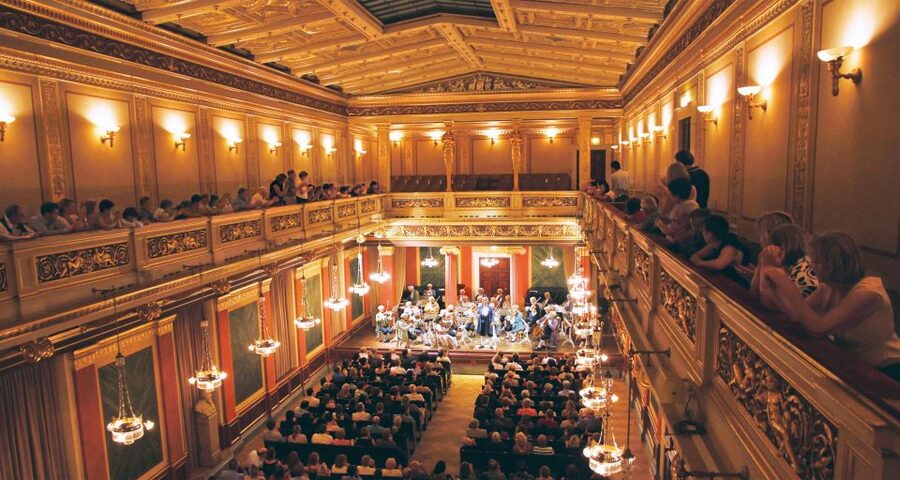
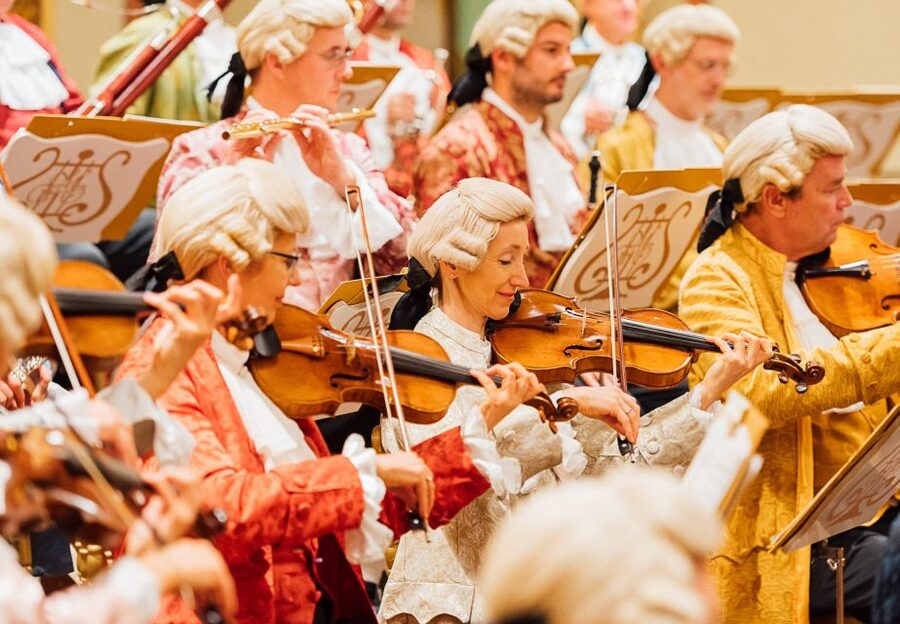
This is the sort of concert where the lineup is the story. The orchestra is 30 musicians, drawn from the ranks of the Vienna Philharmonic, the Vienna Symphony, and other respected Austrian orchestras. That matters because you hear it. The sound is cohesive and confident, especially in passages where voices and strings need to land together cleanly.
The program also leans into vocal performance. The ensemble is joined by internationally acclaimed soloists, and there are two opera singers from the State Opera and Volksoper. That gives you a stronger mix than many “orchestra-only” concerts, because you get real opera presence when Mozart’s arias and duets roll around.
Finally, the conductor is a featured presence. A star conductor matters in a concert like this because the pacing has to work for both music fans and first-timers. The night is a show, but it still needs musical control, and a good conductor pulls the pieces together so it does not feel like random highlights.
Baroque costumes and wigs: what they add to Mozart and Strauss
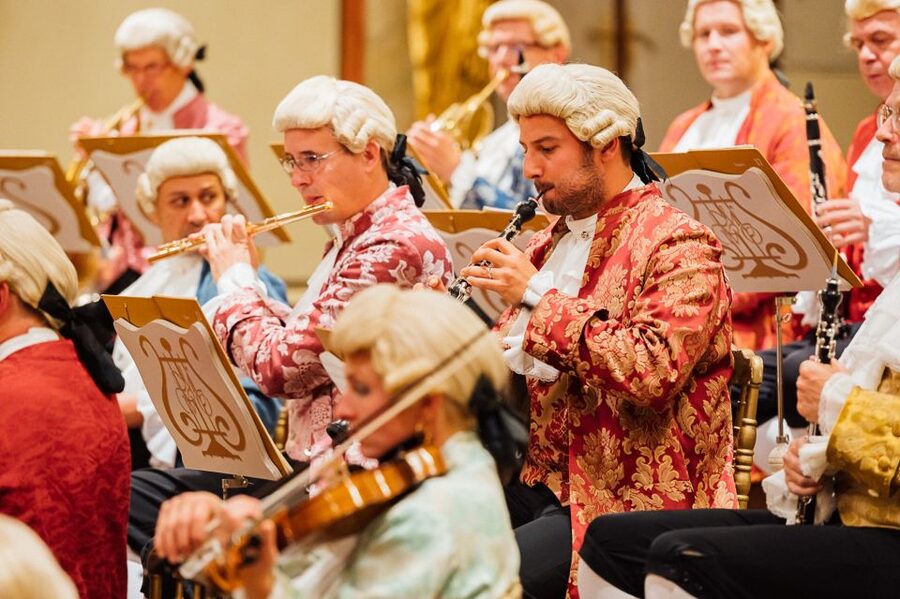
The performers dress in baroque period costumes and wigs. If you think that might be just for fun, you are half right. Yes, it looks great in photos and gives the whole event a theatrical spark. But it also changes how you interpret the music.
Mozart’s operatic writing can feel more dramatic when singers look and move like characters rather than like people in modern black tie. The costumes act like a cue for the room, telling your brain to treat each aria as a scene, not just notes in the air. That is especially helpful if you are not following every reference in the opera plots.
The same idea applies to Strauss at the end. When the ensemble is dressed in period style and the conductor is leading with energy, the Radetzky March and the Blue Danube feel like part of one continuous Viennese evening. You end up leaving with a clear memory loop: Mozart vocal moments, orchestra color, and then a clean, classic Strauss send-off.
Just keep your expectations realistic: you are still at a concert. The costumes support the music, but the focus stays on performance quality.
Held over another night in Vienna
Seating in the Musikverein: balcony views, flat floors, and what to check
In a hall like the Musikverein, your seat affects more than comfort. It affects how much of the stage you can actually see. And this concert has a bit of staging built in, thanks to period costumes and vocal moments.
From real-world feedback, there are a few patterns to watch for:
- Balcony seating can mean you are positioned above the stage, which can make the performers look smaller or require extra looking up.
- Some balcony seats end up far from the stage, so you might get sound but not the same visual connection.
- Flat floor seating near the back can make sightlines tricky, since you are not getting the natural elevation you want.
If your priority is seeing the musicians and singers clearly, treat balcony categories as a risk. If your priority is the sound and you are fine with listening, you can still have a great night even from the back, because the music carries well.
My practical advice: before you confirm your seat, check what you can see from your exact category. If the option you are choosing puts you behind or above the stage, consider paying a bit more for a better angle. For many people, the difference between a fun memory and a slightly annoying evening is simply the line of sight.
Ticket exchange at Kärntner Straße 51 and at the Musikverein
This trip is easy once you know the entry steps. Your voucher gets exchanged at the ticket box office at Kärntner Straße 51, 1010 Vienna. You can also exchange directly at the Wiener Musikverein main foyer at the ticket collection point.
The venue opens 60 minutes before the concert start. That gives you time to exchange smoothly, find your entrance, and get seated without feeling rushed. If you arrive right on time, you will still likely make it, but you will have less buffer.
Here is the smarter approach if you want to move quickly later. You can exchange your ticket any day before the concert at the orchestra’s office and then skip the ticket line in the evening. The office at Kärntner Straße 51, third floor is open daily from 10:00 AM to 5:00 PM.
One small planning note. In the evenings around major performances, Vienna can have traffic restrictions. I suggest building extra time into your route and arriving a little earlier than your map app suggests. It keeps things calm, especially if you are pairing the concert with dinner nearby.
Dress code and practical comforts for a Mozart night
Dress code is smart casual. Think neat and comfortable. You do not need to dress like you are attending a black-tie ball, but you also do not want to show up in something overly casual.
This is also a performance where you will likely stay seated for the full time. So dress for warmth. Even if the hall is comfortable, concert nights are long enough that you can feel cool if you are underdressed.
Two practical notes that often get missed:
- The concert program is not included, so you may want to read up on the general idea of what is coming, or plan to follow along without a printed guide.
- A cloakroom is not included, so avoid traveling with big bulky items you do not want to carry during the evening.
If you are the type who likes to know what you are hearing, arrive with a quick plan in mind. You know the big pieces: Mozart opera excerpts throughout, then Strauss finales like the Blue Danube and Radetzky March.
Price and value: is $81 worth it in Vienna?
At $81 per person for a roughly 2-hour concert ticket, the value comes from three things: the caliber of the performers, the staged presentation, and the venue.
First, the orchestra is 30 musicians from major Austrian institutions. That is not a small ensemble. You can hear the difference in cohesion and volume, especially during full orchestral moments.
Second, you get vocal performance built into the evening. With two opera singers from the State Opera and Volksoper and guest soloists, the concert covers more than instrumental highlights.
Third, the setting and presentation matter. The Brahms-Saal is a major concert hall, and the baroque costumes and wigs add a “Vienna event” feeling rather than a generic ticketed performance.
What does not make the price feel perfect for everyone is that seat choice can change your experience. If you end up in a balcony section with limited view, you may still enjoy the sound, but you lose some of the theatrical payoff. In that case, the value depends heavily on where you sit.
So my take: it is good value if you want a polished Mozart plus Strauss evening in one of Vienna’s best-known halls, and you pick a seat with a decent stage view.
Who should book, and who should reconsider
This concert is a strong match for:
- First-time visitors who want a classic Vienna night without complicated planning
- People who enjoy Mozart and want the operatic side, overtures, arias, and duets
- Anyone who likes Strauss and wants the Blue Danube and Radetzky March in a full concert setting
- Music-curious travelers who will appreciate the orchestra size and opera voices even if they do not read music
It might be less ideal if:
- You are very sensitive about seeing performers and facial detail. Balcony placement can reduce what you can actually watch.
- You are hoping for a long educational talk or a guided explanation. This is performance-forward, with the program not included.
For families, there are discounts for children age 5 to 18. The event is still a concert hall experience, so it is best for kids who can sit through music calmly.
If you want Vienna in two hours with strong performers and an easy storyline, this is an efficient choice.
FAQ
How long is the Mozart Concert in the Brahms-Saal?
The concert runs for 2 hours.
What is included in the ticket price?
Your ticket includes the concert entry. The concert program and cloakroom are not included.
Where do I exchange my voucher?
You can exchange your voucher at the ticket box office at Kärntner Straße 51, 1010 Vienna. You can also exchange directly at the Wiener Musikverein main foyer at the ticket collection point.
When does the venue open?
The venue opens 60 minutes before the concert begins.
What time is the ticket collection point available?
You can exchange at the Wiener Musikverein main foyer at the ticket collection point from 1 hour before the concert starts.
Where can I exchange my ticket earlier to skip the evening line?
You can exchange any day before the concert at the office of the orchestra, at Kärntner Straße 51, third floor, open daily from 10:00 AM to 5:00 PM.
What dress code should I follow?
Dress code is smart casual.
Are there discounts for children or students?
Yes. Discounts are available for children ages 5 to 18 and students up to 27 years old, but only with an ISIC International Student Identity Card. No other student IDs are accepted.
Does the concert include a cloakroom?
No, a cloakroom is not included.
Is free cancellation available?
Yes. You can cancel up to 12 hours in advance for a full refund.
Should you book the Mozart Orchestra concert in the Brahms-Saal?
If your goal is a classic Vienna evening that is easy to enjoy, I think this is a smart booking. You get Mozart opera highlights, a full-size orchestra, opera singers, period costumes, and an Austria-style finale with Strauss.
Just treat seating as part of your decision. If you can, aim for a category that keeps your view of the stage comfortable. If you do that, the value is strong, and the two hours should fly by with a genuinely celebratory atmosphere.
Just added to the bill for Vienna
Mozart & Classical Concert Evenings, compared.
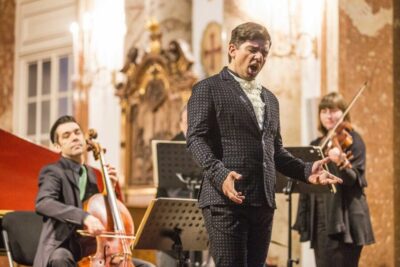
Vivaldi’s Four Seasons Concert in Karlskirche
Read our review →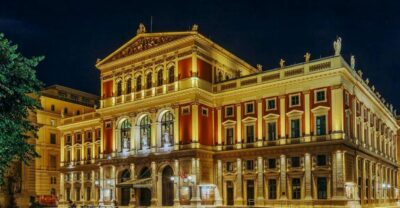
Classical Concert in the World-Famous Musikverein
Read our review →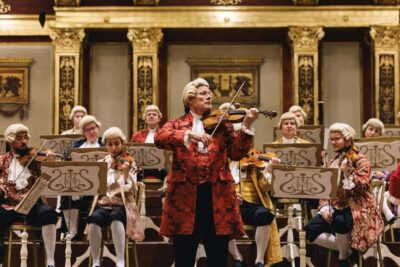
Mozart Concert at the Musikverein – Golden Hall
Read our review →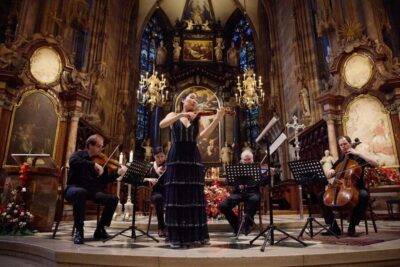
Classical Concert in St. Anne’s Church (Annakirche)
Read our review →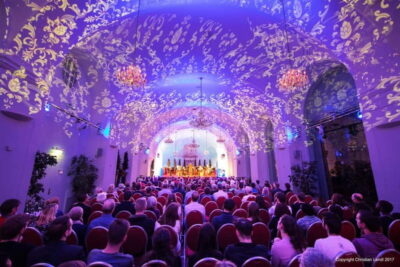
Browse the lists this tour appears in