
REVIEW · WORKSHOPS
Vienna: Natural Sourdough Bread Workshop with Apulian Flour
Fresh bread, made in a small group, beats most food tours. This Vienna sourdough workshop teaches you Apulia-style dough using natural fermentation, step by step, so you know what you are doing, not just what to eat. I love that you get real technique practice, from starter refresh to shaping. I also love the take-home setup, you leave with a freshly baked loaf and a live starter to keep going at home.
One possible drawback to note: the workshop happens in the instructor’s apartment on the DG floor, so if stairs are an issue for you, it’s worth confirming the easiest access before you go.
In This Review
- Key takeaways
- Apulia Meets Vienna: What This Sourdough Workshop Is Really About
- 150 Minutes Inside the Dough: How the Session Flows
- Starter Refresh: The Part You Control Every Week
- Autolyse: Let Flour and Water Do Some Work
- Mixing the Dough: Hydration, Texture, and Balance
- Hand Work and Bulk Fermentation: Folding Builds Strength
- Pre-shaping, Shaping, and Baking: From Dough to Crisp Crust
- The Drink Break and the Bread Stories You’ll Actually Use
- What You Take Home: Loaf, Starter, Recipes, and Tips
- Price and Value: Is $147 Fair for a Vienna Hands-On Workshop?
- Who This Workshop Fits Best (and Who Might Want to Skip It)
- Practical Tips So You Leave With a Better Loaf Next Time
- Should You Book This Apulia-Vienna Sourdough Workshop?
- FAQ
- How long is the Vienna sourdough bread workshop?
- What is the price per person?
- How many people are in the group?
- What languages are used during the workshop?
- Will I bake the bread myself?
- Do I take anything home?
- What ingredients are included?
- Is there a cancellation option?
Key takeaways
- Apulia semolina meets Viennese fermentation, in one guided recipe
- Small group (max 6), so you can actually ask questions and work the dough
- Starter basics included, including how to feed and maintain your live culture
- Hands-on every stage, from autolyse to shaping and baking
- Take-home value, loaf plus a portion of live starter, plus home-baking tips
- Language friendly, taught in Italian, German, or English by Patrik Montinari
Apulia Meets Vienna: What This Sourdough Workshop Is Really About
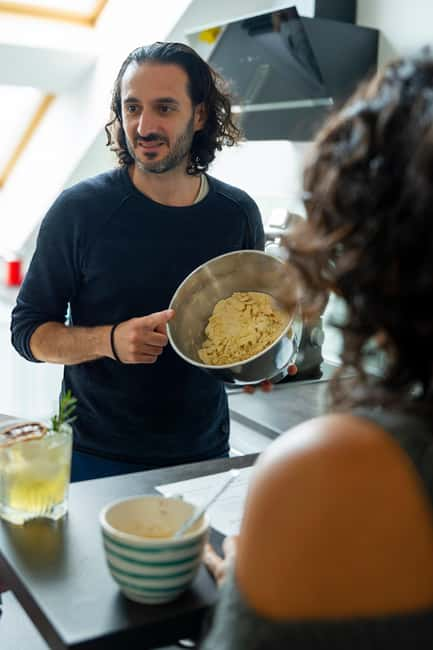
If you care about bread beyond crust-and-crumb photos, this workshop makes sense fast. The core idea is simple: learn how a long, slow, naturally leavened fermentation changes dough behavior, flavor, and digestibility. You also learn how two traditions can share the same bowl, Apulia’s rustic semolina flavor and Vienna’s refined natural-fermentation approach.
The “Apulia” part matters. Apulia is known for semolina-rich breads and a more rustic, hearty taste. The “Vienna” part matters too. Vienna tends to treat fermentation like a craft process, not a timed chore. Put them together and you get a loaf with a deeper aroma, a more interesting crumb, and a fermentation story you can repeat at home.
The workshop is led by Patrik Montinari. He is Italian, and instruction is offered in Italian, German, or English. That language flexibility matters if your baking brain works best in your native tongue.
And yes, you will be kneading and handling dough, not just watching from the sidelines. This is the kind of class where your hands learn the steps, so your next loaf at home feels less like guesswork.
More crafts learned first-hand:
- Vienna: Chocolate Workshop in Chocolate Museum w/ Tasting
★ 4.5 · 1,802 reviews - Chocolate workshop in Chocolate Museum Vienna “BO-YO”
★ 4.5 · 352 reviews - Nabiel’s Vienna Cooking Class
★ 5.0 · 234 reviews - Vienna: Viennese Waltz Beginner Workshop for Couples
★ 4.9 · 144 reviews
150 Minutes Inside the Dough: How the Session Flows
You get a 150-minute session, which is long enough to do a full natural-leavening process without feeling rushed. Timing is built around fermentation and dough development, so even if you are a first-timer, you can follow what is happening and why.
Here is the sequence you can expect, in plain language:
You refresh the sourdough starter first. Then you do autolyse, mixing flour and water and letting gluten start forming naturally. After that comes mixing and dough balancing, so hydration and texture land in the right zone.
Then you move into hand work and bulk fermentation. This is where folding and resting build dough structure. Next you pre-shape and shape the loaf, then bake it to a golden crust and an aromatic crumb.
Between the main stages, there is a short break for a drink while you talk about bread cultures, including the Italian Apulia angle and the Viennese fermentation craft. That social time is not just a pause. It helps you connect the technique to the tradition, so you remember what each step is trying to accomplish.
Small group size, max 6 participants, is a big practical advantage here. You are more likely to get hands-on corrections. You also get to see different dough handling styles, which helps you calibrate faster.
Starter Refresh: The Part You Control Every Week
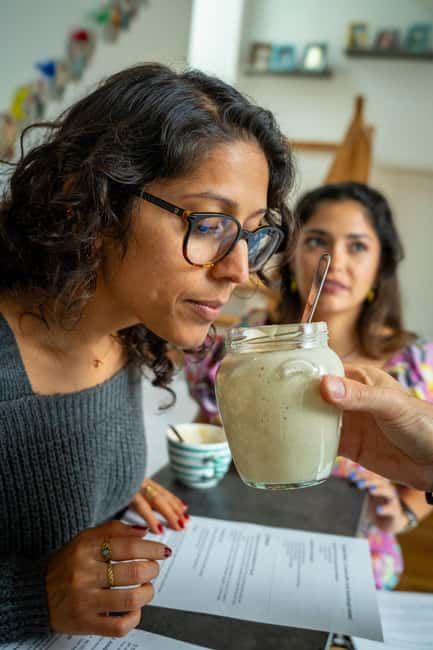
Sourdough starts with a living culture. In this workshop you learn how to refresh it, meaning you feed and maintain the natural yeast so it stays strong and active. If you have ever had starter that behaves unpredictably, you will appreciate how much clarity this gives you.
What you should focus on during starter refresh is not memorizing a ritual. It’s understanding the logic. A healthy starter supports steady fermentation, and steady fermentation supports flavor and texture. When your starter is stable, the rest of the process becomes easier.
For you, this is the biggest “transfer to home” skill. Most baking classes teach dough. This one also teaches how to keep the engine running.
If you want a practical take-home outcome, this workshop gives it. You can take home your starter portion to keep baking, so you are not just collecting knowledge, you’re collecting a tool.
Autolyse: Let Flour and Water Do Some Work
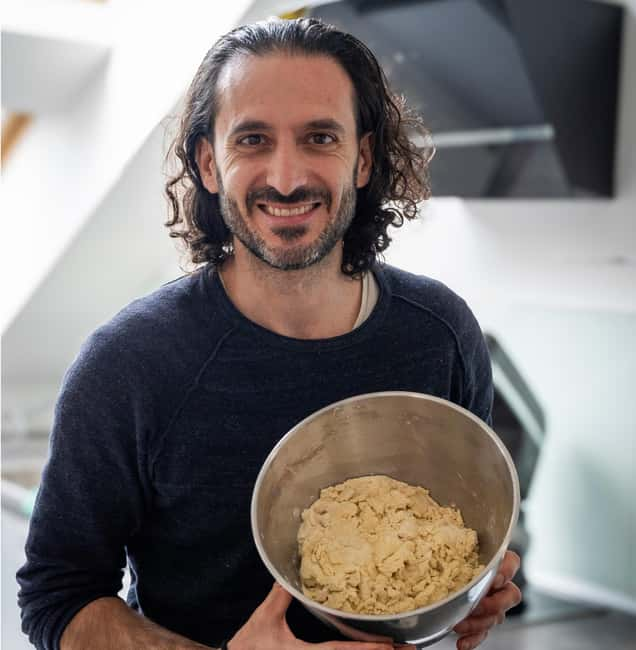
Autolyse is one of those bread steps that feels like it should do more than it does. Then it does exactly that. You mix flour and water and let them rest so gluten begins to form on its own.
In this class, seeing autolyse in action is useful because it changes what your later mixing and folding needs to do. Instead of forcing everything at once, you let time build structure, which usually makes dough easier to handle and improves texture.
You learn what to look for during the rest, so you can tell when the dough is ready to proceed. That is the difference between following steps and understanding them.
Held over another night in Vienna

Mixing the Dough: Hydration, Texture, and Balance
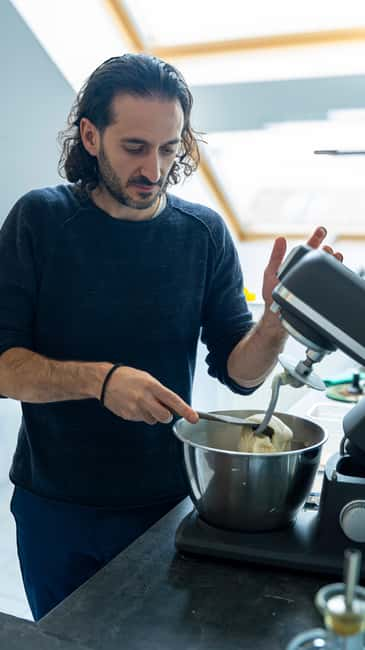
Next comes mixing the dough and balancing hydration for the ideal texture. Hydration is the ingredient that determines so much: how dough stretches, how it traps gas, and how it holds shape.
In a hands-on class, this stage is where you get quick feedback. If your dough seems too slack or too stiff, you adjust with guidance rather than waiting until it fails later at home. That short feedback loop is a big part of the value of paying for instruction.
You also learn what “balance” means beyond feel. The aim is dough that can develop strength through folding and bulk fermentation, and then still shape cleanly for baking.
Hand Work and Bulk Fermentation: Folding Builds Strength
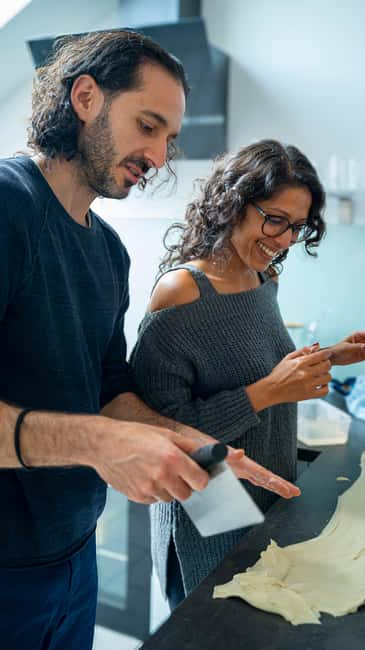
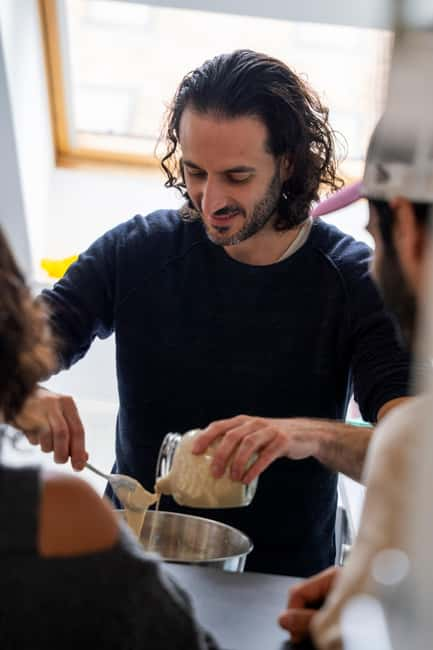
This is where the workshop becomes real craft. During bulk fermentation you practice folding, resting, and developing structure. Natural fermentation is not just waiting. It is active transformation.
You will learn the technique of hand work, meaning you physically build dough strength during the fermentation window. That affects rise and crumb. Done well, your dough gains elasticity and organization, which helps your loaf bake with a better internal structure.
For your next loaf at home, this is the part you will reuse the most. You’ll remember how dough responds to folds and time, which helps you troubleshoot when your kitchen runs warmer or cooler than the workshop did.
Also, this long, slow fermentation is directly tied to what makes the loaf taste better and feel easier to digest. You get the method, not just the promise.
Pre-shaping, Shaping, and Baking: From Dough to Crisp Crust
After bulk fermentation you move into pre-shaping and shaping. This is not just about making it pretty. Shaping organizes the dough so it bakes with the right form and crumb structure.
If you have ever had a loaf that spread too much or tore at the surface, you know why shaping matters. In this workshop, you practice artisan techniques, so you learn how to handle dough gently but confidently.
Then it’s baking. The goal is a crisp golden crust and a soft, aromatic crumb. The class timing and technique aim for a loaf that shows you the results of all the steps before it.
And this is where your work pays off instantly. You watch your dough become bread. You smell it. You take it home.
The Drink Break and the Bread Stories You’ll Actually Use
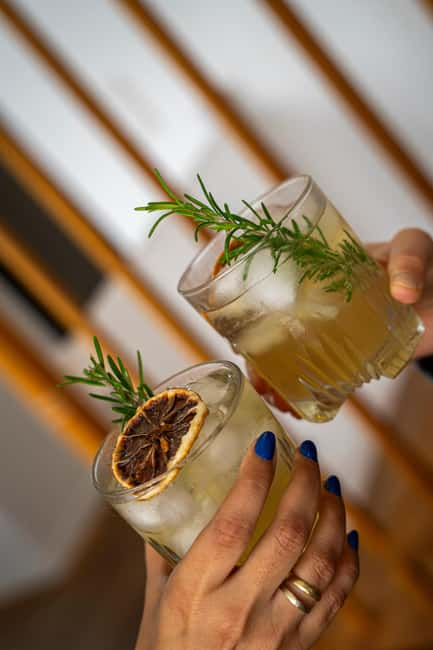
Between stages, there is a break with a drink. You also talk about the bread cultures of Apulia and Vienna. This part is easy to dismiss if you think bread is just chemistry.
But connecting technique to culture helps your brain store the steps with meaning. When you understand why a tradition developed a certain way, it becomes easier to remember what matters in your own kitchen.
It’s also just pleasant. Breadmaking can feel repetitive, then suddenly you are sharing stories and practical insights, and the rest of the process goes smoother.
What You Take Home: Loaf, Starter, Recipes, and Tips
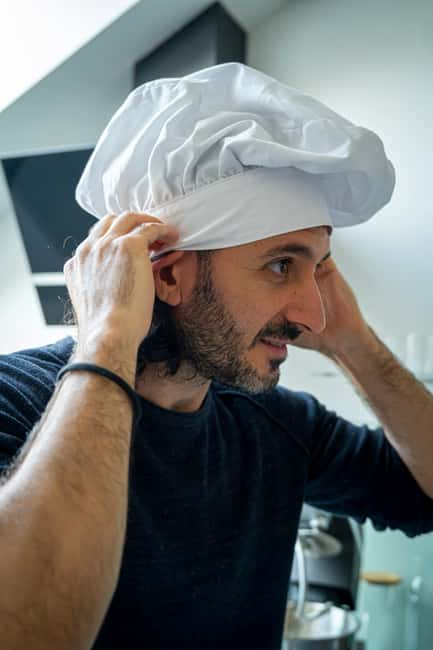
This workshop is generous with take-home value. You leave with:
- A freshly baked loaf
- A portion of live sourdough starter, if you wish
- Recipes and tips to bake at home
- Guidance through the stages, which you can translate into your own practice
The loaf is your immediate reward. It also gives you a reference point when you bake again. You can compare your future result to what you learned here.
The live starter is the real long-term gift. Starter upkeep can be intimidating at first. Having a culture that came from the workshop process helps you start with confidence.
The recipes and tips are the bridge between class and home. Even if your kitchen environment differs, you will have a method you can adapt.
And since the class is taught by Patrik Montinari, you get consistent instruction style, including how he explains the process in the language you choose (Italian, German, or English).
Price and Value: Is $147 Fair for a Vienna Hands-On Workshop?
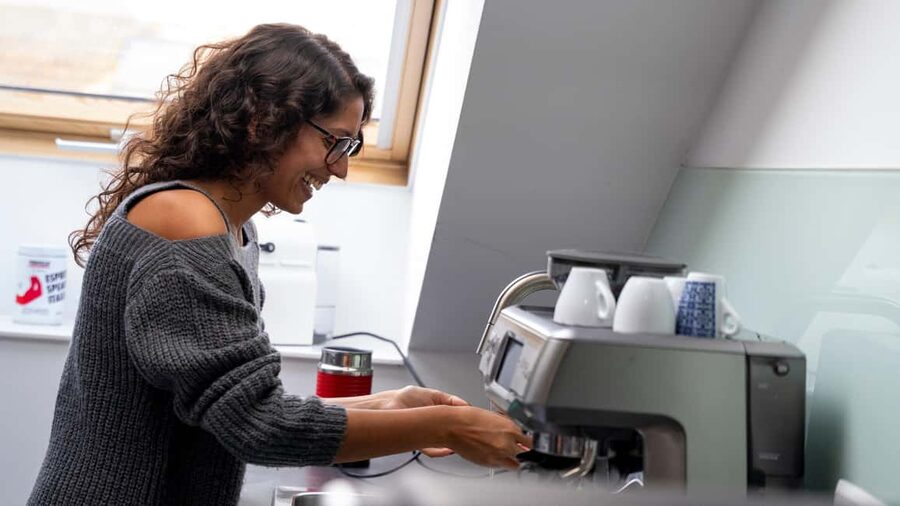
Price is $147 per person for a 150-minute workshop. On paper, that is not cheap. But when you look at what you get, it becomes more reasonable.
You are paying for several things that add up quickly if you try to DIY:
- A guided sourdough process, from starter refresh to baking
- Hands-on equipment use
- All ingredients, including Apulia semolina flour
- A drink during the dough resting period
- Take-home items: your loaf and a portion of live starter
- Recipes and tips, plus step-by-step coaching
Most casual classes teach one piece. This one teaches the whole chain. That matters because sourdough is unforgiving when you skip a step or misunderstand timing. Paying for instruction reduces wasted dough and frustration.
Also, the small group size, limited to 6 participants, helps you get feedback. That is often where the difference is between a fun afternoon and real skill-building.
If you are the type who wants to learn once and bake for months afterward, the cost starts to feel like value instead of expense.
Who This Workshop Fits Best (and Who Might Want to Skip It)
This workshop fits best if you want to learn by doing, not just observe. It’s suitable for beginners and for passionate home bakers. If you are new, you get a clear process you can repeat. If you already bake, you will likely appreciate the Apulia-Vienna method blend and the hands-on shaping and folding coaching.
It also fits if you care about natural fermentation and want the long, slow approach that supports flavor and digestibility. You are not learning quick bread. You are learning a bread culture.
You might want to think twice if you dislike hands-on work or need a class with a fully seated, watching-only format. This is about using your hands. Also, the workshop takes place in the instructor’s apartment on the DG floor, so confirm access if you have mobility concerns.
Practical Tips So You Leave With a Better Loaf Next Time
You are told to wear comfortable clothing suitable for baking. I’d treat that as a hint to dress like you might get flour on you. Even careful bakers tend to leave a little flour on sleeves.
Here’s how to get the most out of your time:
- Ask questions during each stage, especially when you are learning to manage hydration and dough feel
- Pay attention to what the starter looks and smells like after refresh, since that is your weekly control point at home
- Focus on fold technique during bulk fermentation, not just the schedule
- Don’t rush shaping. The goal is organized dough, not speed
- Take notes on the language you used for instruction, since it helps you follow recipes later
These small habits make a big difference. Sourdough punishes shortcuts, but rewards careful learning.
Should You Book This Apulia-Vienna Sourdough Workshop?
Book it if you want a Vienna sourdough experience that teaches the full process, not just the final product. The mix of Apulia semolina and long, slow natural fermentation, plus the hands-on coaching from Patrik Montinari, is exactly the kind of skill you can keep using long after your weekend in Vienna.
Skip it if you only want a tasting or a passive food activity. You are here to make bread and learn the mechanics.
If you like flexible travel plans, it also helps that you get free cancellation up to 24 hours in advance and a reserve now, pay later option. That means you can hold your spot while you lock in your Vienna schedule.
If you want to bake at home with confidence, leave with a live starter, and learn why each step matters, this is a strong bet.
FAQ
How long is the Vienna sourdough bread workshop?
The workshop lasts 150 minutes.
What is the price per person?
The price is $147 per person.
How many people are in the group?
The group is small, limited to 6 participants.
What languages are used during the workshop?
The instructor teaches in Italian, German, and English.
Will I bake the bread myself?
Yes. The experience is hands-on and includes learning each stage, from starter refresh and autolyse to mixing, folding during bulk fermentation, shaping, and baking.
Do I take anything home?
You take home your freshly baked loaf. You can also take home a portion of live sourdough starter, plus recipes and tips to bake at home.
What ingredients are included?
All ingredients are included, including Apulia semolina flour.
Is there a cancellation option?
You can cancel up to 24 hours in advance for a full refund.
Just added to the bill for Vienna



Workshops, compared.
Chocolate Workshop in Chocolate Museum w/ Tasting
Read our review →
Austrian Apple Strudel Cooking Class including Lunch in Salzburg
Read our review →
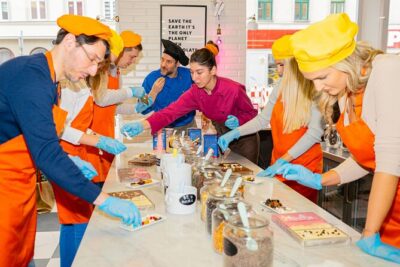
Chocolate workshop in Chocolate Museum Vienna “BO-YO”
Read our review →
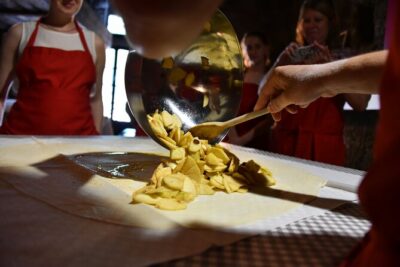
Salzburg Christmas Cookies and Apple Strudel Cooking Lesson
Read our review →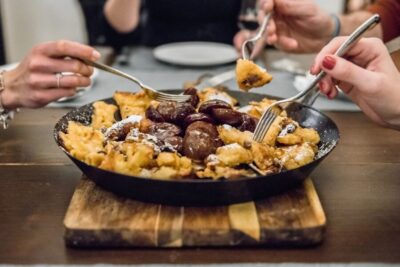
Traditional Kaiserschmarrn Cooking Class & Tasting
Read our review →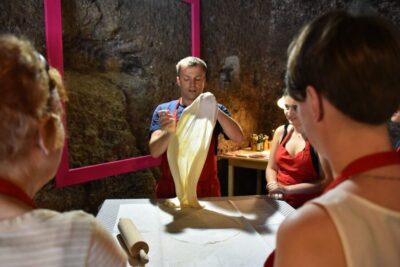
Cookies and Apple Strudel Cooking Class Including Lunch
Read our review →Browse the lists this tour appears in