REVIEW · TOURS
Vienna Oldtown Tour
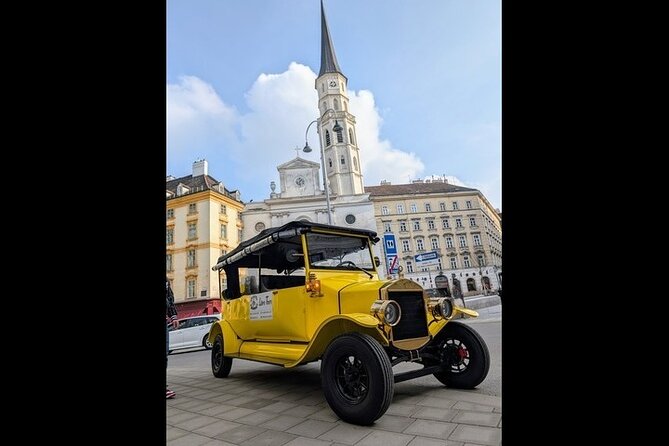
Vienna can feel big fast, so this short tour helps you snap it into place. In just 45 minutes, you’re driven past the big power-and-beauty stops around the Hofburg, the Ringstraße, and the Old Town core, with quick photo stops that make the city feel connected instead of random. I especially like the classic-car vibe and the way the route threads together Habsburg-era sites and everyday city landmarks. One possible drawback is that language quality can vary, and some groups found English less clear than expected.
Here’s what makes this experience stand out for practical travelers. You get a private setup, so it’s easier to go at a pace that fits your group, and you also have the chance to step out briefly at places like the Volksgarten rose area for views and photos. The top value play is simple: treat it like your Vienna orientation. The one thing to plan around is time, because 45 minutes is short, so you will not get long museum or interior time at every stop.
In This Review
- Key Highlights You Can Actually Use
- Price and What You’re Really Buying for $42.17
- The Classic-Car First-Day Strategy: Fast, Comfortable, and Photo-Friendly
- Hofburg and the Imperial Core, Where Vienna’s Story Starts
- The National Library and Knowledge Landmarks You’ll Want to Return To
- OSCE and the Modern Vienna Layer Behind the Old Facade
- Statues and Rulers: Prince Eugene and the Archduke Karl Monument
- Museums in Motion: Kunsthistorisches, Natural History, and MuseumQuartier
- Parliament and Government Buildings on Vienna’s Ringstraße
- Old Town Squares and Church Exteriors: Am Hof and Schottenkirche
- Burgtheater, Rathaus, and City Hall-Scale Architecture
- Art-World Vienna: Secession, Albertina, and Kunstforum
- Music and Iconic Stops: State Opera, St Stephen’s, and Café Culture
- Museums With a Story Beyond Art: Weltmuseum and Natural History Perspective
- A Note on Guides: When English Clarity Matters, Ask Early
- Meeting Point Reality Check: Find the Roses, Not Just the Address
- When Time Gets Tight: Street Closures and a 30-Minute Delay Risk
- Should You Book This Vienna Oldtown Tour?
- FAQ
- How long is the Vienna Oldtown Tour?
- What language is the tour offered in?
- Is this a private tour?
- What ticket format will I receive?
- Where does the tour end?
- What’s the meeting point like?
- Is it suitable for elderly travelers or people with mobility needs?
- What happens if weather is poor?
- FAQ
- What’s the cancellation window for a full refund?
Key Highlights You Can Actually Use
- Quick orientation in 45 minutes, so you know where to return later
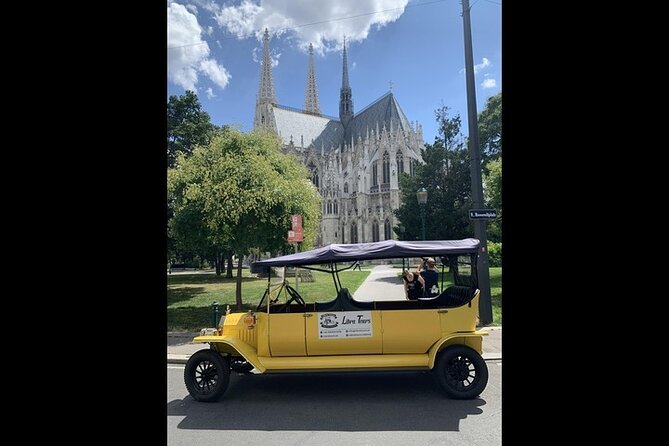
- Classic car stops for photos, including park and church viewing moments
- A strong mix of imperial sites and modern institutions, from Hofburg to Parliament
- English offered via the guide, but language clarity can vary, so confirm needs early
- Great fit for older visitors or limited mobility, with an extra stool option mentioned
Price and What You’re Really Buying for $42.17
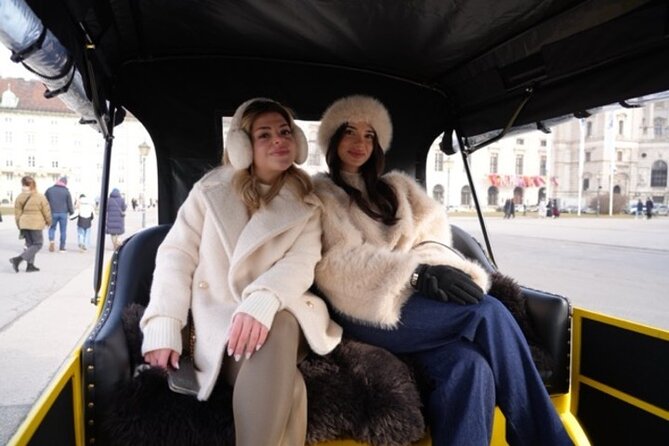
At $42.17 per person for about 45 minutes, you’re mostly paying for logistics plus storytelling, not for a full day of sightseeing. Because it’s a private tour for just your group, this can be a good value if you’re traveling as a pair or small group and want a smooth, low-effort intro route.
Where the price feels most fair is when you use it the way it’s meant to be used, as a first-day orientation. If you’re the type who likes to understand why Vienna’s landmarks sit where they do, the driving route plus stop-and-look moments can save you time later when you plan museum tickets and longer walks.
If you want deep interior access at many places, keep your expectations realistic. In this format, you’re usually there for exterior context, quick viewing, and photo opportunities, rather than long guided entry.
Held over another night in Vienna
- Vienna: Vivaldi’s Four Seasons Concert in Karlskirche
★ 4.7 · 14,951 reviews - Vienna: Spanish Riding School Training
★ 3.9 · 9,281 reviews - Vienna: Schönbrunn Palace & Gardens Skip-the-Line Tour
★ 4.7 · 7,739 reviews - Vienna: Light of Creation Votive Church Immersive Light Show
★ 4.8 · 6,779 reviews
The Classic-Car First-Day Strategy: Fast, Comfortable, and Photo-Friendly
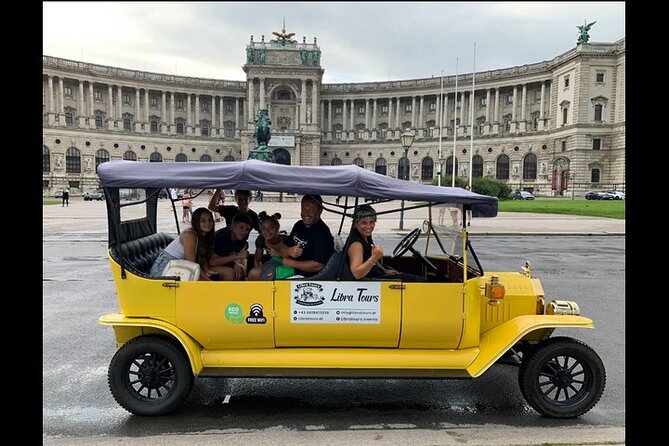
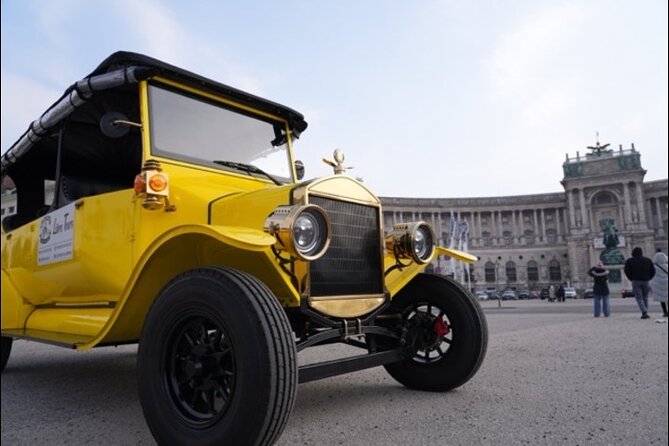
This tour rides you through Vienna in a classic car style, with smooth handling and frequent chances to get photos from the roadside. That matters more than it sounds. Vienna’s highlights can be hard to sequence on foot, and a car route compresses the “where is everything?” problem into something you can solve in one go.
I also like that guides in this experience can adapt. Several people described guides who were friendly, helpful with communication ahead of time, and willing to stop for moments like the roses in the park and quick church viewing. If your feet are tired, or you want a low-stress city overview, this format is usually a relief.
One note for sunny days: a few groups reported that the roof was not rolled back even when conditions were bright. If open-air photos matter to you, ask ahead how that’s handled in different weather.
Hofburg and the Imperial Core, Where Vienna’s Story Starts
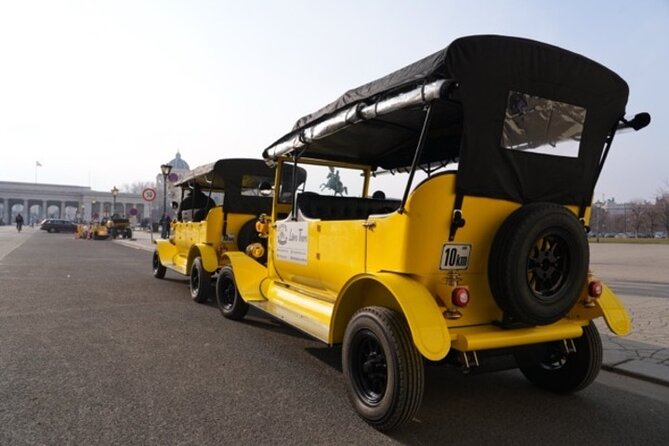
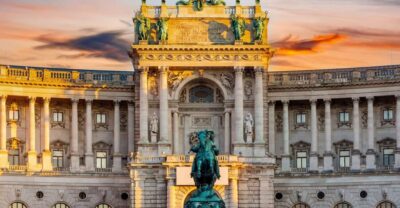
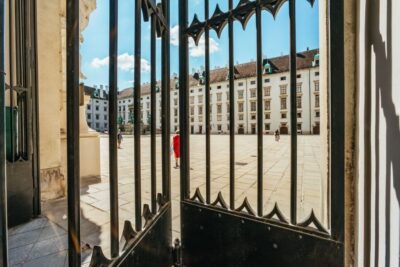
The route begins in the gravitational center of Habsburg Vienna, with the Hofburg Palace. This isn’t just one building. It’s a whole palace complex that includes the Imperial Apartments, the Sisi Museum, and the Imperial Treasury, and it has long served as an imperial seat and a modern official residence.
Why this matters for you: seeing the Hofburg in context helps everything else snap into place. You start to recognize the city’s layout as political power made visible, from ceremonial spaces to the surrounding institutions.
On the Hofburg side, you may also spot nearby palace elements such as the Swiss Gate, the Butterfly House area inside the palace complex, and the general “palace wall” feeling that makes this part of town feel ceremonial and controlled. Even if you do not go inside, the exteriors give you a sense of scale.
Practical tip: if you’re hoping to pair this tour with later museum visits, note the Hofburg zone first. It’s easy to underestimate how much there is here.
The National Library and Knowledge Landmarks You’ll Want to Return To
The tour route includes Vienna’s major knowledge institutions, including the Austrian National Library. The library is among the oldest and largest in the world, with over 11 million books and manuscripts, plus special collections like the Papyrus Museum and the Globe Museum.
Why I like this stop for an orientation tour: Vienna’s culture isn’t only art and music. It’s also documents, scholarship, and libraries that feel like time machines. Even a quick look at the setting helps you decide whether you want to buy entry later.
If your focus is history and quiet, this is the kind of place you’ll likely prioritize after your overview. And if you’re short on time during your trip, using a first-day tour to identify “must return” sites is exactly how you stretch a limited itinerary.
After the interval, more from Vienna:
OSCE and the Modern Vienna Layer Behind the Old Facade
Not every Vienna tour gives you the modern governance layer, but this one includes the OSCE area. The OSCE is the world’s largest regional security organization, founded in 1975 as the Conference on Security and Co-operation in Europe.
For you, this adds a useful truth: Vienna is not only an imperial postcard. It’s also a diplomatic city, where decisions and negotiations happen in real offices.
It’s also a good contrast stop. You get an easy mental comparison between ceremonial power around the Hofburg and the modern, practical work of security and human-rights institutions.
Statues and Rulers: Prince Eugene and the Archduke Karl Monument
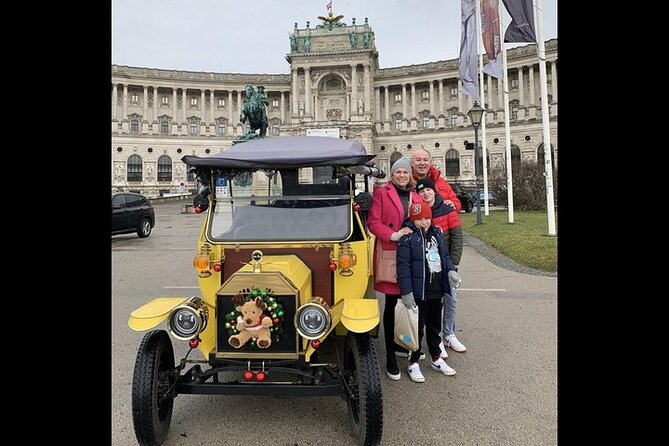
You’ll pass landmarks connected to major military and political figures, including Prince Eugene of Savoy (1663 to 1736) and the Archduke Karl equestrian statue in Heldenplatz.
These are the kinds of sights that can look “just decorative” until you learn what they represent. Prince Eugene is tied to major victories against the Ottoman Empire and France, and Archduke Karl connects to the Habsburg military tradition.
The value of seeing these on a first day is that you start to read the city’s stone messages. You stop seeing Vienna as random beauty and start seeing it as controlled storytelling.
Museums in Motion: Kunsthistorisches, Natural History, and MuseumQuartier
The route includes major museum stretches, including the Kunsthistorisches Museum and the Natural History Museum. The art museum houses the Habsburg imperial collection, and it’s especially strong for European art from antiquity to the late 18th century. The natural history museum, founded in 1807 and opened in its current building in 1889, includes dinosaur skeletons, minerals, and animal exhibits showing Earth’s history and biodiversity.
This is one of the highest-value parts of the tour if you plan to visit museums later. Even when you are only stopping briefly, you’ll learn which museum “type” you’re most drawn to: royal art culture or scientific collections.
You’ll also pass the MuseumQuartier Wien, a restored historic and modern museum area opened to the public in 2001. This area is useful in a “future planning” way. It signals where contemporary museum energy lives in Vienna, so you’re not guessing later.
Parliament and Government Buildings on Vienna’s Ringstraße
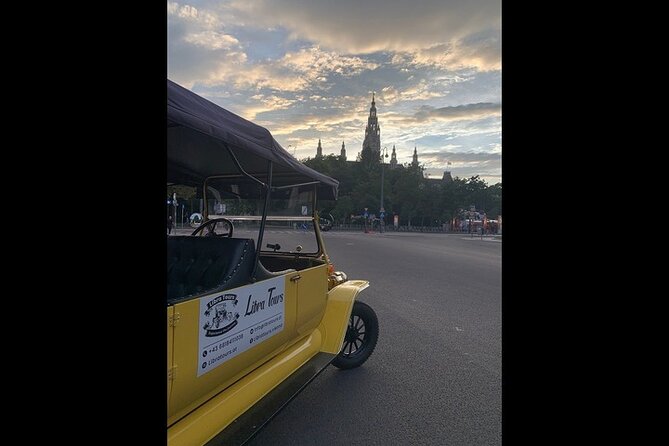
You also get a look at the Austrian Parliament Building, completed in 1883 on the Ringstraße. It’s a grand structure in Greek Revival style, and it houses the National Council and Federal Council.
Nearby, you may also see the Library of the Austrian Parliament, established in 1869 with legal and historical texts supporting parliamentary work and research.
If you’re the kind of traveler who enjoys how cities operate, these stops add context. They show you that Vienna’s “old grandeur” is not only about palaces. It’s also civic design, laws, and administration.
Old Town Squares and Church Exteriors: Am Hof and Schottenkirche
The tour threads into Old Town atmosphere with stops near places like Am Hof. This historic square dates to the Roman era and later became tied to the Babenberg dukes. Today it’s a lived-in space with the Church Am Hof, the Mariensäule, and shops and restaurants.
Another key Old Town stop is the Schottenkirche, founded in the 12th century by Irish monks. The current Baroque facade was completed later, and the church is known for its long story layered onto its architecture.
Why these fit a short tour: they teach you where Vienna’s everyday life happens. Palaces are the big lesson. Squares and churches are the daily lesson. Together, they help you decide where you want to wander after the tour ends.
Burgtheater, Rathaus, and City Hall-Scale Architecture
You may pass the Burgtheater, Austria’s national theatre, established in 1741 and moved to its current location on the Ringstraße in 1888. It’s a landmark tied to Viennese cultural life.
Another stop area includes the Vienna City Hall (Rathaus), built between 1872 and 1883 in Neo-Gothic style. It’s one of Europe’s largest municipal buildings and a major event and concert venue, not just a sightseeing photo.
For you, these are great markers for planning walking routes. If you know where Rathaus and Burgtheater sit, you can build a simple loop on foot for later days without overthinking.
Art-World Vienna: Secession, Albertina, and Kunstforum
Vienna’s art scene appears in this route too, including the Vienna Secession and the Secession Building connected to artists like Gustav Klimt. The iconic building was completed in 1898, and it marks the break from traditional styles.
You may also see the Albertina, which includes one of the largest print rooms in the world. It’s known for drawings, prints, photographs, and architectural works, plus Habsburg staterooms and modern art collections.
And the tour can include Kunstforum Wien, a museum focusing on modern and contemporary art, known for high-quality temporary exhibitions and a central location.
This matters because Vienna has different “art moods.” Imperial collections, modern design movements, and contemporary temporary shows each feel different in your body. A short tour helps you decide what to return for.
Music and Iconic Stops: State Opera, St Stephen’s, and Café Culture
The route includes the Vienna State Opera, opened in 1869. It’s world-renowned and stages over 50 operas and ballets each season, with top international talent.
You may also see St. Stephen’s Cathedral, with origins dating to the 12th century and a Gothic construction period from the 12th to the 15th century. Its tall spire and intricate details make it a signature stop for orientation.
For a more relaxed Viennese beat, the tour route can also connect with coffeehouse landmarks like Café Central and Café Mozart. Café Central is a classic since 1876 and has ties to famous historical figures, while Café Mozart is known for traditional cakes, including apple strudel.
If you like your travel day to include at least one “inhabitant” experience, not only sightseeing, these coffee stops help you do that without turning your whole day into a restaurant mission.
Museums With a Story Beyond Art: Weltmuseum and Natural History Perspective
The route includes the World Museum Vienna (Weltmuseum Wien), which houses artifacts from around the globe and explores ethnography, art, and history with exhibits spanning ancient civilizations to contemporary societies.
It also includes strong natural science energy through the Natural History Museum. Taken together, these two give you a quick sense of Vienna’s museum range, from human cultures to the physical world.
This is a great pairing if you want your museum day to feel balanced. Some cities only do one lane, but Vienna covers several.
A Note on Guides: When English Clarity Matters, Ask Early
The tour is offered in English, and guide quality can be a make-or-break factor on a 45-minute experience. Many guests praised guides like Jerry and Jeremiah for being friendly, well-versed, and genuinely engaging, with smooth driving and smart pacing.
But at least one group found the guide’s English not very good, which limited what they could learn, and another group needed Chinese and found no Chinese option available.
My practical advice: if language is a priority, contact the provider before booking with your needs. Also be ready to adjust how you take in information. If English clarity is uncertain, use the stops themselves as your main data, then follow up with museum or guidebook reading later.
Meeting Point Reality Check: Find the Roses, Not Just the Address
One recurring theme is that the meeting point description can feel vague, especially around the Volksgarten rose area. If your directions say near the Burgtheater and in front of the rose garden, you may still need a moment to confirm the exact spot.
Do this and you’ll avoid the cold-wait problem: zoom in on the map pin in your confirmation and use a specific nearby landmark as your target, the entrance near the Burgtheater and the rose garden area. If you’re traveling in winter or shoulder season, you’ll thank yourself.
When Time Gets Tight: Street Closures and a 30-Minute Delay Risk
Vienna sometimes has street closures that affect routes. One group reported a 30-minute delay due to closures and waited outside in the cold before the tour started.
This is worth factoring if you’re booking on a tight schedule. If you have dinner or a later ticket reservation, build in buffer time on your first day.
Also remember the tour is short. If anything pushes the start time, you may feel it more than on a half-day tour.
Should You Book This Vienna Oldtown Tour?
Book it if:
- you want a first-day orientation that helps you plan your walking routes and museum priorities
- you like the idea of quick stops for photos in a classic-car format
- you’re traveling with someone who has limited mobility, since an extra stool option is mentioned and guides can be accommodating
Skip it or choose a different format if:
- you need guaranteed clear English or you need Chinese language support
- you want a deep, interior-heavy tour experience, because 45 minutes is mostly about seeing and connecting the dots
- you expect rooftop-open sightseeing in all weather conditions, since that can vary
If you book, go in with a smart mindset. Treat it like your Vienna map lesson, then pick your real museum entries and long church visits right after while the city still feels fresh in your head.
FAQ
How long is the Vienna Oldtown Tour?
The tour lasts about 45 minutes.
What language is the tour offered in?
It’s offered in English. Confirmation is received at the time of booking.
Is this a private tour?
Yes, it’s a private tour/activity, only your group participates.
What ticket format will I receive?
You’ll receive a mobile ticket.
Where does the tour end?
The activity ends back at the meeting point.
What’s the meeting point like?
The meeting point details are near public transportation, but some meeting-point descriptions can feel vague, especially around the Volksgarten rose garden area, so confirm the exact spot.
Is it suitable for elderly travelers or people with mobility needs?
Most travelers can participate, and an extra stool is mentioned for handicaps and elderly people.
What happens if weather is poor?
This experience requires good weather. If it’s canceled due to poor weather, you’ll be offered a different date or a full refund.
FAQ
What’s the cancellation window for a full refund?
Free cancellation is available up to 24 hours in advance for a full refund.
Just added to the bill for Vienna
Tours, compared.
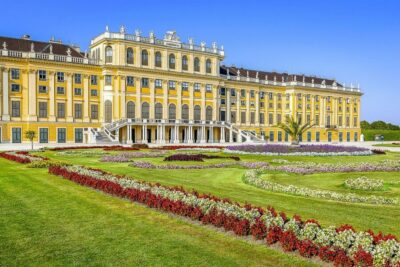
Schönbrunn Palace & Gardens Skip-the-Line Tour
Read our review →
Skip-the-Line Sisi Museum, Hofburg and Gardens Tour
Read our review →
Skip-the-Line Schönbrunn Palace & Gardens Tour
Read our review →
Guided Walking Tour of City Center Highlights
Read our review →