REVIEW · TOURS
Vienna: Sightseeing Tour in a 1920s Classic Style Car
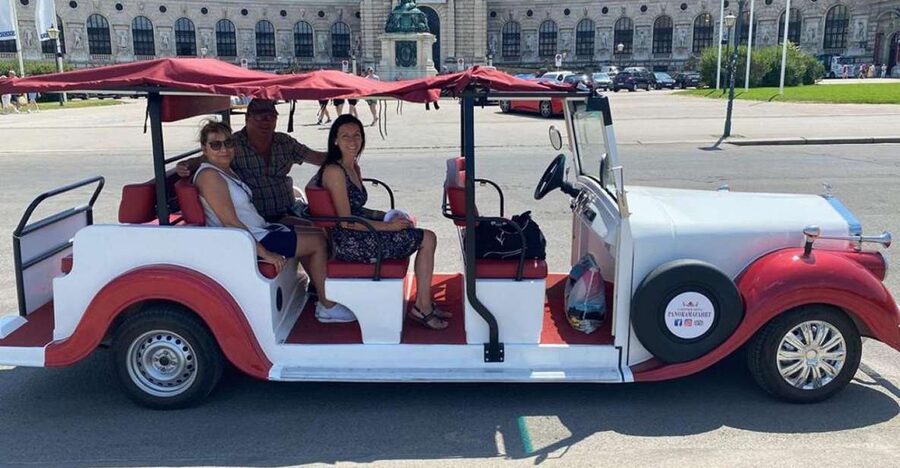
Vienna in one hour, with wheels from the 1920s. This is a relaxed way to see a lot of the center from an electric old-timer car, and you get emission-free sightseeing even when the weather turns. What I really like is the driver-led audio commentary, which keeps the stories clear without turning the trip into a lecture. The main catch is simple: with a 60 minute loop, you will mainly enjoy views from the car, not long stops.
I also love the feel of the experience for families and small groups. You stay together in a vehicle that handles up to 10 people, so the pacing works for different ages and energy levels. If you are hoping to enter museums or linger at viewpoints, plan on doing that separately, since admission fees are not included.
The tour runs in English and German, and the driver tone can be surprisingly personal. In one booking, the guide learned it was the rider’s birthday and worked it into the ride with music so everyone joined in, the kind of small touch that turns a quick loop into a memory.
In This Review
- Key highlights worth knowing before you ride
- Vienna in a 1920s Electric Car, why it works
- Who should book this 60-minute drive?
- Route walkthrough: from Albertina to Stephansdom and back
- Albertina and the Ringstraße sweep
- Museums and monuments around the Hofburg complex
- Parliament, Rathaus, University, and the classic civic zone
- Old streets and iconic sights, including Stephansdom
- Music Vienna and the hotel corridor, then back to Albertina
- The driver audio and how it keeps the ride fun
- Price and value: what $282 per group buys you
- What to know before you go, so the hour feels smooth
- Should you book this Vienna old-timer tour?
- FAQ
- How long is the Vienna old-timer sightseeing tour?
- What is the group size for this experience?
- Where does the tour start and end?
- What languages are available for the tour?
- Is admission to attractions included?
- Can I cancel if my plans change?
Key highlights worth knowing before you ride
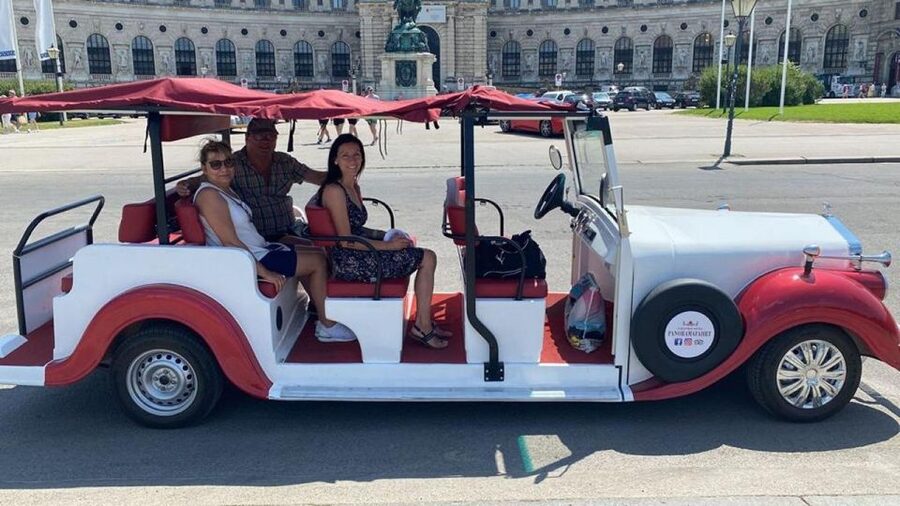
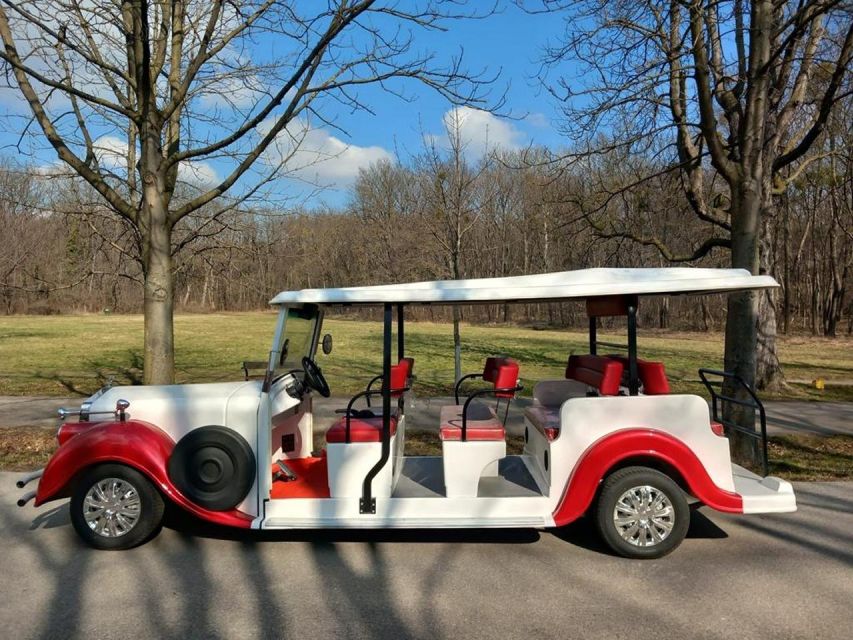
- Electric old-timer comfort: a classic-style vehicle with an emission-free ride through the city
- Private group, up to 10: easier together time than public hop-on hop-off lines
- Driver audio commentary: you get history and culture explanations while you watch the sights roll by
- Weather-proof sightseeing: the tour is designed so you keep moving no matter the conditions
- A wide route in 60 minutes: from Albertina and the Ringstraße to Stephansdom, city park, and music venues
- Real photo opportunities: you see landmark after landmark fast, which helps you capture the highlights
Vienna in a 1920s Electric Car, why it works
There are two common ways people try to see Vienna: either you walk until your feet negotiate a settlement, or you bus your way past the window-view highlights. This old-timer electric car hits a third option: you get a classic, comfortable ride that still feels like sightseeing, not just transport.
The electric part matters more than you might think. Because the trip is emission-free, you can enjoy the drive in a way that feels cleaner and more modern, without losing the vintage vibe of a “what you see is the point” vehicle. And since the tour is designed for no-weather-drama sightseeing, it is one of those plans that still makes sense when you cannot count on clear skies.
The vehicle also keeps the group together. Instead of splitting up for separate lines or waiting around for the slowest person, you all follow the same pace. In a city like Vienna, that kind of cohesion is a quiet form of luxury.
Held over another night in Vienna
- Vienna: Vivaldi’s Four Seasons Concert in Karlskirche
★ 4.7 · 14,951 reviews - Vienna: Spanish Riding School Training
★ 3.9 · 9,281 reviews - Vienna: Schönbrunn Palace & Gardens Skip-the-Line Tour
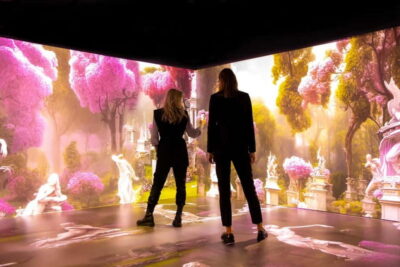
★ 4.7 · 7,739 reviews - Vienna: Light of Creation Votive Church Immersive Light Show
★ 4.8 · 6,779 reviews
Who should book this 60-minute drive?
This is a good fit if you want the Vienna “greatest hits” without turning your day into a stamina test. Because it is a private group for up to 10 people, it can work for families, friend groups, and mixed-age travel parties.
It is also ideal for first-timers who need orientation fast. When you can see a big spread of sights in one loop, you start to understand how Vienna’s center connects, where the grandeur zones are, and where the older, tighter streets start to take over.
If you are the type who loves deep museum time, this may not be your main event. The tour is built for a guided drive-by and audio. You will get “oh, that’s where it is” moments, but not the kind of slow, in-depth experience you get from entering buildings. Admission fees are not included, so plan on saving those for later.
Route walkthrough: from Albertina to Stephansdom and back
You start and end the trip near the Albertina area, and the route is clearly designed for momentum. In the information I have, the tour starts and finishes at Cafe Mozart, Albertinaplatz 2, 1010 Vienna. A separate meeting point is listed as Herrengasse 12 (Hotel Radisson Blu), so I recommend confirming the exact pickup spot with the operator when you book. Either way, it is all in the central core.
Here is how the sightseeing lands in a 60-minute loop, what each cluster gives you, and the realistic tradeoffs of time.
Albertina and the Ringstraße sweep
You kick off near Albertina, then you roll past or near the die alte Stadtmauer area. Then the route pushes into the big-show Vienna corridor: Staatsoper and Ringstraße, including the Ringstraße, längste Boulevard Straße der Welt portion named on the route list.
What I like about this segment is how it sets the tone. Ringstraße is the visual backbone of the city center, and seeing it from a vehicle helps you take in the scale without getting stuck in one spot. The drawback is also time-related: you will not be able to stop and study every façade the way you might on a slower walking day.
From the same grand corridor theme, the tour passes Palais Schy, Goethe Denkmal, Schiller Denkmal, and the Akademie der bildenden Künste area. You will also see Burggarten, plus Palmenhaus and Schmetterlingshaus on the route list. Even if you do not go inside, you get the layout and the feel of the complex as part of the larger imperial-center picture.
Then it continues toward Mozart Denkmal and neues Burgtor, leading into the big ceremonial stretch around Heldenplatz and Hofburg. This cluster of names signals the scale of Vienna’s power-and-culture core, and the drive makes it easier to connect them visually.
After the interval, more from Vienna:

Museums and monuments around the Hofburg complex
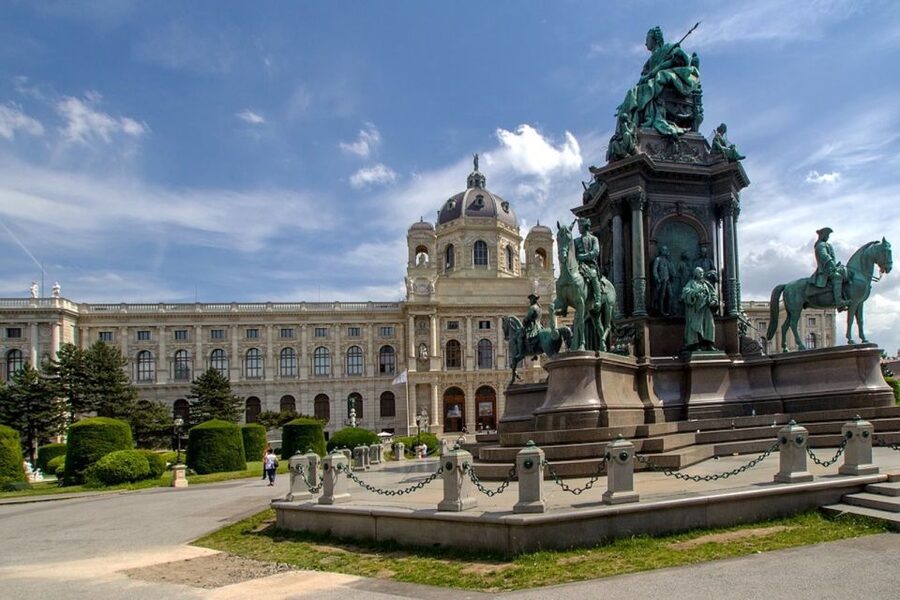
After Hofburg, the route keeps the spotlight on institutions and monuments. You are set up to see Nationalbibliothek, Welt Museum, and Präsidentenpalast, followed by several statues: Prinz Eugen Statue, Erzherzog Karl Statue, and Maria Theresia Statue.
This is a great portion of the tour if you like recognizable names. You can file them away for later, then decide what you want to dig into on a separate visit. The key consideration is that, from a moving car, the details stay “viewable,” not “readable.” If you want to study plaques closely, you will need a follow-up stop later.
The route also includes Natur und kunsthistorisches Museum, and Natur und kunsthistorisches Museum is one of those areas where Vienna’s grandeur and museum culture overlap. From the outside, you get the sense of why this area matters, which is often the hardest part for first-time visitors who do not yet know where to focus.
Parliament, Rathaus, University, and the classic civic zone
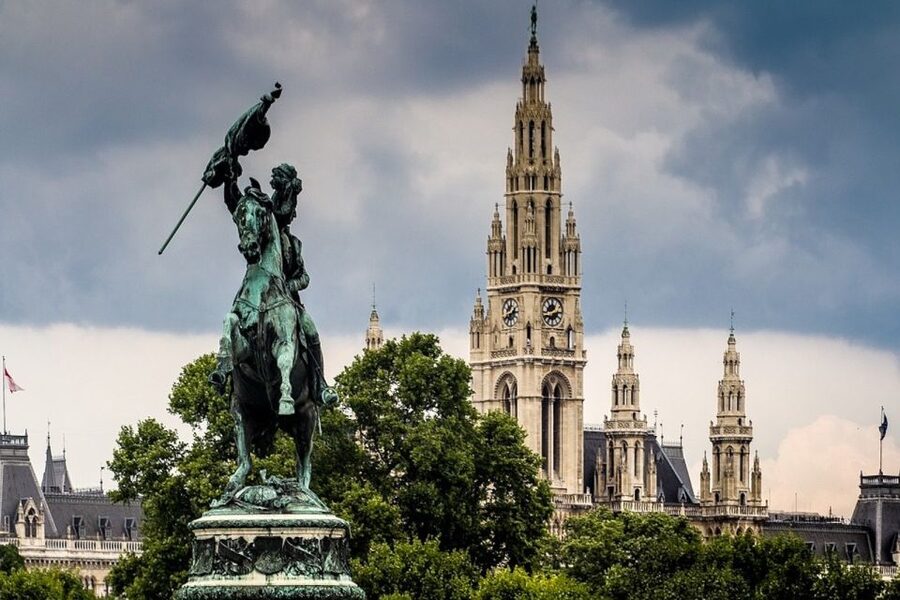
The itinerary then shifts toward the civic heart. You pass Parlament, Burgtheater, and Rathaus, as well as Universität and Liebenberg Denkmal.
If you have ever felt Vienna is too beautiful to pick just one “must-see,” this segment is a practical fix. You see how the city’s cultural and political landmarks sit near each other. It also gives you a “what should I see next” map for later, since you can tell which areas you want to revisit on foot.
One drawback: because you are moving, the focus stays on seeing the landmark shapes and placement. The driver’s audio commentary does help you connect the dots, but you still need to accept that the trip is about overview.
Old streets and iconic sights, including Stephansdom
The route then includes several central-city highlights that many people recognize immediately, including Palais Epostein and Palais Daum Kinski, plus Palais Harrach and Palais Ferstl mit Café Zentral. You also pass Am Hof, Hohe Brücke, Salz Gries, Marc Aurel Straße, hoher Markt, Hochzeitsbrunnen, and Ankeruhr.
This part of the loop is fun because it shifts the tone from grand institutions to the “street-level Vienna” vibe. Even if you do not step out, you get the rhythm of the center. You can mentally bookmark places that look like ideal walking detours.
And then, one of the biggest moments, you reach Stephansdom and continue to Wollzeile. If you are trying to orient yourself for your next day, Stephansdom works because it becomes a reference point. The rest of this segment, including Stadtpark, helps you see how Vienna balances architectural drama with more open city space.
Music Vienna and the hotel corridor, then back to Albertina
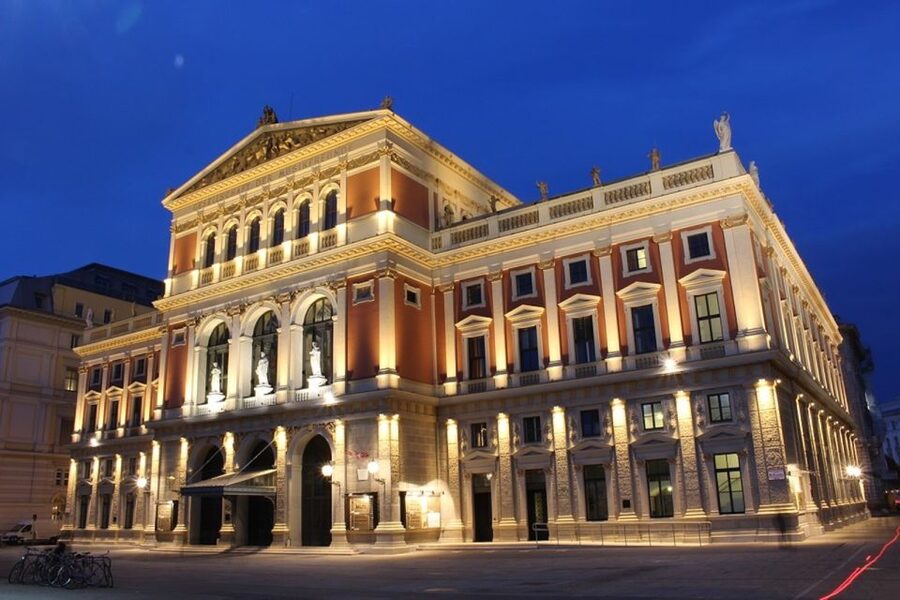
The tour adds a music-signal cluster: Johann Strauss Denkmal, Kursalon Hübner, and Musikverein. It also includes Schwarzenberg Platz and Café Schwarzenberg, which gives you a pause in the sightseeing flow where you can imagine taking a break later.
Then the route continues past major hotel landmarks listed on the route: Hotel Imperial, Grand Hotel, Hotel Bristol, and Staatsoper again, plus Hotel Sacher. This is a classic Vienna photo loop, and it helps you connect the city’s cultural center to its famous addresses.
The tour then returns toward zurück zur Albertina. With a loop like this, the return matters, because it keeps the experience efficient. You are not stuck half-way across town when your 60 minutes are up.
The driver audio and how it keeps the ride fun
The included experience is straightforward: tour and audio commentary by the driver. That sounds basic, but the quality is what makes the difference on a short tour like this.
From the bookings connected to this activity, I picked up three patterns of what works well. First, the information level hits a sweet spot. It is not stuffed with facts, and it is not empty filler either. Second, the tone stays friendly. One account highlights how the guide was not stiff, and that matters when you are listening while the vehicle moves.
Third, there is room for human moments. A birthday surprise is a perfect example. The driver learned it was someone’s birthday right at the start, then brought in a Happy Birthday moment later so the whole group joined in. That kind of spontaneity makes a quick sightseeing loop feel warmer than a scripted checklist.
Language is another practical strength. The tour includes English, German, with a live tour guide. If you are traveling with people who speak different languages, that can reduce stress, since the commentary can match your group needs.
Price and value: what $282 per group buys you
The price listed is $282 per group up to 10, and the duration is 1 hour. Value comes down to how you are traveling.
If you fill the full group capacity, you are effectively looking at about $28 per person for a guided panoramic loop with driver audio. That is why this tour can feel like a bargain for families, friend groups, or mixed-age parties. You are paying for efficiency plus a guide experience, not just for transportation.
You also get a special kind of transportation. A 1920s classic-style electric old-timer is not just a novelty. It changes the experience from “bus window sightseeing” into something you remember. And because the trip is designed to keep going no matter the weather, you are buying back time you might otherwise waste figuring out a Plan B.
The one place where value is limited is if you are just one person or a small duo. Then the per-person cost goes up, and you might wonder if another self-guided method would feel better. Still, for people who want guided context without walking, it can still make sense.
What to know before you go, so the hour feels smooth
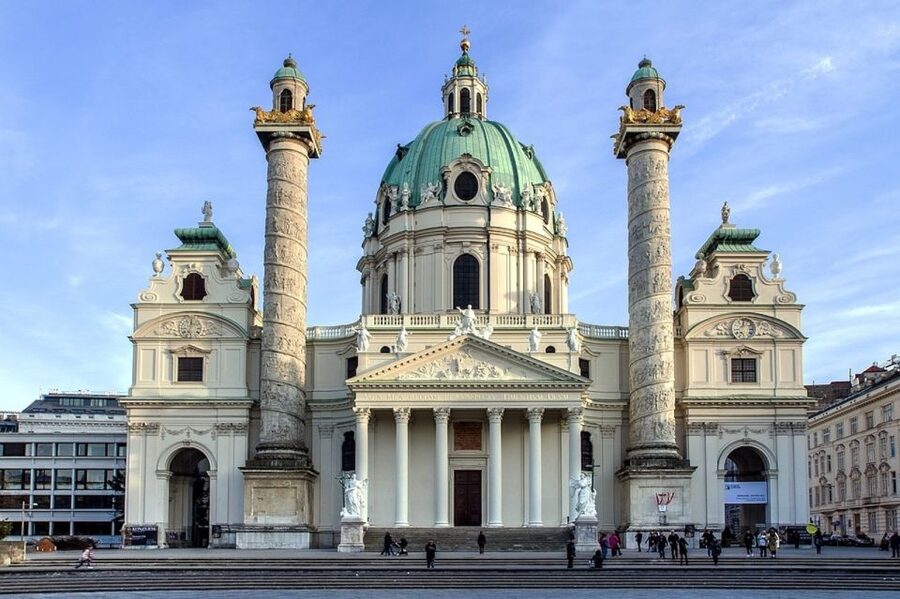
This is a time-boxed tour, so the biggest “tip” is mindset. Treat it as a fast orientation ride. You will see a lot of names, and you will want to remember which ones felt most interesting so you can return later by foot or with separate entry tickets.
A practical note: admission fees are not included. If you spot a place you want to enter, you will need to plan that part separately.
On the meeting side, there is slightly conflicting detail in what you are given: start and end at Cafe Mozart, Albertinaplatz 2, 1010 Vienna, and a meeting point listed at Herrengasse 12 (Hotel Radisson Blu). Nothing dramatic, but it is the kind of detail worth confirming so you are not standing around searching for the car at the last minute.
Finally, expect the route to be driven by landmarks on a list. That means you should be ready for a lot of seeing, plus a bit of audio storytelling while you pass. If you want long photo sessions at one spot, this route is not built for that. If you want the “best hits” in one hour, it is built perfectly for that.
Should you book this Vienna old-timer tour?
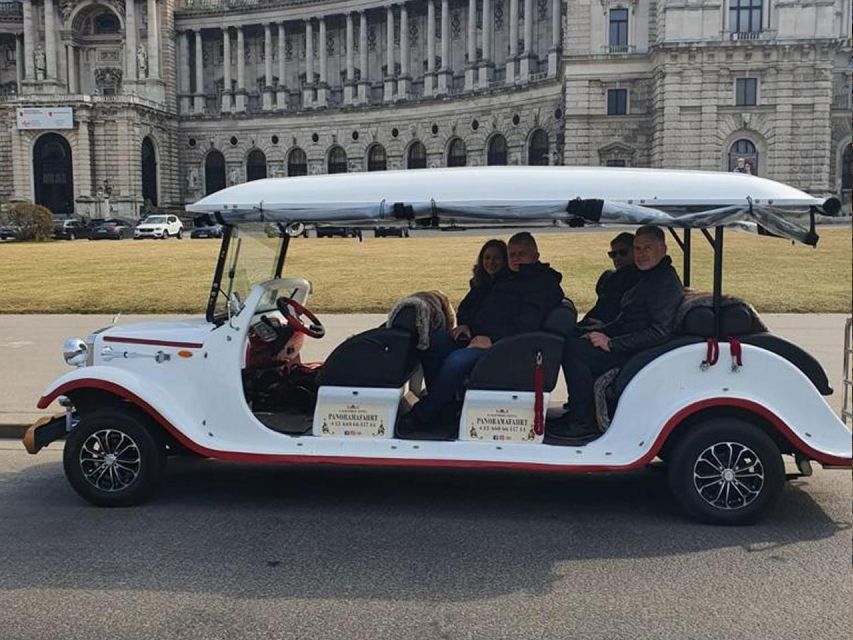
I think it is a strong yes for people who want guided orientation, value for small groups, and a comfortable sightseeing plan that keeps working in bad weather.
Book it if:
- You want big-picture Vienna without walking all day
- You are traveling with family or a group of up to 10 and want everyone together
- You like short, driver-guided loops with clear audio commentary
- You want to hit the Ringstraße and the central monuments without charting it yourself
Skip or swap it if:
- You want to spend meaningful time inside museums or at long-stay viewpoints during the ride
- You are traveling solo and want the lowest cost per person, since the price is per group
FAQ
How long is the Vienna old-timer sightseeing tour?
The tour duration is 1 hour.
What is the group size for this experience?
It is a private group experience, for up to 10 persons.
Where does the tour start and end?
The tour starts and ends at Cafe Mozart, Albertinaplatz 2, 1010 Vienna. A meeting point is also listed as Herrengasse 12 (Hotel Radisson Blu), so it is worth confirming the exact pickup spot.
What languages are available for the tour?
The live tour guide and audio commentary are available in English and German.
Is admission to attractions included?
No. Admission fees are not included.
Can I cancel if my plans change?
Free cancellation is available up to 24 hours in advance for a full refund, and you can reserve and pay later to keep your travel plans flexible.
Just added to the bill for Vienna
Tours, compared.
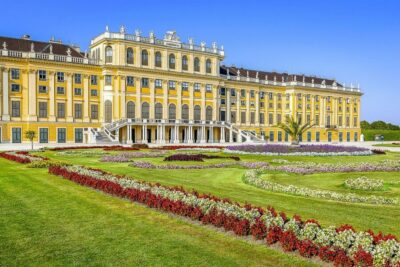
Schönbrunn Palace & Gardens Skip-the-Line Tour
Read our review →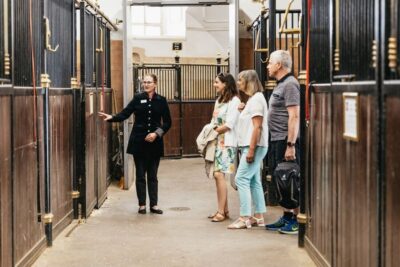
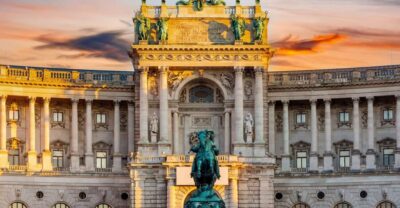
Skip-the-Line Sisi Museum, Hofburg and Gardens Tour
Read our review →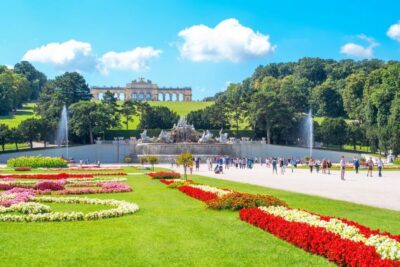
Skip-the-Line Schönbrunn Palace & Gardens Tour
Read our review →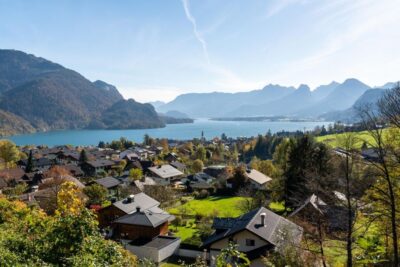
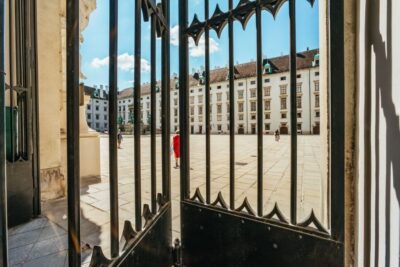
Guided Walking Tour of City Center Highlights
Read our review →