
REVIEW · GUIDED WALKS IN VIENNA
An Introduction to Vienna Walking Tour
Vienna has a way of layering stories on stone. This 2.5-hour small-group walking tour turns the big sights into something you can actually picture. You’ll move through central Vienna with a historian guide, picking up context for the art, politics, and everyday life that shaped the city.
What I like most is the focus on meaning, not just photos. I love that you start with the Hofburg area then fan out to major landmarks like Stephansdom, while also stopping for “in-between” places such as the Naschmarkt and the Graben. I also really value the guide style, with time to ask questions, and frequent extra touches that make the walk feel personal, including music and local snack recommendations mentioned by guides like Elisabeth, Annelie, Katarina, and Wolfgang.
The main drawback to consider is price. At about $181 per person for a structured 2.5-hour walk, it’s not the bargain route, and the stops are set, so you may still want a follow-up day if you’re chasing extra big-ticket targets not covered on this route.
In This Review
- Key Highlights You Should Expect
- Your First Step Into Vienna, From Café Hawelka
- Secession Building: Vienna’s Turn-of-the-Century Rebels
- Stephansdom: Gothic Grandeur With Real City Energy
- Hofburg and Michaelerplatz: Where Power Lived Since the 1200s
- Naschmarkt: A Market Stop That Feels Like Vienna, Not a Set
- Kohlmarkt and the Graben: Fashionable Streets With Memory in the Stone
- Ringstraße and Old Palaces: The Boulevard That Explains Vienna’s Layout
- Loos House: Adolf Loos and the Story Behind Modern Style
- Maria-Theresien-Platz: Museum Density in One Big Central Square
- Small Group + Historian Guide: Why It Feels Personal
- Price and Value: Is $181 Worth It?
- Who Should Book This Vienna Walking Tour
- Should You Book This Tour, or Skip It?
- FAQ
- How long is the Vienna walking tour?
- What does the tour cost?
- What sights are included on the walk?
- What time does the tour start and where do I meet?
- Is the tour only for English speakers?
- Is food included?
- Do I get hotel pickup or drop-off?
- How big is the group?
- Do I get a mobile ticket and confirmation?
- Can I cancel and get a full refund?
Key Highlights You Should Expect

- Historian guide focus, with time to ask questions and get beyond the headline
- Secession building stop for turn-of-the-century ideas tied to figures like Klimt and Mahler
- Hofburg power-story orientation, including why it matters from the 13th century onward
- Central Vienna food-market moment at the Naschmarkt for atmosphere and local mingling
- Ringstraße boulevard context, plus a stop near Adolf Loos’s Loos House
- Concentration of sights in a tight walk, from Stephansdom to Maria-Theresien-Platz
Your First Step Into Vienna, From Café Hawelka
I like starting this kind of trip at street level, not inside a museum. You begin near Café Hawelka on Dorotheergasse, which is a very “Vienna” way to set the tone: cafés first, buildings second. From there, you’re set up to walk through the heart of the city and get your bearings quickly.
You’ll move at a comfortable walking pace for about 2.5 hours. The group size is capped small, with a maximum of 8 travelers for the tour and up to 6 people per booking, so it doesn’t feel like a human conveyor belt. That matters in Vienna, because the best parts of the city are in the details.
If you want a low-stress first day plan, this tour fits well. It’s also in English, and it’s set up to work for most visitors, with the meeting point near public transit.
More Guided Walks in Vienna
- Vienna: Guided Walking Tour of City Center Highlights
★ 4.7 · 4,989 reviews - Vienna: Vienna Central Cemetery Guided Walking Tour
★ 4.8 · 3,307 reviews - Vienna: Guided Walking Tour of City Highlights & Hidden Gems
★ 4.9 · 2,180 reviews - Vienna: Viennese Underworld Guided Walking Tour
★ 4.7 · 1,865 reviews
Secession Building: Vienna’s Turn-of-the-Century Rebels
The Secession building stop is one of those “oh, that’s what I’m looking at” moments. This is where you’ll hear about Vienna’s turn-of-century avant-gardism, including names like Klimt and Mahler. The point is not to memorize dates, but to understand the cultural mood that produced bold art and new musical ideas.
You’ll also get a sense of why this kind of experimentation wasn’t just an art fad. It was tied to a bigger push for new thinking in the Austro-Hungarian world, a world that was still powerful but starting to change its mind about tradition.
If you normally breeze through façades, this stop gives you a reason to slow down. The building becomes a story cue, so when you see other styles later, you’ll know what you’re noticing.
Stephansdom: Gothic Grandeur With Real City Energy
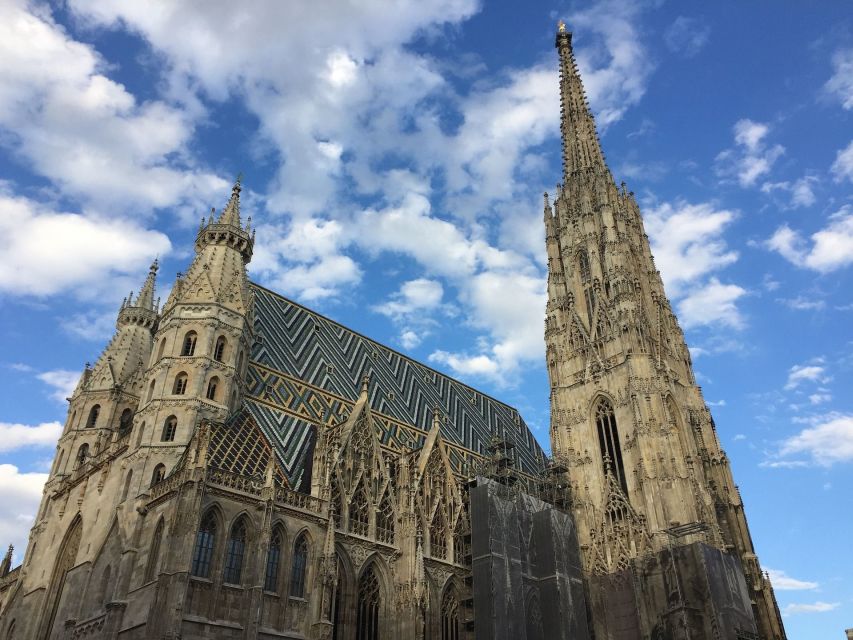
Next up is Stephansdom, the national architectural icon most people have seen in pictures, but few people understand right away. On this walk, you don’t just stare at the cathedral. You learn why it’s such a defining landmark for Vienna’s identity and how it anchors the center of the city.
I like this part because it balances awe with clarity. Vienna can feel like a museum on a grand scale, and Stephansdom is the kind of structure that can either intimidate you or pull you in. Here, the guide context helps you see it as a living centerpiece of the city rather than a distant monument.
You’ll also be standing in the flow of ordinary Vienna street life. That’s a big deal on a walking tour, because it keeps the story grounded.
Hofburg and Michaelerplatz: Where Power Lived Since the 1200s
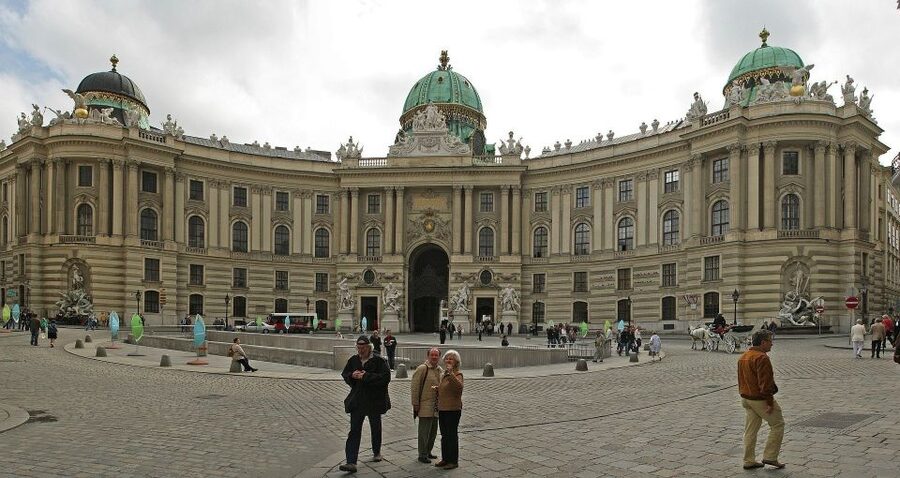
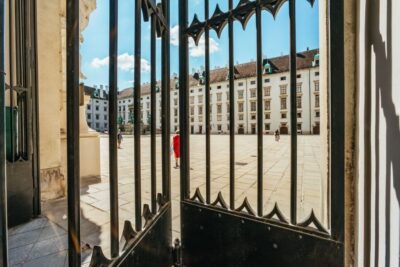
The walk centers heavily on the Hofburg, starting around Michaelerplatz where it dominates the square. This is the Habsburg imperial palace and the seat of power since the 13th century, which is a huge stretch of time for one city to carry in its buildings.
I like how this tour frames the Hofburg as more than a palace you pass by. The guide story connects architecture to governance and culture, so it feels less like trivia and more like cause and effect. Vienna’s art, music, and politics all grew in the same long shadow.
Even if you’re not planning to go inside during your trip, you’ll still leave with a stronger mental map. You’ll know why Vienna’s central streets and grand institutions formed where they did, and why the Habsburg imprint shows up again and again.
More of Austria on foot, bell tower to bell tower:
Naschmarkt: A Market Stop That Feels Like Vienna, Not a Set
Not every walking tour includes time for a market stop, and that’s exactly why this one works. You’ll pass by the Naschmarkt, described as a colorful traditional food market where locals meet to mingle and shop.
This is the kind of stop that helps you shift from “sightseeing mode” to “living in Vienna mode.” You’ll pick up the vibe of the city in a way that no brochure can fake. Even if you don’t stop for food, you’ll see how the market pulls people through different ages and tastes.
Also, this is a good moment to ask your guide for practical suggestions. In the experiences shared, guides like Annelie and Wolfgang have offered restaurant pointers, and that can save you from the usual tourist traps.
Kohlmarkt and the Graben: Fashionable Streets With Memory in the Stone
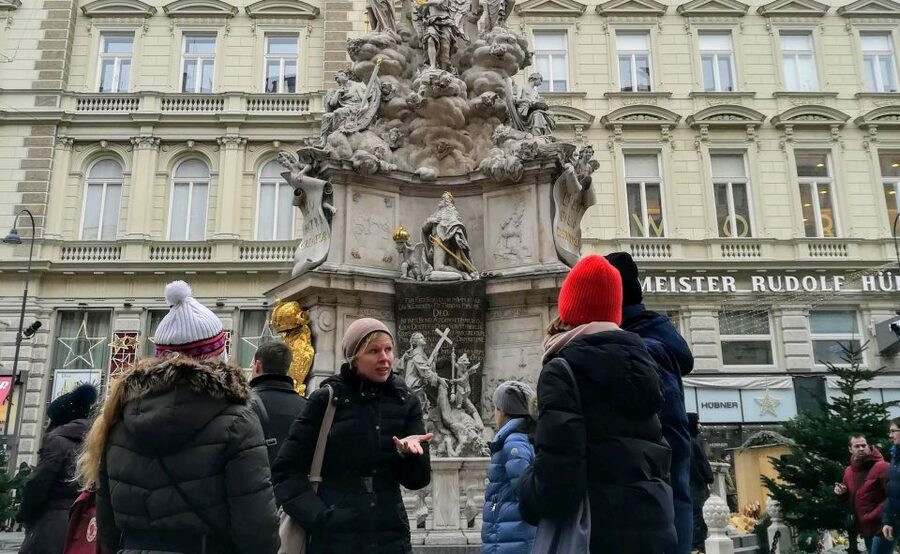
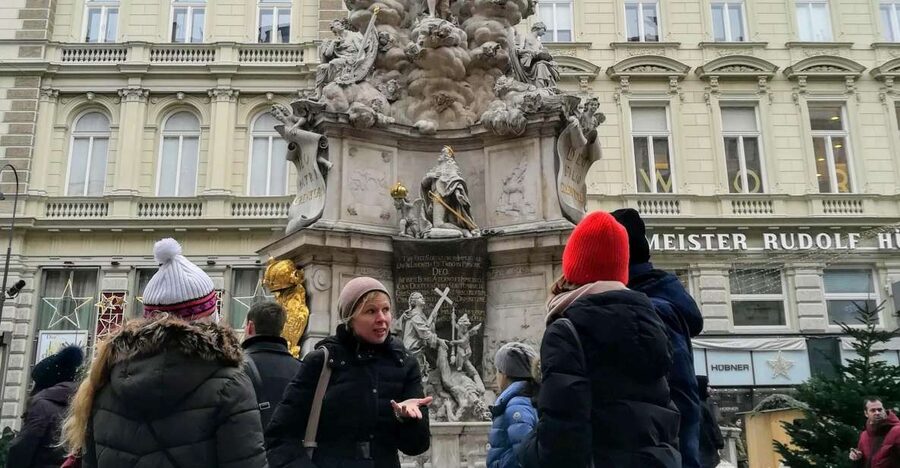
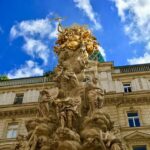
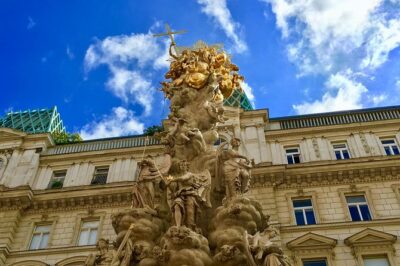
From the Hofburg area you’ll head toward Kohlmarkt and the Graben, two streets that today feel like prime shopping territory. But this section is more than storefronts. You’ll also learn about a plague column commemorating a 17th-century bubonic plague outbreak.
I find that contrast powerful. Vienna can look polished and grand, and it’s easy to forget that the city also endured serious trauma. When you see remembrance built into a fashionable street, it turns “pretty walking” into something more honest.
This is also where you start noticing how Vienna stores its past in layers. A column, a façade, a street bend. Small things carry big stories, especially in older European cities.
Ringstraße and Old Palaces: The Boulevard That Explains Vienna’s Layout
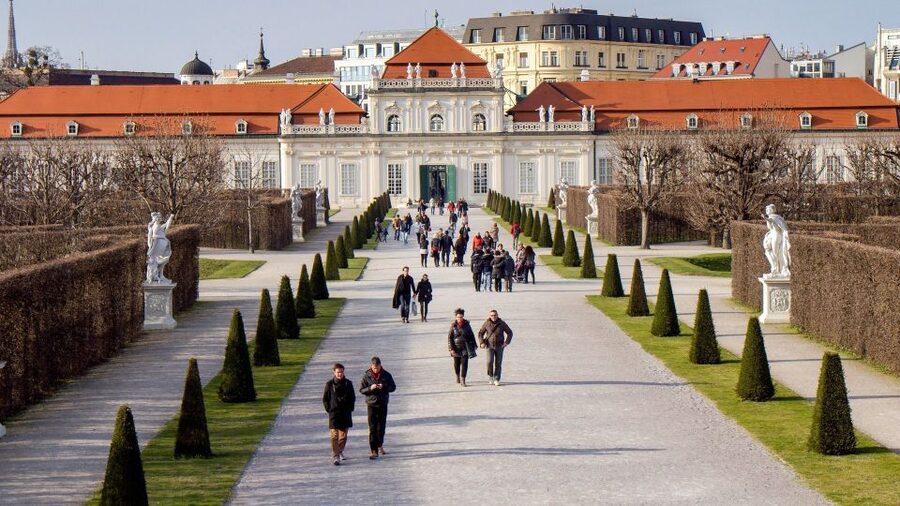
One of the most useful parts of this tour is the Ringstraße segment. You’ll stroll along this grand boulevard built in the middle of the 19th century, and you’ll learn how it shaped the city’s prestige and planning.
I like hearing why so many luxury hotels sit where they do, inside the walls of older palaces. It helps you understand that Vienna’s grandeur is not just one building. It’s a whole urban plan that tells you what the city valued at different times.
If you’re the type who likes walking with a mental map, this stretch does the job. You’ll start linking the center of Vienna into a readable grid of power, culture, and wealth.
Loos House: Adolf Loos and the Story Behind Modern Style
After the Ringstraße context, you’ll pass the Loos House, designed by Austrian architect Adolf Loos (1870 to 1933). Even from the outside, the guide can frame why this building matters, and the details like the green and gray look become more than surface decoration.
This is a smart contrast point after all the grand older landmark energy. Loos represents a shift in architectural thinking, and it helps you see Vienna not only as tradition, but also as a place that argued with itself about modernity.
If your travel style includes architecture, this stop makes the whole walk feel balanced. You get both the heavy-hitter historic sites and a glimpse of the modern ideas that changed design thinking.
Maria-Theresien-Platz: Museum Density in One Big Central Square
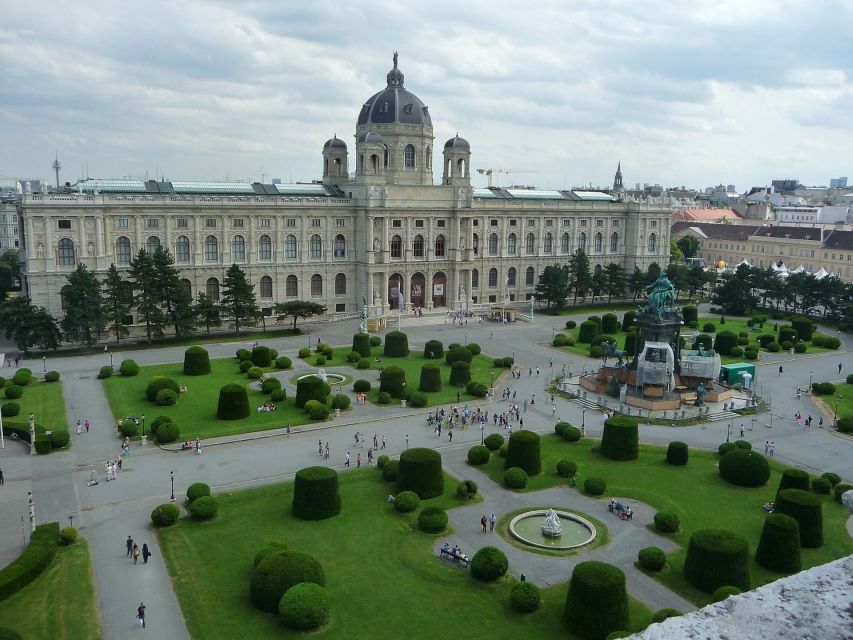
You’ll finish up near Maria-Theresien-Platz, known for the largest concentration of museums in the city. This is a helpful landing spot because it gives you an easy next step, even if you don’t know which museum you want yet.
I like tours that end where you can decide what to do next. After this walk, you’ll have context for why the museums are grouped here and what kind of stories you might want to continue exploring on your own.
Even if museums are not your top priority, this stop still matters. It signals a Vienna truth: culture is organized on a city scale, not just in isolated monuments.
Small Group + Historian Guide: Why It Feels Personal
A tour is more than stops. It’s the way someone connects them. This one is led by an historian guide, and with the small group size, the conversation stays active. That’s why so many people rate it highly, and it’s also why the walk can work well even on a rainy day, when everyone wants clarity and warmth.
In the experiences shared, guides stand out for strong command of both the academic story and the lived feel of Vienna. Names that show up repeatedly include Katarina, Wolfgang, Ilse, Annelie, and Elisabeth, with many mentions of their ability to keep things clear, answer questions, and add small local touches.
Those touches are the difference between a tour that is only “information” and one that feels like someone is showing you their city. Some guides have even referenced playing music like Mozart and Haydn as part of the storytelling, and offering snack ideas you might not find in a standard guidebook approach.
Price and Value: Is $181 Worth It?
Let’s talk money plainly. At about $181 per person for roughly 2.5 hours, you’re paying for a historian guide plus a tight, small-group route through central Vienna.
You get value in a few ways:
- You’re not wasting time figuring out what you’re looking at. The context turns landmarks into a story chain.
- The group size means you can ask follow-up questions, which makes the tour feel more tailored.
- The route includes both major icons and less obvious stops like the Naschmarkt and street-level memory features along the Graben.
Is it cheap? No. And if you compare it to big-group tours, the trade-off is clear. Big groups can be lower cost, but you usually get less interaction and fewer meaningful details for each person.
To decide if it’s right for you, think about your travel style. If you want a guided orientation that helps you enjoy the rest of your trip, this can be a smart first move. If you already know exactly which sites you want and you plan to handle the rest solo, you might consider a more budget-friendly option.
Also, check your wishlist. The route focuses on a set cluster of central highlights, so if you’re hunting for extra big landmarks not listed on this walk, plan to add them later.
Who Should Book This Vienna Walking Tour
This tour fits best if you want:
- A first-day orientation that makes Vienna easier to navigate on foot afterward
- A historical guide who explains how different eras connect
- A route that mixes imperial landmarks with city-life moments like Naschmarkt
It’s also a good choice for couples and solo travelers who prefer small groups. With caps on size, you’re less likely to get lost in a crowd.
If you’re traveling with kids, you can still do it, but keep expectations realistic about walking time and the amount of history. For most adults, it hits the right balance between structure and interest.
Should You Book This Tour, or Skip It?
I’d book it if you want to understand Vienna quickly, without spending hours researching. The mix of Secession building ideas, Stephansdom’s central pull, the Hofburg’s long timeline, and street-level stops like the Naschmarkt and the Graben gives you a strong “now I get it” feeling.
I’d hold off or pair it with something else if you’re chasing a very specific list of famous buildings not covered on this route. In that case, you might prefer either a different themed tour or a more flexible self-guided plan.
If you’re on the fence, here’s my simple rule. If you like your sightseeing with stories and questions, this walking tour is a solid value use of a morning or afternoon. If you only want photos and minimal talking, you’ll probably feel the price more than you’ll feel the benefit.
FAQ
How long is the Vienna walking tour?
It runs for about 2 hours 30 minutes.
What does the tour cost?
The price is listed as $181.02 per person.
What sights are included on the walk?
You’ll cover the Secession building, Stephansdom, the Hofburg area, the Naschmarkt area, Kohlmarkt and the Graben (including a plague column), the Ringstraße, the Loos House area, and Maria-Theresien-Platz.
What time does the tour start and where do I meet?
The meeting point is Café Hawelka, Dorotheergasse 6, 1010 Wien, Austria.
Is the tour only for English speakers?
The tour is offered in English.
Is food included?
Food and drinks are not included unless specified.
Do I get hotel pickup or drop-off?
No, hotel pickup and drop-off are not included.
How big is the group?
A maximum of 6 people per booking, and the tour has a maximum of 8 travelers.
Do I get a mobile ticket and confirmation?
You’ll receive confirmation at the time of booking, and the tour uses a mobile ticket.
Can I cancel and get a full refund?
Yes. You can cancel up to 24 hours in advance for a full refund.
Just added to the bill for Vienna
Guided Walks in Vienna, compared.
Guided Walking Tour of City Center Highlights
Read our review →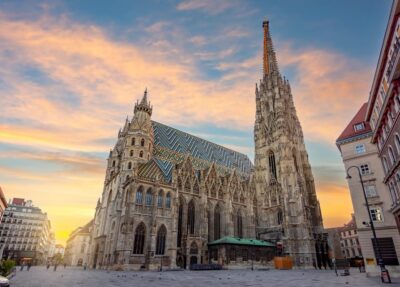
Guided Walking Tour of City Highlights & Hidden Gems
Read our review →
Vienna Historic Center Small Group Walking Tour
Read our review →
Ghosts and Legends Guided Nighttime Walking Tour
Read our review →Browse the lists this tour appears in