
Vienna tells stories best on foot. This self-guided audio tour strings together the city center landmarks you keep seeing on postcards, then explains how they connect to 650 years of Habsburg rule. I especially like the stop-by-stop framing for how each building reflects power, belief, and social change. I also like that it’s set up for offline use, so you can keep moving even when cell service is spotty.
It is not a guided tour, so the biggest drawback is you’ll need a ready phone setup. Bring headphones and make sure your battery is charged, because this experience runs through the app on your device.
You’ll walk from Heldenplatz to Michaelerplatz, picking up context at imperial squares, churches, memorials, and major streets, with an end at the controversial Looshaus. Plan about 1 to 1.5 hours, depending on how often you pause for photos and listen to the full audio.
In This Review
- Key points you’ll actually care about
- Heldenplatz to Michaelerplatz, a walk through Habsburg power
- Price and value for a self-paced history route
- How the app experience works (GPS, offline maps, and your headphones)
- Prince Eugene and Heldenplatz: when propaganda becomes architecture
- The imperial palace complex, courtyards, and the Habsburg wedding story
- Spanish Riding School: baroque elegance in motion
- Joseph II and the politics of equality you can see
- Libraries, cathedrals, and the long reach of 700 years
- War, fascism, and the first Holocaust memorial in the city center
- The Capuchin Church burial ground: 150 imperial coffins
- Markets, a plague monument, and the long memory in public squares
- The elegant shopping street and ending at Looshaus in 1909
- Who should do this self-guided audio walk
- Should you book Downtown Vienna: A Self-Guided Audio Tour?
- FAQ
- Where does the tour start and end?
- How long does the audio tour take?
- What language is the tour in?
- What do I need to bring?
- Can I download the content for offline use?
- Is this tour self-guided?
- Is there a group with other people?
- Is it near public transportation?
- Are service animals allowed?
- When can I start during the year?
- What is the cancellation policy?
Key points you’ll actually care about
- Heldenplatz to Michaelerplatz route keeps the landmarks in a logical downtown loop.
- Offline audio, maps, and geodata means fewer stops to reload or re-check directions.
- Imperial stories plus darker chapters: Habsburg rule, remembrance, and Jewish community history are part of the walk.
- Joseph II and Prince Eugene get their due, with the politics behind their statues explained.
- Major “see it today” hits like St Stephen’s Cathedral, the Habsburg burial area, and a plague monument are included.
- Looshaus at the end gives you a sharp 1909 contrast to baroque and medieval Vienna.
Heldenplatz to Michaelerplatz, a walk through Habsburg power
I like tours that help you read a city, not just point at it. This one starts at Heldenplatz, where the setting is pure imperial theater. You begin with Prince Eugene on horseback, and the audio immediately frames him as a military hero who helped defeat the Ottoman Empire. It’s a strong opener because it tells you what to look for: how Vienna used images of leaders to communicate authority.
From there, the route is designed to feel like a gentle “downtown cross-section.” You move through imperial spaces tied to the Habsburg court, then you shift into central Vienna with major landmarks that survived wars, regime changes, and centuries of rebuilding. You finish at Michaelerplatz area and then end at the Looshaus, which is intentionally controversial. That final contrast is the point, and you feel it once you’re staring at a stark modernist facade right after baroque and Gothic sights.
Timing matters here. At 1 to 1.5 hours, you’re not doing a huge day-long walking marathon, but you are doing enough steps that you should wear comfortable shoes. The audio pacing works best when you’re willing to pause at each stop rather than sprint through.
Held over another night in Vienna
- Vienna: Tickets for Mozarthaus Vienna with Audio Guide
★ 4.2 · 2,344 reviews - Vienna: New Hofburg Palace Audio-Guided Tour & Entry Ticket
★ 4.1 · 566 reviews - Vienna: Self-Guided Audio Walking Tour on Your Phone
★ 3.8 · 33 reviews - The Heart of Vienna: A Self-Guided Audio Tour
★ 4.0 · 29 reviews
Price and value for a self-paced history route
At $14.99 per person, this is priced like a focused walking experience, not a full-day tour with transportation or paid attraction tickets. The value comes from what’s included: the app, the audio, and lifetime access to the English tour in a way you can use before and after your booking date. You also get offline access to audio, maps, and geodata, which saves you time and stress during the day.
The trade-off is also clear. Paid attractions, food, and transport are not included. But that can actually be a good thing, because Vienna’s best sights often have optional entry fees. You can keep control: listen to the exterior stories, then choose which interiors match your interests.
One practical way to think about value: you’re paying for your own “personal guide” for a dense cluster of landmarks. If you’re the kind of traveler who likes to understand why a statue is here, why a church matters politically, and why a memorial changes the tone of the street, the price feels fair.
How the app experience works (GPS, offline maps, and your headphones)
This tour is delivered through the VoiceMap Audio Tours app on Android and iOS. You get directions to the start so that when you’re in the right place, the audio begins. That’s helpful because Vienna can be confusing when you’re arriving on foot and trying to match streets to maps.
The offline features are genuinely useful: you can download offline audio, maps, and geodata. That means you’re not stuck hunting for a signal mid-walk. Before you leave your hotel or a nearby café, make sure you’ve got the audio downloaded and your map view is ready.
Plan for the basics you provide. The only real “bring it yourself” item called out is your smartphone plus headphones. If your phone battery usually dies fast, bring a small power bank. Also, keep volume comfortable. Many of the stops are outdoors, and Vienna streets can get noisy.
Prince Eugene and Heldenplatz: when propaganda becomes architecture
Heldenplatz is more than a square, it’s a statement. You start by standing before Prince Eugene on horseback, and the audio connects him to the moment when Vienna framed military success as national destiny. Even if you don’t know the details of Ottoman-Vienna history, you get a clear reason for why this statue looks the way it does: it’s meant to command attention and signal strength.
What I like about this opening is that it doesn’t treat the statue like a random monument. It treats it like part of an urban message system. You learn to read the square in layers, from the imperial setting to the way visitors were meant to feel small in front of power.
If you arrive at a busy time, you might find it harder to take steady photos without people stepping into frame. That’s normal for a top central landmark. The audio timing still works, because you can keep listening while you shift a few steps to get a cleaner view.
More of Austria taken andante:

The imperial palace complex, courtyards, and the Habsburg wedding story
Next comes the imperial palace complex, where the Habsburg court shaped Vienna for over 600 years. You’re guided through the courtyards and facades, with the audio focusing on the idea of an empire built through space. You’re not only looking at one building. You’re walking inside a whole complex that helped define how rulers performed power day after day.
The tour also points you toward the Habsburg Wedding Church, and that detail matters because it links architecture to dynasty and identity. In a city where families ruled for centuries, marriages were not private events. They were political tools, and the buildings tied to them become physical evidence.
The main drawback here is also a common self-guided challenge: courtyards can blur together if you rush. If you want the most out of this section, slow down for the audio and keep an eye on the facades and entrances the app highlights. You’ll feel more oriented when the later stops start referencing what you just saw.
Spanish Riding School: baroque elegance in motion
After imperial power, you shift into living tradition. You pass the elegant baroque building where the white Lipizzaner stallions have performed for centuries, and the audio connects the place to the refined equestrian arts of imperial Vienna.
This stop works even if you never buy a ticket to an indoor performance, because the story explains why the building still matters. It’s a reminder that court culture wasn’t only ceremonies and paperwork. It was also training, display, and carefully staged public spectacle.
If you’re visiting when there’s a lot of tourist traffic, you might need patience to get a clear look at the facade. Still, the audio’s focus helps you notice details you’d otherwise ignore, like how baroque styling supports the idea of grandeur and discipline.
Joseph II and the politics of equality you can see
Then the audio zooms in on Emperor Joseph II, described as an enlightened ruler who shocked subjects by abolishing serfdom, and believed in equality. You stand in a peaceful square with his bronze statue, and the commentary connects one man’s ideas to visible space.
I like this stop because it breaks the stereotype of Vienna as only decorative beauty. You’re reminded that reforms and social shifts were not abstract. They were experienced by people, and statues are one way the city chooses what it remembers.
This is also a good moment to pause and look around. A square can look calm, but the statue and the story force you to recognize that change can be disruptive. Vienna’s present-day calm often sits on top of real historical tension.
Libraries, cathedrals, and the long reach of 700 years
As you keep walking, the tour points you to the baroque facade of one of the world’s most beautiful libraries, described as a house of Austrian and European knowledge. Even without going inside, you’ll get the sense that this is not only a book location. It’s a symbol of who held learning and how the city wanted to represent culture.
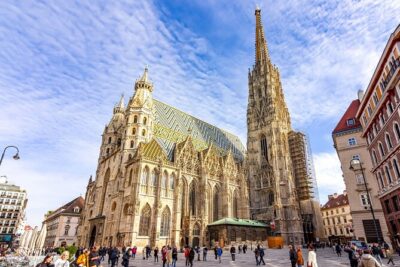
Then comes the Gothic powerhouse: St Stephen’s Cathedral, with distinctive diamond-patterned roof tiles. You’re guided to see it as a medieval masterpiece that has witnessed roughly 700 years of Vienna’s triumphs and tragedies. That number changes your perspective. You stop viewing the cathedral as a single landmark and start viewing it as a long-running witness.
If you only have limited time in central Vienna, cathedrals are easy to overlook because you think you already know what they look like. This audio approach helps because it gives you a reason to stare longer at roof details and stonework, instead of just snapping one wide photo and moving on.
War, fascism, and the first Holocaust memorial in the city center
One of the most important parts of this walk is remembrance. You encounter a memorial dedicated to victims of war and fascism, a modern sculpture that asks you to reflect rather than admire. This is a tonal shift. It asks your brain to slow down, which is exactly what this kind of tour should do.
The audio also brings in the Jewish community history, noting that it was once Europe’s third largest. You then reach Vienna’s first Holocaust memorial. The message is simple, but the placement is powerful: you’re learning this history in the same downtown area where you’re also seeing imperial symbols and elegant buildings.
The main consideration here is emotional. Some people handle this kind of content easily, and some don’t. If you know you get overwhelmed with heavy history while walking, plan a short pause here. Step aside, take a breath, and decide whether you want to keep listening at full volume or just skim the audio points before moving on.
The Capuchin Church burial ground: 150 imperial coffins
Next you walk past the modest entrance to the Habsburg family’s final resting place beneath the Capuchin Church. The audio points out that there’s an underground vault with about 150 members of Austria’s imperial dynasty, laid out in elaborate bronze coffins.
This stop is a different kind of architecture lesson. You see a transition from grand public monuments to a quieter, hidden space. The city center can feel like it’s all spectacle, but here you get a glimpse of how dynasties literally control their legacy from below ground.
One practical note. Underground areas can feel cooler and darker than the street. Even if you only pause at the entrance and listen, dress accordingly for Vienna weather. Also, be mindful of how long you linger. Crowded sidewalks near popular religious sites can make it harder to stand still for the full audio.
Markets, a plague monument, and the long memory in public squares
As the walk continues, you reach a charming square where Viennese nobility once gathered for markets and celebrations. Walking these cobblestones with the audio running helps you picture the everyday side of elite life, not just the court’s rare public moments.
Then you meet the dramatic baroque monument that spirals toward heaven with golden figures and cherubs. The audio frames it as a monument commemorating Vienna’s survival of the plague, linking the city’s survival instincts to art and religious symbolism.
This section is where Vienna becomes very human. Plague memory is not only a historical note. It’s a reminder that cities repeat crises, and they often respond by building meaning into stone and design. If you like street-level storytelling, this is one of the most satisfying parts of the loop.
The elegant shopping street and ending at Looshaus in 1909
Later, the route takes you down Vienna’s most elegant pedestrian shopping street, lined with baroque and Art Nouveau buildings. The tone softens again into everyday glamour, and the audio ties that atmosphere to the imperial setting you’ve been walking through.
Then you finish at Looshaus, a controversial modernist building that shocked Vienna in 1909 with its stark, undecorated facade. The idea is that you end with a question. What happens when a city stops speaking in the old visual language? Looshaus answers with conflict, not harmony, and that contrast sticks in your mind.
If your day is running long, you’ll probably still feel satisfied at the end because the tour closes the loop: imperial glory in early stops, remembrance and reforms in the middle, then architectural rebellion at the end.
Who should do this self-guided audio walk
I’d point this tour at a few types of travelers:
- You want a lot of major landmarks in a short walking window, without committing to paid entries.
- You like urban stories, where statues, churches, and squares are explained in terms of power and social change.
- You want to move at your own pace, with the option to pause as you see fit.
It’s also a good match if you travel on a tighter schedule or hate committing to a timed group meeting. You’re not locked into one pace.
One reason you might choose a different option: if you strongly prefer live interaction, this experience won’t replace that. You’re listening to an app, and while the commentary is praised for depth and information, it still can’t answer your follow-up questions in real time.
Should you book Downtown Vienna: A Self-Guided Audio Tour?
Book it if you want a practical downtown walk that teaches you how Vienna “works,” not just what it looks like. The offline audio and GPS-based setup make it easy to trust the route, and the mix of imperial sites plus remembrance stops gives you a more honest picture of the city.
Skip it or rethink your plan if you don’t like self-guided touring, or if you dislike heavy historical topics without a more supportive format. Also, if you expect transport included, you’ll need to plan that yourself.
If you’re visiting Vienna for a first or second time and want a dense, self-paced sweep from Heldenplatz through the center to Looshaus, this is a strong choice.
FAQ
Where does the tour start and end?
It starts at Heldenplatz, 1010 Wien, Austria. It ends at Michaelerplatz (Michaelerplatz 5, 1010 Wien, Austria).
How long does the audio tour take?
The duration is approximately 1 hour to 1 hour 30 minutes.
What language is the tour in?
The included tour audio is in English.
What do I need to bring?
You need your smartphone and headphones. The tour provides the app and offline audio and maps, but it does not include your phone or headphones.
Can I download the content for offline use?
Yes. The tour includes offline access to audio, maps, and geodata.
Is this tour self-guided?
Yes. It is GPS-based and you explore at your own pace.
Is there a group with other people?
It is listed as a private tour or activity, meaning only your group participates.
Is it near public transportation?
Yes, it is near public transportation.
Are service animals allowed?
Yes, service animals are allowed.
When can I start during the year?
The listed opening hours run from 08/26/2025 to 10/01/2026, Monday through Sunday, 12:00 AM to 11:59 PM.
What is the cancellation policy?
You can cancel for a full refund up to 24 hours in advance of the experience start time. If you cancel less than 24 hours before, no refund is provided.
Just added to the bill for Vienna
Self-Guided Tours, compared.
Tickets for Mozarthaus Vienna with Audio Guide
Read our review →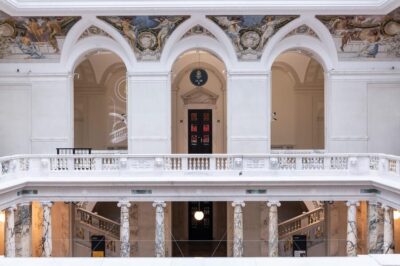
New Hofburg Palace Audio-Guided Tour & Entry Ticket
Read our review →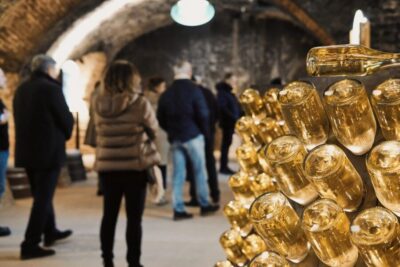
Schlumberger Wine Cellar Guided or Self-Guided Tour
Read our review →
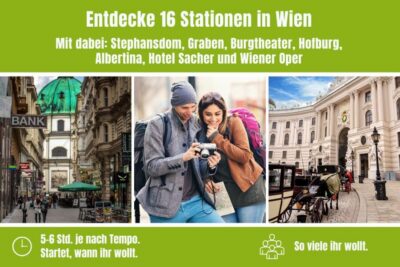
Vienna Walking Tour with Audioguide on Your Smartphone
Read our review →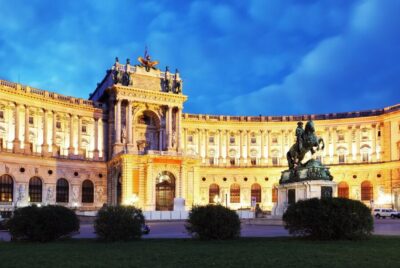
Browse the lists this tour appears in