REVIEW · TICKETS
Forchtenstein Castle Admission Ticket & Optional Guided Tour
Forchtenstein Castle is a fast ticket to big stories. In just one hour in Burgenland, you get a guided-style path through Esterházy collections that mix mural art, weapons, and weirdly specific royal memorabilia from Central and Southeastern Europe.
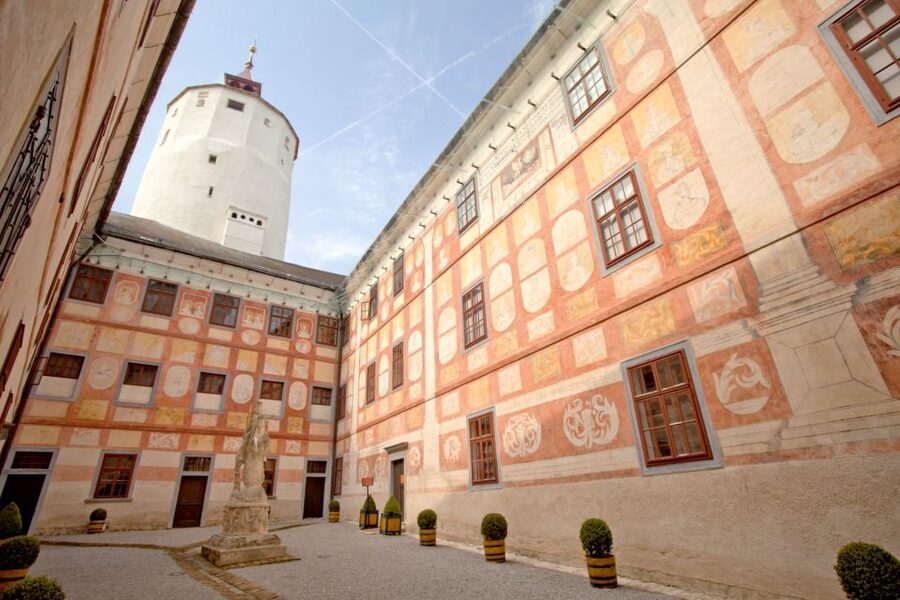
I particularly love the courtyard’s secco wall paintings, said to be the largest display of its kind north of the Alps. I also like the range of objects in the rooms, from an Ottoman tent to silver furnishings, plus the Gallery of Ancestors that includes the full-length portrait of Vlad the Impaler.
One drawback to plan for: this visit is not suitable for people with mobility impairments, and with multiple floors and interior stops, you will want to be comfortable walking and climbing stairs.
In This Review
- Key highlights worth your hour
- Forchtenstein Castle: what you are really buying with your ticket
- Starting in the inner courtyard and the secco mural moment
- First floor stops: oratory, chapel, and why the weapons room works
- Second floor collections: from silver furniture to the Kunstkammer mindset
- The Ottoman tent: why it belongs in a castle museum
- Gallery of Ancestors: where Vlad the Impaler enters the story
- The coronation flags: why 17th-century fabric feels so old
- Silver furniture, portraits, and the collector’s version of reality
- Practical timing: how to make the most of the one-hour format
- Audio guide reality check (and what language you can expect)
- What this is best for
- Should you book Forchtenstein Castle admission and the optional guided tour?
- FAQ
- FAQ
- How long is the Forchtenstein Castle admission experience?
- Where is Forchtenstein Castle located?
- What is the price per person?
- What is included with the ticket?
- Is an audio guide included?
- What time should I arrive?
- What languages are available?
- Is the optional guided tour available?
- Is it suitable for people with mobility impairments?
- Can I cancel and get a refund?
- Can I reserve without paying right away?
Key highlights worth your hour
- Largest secco murals north of the Alps in the inner courtyard
- Europe’s earliest and largest silver furniture collection (major centerpiece)
- Gallery of Ancestors with the full-length portrait of Vlad the Impaler
- 17th-century coronation flags tied to Hungary, Croatia, and Serbia
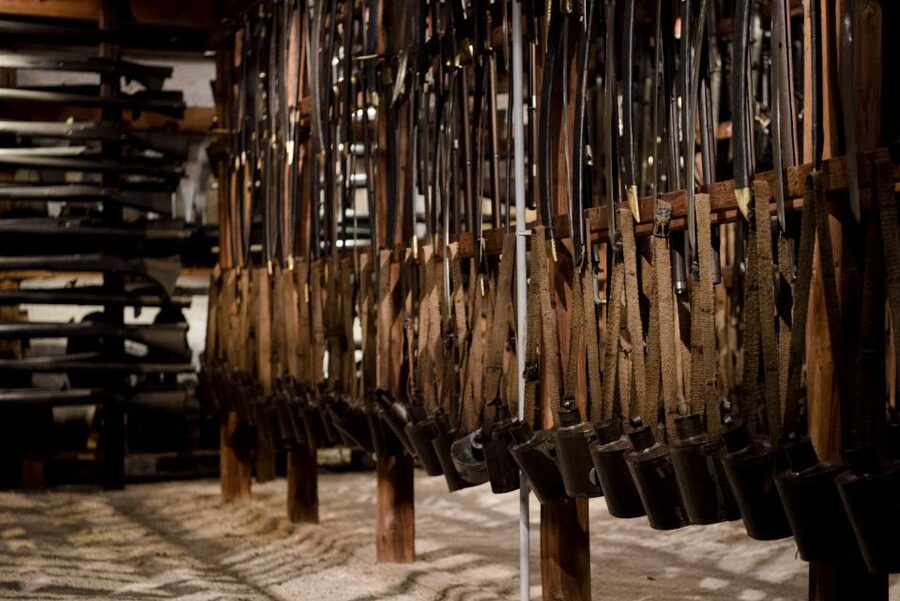
- Europe’s largest private armory and a strong first-floor weapons focus
- Kunstkammer cabinet of curiosities reflecting Prince Paul Esterházy’s collecting
Forchtenstein Castle: what you are really buying with your ticket
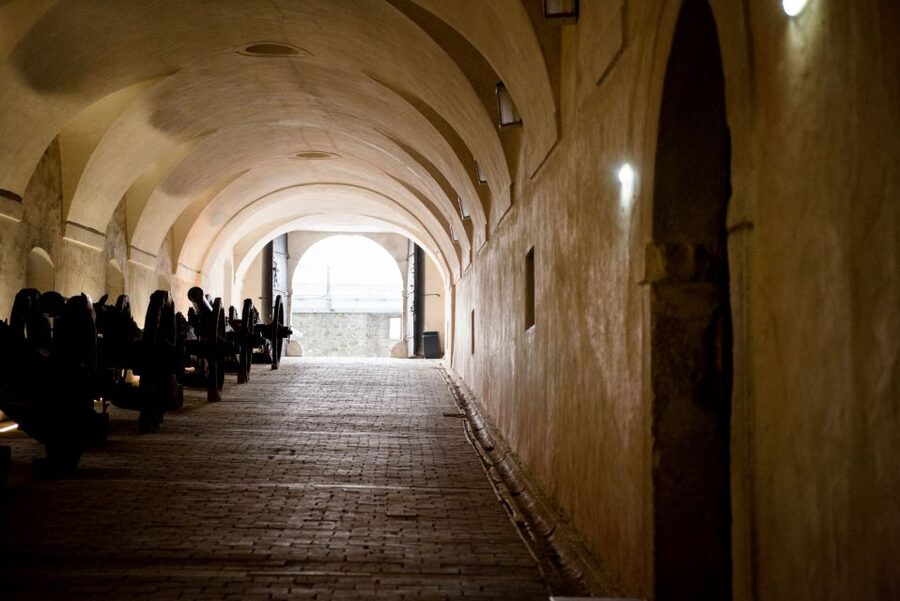
At Forchtenstein Castle (Burgenland, Austria), your $22 ticket is basically your entry into a tightly packed museum route through the Esterházy world. The visit clocks in at about 1 hour, so it is not a slow day where you can wander for hours. That is a good thing if you like museums with clear stops, rather than an endless maze.
Value-wise, the ticket makes sense if you care about original objects and visual wow moments. This place is not just old walls. It puts important, nameable items on display, including the secco murals in the courtyard, the weapons and armor rooms, and rare historical artifacts like coronation flags and Ottoman textiles. If your priority is major collections in a short time, you will get your money’s worth.
The castle also has a strong “identity” vibe. Esterházy collecting tastes are everywhere: art that blurs fact and fiction through portraiture, display styles that feel like a cabinet-of-curiosities mindset, and rooms organized around the idea that power, taste, and memory belong in the same space. Even if you are only half into history, the mix keeps your attention.
Starting in the inner courtyard and the secco mural moment
You begin where the castle wants you to. The inner courtyard is the staging area for the biggest visual pay-off: the largest display of secco wall paintings north of the Alps. Even if you have seen palace murals before, a claim like that usually means you will notice scale fast. What matters for you is not the trivia. It is that the courtyard sets a tone. You stop, look up, and you quickly get that this is a place built to show off.
If you are the type who likes “where should I look first,” start with the broad composition before you zoom in on details. In courtyard murals, people often rush and only catch fragments. Spend a minute taking in the overall design. It will make the rest of the visit easier to follow, because the castle’s collections also have a curated, thematic feel.
Practical tip: arrive 15 minutes early so you are not starting the visit rushed. With a one-hour format, your first moments matter.
First floor stops: oratory, chapel, and why the weapons room works
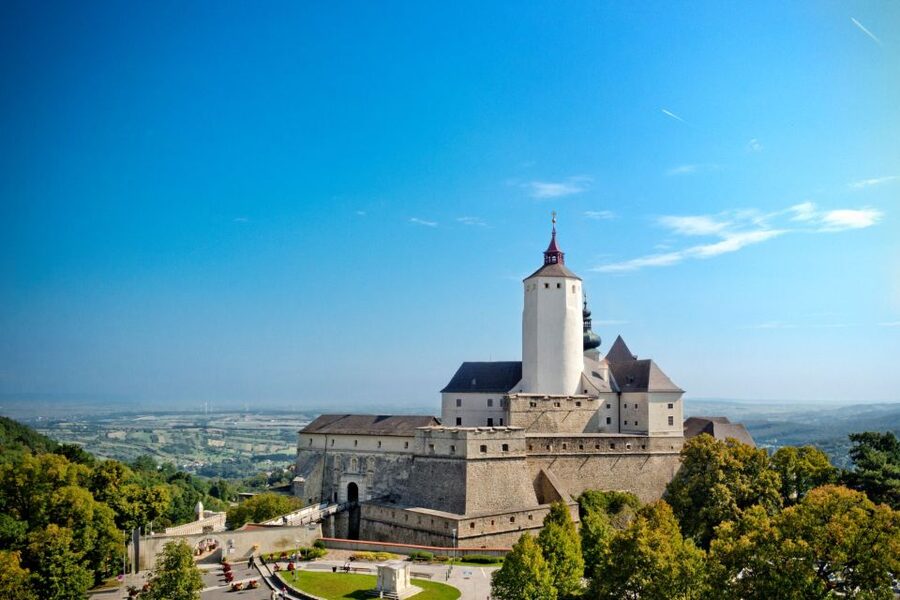
After the courtyard, you move inward and upward. The first-floor route includes the oratory and chapel, which is a great contrast to the courtyard art. This is where you see how the building functioned in daily life and ceremonial life, not just as a display case for wealth.
Then comes the room that many people seem to remember most: the weapons in one of Europe’s largest private armories. Weapons displays can go two ways. Sometimes they feel like generic armory trivia. Here, the impact is more about atmosphere and context. You are looking at arms inside a castle that was built for status, politics, and protection. The result is that the weapons feel like part of the Esterházy story, not a random side exhibit.
If you have a strict sense of museum interests, this is a good test. Even if you do not love arms, the armory can still be compelling because it is tangible history you can see and compare. If you do love armor, plan to slow down a touch, because your brain will want to match shapes, materials, and time periods.
One more consideration: this castle is not suitable for mobility impairments. So if stairs and indoor movement are an issue for you, you may want to reassess before booking.
Second floor collections: from silver furniture to the Kunstkammer mindset
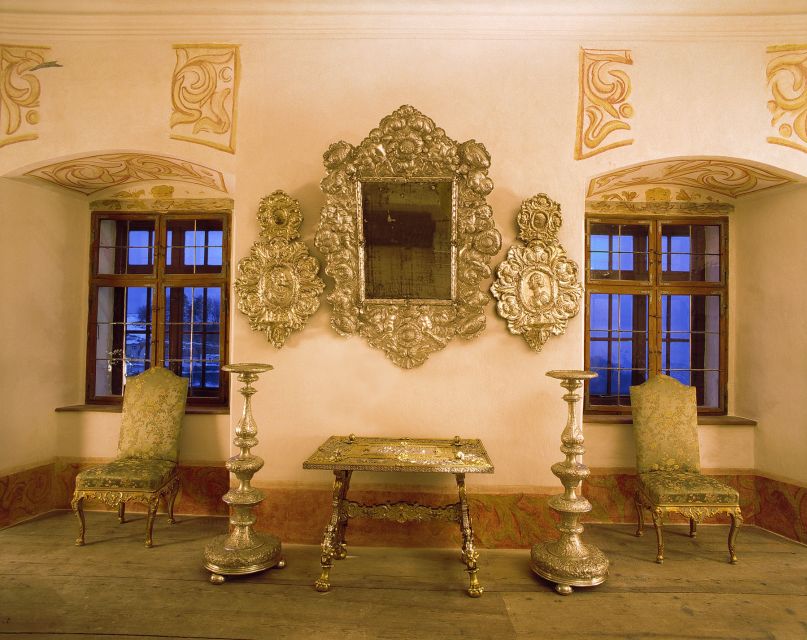
On the second floor, the castle shifts from rooms that feel like a sequence to rooms that feel like a set of treasures. One of the headline exhibits is Europe’s largest and earliest collection of silver furniture. That kind of collection is not only pretty. It tells you how elite households displayed wealth in everyday forms. Instead of silver only showing up as plates or flatware, you are seeing it built into furniture, which speaks to the way status was designed to be lived with.
Then you hit a different flavor of collecting: a Kunstkammer (cabinet of curiosities) dating from the late 16th century to the early 18th century. The point of a Kunstkammer is not accuracy in the modern museum sense. It is the collector’s logic: rarity, association, and the idea that the world is interesting when it is arranged under one roof. In this case, it is tied to Prince Paul Esterházy’s passion for collecting, so the room has a narrative purpose.
If you like museum stories that explain why things are here, this is one of your best stops. You are not only looking at objects. You are learning how a powerful person organized meaning through objects.
The Ottoman tent: why it belongs in a castle museum
One of the standout artifacts in the collections is an ornate 400-year-old Ottoman tent. You might wonder why an Ottoman item sits inside an Austrian castle. The answer is that Central Europe’s power map was never a clean, single-direction story. Artifacts like this reflect contacts, wars, trade, and the way courts copied or collected what they found impressive.
For you as a visitor, this kind of object works because it is more than a name on a label. A tent is functional, but when it is treated as a museum object, it becomes a symbol of craftsmanship and cultural interaction. It also gives your eyes a break from small details like portraits and medals, because fabric and structure are visually different.
If you take one lesson from this stop, it is that the castle collections are not all “local postcard history.” They are about how big empires and big tastes intersected.
Gallery of Ancestors: where Vlad the Impaler enters the story
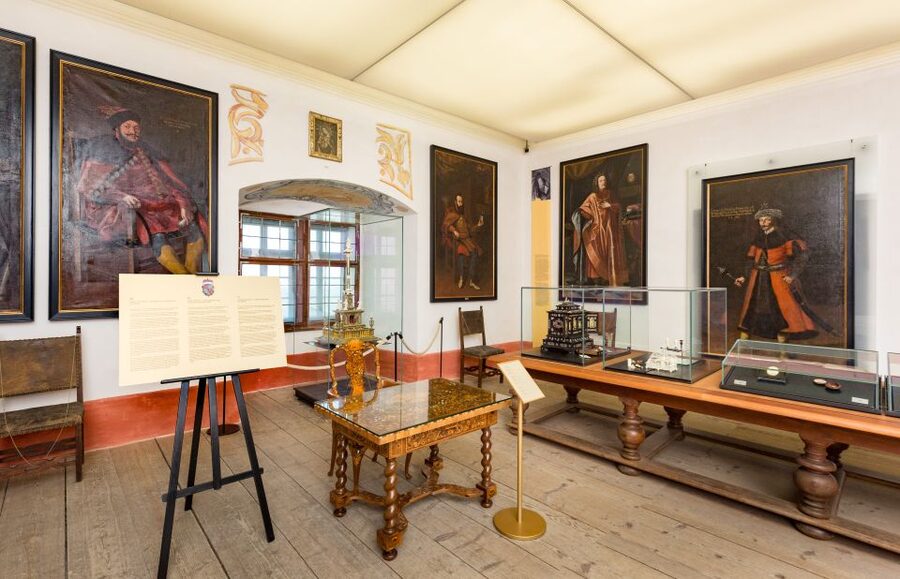
Now for the room that grabs attention instantly: the Gallery of Ancestors, which includes the only known full-length portrait of Vlad the Impaler. Even if you know Vlad primarily as a name, this is a different experience. A portrait changes the way you think about a figure from legend to human presence.
What I like about how this section is set up is that it does not treat Vlad as a lone monster story. It places him among other images of lineage and ancestry. That matters because the Esterházy approach to portraiture includes fictional or symbolic ancestors too, not just documented history.
In other words, you are looking at power used as storytelling. People did not just show who their family was. They also shaped what their family could represent.
This is also where you get some of the most surprising imagery, including portraits connected with Attila the Hun and other figures that feel half-history, half-theatrical family myth.
The coronation flags: why 17th-century fabric feels so old
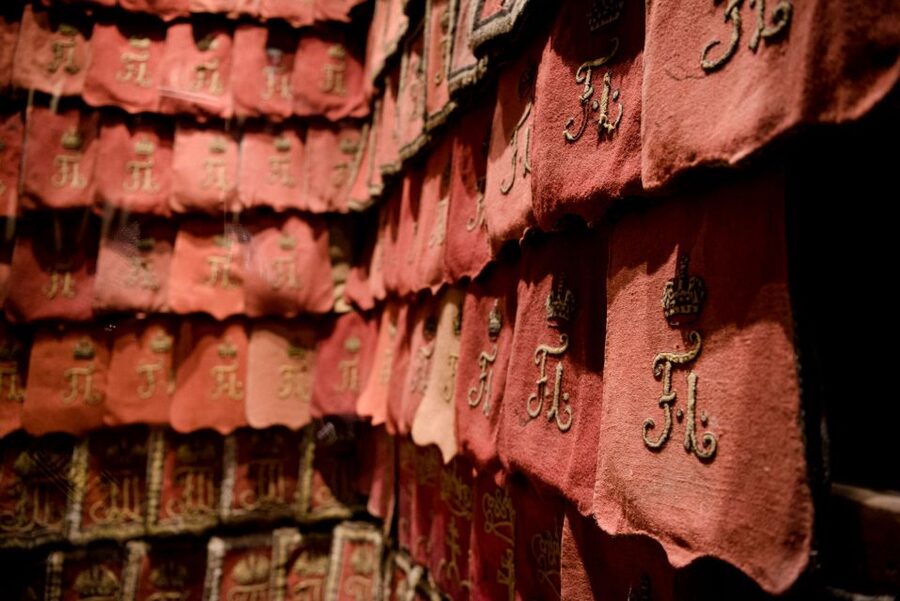
Another headline feature is a set of the oldest known coronation flags from Hungary, Croatia, and Serbia, dating to the 17th century. Flags are easy to overlook in museums, because you expect them to be flat and repetitive. Here, they get treated as serious artifacts of authority, which makes you look more carefully.
A flag is also emotional in a way that armor or furniture might not be. It connects to ceremony, to legitimacy, and to moments where a ruler’s claim was made public. Even without getting lost in details, you can feel what these objects had to do in their original life.
For context, these flags help explain why this castle is not only a local estate. The Esterházy story sits inside broader regional politics, and these textiles show how far influence and symbolism reached.
Silver furniture, portraits, and the collector’s version of reality
If you leave feeling like the collections are all over the place, that is probably the point. Forchtenstein Castle is built around a collector’s logic: silver furniture, mural art, armory displays, Ottoman tent textiles, and portraits that mix historical and invented ancestry.
So instead of asking, is this all consistent, you might ask, what does this collection say about taste and power? To me, it says the Esterházy family used objects like media. They created a world where their identity felt larger than geography.
Also, practical note for your expectations: you are seeing a lot of categories in a short time. If you are the type who wants to read every label, you will need to choose. This tour is designed to keep momentum.
Practical timing: how to make the most of the one-hour format
Because the duration is 1 hour, you should plan to move with intention. Here is my advice to get more from less time:
- Start by letting the courtyard set your mental map.
- Spend your careful time on 2 anchor rooms: the armory and either the Gallery of Ancestors or the coronation flags.
- If you like art, give the secco murals and Kunstkammer extra minutes since those are your visual and interpretive anchors.
You should also know that the experience focuses on interior rooms and museum spaces on different floors. That is part of the charm, but it also explains why the site is not suitable for mobility impairments.
Audio guide reality check (and what language you can expect)
The information you get for this experience indicates admission is included, while an audio guide may not be included and could cost €2. It also lists German as the audio guide language.
So your best move is simple: check what your booking includes before you arrive. If German is your comfort language, you can use the audio guide to slow down the pace slightly and make labels more useful. If you do not speak German, you might still enjoy the visual experience, but you will likely move faster because you have less help with context.
What this is best for
This is a strong pick if you like any of the following:
- Palace and castle museums where rooms have distinct themes
- Seeing major collections in a short time
- Armory and weapons displays paired with art and portraiture
- Central European historical symbolism, like coronation flags
- People who like the “cabinet of curiosities” idea, where collecting is part of the story
It may be less ideal if you need step-free access, since it is not suitable for mobility impairments.
It also suits day-trippers who want a clear, contained visit rather than a long, wandering castle day.
Should you book Forchtenstein Castle admission and the optional guided tour?
I think you should book if you want an hour that feels focused, with recognizable highlights. The biggest selling points for me are the mix of secco mural art, the armory, and the fact that the collections include rare anchors like the Vlad portrait and the coronation flags.
Go for the optional guided tour only if it helps you connect objects into a bigger narrative. If you prefer to read at your own pace, you might still be happy with the admission ticket alone, but you will get the most meaning if someone helps you tie the rooms together.
Skip it or plan differently if stairs and mobility are concerns for you, since the experience is not suitable for mobility impairments.
FAQ
FAQ
How long is the Forchtenstein Castle admission experience?
It lasts about 1 hour.
Where is Forchtenstein Castle located?
It is in Burgenland, Austria.
What is the price per person?
The price is $22 per person.
What is included with the ticket?
The admission ticket is included.
Is an audio guide included?
An audio guide is listed as not included with a cost of €2, and German is mentioned as the audio guide language. Check your booking details to confirm what you receive.
What time should I arrive?
Please arrive 15 minutes before the activity starts.
What languages are available?
German is listed as the language.
Is the optional guided tour available?
The experience is described as admission with an optional guided tour.
Is it suitable for people with mobility impairments?
No, it is not suitable for people with mobility impairments.
Can I cancel and get a refund?
Yes. You can cancel up to 24 hours in advance for a full refund.
Can I reserve without paying right away?
Yes, it is offered with reserve now & pay later.
Just added to the bill in Austria




Tickets, compared.
Classic Ensemble Vienna in St. Peter’s Church Ticket
Read our review →
Vienna Kunsthistorisches Museum Day Admission Ticket
Read our review →
Vienna PASS: All incl. Sightseeing Pass for 85+ Attractions
Read our review →
Tickets for Mozarthaus Vienna with Audio Guide
Read our review →
Skip-the-Line Entrance Ticket to the Danube Tower
Read our review →