
REVIEW · SELF-GUIDED TOURS
Hitler’s Vienna: A Self-Guided Tour
Young history can feel uncomfortably close.
This self-guided GPS audio tour in Vienna helps you follow in Hitler’s footsteps while you listen at key sites, with offline audio, maps, and geodata built into the app. I especially liked how it points out specific places tied to his early struggle in the city, and how the route keeps moving instead of turning into a lecture. One possible drawback: the story can jump around in time a bit, so if you want strict year-by-year order, you may find it slightly confusing.
The walk is designed for you to go at your own speed, starting outside Wien Westbahnhof and ending near the Academy of Fine Arts Vienna. You get an easy-to-follow audio flow that explains what you’re seeing in plain language, which is a big win for a self-guided format.
At $14.99 per person, for about 2 to 3 hours, this is a solid value if you want a structured route with zero waiting around for a group. It’s offered in English, and you get lifetime access in the app, not just a single-use ticket.
In This Review
- Key highlights you should care about
- Price and time: is $14.99 actually good value?
- How the VoiceMap self-guided setup works in real life
- Start outside Wien Westbahnhof: a good place to begin
- Stumpergasse neighborhood walk: where the story becomes specific
- Sisters of Mercy Hospital at Stumpergasse 13: poverty made concrete
- Hitler’s first Vienna home and the Academy applications you are walking toward
- Haus des Meeres: the 154-foot flak tower you can actually see
- Volkstheater: performances as part of the Vienna routine
- Austrian Parliament and the antisemitic environment theme
- Volksgarten: the calm between big moments
- Heldenplatz: the spot tied to a massive reunification speech
- Ending at Schillerpark outside the Academy of Fine Arts Vienna
- What I like about this as a self-guided experience
- Possible drawback to plan around
- Who should book this and who might skip it
- Quick buying checklist (so it runs smoothly)
- Should you book Hitler’s Vienna: A Self-Guided Tour?
- FAQ
- How long is the Hitler’s Vienna self-guided tour?
- Where does the tour start and end?
- Is this tour available in English?
- Do I need a smartphone and headphones?
- Can I use the tour offline?
- Is it fully self-guided?
- Is this tour private?
- What is the cancellation policy?
Key highlights you should care about
- Offline audio and maps so you are not stuck hunting signal in central Vienna
- A start-to-finish walking route from Wien Westbahnhof to Schillerpark near the Academy of Fine Arts Vienna
- Stumpergasse details tied to poverty, rejection, and daily life in a working district
- WW2 echoes at the Haus des Meeres, including its former role as a flak tower
- Heldenplatz scale at the spot where Hitler delivered his reunification speech to over 200,000 people
- Easy pacing because it is self-guided GPS, private to your group
Price and time: is $14.99 actually good value?
For $14.99 per person, you are paying for a guided-style walking route that you control. The big value here is that you do not just get a map pin, you get audio tied to stops, with offline access so it works when your phone signal gets moody.
The tour is listed at 2 to 3 hours, which makes it a practical half-day plan inside a busy sightseeing schedule. You can take it slow, stop for photos, or just pause for a minute when a stop hits emotionally or historically. This matters with heavy subject matter, because rushing tends to flatten the meaning.
It is also offered with lifetime access in English before your booking date and after it. That means you can redo it later if you want a second pass when you have more Vienna context in your head, or if you ended up moving fast the first time.
More of Austria taken andante:
- Vienna: Tickets for Mozarthaus Vienna with Audio Guide
★ 4.2 · 2,344 reviews - Vienna: New Hofburg Palace Audio-Guided Tour & Entry Ticket
★ 4.1 · 566 reviews - Vienna: Schlumberger Wine Cellar Guided or Self-Guided Tour
★ 4.8 · 285 reviews - Vienna: Scavenger Hunt Self-Guided Tour
★ 4.7 · 83 reviews
How the VoiceMap self-guided setup works in real life
This is a self-guided GPS tour on the VoiceMap app for Android and iOS. You also get directions to the starting point, so when you are physically in the right place, the tour starts.
Here is the practical part you will want to plan for:
- Bring your smartphone and headphones. The tour does not include them.
- Download before you start, so your audio and maps are ready offline.
- Wear walking shoes. This is a city walk, and you will be on sidewalks for most of the experience.
I like self-guided tours most when they are clear and structured. This one is structured. The audio tracks the order of stops and keeps you moving along a route you can follow without guesswork.
Start outside Wien Westbahnhof: a good place to begin
You begin outside Wien Westbahnhof, at Europaplatz 2/3. Starting by a major station helps because you can arrive by tram, metro, or train without doing a complicated puzzle with directions.
From the first stretch, the tone is built around following in Hitler’s footsteps, starting with the formative years. Instead of starting with the big, shocking headlines, it eases you into the environment and the everyday places that shaped him. That choice can make the story hit harder, because you are seeing the building blocks of the future, not just the aftermath.
Stumpergasse neighborhood walk: where the story becomes specific
The second major block of the route goes into the multicultural neighborhood where Hitler lived as a failed art student. You will visit former digs outside Stumpergasse 31, and the audio frames this as part of his early attempts to fit into Vienna while failing to land where he wanted to.
This is one of the tour’s best uses of geography. You are not just hearing that he was rejected. You are seeing the surrounding district as the city itself. The audio makes it easier to picture the day-to-day pressures behind those rejections.
Practical tip: keep an eye on street numbers. Addresses like Stumpergasse 31 and later Stumpergasse 13 are central to how the tour works. If you wander a block away and keep going, you can miss the exact spot the narration is tied to.
Held over another night in Vienna



Sisters of Mercy Hospital at Stumpergasse 13: poverty made concrete
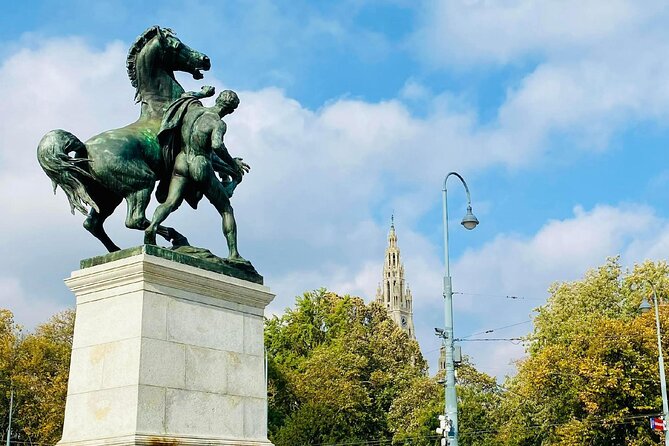
Next, you head by Stumpergasse 13, the site where the Sisters of Mercy Hospital used to be. The tour explains how they provided soup to a young, destitute Hitler.
This stop is quietly powerful because it turns poverty into a real place, not a vague phrase. You are standing near a location associated with basic aid, and the audio connects that help to a specific moment in a specific life phase.
A good way to approach this stop: do not race through it. Even a short pause helps you shift from sightseeing mode into thinking mode. You do not have to force emotion, but you do want the history to land.
Hitler’s first Vienna home and the Academy applications you are walking toward
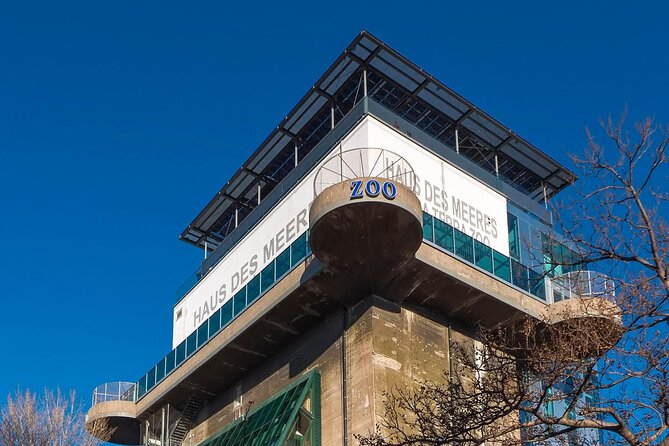
As the route continues, you pass what is described as Hitler’s first home in Vienna. You also hear about unsuccessful applications into Vienna’s Academy of Arts. This part matters because it connects two themes that show up repeatedly in the tour: ambition and rejection.
The tour does not treat Vienna like a blank stage. It treats it like a system, where institutions decide who belongs and who gets shut out. That is a big reason this route can feel more instructive than a simple checklist of monuments.
One consideration: the tour can jump across years as it moves by physical locations. That structure is what lets the audio attach to buildings, but it can feel like timeline zig-zagging if you want a linear story.
Haus des Meeres: the 154-foot flak tower you can actually see
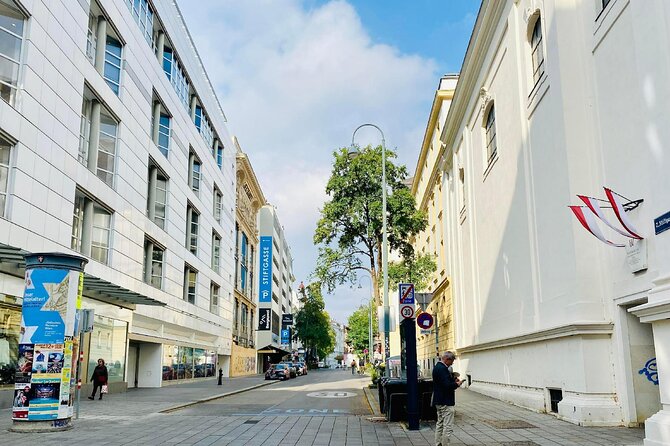
A standout visual stop is Haus des Meeres, described as a gigantic structure that is 154 feet tall. The audio explains that this imposing building used to be a World War 2 flak tower.
If you have ever wondered how old conflict infrastructure gets absorbed into modern cities, this is your answer. You are standing in Vienna, seeing a huge modern landmark, and the narration pulls back the curtain on what it once served.
Practical note: this is one of those places where a photo can distract you. Try to let the audio finish its explanation before you start snapping. If you do photos first, you may miss the key historical link the narration is giving you.
Volkstheater: performances as part of the Vienna routine
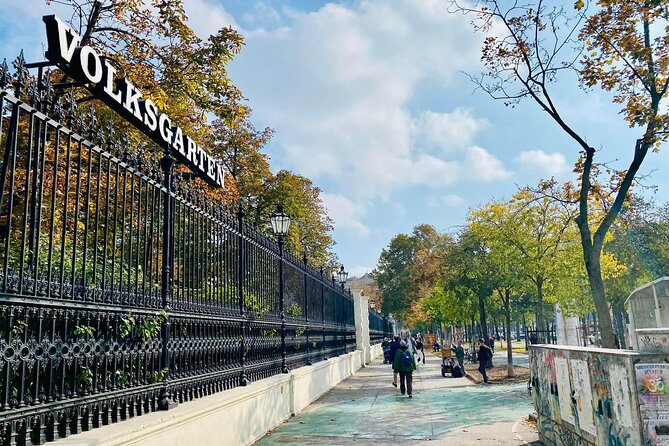
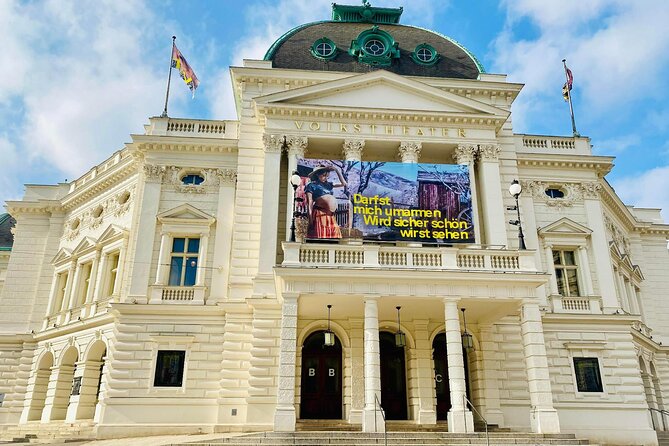
Next you pass by the Volkstheater, where Hitler is said to have frequently attended performances. This kind of stop can be surprising, because it shifts the lens toward culture and routine instead of only hardship or politics.
You are not being asked to excuse or justify anything. You are being shown that the early life of a future dictator included the kind of ordinary city habits people usually associate with art-loving tourists: going to shows, seeking meaning, trying to connect with the city’s cultural life.
If you like learning how people move through a city day to day, this is a compelling shift in perspective.
Austrian Parliament and the antisemitic environment theme
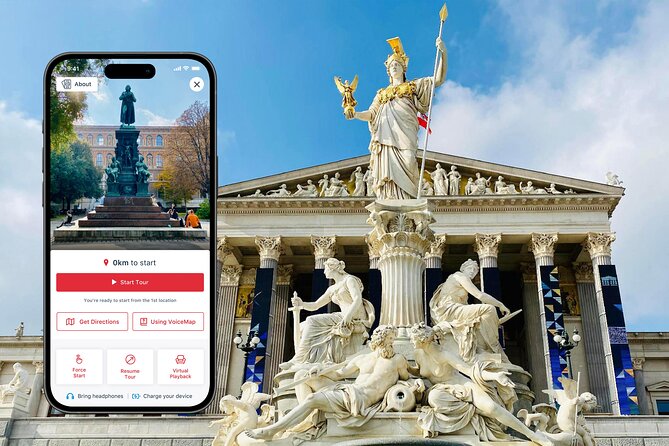
The route passes by the Austrian Parliament. Along the way, the audio focuses on Vienna’s anti-Semitic environment and how Hitler’s experiences of poverty and rejection helped shape his worldview.
This is where the tour stops being just a set of places and turns into interpretation. The tour is basically saying: context matters. You can be rejected personally, but when prejudice is baked into society, rejection can transform into something far more dangerous than a personal disappointment.
For a respectful visit, treat this as a reflective segment. If you want to take notes, this is a good spot. You will likely have questions about how societies normalize cruelty, and the narration sets up that kind of thinking.
Volksgarten: the calm between big moments
You also stroll past Volksgarten. It is a quieter, more open-feeling pause compared with heavier, more specific sites. In tours like this, those transitions matter because they give you a breathing space between major emotional beats.
Even if you do not stop long here, it helps you keep the route readable and walkable. It also provides contrast, so when you reach the final concentration of major historical space, it feels more intentional.
Heldenplatz: the spot tied to a massive reunification speech
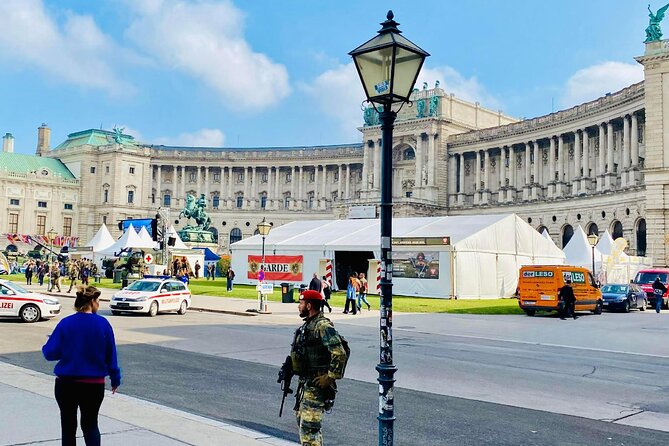
The tour then points you to the very spot on Heldenplatz where Hitler delivered his triumphant reunification speech to over 200,000 people.
This is one of those moments where the sheer scale is hard to process. The audio keeps the focus on what happened and the fact that so many people gathered around him. That is not just trivia. It is part of understanding how power moves from words to reality.
Practical tip: stand where the audio indicates and take a moment to look at the space around you. Even without imagining the exact crowd, you can get a sense of why such a public platform was so effective.
Ending at Schillerpark outside the Academy of Fine Arts Vienna
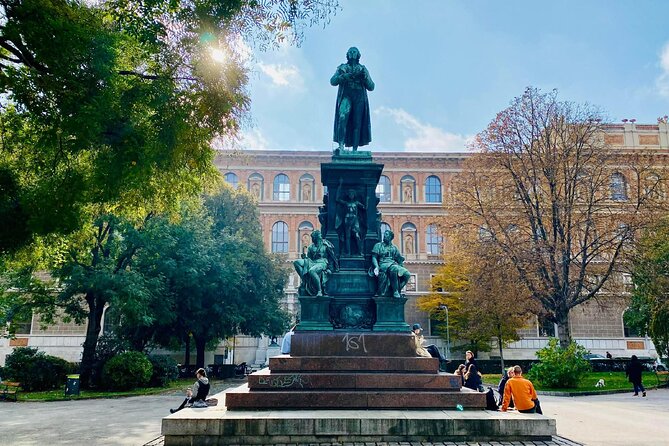
Your tour ends in Schillerpark, outside the Academy of Fine Arts Vienna near Schillerplatz. The audio brings it full circle, explaining that the aspirant artist’s application was rejected three times.
Ending at the place tied to the rejection makes the story feel more complete than just hearing about it in the middle. You finish with the physical location that represents the repeated “no,” while everything behind you traced the path toward a catastrophic later “yes” to tyranny.
It also gives you an easy final landmark to orient yourself. If you are heading back to the city center, you can treat Schillerpark as your exit point.
What I like about this as a self-guided experience
Two things make this tour work well as an audio, do-it-yourself format.
First, it is easy to follow. The audio is designed to match what you are seeing, which is exactly what you want from a GPS tour. If you have tried self-guided tours before and found them frustrating, this one is the opposite of that.
Second, it does not only hit famous spots. It includes specific addresses and lesser-noticed locations like Stumpergasse 13 connected to soup provided by the Sisters of Mercy. That kind of detail is what makes the tour feel like more than just walking between postcards.
Possible drawback to plan around
The biggest real drawback is timeline jumping. The story can move across years while still staying tied to the physical locations you are passing. It is not wrong. It is just a tradeoff of this format.
If you know you prefer strict chronological storytelling, you may want to listen without trying to memorize dates. Instead, think in themes: poverty, rejection, Vienna’s environment, and how those elements connect to later power.
Who should book this and who might skip it
You will probably love this tour if:
- You want an audio-led walking route rather than a traditional guided group tour
- You like learning through exact street-level details and addresses
- You want to go at your own pace, with offline access
You might skip it if:
- You want a strict, year-by-year timeline with zero narrative jumps
- You do not want to handle heavy historical material through an interpretive lens while walking city streets
Quick buying checklist (so it runs smoothly)
Before you start, make sure:
- Your app is ready and you have downloaded offline audio and maps
- You have headphones
- You can find the start at Wien Westbahnhof, Europaplatz 2/3
- You allow at least 2 to 3 hours in the real world, including short stops
Should you book Hitler’s Vienna: A Self-Guided Tour?
If you are looking for a structured way to experience a difficult chapter of history in Vienna, this is a smart option. The route connects specific early-life locations, the city institutions around him, and the later public stage at Heldenplatz, all while keeping the format practical with offline audio and maps.
Book it if you want value, independence, and a stop-by-stop audio guide that helps you notice things you would likely walk past. Skip it if you need a perfectly linear timeline or you dislike interpretive storytelling tied to locations.
Either way, come with the mindset that you are not sightseeing. You are reading the city, one address at a time.
FAQ
How long is the Hitler’s Vienna self-guided tour?
It is listed as about 2 to 3 hours.
Where does the tour start and end?
It starts outside Wien Westbahnhof at Europaplatz 2/3, 1150 Wien, and ends in Schillerpark outside the Academy of Fine Arts Vienna at Schillerplatz, 1010 Wien.
Is this tour available in English?
Yes, it is offered in English.
Do I need a smartphone and headphones?
Yes. A smartphone and headphones are not included, but you do get an app for Android and iOS.
Can I use the tour offline?
Yes. It includes offline access to audio, maps, and geodata.
Is it fully self-guided?
Yes. It is a self-guided GPS tour, and you explore at your own pace.
Is this tour private?
It is described as a private tour or activity, meaning only your group participates.
What is the cancellation policy?
You can cancel for a full refund up to 24 hours before the experience starts. Cancellation within 24 hours is not refunded.
Just added to the bill for Vienna




Self-Guided Tours, compared.
Tickets for Mozarthaus Vienna with Audio Guide
Read our review →
New Hofburg Palace Audio-Guided Tour & Entry Ticket
Read our review →
Schlumberger Wine Cellar Guided or Self-Guided Tour
Read our review →
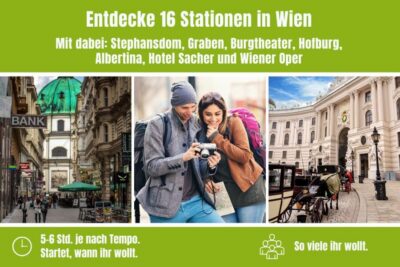

Vienna Walking Tour with Audioguide on Your Smartphone
Read our review →
Browse the lists this tour appears in