REVIEW · GUIDED
Lipizzaner Stud Piber: Guided Tour
Horses, history, and big open air in Styria. This Lipizzaner Stud Piber guided tour at Piber Stud Farm (just outside Köflach) is a straightforward way to see how horses are cared for, how they’re trained, and how the Lipizzaner legacy is presented for visitors.
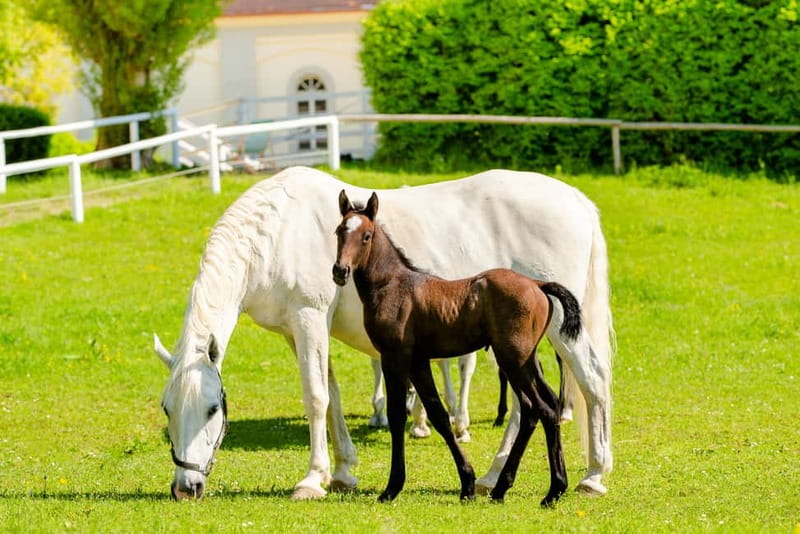
I especially liked the hands-on feeling of watching foals while they explore their surroundings in their first months, still under close care. I also really enjoyed the stop in the museum and cinema, which gives you context beyond what you see in the stables.
One thing to plan for: the live guide is German, and English guided tours are only available by prior request. Also, parts of the breeding and training world may get less explanation than you’d hope if you want technical detail.
In This Review
- Key highlights to look for
- Entering Piber Stud Farm Near Köflach
- A One-Day Route Through the Stud Grounds
- Watching Foals in Their First Months (and Why It Matters)
- Museum and Cinema: Connecting the On-Site Scenes to the Bigger Story
- Riding Hall Training Sessions With Horses and Riders
- Children’s Adventure Path Around the Stud
- Price and Value: Is $28 Worth It?
- Language Fit: German Tours and Requesting English
- Rules That Keep the Horses Calm (and Your Visit Smooth)
- Who Should Book This Stud Tour?
- Should You Book Lipizzaner Stud Piber?
- FAQ
- How long is the Lipizzaner Stud Piber guided tour?
- Where do I meet for the tour?
- What is included in the $28 per person price?
- Is food included during the tour?
- What languages are offered?
- Is there an audio guide if I do not want the live guide?
- Can I feed the horses?
- Can I ride the horses?
- Is the site wheelchair accessible?
Key highlights to look for
- Expert-led stud visit that explains Lipizzaner care and the stud’s role in breeding
- Foals during their early months exploring, with mares keeping a close watch
- Museum plus cinema entry so you can connect the on-site scenes to the bigger story
- Riding hall training sessions where horses and riders work in view
- Children’s adventure path for younger visitors who want to move, not just stand and listen
Entering Piber Stud Farm Near Köflach
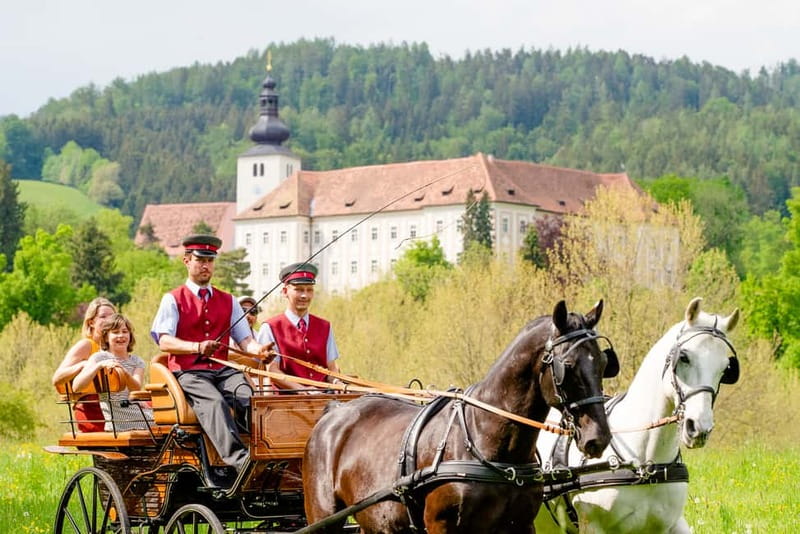
Piber Stud Farm sits in Styria, right outside Köflach, and it feels pleasantly like a real working place rather than a themed show. You meet in front of the Piber-Ticketshop, then you’re directed into the stud grounds. From the start, the visit has that clear rhythm: watch, learn, watch again.
A big practical win here is that your ticket gets you access to the inner courtyard and the museum areas, so you are not piecing together a half day itinerary on your own. You can also expect the visit to include the parts people come for most, including stallions in action and the foals’ early-life setting.
If you’re the type who likes to get your bearings first, aim to arrive a few minutes early. Studs run on schedules, and you want to be in the flow when your guide starts talking about the horses and what you’re about to see.
A One-Day Route Through the Stud Grounds
This is a 1 day experience, designed to cover multiple parts of the operation without feeling like you’re sprinting across the site. You’ll typically move from the courtyard area into areas where you can observe the horses, then you’ll transition to indoor learning and viewing spaces.
Here’s how the day usually feels, step by step:
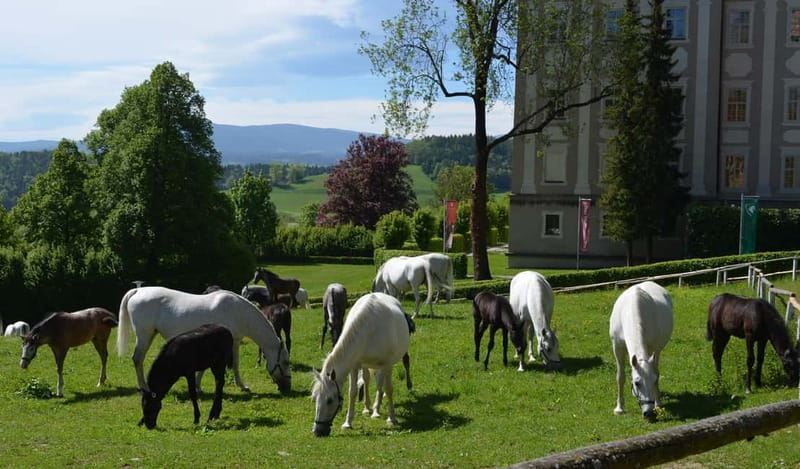
You start with the guide-led overview, focusing on Lipizzaner care and how breeding fits into the stud’s long-term mission. Then you get outdoor time, where you can breathe the fresh air on the mountain pastures and see foals in their early months, still under the attentive care of their mares.
After that, the visit shifts into interpretation. The museum helps connect what you saw outside to the Lipizzaner story. There’s also cinema entry, which is useful when you want the timeline and bigger picture without relying only on what a guide can cover on foot.
Finally, you observe what’s happening in the riding hall, where horses and riders train. The day rounds out with a children’s adventure path option, so families have something hands-on for kids who need more activity.
Two small realities to keep in mind:
First, tours can only cover a slice of daily operations in a limited timeframe. Second, the focus is on visitor viewing, not backstage access.
Watching Foals in Their First Months (and Why It Matters)
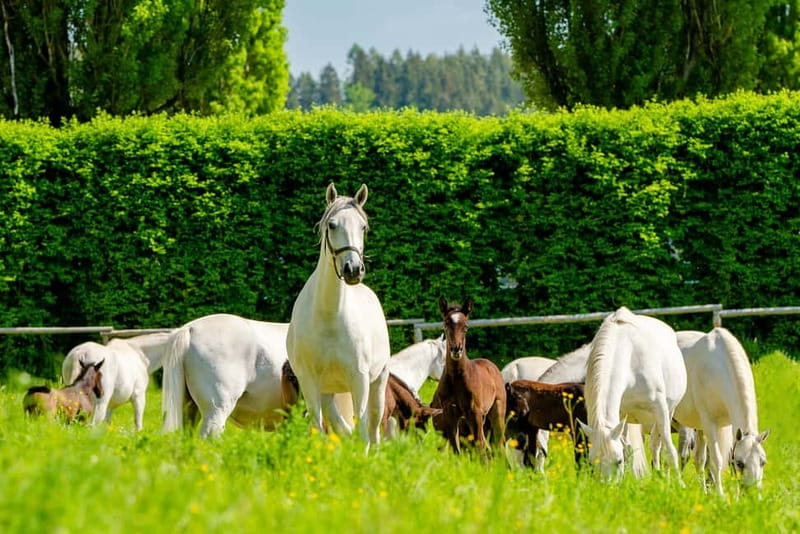
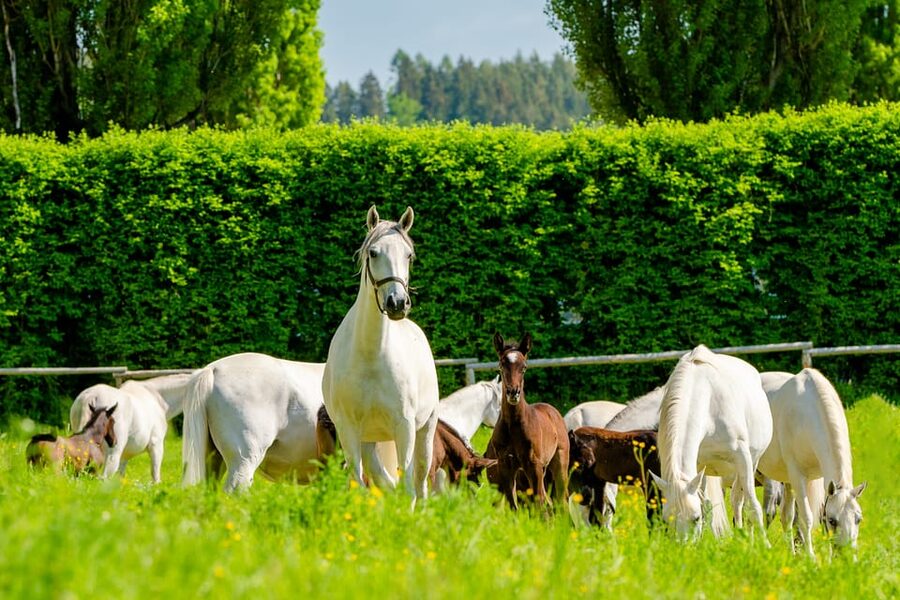
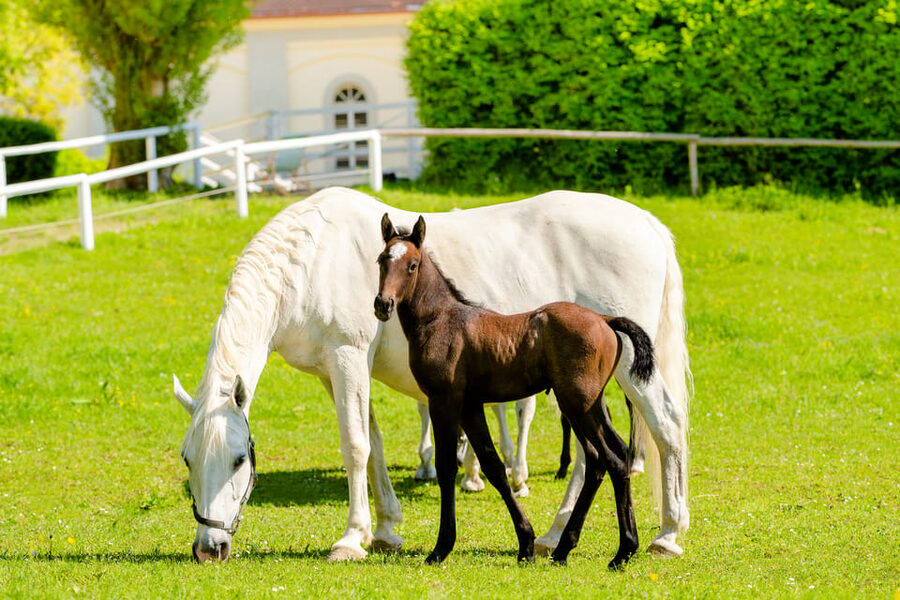
The foal viewing is one of the most memorable parts of Lipizzaner Stud Piber because it’s not just about the horses looking cute. It’s about seeing the early-care environment that shapes temperament and development.
You’ll have a chance to observe foals exploring their surroundings while their mares keep watch. That matters because it turns Lipizzaner breeding into something more understandable. Instead of thinking of horses as training machines, you see how early-life routines and close supervision are part of the system.
This is also where you can get a better sense of how the stud balances visibility with responsibility. You are not meant to interact directly. In fact, feeding animals is not allowed, and riding the animals is not allowed. The rules keep the horses calmer and safer, and they protect the animals from visitors treating the moment like a petting zoo.
Tip for your visit: bring your patience for the slower moments. Foals can be unpredictable, and the best viewing comes when you watch for behavior, not just for movement. If your kids are impatient, the key is using the children’s adventure path later in the day, not trying to keep them standing at the foal area for too long.
Museum and Cinema: Connecting the On-Site Scenes to the Bigger Story
The museum stop is what helps you go from observations to understanding. Outside, you’re watching the horses in real settings. Inside, you’re learning why the Lipizzaner matters and how the stud frames its mission for visitors.
The visit includes entrance to the museums and the cinema, which is a practical combination. A museum gives you details you can read at your own pace. A cinema adds the storytelling layer, which helps when you want a clear overview without asking your guide to compress everything verbally.
One specific point I’d plan around is the stud’s milestone: in 2020, Piber celebrated 100 years of breeding these majestic horses in Piber. Even if you visit years later, the presence of that kind of milestone signals that the stud’s story is not random. It’s built around a long process, and the museum helps you see that continuity.
If you want more context than a quick tour can cover, this is your best moment to slow down. Spend a few extra minutes scanning exhibits you don’t fully understand yet. Then, when you return to watching horses in the riding hall, you’ll spot connections faster.
Riding Hall Training Sessions With Horses and Riders
The riding hall viewing is where the tour shifts from care and early life to performance preparation. You’ll observe training sessions with horses and riders in the riding hall, which turns Lipizzaners from “museum animals” into working athletes with a daily routine.
This stop is valuable for two reasons. First, you see discipline in action, not just horses standing in place. Second, it puts the stud’s breeding work into a practical frame. Training and care are linked, and the riding hall helps you understand that relationship.
That said, it’s also the area where your expectations may vary. Some visitors want more explanation about how horses are selected or how training pathways connect to specific roles. The tour can only fit so much into a short visit, so if you care deeply about the process side, ask your guide a direct question during the session viewing.
Practical viewing tip: stand where you can see the full movement range, not just the nearest horse. In a hall, sightlines matter. And if your group includes kids, position yourself so they can watch the action without constantly turning their heads.
Children’s Adventure Path Around the Stud
Families will appreciate the children’s adventure path, because it gives younger visitors a way to participate beyond listening. After you’ve seen foals and watched training, kids often need an outlet to burn energy, and this path helps keep the day from feeling like one long wait.
The adventure path is specifically mentioned as part of what’s available on the stud grounds. That means it’s planned as part of the visit flow, not an afterthought you have to hunt for.
My advice for families: don’t force a strict timeline. Let kids do the adventure path after the indoor museum stop or after the riding hall viewing, when they’re most likely to benefit from movement. And remember the key rule of the day: kids should not feed animals or ride them, even if they get close to horse areas.
Price and Value: Is $28 Worth It?
At $28 per person for a 1 day visit, this is priced in the range where value depends on what you care about most.
Here’s what you get that supports the price:
- A guided tour or audio guide (your choice within the offering)
- Entrance to the inner courtyard
- Entrance to the museums and the cinema
That’s a lot of included access for one ticket. You’re not just paying for walking around. You’re paying for structured viewing plus indoor learning.
The one clear cost you should plan for is food and drinks. These are not included, so bring a plan for lunch or snacks. Also, because the guide language is German, your value increases a lot if you speak enough German to follow explanations comfortably. If you don’t, you may need an alternative approach, like requesting English guided tours in advance, or relying on what you can catch from the audio guide.
Is it cheap enough to be casual? Yes, it’s approachable. Is it “worth it” if you want highly technical detail in English? That depends on how you like information. The tour is strong for seeing the horses and getting a solid overview, and it may feel lighter if you want deep explanations of breeding selection and training strategy.
Language Fit: German Tours and Requesting English
This is important. The live tour guide is German. Guided tours in English are available only by prior request.
If you’re planning this trip without German, treat language like a core part of your planning, not a last-minute concern. Send the request early enough that it has a real chance to be confirmed. Then, plan to spend more time in the museum, where you can slow down and read.
If you’re relying on an audio option, the tour data confirms an audio guide is available, but it does not guarantee every language. So assume German is the default and double-check what language options you can actually select when you book.
Quick translation tip that helps in real life: bring a phone translation app and a small checklist of terms you care about, like breeding, training hall, foals, and care routines. Even a few captured words help you follow the guide’s points.
Rules That Keep the Horses Calm (and Your Visit Smooth)
A good stud visit runs on boundaries. Here you’ll want to remember:
- Feeding animals is not allowed
- Riding the animals is not allowed
This is not just “for safety.” It’s about respecting the horses as working animals. When people try to interact too much, the behavior changes, and the horses and handlers lose control of the environment. So if you’re coming for the “magic,” these rules are part of why the magic works.
Wear footwear that works on uneven ground and in outdoor areas. Even if the day is mostly walkable, you’ll likely spend time moving between viewing zones and museum spaces. And keep an eye on children around horse areas. A children’s path exists, use it.
Who Should Book This Stud Tour?
I’d point you toward Lipizzaner Stud Piber if you fit one or more of these:
- You want a single-day visit that mixes outdoors, indoor learning, and active viewing
- You like horses but also enjoy history and context, not just animal spotting
- You’re traveling with kids who will benefit from a children’s adventure path
- You can handle German-led commentary, or you’re willing to request an English guided tour ahead of time
It may not be the best fit if:
- You only want detailed, technical explanations about training choices and roles, in a specific language
- You’re expecting a fully guided deep lecture every time you see a horse
- You’re traveling at a time when you cannot secure the language format you need
Still, as a value-minded way to experience a working Lipizzaner stud, it’s a strong option.
Should You Book Lipizzaner Stud Piber?
Book it if you want a structured, one-day look at Lipizzaners that includes the “real life” parts you can observe, plus museum and cinema context. The foal viewing and the riding hall sessions are the heart of the visit, and the children’s adventure path makes it easier for families to enjoy the day without constant negotiation.
Skip or rethink it if language is a dealbreaker. The standard experience is German, and English requires prior request. Also, if you want very detailed explanations about how horses are chosen for specific training outcomes, plan to ask direct questions and spend extra time in the museum to fill in gaps.
If you book with realistic expectations and show up prepared for a working stud environment, you’ll leave with more than photos. You’ll understand how care, early development, and training connect.
FAQ
How long is the Lipizzaner Stud Piber guided tour?
The experience is valid for 1 day, with starting times depending on availability.
Where do I meet for the tour?
The meeting point is located in front of the Piber-Ticketshop.
What is included in the $28 per person price?
The ticket includes a guided tour or audio guide, entrance to the inner courtyard, and entrance to the museums and the cinema.
Is food included during the tour?
No. Food and drinks are not included.
What languages are offered?
The live tour guide is German. Guided tours in English are available only by prior request.
Is there an audio guide if I do not want the live guide?
Yes. A guided tour or audio guide is included, depending on what you choose.
Can I feed the horses?
No. Feeding animals is not allowed.
Can I ride the horses?
No. Riding the animals is not allowed.
Is the site wheelchair accessible?
Yes, the experience is wheelchair accessible.
Just added to the bill in Austria

Guided, compared.
Guided Walking Tour of City Center Highlights
Read our review →
Bus & Schönbrunn Palace Skip-the-Line Guided Tour
Read our review →
Tickets for Mozarthaus Vienna with Audio Guide
Read our review →
Day trips from Vienna: Hallstatt & Salzburg Guided Tour
Read our review →
Guided Walking Tour of City Highlights & Hidden Gems
Read our review →