
REVIEW · GUIDED WALKS IN VIENNA
Private Klimt & Vienna Art Walk — From Baroque to Secession
Klimt comes with fewer crowds. This private, half-day art walk threads Vienna’s Baroque grandeur into Art Nouveau style, with skip-the-line help so your 4 hours go to looking, not waiting.
I especially like the way you get right into Belvedere’s garden world first, then land on Klimt’s Kiss at the Austrian Gallery without wasting time. And I love that the route keeps connecting art to the city around you, from Otto Wagner’s early-1900s design language to the rebel energy of the Secession Building.
One thing to consider: this is a moderate-walk experience. If you want ultra-fast museum time only, you may find the pacing more outdoors and story-driven than strictly gallery-focused.
In This Review
- Key Things You’ll Like
- Baroque to Secession, Vienna in One Tight Walk
- Pickup, Private Groups, and Why the Timing Works
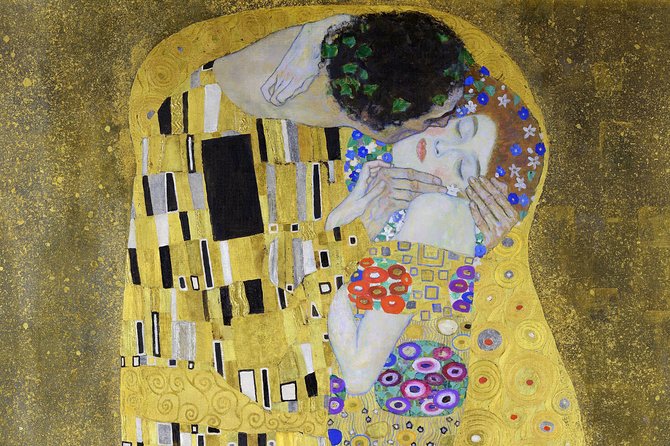
- Belvedere Gardens First: Gates, Perspective, and Klimt’s Kiss
- From Schwarzenbergplatz to Baroque Theater on the Street
- Otto Wagner at Karlsplatz: Art Nouveau You Can See in Motion
- Wiener Musikverein: Vienna’s Sound and the Great Hall
- Secession Building: Klimt’s Beethoven Frieze and Rebel Artist Energy
- Naschmarkt Snack Break for an Easy Lunch Plan
- Tickets, Admissions, and What You Need to Budget
- How the Guide Style Can Affect Your Experience
- Who Should Book This Klimt and Vienna Art Walk
- Should You Book It?
- FAQ
- How long is the tour?
- Is this a private tour?
- What group size is the tour for?
- What does the tour cost?
- What is included in the tour?
- Are admissions included?
- Where does pickup happen?
- What language is the tour offered in?
- Is public transportation included?
- Is cancellation free?
Key Things You’ll Like
- Skip-the-line at Belvedere so you can focus on Klimt instead of lines
- A fast route through Baroque, Otto Wagner Art Nouveau, and the Secession
- Klimt stops that matter, including the Kiss at Belvedere and the Beethoven Frieze at the Secession Building
- A practical city-walk format with pickup and on-the-ground context at major landmarks
- Naschmarkt timing for a snack or lunch break in a lively market area
Baroque to Secession, Vienna in One Tight Walk
Vienna can feel split into neat museum boxes if you visit one stop at a time. This tour stitches those eras together on foot, so Baroque drama, turn-of-the-century modern design, and Klimt’s signature style all feel like part of the same story.
You start by easing into the city’s grand visual language rather than jumping straight into artwork. Then you move through streets where the architecture itself acts like a lesson. It’s the kind of route where you look up at façades and then realize you’re not just sightseeing, you’re learning how Vienna’s style changed.
If your goal is Klimt with real context, this format helps a lot. You’re not just ticking off buildings. You’re building a mental map of how Vienna thought about beauty from the 1700s into the early 1900s.
More Guided Walks in Vienna
- Vienna: Guided Walking Tour of City Center Highlights
★ 4.7 · 4,989 reviews - Vienna: Vienna Central Cemetery Guided Walking Tour
★ 4.8 · 3,307 reviews - Vienna: Guided Walking Tour of City Highlights & Hidden Gems
★ 4.9 · 2,180 reviews - Vienna: Viennese Underworld Guided Walking Tour
★ 4.7 · 1,865 reviews
Pickup, Private Groups, and Why the Timing Works
This is a private experience for your group, up to 8 people. That matters, because you can keep a comfortable pace and ask questions without hearing your guide fight to be heard over other groups.
Pickup is offered at hotels and vacation rentals in town, at Reichsbruecke pier, or at major train stations like Vienna Hbf and Vienna West. If you hate wrangling metro tickets right before you start a sightseeing day, this is a nice way to begin.
Duration is about 4 hours, and the tour starts at 09:30 or 14:00. That schedule is built for half-day sightseeing. You get enough time to connect the dots between the Baroque and Art Nouveau stops without feeling like your entire day disappears.
One practical note: admissions are not included, so you’ll want to plan for the tickets you decide to buy. Belvedere and the Secession Building are the two key points where that shows up.
Belvedere Gardens First: Gates, Perspective, and Klimt’s Kiss
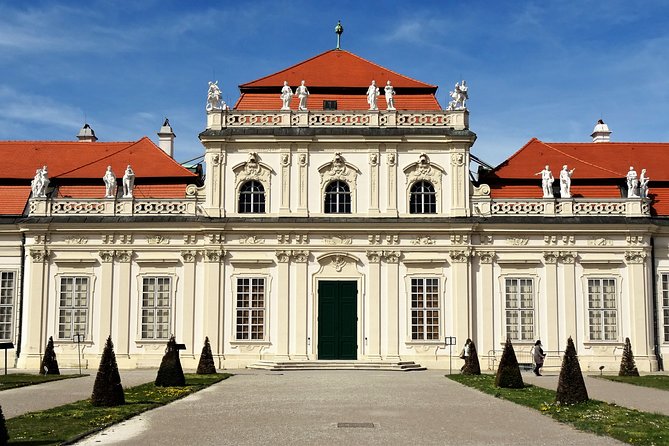
Belvedere is often the headline, but the approach is part of the magic. You begin at the wrought-iron gates, which open into the gardens like a formal invitation. It’s a strong start because the setting prepares you for the Baroque logic: symmetry, staging, and controlled sightlines.
A major value here is skip-the-line access at Belvedere. That helps a lot because Belvedere can get crowded, especially around the Klimt moment. You’re heading in with a guide who sets expectations, so when you reach Klimt’s Kiss, you know what you’re looking for and why it matters.
Inside, you focus on the Austrian Gallery area where Klimt’s Kiss is embedded. The tour also guides you through the Lower Belvedere portion, so you’re not just doing one quick photo and leaving. Instead, you get time to understand how the palace-and-garden design works as a whole.
The garden walk is not fluff. Your route includes an explanation of the gardens in layers, plus the idea of visual tricks. In plain terms, Baroque gardens are like outdoor theatre: they use perspective to make the space feel deeper, more monumental, and more intentional than it might look at first glance.
I also like the way your guide frames the palace connection to Versailles. Even though you’re in Vienna, the story helps you see how power and taste traveled across Europe, and how Vienna adapted that style into something distinctly its own.
Possible drawback to remember: the gardens and palace grounds mean some outdoor walking before you’re even inside. If weather is rough, bring a rain layer and accept that you’ll be outdoors for at least part of the early stretch.
From Schwarzenbergplatz to Baroque Theater on the Street
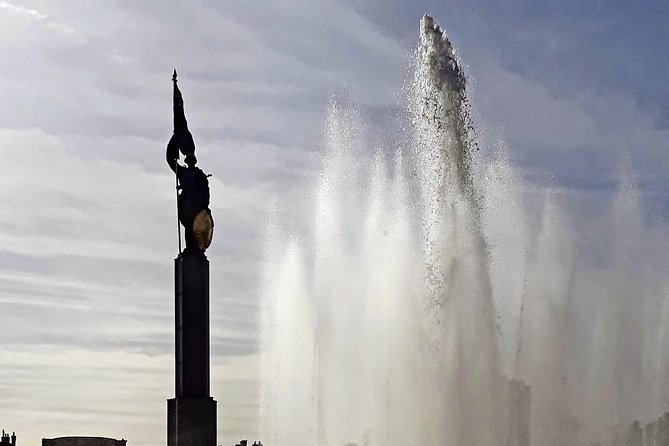
After Belvedere, you shift from palace gardens to the city’s wider visual stage. One stop you hit is Schwarzenbergplatz, with the Soviet Memorial dominating the square. The setting feels heavy in a different way than the Baroque palace does, but it’s still part of how Vienna tells its story in stone.
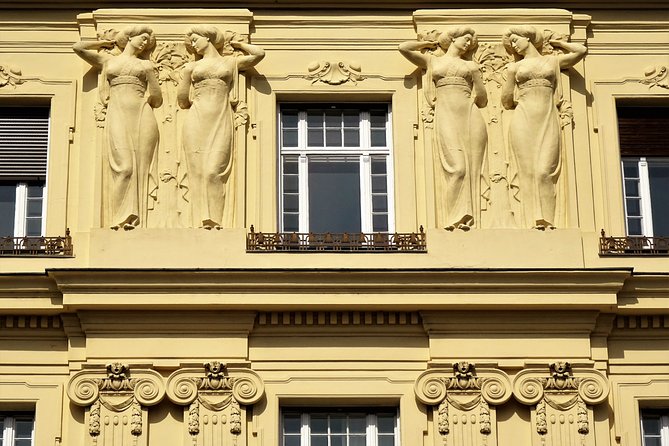
The surrounding buildings illustrate the boom period at the end of the 1800s, so you start seeing how the city modernized while still keeping older stylistic ideas visible nearby. It’s a good contrast moment because it prevents the day from becoming only about fine art.
Then you move toward a big, distance-impressive 1700s Baroque church. The point isn’t only that it is beautiful. It’s that it helps set the stage for Austria’s Baroque “best-of” era, the time when the city used grand architecture to signal importance and confidence.
If you like architecture, this part is where Vienna’s style stops being abstract. You start noticing the cues that make a building feel theatrical: how it frames the approach, how it draws your eye upward, and how it makes you slow down without asking.
More of Austria on foot, bell tower to bell tower:
Otto Wagner at Karlsplatz: Art Nouveau You Can See in Motion
Next comes a Vienna moment that feels almost like stepping into the future. At Karlsplatz, you see the Otto Wagner metro-station design, tied to the around-1900 period of Art Nouveau.
This stop is smart because it shows you that Art Nouveau was not only painting and posters. It was also engineering, planning, and everyday built space. You can stand there and look at the design choices, and then think about how those choices would have shaped daily commuting life.
It’s also a nice pacing shift. After Belvedere’s garden spectacle and the Baroque church’s grand statement, the Wagner station feels like Vienna thinking about modern movement. You’re watching the city evolve in real time.
If you enjoy design that blends function with style, this is one of the most satisfying “between big-ticket stops” moments.
Wiener Musikverein: Vienna’s Sound and the Great Hall
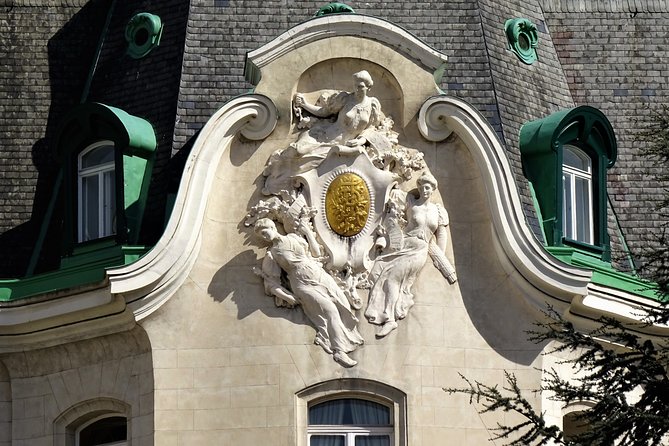
You also pass the Wiener Musikverein, home of the Vienna Philharmonic. The highlight here is the Großer Saal or Great Hall, known for acoustics and often considered one of the finest concert halls in the world.
Even if you are not attending a concert, this stop adds context that you might otherwise miss. Vienna’s art culture is not just visual. Music is central, and the city’s architecture often reflects that seriousness.
Think of it as a bridge. Klimt’s work belongs to a moment in Vienna when culture felt intense and highly connected to identity. Seeing the Musikverein helps you understand why the city’s creative output felt so self-confident at the turn of the century.
This is also a useful reset for your legs. You get a landmark moment without requiring a long museum commitment.
Secession Building: Klimt’s Beethoven Frieze and Rebel Artist Energy
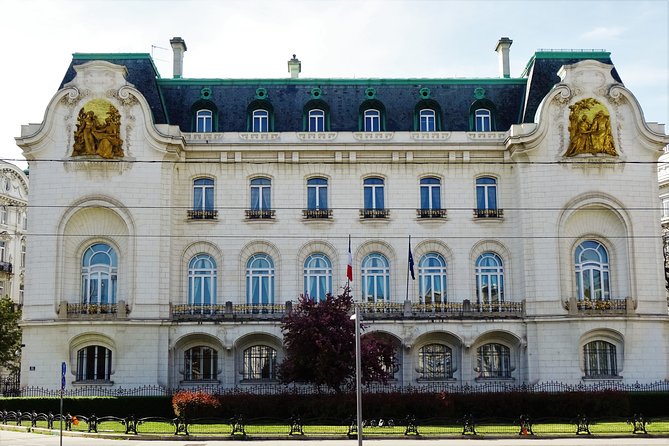
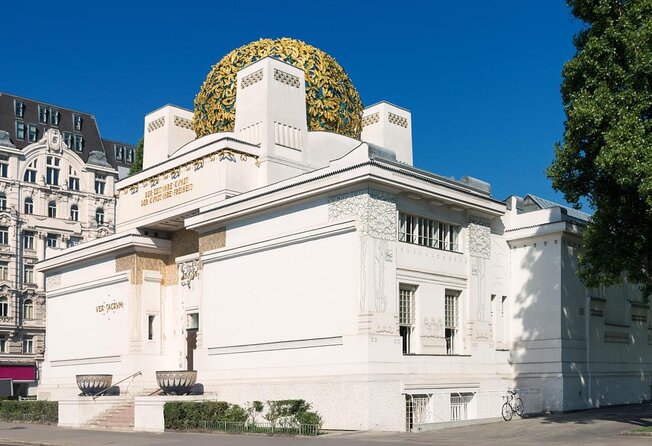
Then you reach the heart of the “Secession” part of the day. The Secession Building is described as an architectural manifesto for Art Nouveau, built by a group of rebel artists who broke away from a long-established art institution.
Klimt fits here in a big way. You learn about his Beethoven Frieze, created for an exhibition celebrating Beethoven. The frieze was painted directly on the walls using light materials, and it culminates in a gesture described as a kiss to the world.
What I like about this stop is how it frames Klimt as both artist and idea. You’re not just looking at a style. You’re seeing how a whole movement was pushing against what came before and trying to invent new visual rules.
A practical heads-up: Secession Building admissions are not included. That means you’ll either buy the entry ticket yourself or decide whether to focus on the parts you can access within the tour format.
If you’re a Klimt fan, this is the stop that turns the walk from pretty into memorable, because the frieze connects his artistic language to an entire ideology of artistic independence.
Naschmarkt Snack Break for an Easy Lunch Plan
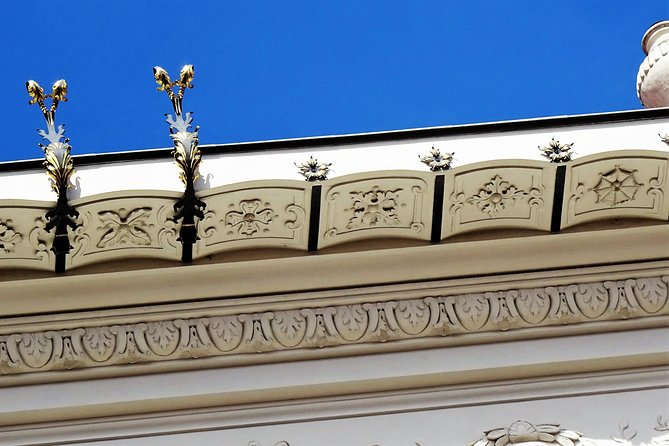
One reason this walk works well is the timing for food. You stop around the Naschmarkt, which in its current transitional form dates to 1915. It’s a mix of market life and international food energy.
This is the kind of place where you can switch gears without breaking the flow of the day. If you want an easy lunch or a late-afternoon snack, Naschmarkt is the practical answer, not a stressful sit-down reservation plan.
Because this is a walking tour, food timing matters. You’ll be happier if you plan something quick here rather than trying to hunt for lunch later when you’re tired.
Tickets, Admissions, and What You Need to Budget
Here’s the simplest planning rule: admissions are not included for the Upper Belvedere and Secession sites. The skip-the-line benefit helps with entry speed, but you still need to buy the relevant tickets.
So your total cost has two layers:
- the tour price per group (up to 8)
- plus any museum or building tickets you choose to purchase
That affects value. The tour is priced as a private group experience, so you’re paying for a guide, pickup, and skip-the-line help, not for all museum spending. If your group includes 4 to 8 people, the per-person value can be quite good compared to arranging multiple separate admissions and guide plans.
Also remember: the tour includes skip-the-line at Belvedere, which is one of the stops most likely to test your patience on your own.
How the Guide Style Can Affect Your Experience
The day is built around stories and visual connections. That’s why some visitors love it as a learn-while-you-walk experience, and why others might feel it leans more into explanation than into constant interaction.
The guide is a licensed Austria Guide, and I’ve seen the name Walter come up often. Based on what people say about him, expect an intelligent, story-forward approach, plus plenty of room for questions.
One caution for anyone with strong preferences: if you want a strictly neutral, no-opinion historical style, you might want to check with the operator beforehand. There has been at least one complaint about politically charged commentary and professionalism. I can’t predict how any specific tour will feel, but it’s worth flagging if that matters to you.
Pacing is another factor. Some people loved the rhythm as perfect, while others felt it ran slow. This tour is not a sprint, so pack patience. Moderate physical fitness is recommended.
Who Should Book This Klimt and Vienna Art Walk
This is a great fit if you:
- want Klimt plus the architectural story behind him
- like walking routes with multiple eras in one day
- prefer a private format where questions come naturally
- care about practical city context, not just the artworks on the wall
It may be less ideal if you:
- hate walking and prefer a purely indoor, museum-only day
- want admissions fully bundled into the price
- strongly prefer a guide who keeps political and historical commentary completely separated from interpretation
For photography, it’s also worth knowing you’ll be outside quite a bit. Wear comfortable shoes, and plan for light rain or cold depending on the season.
Should You Book It?
If your goal is to experience Klimt in a way that actually explains Vienna’s style shift, I’d book this. The combination of skip-the-line Belvedere access, a focused route through major landmarks, and the Secession stop gives you a coherent “from Baroque to Secession” arc without eating your whole day.
I would book it with one clear expectation: this is a guided walk where you spend time understanding what you see, not just racing through rooms. If that sounds like your kind of sightseeing, it’s excellent value for a private group up to 8, especially with pickup taken care of.
FAQ
How long is the tour?
The tour is about 4 hours.
Is this a private tour?
Yes. It is private, and only your group participates.
What group size is the tour for?
The price is per group for up to 8 people.
What does the tour cost?
The price is $372.47 per group.
What is included in the tour?
It includes live guiding by a licensed Austria Guide and skip-the-line access.
Are admissions included?
No. Admissions for Upper Belvedere and the Secession Building are not included.
Where does pickup happen?
Pickup is available at hotels and vacation rentals in town, Reichsbruecke pier, or train stations such as Vienna Hbf and Vienna West.
What language is the tour offered in?
The tour is offered in English.
Is public transportation included?
No. Public transportation is not included.
Is cancellation free?
Free cancellation is available. You can cancel up to 24 hours in advance for a full refund. If you cancel less than 24 hours before the start time, the amount paid is not refunded.
Just added to the bill for Vienna
Guided Walks in Vienna, compared.
Guided Walking Tour of City Center Highlights
Read our review →
Guided Walking Tour of City Highlights & Hidden Gems
Read our review →
Vienna Historic Center Small Group Walking Tour
Read our review →
Ghosts and Legends Guided Nighttime Walking Tour
Read our review →Browse the lists this tour appears in