REVIEW · PRIVATE
Private Tour of Beethoven’s Vienna – Retracing Original Venues with an Expert
Beethoven’s Vienna is still standing. This private, English-language tour traces the specific halls and houses tied to Beethoven’s debuts and major works, so you’re not just looking at plaques. I especially liked the chance to walk into spaces connected to Wellington’s Victory and the Eroica premiere, and I loved how the guide, Frank, could tune the story to your level as you go.
The main thing to weigh is time and weather. At 2 hours 30 minutes, you’ll be on your feet and moving between several sites, and the experience requires good weather, so plan with that in mind.
In This Review
- Key highlights you will care about
- Beethoven’s Vienna is best heard in real rooms
- Planning and logistics for a smooth 2.5-hour private tour
- Where the “private” part pays off
- Stop 1: Akademie der Wissenschaften and the acoustics behind Wellington’s Victory
- Stop 2: Pasqualatihaus, where Beethoven lived for 8 years
- Stop 3: Theatermuseum and the Eroica Hall in the Lobkowitzpalais
- Stop 4: Theater an der Wien and Beethoven’s opera years
- Why having Frank, a true Beethoven expert, changes the whole tour
- The tour’s off-the-path effect
- Value for money: is $229.87 per person worth it?
- Who should book this Beethoven Vienna private tour?
- Should you book this tour or choose a different Beethoven plan?
- FAQ
- What is the duration of the private Beethoven tour in Vienna?
- How much does the tour cost per person?
- Is the tour private or a group tour?
- What language is the tour offered in?
- Where do we meet, and when does the tour end?
- Which stops include admission tickets?
- Is weather a factor for this experience?
Key highlights you will care about
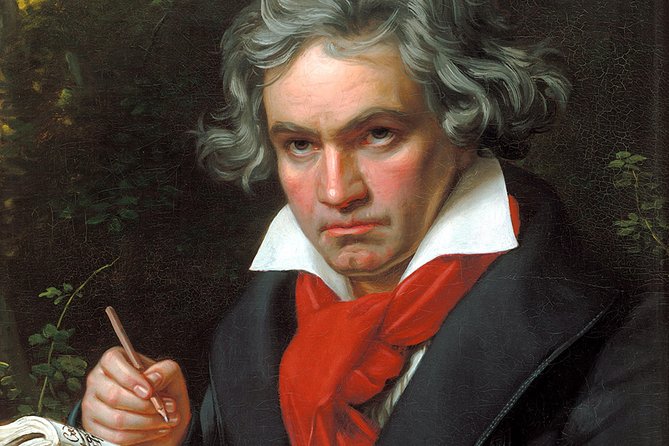
- Original-venue focus: you spend time where Beethoven conducted or premiered music, not just where he is commemorated
- Wellington’s Victory in the Akademie der Wissenschaften: a venue built for strong acoustics around 1800
- Pasqualatihaus connections: Beethoven lived here for 8 years, including work on Fidelio and later symphonies
- Eroica Room in the Lobkowitzpalais: a special, often-not-open-to-the-public space tied to the Eroica
- Theater an der Wien link: Beethoven lived there while working on an opera thread that fits the whole story
- Private pacing: the guide can slow down for details or move faster if you want the quick version
Beethoven’s Vienna is best heard in real rooms
If you love classical music, Vienna can feel like a museum of ideas. This tour helps you turn ideas back into sound. You’re moving through specific places where performances happened around 1800, when Beethoven was still proving himself and composers and patrons treated rooms like instruments.
Two themes run through the walk: how rooms shaped music, and how Beethoven’s work followed his life from house to house and theater to theater. When you learn that a particular space helped a performance land, it changes how you picture the piece. The tour also brings in the practical side of music-making at the time, including the big cast of musical celebrities involved in major works.
Held over another night in Vienna
- Vienna: Vivaldi’s Four Seasons Concert in Karlskirche
★ 4.7 · 14,951 reviews - Vienna: Spanish Riding School Training
★ 3.9 · 9,281 reviews - Vienna: Schönbrunn Palace & Gardens Skip-the-Line Tour
★ 4.7 · 7,739 reviews - Vienna: Light of Creation Votive Church Immersive Light Show
★ 4.8 · 6,779 reviews
Planning and logistics for a smooth 2.5-hour private tour
This is a private tour, meaning it is only your group with an expert guide. That matters here because the tour leans on interpretation. You’re not just reading dates, you’re connecting places to the works Beethoven wrote, revised, and performed.
Here’s the practical snapshot:
- Duration: about 2 hours 30 minutes
- Price: $229.87 per person
- Language: English
- Delivery method: mobile ticket
- Fitness level: moderate physical fitness, since you’ll be walking between venues
- Weather note: the experience requires good weather
- Meeting point: Aula of Sciences, Wollzeile 27A, 1010 Wien
- End point: ends in a different location (you’ll get the details for where it finishes)
You’ll also see that this is not a last-minute gamble. It is typically booked around 24 days in advance on average, so if your travel dates are fixed, it’s smart to reserve early.
Where the “private” part pays off
In Vienna, many “themed” tours quickly become a fast shuffle. Here, private pacing helps you actually absorb what you’re seeing. If you’re a casual Beethoven fan, you can get the storyline without getting lost. If you’ve studied movements and dates, you can ask targeted questions and go deeper on why a room mattered or how premieres worked.
Stop 1: Akademie der Wissenschaften and the acoustics behind Wellington’s Victory
The first stop sets the tone because it’s about how a venue behaves. The Akademie der Wissenschaften is the former assembly hall of the University of Vienna, now used as a ballroom for the Austrian Academy of Sciences. Around 1800, it was a key concert hall, and Beethoven himself conducted Wellington’s Victory here in 1813.
What I like about starting here is that the connection is both direct and specific. You’re not told Beethoven visited. You’re told he conducted a particular work in that space. And the story goes further: Wellington’s Victory was composed to celebrate a decisive victory over Napoleon, and the role of the hall’s acoustics was big enough that it required many of the musical celebrities available at the time.
The details are the fun part. You learn about musicians such as Louis Spohr, Johann Nepomuk Hummel, Giacomo Meyerbeer, and Antonio Salieri linked to the orchestra. That kind of lineup helps you understand why Vienna felt like a high-stakes crossroads for composers.
Possible drawback: the first stop is also the one where you may be most tempted to rush the facts. Don’t. Give yourself a minute to picture how a hall like this would handle choral and orchestral balances, then let the guide connect that feeling back to the music.
After the interval, more from Vienna:

Stop 2: Pasqualatihaus, where Beethoven lived for 8 years
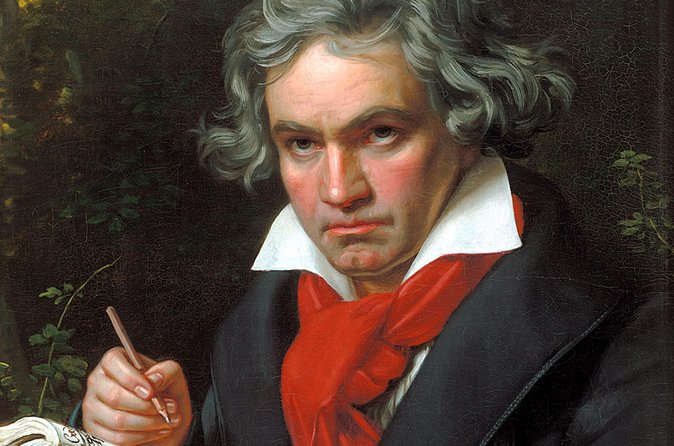
Next comes the home link, and it’s a strong one. At Wien Museum Beethoven Pasqualatihaus, you’re at the Ludwig van Beethoven house where he lived for 8 years. That’s already compelling, because living in a place changes your pace of work, your routine, and your circle of visitors.
From this site, the tour connects several major works:
- the opera Fidelio
- the 5th and 6th symphonies
- the piano piece Für Elise
Even though the stop itself is 30 minutes, it doesn’t feel like a “quick photo moment.” You get enough time to turn the house into a timeline. You can think about what it means that Beethoven wrote work with huge public impact while also doing the daily labor of composing and revising from home.
Why this stop hits: it ties the big public Beethoven you hear on concert programs to a private environment. You start to see how a composer’s output is not just about inspiration, it’s about sustained work in real rooms.
Practical note: admission here is included, so you’re not dealing with extra ticket juggling mid-tour.
Stop 3: Theatermuseum and the Eroica Hall in the Lobkowitzpalais
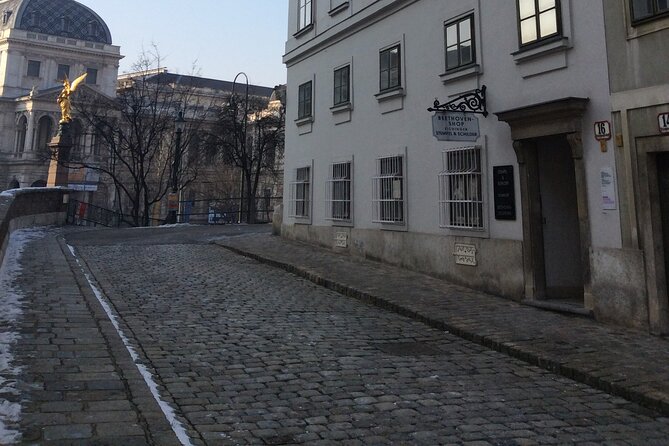
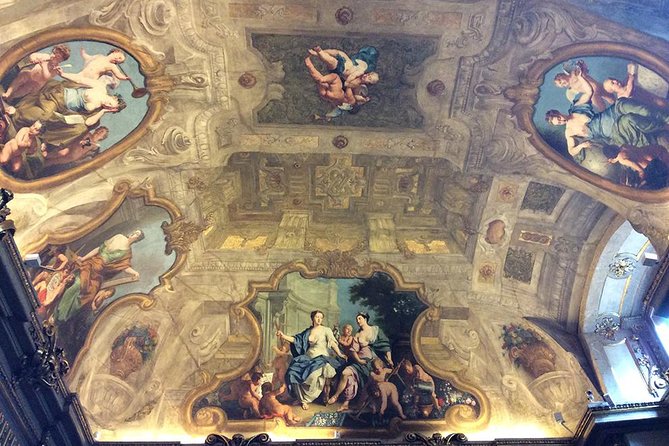
The third stop is where the tour’s name starts to feel earned. You’ll visit the Theatermuseum, located in the Lobkowitzpalais, where the sumptuous Eroica Hall sits. This is connected to the Eroica premiere in 1804.
Here’s the key date story: the private premiere of Beethoven’s Eroica happened in 1804, and you’re given a sense of how special a private premiere could be compared with later public performance. Your guide explains that it was first conducted privately on 9 June 1804, and later had its first public performance on 7 April 1805.
What makes this stop extra memorable is what can happen when the guide has the right access. In one account, Frank obtained a special, private entrance into a space that is not generally open to the public, tied to what is now called the Eroica Room. The tour framed it with a concrete visual detail: a small room where the ceiling is visible in photos, linked to the first private performance.
Even if you do not get the exact same access experience, you still get the core value: you’re in the orbit of where the Eroica mattered most at the moment it arrived.
A small consideration: this stop lasts about 40 minutes, and it often carries a lot of story. If you prefer lots of quiet looking, tell your guide. Private tours are flexible, and Frank’s strength is tailoring the explanation pace.
Stop 4: Theater an der Wien and Beethoven’s opera years
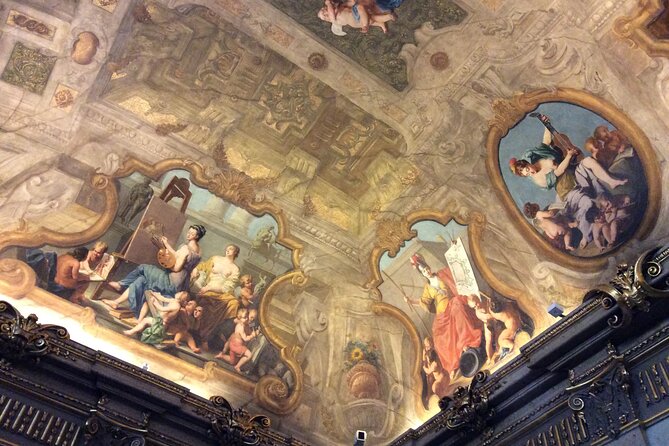
The last venue link brings you to Theater an der Wien. This is the place tied to Beethoven living here for some time around 1803 and 1804 while composing his opera.
It’s a smart final stop because it closes a loop. Earlier, the story centered on orchestral power and a famous home base. Here, you reconnect with the theatrical world. Opera is not a side project in Beethoven’s career, and the tour helps you see how his work moved between music forms.
This stop is about 30 minutes, and admission is free for this specific visit. Even with the shorter time, the payoff is the sense of continuity. You finish with the feeling that Beethoven was not only writing symphonies but also living inside the networks that made opera possible.
What you might look for during this stop: your guide can point out how theaters and their audiences shaped what Beethoven chose to write next. That kind of thinking turns Vienna into a system, not a set of random sites.
Why having Frank, a true Beethoven expert, changes the whole tour
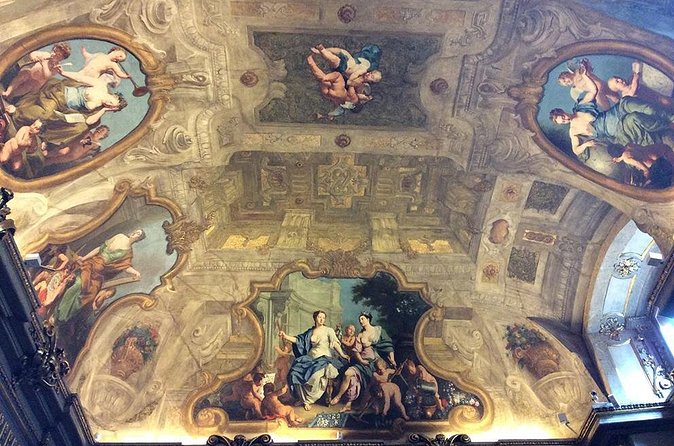
The single biggest praised aspect is the guide. Frank is described as a profound Beethoven expert, and that shows in how the tour feels. You’re not just receiving a script. You can ask questions, and the answers are not generic trivia.
One of the best parts, based on how people describe the experience, is that you can talk for a long while after the tour because the conversation is not limited to your walking time. That is a sign of someone who knows how to connect Beethoven’s works to the physical spaces where they mattered.
In a private setting, that also means pacing becomes personal. If you’re the kind of traveler who wants context, you’ll get it. If you want names, dates, and direct connections, you’ll get those too.
The tour’s off-the-path effect
This is not the standard “Beethoven-themed highlights” route. The venues connect to premieres and less obvious performance spaces. You even learn about theaters or iconic places that no longer exist in their original form, and the guide helps you place those disappearances into the story of what Vienna was like.
That alone is worth something. Vienna has countless commemorations, but the ones that truly stick are the ones tied to rooms where music happened.
Value for money: is $229.87 per person worth it?
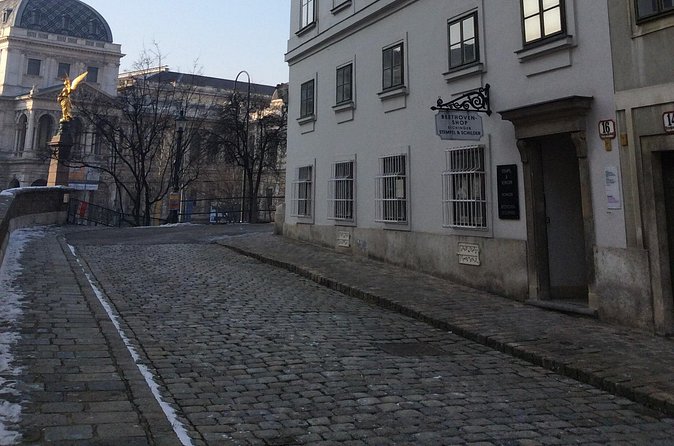
Let’s talk value without pretending it’s cheap. At $229.87 per person, this is a premium tour. You should decide if you’re buying:
- Access and expertise, not just sightseeing
- Original venue storytelling, not a general Beethoven overview
- Private guide attention, where you can ask questions and set your pace
That combination can make sense for a serious music fan, or for anyone who feels disappointed by tours that rush. You also get a mix of free and included admissions, which reduces friction. The key stops include:
- Admission ticket free at the Akademie der Wissenschaften
- Admission ticket included at Wien Museum Beethoven Pasqualatihaus and Theatermuseum
- Admission ticket free at Theater an der Wien
And you should factor in that you’re spending your limited time in Vienna on a tight arc of 2 hours 30 minutes. If you’re visiting just a few neighborhoods, spending that time wisely matters.
My take: if Beethoven is a core part of your trip, this offers strong value because it links specific works to real rooms. If Beethoven is a casual interest, you might feel it is more focused than you need.
Who should book this Beethoven Vienna private tour?
I think this experience is a great match for:
- Beethoven fans who want to hear the story through venues, not just biographies
- visitors who love details like premiere dates and why acoustics mattered
- travelers who prefer private, paced explanations over fast group narration
- anyone comfortable with moderate walking and a weather-dependent schedule
It may be less ideal if:
- you want a long, relaxed museum-style visit with lots of independent time
- you hate structured itineraries or prefer purely outdoor wandering
- you’re traveling with very limited mobility, since the tour assumes moderate fitness
Also, this is in English, so if you need another language, you’d want to double-check language options before booking.
Should you book this tour or choose a different Beethoven plan?
If you’re deciding between another Beethoven experience and this one, I’d make the call based on one question: do you want Beethoven tied to places where music was actually performed, including premieres?
If yes, booking makes sense. This tour delivers exactly that through stops like the Akademie der Wissenschaften, the Pasqualatihaus, the Eroica Hall in the Lobkowitzpalais, and Theater an der Wien. The private format keeps it from feeling like a checkbox list, and the guide’s expertise is clearly the heart of why people remember it.
If you want a broader, more casual Vienna walk, then this might feel too concentrated. But for a high-quality, music-forward afternoon in Vienna, I’d strongly consider reserving it, especially since it’s booked well in advance on average.
FAQ
What is the duration of the private Beethoven tour in Vienna?
It runs for about 2 hours 30 minutes.
How much does the tour cost per person?
The price is $229.87 per person.
Is the tour private or a group tour?
It is a private tour/activity, so only your group participates.
What language is the tour offered in?
The tour is offered in English.
Where do we meet, and when does the tour end?
You meet at the Aula of Sciences, Wollzeile 27A, 1010 Wien, Austria. The activity ends in a different location, with the end details provided.
Which stops include admission tickets?
Admission ticket details vary by stop: Akademie der Wissenschaften is ticket free, Wien Museum Beethoven Pasqualatihaus includes admission, Theatermuseum includes admission, and Theater an der Wien is ticket free.
Is weather a factor for this experience?
Yes. The experience requires good weather, and if it is canceled due to poor weather, you will be offered a different date or a full refund.
Just added to the bill for Vienna

Private, compared.

Wine Tasting Experience in a Private Wine Cellar
Read our review →
Private Day Tour Trip Salzburg Hallstatt and Melk from Vienna
Read our review →
Private Day Tour of Hallstatt and Salzburg from Vienna
Read our review →
Private Hidden Vienna Walk — Stories Behind Quiet Corners
Read our review →