
REVIEW · GUIDED WALKS IN VIENNA
Vienna at First Glance a Private Walking Tour for First Timers
Vienna makes first-time sense in three hours. This private walking tour strings together Belvedere Hill views, the Ringstrasse Golden Mile, and Vienna’s cathedral heart, with a guide meeting you at your doorstep and helping you ride the city efficiently. I especially like the doorstep pickup, and I love the easy pacing that still covers the major sights most first-timers want.
The trade-off is that almost everything is an outside orientation, with quick stops for photos and story time. If you want to spend real time inside palaces or museums, plan to pair this with separate tickets, because the focus here is on seeing and understanding the layout of central Vienna.
In This Review
- Key Highlights at a Glance
- How This Doorstep-First Tour Gets You Oriented Fast
- Price and Group Size: What $344.67 Actually Buys
- Getting Around Like a Local Without Feeling Lost
- Belvedere Hill to Stephansdom: The Tight Route That Makes Vienna Click
- Stop 1: Upper Belvedere Palace and the Skyline on Belvedere Hill
- Stop 2: Ringstrasse and the Imperial Golden Mile
- Stop 3: Rathausplatz, City Hall Energy, and Café Landtmann
- Stop 4: Austrian Parliament and 19th-Century Historicism
- Stop 5: Volksgarten and Theseus Temple
- Stop 6: Heldenplatz, Equestrian Statues, and the 1938 Balcony Site
- Stop 7: Hofburg and 650 Years of Continuity
- Stop 8: Goldenes Quartier Vienna and the Schwarze Kameel
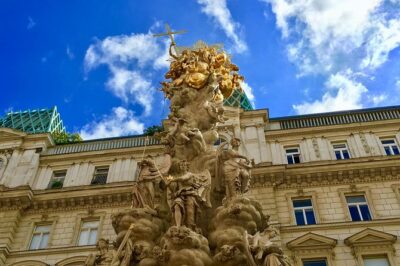
- Stop 9: Graben and Kohlmarkt, Plague Column Symbolism
- Stop 10: Stephansdom and How to Read Stone
- Guide Style Matters More Than You Think
- When This Tour Is a Great Fit, and When It Might Not
- Should You Book Vienna at First Glance?
- FAQ
- Is this a private tour?
- How long is Vienna at First Glance?
- Where does pickup happen?
- What language is the tour offered in?
- Is public transportation included?
- Is admission to Stephansdom included?
Key Highlights at a Glance
- Doorstep start in your hotel or home, plus a listed pier meeting option (Handelskai 265)
- Private group up to 10, so the guide can slow down or speed up to match your pace
- Imperial-to-Art Nouveau context, tied directly to what you see along the Ringstrasse and Hofburg area
- Belvedere Hill panorama, one of the fastest ways to get the Vienna skyline in your head
- Stephansdom handoff, where the guide explains what to look for and then lets you explore inside on your own
- Public-transport confidence, with help that makes the rest of your stay feel more independent
How This Doorstep-First Tour Gets You Oriented Fast
Vienna can feel like several cities layered on top of each other, especially when you first arrive. This tour is designed to give you the big map in your mind early, so later walks feel guided by logic, not luck.
What makes the experience work is that you do not spend your first hours hunting down a meeting point. You start right at your hotel or vacation home, and if you are staying near the city pier, there is also a specific meeting spot listed at Handelskai 265. Then your guide shapes the route with a mix of walking and short public-transport moves, so you stay moving without turning it into a marathon.
You will also get a history thread that connects architecture to politics and culture. Instead of random facts, the guide explains why certain buildings matter, how the imperial era shaped the city, and how later movements changed the mood of what you see.
More Guided Walks in Vienna
- Vienna: Guided Walking Tour of City Center Highlights
★ 4.7 · 4,989 reviews - Vienna: Vienna Central Cemetery Guided Walking Tour
★ 4.8 · 3,307 reviews - Vienna: Guided Walking Tour of City Highlights & Hidden Gems
★ 4.9 · 2,180 reviews - Vienna: Viennese Underworld Guided Walking Tour
★ 4.7 · 1,865 reviews
Price and Group Size: What $344.67 Actually Buys
The tour price is listed as $344.67 per group for up to 10 people. That can sound steep until you do the simple math for your situation.
If you are traveling as two or four people, private guiding is still usually the value play compared with paying separately for multiple tickets to get that same “first-timer orientation” feel. If you have a small family or a group of friends, the per-person cost drops quickly because you share the same guide and route.
You are also buying time. Three hours is long enough to connect the dots across central Vienna, but short enough that you can still plan a museum stop or a long dinner later. The fact that the tour is offered in English, and that guides are pros at setting expectations for first-timers, is part of what you are paying for.
One more value detail: you are not just getting a route, you are getting guidance on how to keep exploring after. Several guides are praised for practical tips on moving around and where to eat, so the tour often turns into a springboard for the rest of your trip.
Getting Around Like a Local Without Feeling Lost
This is a walking tour, but it is not a walk-only tour. Your route includes a scenic ride along Ringstrasse, and the experience is built around Vienna’s efficient public transportation.
Here is the practical benefit: once you understand how the guide thinks about directions and timing, you stop relying on tour-bus shortcuts. You will be able to repeat the same approach on your own later, which is exactly what you want in a city that is best experienced on foot.
Guides in the team get singled out for helping first-timers build confidence fast. For example, Sabine is mentioned for showing how to use trains, while other guides are praised for using maps and making sure you know what lines to take for your next stop. That kind of coaching matters because it turns a one-day highlight into real skills.
Belvedere Hill to Stephansdom: The Tight Route That Makes Vienna Click
This walk is built as a sequence of “meaningful views.” Each stop is short, but the guide uses each one to teach you how Vienna grew, what different eras were trying to project, and where to look for the hidden symbols.
Most of the listed stops are marked as admission ticket free, meaning you are viewing and learning from the city’s public realm rather than paying to go inside. The exception is the cathedral interior, where you explore on your own.
More of Austria on foot, bell tower to bell tower:
Stop 1: Upper Belvedere Palace and the Skyline on Belvedere Hill
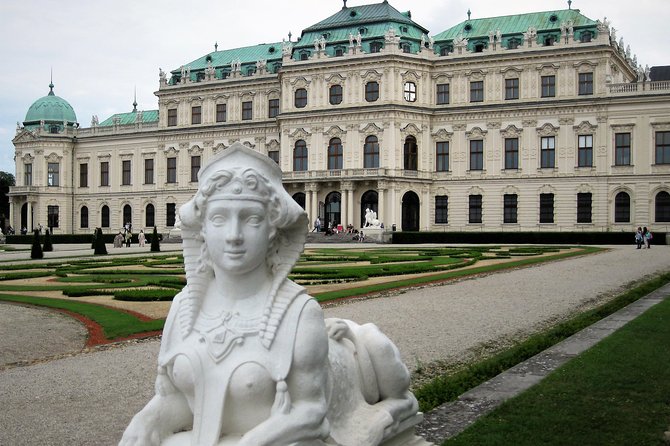
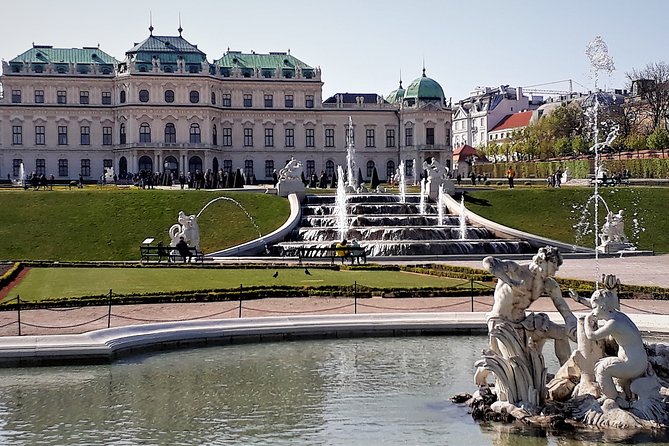
Your tour opens with one of Vienna’s best fast wins: the panorama from Belvedere Hill. Even if you have never studied Baroque art, this view helps you grasp how the city laid out its most important spaces.
The guide explains the palace ensemble’s influence on the skyline, and it is a useful mental anchor for the rest of the day. You will understand why certain areas feel like centers of power rather than random streets.
Because the time at this stop is listed as about 20 minutes, it is ideal for photos and orientation, not for a long museum-style visit.
Stop 2: Ringstrasse and the Imperial Golden Mile
Next comes a scenic ride along Ringstrasse, often called Vienna’s Golden Mile of imperial architecture. You get to see a sequence of landmarks in a short stretch of time, including the Vienna State Opera, the Museum Quarter, Parliament, and the Soviet Monument.
This is where the history thread becomes visible. The buildings along Ringstrasse are not just pretty façades. They reflect the ambitions of a city that wanted to show cultural authority, political identity, and modern European status.
You might find this segment especially helpful if you struggle to connect street names to major monuments. Ringstrasse does that work for you.
Stop 3: Rathausplatz, City Hall Energy, and Café Landtmann
At Rathausplatz, you are surrounded by big civic institutions: City Hall, the University, Burgtheater, and Café Landtmann. This is a lively square even when nothing special is happening.
Seasonal highlights can include Vienna’s largest Christmas Market, and there is also mention of a Film and Food Festival in summer. Even if you are not visiting during peak season, this stop gives you the sense of Vienna as a city where culture happens in public spaces.
The listed time is around 15 minutes, so come ready to look quickly, then listen for the stories that explain what you are seeing.
Stop 4: Austrian Parliament and 19th-Century Historicism
Then you step into the world of 19th-century historicism with the Austrian Parliament building. This is one of those moments where you start noticing stylistic choices as political signals.
A short stop works here because the value is interpretation: your guide points out what makes the building stand out and why that mattered at the time.
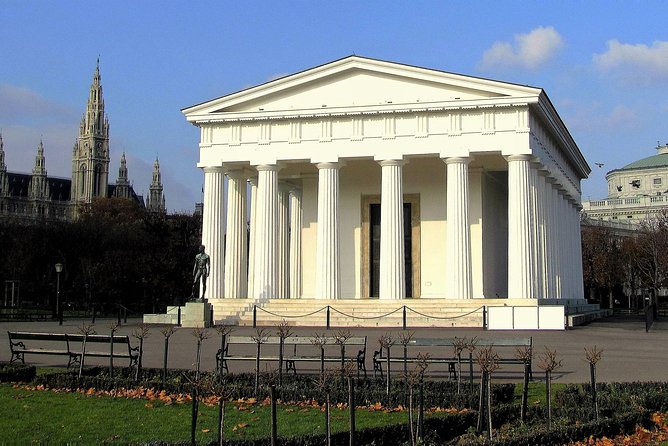
Stop 5: Volksgarten and Theseus Temple
Volksgarten is a more delicate counterpoint to the grand civic buildings. You see the Theseus Temple and the garden’s elegant layout.
This pause matters because it breaks the “monuments only” feeling and gives you a calmer sense of scale. It also helps you understand Vienna’s talent for balancing spectacle with planned green space.
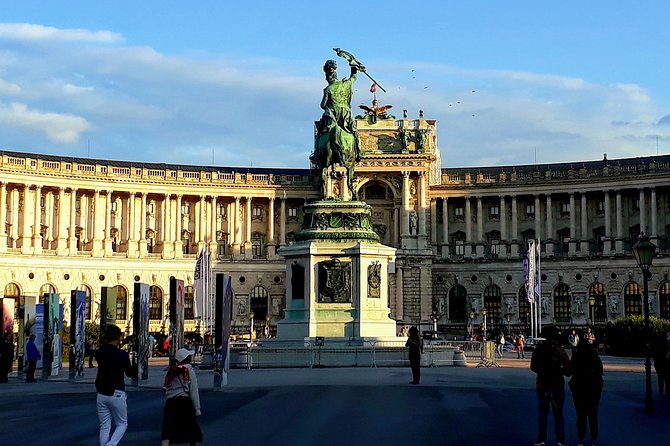
Stop 6: Heldenplatz, Equestrian Statues, and the 1938 Balcony Site
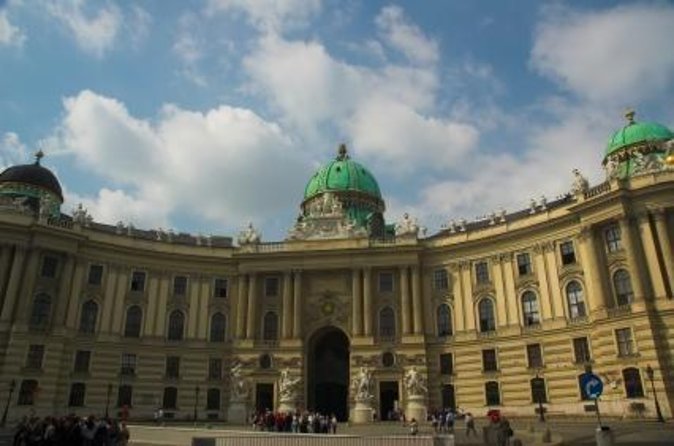
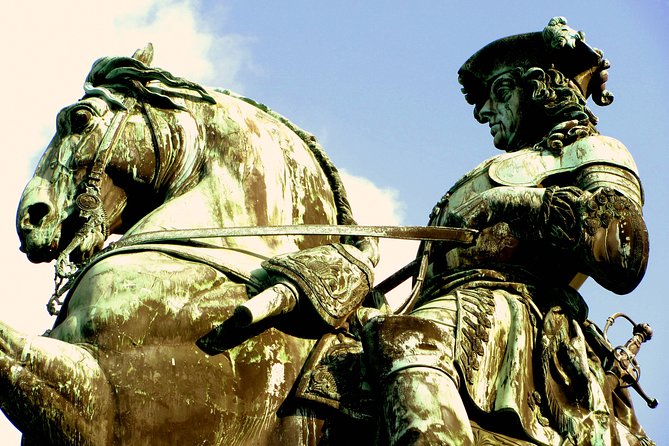
Heldenplatz brings you back to power and memory. The newest Hofburg wing frames the view, and you will notice the two monumental equestrian statues.
This is also where the guide focuses on a darker piece of history, including the site of the infamous 1938 balcony. That context adds weight to what can otherwise feel like just another grand square.
If you prefer your history with clear signposts, this stop is often one of the most memorable parts of the day.
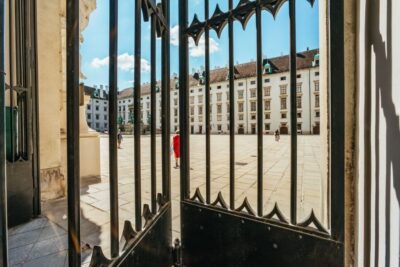
Stop 7: Hofburg and 650 Years of Continuity
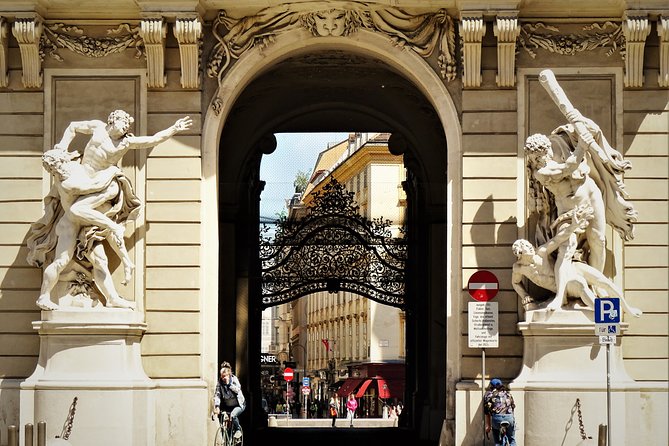
From Heldenplatz you move into Hofburg territory, with a walk that connects 650 years of Habsburg history. The tour description notes that only the Vatican has more continuity, and that comparison gives you a sense of how long Vienna’s center of power has been anchored here.
This stop is about understanding the endurance of the seat of power. You are not expected to absorb a textbook in 20 minutes, but the guide should leave you able to recognize what is old, what is reform-era, and what feels like it belongs to a later reshaping of identity.
Stop 8: Goldenes Quartier Vienna and the Schwarze Kameel
Next is a contrast: the Goldenes Quartier Vienna, a luxury district where you will also hear about the historic Schwarze Kameel, described as a beloved local meeting spot since the early 1900s.
This is a fun moment because it shifts from palaces and politics to daily culture. You begin to see Vienna as a place where tradition and modern branding exist in the same neighborhood, and where old meeting places still matter.
The stop is brief, around 10 minutes, but it helps you picture where locals might actually linger.
Stop 9: Graben and Kohlmarkt, Plague Column Symbolism
Graben and Kohlmarkt are prestigious pedestrian streets linking Hofburg and St. Stephen’s Cathedral. You get a sense of Vienna’s shopping streets as part of the city’s story, not just retail corridors.
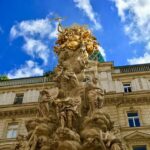
One highlight here is the Plague Column and its Baroque symbolism. This is the kind of detail that makes Vienna feel “readable” once you know what you are looking for, which the guide may reference again later at the cathedral.
Time at this stop is listed at about 20 minutes, giving you room to absorb the visuals and the meaning behind them.
Stop 10: Stephansdom and How to Read Stone
The grand finale is Stephansdom, Vienna’s spiritual heart. The guide explains how to read the cathedral’s messages and stories hidden in stone.
Then you get a clean handoff: the guide leaves you at the cathedral, and you explore the interior on your own. Cathedral admission is not included.
This setup is smart. If you have limited time, you still get a guided understanding of what you are about to see. Then you spend your paid time where it counts, inside the cathedral, without feeling rushed.
Practical tip: wear shoes you can stand in, because if you want to really look, Stephansdom rewards patience.
Guide Style Matters More Than You Think
This tour stands or falls on the guide, and the feedback for this one is consistently about how well guides connect with different interests.
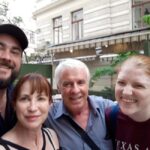
Sabine is repeatedly praised for making Vienna feel accessible for first-timers, including helping with metro and tram use so people feel comfortable for the rest of their trip. Walter comes up often for humor and an easy, patient delivery that keeps history understandable without feeling like a lecture.
Brigitte is another name that pops up for warm, engaging guiding, plus clear pacing that never feels rushed. Alexander is mentioned for tailoring to specific interests and keeping the duration feeling just right.
What I would watch for, based on how the tour is built, is whether you want mostly outside sightseeing. One review suggests that an improvement would be to actually go inside some spots you only pass. The tour design here is intentionally compact and outward-facing, so be sure you are buying the kind of experience that prioritizes orientation and big-picture stories.
When This Tour Is a Great Fit, and When It Might Not
This works best when you are a first-timer who wants to see the major sites without overscheduling. Three hours is the sweet spot for getting oriented, learning what to look for, and leaving with a plan for what to do next.
It also suits travelers who like their history with humor and structure. Several guides are described as funny while still informative, which is a nice match for people who do not want to slog through facts.
It might not be the best choice if your top goal is interior visits. Since most stops are marked as admission ticket free and the cathedral interior is on your own time, you will likely want to add a separate palace or museum visit later.
The physical effort is rated as moderate. So I recommend this when you can handle an urban walk across varied pavement, and you do not need long rests between stops.
Should You Book Vienna at First Glance?
Book it if you want a confident first impression of Vienna, fast. The doorstep pickup, the focused route, and the way guides explain what you are seeing make this a practical orientation tool, not just a sightseeing loop. It is also a strong choice for mixed groups, including families, because guides can adjust pace and handle questions on the fly.
Skip it, or pair it with something interior-heavy, if you already know you want museum time and palaces on this same half day. This tour is built for looking, learning, and getting your bearings, especially around the Belvedere, Ringstrasse, Hofburg, and Stephansdom axis.
FAQ
Is this a private tour?
Yes. It is a private tour/activity, and only your group participates.
How long is Vienna at First Glance?
The duration is about 3 hours.
Where does pickup happen?
Pickup is offered at your hotel or vacation home in town, and also at the city pier meeting point at Handelskai 265. Other meeting points can be arranged.
What language is the tour offered in?
The tour is offered in English.
Is public transportation included?
Public transportation is not listed as included where useful. The tour does use efficient city transit, but you should expect to handle transit as needed.
Is admission to Stephansdom included?
No. The guide leaves you at Stephansdom so you can explore the interior on your own, and cathedral admission is not included.
Just added to the bill for Vienna

Guided Walks in Vienna, compared.
Guided Walking Tour of City Center Highlights
Read our review →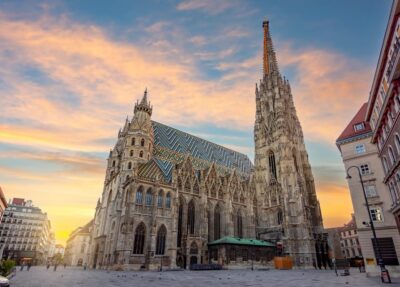
Guided Walking Tour of City Highlights & Hidden Gems
Read our review →
Vienna Historic Center Small Group Walking Tour
Read our review →
Ghosts and Legends Guided Nighttime Walking Tour
Read our review →Browse the lists this tour appears in