
REVIEW · GUIDED WALKS IN VIENNA
Private Vienna Art Nouveau Walking Tour
Art Nouveau in Vienna looks different when you chase it station by station. This private 3-hour walk links Vienna Secession and Jugendstil to the city’s everyday spaces, with an expert guide keeping the story clear and human. I especially like how you move at a walkable pace between major design stops, instead of bouncing between far-apart sights.
My favorite part is the pairing of big-name works with the lesser-known building details: you get Klimt’s Beethoven Frieze at the Secession Building, then you roll straight into Otto Wagner’s station architecture. One more plus is that the tour stays flexible because it is private, so you can ask questions and shape the stops around your interests.
One possible drawback: key interiors are not included in the price. You will need to plan for entrance fees, and one highlight, the Otto Wagner Pavillon visit, depends on seasonal opening months.
In This Review
- Key things that make this Art Nouveau walk worth your time
- Art Nouveau by Metro, not by Museum Ticket
- The Secession Building and Klimt’s Beethoven Frieze
- Practical tip for this stop
- Stadtpark, a calmer pause along the route
- Karlsplatz station: where Jugendstil shows up in everyday transit
- Why this stop matters
- Otto Wagner Pavillon Karlsplatz: the seasonal interior option
- My take on the value
- Postsparkasse: postal savings bank design as serious architecture
- Naschmarkt for local color between architectural stops
- Apartment houses and the ornamental Vienna you might miss
- How to get the most from these facades
- Finishing at paired metro stations and the stop made for the Emperor
- Guide quality is the secret ingredient
- Price and value for a private group up to 10
- Timing matters: admissions and the Otto Wagner Pavillon window
- Who this tour is best for
- Should you book the Vienna Art Nouveau private walking tour?
- FAQ
- How long is the private Vienna Art Nouveau walking tour?
- What is the price, and how many people can be in a group?
- Is this a private tour?
- Where do we meet, and where does the tour end?
- Is hotel pickup included?
- Is the tour ticket delivered digitally?
- Do I need to pay entrance fees for the Secession Building?
- How much is the admission to see the Beethoven Frieze at the Secession House?
- Is the Otto Wagner Pavillon visit included year-round?
- Is food and drinks included?
Key things that make this Art Nouveau walk worth your time
- A true private format: just your group, so you can move faster through what bores you and linger where you care.
- Metro stations as architecture set pieces: you learn how Vienna’s transit buildings became design statements.
- Klimt at the Secession Building: the Beethoven Frieze is the kind of stop that instantly changes how you see the movement.
- Otto Wagner on multiple fronts: Karlsplatz station area, the Karlsplatz pavillon, and the postal savings bank building are all about his modernist vision.
- Nice bonus breaks: Stadtpark and Naschmarkt give you fresh air and a real slice of local life between design-heavy moments.
- Guides who explain without talking down: named guides like Barbara, Wolfgang, and Annelie were praised for clear context and answering varied questions.
Art Nouveau by Metro, not by Museum Ticket
Vienna does Art Nouveau in a very specific way. It is not just fancy facades. It is a whole design approach that shows up in public buildings, transit spaces, and carefully planned streetscapes. That is why this tour format works: you do not treat architecture like an indoor-only activity.
You start at Operngasse 7, right by the action, then you walk a loop of stops that are tied together by the story of Jugendstil and Vienna Secession. Because it is private, your guide can adjust the pace. If you want more building details, you get them. If you want more explanation of the movement, you get that too.
The tour lasts about 3 hours, which is long enough to feel like a proper mini-course, but short enough that you are not stuck all afternoon on your feet. Still, it is a walking tour, so bring sensible shoes. The schedule includes time for both outside viewing and interior access where admission applies.
More Guided Walks in Vienna
- Vienna: Guided Walking Tour of City Center Highlights
★ 4.7 · 4,989 reviews - Vienna: Vienna Central Cemetery Guided Walking Tour
★ 4.8 · 3,307 reviews - Vienna: Guided Walking Tour of City Highlights & Hidden Gems
★ 4.9 · 2,180 reviews - Vienna: Viennese Underworld Guided Walking Tour
★ 4.7 · 1,865 reviews
The Secession Building and Klimt’s Beethoven Frieze
The Secession Building is the kind of place that makes you understand why artists revolted in the first place. Completed in 1898 by Joseph Maria Olbrich, it was created as an architectural manifesto for the Vienna Secession, a group that broke away from the long-established fine art institution.
Your stop here is centered on a famous interior work: Gustav Klimt’s Beethoven Frieze, painted for one of the group’s original exhibitions. Even if you only know Klimt from a few iconic images, this is where the bigger context clicks. You can see how the Secession blended artistic ambition with bold, public-facing design.
Plan for the reality that the Secession Building’s admission is not included. If you tour between Tuesday and Sunday, adults are listed at €9.50 and students and seniors at €6. The guide will help you pay.
Practical tip for this stop
Arrive with an open mind about scale. The Beethoven Frieze is not a quick glance-and-go experience. Give it enough time to actually look, not just snap a photo and rush out.
Stadtpark, a calmer pause along the route
After the intense creativity of the Secession Building, you get a breather at Stadtpark. This municipal park stretches from the Ringstraße area toward Heumarkt, and it helps break up the design concentration.
The park stop is brief, around 15 minutes, and that is exactly right for a walking tour like this. You get to reset your eyes, stretch your legs, and keep your brain from turning into a blur of ornamental details.
Stadtpark’s entry is listed as free, so this is one of the easy, low-stress stops. It also gives you a sense of where these designers lived and walked, not just where their buildings got photographed.
More of Austria on foot, bell tower to bell tower:
Karlsplatz station: where Jugendstil shows up in everyday transit
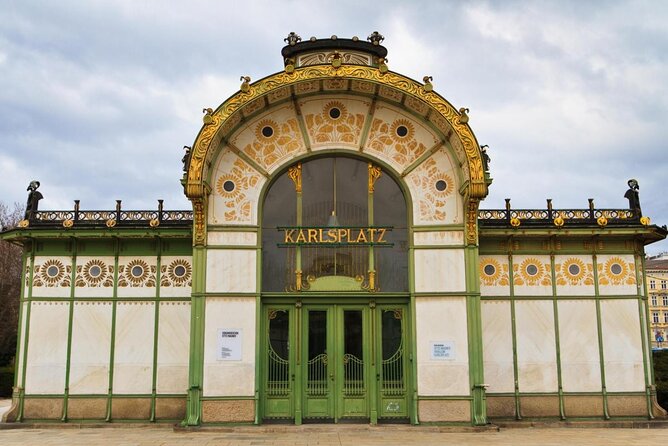
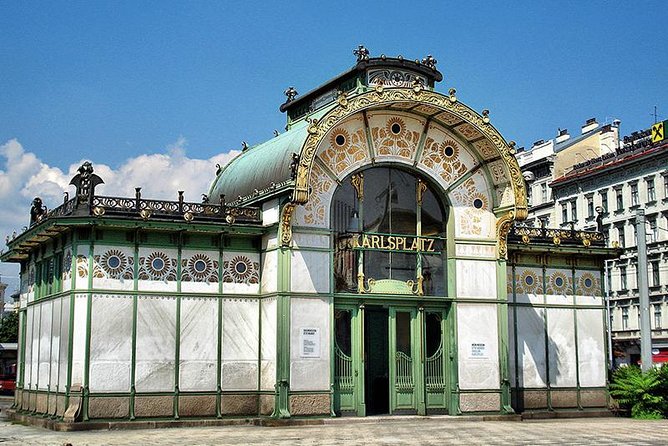
Next comes Karlsplatz, where the tour turns from art-hall drama into streetscape reality. The Karlsplatz Stadtbahn Station is described as a former station of the Viennese Stadtbahn, and the above-ground buildings are a well-known example of Jugendstil architecture.
This is where you meet Otto Wagner in a practical way. The station-area architecture was designed by Otto Wagner, who advised the Transport Commission in Vienna, along with Joseph Maria Olbrich. In other words, this is not decoration added later. It is architecture built with a purpose, then shaped into a modern design language.
Your stop here is around 20 minutes. Admission is listed as not included, which means you mainly get what you can from the relevant areas without paying extra.
Why this stop matters
Stations are where a city shows its priorities. Vienna treated transit architecture as a public statement, not an afterthought. Seeing that idea out in the open helps you connect the style to the life around it.
Otto Wagner Pavillon Karlsplatz: the seasonal interior option
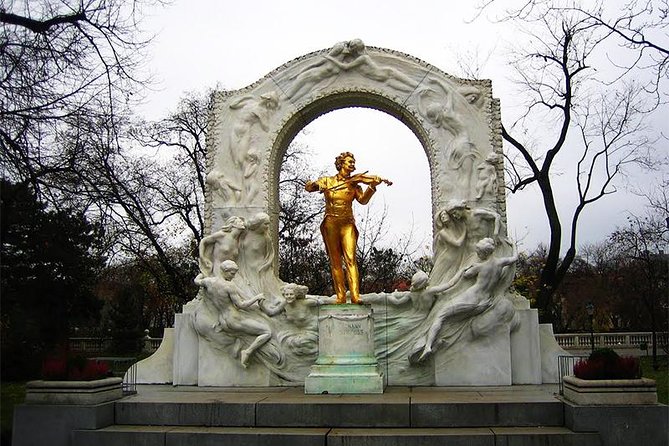
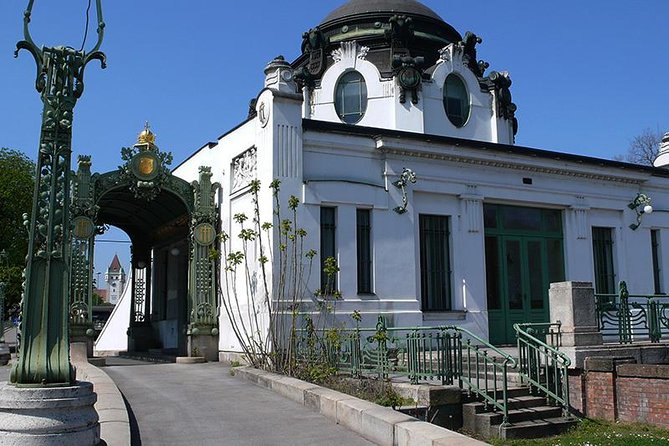
Right after Karlsplatz, you have a chance to visit the Otto Wagner Pavillon Karlsplatz. The pavillon is in an 1898 Art Nouveau station building designed by Wagner, and it works as a focused spotlight on his life and work.
Here is the catch: this visit depends on timing. It is described as included as part of the tour from April to October, when the relevant museum is open. If you go outside those months, you may still see the exterior elements through the day’s walking stops, but you should not expect this pavillon time to be available in the same way.
Admission for the pavillon is not included, with listed fees of €5 for general admission and €4 for senior citizens, students, holders of Vienna Card, and persons with disabilities.
My take on the value
If you can travel between April and October, this is the kind of small-ticket interior stop that makes the whole day feel more complete. You go from noticing design to understanding the person behind it.
Postsparkasse: postal savings bank design as serious architecture
Then comes Postsparkasse, the Austrian Postal Savings Bank building designed and built by Otto Wagner. It is regarded as an important work connected to the Vienna Secession branch of Art Nouveau.
This is a crucial change of pace. A postal bank is not an obvious museum-style building. But Wagner made it a landmark. That tells you something about the ambition of the era: the movement was not only for galleries. It was for institutions that served daily life.
Your time here is about 25 minutes, and the stop lists free admission. In practical terms, that makes this a good place to slow down and look at the building without worrying about ticket timing.
Naschmarkt for local color between architectural stops
After so much design intensity, you get a short break at Naschmarkt, Vienna’s best-known culinary market. It has around 120 market stands and a lively restaurant scene.
Your time at Naschmarkt is about 10 minutes, and admission is free. You will not have time to eat, unless you build your own plan before or after the tour, because food and drinks are not included. Still, even a quick stroll through this market area helps you ground the day in real Vienna, not just design theory.
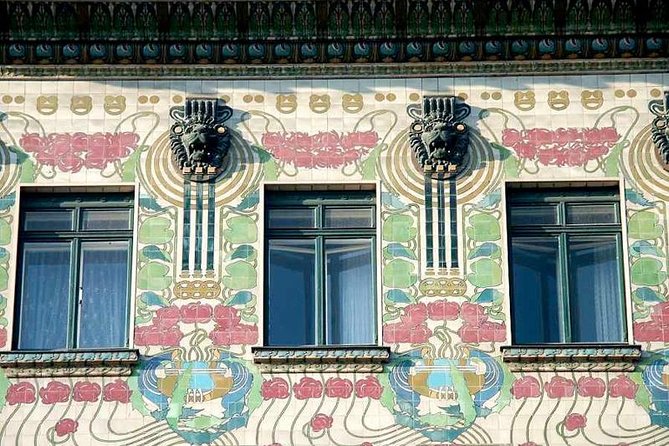
Also, you may notice the route includes a few notable ornamental apartment buildings in the broader downtown area. The movement shows up in façades that look almost playful up close.
Apartment houses and the ornamental Vienna you might miss
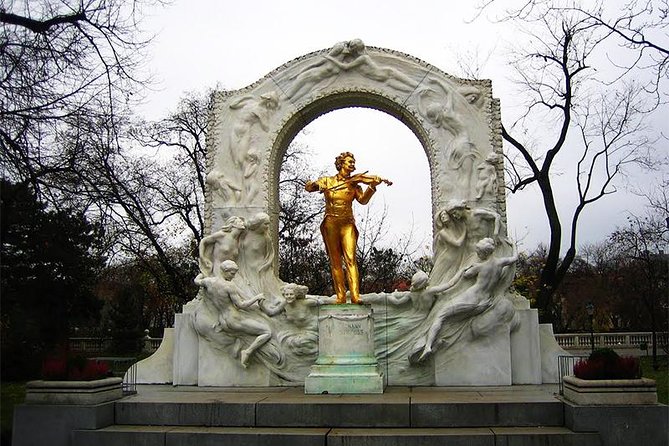
Art Nouveau in Vienna is full of “wait, look at that” moments, and this walk is built to catch them. The day is described as including two apartment houses designed by Otto Wagner, which is one of the best ways to see how the style scales from landmark buildings down to residential streets.
On the route, people also call out other famous Jugendstil-related residential architecture, including the Majolikahauses near Naschmarkt and the Zacherl-house downtown. If you are the kind of person who enjoys facial details, tiles, and sculptural ornament, these are the kind of stops that can quietly become your favorites.
How to get the most from these facades
When you spot a building that looks unusual, take a few seconds to compare it to the straight-edged buildings nearby. That contrast is where Jugendstil starts making sense. It is not only about curves. It is about how the whole visual language rejects the old rules.
Finishing at paired metro stations and the stop made for the Emperor
You wrap up at a pair of metro stations, with an extra-interest detail: a tiny stop that was built just for the Emperor.
The specifics of the station names are not provided in the tour details you have here, but the concept is clear. This is Vienna treating transit like something ceremonial. You are ending the day where the city shows off design, function, and authority in the same place.
Since this is the final stretch of a 3-hour walk, you will likely want to use it as a slow, reflective moment. You have spent the morning learning the style, and now you get a final reminder that Vienna often put design into places where you would not expect it.
Guide quality is the secret ingredient
For a walking tour focused on architecture, the guide makes or breaks the experience. The people leading this tour have been praised for doing exactly what you want: giving enough context to understand what you are seeing, and answering questions that range from art to Vienna’s past and present.
Named guides in the feedback include Barbara, Wolfgang, and Annelie. Barbara stood out for being thorough and pleasant, and for fielding questions across history and art. Wolfgang was highlighted for being an education for someone new to the movement. Annelie was praised for a deep but approachable explanation of Vienna Secessionism.
You should expect a guide who can explain why the movement happened, what the buildings were trying to say, and how to spot the design details. That is the difference between seeing pretty architecture and actually understanding it.
Price and value for a private group up to 10
The price is $490.00 per group for up to 10 people. That may sound steep if you compare it to big public tours, but private architecture walks are often priced per group because you are paying for a dedicated professional guide and time on the route.
Here is how to judge value in your case:
- If you have 4 to 6 people, the cost per person usually feels more reasonable, especially because the group size is capped at 10.
- If your group includes someone who is new to Art Nouveau, a private guide helps you avoid the common frustration of staring at details without understanding what they mean.
- You also get a tight 3-hour structure. Instead of independently hopping between sites and dealing with admission timing on your own, the tour shapes your day around the best sequence.
The only real cost pressure points are the entrance fees for specific stops. The Secession Building (with Klimt’s Beethoven Frieze) and the seasonal Otto Wagner Pavillon can add extra expenses. But the guide can help with at least the Secession House payment process, which reduces hassle.
Timing matters: admissions and the Otto Wagner Pavillon window
Two factors affect your total spend.
First, Secession House admission for the Beethoven Frieze. The stated pricing is for Tuesday to Sunday: €9.50 for adults and €6 for students and seniors. If you are traveling Monday, the details you have here do not specify that day’s pricing, so you should treat it as a point to confirm with the operator.
Second, the Otto Wagner Pavillon Karlsplatz visit is tied to April through October when the museum is open, with listed admissions of €5 general and €4 for seniors, students, Vienna Card holders, and persons with disabilities.
If you are planning your trip and want the simplest budgeting, go within April to October and plan a little extra for the Secession Building.
Who this tour is best for
This is a great pick if you are any of these:
- Art and architecture buffs who want the Vienna Secession story explained without drowning in academic jargon
- Design lovers who enjoy seeing style in practical places like transit buildings
- Pairs or small groups who want flexibility and the option to ask lots of questions
- People new to Jugendstil, because the guide’s job is to make the movement click fast
It is less ideal if your style of sightseeing is very fast and list-based, or if you hate paying separate admissions for interiors. Since some of the day’s most famous elements are ticketed, you should be comfortable budgeting a bit.
Should you book the Vienna Art Nouveau private walking tour?
Book it if you want Vienna’s Art Nouveau to feel like a coherent story. The tour does a smart job of connecting Klimt and the Vienna Secession to Otto Wagner’s architecture through metro stations and landmark buildings, then mixing in real city life at places like Stadtpark and Naschmarkt.
Skip or reconsider if you want a purely exterior walk with no ticket planning, or if your group is too focused on only the biggest museum hits. Even with good planning, this experience includes at least one major ticketed interior, and the Otto Wagner Pavillon depends on seasonal access.
If you fit the target audience, this is a strong value. It is private, it is focused, and it is built around places where Vienna’s design choices show up in daily life.
FAQ
How long is the private Vienna Art Nouveau walking tour?
The tour lasts about 3 hours.
What is the price, and how many people can be in a group?
The price is $490.00 per group, for up to 10 people.
Is this a private tour?
Yes. It is a private tour/activity, so only your group participates.
Where do we meet, and where does the tour end?
The start is Operngasse 7, 1010 Wien, Austria. The end is listed as Vienna, Austria.
Is hotel pickup included?
Hotel pickup and drop-off are listed as not included, though pickup is mentioned as offered. You should confirm the details when you book.
Is the tour ticket delivered digitally?
Yes. A mobile ticket is offered.
Do I need to pay entrance fees for the Secession Building?
Yes. Entrance fees are not included for the Secession House visit to see Klimt’s Beethoven Frieze, and your guide will help you pay.
How much is the admission to see the Beethoven Frieze at the Secession House?
From Tuesday to Sunday, the listed admission is €9.50 for adults and €6 for students and seniors.
Is the Otto Wagner Pavillon visit included year-round?
No. The tour incorporates a visit to the Otto Wagner Pavillon only from April to October, when the museum is open. Admission is not included, with listed fees of €5 general and €4 for qualifying groups.
Is food and drinks included?
No. Food and drinks are listed as not included unless specified.
Just added to the bill for Vienna
Guided Walks in Vienna, compared.
Guided Walking Tour of City Center Highlights
Read our review →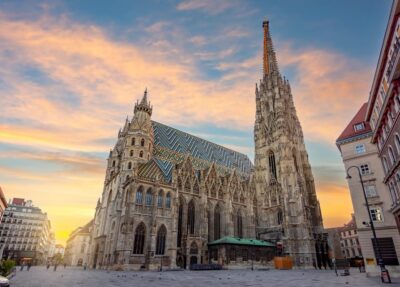
Guided Walking Tour of City Highlights & Hidden Gems
Read our review →
Vienna Historic Center Small Group Walking Tour
Read our review →
Ghosts and Legends Guided Nighttime Walking Tour
Read our review →Browse the lists this tour appears in