
REVIEW · GUIDED WALKS IN VIENNA
Vienna Art Nouveau Walking Tour
Vienna hides Art Nouveau inside daily metro rides. This tour helps you read the city in real metro design and big-name Jugendstil buildings, with an expert guiding you through what you are looking at and why it matters. I particularly like how it links the metro to the late 19th century goal of making Vienna feel modern and international, not just decorative.
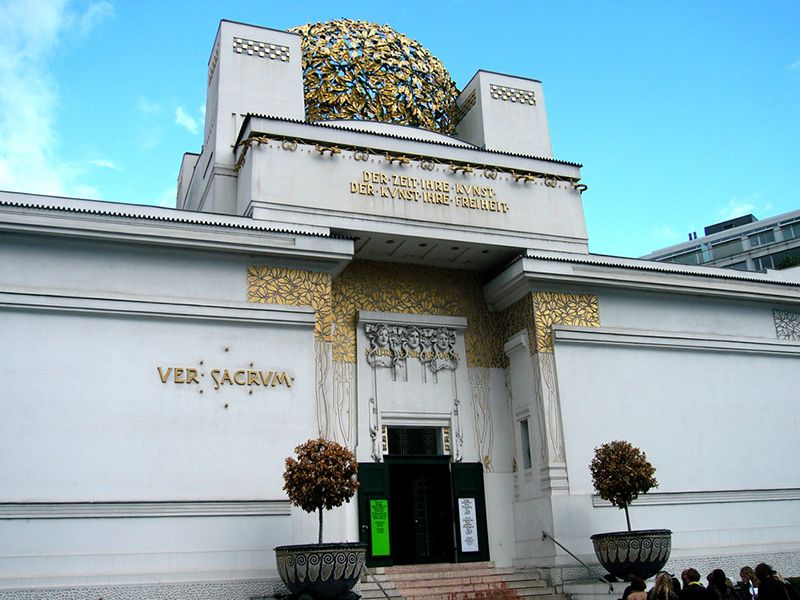
I also love the hands-on feel of the stops, from the Karlsplatz pavilion area to the Secession House and its Art Nouveau symbolism. One thing to plan for: key entrances are extra, including the Secession House (and sometimes the Otto Wagner pavilion), and you will cover plenty of ground on foot.
5 key reasons this tour works
- Otto Wagner’s metro story told with context, not just dates
- Art Nouveau details you can actually spot at stations still in use
- Secession House stop with Klimt’s Beethoven Frieze on Tuesday to Sunday
- Small group energy, with guides who answer questions and tailor when possible
- A clear walking and metro route that keeps you moving between high-impact sites
In This Review
- Art Nouveau in Vienna, with Otto Wagner’s metro as your thread
- Why Wagner’s metro design still feels modern
- Getting your bearings at Café Museum, the perfect launchpad
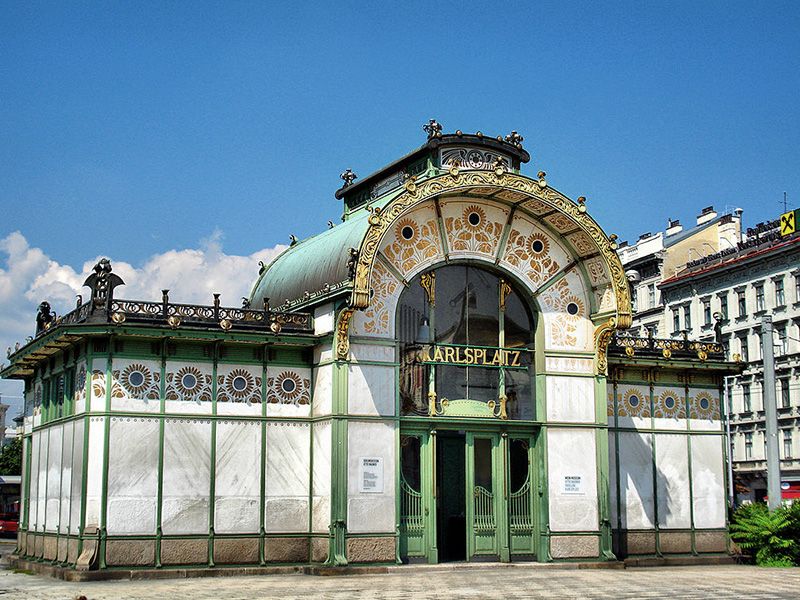
- Karlsplatz and the Otto Wagner Pavillon area, where design meets meaning
- Stadtpark station, the station you can use like a visual textbook
- Secession House detour, and what to do with the Klimt connection
- Otto Wagner apartment houses, the part where style turns into livable design
- Kettenbrücke, then the metro ride to the emperor station
- The guide makes or breaks it, and this one usually lands well
- Price and value for a 3-hour Art Nouveau architecture walk
- What to wear, how to pace it, and how to get the best photos
- Who should book this tour, and who might skip it
- Should you book Vienna Art Nouveau Walking Tour?
- FAQ
- How long is the Vienna Art Nouveau Walking Tour?
- Where does the tour meet?
- What language is the tour offered in?
- What is included in the price?
- Is admission to the Otto Wagner Pavillon included?
- Is admission to the Secession House included?
- On which days do you visit Klimt’s Beethoven Frieze?
- Which stations are part of the tour?
- Are private or small group tours available?
- Does the tour offer flexible booking options?
Art Nouveau in Vienna, with Otto Wagner’s metro as your thread
Vienna can look like a museum from the outside. But this experience flips the script by using the metro as your main guidebook. You are not just admiring facades from the sidewalk, you are learning how Otto Wagner treated transportation design as city branding. The result is a tour that feels both practical and artistic.
You start with the late 1800s problem every fast-growing city faces: too many people, too much commuting, not enough efficient connections. Vienna’s response was a modern public transportation system that connected suburbs to the city along major routes. What makes it interesting is that the design choices were not timid. Wagner aimed for something iconographic and easy to recognize, and Art Nouveau was the language he chose to express it.
Why Wagner’s metro design still feels modern
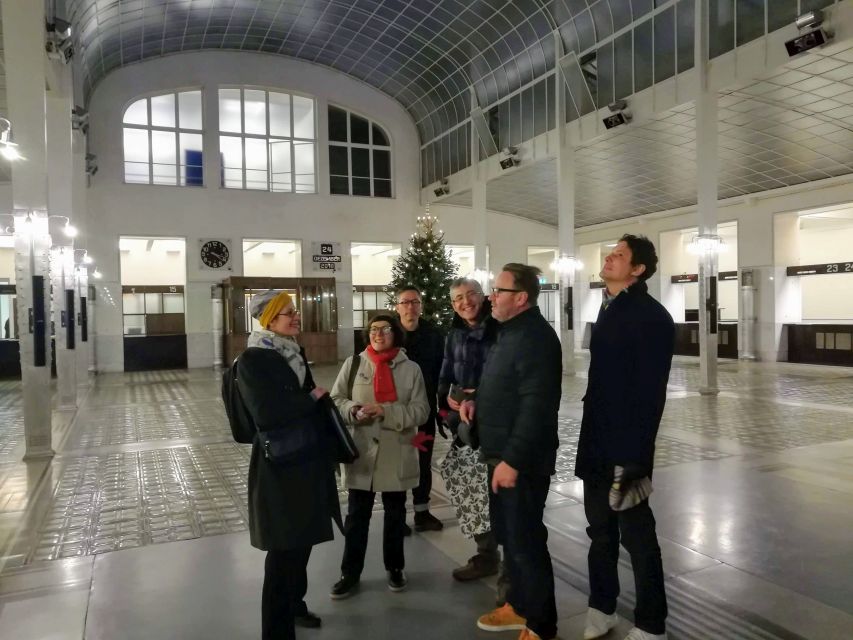
This tour is really about one big idea: architecture can shape how a city sees itself. Wagner wanted the metro to signal Vienna’s cosmopolitan identity. That is a fancy way of saying the city wanted to look current and confident, not stuck in the past.
You will also learn how the Art Nouveau look traveled across class boundaries. The style was often associated with bourgeois tastes, yet Wagner applied his design methods to give some stations an almost imperial presence. When you reach the emperor-focused terminal area, it becomes easier to understand what critics were arguing about and why the symbolism mattered.
More Guided Walks in Vienna
- Vienna: Guided Walking Tour of City Center Highlights
★ 4.7 · 4,989 reviews - Vienna: Vienna Central Cemetery Guided Walking Tour
★ 4.8 · 3,307 reviews - Vienna: Guided Walking Tour of City Highlights & Hidden Gems
★ 4.9 · 2,180 reviews - Vienna: Viennese Underworld Guided Walking Tour
★ 4.7 · 1,865 reviews
Getting your bearings at Café Museum, the perfect launchpad
The meeting point is Café Museum, Operngasse 7 (A-1010 Vienna). It is a good starting choice because it anchors the tour in the old city rhythm before you move into station architecture.
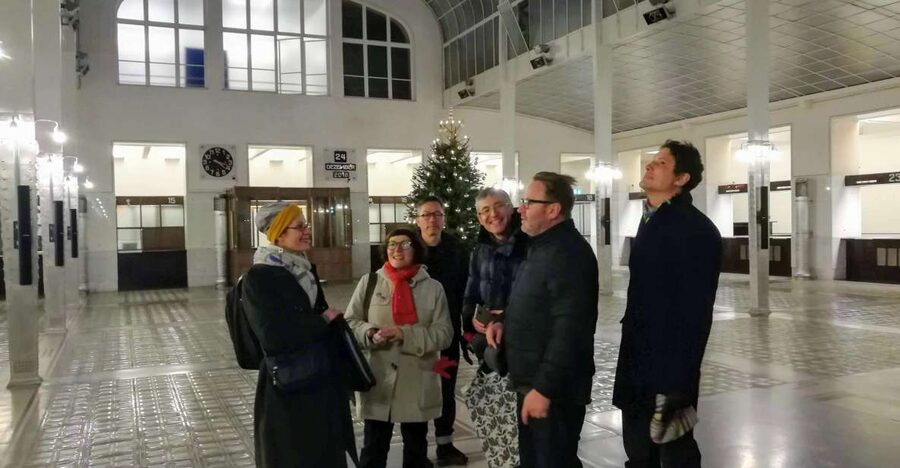
From the first moments, your guide frames the route so you know where to focus. You are not just walking from one pretty building to the next. You are building a mental map of materials, symbols, and design priorities. That makes later stops click faster.
You may notice that tours like this can run best when your guide keeps the pace steady and your attention sharp. Based on past groups, this is where guides really shine. For example, Wolfgang, one past guide, was praised for being enthusiastic and tailoring the tour when there were only two people. Peter was praised for being accessible and answering lots of questions, including history and what to look for in architecture. That matters because Art Nouveau is full of visual clues, and you get more from the tour when someone points them out.
Karlsplatz and the Otto Wagner Pavillon area, where design meets meaning
The tour begins with a guided segment around the Wien Museum Otto Wagner Pavillon Karlsplatz area. This is where you get your first real “Art Nouveau lens.” Even if you do not enter the pavilion, you should expect your guide to orient you to the architectural thinking behind it.
This stop works as a warm-up because it connects the style to the specific job Wagner had. Metro design had to be recognizable at street level, legible to commuters, and consistent across multiple stations. You are learning to see elements as functional plus symbolic.
Keep in mind: pavilion entry is not included in the tour price. If you want to go inside, plan for the extra ticket cost and time it so you do not feel rushed.
Stadtpark station, the station you can use like a visual textbook
Next, you head toward Stadtpark station, highlighted as the best preserved of the original stations still in use. This is a strong stop because it gives you a direct comparison point. You can see how Wagner’s approach survives in a station you can still experience as part of daily Vienna.
What I like here is the way your guide can make the details feel obvious. You stop treating Art Nouveau as “pretty curves” and start treating it like a system. You begin to notice materials, linework, and how the station design guides your eye.
Also, because Stadtpark is still functioning, you get a sense of how the design handles real life. People come through looking at phones, carrying bags, waiting for trains. That daily context makes the beauty feel less like a staged postcard and more like design with a job.
More of Austria on foot, bell tower to bell tower:
Secession House detour, and what to do with the Klimt connection
The route includes a stop at the Secession Building, the icon for Viennese Jugendstil. This is one of those places that can easily become a quick photo stop if you do not have guidance. With a guide, it becomes an anchor for the philosophy behind Art Nouveau.
Here is the key practical note: on Tuesday to Sunday, you visit Secession House to see Gustav Klimt’s Beethoven Frieze. Admission is not included. The stated prices are €9.50 for adults and €6 for students and seniors. Your guide helps you pay, so you are not left scrambling.
If your tour falls outside Tuesday to Sunday, you still get the Secession stop, but the Beethoven Frieze visit is specifically tied to those days. Either way, this is a high-value cultural pause. It helps you understand why Art Nouveau artists and architects leaned into symbols and specific materials, rather than copying older styles.
Otto Wagner apartment houses, the part where style turns into livable design
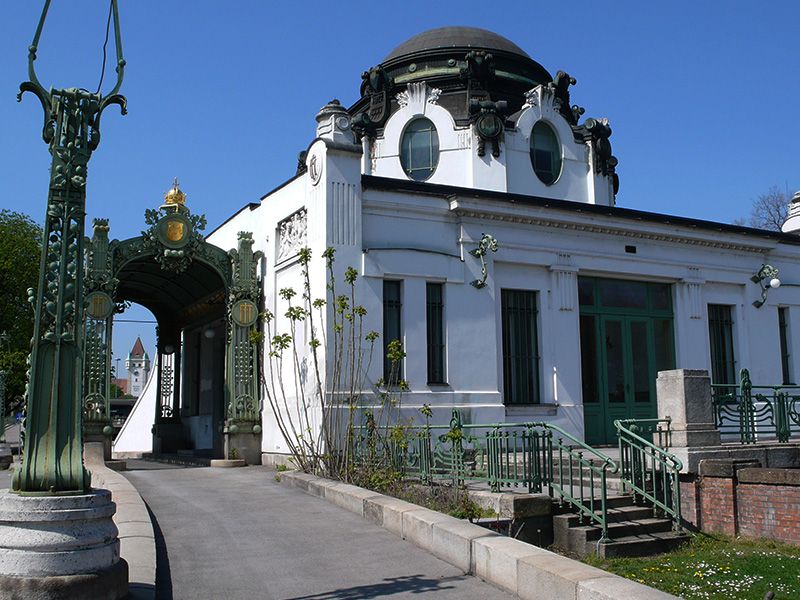
Between metro segments, you will also see two apartment houses designed by Otto Wagner. This is an important shift in the tour. It is easy to think of Art Nouveau as something reserved for landmarks. The apartment houses remind you that this look entered everyday living.
This portion helps you catch the ideological undertone your guide discusses. Art Nouveau was not only about ornament. It was about a modern worldview, one that tried to unify design across public and private spaces. When you connect that to the metro mission, the whole story stops feeling random.
If you enjoy architecture that affects daily life, you will likely appreciate this section more than you expect. It is the “How does it work outside the museum?” moment. And because you are moving between stops, you can keep comparing what changes between civic and residential buildings.
Kettenbrücke, then the metro ride to the emperor station
At Kettenbrücke station, you switch to the metro for the last stop. This is where the tour becomes more than a walking loop. You start feeling like you are actually tracking Wagner’s line, not just hopping between sites.
The final destination is the imperial station, built outside Schönbrunn solely for the emperor to use. That is a dramatic origin story, but the tour emphasis is even smarter: it ties the architecture to messaging.
You will learn the symbolic angle, which is the point that Wagner’s design was meant to show the emperor supported the metro line in the face of criticism. In plain terms, this is a station built to send a political signal through design. Your guide will point out methods Wagner used to translate a generally bourgeois Art Nouveau style into something with imperial grandiosity.
That contrast is one of the most satisfying “aha” moments in the tour. Once you see how the symbolism works, Art Nouveau stops being a look and becomes a strategy.
The guide makes or breaks it, and this one usually lands well
A big reason this tour earns strong marks is the guiding style. The most praised trait is not just facts. It is clarity plus energy, plus the willingness to answer questions.
Wolfgang and Peter were specifically singled out for enthusiasm and accessibility. Wolfgang was praised for being very knowledgeable and enthusiastic, and for tailoring the tour for two people. Peter was praised for answering lots of questions about Austria and for teaching what to look for, including hidden houses of worship like Jewish synagogues.
Guissepina was praised in Spanish feedback for being friendly, attentive, and close with the group, plus having solid understanding of Art Nouveau. Those details matter because Art Nouveau rewards observation. If your guide points out the symbols and the materials you might otherwise miss, you get more than a list of sights.
If you want maximum value, come with one question ready, something like what design feature is doing the most work here. Your guide is the person who can turn that into real seeing.
Price and value for a 3-hour Art Nouveau architecture walk
The tour price is $176 per person for about three hours, led by a historian guide. That sounds like a premium, but it is not just for walking. You are paying for interpretation, pacing, and the route logic that connects metro stations to Art Nouveau philosophy and later stops like the Secession House.
Here is the practical value math in your head:
- You get guided time focused on high-impact buildings and stations, not a generic architecture loop.
- You learn how to look, which is the part that is hard to self-teach when you are short on time.
- You also get a guided connection between the metro system and the city image Vienna wanted to project.
The main cost caveat is that some entrances are not included. Otto Wagner pavilion entry and the Secession House admission for Klimt’s Beethoven Frieze can add to your total, depending on which day you tour. Even so, many people find it worth paying for the guide rather than trying to stitch together multiple neighborhoods alone.
If you are a self-guided traveler, you could technically cobble together the sights. But the “what to look for” guidance is what you are buying here.
What to wear, how to pace it, and how to get the best photos
This is a walking-focused experience. A previous guest specifically said the group walked miles, even with a small group. So wear comfortable shoes and plan for regular stops where you are looking up, stepping aside, and reading details.
For photography, bring a way to steady your shots if you like night or indoor shots, because some of the key beauty is in close-up architectural details. For the Beethoven Frieze segment, you may also want to check your own museum photo preferences when you buy admission, since rules can vary by site and day.
Also, keep your expectations grounded. This is not a slow museum day. It is a route where ideas come first, and you see the architecture as proof of those ideas.
Who should book this tour, and who might skip it
Book it if you like architecture that explains itself through details, and you want a structure for understanding Viennese Jugendstil. It is also a strong pick if you enjoy transit design, because the metro stations are the spine of the story.
You might skip it if:
- You only want big standalone landmarks with minimal walking.
- You are not interested in the metro origin story and prefer art only.
- You would rather pay for one or two sites and explore independently.
Should you book Vienna Art Nouveau Walking Tour?
If your time in Vienna is short, I think you should book this tour. It hits a lot of meaning in three hours by connecting the Art Nouveau look to the metro system and then to the Secession House and Klimt. That linking is what makes the experience feel more than a sightseeing list.
My final advice is simple: add a little extra money and time for the two possible admissions. Once you do that, you get a guide-led way to see Vienna through Wagner’s design choices, not just through pretty buildings. And if your guide is the kind praised in past groups, you will leave with clearer eyes and a few new questions worth asking every time you see a station or a facade in Europe.
FAQ
How long is the Vienna Art Nouveau Walking Tour?
The tour lasts about 3 hours.
Where does the tour meet?
The meeting point is Café Museum, Operngasse 7, A-1010 Vienna.
What language is the tour offered in?
The live tour guide leads in English.
What is included in the price?
The price includes the 3-hour tour and a historian guide.
Is admission to the Otto Wagner Pavillon included?
No. Admission to the Otto Wagner Pavillon is not included.
Is admission to the Secession House included?
No. Admission to the Secession House is not included, and it is €9.50 for adults and €6 for students and seniors.
On which days do you visit Klimt’s Beethoven Frieze?
If your tour is Tuesday to Sunday, you will visit the Secession House to see Gustave Klimt’s Beethoven Frieze.
Which stations are part of the tour?
You visit two of the remaining metro stations, including Stadtpark station, and you also ride the metro to the emperor station as the last stop. Kettenbrücke is part of the route.
Are private or small group tours available?
Yes, private or small groups are available.
Does the tour offer flexible booking options?
Yes. There is free cancellation up to 24 hours in advance for a full refund, and you can reserve now and pay later.
Just added to the bill for Vienna
Guided Walks in Vienna, compared.
Guided Walking Tour of City Center Highlights
Read our review →
Guided Walking Tour of City Highlights & Hidden Gems
Read our review →
Vienna Historic Center Small Group Walking Tour
Read our review →
Ghosts and Legends Guided Nighttime Walking Tour
Read our review →Browse the lists this tour appears in