
REVIEW · GUIDED WALKS IN VIENNA
Vienna: City Center Guided Walking Tour
Vienna in 2.5 hours feels almost unfair. This small-group walk strings together the city’s biggest imperial sights with real stories, plus a few sweet stops. I like the fact that you get an easy route through the city center without constantly checking maps, and I also like how the guide makes the details feel human, not like a textbook.
My second big plus is the listening setup: headsets help you catch every explanation even when the group moves. One thing to consider is that this tour is built for a steady pace with moderate walking, and it is not suitable for people with mobility impairments.
In This Review
- Key things you will notice on this Vienna walk
- A 150-minute route that makes Vienna make sense
- Finding the meeting point at Maria-Theresien-Platz
- The Ring Road opener, then rose gardens and Heroes Square
- Hofburg Palace and Burggarten: where Habsburg life leaves traces
- Augustinerkirche: imperial weddings, plus Napoleon’s marriage connection
- Spanish Riding School and the Lipizzaner horses
- Opera House area, Lobkowitz Palace, and Beethoven’s Eroica
- Coffee house classics and Hotel Sacher’s sweet pull
- Graben shopping street to St. Stephen’s Cathedral finish
- Price and pacing: what you get for $74
- Guides, audio, and how listening stays easy
- Weather, comfort, and who should book this
- Should you book this Vienna City Center Guided Walking Tour?
- FAQ
- How long is the Vienna City Center Guided Walking Tour?
- Where do I meet the guide?
- How big is the group?
- What is included in the price?
- Are entrance fees included?
- What language is the tour guide?
- Is the tour suitable if I have mobility impairments or need accessibility support?
Key things you will notice on this Vienna walk
- Small group size (up to 15 people) keeps the experience personal and questions realistic
- Headsets included so you hear the guide clearly as you walk
- Ring Road plus gardens plus palaces in one straight-line sightseeing route
- Imperial wedding stories at Augustinerkirche, plus Napoleon’s connection
- Spanish Riding School and Lipizzaner horses’ home as a major visual stop
- Hotel Sacher and the Sacher torte link for a fun, Vienna-style sweet moment
A 150-minute route that makes Vienna make sense
This tour is designed for first-time visitors who want the big picture fast. Instead of hopping randomly, you walk a smart loop through the historic center, where the same names keep showing up again and again. Hofburg. Habsburgs. Court life. Music. Coffee houses. It is all connected, and the guide’s job is to show you how.
At 150 minutes, you will cover a lot of ground without feeling like you are stuck in a long, exhausting march. You are also not paying for museum tickets, which helps keep the overall value focused on what you get most from a walking tour: guidance, context, and the ability to ask questions while you are standing in front of the buildings.
More Guided Walks in Vienna
- Vienna: Guided Walking Tour of City Center Highlights
★ 4.7 · 4,989 reviews - Vienna: Vienna Central Cemetery Guided Walking Tour
★ 4.8 · 3,307 reviews - Vienna: Guided Walking Tour of City Highlights & Hidden Gems
★ 4.9 · 2,180 reviews - Vienna: Viennese Underworld Guided Walking Tour
★ 4.7 · 1,865 reviews
Finding the meeting point at Maria-Theresien-Platz
You meet your guide at Maria-Theresien-Platz, at the statue of Empress Maria Theresa. The statue sits between the Kunsthistorisches Museum and the Naturhistorisches Museum, and your guide holds a green sign that says Vienna City Walking Tour.
This is one of those locations where being early matters. If you arrive a few minutes before start time, you can calmly spot the statue, then scan for the green sign. Also, the tour uses headsets, so you do not need to huddle close. That makes it easier to settle in, even if you are traveling solo.
What to bring is simple:
- Wear shoes that work on sidewalks and uneven pavement
- Bring layers, because the tour runs in every weather condition
- Keep your hands free, since luggage or large bags are not allowed
The Ring Road opener, then rose gardens and Heroes Square
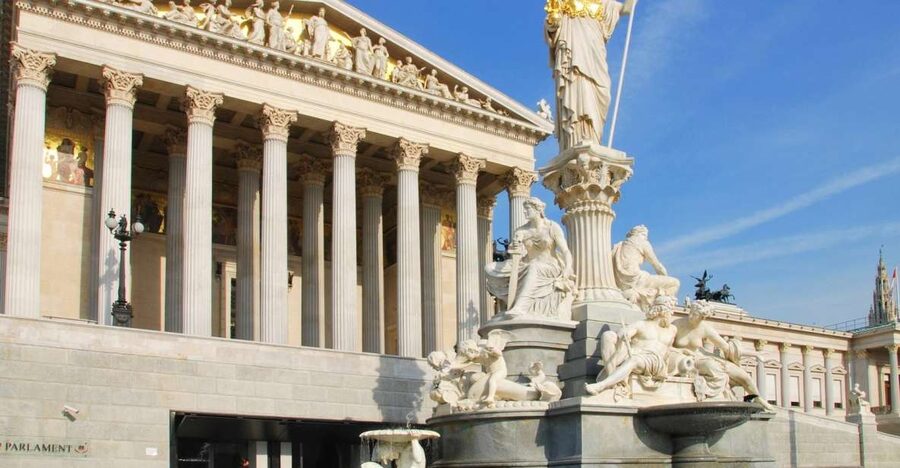
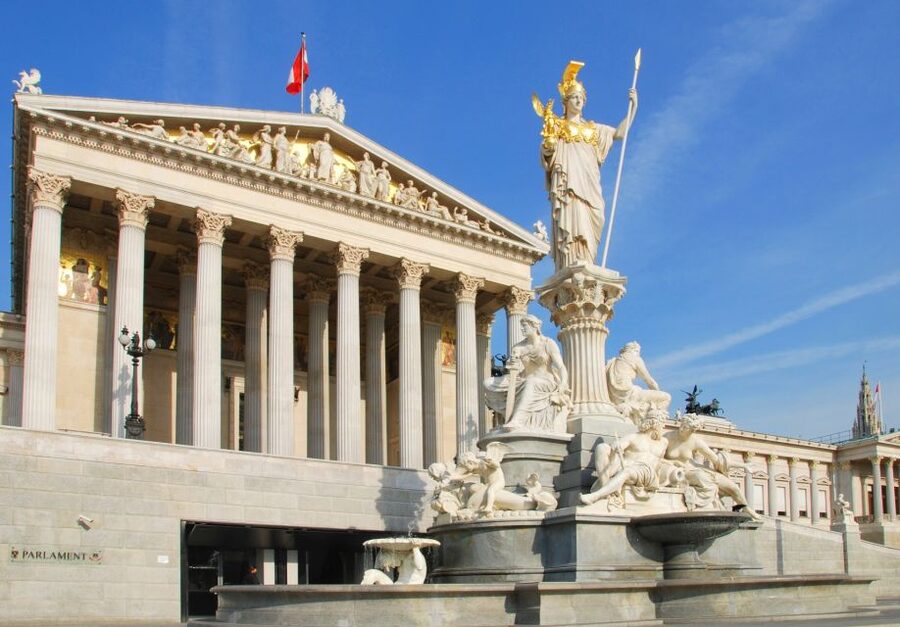
After you meet, the walk begins with a classic Vienna move: you head to the Ring Road surrounding the historic city center. This is a great warm-up. Even if you do not know Vienna’s timeline yet, the Ring Road gives you a sense of scale and layout fast, like the city is showing you where everything sits.
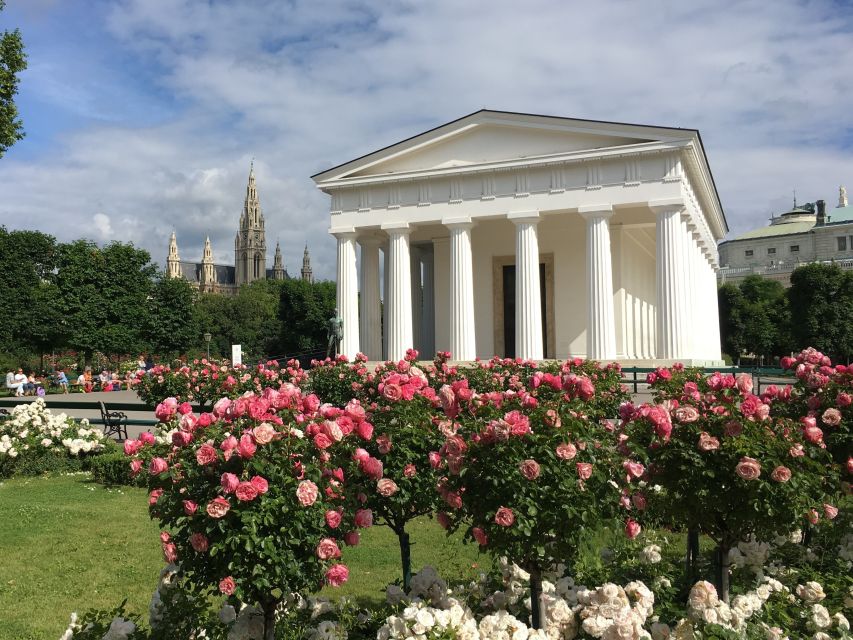
From there, you move into greenery with the rose garden of the Volksgarten. Roses are nice, but the bigger value here is the break from stone and traffic. It gives you a moment to slow down, look around, and absorb how Vienna mixes formal imperial spaces with designed gardens.
Then you continue to Heroes Square. Again, the point is not just to see another monument. It fits the tour’s bigger theme: Vienna constantly references its political and cultural power in public spaces. The guide’s stories help you read what you are looking at, instead of just snapping photos and moving on.
Hofburg Palace and Burggarten: where Habsburg life leaves traces
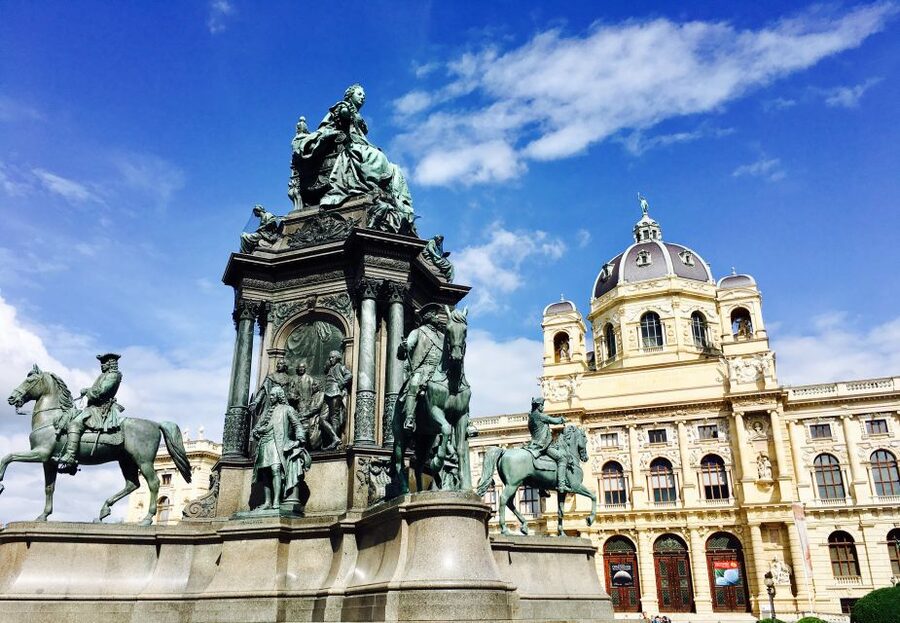
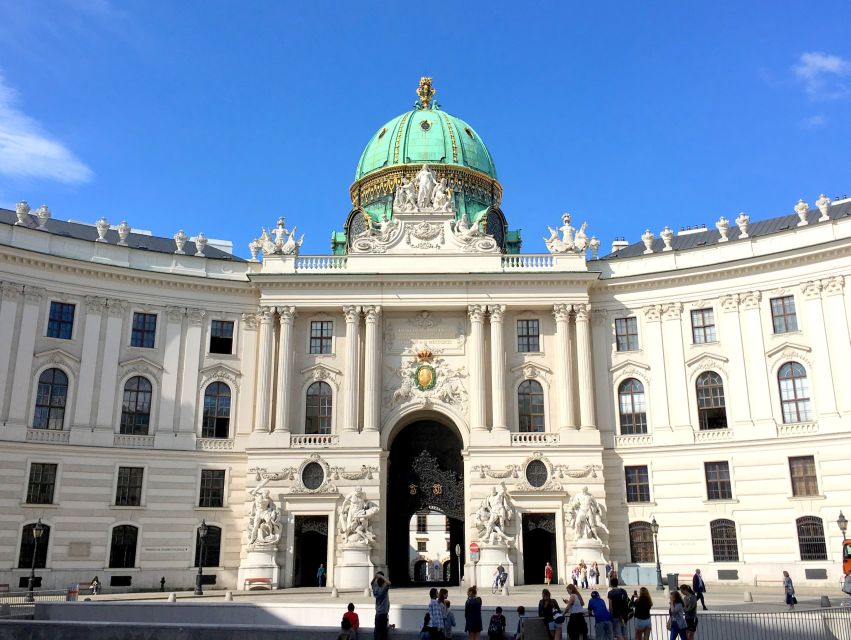
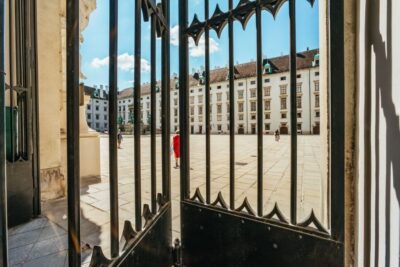
One of the main stops is Hofburg Palace, the imperial residence where the Habsburg family ruled. Seeing it on foot is the advantage. Up close, you can appreciate the sheer presence of the complex. More importantly, you understand why Vienna’s imperial era still dominates the city’s visual language.
The tour continues into the surrounding royal-green spaces at Burggarten, where you hear stories tied to the emperor’s private garden and the former butterfly house. This is a clever part of the route because it adds variety. You get palace grandeur, then you shift to a calmer garden setting, where the guide’s details help you picture court life beyond official ceremonies.
This is also where the small-group format starts to pay off. With no more than 15 people, you can stop for a few seconds without feeling like you are holding up an enormous crowd. If you have questions about why the Habsburgs mattered, this portion is a good time to ask.
More Sightseeing & City Tours in Vienna



Augustinerkirche: imperial weddings, plus Napoleon’s marriage connection
Next comes Augustinerkirche, a church linked to many imperial weddings. Even if churches are not your usual thing, this stop works because it is not presented as a cold architectural lesson. You are given a specific storyline: who got married here and why the place mattered to the ruling family.
Then there is another real historical hook that keeps it from feeling abstract: Napoleon married Princess Marie Louise. That single detail turns the church into something more than a pretty exterior. It becomes part of a bigger European political network, centered right here in Vienna.
Practically, it is also a nice pause. You can stand, listen, and let your feet recover for a moment. If you are traveling with family, this church stop often lands well because it is both visually significant and story-driven.
Spanish Riding School and the Lipizzaner horses
No Vienna city center walk feels complete without a nod to the Spanish Riding School. This tour highlights it as the home of the Lipizzaner horses, which gives you a tangible connection to a tradition that is recognizable worldwide.
Even from outside, the building and its role in Vienna’s cultural identity are easy to grasp once you have heard the guide’s framing. If you love horses or you enjoy seeing how old traditions survive in modern cities, this is one of the stops that makes the whole walk feel more alive.
If your timing is tight, you will still come away with the key idea. The tour is not built to compete with a ticketed experience inside. Instead, it positions the Spanish Riding School in the broader “imperial Vienna” story, which helps you understand why it belongs on this route.
Opera House area, Lobkowitz Palace, and Beethoven’s Eroica
The tour then heads toward Vienna’s performance-world landmarks, including the Vienna State Opera House area. You also see Lobkowitz Palace, where Beethoven first conducted his Eroica symphony.
This is one of those moments where context improves everything. If you already know Eroica is famous, you get extra satisfaction learning that it has a Vienna address tied to early performances. If you do not know the piece yet, the guide’s mention still plants a useful seed, so later, when you hear music in Vienna, you can connect it to the city’s real-life sites.
I like this stop because it links art and power. Vienna is famous for classical music, but this walk avoids treating music like a separate museum category. It shows how it sits in the same web as palaces, rulers, and public prestige.
Coffee house classics and Hotel Sacher’s sweet pull
Then you hit Vienna’s best-known mood: coffee houses. The tour includes a pass by elegant coffee-house spots, including the connection to the famous Sacher torte at Hotel Sacher, where it is still served.
This part is smart for two reasons. First, it gives you a sensory memory you can anchor to the rest of the route. Second, it helps you understand Vienna as a city of rituals, not just buildings.
One practical note, especially in hot months. On at least one tour with Alex, the guide paid close attention to heat by standing in shade when possible and stopping for water refills. That kind of care matters on a walk that stays outdoors for long stretches, so you will feel the difference in pacing and comfort.
If you plan to eat after the tour, you will already know where the historic sweet spot is. Even if you do not buy anything during the walk, you leave with a clear target.
Graben shopping street to St. Stephen’s Cathedral finish
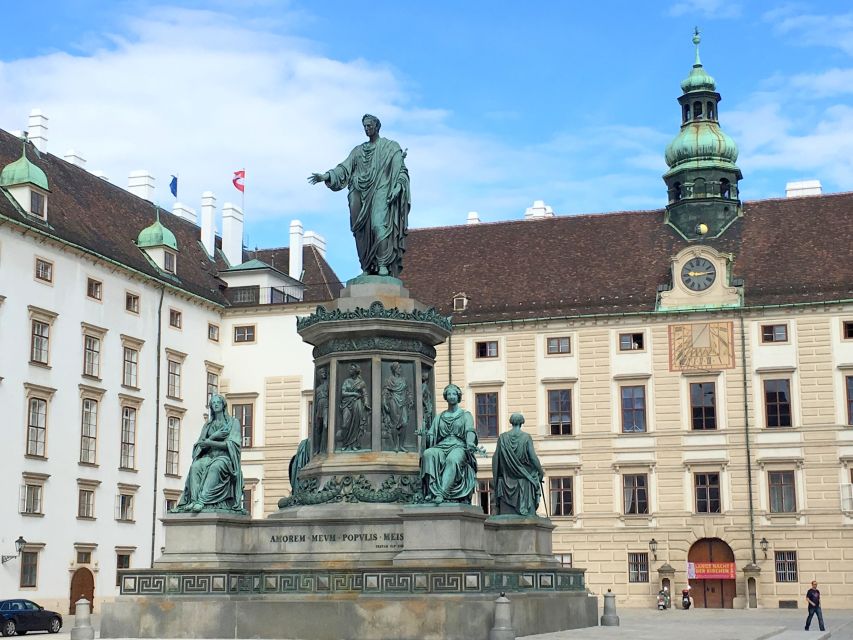
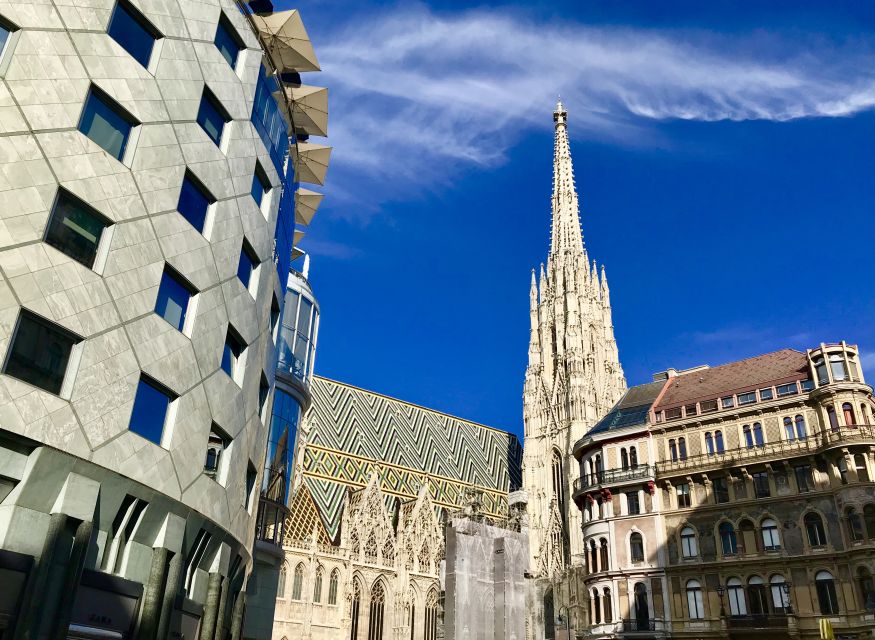
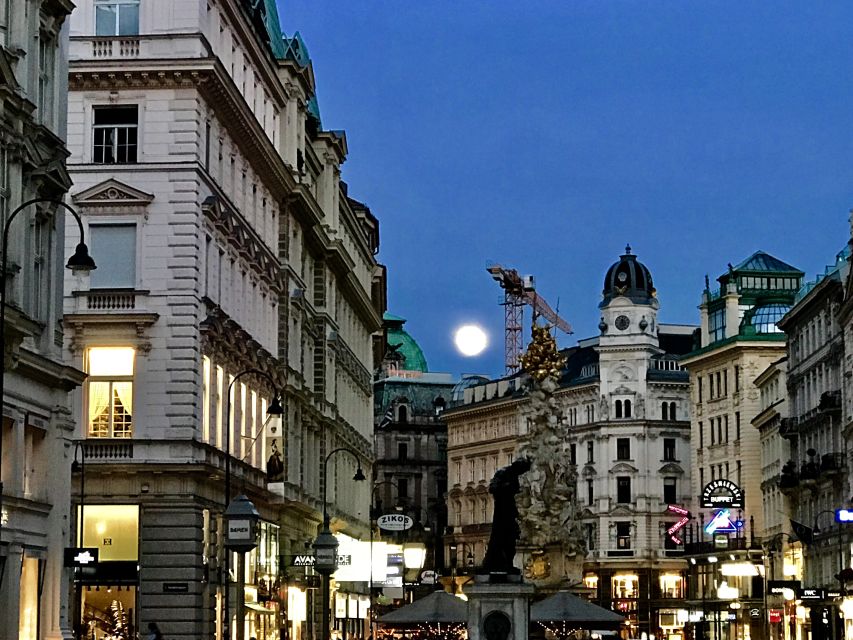
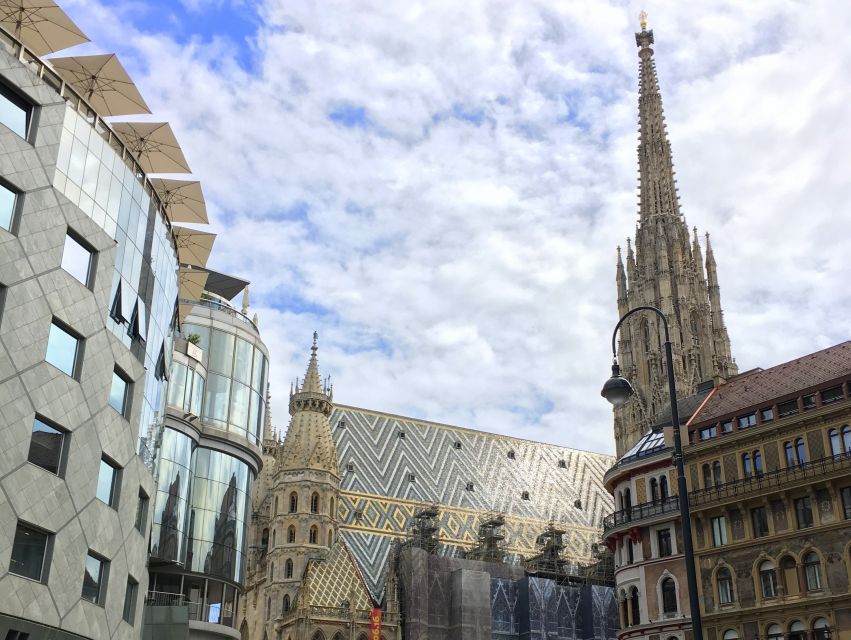
You finish by walking through Graben, one of Vienna’s elegant shopping streets, and then ending next to St. Stephen’s Cathedral.
This ending works well because it gives you options. If you want to continue on your own, you can branch out in multiple directions from a major landmark. If you just want to stop walking, the cathedral area is a strong visual finish, and it is easy to plan your next meal nearby.
Also, finishing near a recognizable center point reduces stress. Vienna can feel big. Ending at St. Stephen’s helps you reset your bearings, then choose what you want to explore next.
Price and pacing: what you get for $74
At $74 per person for 150 minutes, the value comes from two things you cannot easily replicate on your own: a licensed local guide and headsets. Entrance fees are not included, so you are not paying extra for ticketed moments.
If you are the kind of traveler who likes to understand what you are seeing while you are seeing it, this format makes sense. You are not just collecting photos. You are learning the why behind the names, like the Habsburg connection at Hofburg, the court-linked weddings at Augustinerkirche, and Beethoven’s Eroica at Lobkowitz Palace.
The other pricing advantage is the group size. With no more than 15 people, you get more chance to hear the guide and ask questions. In reviews, the guides are consistently praised for keeping the experience light, interesting, and organized without turning it into a lecture.
Guides, audio, and how listening stays easy
This tour uses headsets, which is a big deal in busy city center streets. You do not have to shout over traffic or chase a moving group to catch details. You can walk at a comfortable distance and still follow the story.
In one instance with Dace, the guide used humour alongside strong historical knowledge, and the overall vibe stayed engaging. Another review highlighted that audio elements were part of the experience and felt like a pleasant surprise. So while you should expect the core guide explanation every time, you might also notice extra audio-type touches depending on the guide and timing.
A small but helpful detail from reviews: there can be pre-tour communication and the organizer may coordinate start timing carefully. That reduces that awkward moment of wondering if you are in the wrong spot.
Weather, comfort, and who should book this
Since it runs in every weather condition, dress for real life, not perfect forecasts. In winter, cold can feel sharper around tall buildings. If you are visiting in colder months, bring warm layers, and do not underestimate wind around the city center.
Walking time is moderate, but it is still a walking tour. You will want comfortable shoes and a plan for taking short rests when the group stops for explanations.
This experience is best for:
- First-time visitors who want the key sites in one organized loop
- People who like stories tied to specific buildings
- Travelers who want a small group and clear audio
It is not a fit if:
- You need wheelchair-accessible routing, since it is not suitable for people with mobility impairments
- You cannot travel without luggage, since large bags are not allowed
- You are traveling with unaccompanied minors, since unaccompanied children are not allowed
Should you book this Vienna City Center Guided Walking Tour?
Book it if you want a practical, story-led orientation to Vienna in about two and a half hours. The route makes sense: imperial power at Hofburg, garden breathing room at Burggarten, wedding and political connections at Augustinerkirche, performance culture near the Opera area, then the sweet, very Vienna finish around coffee houses and St. Stephen’s.
Skip it if you expect lots of indoor time and entrance tickets. This is a walking tour, and the value is in the guide, the headsets, and what you learn while you are out seeing the city.
If you want a first step that sets up the rest of your trip, this is a strong choice.
FAQ
How long is the Vienna City Center Guided Walking Tour?
The tour lasts 150 minutes.
Where do I meet the guide?
Meet by the statue of Empress Maria Theresa on Maria-Theresien-Platz, on the side the statue is facing between the Kunsthistorisches Museum and the Naturhistorisches Museum. The guide will hold a green Vienna City Walking Tour sign.
How big is the group?
The tour is a small group of no more than 15 people.
What is included in the price?
You get a licensed local guide and headsets to hear the guide clearly.
Are entrance fees included?
No, entrance fees are not included.
What language is the tour guide?
The tour is guided in English.
Is the tour suitable if I have mobility impairments or need accessibility support?
No. It is not suitable for people with mobility impairments.
Bell Tower to Bell Tower
- Vienna: World War II Historical Walking Tour
★ 4.8 · 1,772 reviews - Vienna Historic Center Small Group Walking Tour
★ 5.0 · 1,746 reviews - Vienna: Private Walking Tour with a Local
★ 4.6 · 1,446 reviews - Vienna: 1.5-Hour Underground Walking Tour
★ 4.9 · 1,146 reviews
Just added to the bill for Vienna
Guided Walks in Vienna, compared.
Guided Walking Tour of City Center Highlights
Read our review →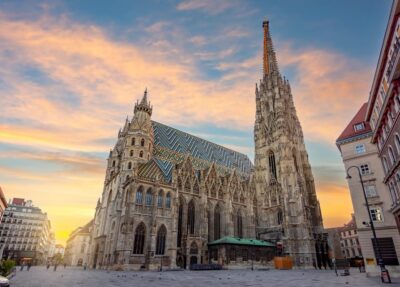
Guided Walking Tour of City Highlights & Hidden Gems
Read our review →
Vienna Historic Center Small Group Walking Tour
Read our review →
Ghosts and Legends Guided Nighttime Walking Tour
Read our review →Browse the lists this tour appears in