
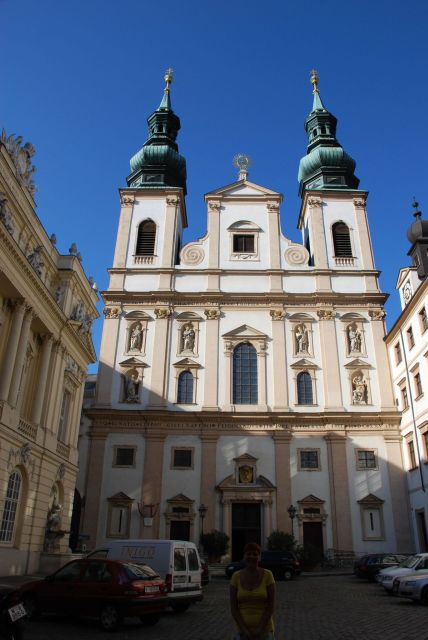
REVIEW · GUIDED WALKS IN VIENNA
Vienna: Courtyards & Hidden Places Walking Tour
Vienna has a second city behind doors. This courtyard-focused walk turns Vienna’s lanes into stories you can follow, and I love how it pairs major sights like St. Stephen’s Cathedral with quieter, lesser-known corners. The one drawback is practical, not artistic: this tour is not suitable for wheelchair users or people with mobility impairments, and there’s no option to bring large bags.
You’ll be guided by a certified tourist guide, in a small group, in either English or German. It runs in all weather, so you’ll want to dress for rain and wind, not just sunshine.
This is also built for real world schedules. It continues on from Part 1, but you can join even if you missed that first walk, and you’ll still hit major stops including Mozart’s final residence, the Franciscan Church and Monastery, the old university area, the Jesuit Church, and the old city wall.
In This Review
- Key Points You’ll Feel Right Away
- Why Courtyards Make Vienna Feel Like a Secret City
- The St. Stephen’s and Stephansplatz Start: Big Landmark, Better Context
- Palais Neupauer-Breuner and Deutsches Haus: Architecture With Personality
- Blutgasse and Domgasse: When Street Names Become Stories
- Mozart’s Final Residence: Truth, Not Just Tourist Hype
- Learning Traditional Viennese Cuisine Along the Way
- The House Where the Cow Plays on the Board
- University District, Jesuit Church, and the Old City Wall
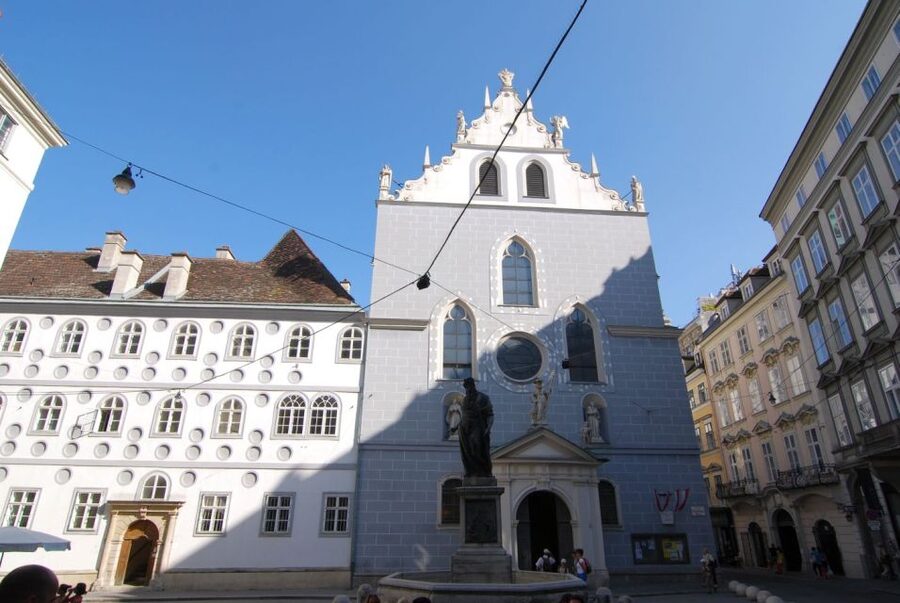
- Franciscan Church and Monastery: A Calmer Change of Pace
- Price and Logistics: Is $34 for 2 Hours Good Value?
- Group Size, Weather, and What to Wear
- Should You Book This Courtyards and Hidden Places Tour?
- FAQ
- How long is the Courtyards and Hidden Places Walking Tour?
- What does the tour cost?
- Where does the tour meet?
- Where does the tour end?
- What languages are available for the live guide?
- Does the tour run in bad weather?
- Is pick-up or drop-off included?
- Is this tour suitable for children?
- Is luggage allowed?
- Can I record audio during the tour?
Key Points You’ll Feel Right Away
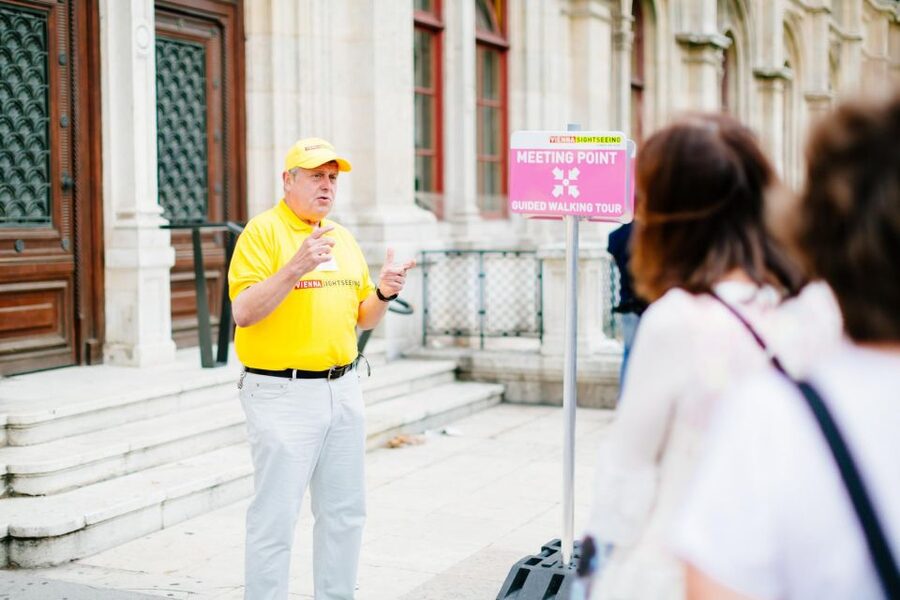
- Courtyard legends, not just pretty facades, with stories tied to Vienna’s historical center
- St. Stephen’s Cathedral plus the Stephansplatz area, so you get the big landmark without losing the hidden-city vibe
- Mozart’s final residence, with the truth vs. the myth of his life
- Food culture moments, including what traditional Viennese cuisine is really about
- Stops that connect streets, institutions, and architecture, from the University of Vienna area to church sites and the old city wall
- Small-group pacing in 2 hours, built for walking through narrow streets comfortably
Why Courtyards Make Vienna Feel Like a Secret City
Vienna looks grand on the main streets. Then you step toward a courtyard, and the city shrinks in size and gets personal.
This tour’s big idea is simple: you’re not only sightseeing from a distance. You’re learning why these buildings are arranged the way they are, and what people were doing behind those doors for centuries. That’s why the courtyards and hidden places approach works. It gives you context, not just postcards.
I also like that the tour doesn’t treat Vienna like one long museum line. It moves between famous anchors and side streets, so you can see the full map of the historical center in a short time. You’ll cover big names like St. Stephen’s Cathedral while also getting the kind of details that make the city feel lived-in.
The timing matters too. At 2 hours, you’re not stuck forever, but you also get enough stops to understand how different parts of the center connect.
More Guided Walks in Vienna
- Vienna: Guided Walking Tour of City Center Highlights
★ 4.7 · 4,989 reviews - Vienna: Vienna Central Cemetery Guided Walking Tour
★ 4.8 · 3,307 reviews - Vienna: Guided Walking Tour of City Highlights & Hidden Gems
★ 4.9 · 2,180 reviews - Vienna: Viennese Underworld Guided Walking Tour
★ 4.7 · 1,865 reviews
The St. Stephen’s and Stephansplatz Start: Big Landmark, Better Context
The tour begins with a guided walk that naturally centers on Vienna’s most recognizable landmark area, including the St. Stephen’s Cathedral zone. You’ll hear about what you’re looking at, rather than just standing nearby for photos.
St. Stephen’s Cathedral is famous for a reason, but the better part is what you learn alongside it. This tour is designed to explain the cathedral’s place in the city’s story, not only its architecture. That turns your first big sight into a map key for everything that follows.
A practical note: you’ll likely spend time walking through busy streets around Stephansplatz before you peel away into quieter lanes. If you’re sensitive to crowds, I suggest showing up a bit early so you can settle in before the group moves off.
Palais Neupauer-Breuner and Deutsches Haus: Architecture With Personality
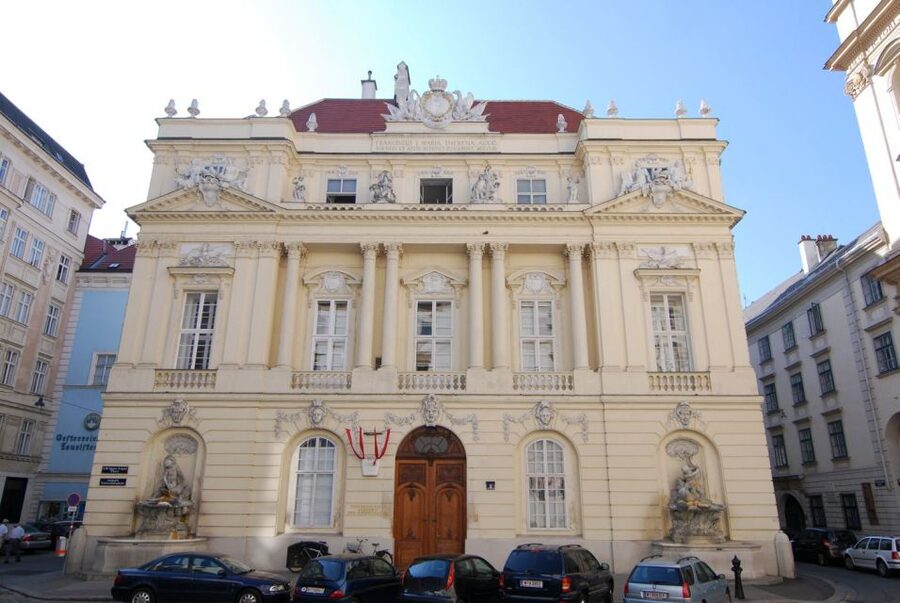
After the cathedral area, the tour moves into palace-and-building territory. Stops like Palais Neupauer-Breuner bring you into a Vienna that feels more intimate than the grand avenues.
What I appreciate here is the focus on architecture as a clue to daily life. These weren’t just “pretty buildings.” They were stages for wealth, work, and power, all shaped by the historical center around them. Even if you’re not an architecture nerd, you can follow the logic because the guide connects what you see to stories you can repeat later.
You’ll also see Deutsches Haus, another reminder that Vienna’s center is layered. Different eras overlap. You’re not looking at one time period; you’re walking through a set of decisions people made long ago, and you can still read those decisions in stone and street layout.
Blutgasse and Domgasse: When Street Names Become Stories
Then you hit narrow streets where Vienna starts to feel like it has secrets. The tour includes areas such as Blutgasse and Domgasse, which is exactly the kind of stop where a guide matters.
Street names in the historical center often point to old trades, events, and identities. On your own, you’d see the sign and move on. With a guide, those names become an entry point into the city’s past. That’s the tour’s sweet spot: it takes places you might otherwise skim and gives them meaning.
This part is also where the “courtyards and hidden places” theme turns physical. You’re walking at a human scale, and you start to notice how buildings face inward as much as they face the street.
If you’re the type who likes to understand the “why” behind what you see, this section will feel satisfying.
More of Austria on foot, bell tower to bell tower:
Mozart’s Final Residence: Truth, Not Just Tourist Hype
One of the highlights is Mozart’s final residence, where the tour focuses on the reality of his life, not only the legend people expect.
Here’s why that’s valuable. Mozart is easy to turn into a brand: geniuses, concert halls, and golden-era stories. A guided walk that frames his final residence in the context of what was really going on helps you connect the man to the time and place. You don’t have to be a music expert. If you can remember a handful of key facts, you’ll come away with a clearer picture than you’d get from a quick stop.
The same goes for the other music-adjacent streets on the route, including Ballgasse. This tour treats them as parts of a broader city story, not isolated photo opportunities.
Tip for you: if you’re a Mozart fan, go in with one question. Ask yourself what you expect to learn about him beyond the famous works. This tour’s format is built to answer that.
Learning Traditional Viennese Cuisine Along the Way
The tour doesn’t turn Vienna into a food crawl with tastings. Instead, it includes moments that explain traditional Viennese cuisine as part of the city’s culture.
That matters because Vienna’s food story is tied to social life, class, and everyday routines. When a guide explains the cuisine context while you’re standing in the historical center, it feels less like a lecture and more like a missing layer.
If you love the idea of matching what you eat with where you are, these food moments will make the whole trip feel more coherent. You’ll know what to look for when you later eat schnitzel, pastries, or coffeehouse classics.
If you’re expecting lots of samples and restaurant names, calibrate your expectations. This is still a walking tour built around streets, sights, and stories.
The House Where the Cow Plays on the Board
Yes, this stop is real, and it’s exactly the kind of detail that makes a tour memorable. The route includes the house known as Where the cow plays on the board.
I like this kind of moment because it breaks the “big monuments only” pattern. It also helps you understand how Vienna marks identity in a place. Funny names and symbolic details were a way people created memorable signals in their neighborhoods.
It’s also a reminder that the historical center isn’t only solemn. It has humor, eccentricity, and personality. Those small, strange details stick in your head.
University District, Jesuit Church, and the Old City Wall
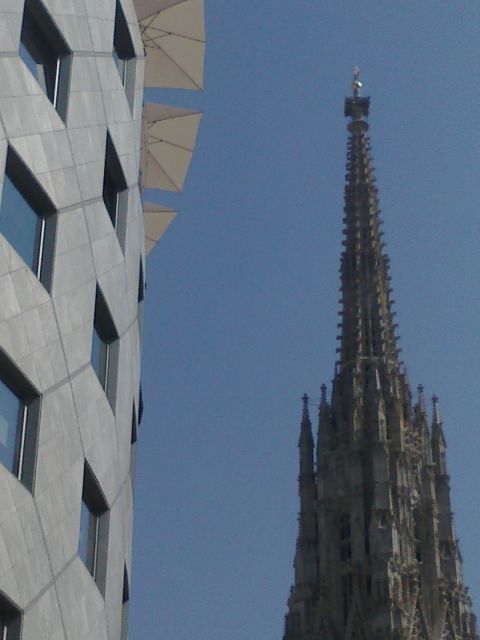
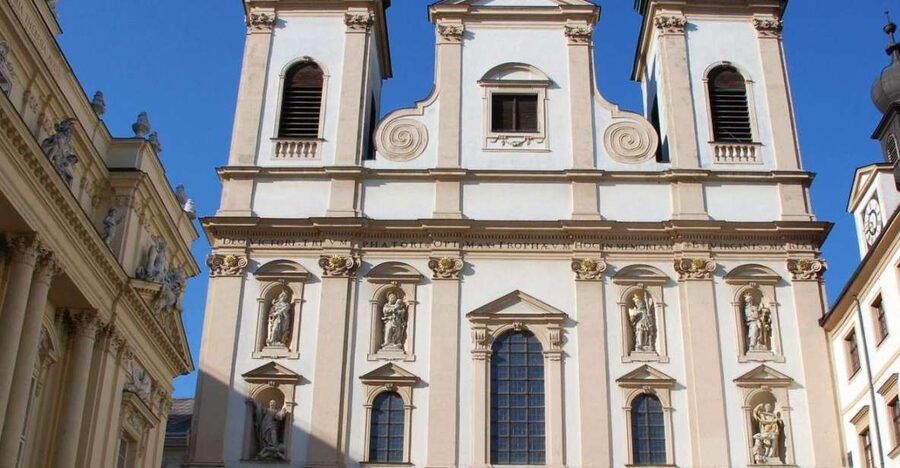
After the palace-and-street phase, you move into an area where Vienna’s institutions show up clearly, including the University of Vienna area and the Jesuit Church. This part of the walk helps you see how the city organized ideas, education, and religion across time.
Then comes the old city wall. City walls are a helpful way to visualize limits. Where boundaries once were, you can often still sense the city’s earlier “shape,” even after it grew beyond the limits.
If you’re the kind of person who likes your sightseeing to add up into a story of how cities work, you’ll appreciate this section. It connects the tour’s earlier landmark sights to the infrastructure and institutions that helped Vienna function.
A practical consideration: the route includes lots of walking through narrow streets. Good shoes are not optional if you want to enjoy it instead of just endure it.
Franciscan Church and Monastery: A Calmer Change of Pace
The tour includes the Franciscan Church and Monastery, which is a natural tonal shift from the most crowded main streets.
Monastery sites often bring a different mood: more reflective, more still, more focused on space and setting. On this walk, the monastery stop also helps round out the theme of Vienna as a layered city where different parts of society built their identities in different places.
If you’re traveling with time pressure, this kind of stop is great because it refreshes your brain. You can take your photos, but the value is in understanding why this place matters in the broader city story.
Price and Logistics: Is $34 for 2 Hours Good Value?
At $34 per person for a 2-hour small-group walk, this tour is priced like a value-focused way to cover a lot of the historical center without hiring private guides.
Here’s what makes it feel worth the money:
- You get a certified tourist guide rather than self-guided wandering.
- You cover both major landmarks and lesser-known courtyards and side streets.
- The guide’s stories add meaning, especially for Mozart’s final residence and the “truth of his life” angle.
- You walk a focused route that fits into a busy Vienna schedule.
Logistics are fairly simple. Pick-up and drop-off are not included, and the meeting point can vary depending on the option you book. You should plan to be at the meeting point on time so the group can move out together.
Also note the restrictions: no large bags or luggage, and audio recording is not allowed. If you’re the type to carry a big daypack, you’ll want to keep it small.
Group Size, Weather, and What to Wear
This is a small-group tour and it runs in all weather. That’s a good sign if you hate wasting time waiting for perfect conditions.
But it does mean you’ll need to dress smart:
- Wear layers, because mornings and evenings in Vienna can feel chilly.
- Bring a rain layer even if the forecast looks mild.
- Use shoes with decent grip for cobblestones and narrow lanes.
Children under 12 are not suitable for this tour, and it’s not designed for wheelchair users or people with mobility impairments. If you or someone in your group falls into that category, it’s better to look for a different format with step-free options.
Should You Book This Courtyards and Hidden Places Tour?
If you want a short, story-led walk that connects the famous Vienna hits with the quieter places behind them, I think this is a good booking. The courtyard legends, the Mozart reality check, and the inclusion of sites like the Franciscan Church and Monastery and the old city wall help you build a mental map fast.
Book it if:
- You like guided walking tours and you want context, not just photos.
- You’re curious about how Vienna’s streets, buildings, and institutions fit together.
- You want traditional Viennese cuisine explained in the same walk, not hours later.
Skip it if:
- You need step-free access or you are a wheelchair user.
- You’re traveling with large luggage or you rely on recording audio for personal use.
- You’d rather spend more time in one place than cover several stops in 2 hours.
FAQ
How long is the Courtyards and Hidden Places Walking Tour?
The tour duration is 2 hours.
What does the tour cost?
The price is $34 per person.
Where does the tour meet?
The meeting point may vary depending on the option booked. The listed starting options include a Bankomat location.
Where does the tour end?
There are two drop-off locations listed at Dr.-Karl-Lueger-Platz 3, 1010 Wien, Österreich.
What languages are available for the live guide?
The tour offers live guiding in German and English.
Does the tour run in bad weather?
Yes, this tour takes place in all weather conditions.
Is pick-up or drop-off included?
No, pick-up and drop-off are not included.
Is this tour suitable for children?
No, it is not suitable for children under 12 years.
Is luggage allowed?
No, luggage or large bags are not allowed.
Can I record audio during the tour?
Audio recording is not allowed.
Just added to the bill for Vienna
Guided Walks in Vienna, compared.
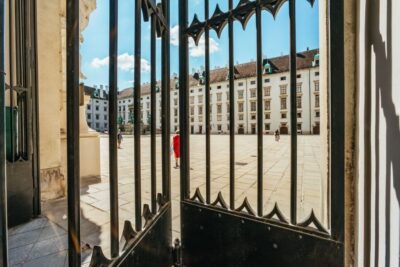
Guided Walking Tour of City Center Highlights
Read our review →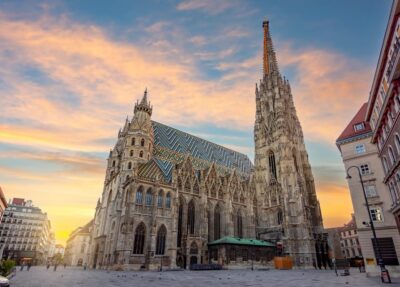
Guided Walking Tour of City Highlights & Hidden Gems
Read our review →
Vienna Historic Center Small Group Walking Tour
Read our review →
Ghosts and Legends Guided Nighttime Walking Tour
Read our review →Browse the lists this tour appears in