
REVIEW · GUIDED WALKS IN VIENNA
Vienna: Guided Walking Tour of City Highlights in a Small Group
Vienna can be a lot, fast. This small-group walking tour ties the city’s big sights together into one easy route, with the guide reading the streets like a story. You’ll get the sense of where power sat, where culture grew, and how Vienna’s center really flows, all in about 2 hours.
I especially like the small group size, which keeps the pace relaxed and lets you actually hear questions and answers. I also love that you get pictures and maps along the way, so major buildings like the Hofburg complex, the Ringstrasse, and the Opera house make more sense while you’re standing right in front of them.
One possible drawback: it’s mostly external visits only, so if you want to go inside major sights, you’ll need to plan separate time and tickets. Also, there are stairs/steps, and it’s not set up for baby strollers.
In This Review
- Quick takeaways
- A tight 2-hour loop through Vienna’s Habsburg heart
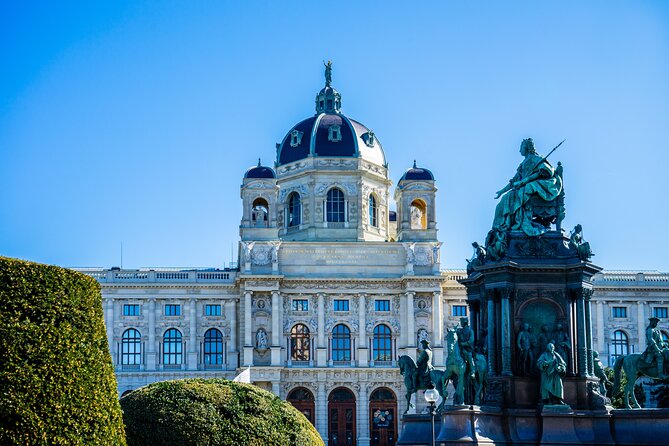
- Meeting at Maria Theresia Memorial, then straight into royal real life
- Museums you see from outside: Kunsthistorisches and Natural History
- Ringstrasse viewpoints that make the center click
- Heldenplatz to the Hofburg: the power stops you remember
- Albertina and the art institutions Vienna uses as a language
- Lipizzans, old churches, and the street rhythm of Vienna
- Stephansdom, the heart finish, and what to do next
- Price and pacing: is $42.05 actually good value?
- Who should book this tour, and who should skip it
- Should you book this Vienna city highlights walking tour?
- FAQ
- Do we enter museums on this walking tour?
- How long is the tour, and when does it start?
- What language is the tour offered in?
- Is admission included for major sights like the opera, national library, or cathedral?
- How big is the group?
- Where do we meet and where does the tour end?
- Is the tour stroller-friendly, and is it easy to walk?
- Can I get a full refund if I cancel?
Quick takeaways
- A max small group (10 or fewer, with this experience capped at 6), so you are not shouting over crowds
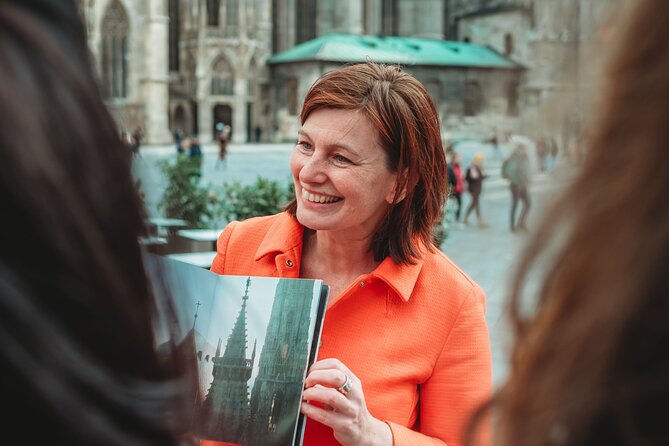
- Outside-only sightseeing of major landmarks, with context from Maria Tours Live
- Pictures and maps help you connect architecture to history as you walk
- Habsburg “power stops” from Heldenplatz and the Hofburg to Burggarten
- Arts and culture focus with sights tied to the Albertina, Staatsoper, and National Library
- A practical ending right by Stephansdom, so you can keep exploring immediately
A tight 2-hour loop through Vienna’s Habsburg heart
This tour works best as your first real day in Vienna. Not because it tries to cram every museum into two hours, but because it gives you bearings. You start at a major memorial, then move through the ring boulevard area, the Hofburg orbit, and finally into the old core around Graben and Stephansdom.
Think of it as a guided “mental map.” You see the big imperial buildings from close range, but you also learn what to look for: the way Vienna’s center was built to impress, how different rulers shaped the city, and how the arts and institutions grew around the court.
The price is also fair for what you get. You are paying mainly for a professional English-speaking guide, plus the visual aids that make the walk click. You’re not buying entry tickets as part of the package, so the cost stays focused on guidance rather than museum admissions.
More Guided Walks in Vienna
- Vienna: Guided Walking Tour of City Center Highlights
★ 4.7 · 4,989 reviews - Vienna: Vienna Central Cemetery Guided Walking Tour
★ 4.8 · 3,307 reviews - Vienna: Guided Walking Tour of City Highlights & Hidden Gems
★ 4.9 · 2,180 reviews - Vienna: Viennese Underworld Guided Walking Tour
★ 4.7 · 1,865 reviews
Meeting at Maria Theresia Memorial, then straight into royal real life
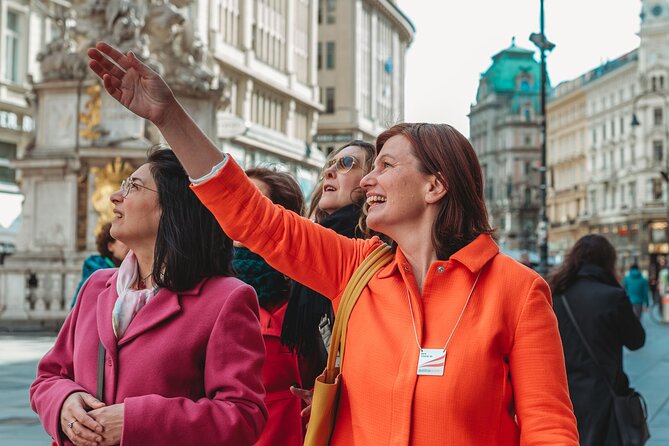
You meet at the Maria Theresia Memorial at Maria-Theresien-Platz (right in Vienna’s central area). The guide uses an orange sign, and it’s easy to spot. The tour starts at 10:00 am, and it ends near St. Stephen’s Cathedral, in the heart of the historic center.
A small practical note: there are no water stops built into the tour at the meeting point. There is a chance to buy coffee nearby, and the nearest public restrooms are about a five-minute walk away. That matters because the tour is fast-paced in the sense that you will keep moving, not because it sprints.
Before you start, I like that the tour sets expectations clearly: it runs in all weather conditions, you should dress for rain or sun, and you can expect stairs/steps. If you have mobility issues, walking disorders, or you need stroller access, you will likely find another option more comfortable.
Museums you see from outside: Kunsthistorisches and Natural History
Your route takes you past two of Vienna’s most important museum buildings, without going inside. That’s not a downgrade, it’s a strategy. From the outside, you get the scale, the style, and the sheer confidence these institutions were built with. Then your guide connects them to the Habsburg court and the ideas behind their collections.
At the Museum of Fine Arts, also known as the Kunsthistorisches Museum, the focus is the idea of a royal collection becoming a public resource. You’ll hear about famous names associated with the picture gallery and European art history. You also learn why some works are so significant that they shape what people come to see in Vienna today.
Next you move to the Natural History Museum. The building and exhibitions are described as part of one overall “total work of art,” with an atmosphere that feels designed, not accidental. Even from street level, you can sense the intent: this is Vienna showing off its curiosity and authority at the same time.
If you want to go deeper, you can add museum time later. But for getting oriented, outside views plus context are a strong combo.
Ringstrasse viewpoints that make the center click
Then you cross the Ringstraße, Vienna’s grand circular boulevard around the historic core. This is one of those streets that looks simple on a map, but when you walk it, you see how it acts like a spine for the entire city center.
Your guide helps you read what you are seeing. Instead of just pointing at fancy façades, the tour connects them to the city’s planning and the imperial mindset: Vienna was built to be experienced from the outside, in motion, with grand architecture lined up like set pieces.
After that, you reach a key architectural story point tied to the city’s walls and the Hofburg. You’ll see the palace gate area known as the Burgtor, built in the early 1820s as a replacement after damage during Napoleon’s era. It is one of those details that’s easy to miss if you are just sightseeing on your own, but it adds a real “oh, that explains it” moment.
More Sightseeing & City Tours in Vienna



Heldenplatz to the Hofburg: the power stops you remember
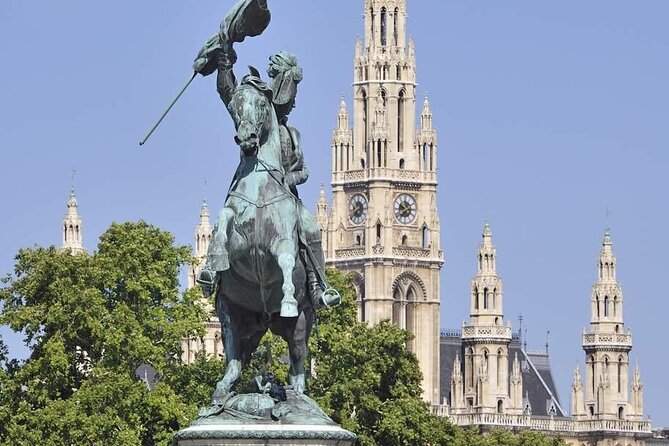
Heldenplatz, the Heroes’ Place, is next. This open square is dominated by monumental equestrian statues, and the design gives you a standout view toward the Imperial Palace. The guide also points out what you can combine visually, like how Heldenplatz lines up with nearby green space.
You then move into the Hofburg orbit, starting with the Hofburg itself, Vienna’s imperial palace complex. It began as a 13th-century castle and expanded as the Habsburgs grew their reach. Even without entering, you get the feeling of an evolving seat of power, not a single frozen moment.
One highlight inside the complex is the Gothic Imperial Chapel. The connection here is not just architectural. It’s also cultural, because the Vienna Boys’ Choir performs there during High Mass on Sundays. So you are seeing something that still functions, not only something preserved in amber.
Then the tour eases into Burggarten, the Hofburg Palace Gardens. This stop is a nice change in pace from the heavy monumental feel of the imperial squares. Burggarten was created in 1819, on older foundations, and the walk is meant to slow you down just enough to notice the design.
You’ll also see the Palm House, the Butterfly House. Even if you do not go inside, it’s a recognizable feature that keeps the gardens from feeling like a generic park stop.
Albertina and the art institutions Vienna uses as a language
The tour also passes by the Albertina Museum’s Graphic Art Collection from the outside. Here, the guide does something useful: they give you the scale of what the collection represents, so your eyes can follow the story. The collection includes over one million drawings and prints, spanning centuries. The big idea is that this is not random art storage, it is a long-term record of European visual culture.
The other useful point is practical: many masterpieces are too light-sensitive for permanent display. So when you later decide whether to add an exhibition inside, you understand why what you see changes over time and why conservation matters.
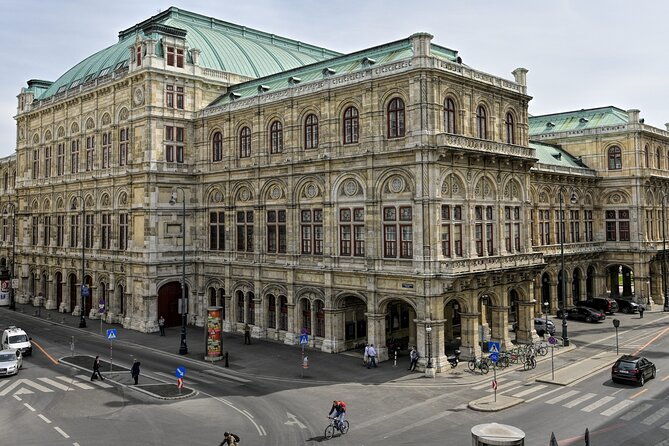
From there, you head toward Vienna’s theater and library world in the same day. You’ll see the Wiener Staatsoper, one of the most famous opera houses on the planet. Even outside, it feels like Vienna is saying, yes, this is a serious city for serious music.
Next is the Austrian National Library area. The tour highlights the Augustinerkirche and the baroque State Hall area, plus the Redoutensäle at Joseph square. The key value is that your guide links these places to Austria’s identity as a place of learning and ceremony, not only sightseeing.
Lipizzans, old churches, and the street rhythm of Vienna
The Spanish Riding School is another major cultural landmark on your route. The stop focuses on the Stallburg, the horse stables of the white Lipizzans. Again, it’s outside-only here, so you are not committing to a timed entry, but you still learn why the school matters and how it became part of Vienna’s public image.
You also pass St. Michael’s Church, which dates back to the year 1220. That age gives you perspective fast. You are walking through a layered city where centuries stack on top of each other, even when the street looks modern.
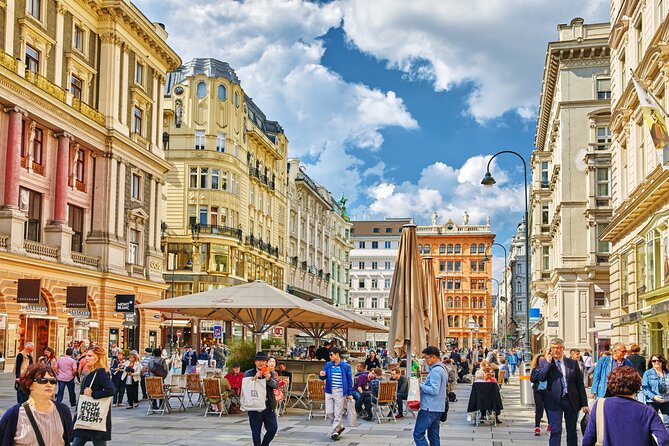
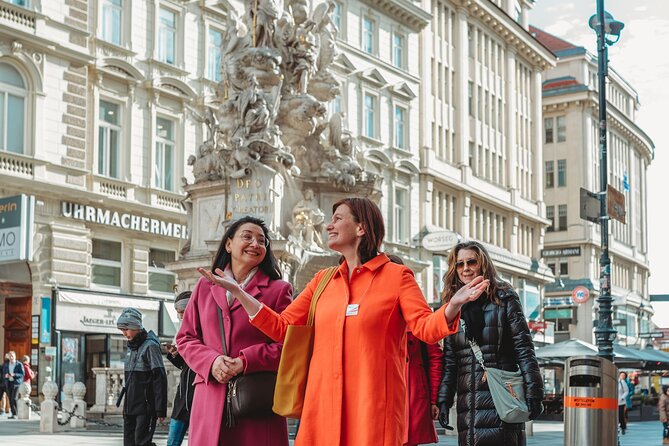
Then you reach Graben and Kohlmarkt, which the tour frames as Vienna’s exclusive shopping miles. This is a good moment to pause and look up. The buildings here feel designed for both commerce and ceremony, which is a very Vienna kind of mix.
After that, you see the 300-year-old Catholic church stop known for classical concerts. Even without entering, it’s helpful context: Vienna’s reputation is not only about imperial palaces, it’s also about music happening in real spaces on real schedules.
Stephansdom, the heart finish, and what to do next
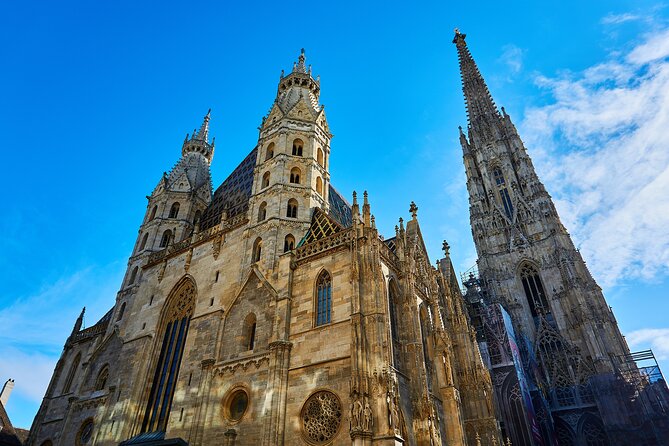
Your tour ends near St. Stephen’s Cathedral, Stephansdom, which is presented as the heart of Vienna’s old city center. You’ll have enough time at the end to keep exploring the area on your own.
This finish point is smart for you if you still have half a day or an evening. Once you are in this neighborhood, you can branch out easily to cafés, shopping streets, and small side lanes that feel unmistakably central.
Also, because the tour includes stairs/steps and runs in all weather, your best move after the walk is to pick something close by. You are already where you want to be.
Price and pacing: is $42.05 actually good value?
At $42.05 per person for about two hours, the value depends on what you want from Vienna on day one.
If you want a self-guided checklist, this might feel pricey, because it does not include museum entries. But if you want a guided mental map, it’s a good deal. You are paying for:
- a professional English-speaking guide
- a small group atmosphere (10 or fewer, capped at 6 for this experience)
- pictures and maps that help you interpret what you are seeing
- a route that hits major historical, cultural, and architectural landmarks without needing ticket lines
Pacing is another big part of the value. In practice, a small group keeps the walk from turning into a sprint where people get separated. The tour is action-packed, but it should not feel frantic if you speak up when you need a pause for photos.
One caution: it is not ideal if you use a stroller, carry large luggage, or have limited mobility. The route includes stairs/steps, and the tour is explicitly not designed for baby strollers or walking disorders.
Who should book this tour, and who should skip it
I think this is a strong pick for you if:
- it’s your first time in Vienna and you want the center to make sense quickly
- you like history explained in real street context, not only in museum rooms
- you want a small-group experience where you can actually ask questions
- you enjoy arts connections, from the opera world to the National Library and major graphic art
I’d consider skipping or swapping tours if:
- you need step-free access, since the route includes stairs/steps
- you want to spend lots of time inside museums or paid cultural spaces, since the tour is external-only
- you travel with large bags or require storage, since luggage and large items are not allowed
A practical bonus: this tour is also a perfect springboard for your own planning. The guide’s style tends to go beyond facts into practical local advice, including where to eat and what local seasonal events look like.
Should you book this Vienna city highlights walking tour?
Book it if you want the fast version of Vienna that still feels personal. The small group cap makes a real difference, and the guide’s explanations, plus the pictures and maps, help you connect each stop into one clear story. You end right by Stephansdom, so you are not stuck back at a hotel far away.
Skip it only if your priorities are inside-museum time, step-free touring, or stroller-friendly routes. For everyone else, this is a solid, efficient way to get oriented, learn how the city’s power and culture shaped what you see today, and then go explore with confidence.
FAQ
Do we enter museums on this walking tour?
No. The tour is external visits only and it does not visit inside any museums.
How long is the tour, and when does it start?
It runs for about 2 hours and starts at 10:00 am.
What language is the tour offered in?
The tour is offered in English.
Is admission included for major sights like the opera, national library, or cathedral?
No. Admission tickets are not included, and for some stops the tour notes that tickets are not included. This is also consistent with the outside-only approach.
How big is the group?
This tour is limited to 10 people or fewer, and the experience is capped at a maximum of 6 travelers.
Where do we meet and where does the tour end?
You meet at Maria-Theresien-Platz, 1010 Wien, Austria at the Maria Theresa Memorial. The tour ends next to St. Stephen’s Cathedral at Stephansplatz 3, 1010 Wien, Austria.
Is the tour stroller-friendly, and is it easy to walk?
It is not suitable for baby strollers. The tour includes stairs/steps, and it asks for a moderate physical fitness level. It is not recommended for travelers with walking disorders.
Can I get a full refund if I cancel?
Yes. Free cancellation is available up to 24 hours in advance for a full refund. If you cancel less than 24 hours before the start time, the amount you paid will not be refunded.
Bell Tower to Bell Tower
- Vienna: World War II Historical Walking Tour
★ 4.8 · 1,772 reviews - Vienna Historic Center Small Group Walking Tour
★ 5.0 · 1,746 reviews - Vienna: Private Walking Tour with a Local
★ 4.6 · 1,446 reviews - Vienna: 1.5-Hour Underground Walking Tour
★ 4.9 · 1,146 reviews
Just added to the bill for Vienna
Guided Walks in Vienna, compared.
Guided Walking Tour of City Center Highlights
Read our review →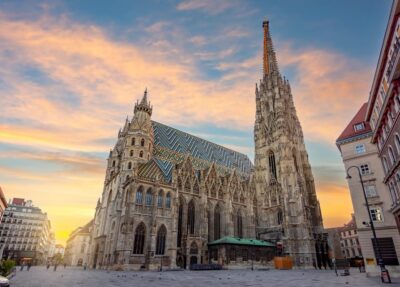
Guided Walking Tour of City Highlights & Hidden Gems
Read our review →
Vienna Historic Center Small Group Walking Tour
Read our review →
Ghosts and Legends Guided Nighttime Walking Tour
Read our review →Browse the lists this tour appears in