
REVIEW · GUIDED WALKS IN VIENNA
Vienna: Meet Beethoven Life Private Guided Walking Tour
Beethoven feels close in this part of Vienna. This private guided walk links famous city landmarks to Ludwig van Beethoven’s life, with a real focus on places like the Beethoven Pasqualatihaus.
I especially like the intimate pace. In real life, that means you get a guide who can tune the story to your group, whether you want composer details or just want to understand why these buildings matter. Guides I heard about, including Ingrid and Sergio, are the kind who can switch gears between big Vienna scenes and smaller Beethoven moments.
One thing to plan for: not everything is included. You’ll see many major sights from the outside, and some museums or church entrances are listed as not included, with the Secession entrance ticket called out as optional.
In This Review
- Key highlights worth your attention
- Starting at Friedrichstraße 12, where the walk becomes your plan
- Secession Building: the gold dome stop (and the optional entry fee)
- The Historic Center and Ringstrasse sweep through Beethoven’s Vienna
- Beethovenplatz statue, Wiener Staatsoper, and why “music city” is literal
- Theatermuseum, Hofburg exterior views, and Burgtheater details
- Volksgarten for breathing room, then Rathaus by the numbers
- Beethoven Pasqualatihaus: the 2-hour highlight that changes the whole tone
- Adding Stephansplatz and St. Stephen’s Cathedral without derailing the day
- Extended tour upgrade: the evening concert ticket plan
- Price and value: what you’re really paying for at $264.50 per person
- Who this Beethoven Vienna tour suits best
- Should you book this tour?
- FAQ
- What is the meeting point and where does the tour end?
- How long is the Beethoven walking tour in Vienna?
- Is the tour private or shared with other people?
- Is the tour offered in English?
- What ticket costs are included, and what is optional?
- Does the tour include a classical concert ticket?
- When are the concerts scheduled for the extended option?
- Is it easy to get there using public transportation?
Key highlights worth your attention
- Beethoven Pasqualatihaus for 2 hours, with admission included and a look at notes, piano ties, photos, and paintings
- A true private guide for your group, in English, with room to adjust for interest levels
- Old Town landmarks in a Beethoven storyline, from Staatsoper to Burgtheater and Hofburg exterior views
- Beethoven Pasqualatihaus plus a concert option (extended tour), typically in the evening
- Comfort breaks baked in, including the quieter stretch around Volksgarten
- Mobile ticket included, plus easy transit access around the start point
Starting at Friedrichstraße 12, where the walk becomes your plan
The tour begins at Friedrichstraße 12, 1010 Wien, and it ends back there. That matters more than it sounds. You can park your plans around a known starting point, and you do not lose the day to figuring out “where do we meet now?”
The timing is listed as about 3 to 5 hours, so think of it as a half-day in “slow-sightseeing mode.” You’ll be walking through central Vienna, mostly on foot, with short stops and commentary designed to connect Beethoven to the city’s big spaces.
If your group includes someone who is a Beethoven fan in full-on mode, this is a smart choice. The tour is built for Beethoven, but it also includes mainstream Vienna classics so the non-fan in your group still has plenty to look at.
More Guided Walks in Vienna
- Vienna: Guided Walking Tour of City Center Highlights
★ 4.7 · 4,989 reviews - Vienna: Vienna Central Cemetery Guided Walking Tour
★ 4.8 · 3,307 reviews - Vienna: Guided Walking Tour of City Highlights & Hidden Gems
★ 4.9 · 2,180 reviews - Vienna: Viennese Underworld Guided Walking Tour
★ 4.7 · 1,865 reviews
Secession Building: the gold dome stop (and the optional entry fee)
Your first stop is the Secession Building, and you meet your guide there by finding your name on a holding card. You’ll spend around 10 minutes taking in the look of the building, including that famous golden dome against a white-and-gold visual theme.
The guide also connects it to Beethoven. That’s the trick here: Vienna landmarks are often beautiful on their own, but the value is in the explanation, not the postcard photo.
Practical note: Secession admission is optional and not included. The listing gives a typical range of about 4.5 to 9.5 EUR if you choose to go inside. If you’re the type who hates extra fees, you can still enjoy the exterior without buying that ticket.
The Historic Center and Ringstrasse sweep through Beethoven’s Vienna
Next comes the Historic Center of Vienna, with about 1 hour here. This is where you get the map in your head. The tour frames the city’s architecture and layout so Beethoven’s story has a real place to sit.
You’ll see the mix of styles the city is known for, including Baroque castles and gardens, then the later Ringstrasse area lined with grand buildings, monuments, and parks. Even if you have seen Vienna before, this “why it looks like this” framing makes it easier to read the city as you walk.
Here’s what I like from a practical standpoint: you’re not stuck in one museum mindset. You’re walking through urban planning and style choices, and your guide keeps tying it back to what Beethoven would have experienced during his time.
Beethovenplatz statue, Wiener Staatsoper, and why “music city” is literal
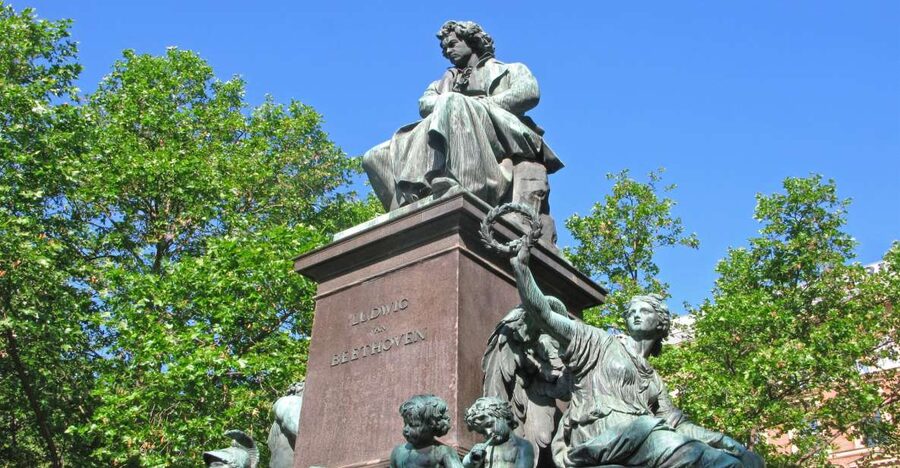
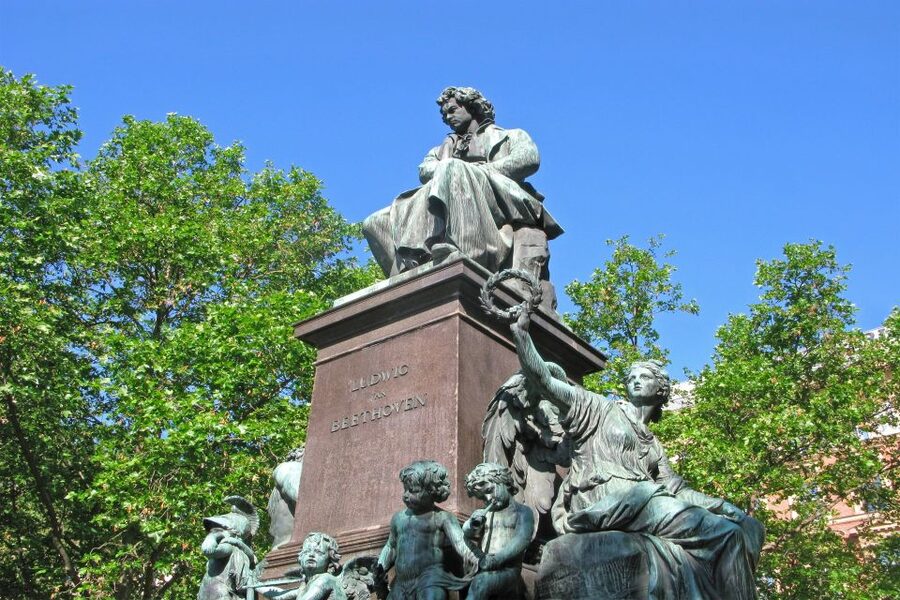
After the Historic Center, you hit the Beethoven Statue at Beethovenplatz, with about 25 minutes. This is one of those stops that feels simple until you realize how many people pass through Vienna without really looking at what a composer’s legacy gets turned into. You’ll get the context from your guide, and you can pause for photos in a calmer moment.
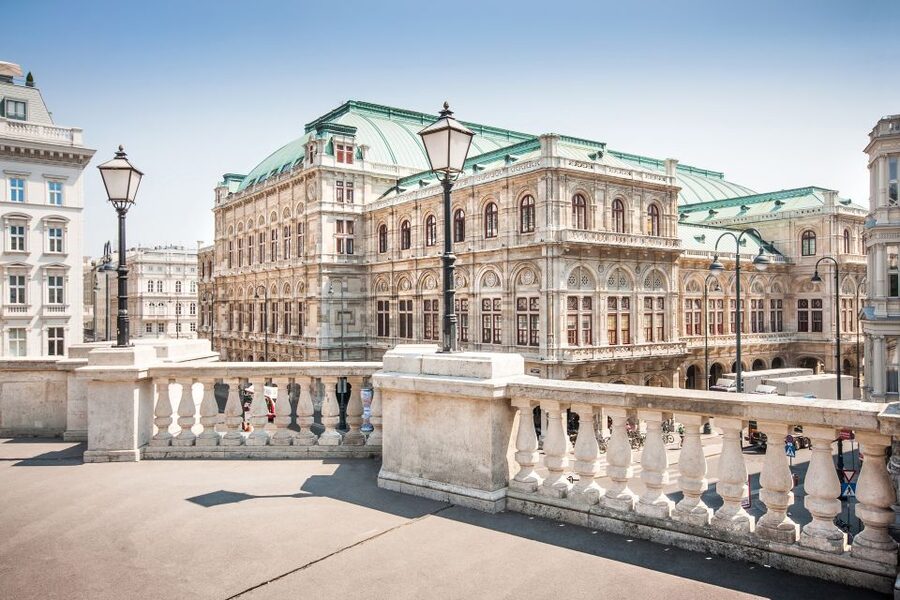
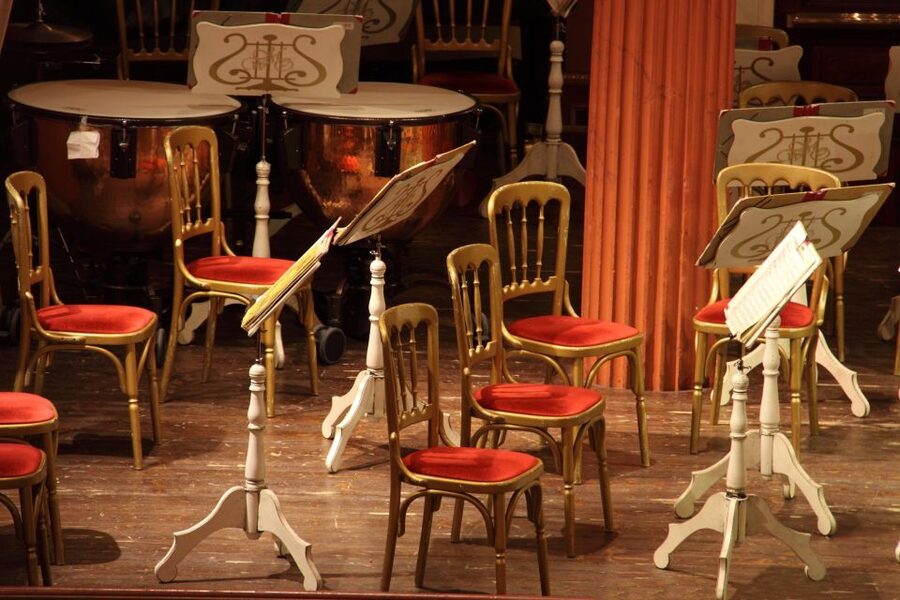
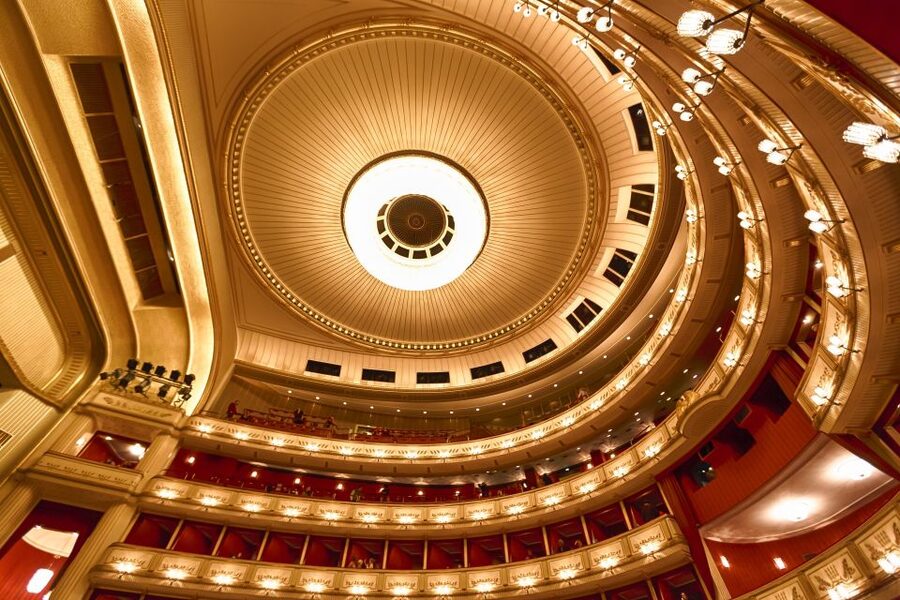
Then it’s on to the Wiener Staatsoper for around 10 minutes. Admission is listed as free, and the point is the location. Vienna’s identity as a music capital is not just a marketing line. You’re standing near a stage tied to the performance culture that has shaped composers, including Beethoven’s legacy.
From there you stop at Albertina for about 10 minutes. You’ll look at the building facade and that horse-rider statue on top. Albertina is also a major art venue, with the listing specifically pointing to masterpieces by artists such as Da Vinci, Raphael, Michelangelo, Dürer, and Rembrandt. Even if you don’t enter, it helps to know what kind of collection you’re walking past.
More of Austria on foot, bell tower to bell tower:
Theatermuseum, Hofburg exterior views, and Burgtheater details
Your next stop is the Theatermuseum for about 10 minutes. The key fact here is Beethoven’s connection: the building is tied to him conducting a private Viennese premiere of his 3rd Symphony, Eroica. That detail makes the exterior feel like more than just another wall.
A quick reality check: this specific stop lists admission as not included, so you’ll likely get the story from outside unless you choose another option elsewhere. Still, the Eroica connection gives you a reason to look closely.
Then you pass the Hofburg for about 10 minutes, also from the outside. The listing notes the tour is exterior only for this activity. If you want to go inside, the data suggests it would be covered in other tours, not this one.
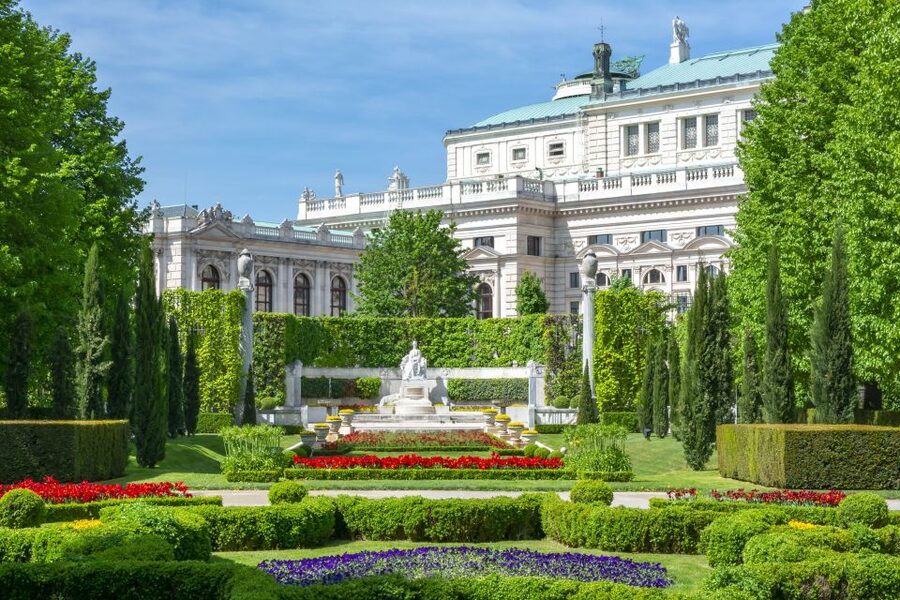
Next up is Burgtheater for about 10 minutes. Again, it’s about the exterior. It’s on the Ringstrasse, and you can admire the ornate civic architecture while your guide connects it back to the performing arts world that surrounded Beethoven.
Volksgarten for breathing room, then Rathaus by the numbers
After all that grand architecture, you get a welcome pause at Volksgarten for about 25 minutes. This is a quieter park area with green space and a rose garden, and it’s a smart stop because it breaks the “tight museum lane” feeling. You’ll have time to reset your feet and let the stories settle.
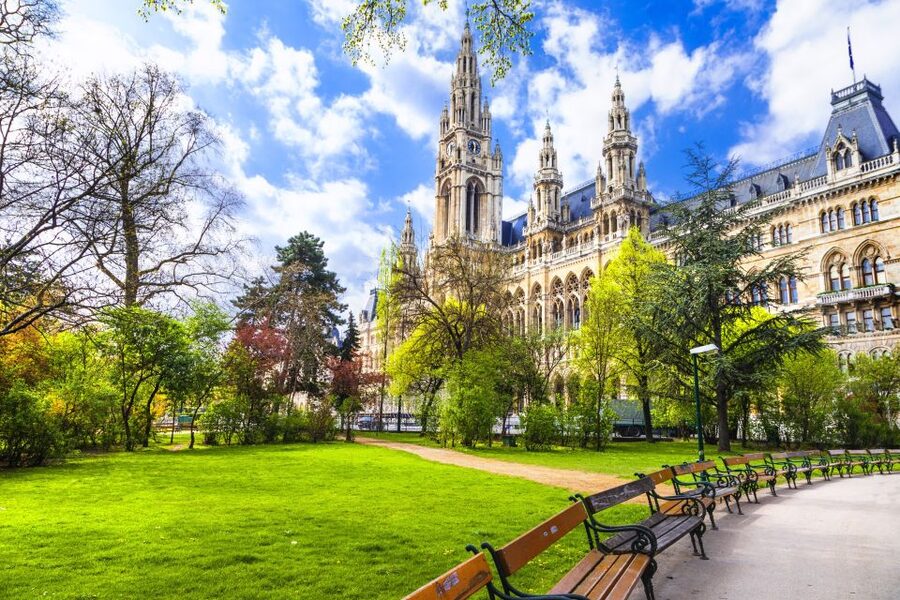
Then you reach Rathaus, Vienna’s town hall, for about 10 minutes. The listing calls out the scale, including the fact that it was built using around 30 million bricks. That kind of specific detail is exactly why I like guided walks. It turns big buildings into something measurable.
Right near this area you also have a view opportunity of the Austrian Parliament Building and the University of Vienna in the close vicinity. After that, you move along Ringstrasse for another short look at about 10 minutes, from Opera to Rathaus. This is where your guide helps you connect the dots between spots you might otherwise treat like isolated landmarks.
Beethoven Pasqualatihaus: the 2-hour highlight that changes the whole tone
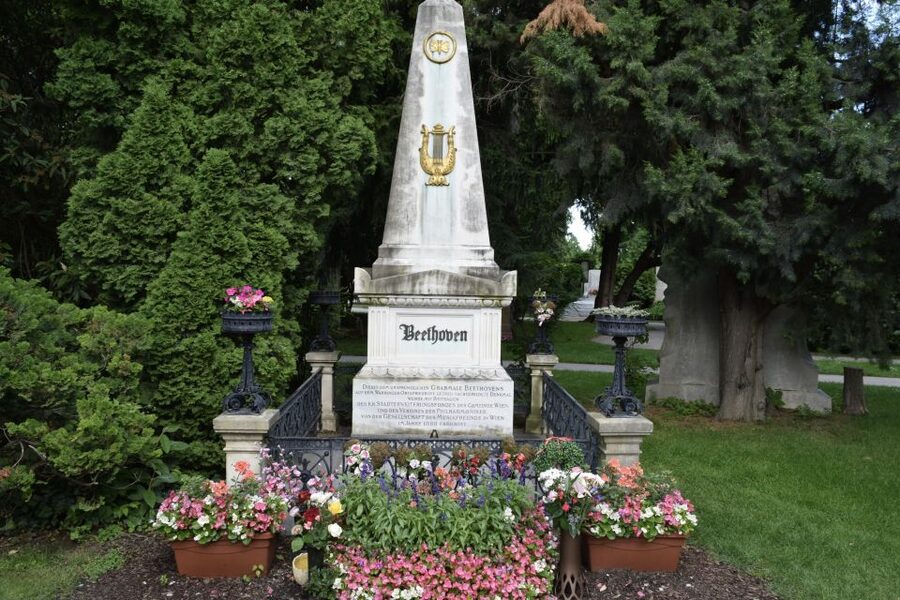
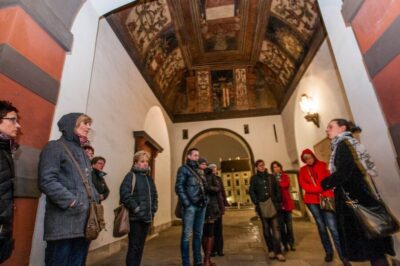
The centerpiece stop is the Beethoven Pasqualatihaus, with about 2 hours on site, and admission is included. If you only remember one moment from this tour, make it this one.
This place matters because it’s presented as an authentic residence tied directly to Beethoven. The listing also notes it includes part of the remains of old city fortifications. That combination creates an interesting feeling, like you’re walking between eras at the same time.
Inside, the collection focuses on composer-related items, including notes, a piano connection, photos, and paintings. The guide specifically points out stories tied to Beethoven’s well-known works like Fur Elise and Fidelio. Even if you already know the tunes, the way a museum frames them through an artist’s environment can make them feel newer.
The two-hour timing is important. It’s long enough that you’re not just rushing through “look and move on.” You can slow down, ask questions, and let the guide tie what you see to the broader Vienna story you heard earlier.
Adding Stephansplatz and St. Stephen’s Cathedral without derailing the day
After the Pasqualatihaus, you’re given flexibility. The tour notes that Stephansplatz is not part of the fixed theme route, but your guide can adapt the tour to your needs if you request it.
The same idea applies to St. Stephen’s Cathedral and Karlsplatz, and possibly Karlskirche. The listing includes these as “can be visited on request,” with the cathedral and Karlsplatz marked as free for the stop, and Karlskirche marked as not included for admission.
This approach is useful because Vienna trips often fail for one reason: everyone wants something different, and rigid schedules break the mood. Here, you can ask for a quick cathedral moment if you want that iconic exterior or a relaxed pause in a square atmosphere.
If you want the practical version of this: you still stay within the tour framework, but you can swap time based on your group’s energy.
Extended tour upgrade: the evening concert ticket plan
If you choose the extended option, your ticket includes a classical concert in the evening. The listing says these concerts are held in multiple venues in Vienna Old Town, and the exact venue can change based on group size, day, time, and availability.
The timing window is also specific: concerts usually start between 5:30 and 8 pm. That means your earlier walking stops matter. Build in time to arrive early, and do not treat the walking part as optional on that day.
What’s included is a ticket for a concert featuring music by Beethoven, Mozart, Strauss, or Schubert. You will have the exact concert time on the concert ticket sent by email, and you should check that message the day before.
Price and value: what you’re really paying for at $264.50 per person
At $264.50 per person, this is not a cheap “grab and go” tour. The value comes from the things that cost real money in Vienna: a licensed private guide, a Beethoven-focused storyline, and included admission to the Beethoven Pasqualatihaus.
Here’s how I’d weigh it if you’re deciding:
- You pay for focus. This is not a general Vienna highlights walk with a few composer facts sprinkled in.
- You pay for time. The Pasqualatihaus stop is two hours with entry included, not a 20-minute peek.
- You may pay extra only if you choose it. The Secession entrance is optional, and several stops are outside-only or marked as not included if you want to go in.
Also, the tour lists group discounts, so the per-person cost can be more reasonable if you book as a group. Still, it stays private, meaning you are not sharing your guide with strangers.
If you’re someone who hates spending money on “looking at buildings” without guidance, this tour is built to prevent that. But if you already know every Beethoven fact and you are allergic to walking between sights, you might not feel the value as strongly.
Who this Beethoven Vienna tour suits best
This tour fits best if you:
- Want Beethoven’s Vienna told through real places, not just dates and names
- Like private guidance that can adjust to your interest level (the guide can meet a Beethoven fan at their pace)
- Appreciate architecture and music culture together, without spending your day stuck only in museums
- Want a manageable half-day walk that still reaches the big touchstone stop, the Pasqualatihaus
It might not be ideal if you:
- Want nonstop indoor admissions at every stop
- Expect every major sight to have a ticket included
- Plan your day around a very strict schedule that cannot accommodate the concert timing in the extended option
Should you book this tour?
Yes, if Beethoven is your main reason for visiting Vienna and you like guided context that turns landmarks into stories. The Pasqualatihaus visit alone gives this tour a strong anchor, and the private guide adds the kind of explanation that makes the rest of the walk click.
I’d think twice only if you dislike walking, or if you strongly prefer a tour where every site is guaranteed to be entered. In this one, you get many impressive exteriors plus deep time in the one place that matters most for Beethoven’s personal world.
FAQ
What is the meeting point and where does the tour end?
The tour starts at Friedrichstraße 12, 1010 Wien, Austria, and it ends back at the same meeting point.
How long is the Beethoven walking tour in Vienna?
The duration is listed as approximately 3 to 5 hours.
Is the tour private or shared with other people?
It is a private tour/activity, and only your group participates.
Is the tour offered in English?
Yes, it is offered in English.
What ticket costs are included, and what is optional?
Entrance to Beethoven Pasqualatihaus is included. The Secession Building entrance is optional (not included), and some other stops are also marked as not included.
Does the tour include a classical concert ticket?
If you choose the extended option, the tour includes a concert ticket for Beethoven, Mozart, Strauss, or Schubert.
When are the concerts scheduled for the extended option?
Concerts typically start between 5:30 pm and 8 pm, and you’ll find the exact time on your concert ticket attached in the email.
Is it easy to get there using public transportation?
Yes. The tour notes that the start point is near public transportation.
Just added to the bill for Vienna

Guided Walks in Vienna, compared.
Guided Walking Tour of City Center Highlights
Read our review →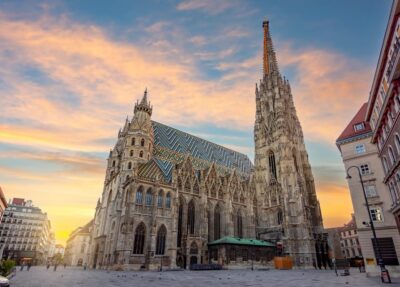
Guided Walking Tour of City Highlights & Hidden Gems
Read our review →
Vienna Historic Center Small Group Walking Tour
Read our review →
Ghosts and Legends Guided Nighttime Walking Tour
Read our review →Browse the lists this tour appears in