
REVIEW · GUIDED WALKS IN VIENNA
Vienna Private Walking Tour With A Professional Guide
Vienna’s best move is getting your bearings fast. This private 2-hour walking tour is built for that, with a professional guide who keeps you on track and explains what you’re seeing as you go. You start at Stephansplatz and then work through big hitters like St. Stephen’s Cathedral, the Hofburg area, and the museum zone, all without wrestling a map while you’re trying to enjoy Vienna.
I especially like the setup: it’s private for your group only, so your guide can adjust to your interests on the spot. And because it’s a walking route with frequent visual “checkpoints,” you get a true orientation to central Vienna, not just a list of monuments. The main drawback to watch for is pace and depth: if you want faster walking, more interactive storytelling, or extra historical detail at every stop, you may need to ask your guide to slow down less and go deeper on what you care about.
In This Review
- Key things I’d notice right away
- Why this private 2-hour Vienna walk is a smart starting move
- Price and what you really get for $323.69 per group
- The meeting point: Stephansplatz 8a, and why starting here helps
- Getting oriented fast at St. Stephen’s Square and the cathedral zone
- State Opera House and the museum views: seeing without committing to tickets
- Hofburg imperial palace area, Michaelertor, and St. Michael’s Church
- Looshaus, Graben Street, and St. Peter’s Church: the walk that feels like Vienna
- Stroll back through Stephansplatz and Church of St. Rupert
- Morzinplatz Jewish Memorial, Stubentor, and the quieter side of the center
- Mozart’s last residence and Ballgasse: cultural stops that also act as direction markers
- Pacing, engagement, and how to get more out of your guide
- What’s included, what’s not, and how that affects your schedule
- Who this tour is for, and who should pick something else
- Should you book this Vienna Private Walking Tour?
- FAQ
- How long is the Vienna Private Walking Tour?
- Is the tour private or shared with other groups?
- What language is the tour offered in?
- Where does the tour start and end?
- Are entrance fees included?
- Do I need a printed ticket?
- What is the cancellation policy?
- Is the tour accessible for service animals?
Key things I’d notice right away
- Private, guide-only experience: your group stays together the whole time
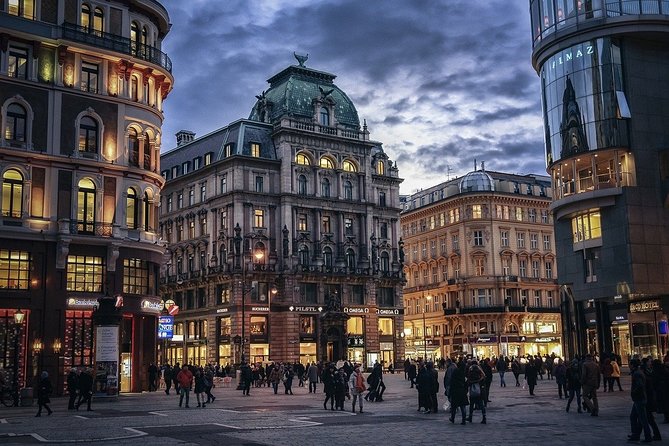
- Big-orientation route in 2 hours: ideal for a first pass through central Vienna
- Monument stops with commentary: helpful context for major architecture and city history
- On-the-spot customization: you can steer the focus while you walk
- Easy planning basics: English tour, mobile ticket, and a clear meeting point
Why this private 2-hour Vienna walk is a smart starting move
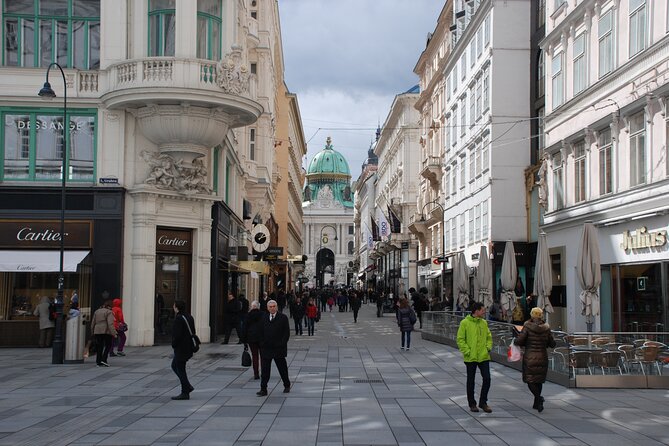
Vienna can feel like a museum you step into with your shoes on. That’s not bad, but it can get overwhelming fast if you wander without a plan. This tour is designed to solve that exact problem. You get a guided route that threads together several of the city’s most recognizable landmarks, so you walk away knowing where things sit in relation to each other.
The private angle matters. With a group-only guide, you are not competing with strangers who want different things. You can ask for what you care about, and your guide can recalibrate in real time. The “customizing on tour” note is not just marketing fluff. In practice, it’s what turns a standard highlights walk into something closer to a tailored city orientation.
One more practical perk: the tour is offered in English, and it uses a mobile ticket. That keeps the whole day lighter. You are not juggling printed passes or last-minute paperwork.
More Guided Walks in Vienna
- Vienna: Guided Walking Tour of City Center Highlights
★ 4.7 · 4,989 reviews - Vienna: Vienna Central Cemetery Guided Walking Tour
★ 4.8 · 3,307 reviews - Vienna: Guided Walking Tour of City Highlights & Hidden Gems
★ 4.9 · 2,180 reviews - Vienna: Viennese Underworld Guided Walking Tour
★ 4.7 · 1,865 reviews
Price and what you really get for $323.69 per group
The price is $323.69 per group up to 15, and the tour runs about 2 hours. So the value depends on how many people you’re bringing. If you’re traveling as a couple or a small family, the per-person cost can feel steep for a short walk. If you’re filling out the group capacity, the cost per person drops quickly.
Here’s the trade-off I think is worth considering: you are paying for a guide who stays with just your party, plus a focused route that hits multiple major sights. Entrance fees are not included, so you’re not paying for museums during the tour, but you are paying to understand what you’re looking at while you’re in the street-level city.
If you’re the type who likes to take a first-day stroll that makes later exploring easier, this pricing can feel fair. If you mainly want to “see stuff” with minimal commentary, a lower-cost self-guided option might suit you better.
The meeting point: Stephansplatz 8a, and why starting here helps
You meet at Stephansplatz 8a, 1010 Wien, and the tour ends back at the meeting point. Starting and ending in the same place is underrated. It reduces the stress of finishing somewhere inconvenient, especially if you’re planning a meal, museum visit, or evening concert afterward.
Stephansplatz is also a natural hub. It’s easy to build your day around it. You can align the tour with dinner reservations, transit schedules, or a later stop at the cathedral area. And since the tour is near public transportation, you can get there without a long detour.
If you want one simple tactic: arrive a few minutes early, then take a quick look around the square. Even before the guide speaks, you’ll feel how the streets radiate outward from this core area.
Getting oriented fast at St. Stephen’s Square and the cathedral zone
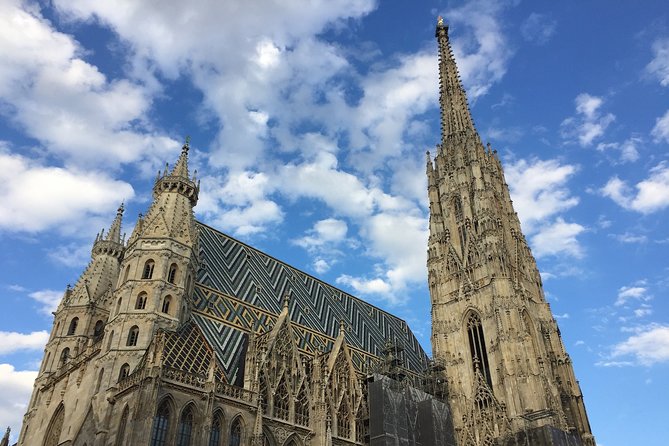
The route centers on St. Stephens’s square and then comes back around to Stephansplatz and St. Stephen’s Cathedral. That’s not an accident. The cathedral and its square act like Vienna’s visual anchor. Once you know where it is, you start recognizing how the rest of central Vienna connects.
What I like about this section is the “walkable rhythm.” You don’t just stop for photos and move on. You’re there for the guide’s explanations on Vienna’s layered identity and monumental architecture. That matters because the cathedral area sets the tone for everything else you’ll see.
Potential drawback: because the tour is only about 2 hours, this part can feel like a highlight loop rather than a deep dive into every detail. If you want cathedral-specific history, you may need to ask your guide directly to slow down and give you more of the story behind what you see.
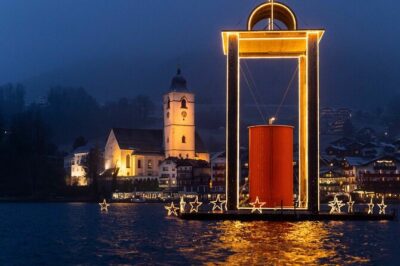
More of Austria on foot, bell tower to bell tower:
State Opera House and the museum views: seeing without committing to tickets
After the cathedral square area, the tour heads toward the State Opera House and includes views of the Natural History Museum and the Art History Museum. You’re getting “front-of-house Vienna” here. Even without entering museums, you’re learning the spatial layout and visual scale of the museum district.
This is smart for first-time visitors because it gives you two things at once:
- a sense of where the major cultural institutions sit
- a clearer sense of what you might want to do later on your own schedule
The view stops also help if your day includes museum plans with timed entry. Instead of spending your first hours searching for buildings and planning routes, you walk past key locations and decide later whether an interior visit is worth the cost and time.
Hofburg imperial palace area, Michaelertor, and St. Michael’s Church
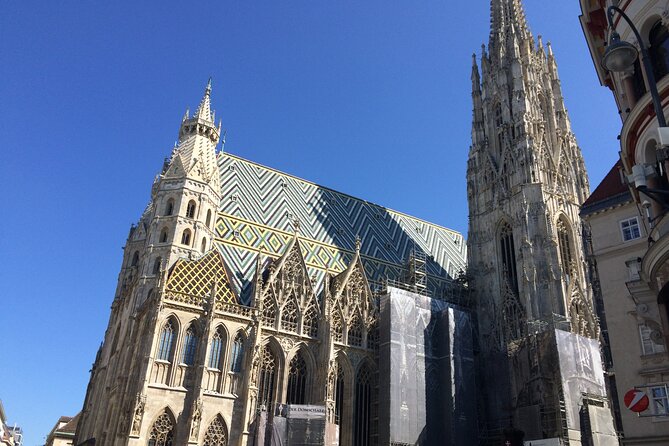
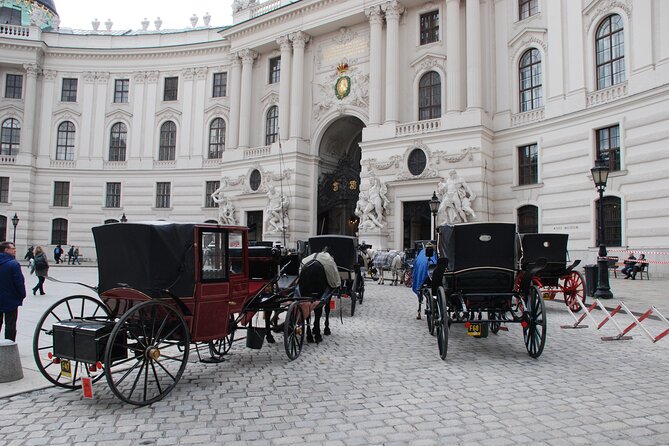
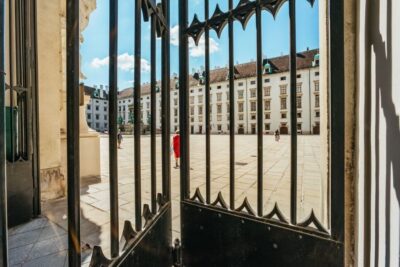
The tour then moves into the Hofburg orbit, including view of the Hofburg imperial palace, Michaelertor, and the Church of St. Michael. This section is where you start noticing how Vienna’s street-level architecture communicates power and identity, even if you don’t go inside.
I find these stops valuable because they teach you how to read a city. When you stand near major landmarks and get guiding commentary, you start to understand why these buildings matter to Vienna, not just that they exist. The itinerary’s inclusion of both gates and churches is also helpful. Vienna is not only palaces. It’s a mix of ceremonial spaces and religious landmarks threaded into everyday streets.
A consideration: if your energy level is low or the day is hot, churches and palace exteriors can take time because you tend to linger for photos and explanations. The tour is still short overall, but this stretch can feel the most “look and listen” heavy.
Looshaus, Graben Street, and St. Peter’s Church: the walk that feels like Vienna
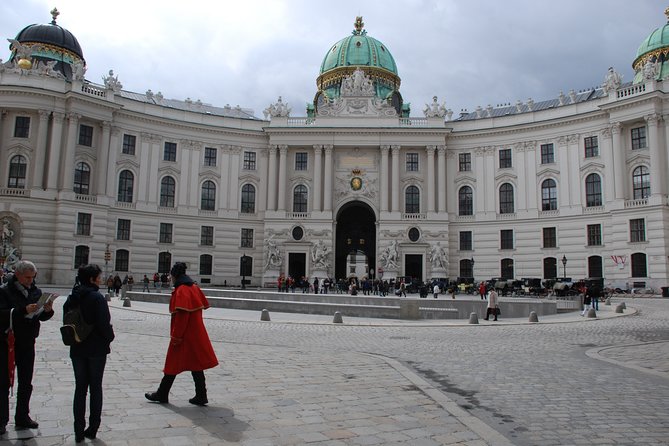
Then comes a more street-level, neighborhood-feeling segment: the Looshaus, Graben Street, and St. Peter’s Church. I like these stops because they shift the experience from landmark viewing to actual urban strolling.
Graben Street in particular is useful in a practical way. It’s a reminder that Vienna’s grand architecture sits in living streets. Walking here helps you picture how locals might move through the city, not just how tourists point cameras at buildings.
The Looshaus stop adds contrast, which helps your brain reset. After palace and cathedral-type architecture, seeing a different kind of building along the way makes the overall city picture more complete.
Stroll back through Stephansplatz and Church of St. Rupert
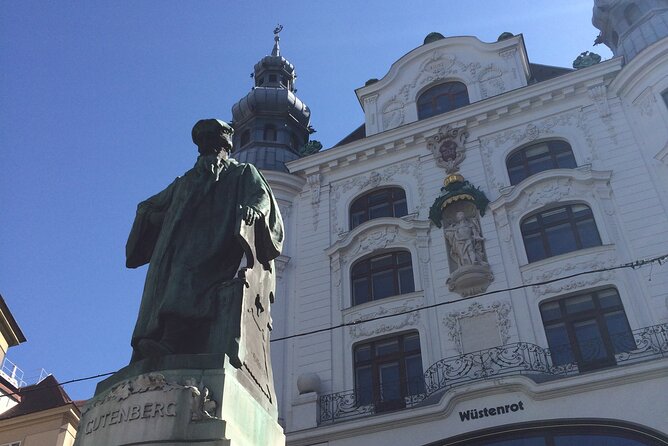
The itinerary loops again toward the cathedral area with Church of St. Rupert and the St. Stephen’s Cathedral segment. This can sound repetitive on paper, but it’s often the way Vienna works. Landmarks cluster. Streets curve. What feels like a detour can actually be a route adjustment based on sight lines, photo angles, and the guide’s pacing.
If you want a tour that leaves you with a mental map, loops can help. You connect the dots faster. And because your guide is there to explain what you’re seeing, you’re not relying on your own guesswork.
Morzinplatz Jewish Memorial, Stubentor, and the quieter side of the center
One of the most important stops on the route is the Jewish Memorial at Morinzplatz. This is a respectful moment in the middle of a sightseeing walk. Even when you’re only there for a short time, it anchors the tour with a reminder that Vienna’s history includes more than monuments and architecture.
After that, the tour includes Stubentor. This kind of city portal view is valuable because it gives you a sense of where you might walk next later on your own. It’s the bridge between “see the big things” and “understand how the city moves.”
The only caution here is emotional readiness. The tour includes a memorial stop, and your guide’s commentary could be reflective. If you prefer purely upbeat sightseeing, consider whether this fits your mood that day.
Mozart’s last residence and Ballgasse: cultural stops that also act as direction markers
The later part of the walk includes Mozort’s last residence and a stop at Ballgasse, described as the former University quarter. These are the type of stops that help you layer Vienna beyond its grand architecture.
Even if you are not a deep classical-music scholar, Mozart and the old university area give you a different lens for the city. You start to connect Vienna to ideas, students, and the human side of cultural life, not only buildings designed to impress.
One practical benefit: these stops act like navigation landmarks. Once you learn that Mozart’s last residence and the university-quarter streets are in the same broader central area, it becomes easier to plan an afternoon walk without getting lost.
Pacing, engagement, and how to get more out of your guide
From what you’re likely to want, there’s a key mismatch to watch for. The tour can feel a bit slow at times, even though it’s still only about 2 hours. The upside is that a slower pace can give you time to look carefully and absorb the commentary. The downside is if you want a more interactive, story-rich flow.
If you book this, here’s how I’d handle it:
- Tell your guide at the start what you want: architecture focus, city history, photo stops, or quick hits.
- If the pace feels dragging, ask for more detail at the next stop, not later. You will get better results while you’re already standing there.
- If you want interaction, encourage questions. A private guide can tailor the conversation much more than a group tour can.
The guide’s knowledge is a real strength of this experience. When you get it at a comfortable pace, the tour works as a first-day orientation. When you want extra depth or more energy, communication upfront is the fix.
What’s included, what’s not, and how that affects your schedule
Included is straightforward: you get a local guide with your group only, plus a private guided tour. There are no entrance fees included, so think of this as a street-level orientation and architectural commentary walk.
That matters for planning. If you were hoping to use the tour as a substitute for buying museum tickets, you’ll need to plan those separately. If your goal is to understand what’s worth your time later, skipping entrance fees can actually be a plus. You’re not rushed into paying for things you end up not caring about.
Who this tour is for, and who should pick something else
This tour is a good match if you want:
- a first-time Vienna overview that helps you navigate central areas
- a private experience for your group only
- English commentary on major landmarks and city history
- a guide to handle directions so you can focus on noticing details
It might be less ideal if you:
- want a fast-moving, highly interactive format where every minute feels packed
- prefer self-guided wandering with no pacing or commentary structure
- are looking for multiple museum entries during the same 2 hours
Should you book this Vienna Private Walking Tour?
Yes, if you want an organized way to understand Vienna’s core landmarks without getting stuck with map fatigue. This is especially worth it when your schedule is tight and you want the guide to connect the sights into a coherent city picture.
I’d hold off or choose a different style of tour if you know you love fast, high-energy storytelling or you need lots of extra history at every stop. In that case, you can still book this, but plan to ask for more detail and more interaction from the start so the tour matches your expectations.
If you do book, I’d also aim to schedule it earlier rather than later. A quick orientation like this makes your next walks much easier to enjoy.
FAQ
How long is the Vienna Private Walking Tour?
It lasts about 2 hours.
Is the tour private or shared with other groups?
It is private. Only your group will participate.
What language is the tour offered in?
The tour is offered in English.
Where does the tour start and end?
It starts at Stephansplatz 8a, 1010 Wien, Austria, and ends back at the meeting point.
Are entrance fees included?
No. Entrance fees are not included.
Do I need a printed ticket?
No. You’ll receive a mobile ticket.
What is the cancellation policy?
You can cancel for a full refund up to 24 hours in advance of the experience start time.
Is the tour accessible for service animals?
Yes, service animals are allowed.
Just added to the bill for Vienna
Guided Walks in Vienna, compared.
Guided Walking Tour of City Center Highlights
Read our review →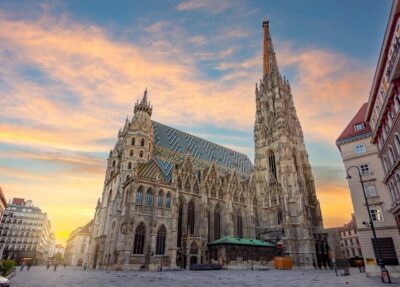
Guided Walking Tour of City Highlights & Hidden Gems
Read our review →
Vienna Historic Center Small Group Walking Tour
Read our review →
Ghosts and Legends Guided Nighttime Walking Tour
Read our review →Browse the lists this tour appears in