
REVIEW · GUIDED WALKS IN VIENNA
Vienna: Vienna under the Nazis, Private Walking Tour
This walk trades glitter for truth. You get a private, 150-minute look at Nazi-era Vienna through real street-level landmarks, from Heldenplatz to the Albertina end point. I also like that it is not trying to be a moral lecture, it is built for insight into how daily life and power worked during 1938 to 1945.
One thing to consider before you book is that there are mixed reports about guides showing up and communication on at least one occasion. If you want this to be a core part of your trip, I would plan it earlier and stay flexible.
In This Review
- Key takeaways before you walk
- Why this isn’t the usual imperial Vienna stroll
- Meeting at the Archduke Charles monument and getting your bearings fast
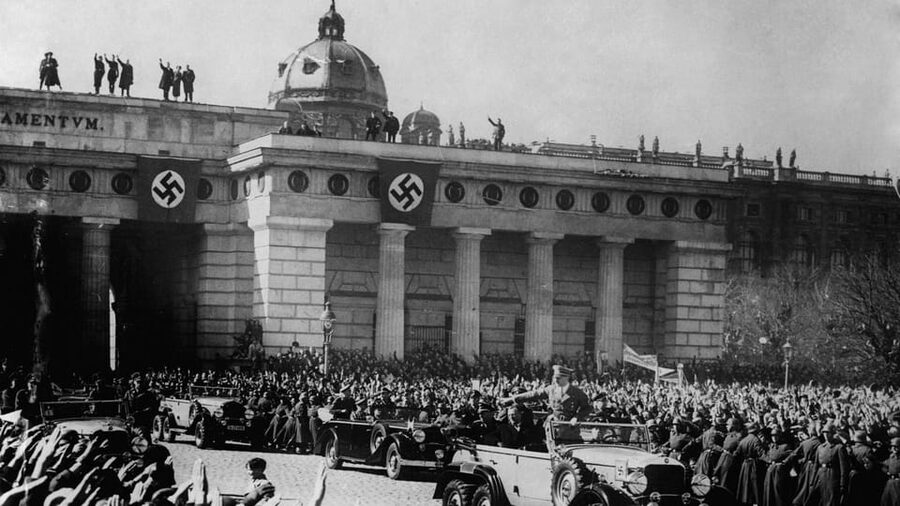
- Heldenplatz: where the annexation was announced
- Hofburg to Kohlmarkt: imperial streets and the mechanics of aryanization
- Am Hof and Judenplatz: resistance and the Holocaust memorial landscape
- The Danube Canal area and the Hotel Metropole aftermath
- Hoher Markt and St. Stephen’s: World War 2 damage as evidence
- A building where the Nazis organized the old town, then Albertina for closure
- Price and value: $258 per group up to 15 for 150 minutes
- The guide experience: David Sterrer, plus a reality check
- Who should book this Nazi-era Vienna walking tour
- Should you book Vienna under the Nazis?
Key takeaways before you walk
- Start on Heldenplatz and stand where Hitler announced the annexation of Austria to Nazi-Germany
- See aryanization on the ground at Kohlmarkt through the stories of specific buildings tied to stolen Jewish businesses
- Hit the memorial stops that matter including Judenplatz and a remembrance linked to Holocaust victims in Vienna
- Spot wartime damage you can still read around Hoher Markt, with World War 2 scars visible in the streetscape
- Finish at a major anti-war, anti-fascism monument near the Albertina, so the walk lands with meaning, not just facts
Why this isn’t the usual imperial Vienna stroll
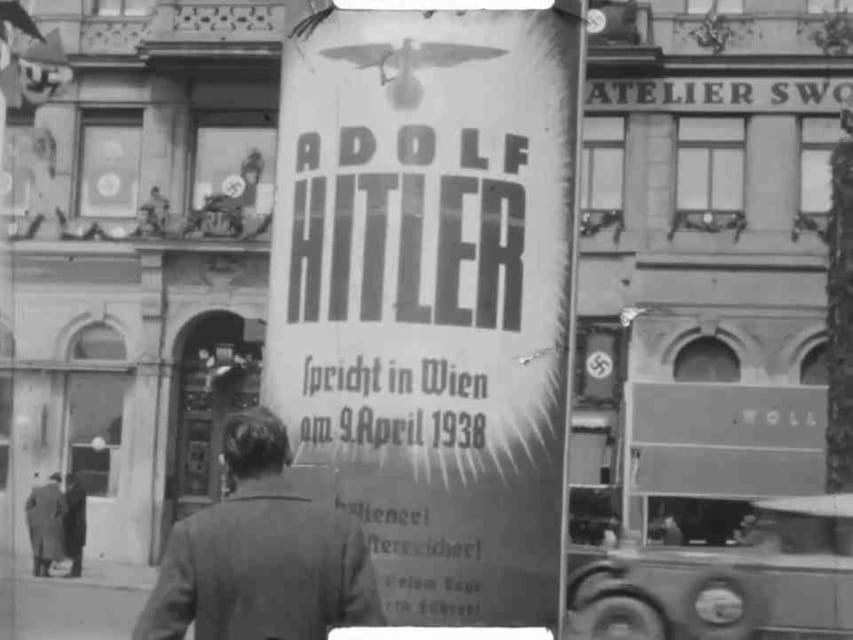
Vienna has a reputation for palaces, music, and that elegant, postcard look. This tour flips the script. It is built around the dark years when Vienna became part of Hitler’s German Empire from March 1938 until April 1945, with Vienna called the Pearl of the Reich in Nazi propaganda. You will also get the frame most tours skip: by the end, a third of the city was destroyed and many thousand people were dead, including about 70,000 murdered among Vienna’s Jewish population.
I like that the guide approach is described as practical and story-based rather than preachy. You are not just collecting dates. You are trying to understand how policies turned into real life, in public squares and shopfronts, in who benefited, and who resisted.
The best payoff is that you walk through places tied to announcements, arrests, and memorials, side by side. That is when it starts to feel real, because Vienna’s buildings keep the memory in their stones.
More Guided Walks in Vienna
- Vienna: Guided Walking Tour of City Center Highlights
★ 4.7 · 4,989 reviews - Vienna: Vienna Central Cemetery Guided Walking Tour
★ 4.8 · 3,307 reviews - Vienna: Guided Walking Tour of City Highlights & Hidden Gems
★ 4.9 · 2,180 reviews - Vienna: Viennese Underworld Guided Walking Tour
★ 4.7 · 1,865 reviews
Meeting at the Archduke Charles monument and getting your bearings fast
You meet at the Archduke Charles monument, the rider with the flag held in hand. It is a strong starting point because it quickly anchors you in Vienna’s civic space, not just in a museum setting.
From there, you move toward Heldenplatz and the old imperial core, meaning the route has two tracks running at once. One track is geography, how the center of power looks and flows. The other track is history, how the Nazi regime used familiar imperial scenery as a stage for new authority.
If you like walking tours that let you build a mental map while you learn, you are in the right place. It is also private, so the pace can match your energy level, and the guide can adjust what you focus on based on what you care about before you start.
Heldenplatz: where the annexation was announced
Heldenplatz is the opening shock. This is where you go to see the sight of Hitler’s announcement of the annexation of Austria to Nazi-Germany. The tour explicitly includes the famous balcony where he gave the speech, so you are not just pointing at a plaque. You are standing in the kind of position where you can picture the crowd’s view.
Why this stop matters: it shows how the regime worked through spectacle. Annexation is a political act, but the Nazi method often used staging, visibility, and intimidation in public space. That is easier to grasp when you can orient yourself to the exact architectural viewpoint.
There is also an emotional weight here, because Heldenplatz is not a remote site. It is part of the everyday Vienna center. Standing there, you can feel the difference between how a place functions now and what it once represented.
Hofburg to Kohlmarkt: imperial streets and the mechanics of aryanization
After Heldenplatz, the walk moves through the old imperial palace area, the Hofburg, heading toward Kohlmarkt. This is one of the tour’s most practical learning segments because it focuses on the “how” behind Nazi rule.
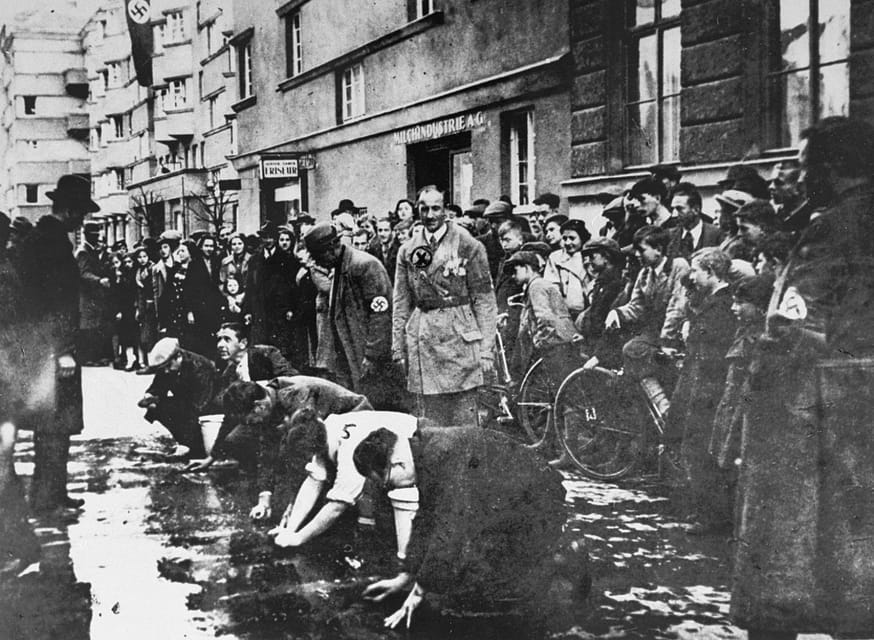
At Kohlmarkt, the guide points out houses tied to victims of aryanization. Aryanization was the practice that enabled the stealing of Jewish businesses. The key detail to take with you is that this was not abstract. It happened through property changes, ownership transfers, and the everyday economic life of a neighborhood.
I like this because it turns history into something you can picture. You can look at a row of buildings and understand why the Nazi regime cared so much about controlling commercial space. If you are the type who hates vague narratives and wants to see mechanisms, this stop will work for you.
Possible drawback: because aryanization is linked to specific buildings, it helps to be present and listening. If you drift off, you may miss the point the guide is making about what you are actually seeing.
More of Austria on foot, bell tower to bell tower:
Am Hof and Judenplatz: resistance and the Holocaust memorial landscape
Next comes Am Hof, where you will see a memorial connected to firemen who were executed for resisting Nazi terror. That is an important counterweight. Many Nazi-era stories focus heavily on victims, which matters. But understanding resistance helps you see that not everyone went along, even under intense pressure.
Then the tour continues to Judenplatz, where there is a Holocaust memorial monument in Vienna. This is one of those stops that changes the mood of the walk. The point is not just remembrance as a concept, it is remembrance tied to Vienna’s reality: where Nazi persecution was concentrated and recognized, and how the city later built physical memory into the streets.
One thing I appreciate about including these memorial stops is that it forces you to compare two kinds of markers. You see places tied to the power display, and you also see places created to acknowledge what happened and who suffered. Both are part of the city now.
The Danube Canal area and the Hotel Metropole aftermath
As the route heads down toward the Danube channel, you reach a square created after the Hotel Metropole was destroyed at the end of World War 2. The tour also notes that this location is infamous for being Vienna’s Gestapo headquarters, and you will see a monument that remains.
This is the kind of stop that can feel surprisingly complicated, even when you have the basic historical facts. The Nazi regime used institutions for surveillance and terror, and the Gestapo is one of the most feared names associated with that system. Seeing the connection between a specific site, its destruction, and what replaced it with a monument helps you understand how memory gets layered on top of rubble.
If you tend to think of history as sealed behind museum glass, this will rewire that. It reminds you that the past is often still sitting in the city, even when the original structures are gone.
Hoher Markt and St. Stephen’s: World War 2 damage as evidence
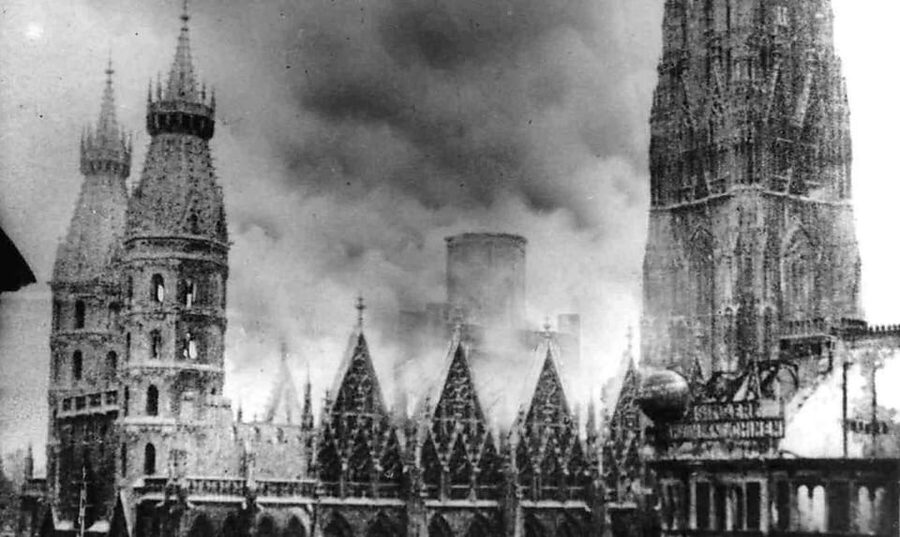
From there, the tour moves through the square Hoher Markt, where you can still see damages World War 2 did to Vienna before heading toward Saint Stephen’s Cathedral. The guide also includes more reminders of the war and the Nazi regime near the cathedral.
Why this matters: war damage is not just a visual reminder. It is evidence. Buildings that did not vanish become documents of impact, and streets that look ordinary can carry visible scars. When you understand that the city was reshaped by violence, you stop treating old architecture as a timeless backdrop.
This section can be a lot to hold emotionally. The good news is that the walk keeps structure by pairing “what happened” with “what you can still see.” It is the difference between reading a chapter and standing inside one.
A building where the Nazis organized the old town, then Albertina for closure
The tour includes a nearby building where the Nazis organized the old town of Vienna. That kind of stop is especially revealing because it shows how control becomes administration. Once you see that, Nazi rule stops feeling like distant ideology and starts feeling like a daily system.
Finally, the tour ends at the Albertina at the main monument against war and fascism in Vienna. The ending matters because it signals what the walk is trying to do: connect historical mechanics to moral and civic responsibility today, without turning the entire tour into a lecture.
The Albertina end point is also a practical “reset” physically. You have had intense subject matter for 150 minutes, and then you finish at a recognized cultural area where you can step back, catch your breath, and decide where to go next.
Price and value: $258 per group up to 15 for 150 minutes
At $258 per group (up to 15 people) for a 150-minute private walk, this tour can be good value if you are traveling with friends or family who want the same focus.
Here is the simple math. If you had the full group size, the cost is about $17 per person. If you had a smaller group, it rises quickly. For example, with 6 people you are looking at about $43 per person. With 2 people, it becomes $129 each. Those numbers are not just math trivia, they help you judge whether a private guided approach is worth it for your plans.
What makes it potentially worth the price:
- It is private and adjustable to your interests
- It focuses on specific Nazi-era sites and memorials, rather than generic background
- It is led in English, which saves you the effort of piecing together information on your own
What might make it less worth it:
- If you only want quick, light sightseeing, this is the opposite of that. It is aimed at history and memorial sites, not glamour.
- Because the subject is heavy, you will want a guide who matches your tolerance for detail and your desire for context.
The guide experience: David Sterrer, plus a reality check
The tour is provided by David Sterrer, and one of the strongest positive remarks is that he is very knowledgeable about the historic part of Vienna and also provides insight into what it is like to live and work in Vienna. That blend matters. It helps you connect the past to how people actually move through the city, not just how they wrote speeches.
I also want to be honest about reliability. There are reports of at least one situation where the tour did not happen because the tour leader did not appear. Another report described a booking that ended up effectively unguided, with delayed or unhelpful communication. That does not mean every day will be like that, but it does mean you should treat this as an important, preplanned activity, not something you can shrug off.
My practical advice: if this is a must-do, set it earlier in your visit, confirm close to start time, and have a backup plan for the rest of your afternoon if something goes sideways.
Who should book this Nazi-era Vienna walking tour
Book it if you:
- Want history with a real street-level backbone, not just broad museum context
- Prefer a guided explanation that connects politics to physical places
- Are interested in the Jewish history connected to Vienna, including memorial sites like Judenplatz
- Like tours where you can influence what the guide emphasizes, since this one is designed to be adjusted to your inputs
Skip it, or at least think hard, if you:
- Want imperial palaces and light stories only
- Would feel overwhelmed by memorial stops and visible reminders of war damage
- Need a super casual experience that avoids serious topics
If you are visiting Vienna for a second or third time, this can also feel like a sharper way to understand the city beyond its beautiful surfaces. It gives you a different lens, and you will likely notice details in buildings and squares you would have otherwise walked past.
Should you book Vienna under the Nazis?
I think it is worth booking if you want a serious, well-structured walk that uses Vienna’s central landmarks to explain how Nazi power took hold and how it left traces. The itinerary is built around recognizable sites tied to annexation, aryanization, persecution, resistance, and memorialization, and that focus makes the 150 minutes feel purposeful.
But do not book it blindly. Because there are reports of guide no-shows or communication problems, treat this as a tour you should verify and plan carefully. If you go into it with realistic expectations, you will end with a Vienna map in your head that includes the truth behind the glamour.
If you want Vienna as it really was, plus what we chose to remember, this is one of the more direct ways to get there on foot.
Just added to the bill for Vienna

Guided Walks in Vienna, compared.
Guided Walking Tour of City Center Highlights
Read our review →
Guided Walking Tour of City Highlights & Hidden Gems
Read our review →
Vienna Historic Center Small Group Walking Tour
Read our review →
Ghosts and Legends Guided Nighttime Walking Tour
Read our review →Browse the lists this tour appears in