
REVIEW · GUIDED WALKS IN VIENNA
A private Historical Walking Tour in Vienna
Vienna snaps into focus on this walk. In one 2.5-hour loop, you cover art power at the Albertina, the drama of the Vienna State Opera, and the political center of the Habsburgs at the Hofburg. It is the kind of route that helps you stop feeling lost and start seeing how Vienna fits together.
Two things I really like: first, it is truly private, just your group (up to 15), so you get real conversation instead of a loud shuffle. Second, the story moves between cultures, from museums and classical music to royal architecture and everyday old-town streets. One drawback to keep in mind: several big stops are viewable from outside, and some entrances are not included, so you may want to budget for optional tickets if you want to go in.
You also get practical support. The meeting point is easy to find near public transit, and the tour uses a mobile ticket. If it is snowy or windy, plan for some outdoor walking, and wear shoes you can trust.
In This Review
- Key highlights you can plan around
- A 2.5-hour loop that actually explains Vienna
- Price and value: $312.06 per group (up to 15)
- Where your tour starts: Albertinaplatz and the “now I get it” orientation
- Albertina: art museum outside view, and why it still matters
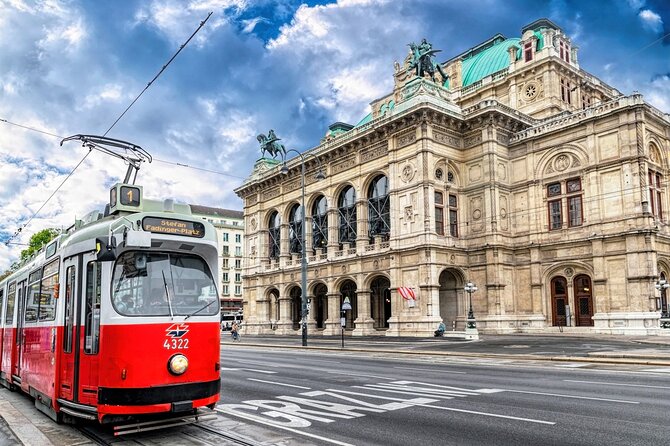
- Vienna State Opera: a cultural symbol you can understand fast
- Hotel Sacher Vienna: luxury with a story you can use
- Burggarten and Ringstrasse: imperial planning made walkable
- Maria Theresien Square and Heldenplatz: the education comes fast
- The Hofburg: power, palace rooms, and the center of Austria
- Josephplatz and the Spanish Riding School: tradition you can spot
- Graben and Kohlmarkt: old fortifications turned shopping streets
- Stephansdom and the Mozart thread: music and meaning in one center stretch
- Ankeruhr Clock and Hohermarkt: playful timekeeping and ancient trade
- St. Rupert’s Church: the oldest-feeling stop on the route
- How the guide experience makes or breaks this tour
- Practical tips so you enjoy every minute
- Who should book this private Vienna historical walking tour
- Should you book this private Vienna historical walking tour?
- FAQ
- How long is the private historical walking tour?
- Is this tour private, and how many people are in a group?
- Where does the tour meet?
- Is pickup offered, and do I get a mobile ticket?
- What’s included, and are entrance tickets covered?
- What is the cancellation policy?
Key highlights you can plan around
- Private group, up to 15, so your guide can adapt to your questions and pace.
- Big-name Vienna landmarks close together, from Albertina to Stephansdom.
- Clear mix of art, music, and imperial power, not just a photo stop parade.
- Some entrances cost extra, but several squares and exterior sights are free.
- Mobile ticket and near-transit meeting point help you show up smoothly.
A 2.5-hour loop that actually explains Vienna
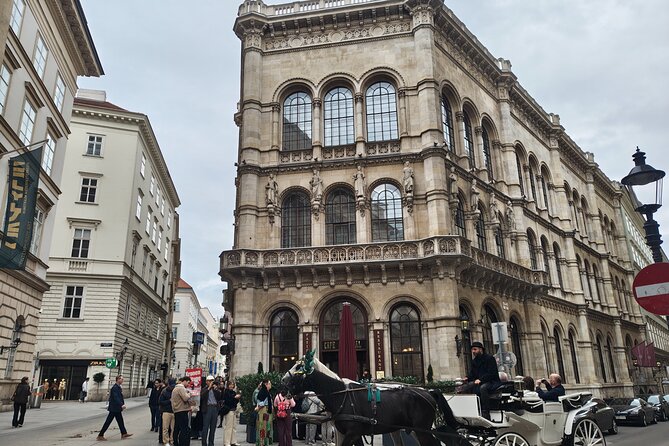
This is a compact, center-of-Vienna walk that runs about 2 hours 30 minutes. That timing matters. In this part of the city, walking too long turns the day into “slog and spot photos.” This route keeps moving, but it also slows down enough for context at each major stop.
The tour begins at Tourist-Info Wien Albertinapl. 1, 1010 Wien, and it ends in a different location. That matters too, because you should keep a little flexibility for what you do next, like grabbing food nearby or continuing on your own through the inner districts.
If you want a first-day orientation, this works. If you want one last pass before you leave, it also works. The key is that the route is designed to connect themes, not just landmarks.
More Guided Walks in Vienna
- Vienna: Guided Walking Tour of City Center Highlights
★ 4.7 · 4,989 reviews - Vienna: Vienna Central Cemetery Guided Walking Tour
★ 4.8 · 3,307 reviews - Vienna: Guided Walking Tour of City Highlights & Hidden Gems
★ 4.9 · 2,180 reviews - Vienna: Viennese Underworld Guided Walking Tour
★ 4.7 · 1,865 reviews
Price and value: $312.06 per group (up to 15)
The price is $312.06 per group, for up to 15 people. That is not “per person pricing,” so the value swings based on how many you book with.
At the maximum group size, you are effectively around $20 to $21 per person. At smaller sizes, it becomes more expensive per person. But for families, friends, or small groups who want a guide instead of a crowded group tour, it can still feel reasonable because you are paying for one guide’s attention.
Where it earns its keep is in the kind of tour you get. You are not just receiving a script about buildings. You are getting guidance through the city’s layout, plus quick explanations that help you understand what you are looking at. And from the guide styles mentioned in feedback, the best experience comes when your guide is interactive and adjusts to your interests.
Where your tour starts: Albertinaplatz and the “now I get it” orientation
Stop 1 is Albertinaplatz. You start with an introduction and a walk-through of the surroundings. This is a small but smart start. In Vienna, big landmarks sit close together, and streets can look confusing if you are only relying on maps.
This opening helps you build a mental framework. You begin to see how the city’s center is organized and how your later stops link back to older Vienna, not just the present-day postcard look. The stop is around 10 minutes, and it is free to view.
Practical tip: take a few minutes here to pick your direction. If you know what you’re heading toward, the whole walk feels easier.
Albertina: art museum outside view, and why it still matters
Stop 2 is the Albertina. This is one of Vienna’s major art institutions, and even a brief stop pays off if you care about how Vienna became a serious art capital.
The time is short, about 5 minutes, and the admission ticket is not included. That means you are likely getting an orientation exterior view rather than a full gallery visit.
Still, it is a valuable stop. It bridges your day from squares and streets into the world of curated collections. If you or someone in your group loves art, you may decide this is the museum you want to add with a separate ticket later. If you do not, the guide’s explanation should still help you recognize why the building and location matter.
More of Austria on foot, bell tower to bell tower:
Vienna State Opera: a cultural symbol you can understand fast
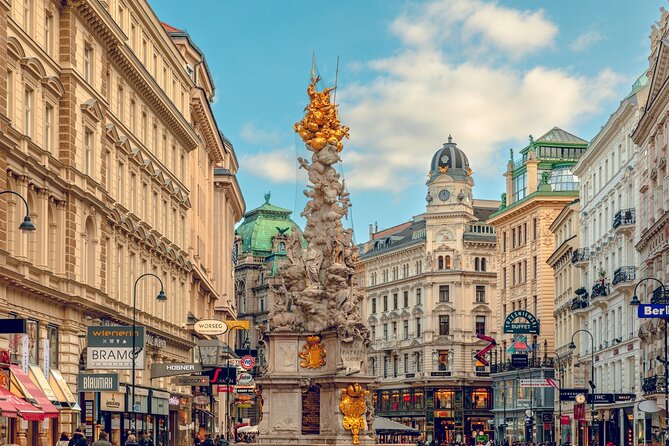
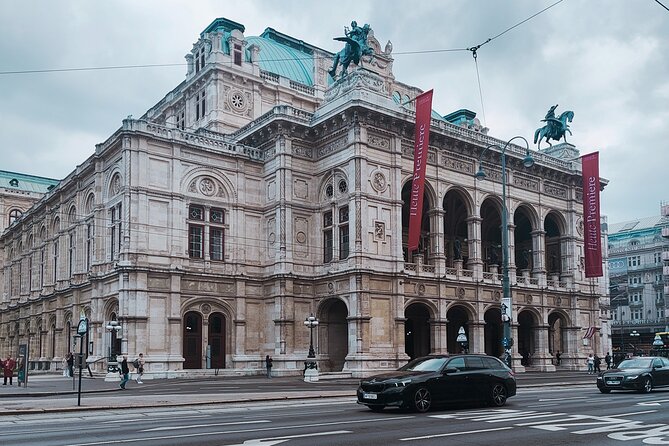
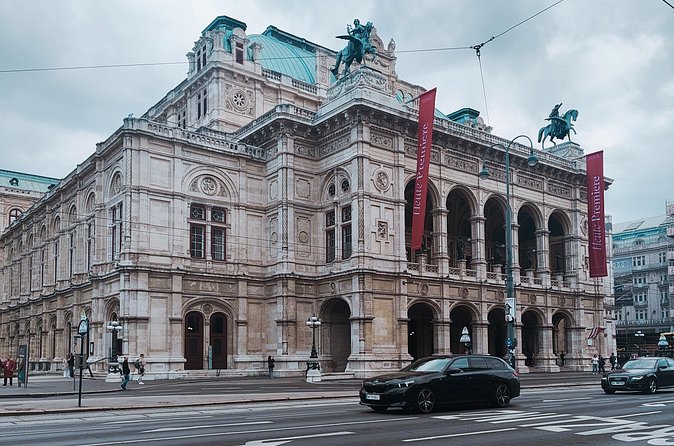
Stop 3 is the Vienna State Opera. This is a “you know it when you see it” kind of landmark, and the tour uses that recognition to teach you what makes it important.
Time is about 5 minutes, and admission is not included. Most of the value here is in context: why the opera matters to Vienna’s identity and how classical music and opera are treated as a serious art form in the city.
This stop also helps you appreciate the street theater of Vienna. The opera sits where people naturally gather, so you can look around and notice how the city’s design funnels movement toward cultural icons.
Hotel Sacher Vienna: luxury with a story you can use
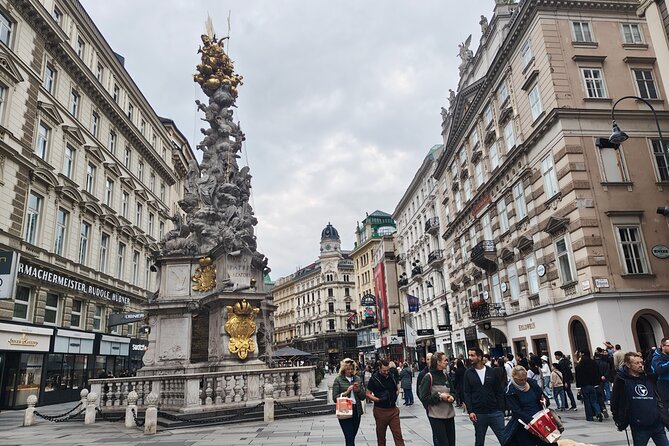
Stop 4 is Hotel Sacher Vienna, founded in 1876. The key detail is that it is associated with the original Sachertorte by Franz Sacher.
Time is about 5 minutes. Admission is not included, which is fine. This is mostly about connecting place to tradition. Once you understand that link, Vienna’s luxury culture stops feeling like pure branding and starts feeling like continuity.
If you like food history, or you simply like knowing the origin stories behind famous things, this stop gives you a useful thread for the rest of your trip.
Burggarten and Ringstrasse: imperial planning made walkable
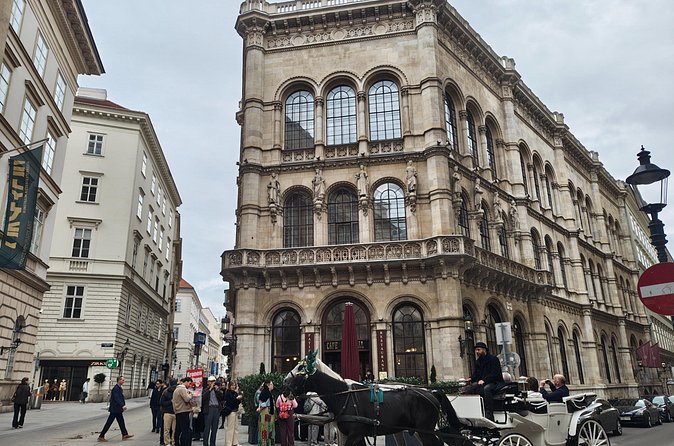
Stop 5 is Burggarten, a garden laid out in the 19th century as part of the Hofburg grounds. You get about 5 minutes and it is free to view.
Stop 6 is Ringstrasse, described as created after the old city walls were demolished, shaping Vienna into a modern boulevard. This is your 10-minute “big city expansion” moment, also free.
Why these two together work: Burggarten is about planned space inside the imperial sphere. Ringstrasse is about expansion outside of it. The guide’s explanations should help you see how Vienna’s power and public life overlap in design.
If you are traveling with kids or you just want a pause from dense streets, gardens and boulevards are a good mental reset.
Maria Theresien Square and Heldenplatz: the education comes fast
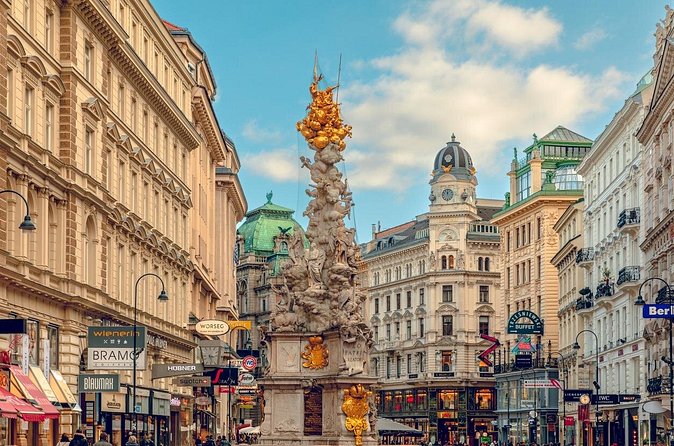
Stop 7 is Maria Theresien Square. You spend around 5 minutes, and it is free to view. The area is surrounded by impressive historical buildings linked to the Museum of Art History and the Museum of Natural History.
Stop 8 is Heldenplatz, directly in front of the Hofburg. This is about 10 minutes and free. It is one of Vienna’s most important landmarks and a signature “imperial front yard” scene.
These stops are where the tour’s pacing becomes useful. In the space of an hour, you move from art and music into institutions of knowledge and then into the stage where Habsburg power announced itself.
If you want to understand the city instead of just ticking boxes, this is where it starts clicking.
The Hofburg: power, palace rooms, and the center of Austria
Stop 9 is the Hofburg. You get about 10 minutes, and it is free to view.
This palace complex served for centuries as the residence of the Habsburgs and as a center of power in Austria. The quick timing can sound short, but in practice it gives you a grounded introduction to why this place is everywhere in Vienna’s story.
Even if you do not go inside, the exterior experience works because Vienna’s buildings communicate function through scale and placement. The guide’s job is to translate that into plain language.
Josephplatz and the Spanish Riding School: tradition you can spot
Stop 10 is Josephplatz, a smaller but striking square known for historical significance and architecture. It is free and about 10 minutes.
Stop 11 is the Spanish Riding School (Spanische Hofreitschule). This one is about 5 minutes and admission is not included.
The Spanish Riding School is known for classical horsemanship and the training of Lipizzaners. Even without going in, you can connect the tradition to the broader theme of Vienna as a city that protects long-running institutions.
This stop also makes the walk feel more three-dimensional. Vienna is not only churches and museums. It is also living tradition.
Graben and Kohlmarkt: old fortifications turned shopping streets
Stop 12 is Graben and Kohlmarkt. You get about 10 minutes, and it is free to view.
The tour explains the moat concept from medieval fortifications, then how the area developed into an important commercial district. This is one of those explanations that changes how you experience streets.
Once you know the ground used to be defensive, the sidewalks feel like a completely different era. You can walk it with more curiosity, less autopilot.
Stephansdom and the Mozart thread: music and meaning in one center stretch
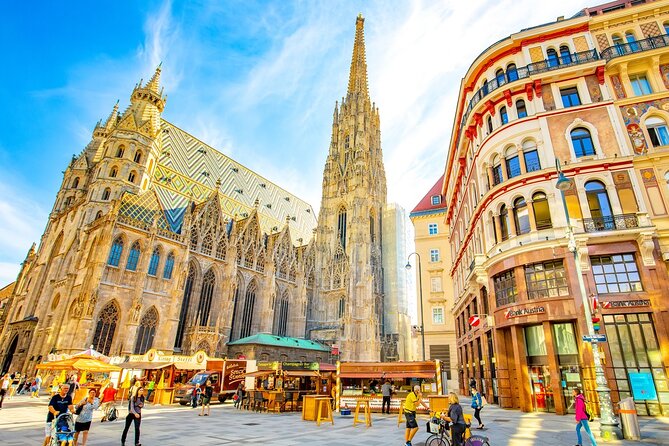
Stop 13 is St. Stephen’s Cathedral (Stephansdom). You spend about 10 minutes. Admission is not included.
The cathedral is a landmark of Vienna and one of Austria’s most important Gothic cathedrals. The square in front, Stephansplatz, is a popular meeting place, so you will also feel the rhythm of everyday Vienna.
Stop 14 is Mozarthaus Vienna, the only surviving home of Wolfgang Amadeus Mozart in Vienna. Time is about 5 minutes, admission is not included.
This sequence works because it ties two “big music” ideas together: the grandeur of sacred Gothic architecture and the human story of Mozart’s home. Even if you skip entrances, the way your guide frames each place helps you see music as part of Vienna’s identity, not just a ticket you buy later.
Ankeruhr Clock and Hohermarkt: playful timekeeping and ancient trade
Stop 15 is the Ankeruhr Clock, an astronomical clock known for colorful moving representations. It is about 5 minutes and free to view.
Stop 16 is Hohermarkt, an old square dating to the Middle Ages with even older roots, including Roman-era Vienna (Vindobona). It is about 5 minutes, free.
This pairing is surprisingly effective. The clock brings whimsy and motion into the walk, while Hohermarkt reminds you Vienna’s story goes way deeper than “medieval street, modern city.”
If you like small details that make a city feel alive, these two stops deliver without needing ticket lines.
St. Rupert’s Church: the oldest-feeling stop on the route
Stop 17 is St. Rupert’s Church (Pfarrkirche St. Ruprecht). It is about 5 minutes and admission is not included.
This is one of the oldest churches in Vienna and it sits in the first district. Even with a short stop, the tour uses it to cap your walk with a sense of continuity, older Vienna to the present day, with the city still shaped by religion, community, and architecture.
If you are tired by the end of the walk, this stop is short enough to feel like a satisfying finish rather than a sprint.
How the guide experience makes or breaks this tour
A huge strength here is the guide factor. In the feedback shared with this tour, guides like Jeremy, Eszter, and Horst are repeatedly described as fun, attentive, and good at making Vienna feel understandable. One guide style that comes through is personalization, including checking what you specifically want to see at the start.
That matters because Vienna can easily become overwhelming. With a guide who listens, you get the right kind of structure. You also avoid the common problem of walking past major sights without knowing why they matter.
There is also mention of keeping kids comfortable and finding places to sit and warm up when weather turns. If you are traveling in winter or late year, that kind of real-world flexibility is worth its weight.
Practical tips so you enjoy every minute
A few things will help you get more from the route:
- Wear comfortable shoes. Even with a 2.5-hour limit, Vienna center sidewalks add up.
- Bring a phone with battery. You will use a mobile ticket, and it helps for any follow-up directions on your own.
- If you care about entering specific sites, ask your guide what makes sense. Several major stops list admission as not included, so you can plan optional additions without guessing.
- If crowds are heavy, a good guide will steer you toward calmer streets. You should expect your guide to manage flow and timing so the walk stays pleasant.
Who should book this private Vienna historical walking tour
This tour fits best if you want:
- A first-time Vienna walk that ties art, music, and imperial power into one story.
- A group that prefers conversation over headsets and schedules.
- A family or mixed-age group that needs pacing and breaks.
It may be less ideal if you want a full museum or opera experience inside major venues. The stops are focused on orientation and context, and several entrances are not included, so you would need separate tickets if you want deep, timed entry visits.
Should you book this private Vienna historical walking tour?
If your goal is to get your bearings fast and understand why Vienna looks the way it does, I think this is a strong choice. The route hits top landmarks without dragging you through the city in circles, and the guide-led explanations can turn famous facades into real meaning.
I’d book it if your group is small enough to benefit from a private walk and you like learning as you walk. Skip it only if your priority is “lots of indoor admissions” and you already know exactly what you want to enter, hour by hour.
If you do book it, do this one thing: think of 2 to 3 priorities beforehand. Art, opera, imperial buildings, church architecture, Mozart, clocks, whatever. Then bring those priorities to your guide early, so the tour can match your interests while you still get the big Vienna story arc.
FAQ
How long is the private historical walking tour?
It lasts about 2 hours 30 minutes.
Is this tour private, and how many people are in a group?
Yes, it is private. Only your group participates, and the group size can be up to 15 people.
Where does the tour meet?
The start point is Tourist-Info Wien Albertinapl. 1, 1010 Wien, Austria.
Is pickup offered, and do I get a mobile ticket?
Pickup is offered, and you will receive a mobile ticket. The meeting point is near public transportation.
What’s included, and are entrance tickets covered?
The guide is included. Some stops are free to view, while several major sights list admission tickets as not included (for example the Albertina, Vienna State Opera, Spanish Riding School, St. Stephen’s Cathedral, Mozarthaus Vienna, and Ruprechtskirche).
What is the cancellation policy?
You can cancel for free up to 24 hours in advance for a full refund. If you cancel less than 24 hours before the start time, the amount paid is not refunded.
The Habsburg Map
- Vienna: Time Travel and Magic Vienna History Tour
★ 4.6 · 3,879 reviews - Time Travel-Magic Vienna History Tour Ticket
★ 4.5 · 1,099 reviews - Skip-the-Line Schonbrunn Palace Guided Tour and Vienna Historical City Tour
★ 3.5 · 940 reviews - Vienna Mozart Concert in Historical Costumes at the Musikverein
★ 4.5 · 888 reviews
Just added to the bill for Vienna
Guided Walks in Vienna, compared.
Guided Walking Tour of City Center Highlights
Read our review →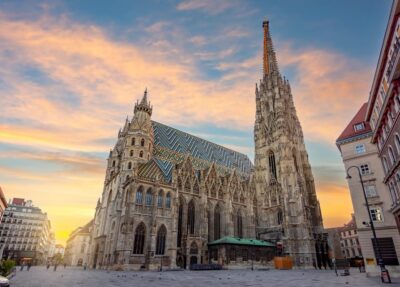
Guided Walking Tour of City Highlights & Hidden Gems
Read our review →
Vienna Historic Center Small Group Walking Tour
Read our review →
Ghosts and Legends Guided Nighttime Walking Tour
Read our review →Browse the lists this tour appears in