
REVIEW · GUIDED WALKS IN VIENNA
Private Vienna Highlights History Walk — WWII and Post War Vienna
Vienna rewrites itself every few steps. This private highlights walk uses WWII and post-war stories to connect major landmarks into one route you can follow, with hotel pickup and an English-speaking licensed guide. You also get a mix of viewpoints, palace-and-garden axes, and memorial sites, so it is not just a checklist.
I love how the tour keeps a steady rhythm, with WWII and post-war framing at stops like the Soviet War Memorial and the Judenplatz Holocaust Memorial. One consideration: public transport to and from sights is not included, so if you plan to use transit during the rest of your day, budget for it.
In This Review
- Key Things You’ll Like About This Private Vienna Highlights Walk
- A 3-hour route that turns landmarks into a story of change
- Pickup, meeting times, and why this tour starts easy
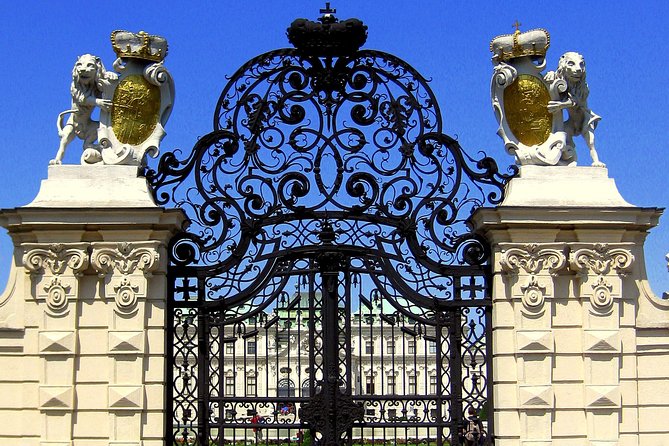
- Belvedere Gardens: from imperial terraces to the Second Republic (Stop 1)
- Lower Belvedere and the garden axis as a political statement
- Schwarzenbergplatz: the Soviet War Memorial and the politics of remembrance (Stop 2)
- Allied symbols and a Ringstraße tram hop for quick coverage
- Burggarten and the Mozart garden that sits beside dark footnotes (Stop 3)
- MuseumsQuartier, Maria Theresa, twin museums, and FLAK towers (Stop 4)
- Heldenplatz and the Hofburg: from imperial ceremony to Anschluss memory (Stops 5 and 6)
- Judenplatz Nameless Library: the Shoah memorial you should not rush (Stop 7)
- Pestsäule and St. Stephen’s Cathedral: healing after crisis, then the 1945 fire (Stops 8 and 9)
- Guide quality is the real differentiator on a private walk
- Price and value for a group up to 10, plus who this fits best
- Should you book this WWII and post-war Vienna highlights walk?
- FAQ
- How long is the tour?
- What times does the tour start?
- Is this a private tour?
- Can you pick me up from my hotel?
- Are admission tickets included for the stops?
- What is not included in the price?
- What language is the tour offered in?
- Are pets or service animals allowed?
- Is there a cancellation window?
Key Things You’ll Like About This Private Vienna Highlights Walk
- Hotel pickup from hotels and vacation rentals in town, plus options like Reichsbruecke pier and Vienna train stations
- Private group up to 10 for a pace that can match your questions and schedule
- WWII and post-war storytelling at major memory sites, not just pretty façades
- Belvedere to Hofburg route flow that links gardens, power centers, and architecture fast
- A short Ringstraße tram ride to cover the grand boulevard efficiently
- Many listed stops are admission ticket free, so you spend time looking instead of queuing
A 3-hour route that turns landmarks into a story of change
This is a short, well-managed way to get your bearings in Vienna. In about three hours, you move from the dramatic terrace views of Belvedere down through garden geometry and across squares tied to 20th-century power, conflict, and remembrance.
The value here is how the guide connects themes. Instead of treating WWII and the aftermath like separate chapters, you see how Vienna’s public spaces hold multiple layers at once: imperial ceremony, Allied symbolism, occupation memory, and the modern Austria that followed.
More Guided Walks in Vienna
- Vienna: Guided Walking Tour of City Center Highlights
★ 4.7 · 4,989 reviews - Vienna: Vienna Central Cemetery Guided Walking Tour
★ 4.8 · 3,307 reviews - Vienna: Guided Walking Tour of City Highlights & Hidden Gems
★ 4.9 · 2,180 reviews - Vienna: Viennese Underworld Guided Walking Tour
★ 4.7 · 1,865 reviews
Pickup, meeting times, and why this tour starts easy
There are two start times, 09:30 and 14:00, and the tour is designed to reduce the “where do we meet?” stress. You can be met at hotels and vacation rentals across town, or at key transit points like Vienna Hbf and Vienna West. If you are arriving by ship, there is also a specific meeting point listed for A-Rosa guests at Pier Handelskai 265, 1020 Wien.
Because this is private, the guide can also adjust the order and pacing a bit to fit your interests. That matters when you have one or two topics you care about most, like the fall of Nazi rule, Austria’s Second Republic, or the way memorials communicate loss.
One more practical note: hotel drop-off is not included. Your pickup is handled, but your return is on you, so it helps to know how you will get back to your hotel before you start walking.
Belvedere Gardens: from imperial terraces to the Second Republic (Stop 1)
Stop 1 starts at Jardines de Belvedere, with a focus on the Upper Belvedere area. The setting is meant to do the talking. From the terrace, you get a big-picture view that makes it easier to understand why power and spectacle were built into Vienna’s architecture.
A key idea you will hear here is how the palace environment connects to political change. The tour highlights Prince Eugene, a military genius who never ruled, and then ties the site to the symbolic “birth” of Austria’s Second Republic in 1955. The message is not that history is a line, it is that the same physical landscape can take on new meanings as governments change.
You spend about 20 minutes here, and the stop is listed as admission ticket free. That is good for value, but it also means you are not likely to treat this as a full palace museum visit. If you want deep interior time in Belvedere, plan it as an add-on later.
Lower Belvedere and the garden axis as a political statement
From there, the route works its way through Belvedere Gardens and Lower Belvedere, using the descending baroque garden axis as a kind of outdoor reading room. Baroque garden design is not random beauty. It is hierarchy, control of sightlines, and an aesthetic language for power.
The practical benefit for you is clarity. When you can see how the garden geometry guides your eyes, you stop thinking of it as “pretty outdoor walking” and start recognizing it as a designed environment with political intent.
This segment is also a good reset after the terrace. If your legs need a short rhythm change, gardens are often easier walking than steep streets.
More of Austria on foot, bell tower to bell tower:
Schwarzenbergplatz: the Soviet War Memorial and the politics of remembrance (Stop 2)
Next comes Schwarzenbergplatz, and with it a more direct wartime memory stop. The tour includes the Soviet War Memorial, honoring thousands of Red Army soldiers who died in 1945 ending Nazi rule in Vienna.
The framing here is important: liberation and occupation can exist together in memory. In practical terms, this stop helps you understand why WWII is not just celebrated or mourned, it is interpreted differently depending on who holds the story.
The time is about 10 minutes, and it is listed as ticket free. That short slot works well because you get the key idea without turning it into a long museum-style stop.
Allied symbols and a Ringstraße tram hop for quick coverage
From Schwarzenbergplatz, you move to Hochstrahlbrunnen and the French Embassy area, where you will see how public art and architecture can communicate national identity. The fountain is described as monumental, tied to Vienna’s alpine tap water, and it is placed against the elegant French Embassy backdrop. The pair of sites is meant to make you notice how Allied connections show up in stone, water features, and style.
Then the itinerary includes a short tram ride along the Ringstraße. This is one of the tour’s smartest “do less walking, see more city” moves. The Ringstraße is Vienna’s 19th-century prestige project, and the tram helps you pass major landmarks without spending an extra hour on sidewalks.
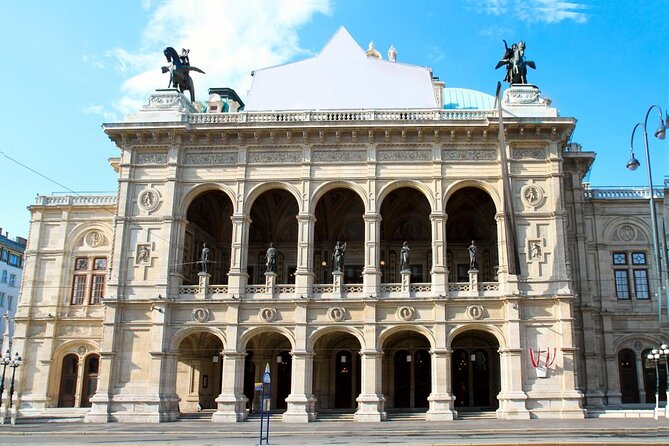
You will go past the rebuilt State Opera area. Even if you already know the boulevard from photos, hearing how it connects to post-war cultural continuity makes it easier to interpret what you are seeing.
Burggarten and the Mozart garden that sits beside dark footnotes (Stop 3)
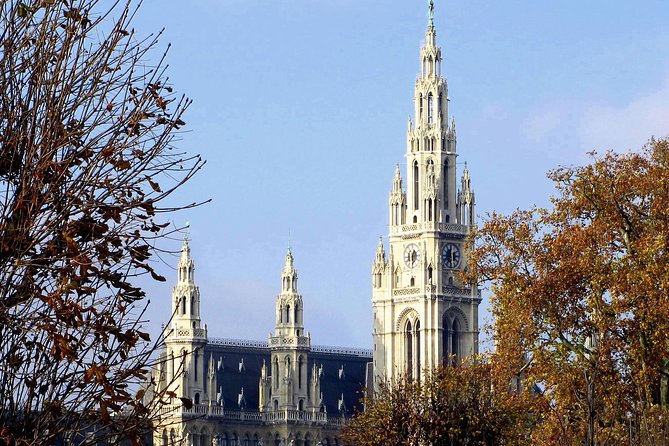
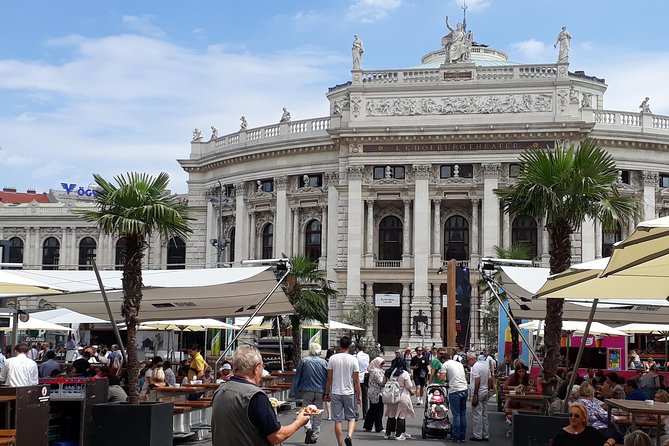
Stop 3 is Burggarten, where Mozart presides over the garden near imperial court space. This is one of those Vienna moments where beauty and history sit in the same frame.
Just nearby is the Academy of Fine Arts, where a young Adolf Hitler was reportedly rejected. The tour treats it as a footnote that later turned into a headline, which is a useful reminder that small decisions can echo forward.
The stop is listed for about 5 minutes and ticket free. If you like slow garden strolling, you might want to linger on your own after the tour ends, but as a highlights walk it stays efficient.
MuseumsQuartier, Maria Theresa, twin museums, and FLAK towers (Stop 4)
Next you reach MuseumsQuartier Wien, centered on a public square with Maria Theresa. The itinerary points out the twin museums and then shifts attention to one of Vienna’s six FLAK towers, described as indestructible concrete witnesses to the city’s militarized final months.
That juxtaposition is the point. MuseumsQuartier can feel like a modern cultural district, but the tour asks you to look at what stands underneath the normal present-day vibe.
You spend around 10 minutes here, and it is listed as ticket free. This is not a deep museum plan, but it is a strong “read the city layers” stop, especially if you are trying to balance sightseeing with meaning.
Heldenplatz and the Hofburg: from imperial ceremony to Anschluss memory (Stops 5 and 6)
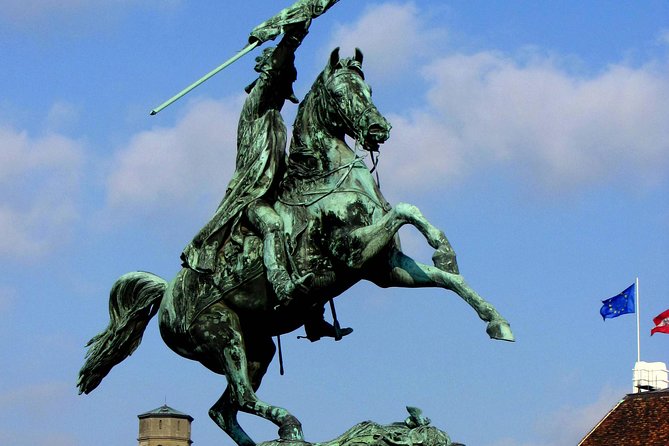
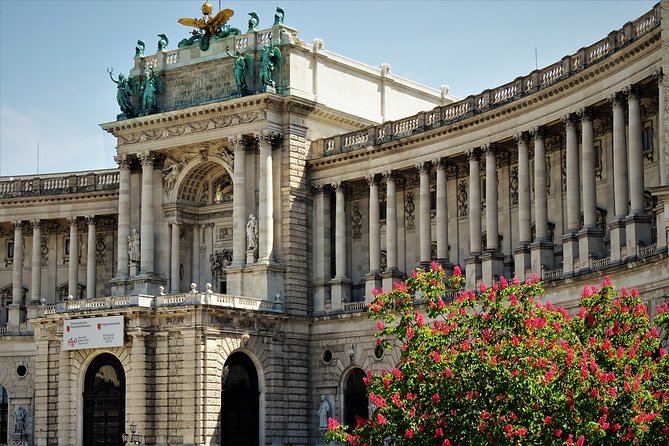
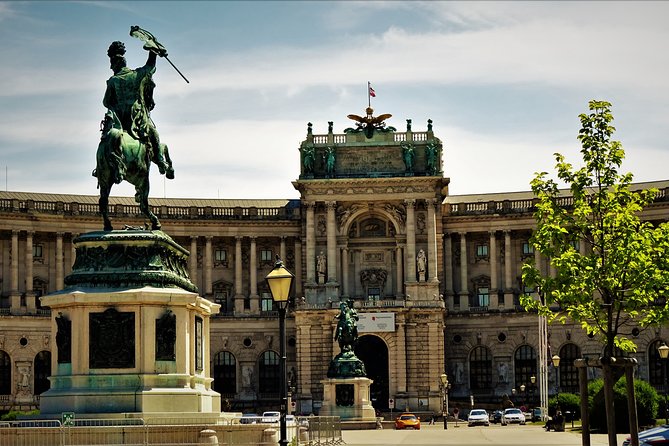
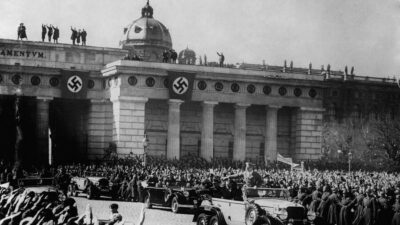
At Heldenplatz, the tour slows down slightly, about 15 minutes. This square is described as a stage for imperial ceremony and military pride, and it also connects to the March 1938 Anschluss speech by Hitler. Seeing how a place used for state power later becomes a marker of political rupture gives you a real sense of how Vienna’s squares can hold competing narratives.
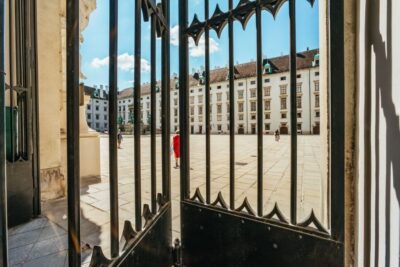
Then you move to the Hofburg, Vienna’s palace-city seat of power for centuries. The tour frames it as serving power for seven centuries, from dukes and emperors to the modern presidency. That arc matters because it helps you understand why so many buildings in Vienna feel both ceremonial and functional.
You get about 15 minutes at the Hofburg area. The itinerary also points out a transition where imperial façades meet ecclesiastical grandeur and today’s luxury boutiques. It can feel like a lot in one view, but it is a good snapshot of Vienna’s balancing act between ceremony, commerce, and spirituality.
For many visitors, this is the moment when the tour stops being abstract. You can see why the city is so visually consistent, even though the politics underneath it kept changing.
Judenplatz Nameless Library: the Shoah memorial you should not rush (Stop 7)
Stop 7 is one of the most important parts of the route: Judenplatz Holocaust Memorial, specifically the Nameless Library. The tour connects it to the site of Vienna’s medieval Jewish community, destroyed in 1421, and to the commemoration of 65,000 Austrian Jews murdered in the Shoah.
This is listed for about 15 minutes and ticket free. It is also the kind of stop where you will appreciate having time to stand, read, and absorb. It does not need to be loud to be powerful.
If your travel style is usually quick photo stops, this is a place where you may want to pause longer on your own after the guided portion, even if the tour keeps a steady pace.
Pestsäule and St. Stephen’s Cathedral: healing after crisis, then the 1945 fire (Stops 8 and 9)
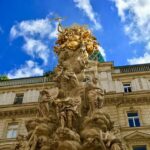
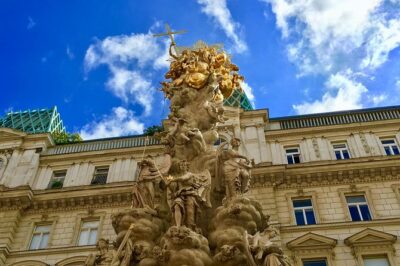
After Judenplatz, you reach Colonna Della Peste, also known as the Pestsaule. Here, the tour presents the plague column as Counter-Reformation in marble, using art and devotion to reclaim the city after a crisis. It is a reminder that Vienna’s memory culture is not only about war. It also includes epidemics, rebuilding, and faith expressed through public monuments.
This stop is short, about 5 minutes, but it helps broaden your sense of what the city “remembers.”
Finally, you end at St. Stephen’s Cathedral, Vienna’s Gothic heart. The tour points out what happened in April 1945, when parts of the cathedral burned after looters set fire to nearby shops. Even if you have seen photos of the cathedral’s towers, this wartime note adds a painful layer to what might otherwise feel like pure sightseeing.
You get about 10 minutes here, ticket free. It is enough time to appreciate the scale and to understand why Vienna’s central church became part of the city’s wartime story.
Guide quality is the real differentiator on a private walk
On a tour like this, the route is only half the experience. The other half is how the guide turns stone and dates into something you can keep in your head.
The provider’s guides earn strong praise for exactly that. People highlight Brigitte for making Vienna feel friendly and real, with warmth and thoughtful history plus practical local tips. Walter gets praised for being organized, fun to walk with, and good at pace control, including fitting in time for coffee. Alex is mentioned for enthusiasm and for answering questions beyond the tour route. And you will also see names like Andrea and Hannes, with feedback focused on thorough city overviews and adapting the walk to tour wishes.
So what should you expect for your own day? You should expect a guide who can point out the “why” behind the “what,” especially with a theme as sensitive as WWII. You should also expect a sense of flow, not random jumping between points.
Price and value for a group up to 10, plus who this fits best
The price is $342.40 per group, up to 10 people, for about 3 hours. That is the kind of setup where cost feels fair when you split it, but it can feel less attractive if you are a couple booking alone. At the full group size, it is roughly $34 per person. At two people, it is more like $171 each, so in that case it is worth asking yourself if you will actually use a private guide’s timing, pickup, and narrative focus.
What you are buying is not only walking. You are buying a guided thread that connects WWII-related sites, post-war symbolism, and Vienna’s long political timeline from the Hofburg to modern Austria. You are also buying the convenience of pickup and a route that uses a mix of walking and one short tram ride to cover ground.
This tour is a strong fit if:
- you want a first-time or short-stay overview with meaning
- you care about WWII and how Vienna remembers it
- you prefer a private pace and like asking questions
- you want ticket-free stops spread across the city center
It may be a weaker fit if:
- you want long museum interiors at each location
- you do not like walking, even at a moderate pace
- you need food included, since food and drinks are not part of the tour plan
A small reality check: it is a walking tour with moderate physical fitness requirements, so wear shoes you trust. If weather turns, plan for wet stone and slick steps.
Should you book this WWII and post-war Vienna highlights walk?
If you want to see Vienna fast and still understand what the city is telling you about WWII and its aftermath, I think this is a smart booking. The private format, hotel pickup, and the careful selection of memory sites give you a focused experience that feels more like guided interpretation than sightseeing.
Book it if your goal is getting oriented, learning the connections, and ending with a clearer sense of how Vienna’s power, culture, and losses overlap in the same streets. Skip it only if you are chasing long museum time, or if you are not comfortable budgeting for transit fares and sorting your own meal plans after.
FAQ
How long is the tour?
It runs for about 3 hours.
What times does the tour start?
Pickup starts at 09:30 and 14:00.
Is this a private tour?
Yes. It is private, and only your group participates.
Can you pick me up from my hotel?
Hotel pickup is offered. The tour also meets people at Reichsbruecke pier and at train stations including Vienna Hbf and Vienna West.
Are admission tickets included for the stops?
The itinerary lists admission ticket free for the major stops.
What is not included in the price?
Food and drinks are not included, and public transport to and from attractions is also not included. Hotel drop-off is not included.
What language is the tour offered in?
It is offered in English.
Are pets or service animals allowed?
Service animals are allowed. Pets are not permitted in certain areas visited.
Is there a cancellation window?
Yes. You can cancel up to 24 hours in advance for a full refund.
The Habsburg Map
- Vienna: Time Travel and Magic Vienna History Tour
★ 4.6 · 3,879 reviews - Time Travel-Magic Vienna History Tour Ticket
★ 4.5 · 1,099 reviews - Skip-the-Line Schonbrunn Palace Guided Tour and Vienna Historical City Tour
★ 3.5 · 940 reviews - Vienna Mozart Concert in Historical Costumes at the Musikverein
★ 4.5 · 888 reviews
Just added to the bill for Vienna
Guided Walks in Vienna, compared.
Guided Walking Tour of City Center Highlights
Read our review →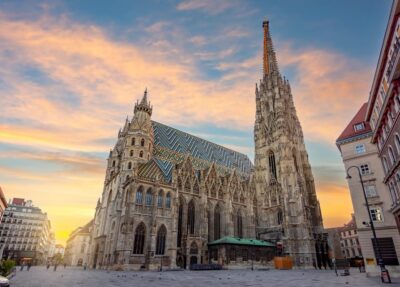
Guided Walking Tour of City Highlights & Hidden Gems
Read our review →
Vienna Historic Center Small Group Walking Tour
Read our review →
Ghosts and Legends Guided Nighttime Walking Tour
Read our review →Browse the lists this tour appears in