
REVIEW · GUIDED WALKS IN VIENNA
Vienna: Essential History Walking Tour
Vienna’s imperial core is more readable than you think. This tour connects the big buildings to the people who used them, from Roman Vienna to the Habsburg world. I especially like how it blends key landmarks like Hofburg with the “why” behind them, and how guides like Herbert Stojaspal often bring humor and real stories to each stop.
The main thing to consider is focus. The route is heavily weighted toward the Habsburg and imperial district, so if you want lots of modern Vienna culture in two hours, you might feel the time goes quickly.
In This Review
- Key Highlights You’ll Notice Right Away
- Price and Time: Why This Two-Hour Tour Feels Like Good Value
- Meeting at Loos Haus: Finding the Start Without Stress
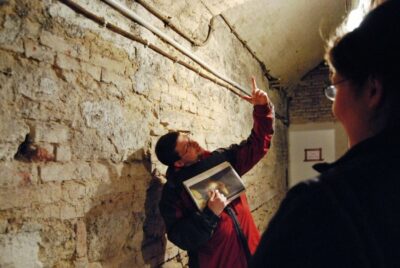
- Michaelerplatz Excavations: Vienna Before the Emperors
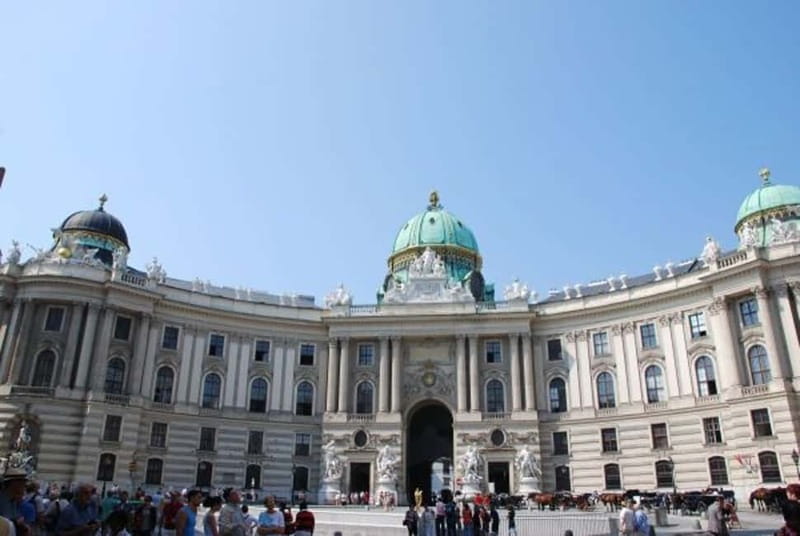
- Hofburg Palace and Heldenplatz: Reading Power in Stone
- Imperial Treasury and the National Library Roof Symbol
- Albertina Museum: Biggest Graphics Collection Meets Modern Context
- Monument Against War and Fascism: A Hard Reset in the Middle of Beauty
- State Opera Area, Hotel Sacher, and the Carinthian Gate Theatre
- Neuer Markt and the Providentia Fountain Anecdotes
- St. Michael’s Church: Three Architectural Styles and a Place That Anchors Time
- The Church Where Habsburg Weddings Happened
- Imperial Crypt: Burial Rituals, Not Just Names
- St. Stephen’s Cathedral: WWII Destruction and a Reality Check
- What Makes the Guide Style Work (And Who You’ll Want on Your Tour)
- A Possible Drawback You Should Plan Around
- Who Should Book This Tour, and Who Might Skip It
- Should You Book This Vienna Essential History Walking Tour?
- FAQ
- How long is the Vienna Essential History Walking Tour?
- How much does the tour cost?
- Where do I meet the guide?
- Where does the tour end?
- Which languages are offered?
- Are entrance fees included?
- Is the tour in all weather conditions?
- Is video or audio recording allowed?
- Is the tour suitable for children?
- Is it suitable for people with mobility impairments?
- Can I cancel for a full refund?
Key Highlights You’ll Notice Right Away
- Small group format that keeps the pace comfortable and questions welcome
- Stops concentrated in a tight area, so you can cover major landmarks without long transit breaks
- The tour explains the symbolism and names behind places like the Austrian National Library roof and Joseph II references
- You’ll see how Vienna’s imperial power is paired with darker 20th-century reminders at sites like the Monument Against War and Fascism
- Guides often use visual support, including iPad photo explanations that make the history easier to picture
- You end at St. Stephen’s Cathedral, with WWII context that challenges the quick school version
Price and Time: Why This Two-Hour Tour Feels Like Good Value
At $34 per person for about 2 hours, you’re paying for orientation plus interpretation, not museum tickets. Entrance fees are not included, so you should budget separately if you plan to go inside any special collections or state rooms on your own later.
What makes the price feel fair is the density. The tour threads together major sites that are usually scattered across different days: Hofburg, Heroes’ Square, the National Library area, the Albertina, reminders of WWII history, and the cathedral finale. Two hours can sound short, but in this part of Vienna, it’s just enough time to learn what you’re looking at without turning it into a marathon.
Also, the group stays small and the tour runs in all weather conditions. If you like your sightseeing to be efficient and structured, this format helps. If you want long, slow wandering or deep museum time, you’ll still need to do some self-guided exploring afterward.
One more practical note: this is not designed for kids under 12, and it is not suitable for people with mobility impairments. The route includes walking between sites, and the experience expects you to move.
More Guided Walks in Vienna
- Vienna: Guided Walking Tour of City Center Highlights
★ 4.7 · 4,989 reviews - Vienna: Vienna Central Cemetery Guided Walking Tour
★ 4.8 · 3,307 reviews - Vienna: Guided Walking Tour of City Highlights & Hidden Gems
★ 4.9 · 2,180 reviews - Vienna: Viennese Underworld Guided Walking Tour
★ 4.7 · 1,865 reviews
Meeting at Loos Haus: Finding the Start Without Stress
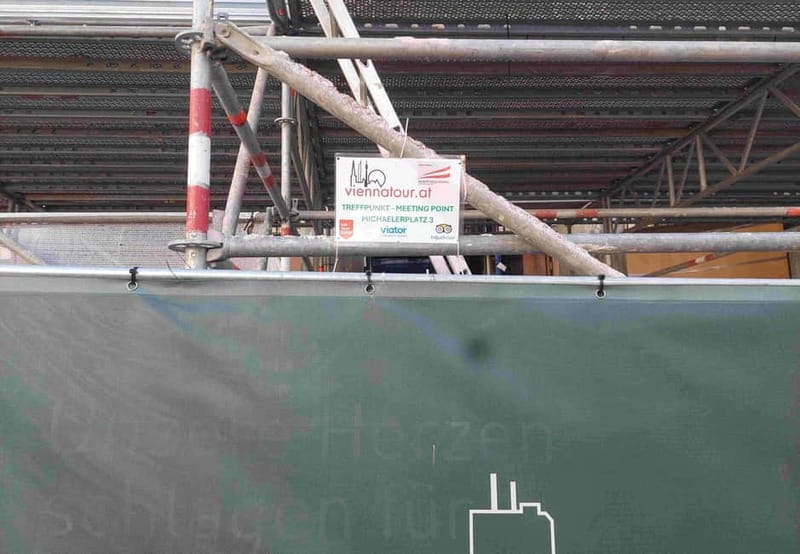
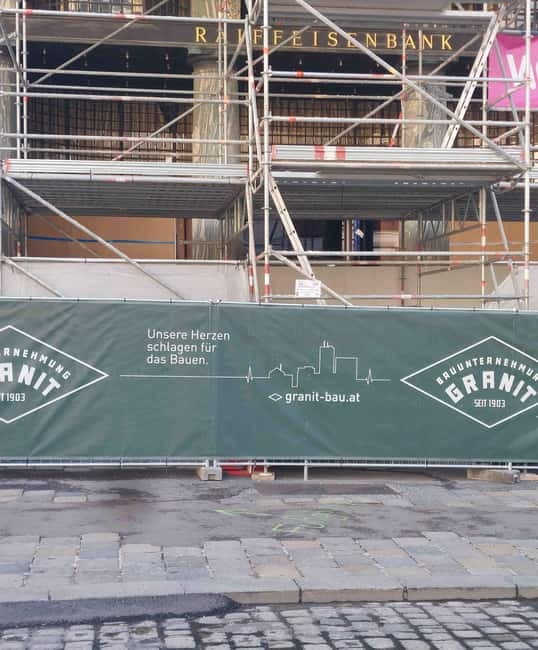
You meet at Michaelerplatz 3, in front of Loos Haus, which sits near the Herrengasse metro station (U3). The guidance is clear and specific, too: the building is between Kohlmarkt and Herrengasse, and you’ll see the name Raiffeisenbank on the facade.
This kind of start matters. If you’ve ever shown up to a major square only to realize the meeting point is a two-block walk in the wrong direction, you know how quickly a tour can go sideways. Here, the instructions are simple enough that you can arrive, locate the facade sign, and settle in.
The tour ends at Stephansplatz 8A (near Stephansplatz). That’s useful because St. Stephen’s Cathedral sits right there. It’s a natural “finish zone” for getting food afterward, grabbing a tram, or continuing your day on foot.
Michaelerplatz Excavations: Vienna Before the Emperors
The tour begins at Michaelerplatz 3 and quickly moves into the idea that Vienna has layers. Even before you reach the imperial buildings, you’re pointed toward the concept of Roman Vienna and the practical question the guide keeps returning to: why a castle was built here.
That framing changes your walking. Instead of treating the imperial district like a static postcard, you start seeing it as a response to geography, defense, and power. You also get a “first clue” for how to read Vienna’s center: buildings may look like they belong to one era, but they often sit on decisions made much earlier.
Hofburg Palace and Heldenplatz: Reading Power in Stone
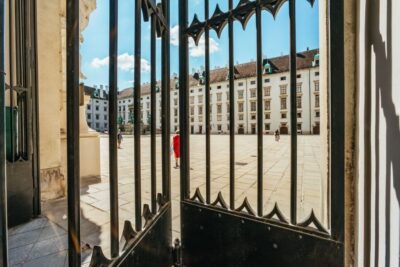
Next up is the Hofburg Palace area, where you learn what the huge grounds mean in real terms. You’re given a scale that helps your brain lock in the idea of an imperial seat, not a small residence.
From there, the route hits Heldenplatz. This is where the tour turns architecture into story. You look at the size of Heroes’ Square and learn what lies behind the facades. That phrase matters because the “front” of imperial Vienna can feel like theater until someone explains what was happening behind it: administration, ceremony, public messaging, and control.
I like that the guide doesn’t just list rulers. The tour connects rulership to what you see: squares, palaces, and the way public space gets used. It’s a fast way to understand why Vienna’s center feels so official. It’s not random grandeur. It’s a system.
More of Austria on foot, bell tower to bell tower:
Imperial Treasury and the National Library Roof Symbol
The tour includes the Imperial Treasury area, positioned as a must-see reason for your trip. Even when you aren’t going inside, this stop helps you understand what kind of objects and traditions you’re looking for in the broader imperial story.
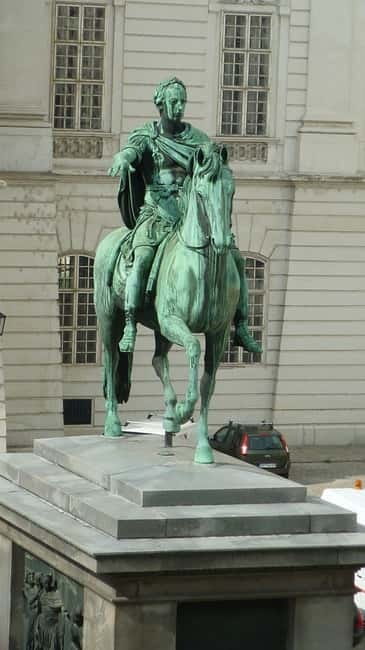
Then you move to the Austrian National Library with its state room. This is one of the most useful parts of the tour because it teaches you to notice details. You’ll learn what the symbol on the roof means, and why the nearby square is named after Emperor Joseph II.
Those name and symbol explanations are more than trivia. They help you connect the building to the larger theme of enlightened governance and state identity. When you later see the library again from a distance, you’ll recognize the roof element and understand it as part of the city’s public messaging, not just decorative architecture.
Albertina Museum: Biggest Graphics Collection Meets Modern Context
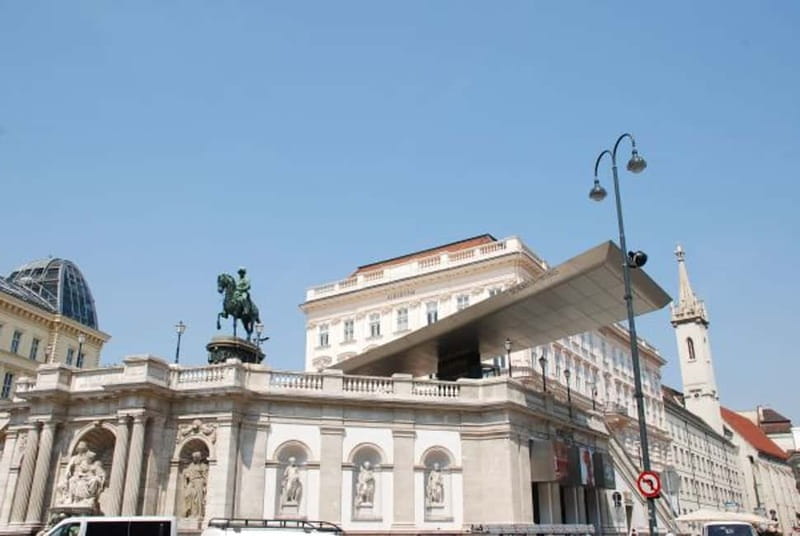
You’ll stop by the Albertina, described as home to the largest graphical collection in the world. Even if you don’t go in immediately, the guide’s point is practical: Vienna isn’t just churches and palaces. It’s also where art collections carry cultural power.
Albertina also sits near the tour’s shift toward 20th-century memory. As you walk past, the tour builds a bridge from imperial ceremony to the consequences of the modern era. That matters because Vienna’s beauty can trick you into forgetting what the 20th century did to the city and its people.
Monument Against War and Fascism: A Hard Reset in the Middle of Beauty
The Monument Against War and Fascism is not a casual stop. The tour uses it to confront the horrors of the Second World War. It’s where the tone changes, and the guide’s job becomes to keep you thinking, not just looking.
This is one reason I like this tour despite its heavy imperial focus. It doesn’t pretend history is only elegant. It gives you a reminder that the same streets that host imperial grandeur also hold the scars and lessons of real conflict.
State Opera Area, Hotel Sacher, and the Carinthian Gate Theatre
You also visit the State Opera area and hear why the Hotel Sacher exists on the site where the Carinthian Gate Theatre once stood.
This kind of “what replaced what” lesson is surprisingly valuable. Vienna can feel like one long continuity of style, but buildings change for economic, political, and historical reasons. The tour helps you understand that the city’s current look is the result of choices and losses, not a timeless museum set.
Neuer Markt and the Providentia Fountain Anecdotes
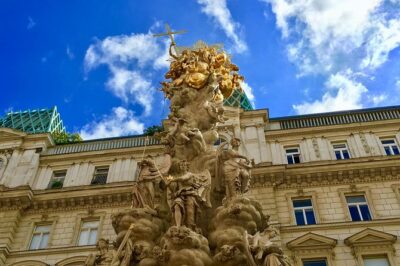
At Neuer Markt, the tour points out the Providentia Fountain and shares anecdotes that make it more than another photo stop. If you usually skip fountains, this is the kind of explanation that fixes that habit. You start to see how even small public details can reference civic identity, moral framing, or the storytelling Vienna uses in public space.
These are the moments where a good guide earns their fee. Not by overwhelming you with facts, but by choosing a few small details and making them stick.
St. Michael’s Church: Three Architectural Styles and a Place That Anchors Time
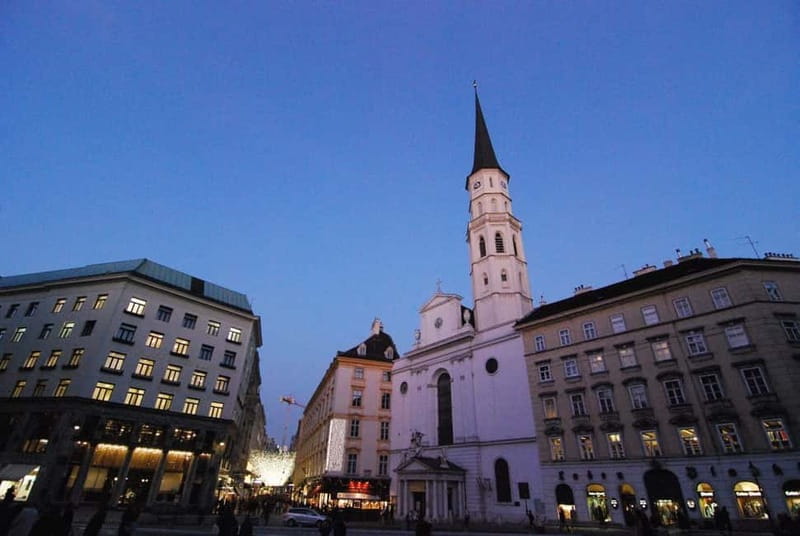
The route includes St. Michael’s Church, described as Vienna’s third oldest church and a mix of three different architectural styles. That blend gives you an easy visual way to understand that Vienna’s religious architecture didn’t freeze in one moment.
In other words, you’re not just visiting a pretty church. You’re watching time stack on top of each other. The tour treats the church like a timeline you can see with your feet.
The Church Where Habsburg Weddings Happened
One of the most memorable parts of the tour is the church where all Habsburg weddings took place. You’ll hear details that make imperial weddings feel less like myth and more like actual events with unusual rules.
The guide also notes that the church is closed on Sundays and public holidays, so you should plan your day with that in mind if you want to see the building from the outside at the right time.
You’ll also get the kind of odd detail that changes how you interpret “ceremony.” In some weddings, the groom was not even present. That detail helps you see the dynasty’s marriage arrangements as political machinery, not romantic tradition.
Imperial Crypt: Burial Rituals, Not Just Names
Near the end, you’ll reach the Imperial Crypt, where you learn about the Habsburg burial ritual. The tour doesn’t treat it like a list of famous people. It frames it as a repeatable ritual with meaning.
This stop is a good reminder that Vienna’s imperial story wasn’t only about crowns and battles. It also managed memory, legitimacy, and how the state communicated power after death.
St. Stephen’s Cathedral: WWII Destruction and a Reality Check
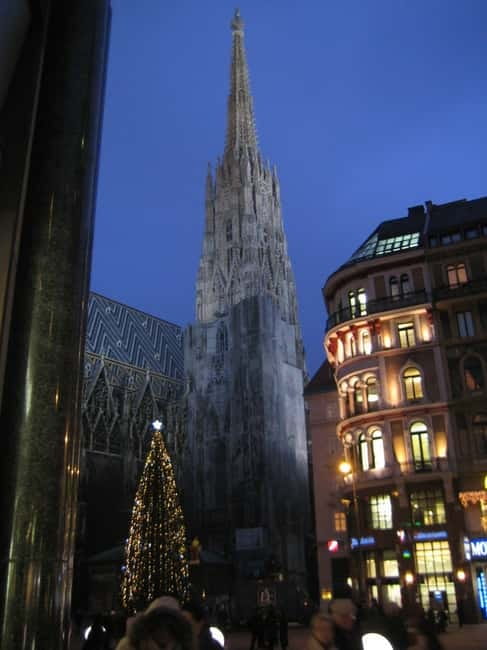
The tour ends at St. Stephen’s Cathedral, Vienna’s landmark. The guide explains the cathedral’s partial destruction during the Second World War and also points out why not everything you learn in school is correct.
That last bit is the perfect final move. You arrive thinking you already know the basics, then you leave with a more grounded understanding. Even if you don’t remember every detail, you’ll remember the feeling: Vienna’s story is layered, and simplified versions do not tell the whole truth.
What Makes the Guide Style Work (And Who You’ll Want on Your Tour)
A big reason this tour earns such high marks is the guide delivery. Names that come up include Herbert (often with dry humor), Dorothy, and Wolfgang. Guides are frequently described as engaging, with strong historical storytelling rather than a dry lecture.
Two elements show up again and again in feedback. First, humor helps keep the pace from turning heavy. Second, some guides use an iPad with photos to show what the buildings looked like in different time periods. That makes “history as explanation” turn into history as sight.
One more point I’d treat as a personal recommendation: ask questions when you get them. The guide often answers in ways that connect the next stop. That turns two hours into more than sightseeing, it becomes a set of mental bookmarks.
A Possible Drawback You Should Plan Around
Because the route stays focused on the imperial core, you may feel it leans toward the Habsburg story more than broader city life. If your dream day is coffee shops, modern design, and neighborhoods beyond the center, pair this with a separate activity later that explores Vienna beyond the palace belt.
Who Should Book This Tour, and Who Might Skip It
Book it if:
- You want strong orientation for a first trip to Vienna’s center
- You like history that explains what you see in front of you
- You prefer a small group and a guide who can handle questions
- You want a tour that covers both imperial beauty and WWII memory in one compact walk
Consider skipping or pairing it differently if:
- You’re traveling with someone who needs step-free or mobility-friendly routes
- You’re hoping for a two-hour sampling of modern Vienna culture
- You want long time inside attractions, since entrance fees are not included
If you’re an art lover, this tour is also a good setup for later museum choices. Knowing what the Albertina represents helps you decide what to prioritize when you have paid entry time.
Should You Book This Vienna Essential History Walking Tour?
Yes, I think you should book it if this is your first day or your first time in central Vienna. For the money, you get a tight route with major landmarks, helpful “why” explanations, and a guide style that keeps the story moving. The ending at St. Stephen’s is a strong finish point, especially if you plan to keep exploring afterward.
Just go in with the right expectations. This is not a general wander through Vienna. It’s a focused walk through the imperial world, including WWII reminders. If that matches what you want, you’ll likely find it a smart, efficient start to your trip.
FAQ
How long is the Vienna Essential History Walking Tour?
The tour lasts 2 hours.
How much does the tour cost?
The price is $34 per person.
Where do I meet the guide?
Meet in front of Loos Haus, Michaelerplatz 3, which is between Kohlmarkt and Herrengasse. It is about a 3-minute walk from the Herrengasse metro station (U3).
Where does the tour end?
The tour drop-off locations are listed as Stephansplatz 8A, 1010 Wien, Österreich.
Which languages are offered?
The live guide provides English and German.
Are entrance fees included?
No. Entrance fees are not included.
Is the tour in all weather conditions?
Yes. The tour takes place in all weather conditions.
Is video or audio recording allowed?
No. Video recording and audio recording are not allowed.
Is the tour suitable for children?
It is not suitable for children under 12.
Is it suitable for people with mobility impairments?
No. It is not suitable for people with mobility impairments.
Can I cancel for a full refund?
Yes. You can cancel up to 24 hours in advance for a full refund.
The Habsburg Map
- Vienna: Time Travel and Magic Vienna History Tour
★ 4.6 · 3,879 reviews - Time Travel-Magic Vienna History Tour Ticket
★ 4.5 · 1,099 reviews - Skip-the-Line Schonbrunn Palace Guided Tour and Vienna Historical City Tour
★ 3.5 · 940 reviews - Vienna Mozart Concert in Historical Costumes at the Musikverein
★ 4.5 · 888 reviews
Just added to the bill for Vienna


Guided Walks in Vienna, compared.
Guided Walking Tour of City Center Highlights
Read our review →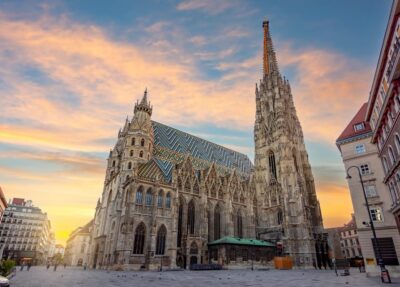
Guided Walking Tour of City Highlights & Hidden Gems
Read our review →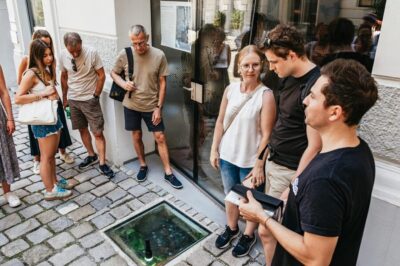
Vienna Historic Center Small Group Walking Tour
Read our review →
Ghosts and Legends Guided Nighttime Walking Tour
Read our review →Browse the lists this tour appears in