
REVIEW · GUIDED WALKS IN VIENNA
Vienna: Imperial History Guided Walking Tour
Vienna feels like it has layers you can walk through, and this tour turns the Hofburg area into a clear story. I love how the route connects Habsburg rulers to real places you see today, and I especially love the stop at Minoritenkirche to view the Last Supper mosaic replica inside. The one consideration is that Hofburg Palace interior rooms are not included, so you are mostly experiencing the complex from the outside and key public areas.
You get a fast, focused 2-hour orientation that’s built for your feet: meet the guide at the statue near the Albertina, then follow the walking flow around the Heldenplatz zone, the Imperial Treasury area, and the church. I also like that the tour runs rain or shine, which matters in Vienna, and that you can pick from many languages so the historical thread stays understandable.
In This Review
- Key things to notice on this Vienna Imperial History walk
- Finding your starting point near the Albertina and Archduke Albrecht
- Hofburg Palace grounds: 2,000 rooms, one empire-shaped space
- Heldenplatz: where imperial messaging meets public space
- Imperial Treasury, National Library, and the Spanish Riding School area
- The Minoritenkirche interior: the Last Supper mosaic replica
- Congress of Vienna: Prince Metternich and how the map was redrawn
- What the tour covers inside the Hofburg complex today
- The practical flow: how to make the most of a 2-hour walk
- Price and value: is $328 per group up to 7 a good deal?
- Who should book this Hofburg walking tour
- Should you book the Vienna Imperial History Guided Walking Tour of Hofburg?
- FAQ
- How long is the Vienna Imperial History Guided Walking Tour?
- Where do I meet the guide?
- Are Hofburg Palace interiors included?
- What do we see inside the Church of the Minor Friars?
- Is the tour wheelchair accessible?
- What is the price, and is it per person?
- What languages are available for the live guide?
Key things to notice on this Vienna Imperial History walk
- Hofburg Palace as a living complex: your guide explains how the grounds and offices function today, not just what used to happen there
- Heldenplatz and the public face of empire: you connect power to architecture and open space
- Minoritenkirche’s Last Supper mosaic replica: a memorable inside stop included with admission
- Congress of Vienna context: you learn why Europe’s map was reorganized after the Napoleonic Wars
- Prince Metternich is not just a name: it comes with the story of negotiation and political reshaping
- A time-efficient 2 hours: enough stops for real understanding without turning your day into a marathon
Finding your starting point near the Albertina and Archduke Albrecht
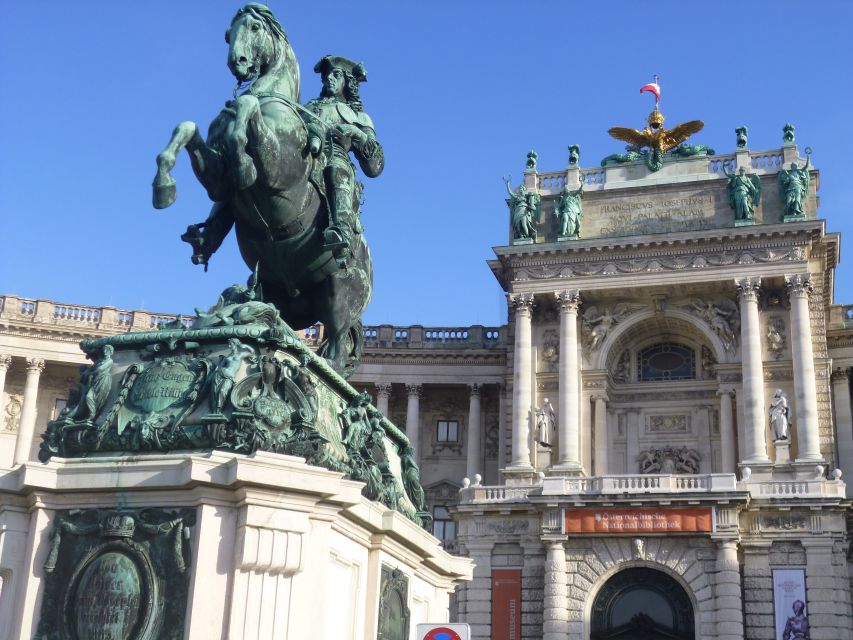
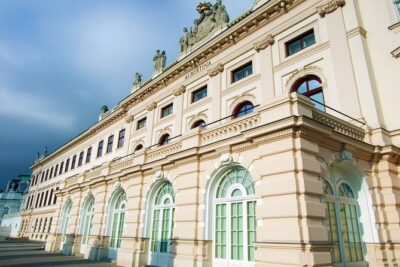
Your tour begins at street level, next to the Statue of Archduke Albrecht in front of the entrance to the Albertina museum. This is a helpful anchor point because you get oriented in central Vienna right away, and you do not waste the first part of your day trying to hunt for the right meeting corner.
I like that the experience is designed as a walking tour, not a bus lecture. The best part of this kind of history visit is that you can look up while listening, then look forward while learning how the empire played out in real space.
Bring comfortable shoes. You will be on sidewalks and paved areas around the Hofburg zone, and the tour runs rain or shine, so solid footing matters.
More Guided Walks in Vienna
- Vienna: Guided Walking Tour of City Center Highlights
★ 4.7 · 4,989 reviews - Vienna: Vienna Central Cemetery Guided Walking Tour
★ 4.8 · 3,307 reviews - Vienna: Guided Walking Tour of City Highlights & Hidden Gems
★ 4.9 · 2,180 reviews - Vienna: Viennese Underworld Guided Walking Tour
★ 4.7 · 1,865 reviews
Hofburg Palace grounds: 2,000 rooms, one empire-shaped space
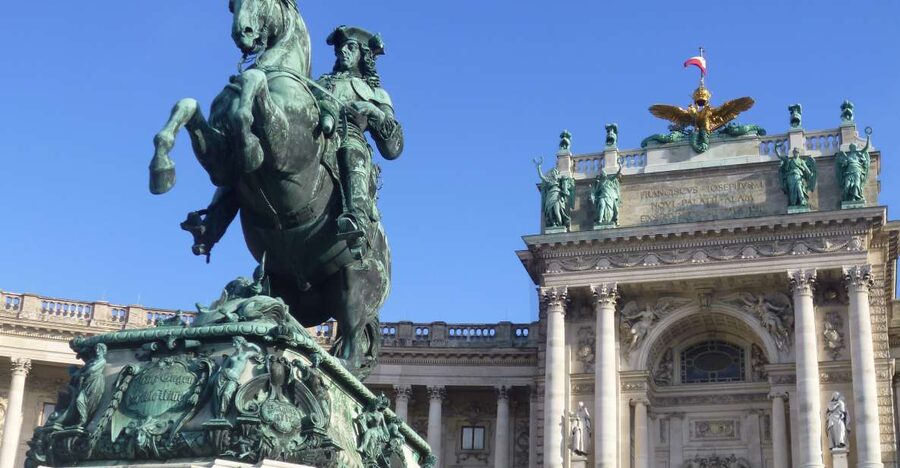
The core of this experience is the Hofburg Palace complex, which your guide treats like an open-air museum. You get the big-picture idea first: this was the winter residence of the Habsburg family, and it still functions as an important center in modern Vienna.
One of the most useful bits of context you get here is how expansive the place really is. The complex has around 2,000 rooms, and your guide explains how they are used today, including public and governmental functions inside the palace walls. That matters because it changes your view from wow, old building to oh, this is still how the state operates.
As you wander, pay attention to the mix of architectural styles. The tour focuses on how Baroque architecture and other layers reflect roughly 700 years of building and rebuilding, so you start seeing Vienna’s evolution instead of just one “pretty palace” moment.
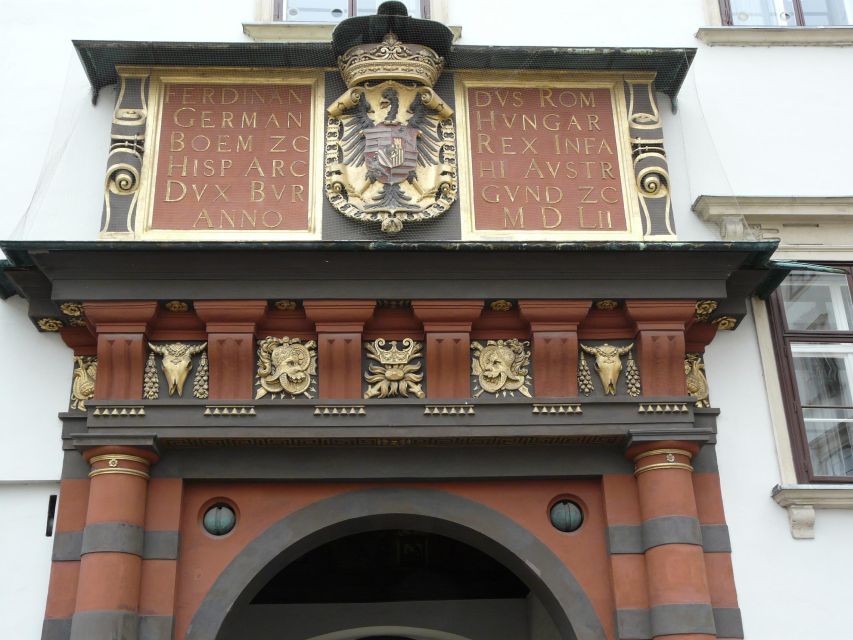
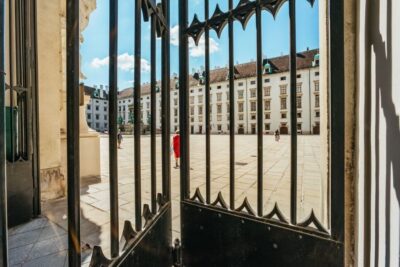
Even without interior access, the exterior experience can still feel complete because the Hofburg complex is huge, and the story of power shows up in gates, roofs, towers, and statues. Your guide ties those details to the House of Habsburg, helping you understand how dynasties built legitimacy in stone and ceremony.
Heldenplatz: where imperial messaging meets public space
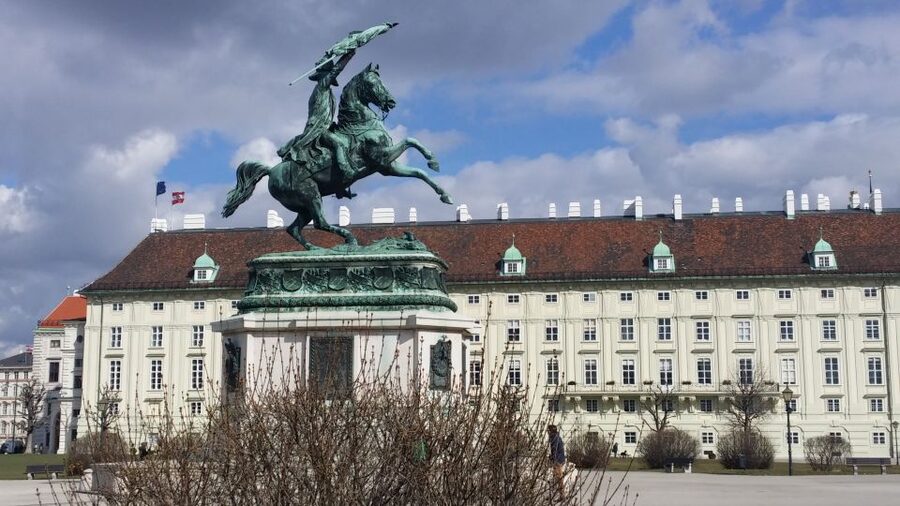
Around the Hofburg, Heldenplatz is where the empire talks directly to the city. In plain terms, it is a big public stage, and your guide helps you read it that way: a place built to project authority, not hide it.
This stop is valuable because it shows you that imperial power was not only royal life behind walls. It was also the public-facing kind of control, the kind you could walk through as a citizen or visitor and still feel.
As you move through the area, keep your eyes up and out. The walking pace gives you time to connect what you are seeing, like monumental façades and prominent spaces, with what your guide is explaining about Habsburg priorities and the long arc of European politics.
Imperial Treasury, National Library, and the Spanish Riding School area
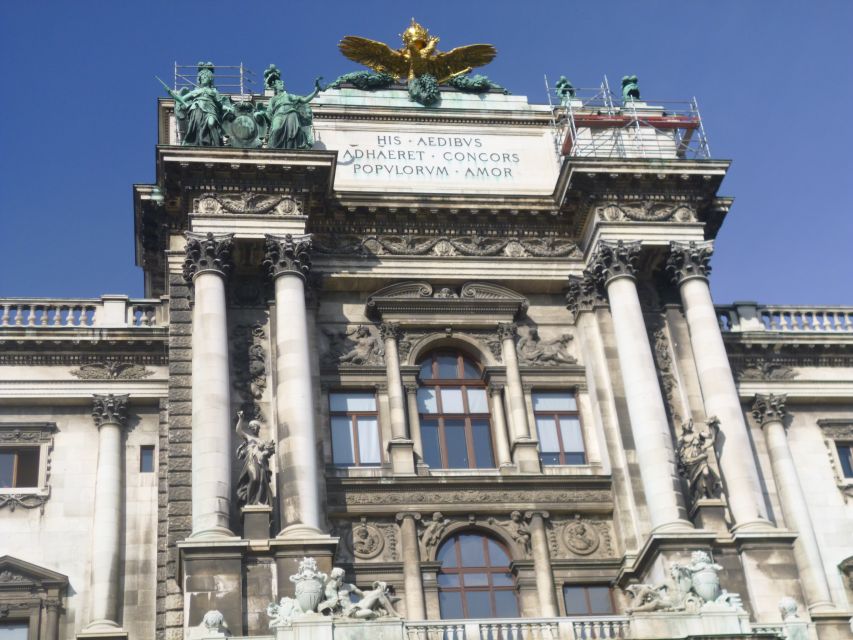
The tour also passes several major neighbors of Hofburg, so you get more than one palace wall to look at. Among the highlights are the area around the Imperial Treasury, the National Library, and the Spanish Riding School.
Here is what is practical about these stops: they help you understand Hofburg as a whole system. This was not a single residence, it was an administrative and cultural center, with institutions that supported governance, finance, and elite traditions.
The Imperial Treasury connection helps you think about wealth and state power. Even if you are not going inside during this walk, the location alone works as a cue for the economic side of ruling.
The National Library angle adds a different layer, showing how knowledge and record-keeping fit into the empire’s power structure. Again, the point is not just the building, it is what your guide helps you infer from the setting.
The Spanish Riding School stop is a good reminder that imperial identity was performed and maintained. If you have ever wondered why aristocratic Europe cared so much about tradition and presentation, seeing where that tradition sits near Hofburg makes the answer feel obvious.
More of Austria on foot, bell tower to bell tower:
The Minoritenkirche interior: the Last Supper mosaic replica
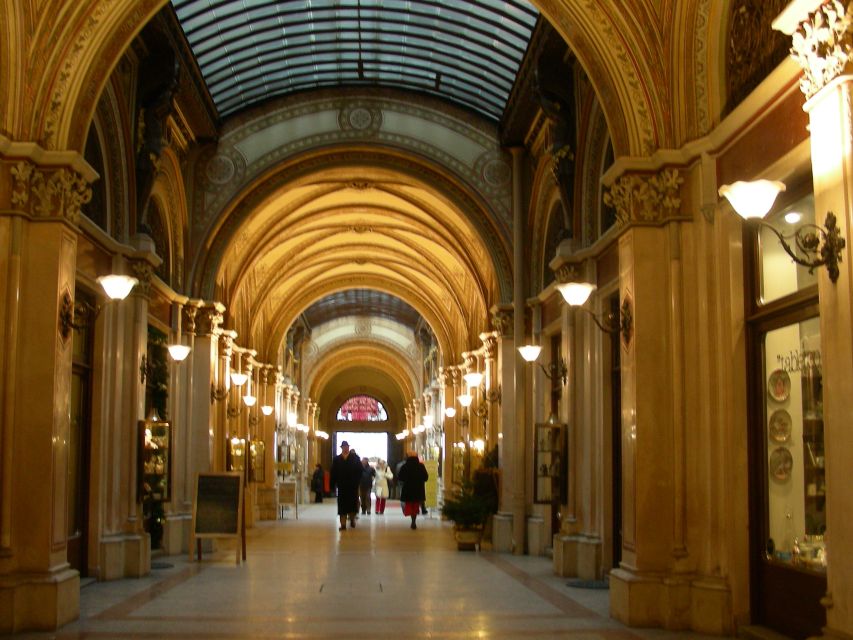
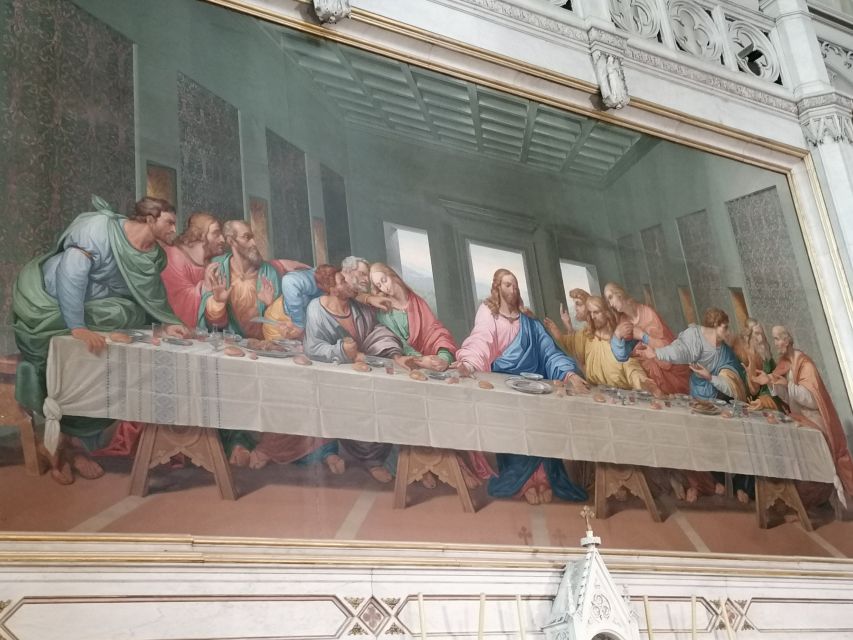
This is the one inside stop, and it is included. You will visit the Wiener Minoritenkirche, also known as the Church of the Minor Friars, and your guide brings you to the famous mosaic replica of The Last Supper.
This part works because it breaks the “exteriors only” feel of many palace walks. You get to step inside, and the replica gives you a visual anchor that is easy to remember long after you leave.
The tour also points out the unusual exterior of the church. I like that you get the contrast, because you can spot the difference on the way in, then see how the inside experience shifts from architectural drama to focused art viewing.
If you want a souvenir in your memory instead of a souvenir in your bag, this is the stop. A mosaic replica is the kind of detail that makes the whole tour feel specific to Vienna rather than generic European palace history.
Congress of Vienna: Prince Metternich and how the map was redrawn
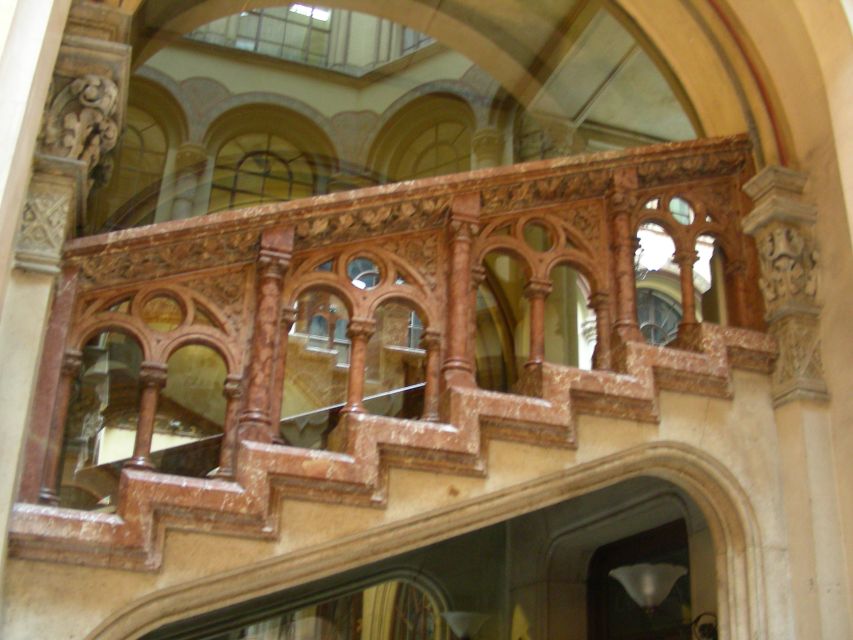
After you spend time inside and around imperial spaces, the story shifts into Europe-wide politics. Your guide explains the Congress of Vienna and, more importantly, why it mattered: Europe’s map was reorganized after the Napoleonic Wars under the leadership of Prince Metternich.
This section is valuable because it takes the Habsburg story beyond local grandeur. The Habsburg dynasty was shaped by big events, and the Congress of Vienna helps you see how diplomacy, negotiation, and power calculations determined borders and relationships.
Keep an eye out for the way your guide connects the dots. A good guide here makes it feel like you are not just memorizing names, you are understanding what was at stake. Metternich becomes more than a historical label, because you learn how leaders tried to stabilize Europe after years of upheaval.
If your Vienna trip includes other history sites, this context can help everything click. You will start seeing the city’s imperial atmosphere as part of a wider political system, not just a beautiful setting.
What the tour covers inside the Hofburg complex today
One of the most “modern Vienna” parts of the experience is the explanation of today’s public authorities that function within the palace walls. Your guide points out key institutions such as the Federal Presidency and the Federal Chancellery, plus various ministries and museums located in the complex.
This is where the tour earns its keep for me. It is easy to treat palaces like time capsules, but this walk frames Hofburg as a working center. You learn how historical power and modern governance share the same physical location, which makes the area feel less distant.
So even if you cannot enter the Hofburg interiors on this tour, you still get meaningful insight. You leave with a better sense of where you are standing and why that matters now, not only then.
The practical flow: how to make the most of a 2-hour walk
This is a compact tour at 2 hours, and you should plan it like a focused morning or afternoon history block. There is enough time to cover the Hofburg complex highlights and include the Minoritenkirche interior stop, but it is not designed to be a slow museum marathon.
You will also pass the Imperial Treasury area, the National Library area, and the Spanish Riding School nearby, so it helps to have a short attention loop. Listen, look, then ask your guide follow-up questions if you are curious, because the guide can translate architectural cues into political meaning quickly.
Your experience includes skipping the ticket line. That matters because churches and major sites can have bottlenecks, and the tour schedule is tight enough that saving time improves the experience rather than forcing you to rush.
Also plan for weather. The tour runs rain or shine, so I recommend you wear layers and keep an umbrella handy if rain is possible.
Price and value: is $328 per group up to 7 a good deal?
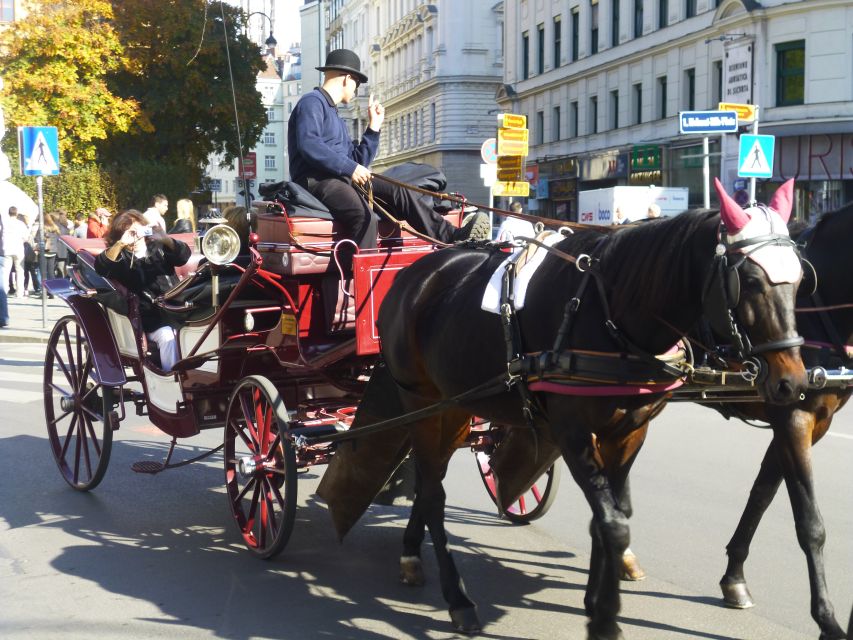
The price is listed as $328 per group for up to 7 people, with a 2-hour duration. The value question here is not just the total cost, it is how you will split it.
If you are traveling as a small group, that group-based pricing can make the per-person cost reasonable compared to paying for separate individual tours. If you are solo, it might feel like you are paying for other people’s seats, so you may want to decide if you prefer a private-group setup or a larger group tour on another day.
What you are paying for is a licensed guide plus an included church entry, and you are getting a historically guided route through the Hofburg complex area. The fact that the walk includes the Minoritenkirche interior means you are not only paying for sightseeing from the street.
In my view, this tour is a good value if your goal is clarity. You want a guided narrative that connects Habsburg power to specific places, then ties it to the Congress of Vienna without turning your afternoon into homework.
Who should book this Hofburg walking tour
This experience fits best if you want a tight, structured history walk in central Vienna. It is ideal when you like your facts tied to buildings, gates, and public squares, and you want context for why Vienna looked and acted like an imperial capital.
You will likely enjoy it most if:
- You are interested in the House of Habsburg and want the story connected to real locations
- You want the Congress of Vienna explained with Prince Metternich as the thread, not a random name drop
- You want at least one included interior stop at Minoritenkirche, not only exterior palace views
It is also a good choice for travelers who do not want to commit to a long museum day. Two hours can fit easily between other plans, and you still end up with multiple memorable anchors: Hofburg grounds, Heldenplatz, and the Last Supper mosaic.
Should you book the Vienna Imperial History Guided Walking Tour of Hofburg?
Yes, I would book it if you want a guided, place-based overview of Vienna’s imperial era in a time-efficient format. The combination of Hofburg Palace complex framing, Heldenplatz public-space energy, and the included Minoritenkirche interior stop gives you variety, so it feels more complete than a one-note palace walk.
I would pause before booking if you are only interested in deep interior touring inside Hofburg Palace itself. Since Hofburg interiors are not part of this tour, your highlights are the complex setting and the included church, not an extended palace room-by-room visit.
If your plan includes a lot of Vienna sightseeing anyway, this tour is a smart way to get the big story early. It helps you look at the city after the fact and understand what you are seeing, not just that it is impressive.
FAQ
How long is the Vienna Imperial History Guided Walking Tour?
The tour lasts 2 hours.
Where do I meet the guide?
Meet your guide next to the Statue of Archduke Albrecht in front of the entrance to the Albertina museum.
Are Hofburg Palace interiors included?
No. Entry to interiors of Hofburg Palace is not part of the tour.
What do we see inside the Church of the Minor Friars?
You visit the Wiener Minoritenkirche and see the famous mosaic replica of Da Vinci’s Last Supper.
Is the tour wheelchair accessible?
Yes, the tour is wheelchair accessible.
What is the price, and is it per person?
The price is $328 per group up to 7 people.
What languages are available for the live guide?
The live guide is available in many languages, including English, German, French, Spanish, Italian, Japanese, Russian, and several others.
The Habsburg Map
- Vienna: Time Travel and Magic Vienna History Tour
★ 4.6 · 3,879 reviews - Time Travel-Magic Vienna History Tour Ticket
★ 4.5 · 1,099 reviews - Skip-the-Line Schonbrunn Palace Guided Tour and Vienna Historical City Tour
★ 3.5 · 940 reviews - Vienna Mozart Concert in Historical Costumes at the Musikverein
★ 4.5 · 888 reviews
Just added to the bill for Vienna
Guided Walks in Vienna, compared.
Guided Walking Tour of City Center Highlights
Read our review →
Guided Walking Tour of City Highlights & Hidden Gems
Read our review →
Vienna Historic Center Small Group Walking Tour
Read our review →
Ghosts and Legends Guided Nighttime Walking Tour
Read our review →Browse the lists this tour appears in