
REVIEW · MOZART & CLASSICAL CONCERT EVENINGS
Vienna Private Walking Tour including State Opera
Vienna can feel like a museum you walk through, but this private tour connects the stones to the stories you actually want. It strings together Vienna’s big turning points, from Roman Vindobona to the Habsburg era and on to the Second Republic, and then brings the music side into focus. I especially like the way the route builds toward the city’s opera life, starting with the State Opera and ending at the grand Stephansdom.
Two things I like a lot: you get a guided history thread across centuries, and you also get the classical-music lens, with composers you know like Mozart and Beethoven tied to places you can point at. One thing to consider, though, is that the State Opera stop can be schedule-dependent, and what you see inside may not match your expectations for full auditorium access, since entrance fees are not included.
In This Review
- Key Takeaways Before You Go
- Why This 3-Hour Walk Works: Roman Vindobona to the Second Republic
- Starting at Stephansplatz 8A, Then Heading Toward the Opera
- The State Opera Stop: What You’re Really Signing Up For
- Inside the Opera Building: Lobby Viewing vs Full Access
- Habsburg Vienna Loop: Mozart Monument, Art History Museum, and Hofburg
- Michaelerkirche and the Roman-to-Medieval Layers Around the Gate
- Graben Street and the Peterskirche: Walking the Empire’s Main Line
- Stephansplatz and Stephansdom: The Final View That Locks It In
- Price and Value: $323 Per Group Up to 15 People
- What to Watch For: Opera Scheduling, Access, and Guide Delivery
- Who This Tour Suits Best, and Who Should Consider Alternatives
- Quick Practical Tips Before You Book
- Should You Book This Private Walking Tour with State Opera Included?
- FAQ
- Where does the tour meet?
- How long is the tour?
- What is included in the price?
- What languages is the live guide available in?
- Is this tour private, and how large is the group?
- Is the tour suitable for people with mobility impairments?
Key Takeaways Before You Go
- A 3-hour, private route that keeps the pacing tight from Stephansplatz to the opera area and back.
- Roman to Roman-Gothic connections, with stops that let you see Vienna evolve street by street.
- State Opera context tied to works like La Traviata, La Clemenza di Tito, and Verdi’s Don Carlo.
- Habsburg power made walkable, especially around the Hofburg and the emperor-focused church zone.
- WWII and postwar framing that you’ll want to hear clearly and respectfully.
- Comfortable-shoe required, because this is a walking tour with limited patience for flip-flops.
Why This 3-Hour Walk Works: Roman Vindobona to the Second Republic
This tour is built for people who want Vienna to make sense fast. In 3 hours, you’re not trying to memorize every date. You’re seeing the city’s main layers, from Roman Vindobona all the way through Habsburg rule, the big empire-era shift of the Holy Roman Empire and Austro-Hungarian period, and then into the wartime years and the birth of the Second Republic.
What makes that valuable for you is the way Vienna’s sights stop being random postcards. When the guide connects a street, a gate, or a church to the political reality behind it, you start noticing patterns. Even if you only visit once, you leave with a mental map of how power, religion, and art shaped the city you’re walking through today.
If you like tours that give you a “why” with the “where,” this one has the right structure. If you’re hoping for a slow, museum-style day, 3 hours may feel short. But for orientation and momentum, that time box is a strength.
More Guided Walks in Vienna
- Vienna: Guided Walking Tour of City Center Highlights
★ 4.7 · 4,989 reviews - Vienna: Vienna Central Cemetery Guided Walking Tour
★ 4.8 · 3,307 reviews - Vienna: Guided Walking Tour of City Highlights & Hidden Gems
★ 4.9 · 2,180 reviews - Vienna: Viennese Underworld Guided Walking Tour
★ 4.7 · 1,865 reviews
Starting at Stephansplatz 8A, Then Heading Toward the Opera
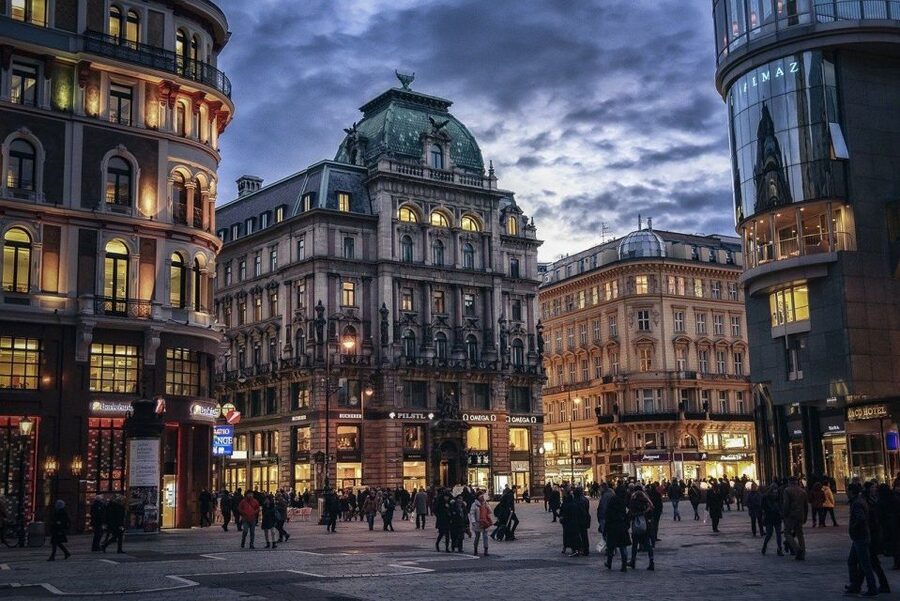
The tour meets at Stephansplatz 8A, 1010 Wien. From there, you’re set up to move in a loop that starts with a major Vienna square energy and then brings you to the opera world before walking back toward the cathedral area.
Stephansplatz is a smart meeting point because it’s already a hub. You can get oriented quickly, and you’ll likely pass familiar landmarks again later, which helps your brain lock in the route. That matters on a private tour because you want the guide’s story to land, not disappear between stops.
Also, you’ll want comfortable shoes. This is the kind of walking where you’ll feel every cobblestone decision after an hour, especially if you spend time looking up at façades rather than just powering through.
The State Opera Stop: What You’re Really Signing Up For
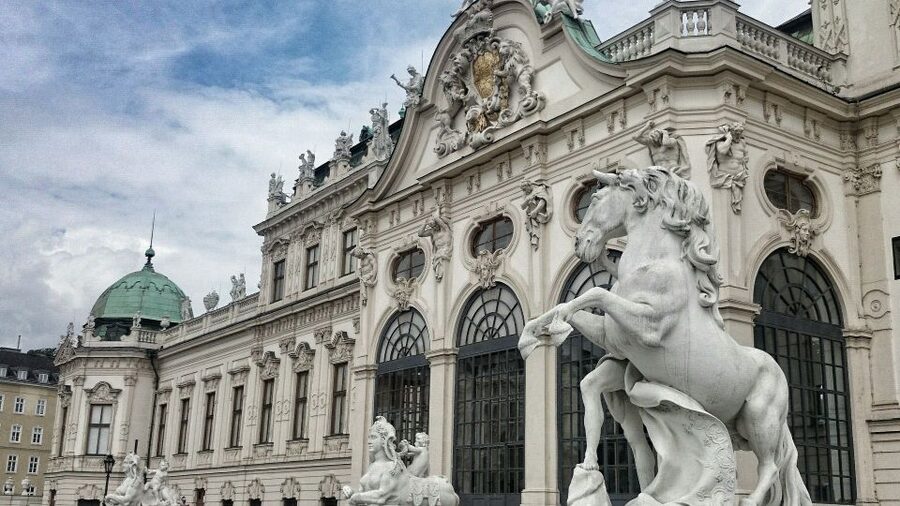
The tour includes a visit to Vienna’s State Opera, often described as starting in the building’s orbit and public areas. The opera’s story is part of the pitch: it began in the 1860s as the Vienna Court Opera, and the name changed in 1920 in the early Austrian Republic era.
The guide connects that opera-house history to the wider empire story. You’ll hear how the building became a place where Vienna’s prestige, money, and classical training all met on the same stage.
You’re also likely to get details that make the opera more specific, not generic, including famous productions tied to composers and companies. The tour content mentions works such as La Traviata, La Clemenza di Tito, and Verdi’s Don Carlo. It also points to major historical figures connected to the opera scene, including Gustav Mahler, Herbert von Karajan, and Claudio Abbado.
One practical caution: entrance fees are not included. So if your idea of the “opera visit” includes things like paying for a particular special access area, you should assume you might need to cover that separately. The goal is a guided look and historical context, not necessarily a full backstage fantasy package.
If you want to maximize your odds, keep your schedule flexible and be ready for the opera to run on its own timetable.
Inside the Opera Building: Lobby Viewing vs Full Access
Here’s the honest way to think about the State Opera portion. This tour promises a guided visit, but it does not promise that every traveler will see the same exact rooms. One common outcome is a visit focused on areas like the lobby and accessible public spaces.
That’s not automatically disappointing. The opera lobby and public corridors can still be visually impressive, and a good guide can make the building feel alive through stories about productions and the names tied to it.
But if your goal is a very specific kind of inside access, you’ll want to confirm what the included visit covers for your exact time slot. Timing can change, and the opera itself has the final say on what is available. In real life, that means you should expect some variability in what you can physically enter.
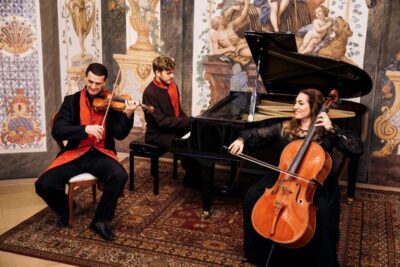
More evenings of Mozart and strings:
Habsburg Vienna Loop: Mozart Monument, Art History Museum, and Hofburg
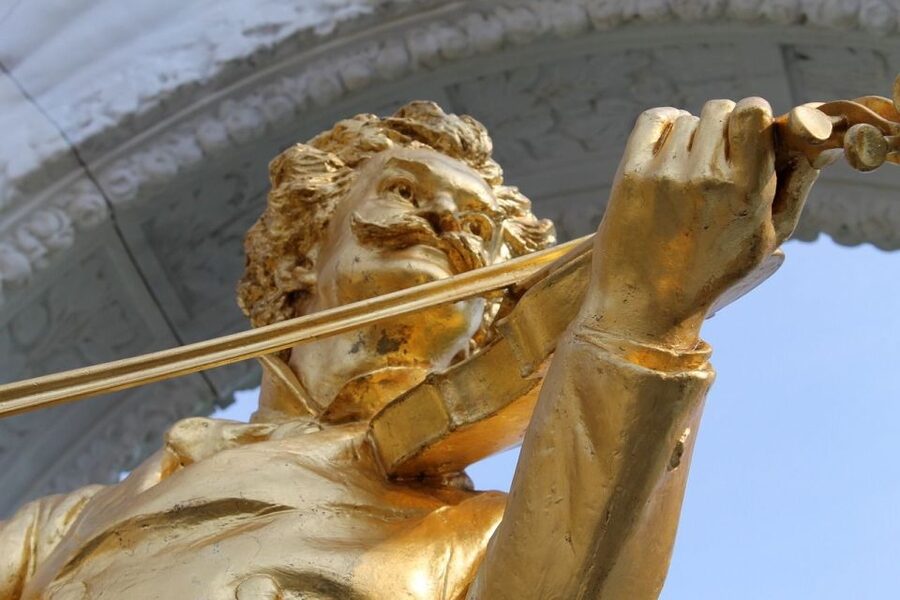
After the opera area, the tour leans hard into the Habsburg “power geography.” You’ll see the Mozart Monument, and the façade sweep around major institutional buildings, including the Art History Museum and the Hofburg.
This is where the tour’s theme becomes clear: Vienna’s art and architecture didn’t just happen. They grew from court power. The Hofburg was the opulent home base for the monarchy for centuries, so it’s a natural anchor for a guide who wants you to understand Vienna as a political center, not only a cultural one.
If you like classical music context, this section also helps you connect names you recognize to how the city functioned. Vienna was the stage where composers lived and worked close to the institutions that supported music. Even without sitting down to a performance, you’re learning why the city became so strongly associated with composers like Mozart, Haydn, Beethoven, Schubert, Johann Strauss (father and son), Brahms, and Mahler.
It’s also a nice pacing break. After the opera focus, you get big, easy-to-read exteriors and monuments where it’s natural to stop, look, and listen.
Michaelerkirche and the Roman-to-Medieval Layers Around the Gate
Next up is the emperor-church zone. You’ll pass the Michaelertor gate and get a look at the Church of St. Michael, also called the Michaelerkirche. The tour frames this as the official church of the emperors for years, which gives the stop extra meaning.
Then comes a really Vienna twist: you’re not only seeing elite landmarks. You’re also getting ancient Roman ruins in the center of the square, plus medieval walls, and remnants connected to the old Burg Theatre. This is one of the parts that helps you understand why Vienna feels layered rather than flat.
If you tend to speed through streets, this stop helps slow you down. Seeing Roman remnants and medieval walls near later imperial power points can reset your expectations. Vienna didn’t replace everything. It built on top of it, and that’s why the city feels like it contains multiple timelines.
Graben Street and the Peterskirche: Walking the Empire’s Main Line
From there, you move toward the Graben street, also known as Der Graben. The tour gives it Roman-era roots and even mentions a medieval legend-style detail tied to Richard Lionheart entering the city via this route.
Is it exact like a textbook? Maybe you’ll treat the story as historical atmosphere rather than a GPS coordinate. But even if you only take the vibe, the point lands. Der Graben is the kind of street where commerce, movement, and status all overlapped. It’s easy to see how an empire city would organize itself around a main line of walking and meeting.
Then you reach Peterskirche, St. Peter’s Church, which the tour notes has been there since the 4th century. That’s a staggering time span, and the effect is practical. When you stand in the space and imagine it starting so early, Vienna stops being only 18th and 19th-century glamour.
Stops like this work best when you’re listening for contrasts. The street-level energy versus the centuries-deep religious presence is a good mental “zoom out” moment.
Stephansplatz and Stephansdom: The Final View That Locks It In
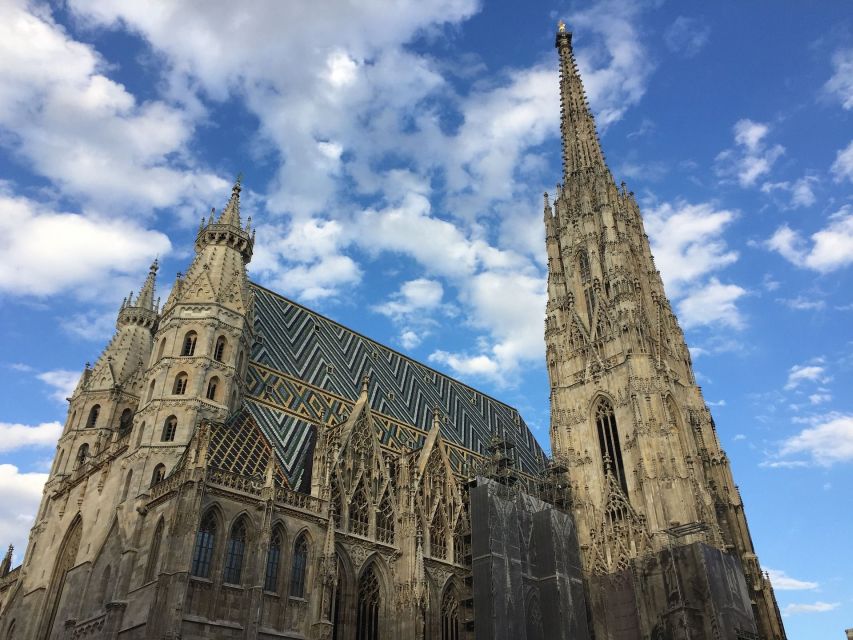
The tour ends by reaching Stephansplatz again and focusing on the Stephansdom, Vienna’s cathedral. The guide frames it as one of the tallest churches in the world and a major Roman-Gothic masterpiece.
This is the moment where the whole tour clicks. You’ve heard about dynasties, empires, and wars. You’ve also seen how the city’s key identity points cluster around the most walkable core spaces. Ending at Stephansdom gives you something big enough to remember, and it makes the route feel intentional.
It also helps you take Vienna forward after the tour. Now you know what to look for if you walk these streets again on your own. You start seeing the cathedral not as a single sight, but as the anchor for everything the guide talked about.
Price and Value: $323 Per Group Up to 15 People
The price is $323 per group, up to 15 people, for about 3 hours. Private tours are usually expensive per person, but the math changes fast with group size.
If you fill the group with friends or family, the cost can feel very reasonable. If you only have a couple of people, it becomes a different story. You’re then paying for the private guide time plus the premium of having a small group at major landmarks.
Here’s how to decide if it’s worth it for you:
- You care about a guided connection between history and music, not just sightseeing photos.
- You want a private format so the guide can match your pace and interests.
- You’re comfortable budgeting for a guided experience rather than doing a self-guided route.
If you’re the kind of traveler who loves reading signs and wandering freely, you can always build a similar route on your own. But you’ll likely miss the “story thread” that makes this walk feel cohesive.
What to Watch For: Opera Scheduling, Access, and Guide Delivery
A few practical realities can affect the experience.
First, the opera building has its own schedule. If your expectation is that you’ll see specific areas inside, keep it flexible. The guide may need to work around what’s available at that moment.
Second, the State Opera stop can sometimes feel like a lobby-focused visit rather than a full, deep interior access tour. That can still be worthwhile if your main goal is context and you’re interested in the building’s place in Vienna’s musical identity.
Third, guide style matters, especially with heavy topics. The tour includes stories connected to World Wars and the birth of the Second Republic. I suggest you pay attention to how the guide handles WWII persecution and historical accuracy. In one instance, a guide named Franziska Pfisker was associated with uncomfortable commentary and imprecise language when discussing WWII atrocities. That’s not the kind of framing you want, so if you’re sensitive to respectful, fact-focused delivery, it’s wise to set expectations early and ask for the right historical tone.
You want the history to teach you, not turn into politics-on-the-walk. A good guide keeps it human, factual, and clear.
Who This Tour Suits Best, and Who Should Consider Alternatives
This tour fits you well if:
- You want Vienna’s big-picture timeline, not just famous façades.
- You like classical music references, especially Vienna-centric names.
- You’re traveling with a small private group and want an efficient 3-hour plan.
- You’re okay with moderate walking and some standing around major exteriors.
It may be a mismatch if:
- You have mobility impairments, since the tour is not suitable for that.
- You want a performance experience, not a guided tour.
- You want guaranteed, full-access opera interior viewing with paid ticket entry included.
If you’re unsure, consider pairing it with a separate plan for an actual concert or opera performance. This tour builds context, but it is not the same as hearing the music live.
Quick Practical Tips Before You Book
- Wear comfortable shoes and plan for cobblestones.
- If you’re planning photos, bring a phone or camera with a good wide-angle lens. The façades are dramatic but not easy to capture if you’re too far away.
- Ask yourself what you want most, history structure or opera details, then choose your time slot with that in mind.
- Keep an open mind about what exactly “visit the State Opera” includes for your specific departure.
Should You Book This Private Walking Tour with State Opera Included?
I’d book it if you want Vienna in story form: Roman remnants, Habsburg power centers, and a clear opera connection, all in a tight 3-hour loop. The best part is the way the guide turns landmarks into a timeline, and the way classical music names become more than trivia.
I would hesitate if your top priority is guaranteed full indoor opera access with no schedule variability, or if you need a mobility-access friendly route. And if respectful WWII framing is important to you, choose your departure carefully and be ready to raise concerns if the tone feels off.
If you’re in the sweet spot, this is a strong value private option, especially for groups who can spread the cost and want a guided route through Vienna’s most iconic core.
FAQ
Where does the tour meet?
The meeting point is Stephansplatz 8A, 1010 Wien, Austria.
How long is the tour?
The tour duration is 3 hours.
What is included in the price?
Included items are a local professional guide and a visit to the State Opera. Entrance fees are not included.
What languages is the live guide available in?
The live tour guide is available in English and German.
Is this tour private, and how large is the group?
It’s a private group, priced per group up to 15 people.
Is the tour suitable for people with mobility impairments?
No, it is not suitable for people with mobility impairments.
Bell Tower to Bell Tower
- Vienna: World War II Historical Walking Tour
★ 4.8 · 1,772 reviews - Vienna Historic Center Small Group Walking Tour
★ 5.0 · 1,746 reviews - Vienna: Private Walking Tour with a Local
★ 4.6 · 1,446 reviews - Vienna: 1.5-Hour Underground Walking Tour
★ 4.9 · 1,146 reviews
Just added to the bill for Vienna

Mozart & Classical Concert Evenings, compared.
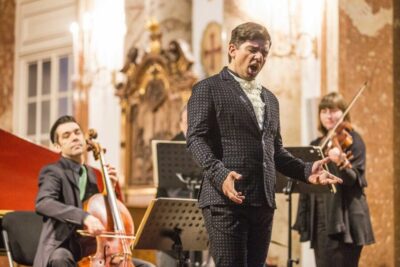
Vivaldi’s Four Seasons Concert in Karlskirche
Read our review →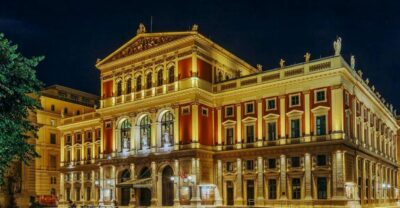
Classical Concert in the World-Famous Musikverein
Read our review →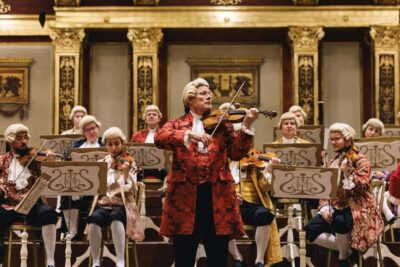
Mozart Concert at the Musikverein – Golden Hall
Read our review →
Classical Concert in St. Anne’s Church (Annakirche)
Read our review →
Browse the lists this tour appears in