REVIEW · TICKETS
Esterhazy Palace Entrance Ticket
Vienna history smells faintly of old wine. This audio-guided palace ticket takes you through Schloss Esterházy, with a second track on Haydn. I love the hand-painted Chinese salons and the feeling of stepping into rooms that look staged for a story. I also like the wine focus in the underground cellars. One consideration: the Haydn hall can have occasional access restrictions on event days.
This is a straightforward, family-friendly visit. You get a mobile ticket and recorded commentary as you move through rooms and exhibits, which is great if you want control over your pace (you can speed up, slow down, or pause for photos). The whole experience usually lands around 1 to 2 hours, so it fits nicely between museum stops.
The big value point is that your ticket includes entry plus the interior audio guide. The main drawback is also the most practical one: you make your own way to the palace, and there is no transportation included. If your day is already packed, you will want to plan travel time and parking options in advance.
In This Review
- Key things I’d bet you’ll care about
- Schloss Esterházy in about 1 to 2 hours, on your own schedule
- The Empiresaal banquet grandeur, and why it matters beyond looks
- Chinese salons and the palace chapel with Saint Constantine
- Haydn at Esterházy: more than 40 years of music in one place
- The wine museum cellars: 300 years old, with 700 objects
- The audio guide experience, plus how to get more from it
- Gardens and palace grounds: rose garden and hedge maze time
- Price and value for admission with palace audio
- Who should book this ticket, and who might prefer something else
- Should you book the Esterházy Palace entrance ticket?
- FAQ
- How much does the Esterházy Palace entrance ticket cost?
- How long does the visit take?
- Does this ticket include an audio guide?
- Is the ticket mobile?
- What does the tour include?
- Are children allowed?
- What days and times are the palace open in the listed period?
- Is free cancellation available?
Key things I’d bet you’ll care about
- Self-paced audio tour inside the palace, with recorded commentary for rooms and exhibits
- Haydn focus, tied to more than 40 years serving the Esterházy princes
- Chinese salons and a palace chapel, including the reliquary of Saint Constantine
- Wine museum in the cellars, with 700 objects and special items tied to viticulture
- Family-friendly palace visit, where kids can follow the stories at an easy pace
Schloss Esterházy in about 1 to 2 hours, on your own schedule
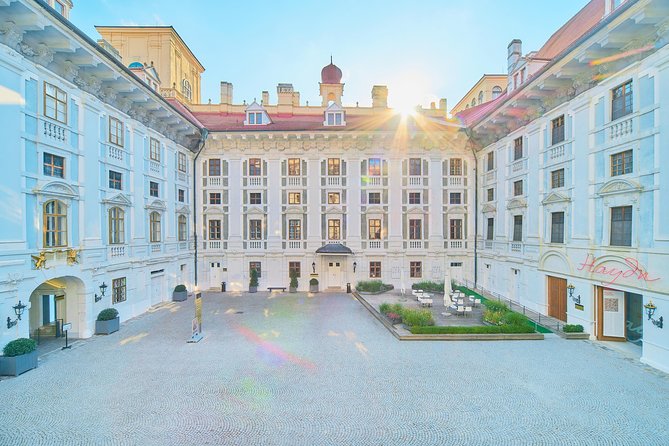
This ticket works best when you treat it like an on-foot walk with smart storytelling. You head to Schloss Esterházy and present your voucher for admission, then use the audio guide for what you see inside. There is no frantic group herding required. You can drift room to room, then spend extra time where something grabs you.
In practical terms, plan roughly 1 to 2 hours. That is enough time to cover the main palace interiors, hit the Haydn section, and still catch the wine museum cellars. If you move quickly, you may finish closer to the 1-hour end. If you love looking closely at furnishings, displays, and exhibit details, you may be closer to the 2-hour mark.
You’ll also want to know the hours are limited to weekends for the listed seasons. During the opening periods shown, it is Saturday and Sunday, 10:00 AM to 4:00 PM. If you are visiting midweek, you’ll need another plan for that day. The good news is that the palace is near public transportation, so you are not forced into a complicated logistics puzzle.
Finally, because it is a mobile ticket, get your phone ready. Offline access can matter if reception is spotty, so I suggest downloading or checking the ticket screen before you arrive. And if you do change plans, cancellation is free up to 24 hours in advance based on local time, which gives you flexibility.
Held over another night in Vienna
- Vienna: Vivaldi’s Four Seasons Concert in Karlskirche
★ 4.7 · 14,951 reviews - Vienna: Spanish Riding School Training
★ 3.9 · 9,281 reviews - Vienna: Schönbrunn Palace & Gardens Skip-the-Line Tour
★ 4.7 · 7,739 reviews - Vienna: Light of Creation Votive Church Immersive Light Show
★ 4.8 · 6,779 reviews
The Empiresaal banquet grandeur, and why it matters beyond looks
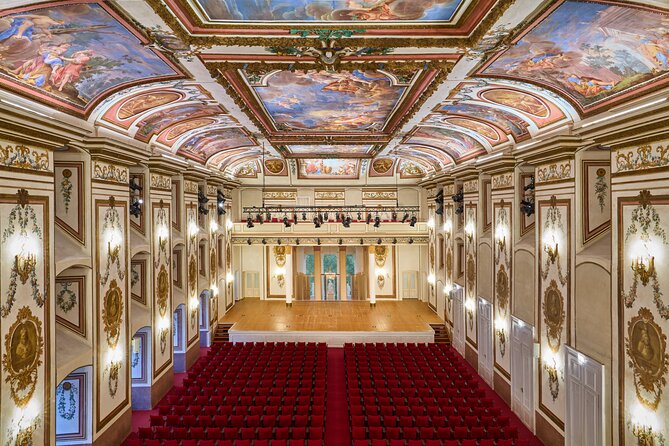
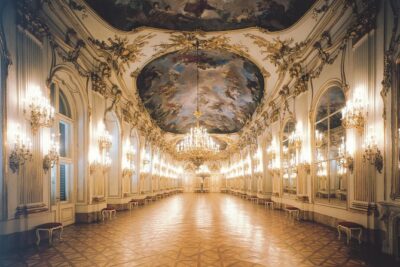
The palace interiors are where this ticket really flexes. You start on the bel étage and first-floor levels, with audio narration that explains what you’re seeing as you go. The highlight for many people is the Empiresaal, an Empire-style room with a gilded interior and that sense of formal ceremony. It is not just ornate for ornament’s sake. The audio frames these spaces as part of daily court life and major events.
One room description you’ll hear as you wander is the former banquet hall, lit by elegant chandeliers. That detail matters because it helps you picture what the room was for. Instead of staring at decor and wondering, you get a quick mental movie of social life under the Esterházy princes.
There is also a practical rhythm to how the story unfolds. A tour of the first floor tells the tale of Melinda Esterházy, which gives you a human thread, not just architectural tour-guide vibes. Then the ground-floor portion shifts toward Joseph Haydn and his role as director of music and composer for the princes.
Possible drawback: if you prefer live guides and real-time Q and A, an audio tour can feel a bit more one-direction. But if you like flexibility and easy pacing, recorded commentary is a strong match.
Chinese salons and the palace chapel with Saint Constantine
If you want one section that feels visually different from the rest, the small and large Chinese salons are it. The audio focuses on hand-painted Chinese wallpaper on the walls, and you’ll likely notice how carefully the designs create an illusion of another world. These rooms are a great reminder that European courts did not just decorate for status. They also curated impressions of faraway places, translated through the tastes of the time.
I also appreciate that the audio does not treat these rooms like static background. It gives context so the salons feel like part of a bigger story about the court and its interests. When you understand why a room exists, it becomes more than a pretty stop.
Next up is the palace chapel, where you’ll hear about its different styles and the reliquary of Saint Constantine. This is where the tone shifts from art and décor into something more spiritual and ceremonial. The reliquary detail is a strong hook because it tells you this is not only architecture. There is a specific artifact at the center of the chapel’s significance.
One caution for your planning: if you are the type who needs quiet time to absorb, give yourself a little extra buffer. Palace spaces can be visually crowded, and the audio guide means you will sometimes want to stop moving to listen.
Haydn at Esterházy: more than 40 years of music in one place
The Haydn section is the reason many people buy this ticket, and for good reason. The story is not vague. You’ll learn that Haydn served the Esterházy princes for more than 40 years, which instantly gives the music a time-scale you can actually feel. It is a long service period, and that changes how you think about composer and patron relationships.
As you move through the Haydn-focused exhibits, the audio points you toward interactive displays and multimedia stations, plus project installations and unusual exhibits that trace Haydn’s early life. The tour also highlights how he emerged as a musical genius, rather than treating him like an untouchable statue.
You’ll also see personal artifacts, documents, and instruments. That part is especially valuable if you tend to get more out of objects than explanations. Seeing instruments and documents helps you connect the story to real tools and real paperwork, the stuff a composer used, not just the finished output.
The finale is the Haydnsaal, an elegant salon where many of Haydn’s pieces were first heard. That detail matters because it turns the visit from history flashcards into a place-based experience. You are not only learning about performances, you are standing near the setting where they happened.
One real-world consideration: the Haydn hall can have occasional restrictions due to ongoing events. If you’re coming specifically for the Haydnsaal, try to arrive early within the open hours and be ready with a Plan B mindset if access is limited.
After the interval, more from Vienna:


The wine museum cellars: 300 years old, with 700 objects
I love that this palace ticket includes something different from the usual court-room focus. The tour heads into the over 300-year-old palace cellars, where you’ll find the wine museum. The audio frames it as a history of winemaking under the Esterházy princes, and it does it with a level of specificity that helps the whole thing feel tangible.
You’ll encounter over 700 rare, unusual, and sometimes long-forgotten objects connected to wine and viticulture. That is a lot to process, but the variety works in your favor. Even if you are not a wine expert, you can still appreciate the idea of a working system: tools, barrels, and production practices that shaped local life.
One item mentioned is Burgenland’s oldest Baumpresse, which is exactly the kind of detail that makes a museum feel more real. Instead of generic “people made wine” storytelling, you get a specific artifact tied to pressing grapes, a process you can picture.
The “drawback” here is simple: if you love music and palace rooms and you are short on time, the wine museum section might feel like a detour. But it is easy to solve. Just decide ahead of time how much cellar time you want, and let the audio guide your pace without you feeling stuck.
The audio guide experience, plus how to get more from it
This tour is built around recorded commentary. That can be either your best friend or your biggest mismatch, depending on your style. I like audio guides when they help me notice details I would otherwise glide past, and that’s exactly the job here.
The audio guides rooms and exhibits as you walk. It covers the gilded Empiresaal, the banquet hall lighting, the Chinese salons, and the palace chapel. Then it shifts to Haydn’s early life, service to the Esterházy princes, and key artifacts and instruments, and finally the cellar wine museum story.
The practical benefit for you is focus. You do not have to guess what you’re looking at. The narration tells you what matters in each room and why it matters. And because it is recorded, you can replay a moment if you need to.
When I think about what could go wrong, it’s mostly about your timing and attention. If you arrive tired, you might not enjoy the room-to-room listening. If you are the type who hates wearing headphones in historic rooms, you may find the audio component less fun than a live lecture.
My advice: plan for short pauses. You do not need to sprint. Look, listen for a couple minutes, then step away to take in the space again. That rhythm keeps the audio from becoming background noise.
Gardens and palace grounds: rose garden and hedge maze time
The palace visit has another payoff beyond interiors, at least based on what people love most about the site. You’ll hear positive comments about beautiful gardens, especially time in the rose garden and a hedge maze. If the gardens are open during your visit, I strongly recommend building in a small chunk of walk-about time.
Why? Because it turns the day from museum-only to palace-life. After you’ve been inside hearing about court rooms, music service, and winemaking, a slow outdoor stroll helps your brain reset. It also gives you a different set of photo opportunities that feel natural, not posed in front of a velvet rope.
The only caution is simple: outdoor areas depend on conditions and seasonal access. Do not assume everything is open every day. But if you see paths and garden signage, take advantage. A palace ticket plus a garden moment is a better balance than racing straight to the exit.
Price and value for admission with palace audio
At $22.83 per person, this is not the cheapest way to spend an hour in Vienna, but it also is not trying to be. The price includes admission plus the audio tour inside the palace. It also includes the narrative structure that connects palace rooms, Haydn exhibits, and the wine museum cellars in one ticket.
So what makes it good value is not only the price tag. It is the content density. You are not paying to look at one room and leave. You are paying for multiple themed zones: Empiresaal banquet spaces, Chinese salons, the chapel with Saint Constantine reliquary, Haydn-related artifacts and exhibits, and the wine museum with a huge number of cellar objects.
Duration also helps the math. 1 to 2 hours means you can fit it into a day without feeling like you lost your afternoon. And because it is family-friendly, it can be a strong choice when you want a history stop that does not depend entirely on kids being interested in music theory.
If your main priority is only Haydn and nothing else, you might wonder if you want a more focused experience. But if you like when a ticket gives you options, this one is built for it.
Who should book this ticket, and who might prefer something else
This works best for you if you want a palace day that is story-led. You’ll like it if you enjoy period rooms, decorated spaces with context, and when the museum material connects to specific people and objects, like Joseph Haydn’s role with the Esterházy princes and the chapel’s Saint Constantine reliquary.
It is also a solid fit for families. The visit is designed to be accessible, and kids can follow the audio storytelling without needing a live lecturer.
You might look elsewhere if:
- You strongly prefer guided, live commentary.
- You are sensitive to the idea that the Haydn hall can have occasional access limits on event days.
- You only want one narrow theme and you dislike splitting time across palace interiors, music exhibits, and wine cellar history.
Should you book the Esterházy Palace entrance ticket?
Yes, if you want a strong mix of palace interiors, Haydn-inspired exhibits, and a cellar wine museum, all in a self-paced format. The best part is that the audio guide ties the rooms together, so you don’t just walk through ornate spaces wondering what they mean. If Haydn is your top interest, plan your timing and be flexible about the Haydn hall access.
If you are already planning separate wine stops and only care about one theme, this could feel like too much. But if you want a compact Vienna day with multiple layers, this ticket is a practical buy.
FAQ
How much does the Esterházy Palace entrance ticket cost?
It costs $22.83 per person.
How long does the visit take?
The experience is about 1 to 2 hours.
Does this ticket include an audio guide?
Yes. Admission includes an audio tour with recorded commentary as you visit the palace interior.
Is the ticket mobile?
Yes, it is a mobile ticket.
What does the tour include?
It includes admission and the audio tour to Esterházy Palace, with commentary covering rooms and exhibits, Haydn’s life and work, and the related museum displays.
Are children allowed?
Children must be accompanied by an adult.
What days and times are the palace open in the listed period?
For the listed dates, it is open on Saturdays and Sundays from 10:00 AM to 4:00 PM.
Is free cancellation available?
Yes. You can cancel for a full refund up to 24 hours before the experience starts.
Just added to the bill for Vienna


Tickets, compared.
Classic Ensemble Vienna in St. Peter’s Church Ticket
Read our review →
Vienna Kunsthistorisches Museum Day Admission Ticket
Read our review →
Vienna PASS: All incl. Sightseeing Pass for 85+ Attractions
Read our review →
Tickets for Mozarthaus Vienna with Audio Guide
Read our review →
Skip-the-Line Entrance Ticket to the Danube Tower
Read our review →