
REVIEW · HISTORICAL TOURS
Historic Innsbruck: Exclusive Private Tour with a Local
Innsbruck history, told at street level. This exclusive private tour is a 2-hour walk with a local host, built around standout landmarks like the Golden Roof and the Schwarze Mander church. I like that the plan is flexible, so you can steer the pace and focus. One thing to consider: it is mainly for walking, and the stops can shift with weather.
You get a tight route that still feels personal. In one recent tour led by Verena, the welcome was warm, the history came through clearly, and the host shared practical ideas for dining and cocktails along the way. You will also get travel tips that help you move through Innsbruck like someone who lives there, not like a checklist tourist.
The main drawback is that you should be ready for a steady walking pace and changing conditions outdoors. If mobility is a concern, this tour is not recommended for impaired mobility, and it is not the kind of tour where you can easily pause for a long sit-down break.
In This Review
- Key things I’d note before you go
- Why this Innsbruck private history tour feels different
- How the 2-hour timing works on foot
- Stop 1: The 1706 column and the meaning of Tyrolean freedom
- Stop 2: The 1765 arch, joy and sorrow in one landmark
- Baroque architecture stops: learning to read the city’s style
- The city tower: get your bearings fast
- Golden Roof: the 2,657 copper tiles that steal the show
- A Renaissance-era castle turned artist residence
- A park dating back to the 1400s for a breather
- Baroque cathedral: ceiling frescoes and the high altar
- Schwarze Mander church: the bronze statues you can’t ignore
- What you really get for the $254.07 per person price
- Who this private tour suits best
- Planning tips that will make the day smoother
- Should you book this private Innsbruck history walk?
- FAQ
- How long is the Historic Innsbruck private tour?
- Where does the tour start and end?
- Is this tour private or shared?
- What language is the tour offered in?
- Can the itinerary be tailored to my interests?
- Do I need to bring entry tickets for attractions?
- Is a mobile ticket provided?
- Are service animals allowed?
- Is the tour suitable for people with impaired mobility?
- What is the cancellation policy for a full refund?
Key things I’d note before you go
- Local host, tailored route: You can shape the itinerary to your interests and walking pace.
- Golden Roof detail stop: The famous oriel window with 2,657 fire-gilded copper tiles is a real focal point.
- Views built into the route: The 14th-century city tower adds a panoramic pause.
- Tyrolean stories, not just dates: From Bavarian troop withdrawal to later royal marriages and losses, each landmark has a meaning.
- Baroque and Renaissance variety: You’ll see multiple architectural styles in a compact loop.
- Easy to plan, tight timing: About 2 hours, with choice of departure times.
Why this Innsbruck private history tour feels different
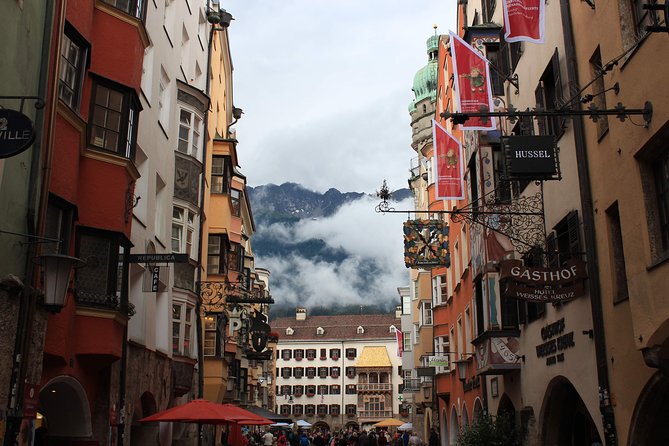
Innsbruck can look like a postcard city, but it becomes much more interesting when someone connects the buildings to the people and politics behind them. This tour is designed for that exact effect: you are guided through historic touchpoints, then given context you can use immediately as you keep exploring on your own.
I like that it is exclusive, meaning only your group participates. That matters, because you can ask follow-up questions without waiting, and the host can adjust to how you walk, how long you linger at a viewpoint, or what you want to understand more. It is also private, so the guide can keep the route moving without feeling rushed to a large group schedule.
The second reason I think this works well is the variety of the stops. You are not only hitting the most famous postcard location, like the Golden Roof. You also get political symbolism, architecture shifts from Baroque to Renaissance, and a notable church stop tied to the Schwarze Mander bronze statues.
More centuries of the Habsburg map:
- History and Strudel, get 800 years and yummy food, local guide
★ 5.0 · 13 reviews - Private tour of Tyrol’s beer history
★ 5.0 · 4 reviews - Innsbruck Old Town and Jewish History Private Walking Tour
★ 5.0 · 1 review - Vienna: Time Travel and Magic Vienna History Tour
★ 4.6 · 3,879 reviews
How the 2-hour timing works on foot
This is an approximately 2-hour private walk through Innsbruck. You start at Maria-Theresien-Straße 18 (6020 Innsbruck) and end at Universitätsstraße 2 (6020 Innsbruck). That “walk in, walk out” setup is useful because you finish in a different area than you began, so you can keep going without backtracking as much.
The pacing is explicitly adaptable. The itinerary changes to match your interests and your walking pace, and stops may vary depending on weather. Practically, that means you should wear comfortable shoes and plan for outdoor time even if the day turns gray.
Because this is not a museum-day tour, expect more street-level looking than ticketed museum time. Entry tickets for transportation, museums, and monuments are not included, so you will want to decide in advance if you want to add anything after the tour ends.
Stop 1: The 1706 column and the meaning of Tyrolean freedom
One of the first historical signals you get is a column erected in 1706. It commemorates the withdrawal of Bavarian troops, and it is topped with a statue of the Virgin Mary. The key value here is the symbolism: you are not just seeing a monument, you are learning how Innsbruck framed events in public space.
This stop is a good “starter” for the whole tour, because it gives you a lens for the rest of the walk. After you understand that people used statues and public works to broadcast political outcomes and beliefs, the later royal and religious stories make more sense.
Stop 2: The 1765 arch, joy and sorrow in one landmark
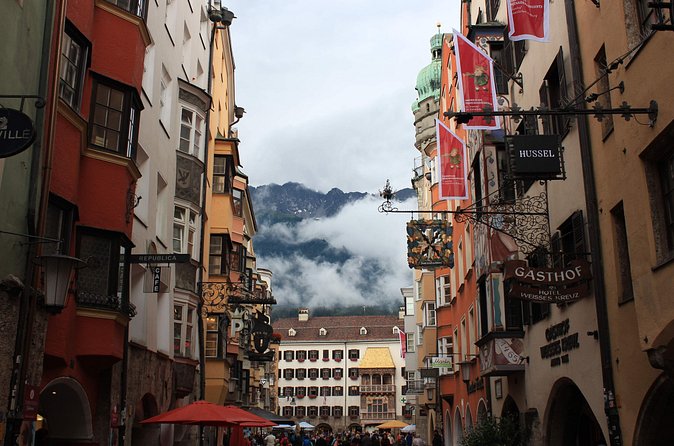
Next comes an arch built in 1765, and it carries a mixed message. It commemorates the marriage of Leopold II, but it also marks the death of Empress Maria Theresa’s husband. That combination is powerful, because it highlights how public monuments can hold multiple layers of meaning, not just one clean celebration.
A practical tip for you here is to slow down and look at the arch as more than a photo spot. When you realize the arch is doing memory work for two kinds of events, you start noticing how different parts of a city can tell different emotional stories.
If you prefer happier narratives only, this stop might feel a bit heavy. Still, it helps Innsbruck feel real, because life in history was rarely simple.
Held over another night in Innsbruck


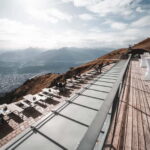
Baroque architecture stops: learning to read the city’s style
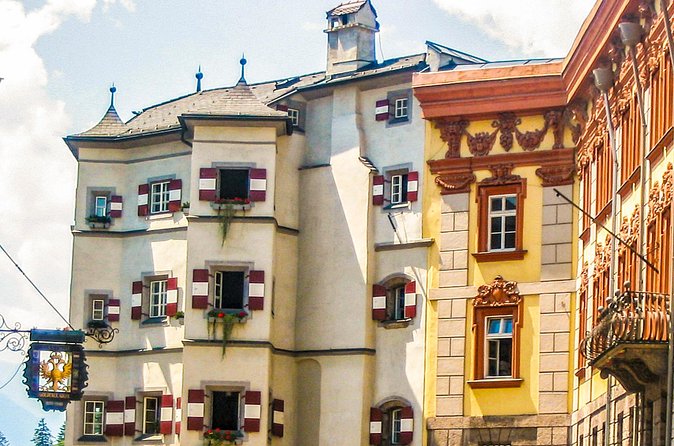
The route includes historic buildings known for Baroque architecture. You will see this style described as part of the city’s architectural heritage, and the tour uses these stops to help you notice what changes across the city.
Baroque architecture often leans into drama through shape, decoration, and the way structures catch light. Even if you are not an architecture nerd, you can use the guide to point out what makes one building feel more theatrical than another. That is one of the reasons I like this tour format: it teaches you how to look.
One consideration: you have two Baroque-focused stops in the schedule. If you want every stop to be a distinct “headline,” you might find the middle section feels a little repetitive. The payoff is that the repetition trains your eye to spot differences.
The city tower: get your bearings fast
The 14th-century city tower is a planned viewpoint stop. It offers panoramic views of Innsbruck, and it is also a symbol of the city’s medieval background.
A viewpoint is not only for photos. It helps you “map” where you are in the city. After you climb or look out from this tower area, you often understand why certain streets and landmarks line up the way they do.
If you go on a day with cloud or rain, plan for shorter view time. Since stops may vary with weather conditions, the host might adjust what you do outside, especially if visibility drops.
Golden Roof: the 2,657 copper tiles that steal the show
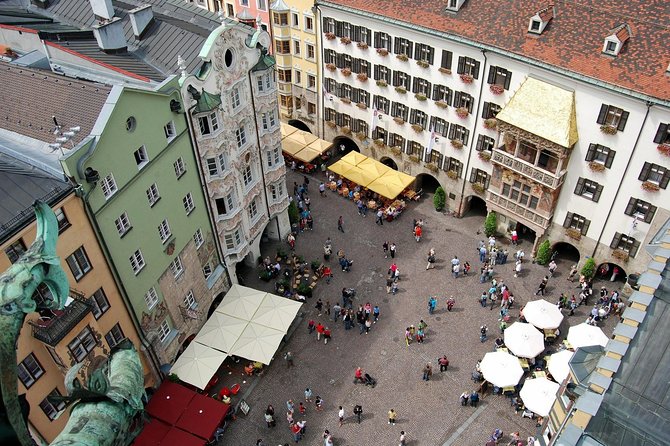
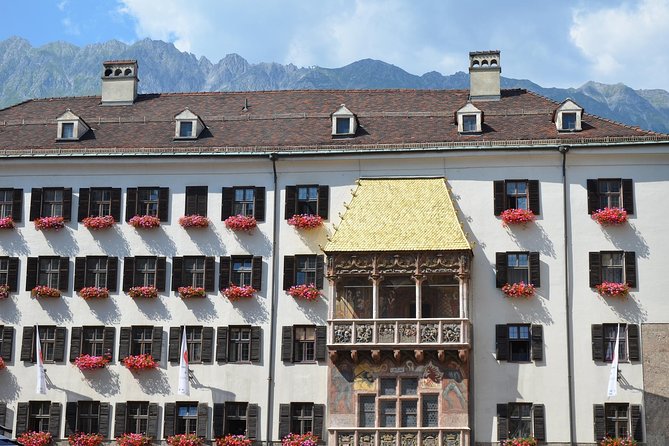
No Innsbruck landmark is more famous than the Golden Roof, and this tour gives you time to understand why. The oriel window is late Gothic and covered in 2,657 fire-gilded copper tiles.
What makes this stop valuable is the way the guide connects the landmark to the story of Innsbruck. The Golden Roof is famous, sure, but the real benefit is learning what you are looking at beyond the shiny surface.
This is also the easiest stop to “over-photograph.” My practical advice is to take your pictures quickly, then spend the extra minute listening and letting the details sink in. The tiles are the headline, but the context is what turns the stop into something you remember.
A Renaissance-era castle turned artist residence
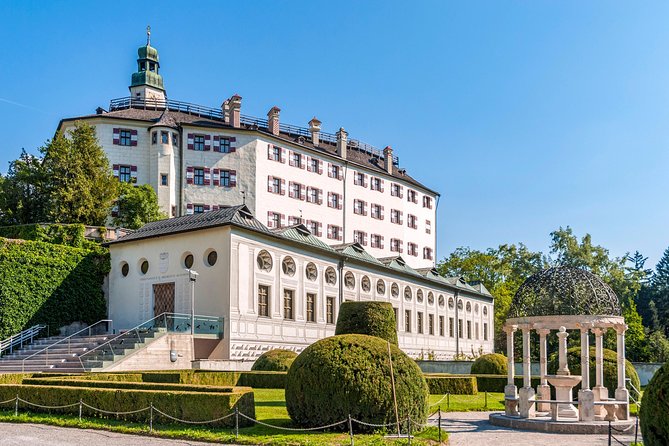
Another standout on this route is a historic castle, now an artist residence. It is described as showing Renaissance architecture and reflecting Innsbruck’s cultural evolution.
This stop works well because it bridges past and present. When a building changes function over time, it often tells you how a city values heritage while still using it for modern life. You get that sense of continuity without needing a long detour.
If you like places where old stone keeps doing new work, this is the part that usually clicks. If you want only the most monumental churches and grand civic structures, this stop might feel slightly calmer. Still, it adds variety to the route.
A park dating back to the 1400s for a breather
You get a serene pause at a historic park dating back to the 1400s. It is a green space that fits the day’s pacing, and it reflects an idea that Innsbruck values natural beauty alongside architecture.
This kind of break is more important than it sounds. On a 2-hour tour, you need one or two moments where your mind can reset. A park stop also helps you photograph buildings from a distance when you step back into the city.
If the weather is bad, expect the host to adjust the plan. Since stops may vary due to weather conditions, you might get less time outdoors if the day is wet.
Baroque cathedral: ceiling frescoes and the high altar
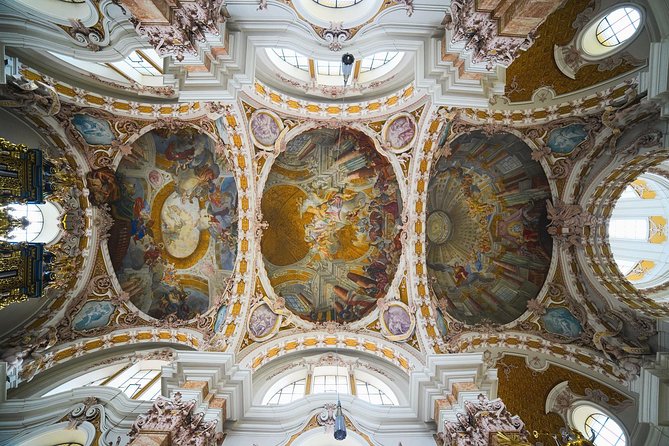
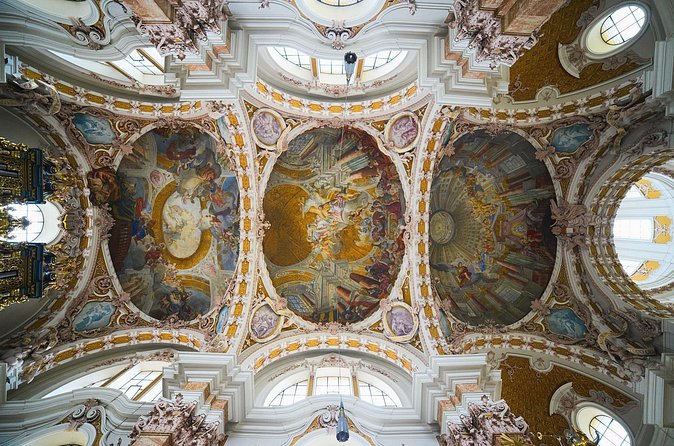
The route includes a Baroque cathedral known for its stunning ceiling frescoes and a high altar. This is one of the tour’s more culturally significant stops, because it connects religious art to public identity.
This is the kind of place where the “look up” habit matters. Even if you move quickly, aim your attention toward the ceiling and then bring it back to the altar area. The guide can help you focus on what to notice, so you do not just wander and miss the point.
Keep in mind: entry tickets for monuments and similar sites are not included. If you want to go inside longer than the tour allows, you will need to plan for that separately.
Schwarze Mander church: the bronze statues you can’t ignore
Finally, you’ll visit a church famous for the Schwarze Mander, life-sized bronze statues. It is described as a key historical and cultural monument in Innsbruck.
This is a strong closing stop because the subject is memorable. Instead of leaving with only architectural impressions, you end with a human-scale artwork presence you can picture later. Life-sized bronze statues tend to feel immediate, not distant, and that makes them a great “last story” on a walking tour.
As with other religious sites, you may find the tone changes from stop to stop. Treat it respectfully, keep your voice low, and let the guide explain what makes these statues important before you start taking photos.
What you really get for the $254.07 per person price
At $254.07 per person for about 2 hours, this is not a budget tour. But it is also not trying to be one. The value comes from exclusivity and from having a local host tailor the route to you.
Here is the practical way to think about it:
- You are paying for private time and a guide who can answer questions on the fly.
- You are paying for a structured route that still adapts, so you spend the limited time you have on meaningful stops.
- You are paying for the kind of local suggestions that can save you time later, like what to eat and even where to go for cocktails. In one review, Verena was praised for exactly that.
If you are traveling with a friend or partner, private tours can feel much more reasonable because you share the experience. If you are solo, you might decide whether your priorities justify the cost, especially since entry tickets are not included.
Also, remember: this tour is great for building context, not for replacing every ticketed attraction day. If you want lots of museum time, you might pair this with other activities on different days.
Who this private tour suits best
This experience is a good fit if you:
- Like history that connects to what you see in the street.
- Want a local host who can adapt to your interests and your pace.
- Prefer walking tours over large-van sightseeing.
- Care about iconic Innsbruck stops like the Golden Roof, but also want less obvious landmarks with meaning.
It may be less suitable if you:
- Have mobility limitations. The tour is not recommended for impaired mobility.
- Want mostly indoor time, since it is a walking route and stops can change with weather.
- Are allergic to history that includes both joy and sorrow. Some monuments carry heavy stories.
Planning tips that will make the day smoother
A few things will help you enjoy the route more:
- Bring comfortable shoes. You are covering multiple landmarks in about 2 hours.
- Use the host’s suggestions. One of the best parts, based on the Verena review, was the thoughtful dining and cocktails guidance.
- Expect weather flexibility. Stops may vary depending on conditions, so do not schedule a tight next activity that depends on every stop happening exactly as planned.
- Plan for tickets separately. Entry tickets for transportation, museums, and monuments are excluded.
Should you book this private Innsbruck history walk?
I recommend it if you want a personal, story-driven route through the city’s most iconic visual landmarks, with a host who can tailor the experience and share practical local ideas. The biggest selling points are the exclusive private format, the flexibility, and the way the stops combine architecture with political and cultural meaning.
Skip it, or at least reconsider, if you need a low-walking day, if mobility is an issue, or if you expect the tour to include paid entry inside every site. You are booking guidance and context, not a full-ticket day pass.
If your goal is to understand Innsbruck faster and explore smarter afterward, this private history tour is an efficient way to do it.
FAQ
How long is the Historic Innsbruck private tour?
It lasts about 2 hours.
Where does the tour start and end?
It starts at Maria-Theresien-Straße 18, 6020 Innsbruck, Austria and ends at Universitätsstraße 2, 6020 Innsbruck, Austria.
Is this tour private or shared?
It is an exclusive private tour, so only your group participates.
What language is the tour offered in?
The tour is offered in English.
Can the itinerary be tailored to my interests?
Yes. The itinerary adapts to your interests and your walking pace.
Do I need to bring entry tickets for attractions?
Entry tickets for transportation, museums, and monuments are not included.
Is a mobile ticket provided?
Yes, the tour includes a mobile ticket.
Are service animals allowed?
Yes, service animals are allowed.
Is the tour suitable for people with impaired mobility?
It is not recommended for guests with impaired mobility.
What is the cancellation policy for a full refund?
You can cancel up to 24 hours in advance for a full refund. If you cancel less than 24 hours before the start time, the amount paid is not refunded.
Just added to the bill for Innsbruck

Historical Tours, compared.

Vienna Historic Center Small Group Walking Tour
Read our review →
Skip-the-Line Schonbrunn Palace Guided Tour and Vienna Historical City Tour
Read our review →
Vienna Mozart Concert in Historical Costumes at the Musikverein
Read our review →
Browse the lists this tour appears in