
REVIEW · MUSEUMS
Unconventional Privat Tour of the Art History Museum (Kunsthistorisches Museum):”Masterpieces and Beauties. A Museum Tour Focused on Beauty”
Beauty science meets old masters. This private, themed visit to the Kunsthistorisches Museum turns art history into a conversation about beauty, attraction, and how status shaped body ideals across centuries. You do not get a generic highlights sweep. You get a focused way to look, using specific masterpieces and ancient sculptural ideas.
I especially like two things: first, the pre-tour perception tests that push you to notice what you personally find attractive before you see the artworks. Second, the way the guide links major works by Titian, Tintoretto, Rubens, Raphael, Velázquez, and Belini to concrete themes like proportion, skin, and social messaging. One possible drawback is that the theme is very specific. If you want a classic art-history overview with zero theory, you might find the beauty-and-attraction angle a bit heavy.
In This Review
- Key Points You’ll Remember From This Beauty-Focused Museum Tour
- Why This Kunsthistorisches Museum Beauty Tour Feels Different
- Before Entry: The Beauty Perception Tests That Set the Tone
- Titian, Tintoretto, and Rubens Through the Lens of Attraction
- Ancient Greek Sculpture and the Rules of Proportion
- Egyptian Sarcophagi and Why Body Shaping Shows Up in Surprising Ways
- Cabinets of Curiosities, Old Masters, and Cultural Messaging
- What You’re Really Paying For: Value, Ticket Inclusion, and Tour Length
- Practical Tips So You Enjoy It Instead of Feeling Rushed
- Who This Tour Fits Best (and Who Might Skip It)
- Should You Book This Private Beauty-Focused Tour?
- FAQ
- How long is the private tour?
- Where does the tour meet, and does it return there?
- Is the museum admission ticket included?
- Is this tour private?
- What happens before you start viewing the museum collections?
- Is it stroller accessible or suitable for pets?
- Can I get a full refund if I cancel?
Key Points You’ll Remember From This Beauty-Focused Museum Tour
- Perception tests before the art so you start with your own instincts, then compare what you notice once the masterpieces are in front of you.
- Beauty as a repeat pattern in art from Renaissance painting to ancient Greek sculpture and even modern-style ideals discussed through historical images.
- Stop-by-stop looking at named works, including Titian and Tintoretto, rather than wandering and hoping.
- Talk about proportion and the golden ratio in Greek sculpture, Dutch painting, and ideas that connect to how bodies are treated today.
- You also see the Cabinets of curiosities area, which changes how you understand the museum’s role in culture.
Why This Kunsthistorisches Museum Beauty Tour Feels Different
If you have ever walked into Vienna’s Kunsthistorisches Museum, you know the problem fast. It is huge, and your brain says, everything matters. This tour gives you a route through the noise, with a theme that makes the choices feel purposeful.
Instead of treating beauty as a vague mood, you will examine it like a set of clues. What do certain figures do with posture and hands? How do painters handle skin, hair, fabric, and facial expression? How do sculptors build proportion? And how do those ideas echo through time as fashion, status, and even modern body ideals?
The museum is already world-class for its Old Masters, plus major Egyptian, Greek, and Roman collections. What makes this tour stand out is that you look at those strengths with a single question in mind: are ideas of attraction mostly taste, or is there something more built in?
More Habsburg-era halls and hangings:
- Vienna: Skip-the-Line Sisi Museum, Hofburg and Gardens Tour
★ 4.8 · 5,918 reviews - Vienna Kunsthistorisches Museum Day Admission Ticket
★ 4.6 · 3,690 reviews - Tickets for the Albertina Exhibitions
★ 4.7 · 2,126 reviews - Vienna: Chocolate Workshop in Chocolate Museum w/ Tasting
★ 4.5 · 1,802 reviews
Before Entry: The Beauty Perception Tests That Set the Tone
Before you start seriously looking at paintings and sculptures, the guide offers beauty and perception tests. You record your intuitive perceptions of beauty, and the tour frames some of these tests as being used by scientists to explore evolutionary assumptions about attractiveness.
This is not a gimmick. It acts like a mental warm-up. You are basically training yourself to notice how your brain responds to certain visual cues. Then, when you get to the artworks, you can compare: did your instinct match what you expected, or did the art change your mind?
It also helps you take the theme personally. Instead of sitting back and listening to theories, you have your own baseline. That makes the rest of the tour feel more like a guided experiment than a lecture.
Titian, Tintoretto, and Rubens Through the Lens of Attraction
Once you are inside the museum focus, the tour starts using big names to break down the mechanics of beauty. You will look at works by Titian, Tintoretto, and Peter Paul Rubens, and you will connect their choices to modern conversations about attraction, skin, and confidence.
One highlight is Titian’s Diana and Calypso. The tour uses it to talk about the secret of attraction tied to a small detail, the little foot. That kind of observation is a good reminder that art rarely relies on only one thing. Sometimes one body cue carries the whole emotional charge.
Then you move to Tintoretto’s Susanna in the Bath, where the focus shifts to the idea of attraction for flawless skin. It is a chance to notice how a painter can make skin look touchable through light and texture. Even if you are not an expert, you can learn to spot what the artist is doing.
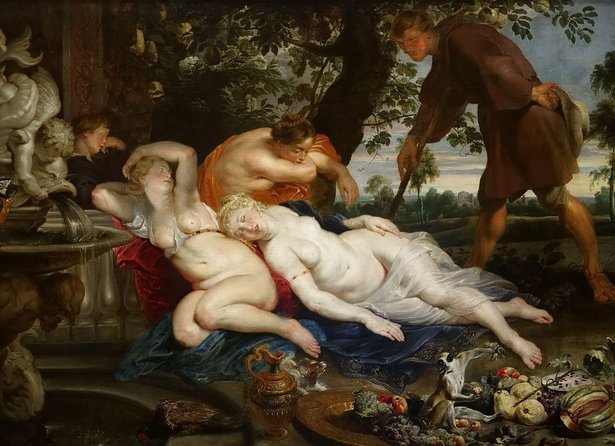
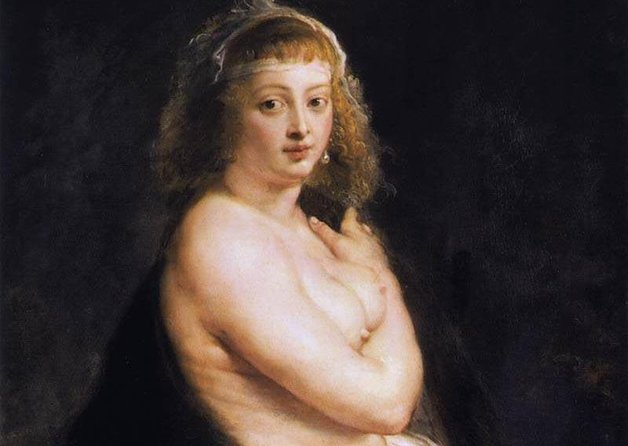
From there, Rubens enters with The Little Fur Coat. The discussion uses the painting to comment on body confidence themes, including a connection to the Body Positivity movement. You are not just looking at a pretty image. You are studying how an artwork signals attitude and self-possession through pose, expression, and styling.
And yes, Raphael and Velázquez are part of the broader sweep. Belini is mentioned too. The point is that this tour treats beauty as a craft, not an accident.
Ancient Greek Sculpture and the Rules of Proportion
A big chunk of the experience is about older beauty codes, especially those tied to ancient Greek sculpture. You will look at how ideas of beauty connect to proportion, symmetry, and what the tour frames as the rules behind attraction.
This is where the conversation gets especially useful if you like thinking in patterns. The tour brings in the golden ratio and discusses how it appears not only in Greek sculpture but also across Dutch painting and even in discussions that connect to plastic surgery. It is an unusual path, but it gives you a framework: proportion and balance matter, whether an artist is carving stone or building an ideal in paint.
You do not need a math background to follow along. The guide’s goal is to help you see the logic in the images. You learn what to look for, then you look again with better questions.
This section also helps you understand why beauty ideas can feel both personal and strangely universal. Your tastes matter, but your brain also reacts to certain forms that have been reinforced across art history.
More centuries of the Habsburg map:

Egyptian Sarcophagi and Why Body Shaping Shows Up in Surprising Ways
One of the more unexpected parts of the tour is how it uses ancient Egyptian sarcophagi to talk about the popularity of push-up bras. That sounds modern, but it is really a conversation about shaping and emphasis, how cultures highlight certain areas, and how clothing and body design reflect status and ideal bodies.
Do not expect a fashion history lesson with exact dates and garment catalogs. The tour uses the visual logic of ancient funerary and body-related design to connect to the way we shape ourselves now. It is more about the pattern of human attention than about marketing claims.
This approach makes the museum feel less like a vault of dead artifacts and more like a mirror. The details change, but the impulse is familiar: show the body in the most admired way, and let the surrounding story do the rest.
If you enjoy playful but thoughtful comparisons like this, you are going to have fun here. If you prefer strict formal art analysis only, you might treat these moments as discussion prompts rather than proof.
Cabinets of Curiosities, Old Masters, and Cultural Messaging
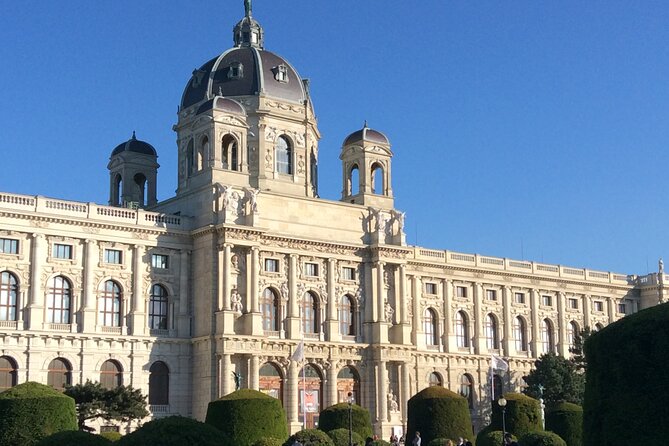
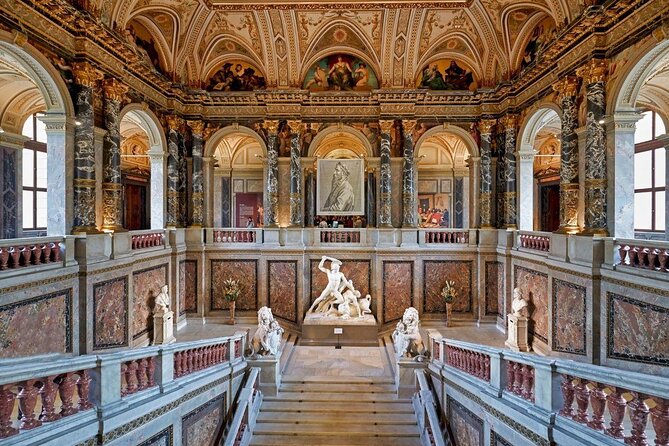
The Kunsthistorisches Museum is not just big paintings in neat rows. A quarter of the exhibition space is devoted to Cabinets of curiosities. This tour includes all collections during the themed route, so you get a taste of that side of the museum rather than skipping it.
That matters because Cabinets of curiosities change how you interpret objects. They were about collecting knowledge and signals of taste. In other words, the museum’s walls are not only showing beauty. They are showing how beauty, knowledge, and status get mixed together.
When the tour talks about social and cultural messages conveyed by great works, this is where you can feel it. You start to notice how an artwork positions the viewer. Sometimes it flatters. Sometimes it warns. Sometimes it sells power through myth and fashion.
This is also where the tour’s focus on beauty turns into something broader and more satisfying. It becomes an investigation into what societies wanted people to admire, and how those ideas traveled across time.
What You’re Really Paying For: Value, Ticket Inclusion, and Tour Length
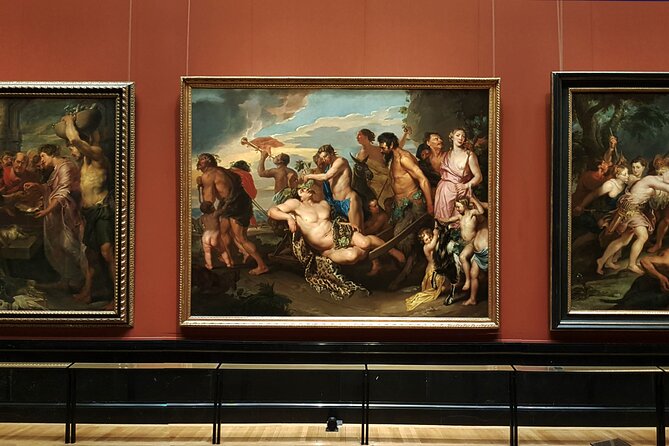
At $198.64 per person for about 2 hours 15 minutes, you are paying for something different than a standard public museum ticket. You are buying a private, themed path through a massive museum.
The admission ticket is included, which helps the value math. You also get a mobile ticket, which is practical in Vienna. Add private routing, and the time cost drops. Instead of spending an entire afternoon trying to choose what not to miss, you spend the time you have on a guided argument you can actually see.
Also, this experience is often booked well ahead, with an average booking window of 199 days. If you are traveling in busy seasons, plan earlier than you think you need to. It is the kind of tour that sells out quietly.
One more value point: group discounts are listed as a feature. If you have a small group of friends who want the same theme, the per-person cost can feel more reasonable.
Practical Tips So You Enjoy It Instead of Feeling Rushed
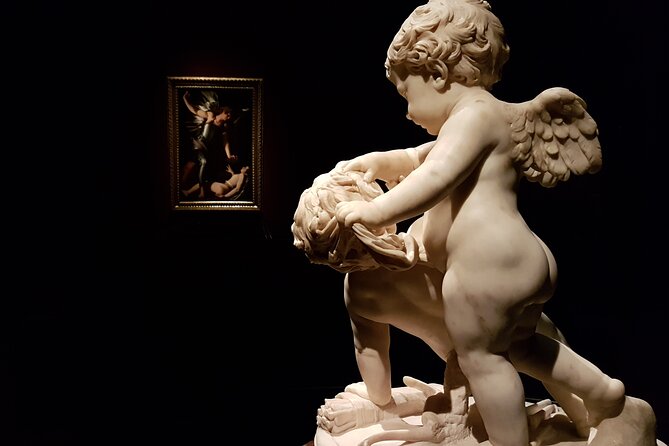
Even with a private route, this is still a serious museum visit. You should go in with two expectations: you will slow down, and you will see only what fits the beauty theme.
Bring your curiosity and your notebook, even if you just use your phone for notes. The pre-tour tests ask you to record your perceptions of beauty. If you skip that step or forget to jot down quick impressions, the later comparisons lose impact.
Wear shoes you can stand in. The tour is listed as requiring moderate physical fitness. It is also not stroller accessible. If you have mobility limitations, you might want to consider how much time you are comfortable spending on museum floors.
And if you are the type who likes planning, mark the meeting point on your map before you arrive: Maria-Theresien-Platz, 1010 Wien. That area is a simple anchor, and the tour ends back at the meeting point.
Who This Tour Fits Best (and Who Might Skip It)
This tour is ideal if you like art history but also like ideas. You do not need to be a scholar. You do need interest in how beauty gets constructed through painting, sculpture, and visual codes.
It is especially suited for:
- People who enjoy learning through themes, not just chronology
- Anyone curious about how attraction, proportion, and body ideals show up across time
- Art lovers who want to see the Kunsthistorisches Museum but do not want to wander aimlessly
It might be less satisfying if:
- You want a traditional, balanced survey of everything important in the museum
- You dislike discussion-heavy tours and prefer quiet, purely visual viewing
- You want stroller-friendly access, since it is not stroller accessible
Still, even if you do not agree with every theory, the works themselves are what make this worthwhile. The theme gives you a reason to look closely at details you would otherwise miss.
Should You Book This Private Beauty-Focused Tour?
I would book it if you want a Kunsthistorisches Museum experience with direction. The ticket inclusion, the private format, and the smart use of named masterpieces make this feel like guided thinking, not just guided walking.
Skip it if you are aiming for a broad museum sampler with minimal discussion. The beauty theme drives the pacing, so you will focus on attraction, proportion, and cultural messaging, not on trying to cover every major school of painting.
If you are curious about the question behind the tour, you will likely enjoy it: are beauty standards mostly personal taste, or do they reflect patterns tied to human perception and social life? This tour gives you enough art and enough structure to form your own answer.
FAQ
How long is the private tour?
It runs for about 2 hours 15 minutes.
Where does the tour meet, and does it return there?
You meet at Kunsthistorisches Museum Wien, Maria-Theresien-Platz, 1010 Wien, Austria. The activity ends back at the meeting point.
Is the museum admission ticket included?
Yes, the admission ticket is included.
Is this tour private?
Yes. It is a private tour/activity, and only your group participates.
What happens before you start viewing the museum collections?
Before the tour begins, the guide offers tests so you can record your intuitive perceptions of beauty.
Is it stroller accessible or suitable for pets?
It is not stroller accessible, and it is not suitable for pets.
Can I get a full refund if I cancel?
Yes. Free cancellation is available, and you can cancel up to 24 hours in advance of the experience for a full refund.
Just added to the bill for Vienna
Museums, compared.
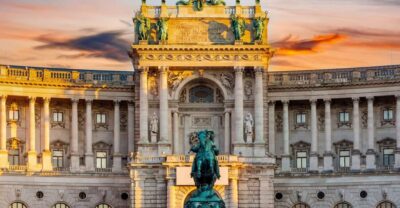
Skip-the-Line Sisi Museum, Hofburg and Gardens Tour
Read our review →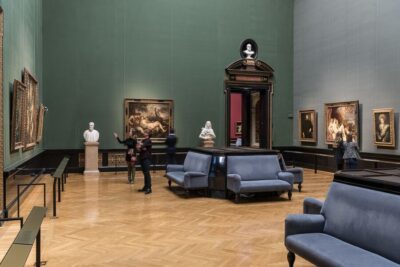
Vienna Kunsthistorisches Museum Day Admission Ticket
Read our review →
Chocolate Workshop in Chocolate Museum w/ Tasting
Read our review →
St. Stephen’s Cathedral & Dom Museum Wien Tickets
Read our review →
Browse the lists this tour appears in